



September 18, 2026
Moving the Center: Nairobi’s Pan-African Moment
Reflecting on the Past, Looking Ahead
Immediately, it was clear that PAB was charting a bold path in a world saturated with art and design biennales and triennales. The Biennale’s objective was to question the biennale model and ask whether a truly transnational model of cooperation can be sustained as a platform for critical discourse. In this regard, the Pan African Biennale traces its origins to key moments in Pan-African thought, including Okwi Enwezor’s landmark “post-colonial” Documenta 11 (2002) and the Dak’Art (ongoing since 1990). Further back, the First World Festival of Negro Art (Dakar, 1966) and the Second World Black and African Festival of Arts and Culture (FESPAC) (Lagos, 1977) were instrumental in giving aesthetic expression to the theoretical framework of the catch-all term “Pan-African”. In the context of a fast decolonizing continent and its growing diaspora, Pan-Africanism was therefore a global call for solidarity. This sentiment was broadly reflected in the Biennale’s selection of panelists taken from across Africa and beyond, including the American architect Jerome Haferd, who located Harlem as a center of Pan-Africanist thought actively working “against erasure”.
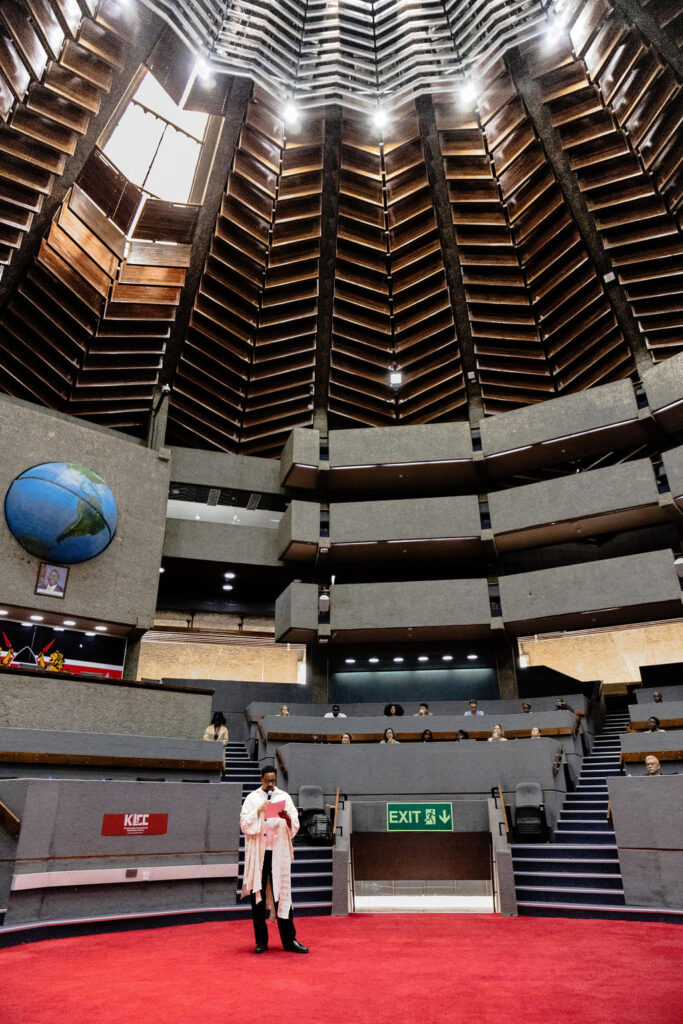
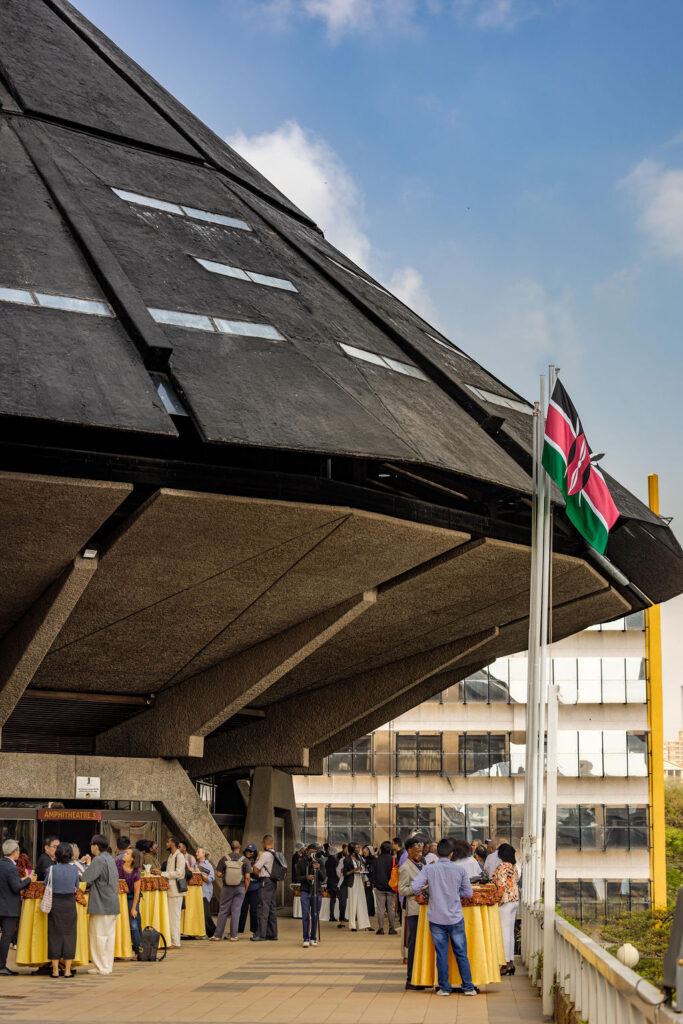
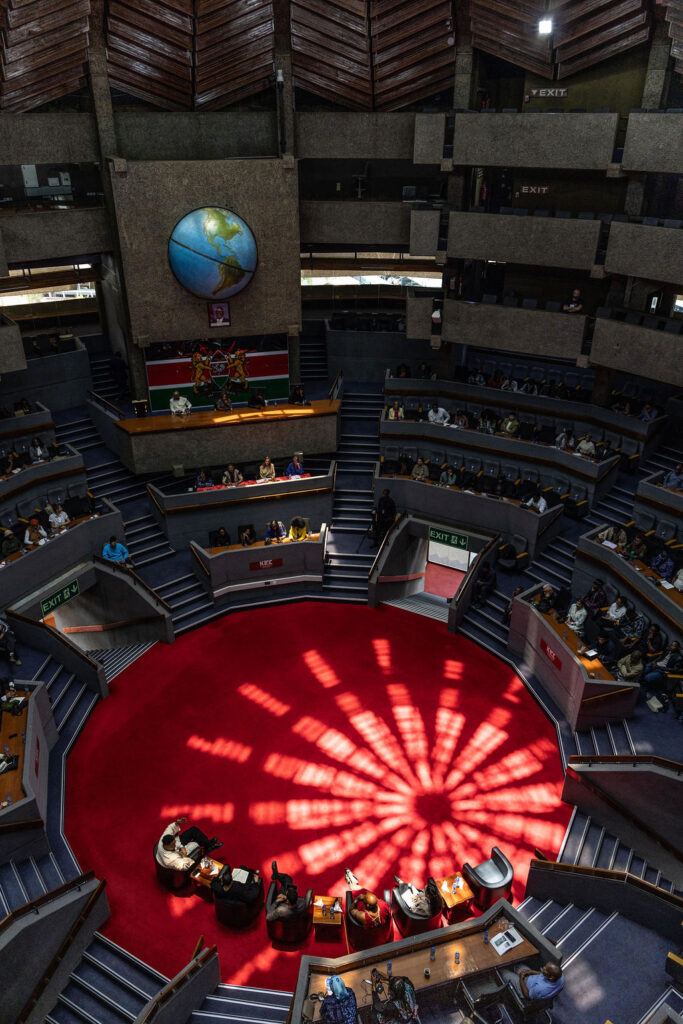
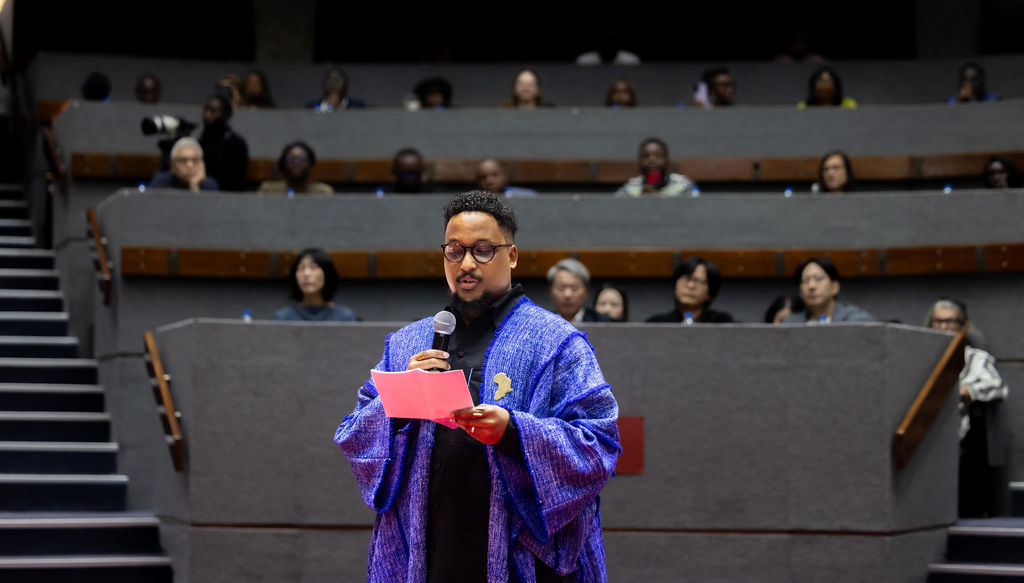
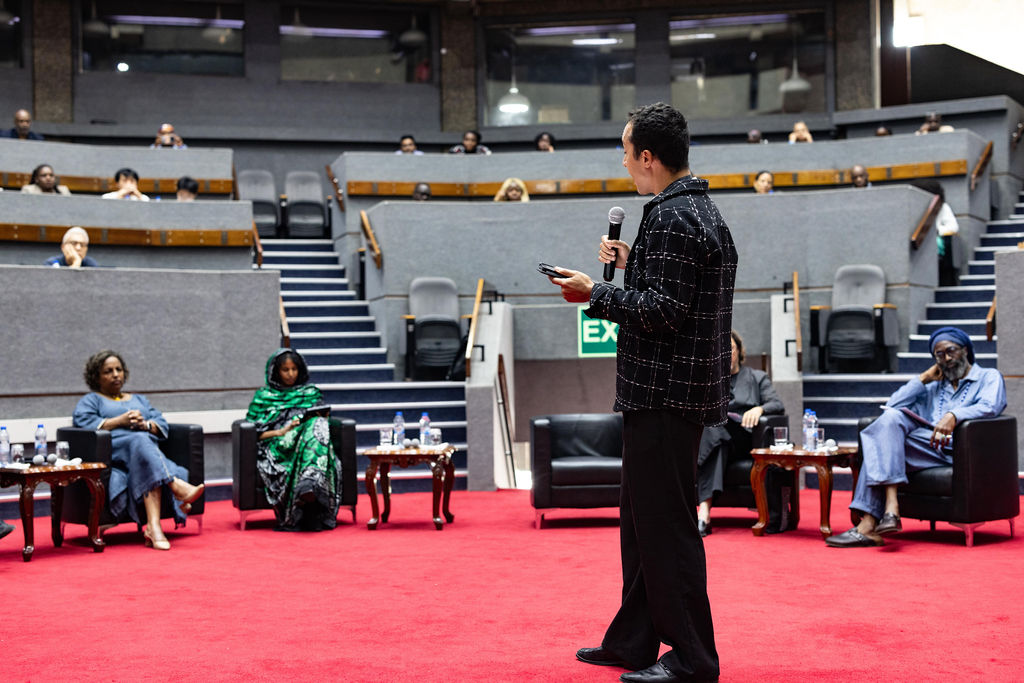
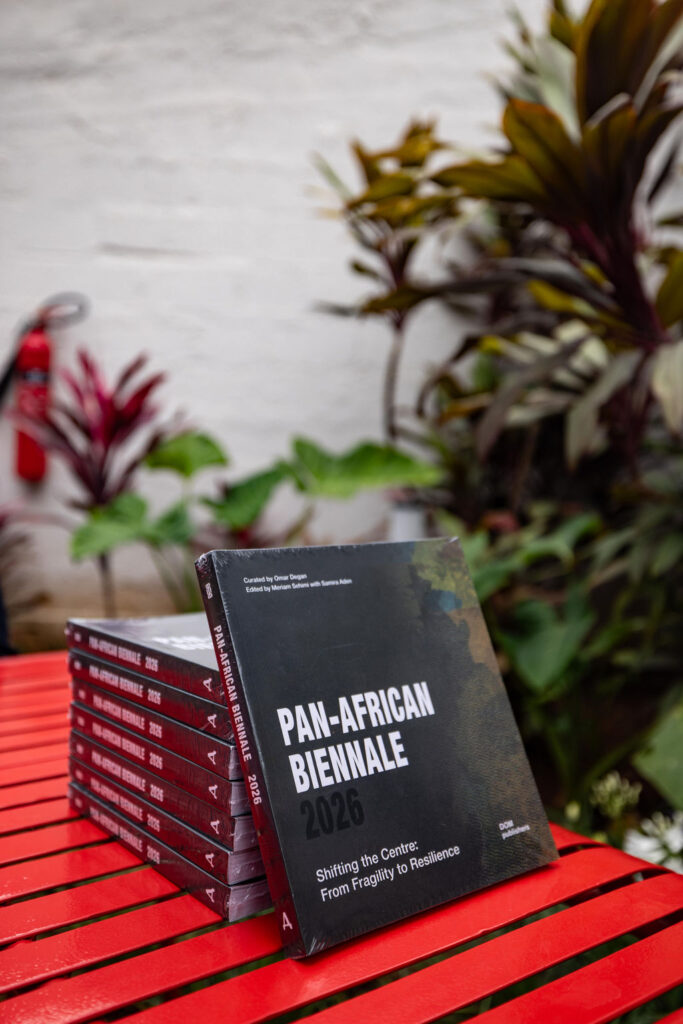
Nairobi’s symbol of Pan-African idealism, the 1973 Kenyatta International Convention Centre (KICC), was therefore an ideal backdrop for the inaugural Biennale. Karl Henrik Nøstvik and David Mutiso’s design was an early attempt at defining African architectural expression in the context of late modernism. The soaring tower and its hut-shaped amphitheater hosted the opening and closing events. Elsewhere during the week, the Biennale leveraged Nairobi’s small but growing number of private, cultural spaces including the Shah Houses, South Asian shop houses turned cultural spaces in Nairobi’s bustling inner-city Ngara neighborhood, and Paper Cafe, an independent magazine store and exhibition space that also collaborated on a pop-up bookshop with Berlin’s DOM Publishers. DOM also published the Biennale’s weighty book distributed free of charge to all participants.
Africa, Center of the World
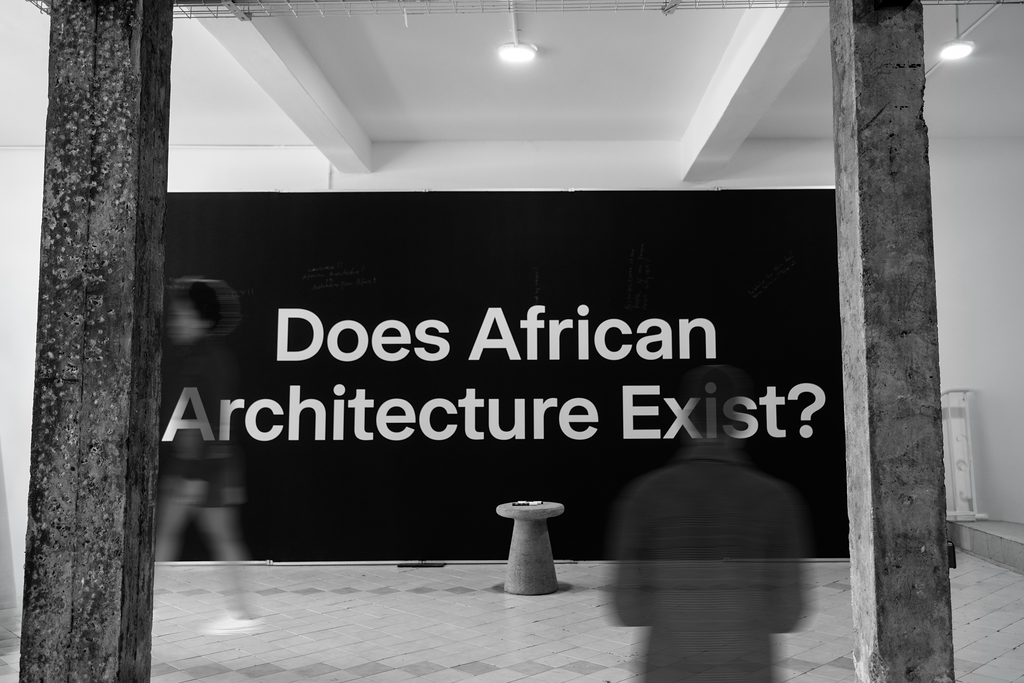
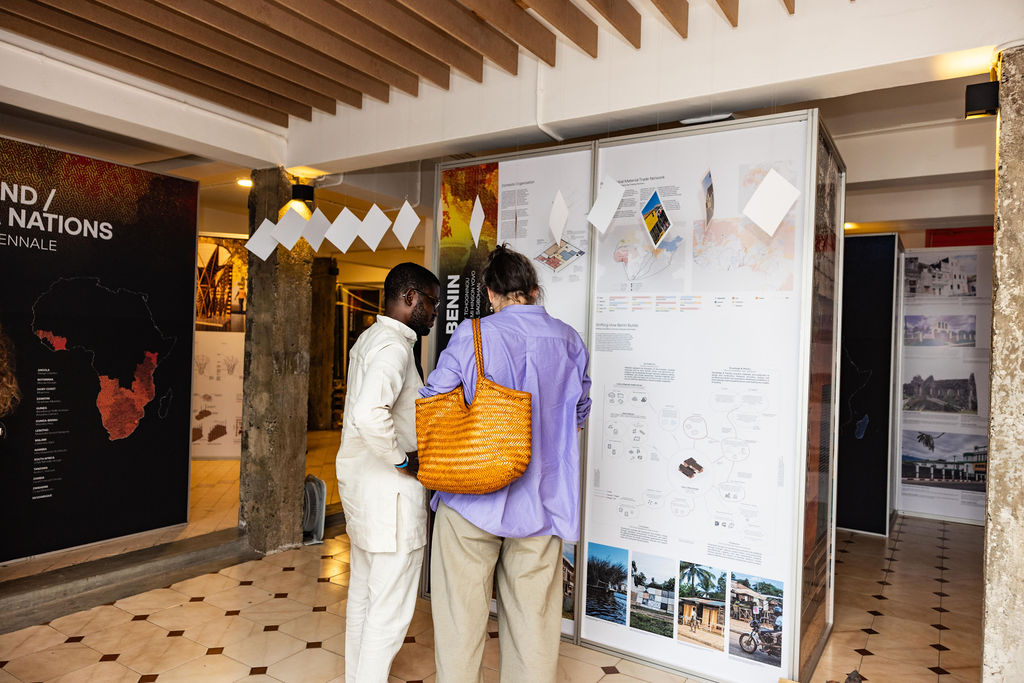
The absence of national pavilions, or any pavilions, was the first departure from the traditional Biennale form. In fact, the Biennale had few models or materials. Instead, the Biennale’s exhibition consisted of printout panels covering 40 African countries. Some, like the Cape Verdean firm Ramos Castellano Archichitectos, used VR headsets, a heat lamp, and a fan to simulate the island’s district climate while showcasing four immersive short films. Liberian artist Nu Goteh’s sound installation Kolokolo: A Sonic Assemblage could be accessed by scanning a QR code. Most, however, relied on dense, text-heavy panels to demonstrate how their work loosely related to the Biennale’s theme. This was undoubtedly the Biennale’s weak point and, despite asserting the dematerialization of national borders, the exhibition still lumped countries into broad geographic groupings. Intriguingly, the provocation “Does African Architecture Exist?” printed and prominently displayed on a blank wall was far more arresting and thought-provoking than much of the work on display. In the end, the rejection of the traditional biennale format had more to do with the logistical challenge of bringing objects from across Africa to Nairobi.
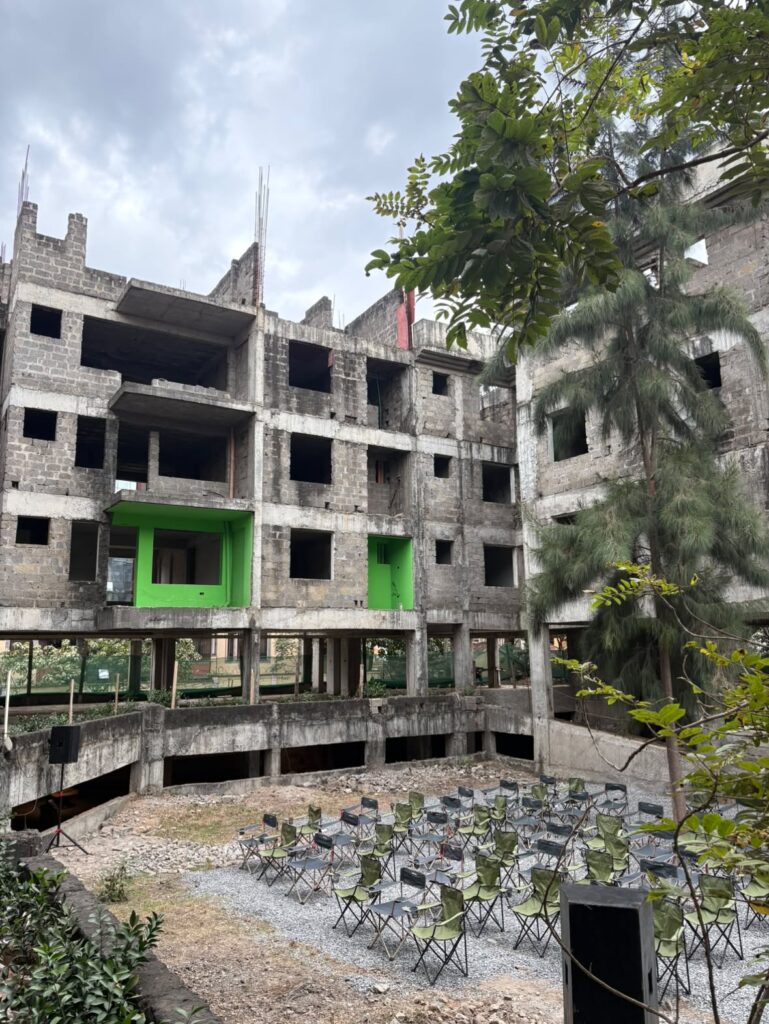
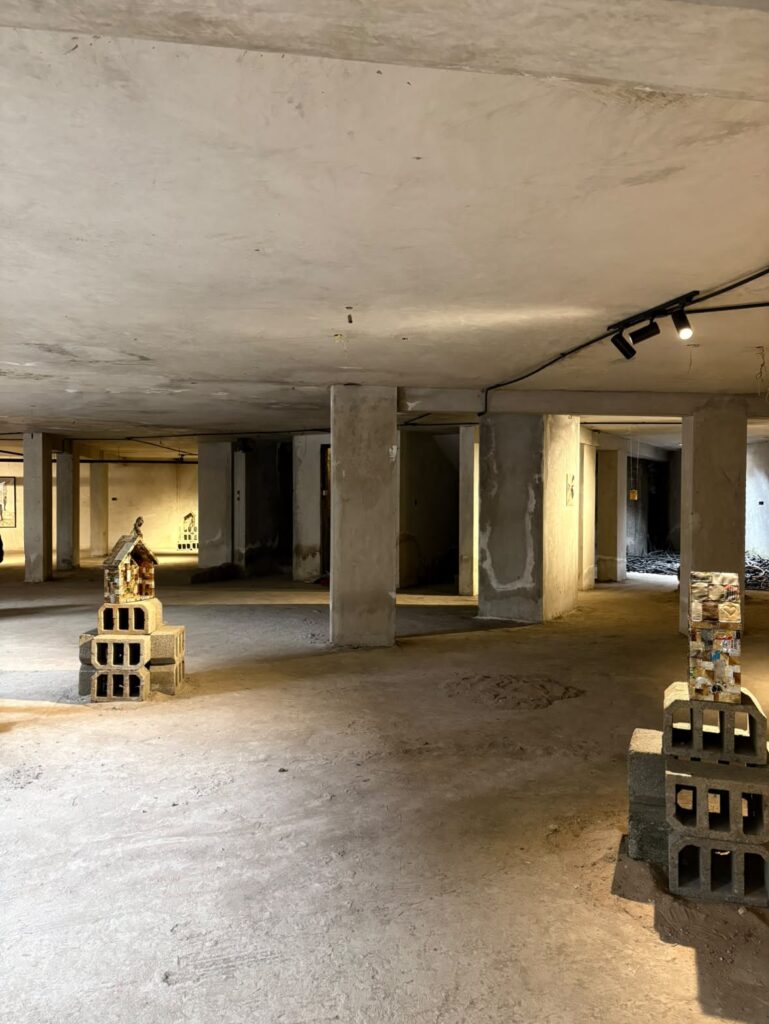
Given the unevenness of the Biennale exhibition, Nairobi’s Cave Bureau spectacular ante-exhibition titled “Earth Spirit Practice: Eulogy to Nature” was a standout attraction. Cave transformed a half-finished, abandoned apartment building in Nairobi (itself a comment on the city’s runaway speculative real estate market) into a testing ground for their cerebral philosophy on the relationship between architecture, geology and the natural world. The exhibition was elegant, drawing from a wide circle of Nairobi-based collaborators and family members, and had the polish and deftness of a firm comfortable in global platforms. Cave co-curated the 2025 British Pavilion at Venice, participated in the Sharjah Architecture Triennial in 2004, and was the subject of a solo show at the Louisiana Museum of Modern Art in 2023. Through a series of sculptural interventions blurring the line between art and design, the presentation explored geology and time, African traditional world-building, and novel experiments in solving intractable problems such as water scarcity in Kenya’s arid regions.
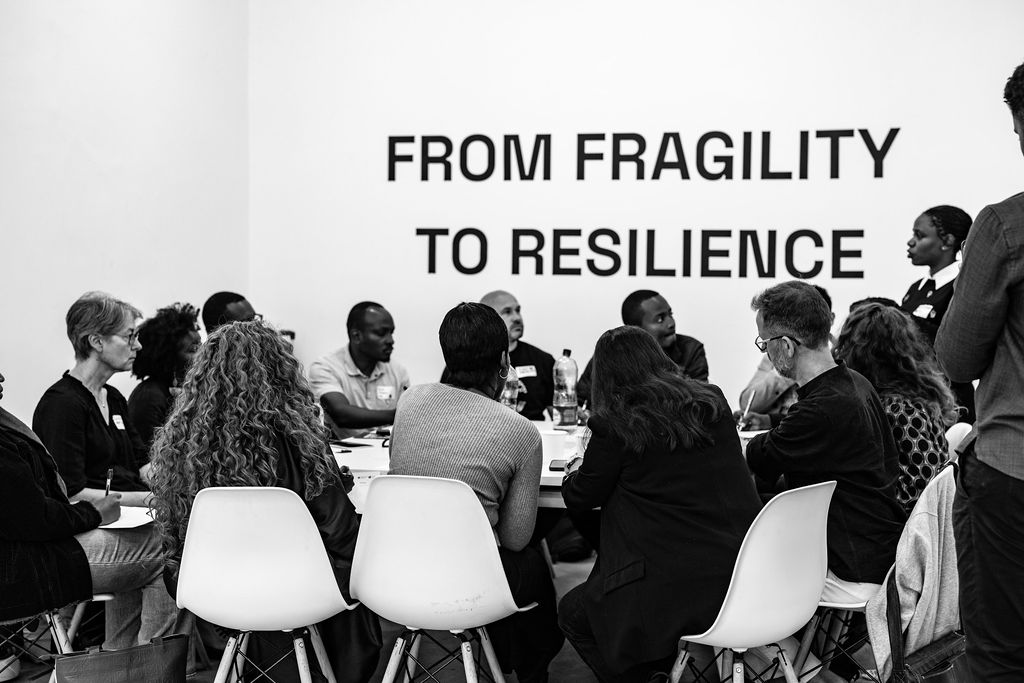
Without scale models and pavilions, conversation and connection took on new meaning as practitioners met for the first time to talk about architecture, urbanization, and representation. At the panel “Beyond Shelter: Rethinking Housing as a Shared Act”, the architect Viola Langet made a compelling argument on the power of “democratising beauty”, a subtle rebuke to the slum upgrading and urban revitalization projects sweeping towns and cities across Kenya. Building on that discussion, an earlier panel, “The City That Has Not Been Built Yet: Designing for 2.5 Billion” unpacked what it would mean to house the people of the fastest-growing and urbanizing continent.
The African Century
Across five days of panels, the Biennale recontextualized popular tropes used to describe Africa, such as the youth dividend and informality. The Biennale repeatedly suggested that the architect’s role in Africa is not to tame the territory but to facilitate equitable social welfare and development, despite the profession’s elitism. Ghana, for instance, has only 744 registered architects. This puts into perspective how urgent conversations shaping the continent’s urban future can be, given scarce technical skills and resources.
The architect as facilitator and mediator of both public and private space continues, with female architects in particular seeing themselves in this role. Female architects, in particular, cast themselves as community builders. Viola Langet saw the architect’s role as a “vision carrier,” articulating physical needs (shelter, protection, etc.) while broadening the definition of the client to include the community’s dreams and aspirations. Indeed, the message of resilience seemed to carry through the Biennale, undoing what architect Althea Peacock of Lemonpebble called the “romanticisation of fragility”.
Conversations on sustainability and materiality offered interesting insights, given the fraught debates over what counts as African building material. During the session “From the Ground Up: Local Material Intelligence” the architects Urko Sanchez, Moran Munyuthe and the academic Mary Wairimu Maina made compelling arguments to rediscover ancient and novel building techniques to inform the construction of contemporary buildings. Meanwhile, MASS Design Group’s Christian Benimana, on an earlier panel, “What the Ground Already Knows: East African Architecture and the Climate Condition”, outright rejected the notion of African vs non-African building materials and advocated a forward-looking approach to material choice. Across the panels, the most interesting perspectives came when panelists engaged with the audience during Q&As, as if liberating the conversation from the confines of often convoluted, wordy panel themes. The panel structure also deterred deeper, more meaningful conversation. Revered panelists like Rahel Shawl Zelleke of RAAS Architects, who defied all odds to build Ethiopia’s most prolific architectural practice, could have had more room to speak.
In the current moment, the politics of shaping space remained a silent undercurrent. This was practical: what are the politics of 54 nations, and what constitutes meaningful engagement? Politics was not, however, absent; Palestinian academic Nora Akawi’s work on carceral spaces and sound highlighted that architects can build both spaces of liberation and oppression. The historian Chao Taiyana Maina’s research on concentration villages in 1950s colonial Kenya underscored the importance of archives and historic records, underscoring that Africa’s architectural future cannot be understood without knowing the past.

Moving the Center
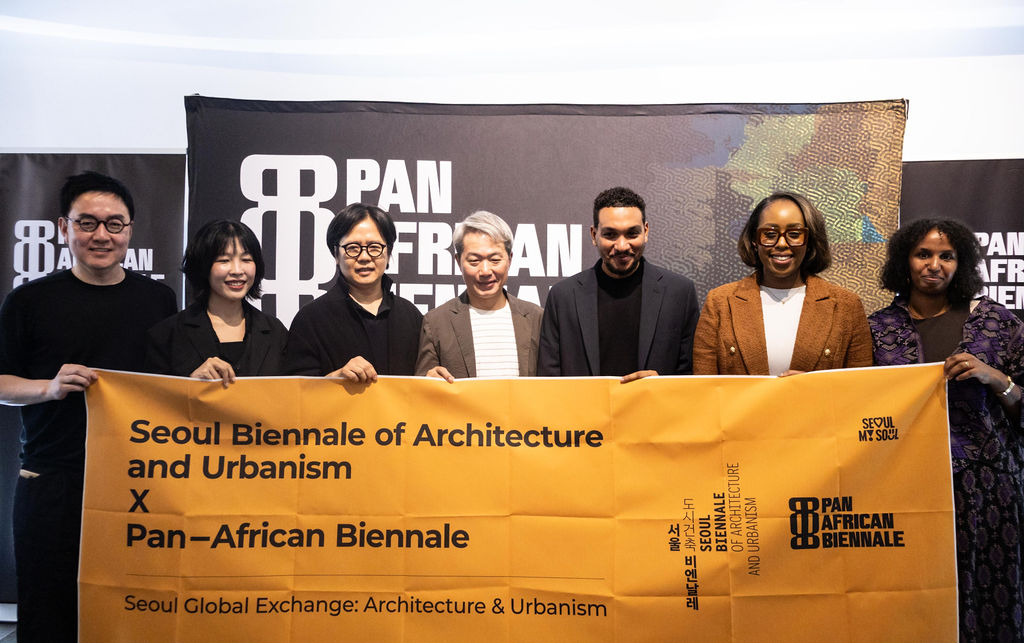
At the end of five days, participants left grateful, exhausted and nourished. More questions were raised than answered. Without answers, the distinguished panelists left the audience with the faint outlines of an African design philosophy. Degan did not reveal where or when the next Biennale would take place. The timing of the next Biennale would depend on securing funding and support, perhaps a tongue-in-cheek defense of the inaugural Biennale’s theme of “fragility to resilience”. On the sidelines of the Biennale, the Van Alen Institute, in conjunction with PAB, jointly announced Arafa C. Hamadi and the Bled el Abar Collective as the winners of the 2006 Re: Paris Prize, suggesting the Biennale’s reputation has been cemented and that support, philanthropic or otherwise, is within reach.
The connections and conversations in Nairobi will no doubt reverberate through time, much like previous landmark moments in Pan-Africanism. It is too soon to judge if the “center has shifted”; buildings and cities are, after all, long-term projects, but for five days in September, Nairobi was the center of the world.
.
Would you like to comment on this article? Send your thoughts to: [email protected]
Latest
Projects
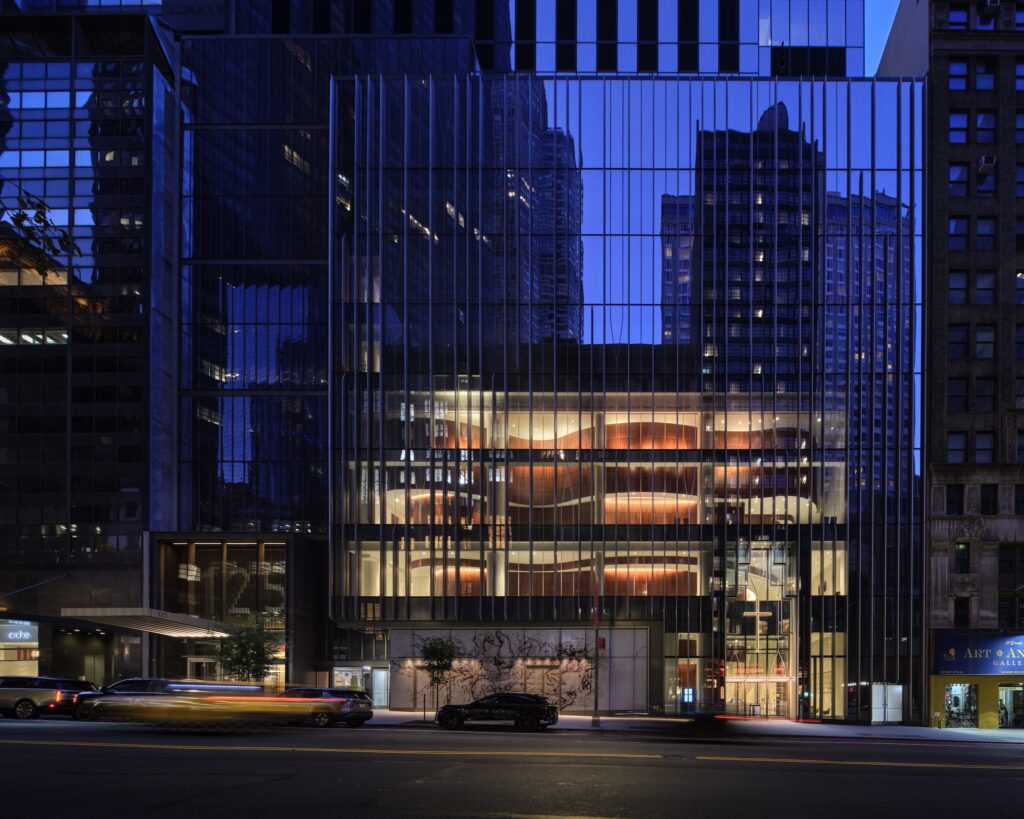
How a Hybrid Building Helped an Historic Manhattan Congregation Remain in Place
On Billionaire’s Row, FX Collaborative designed a new home for Calvary Baptist Church combined with an office tower.
Projects
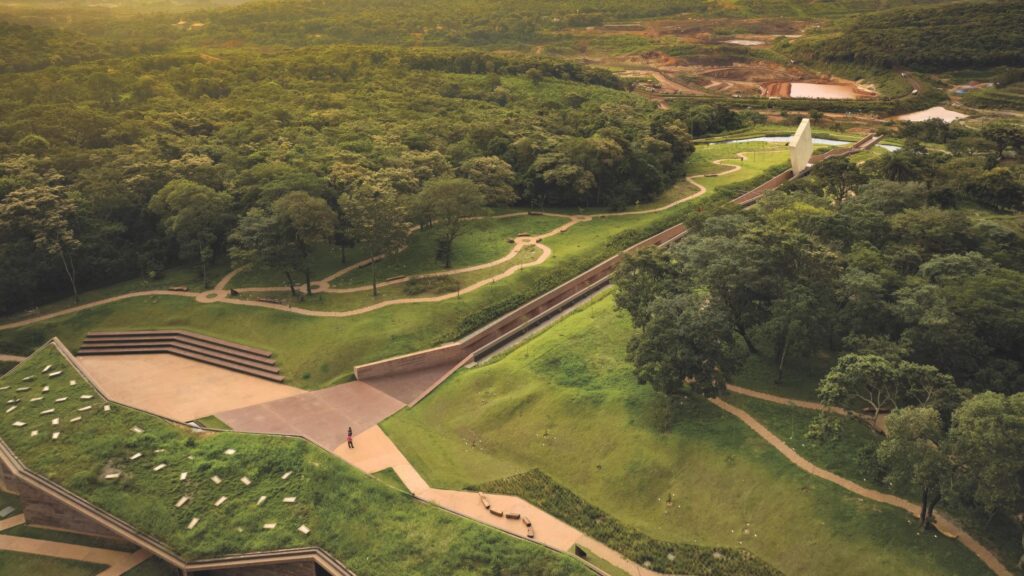
The Brumadinho Memorial Is an Exercise in Memory and Materiality
Designed by Gustavo Penna Arquitetos Associados, the memorial was built to honor the 272 victims of the collapse of Brazil’s Mina Córrego do Feijão tailings dam.