


April 23, 2026
The Productive Tension of Prefabrication
Prefabrication has long promised a more efficient and controlled future for housing, yet it often remains tethered to aesthetic compromise. All around the globe, some prefab housing has developed a reputation for being generic, soulless, and mundane.
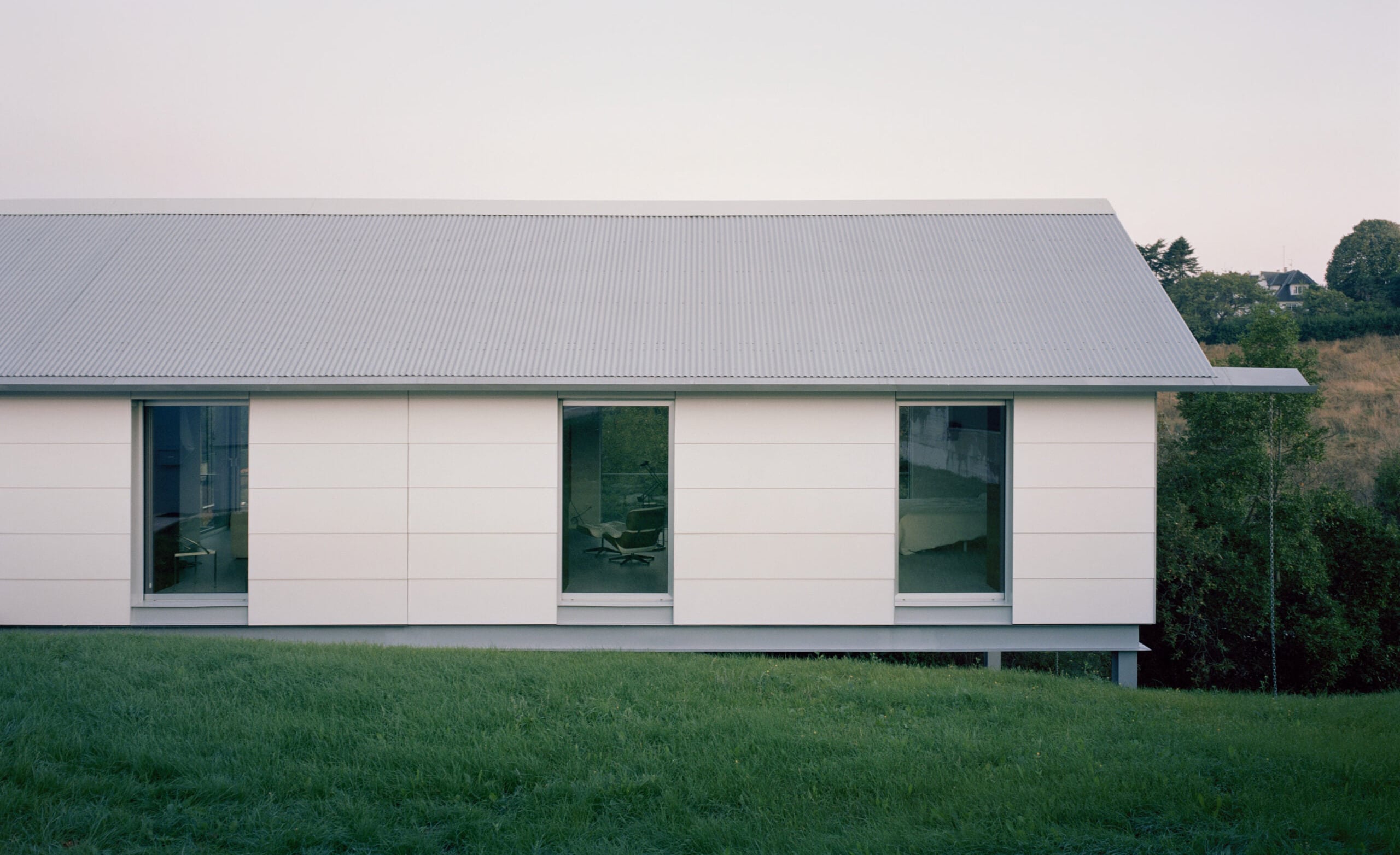
Casa Guadalupe by Eduardo Mediero of HANGHAR pushes against that perception, presenting a pragmatic yet refined project that embraces the mechanistic language of prefabricated assemblies and, that in its own way, renders it local.
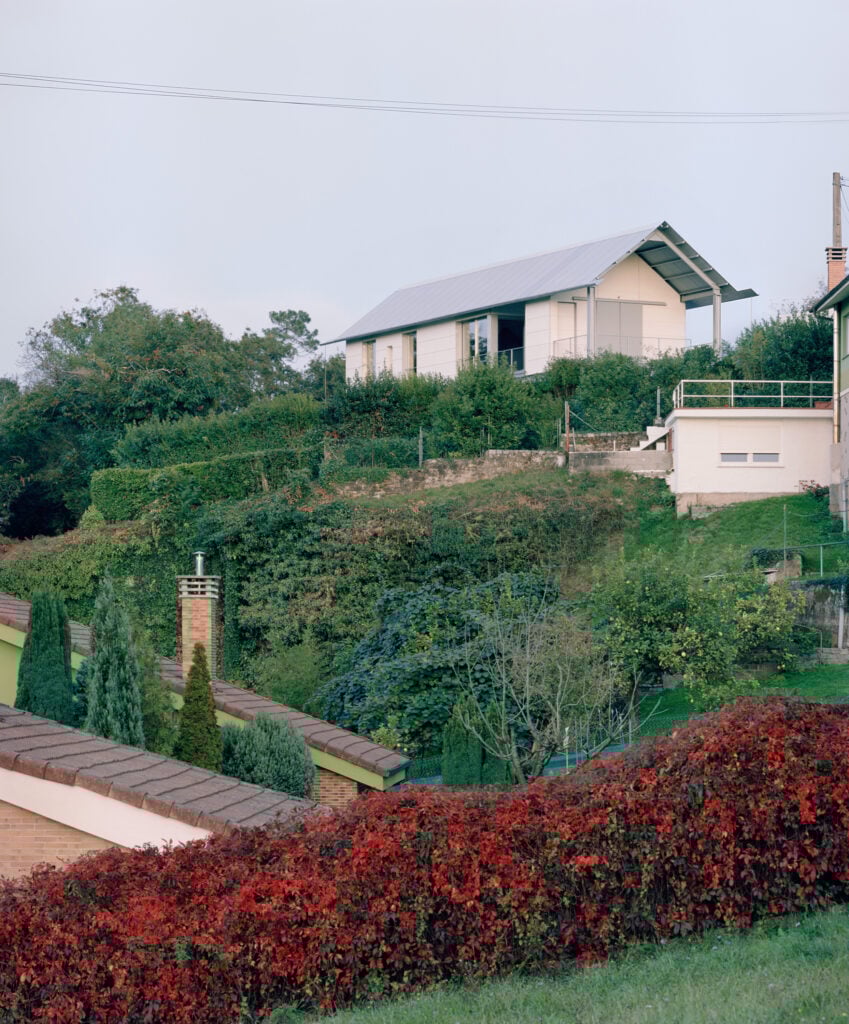
Set on a hillside overlooking Gijón, in Spain’s Asturias region, the house demonstrates how industrialized construction can deliver not only speed and precision, but also architectural specificity and a nuanced relationship to place—especially in a context where most houses adhere to a more “Mediterranean” palette of terracotta roof tiles and earthen hues.
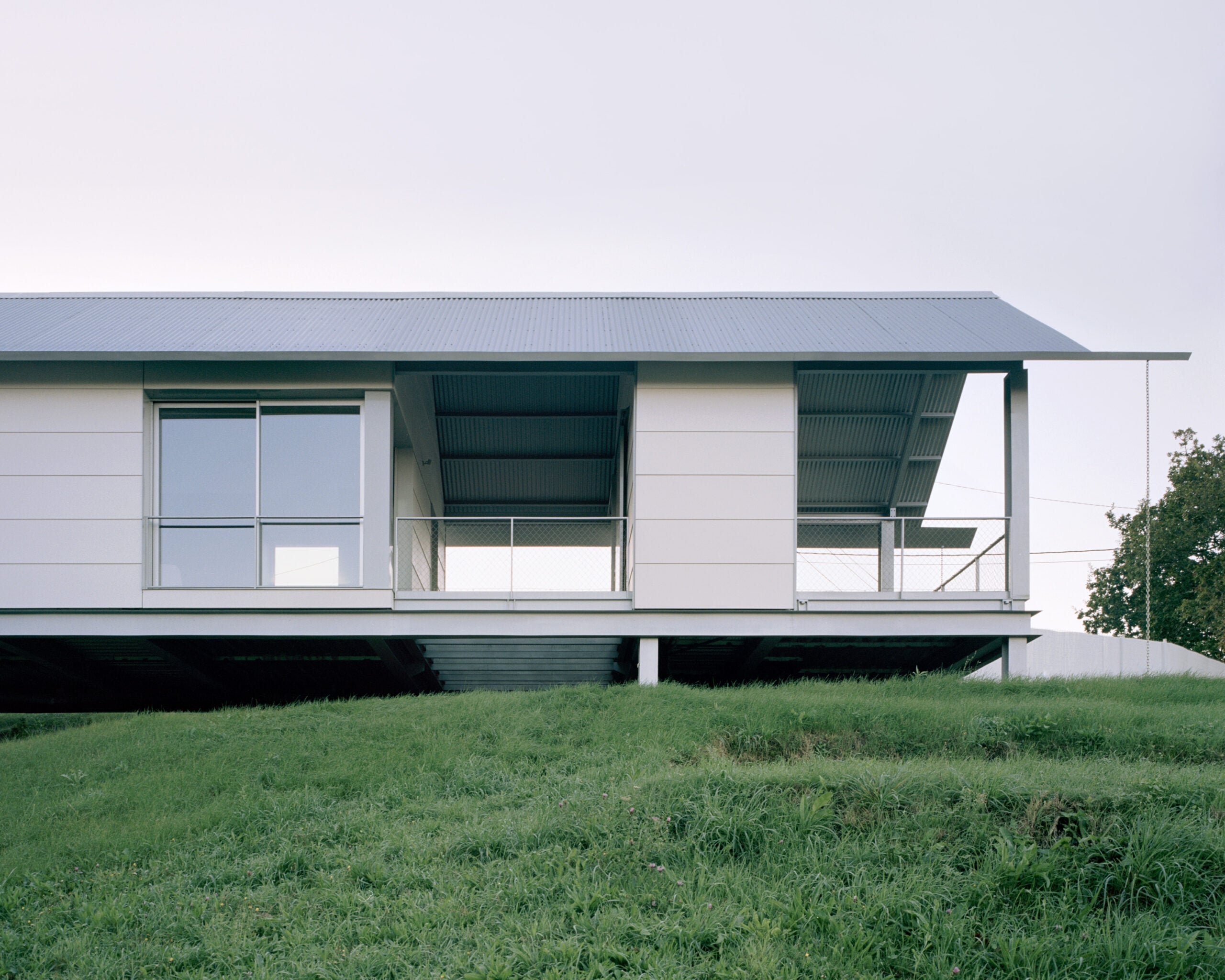
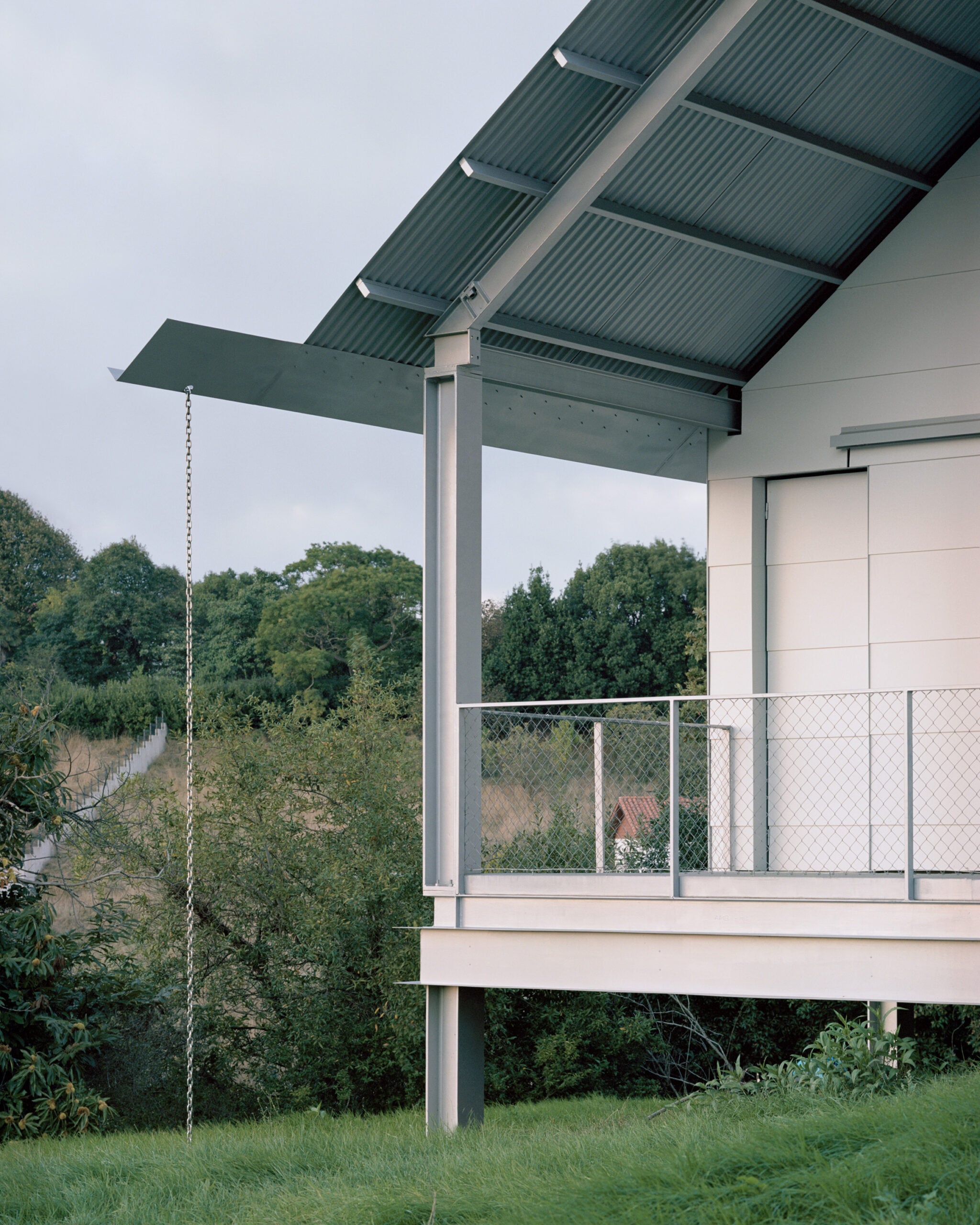
Fully fabricated off-site and assembled in a matter of days—with the primary structure erected in just 48 hours—the house exemplifies the logistical advantages of prefabrication. But its ambitions extend beyond efficiency. From afar, the structure appears perched like an observatory hut. Yet, the architect argues that the design is rooted in vernacular Asturian typologies, such as the agricultural shed and the casa Mariñana. It adopts a familiar clarity of volume and proportion, and a direct engagement with the landscape, even as it reinterprets these forms through a sharp, contemporary, steel-based system.
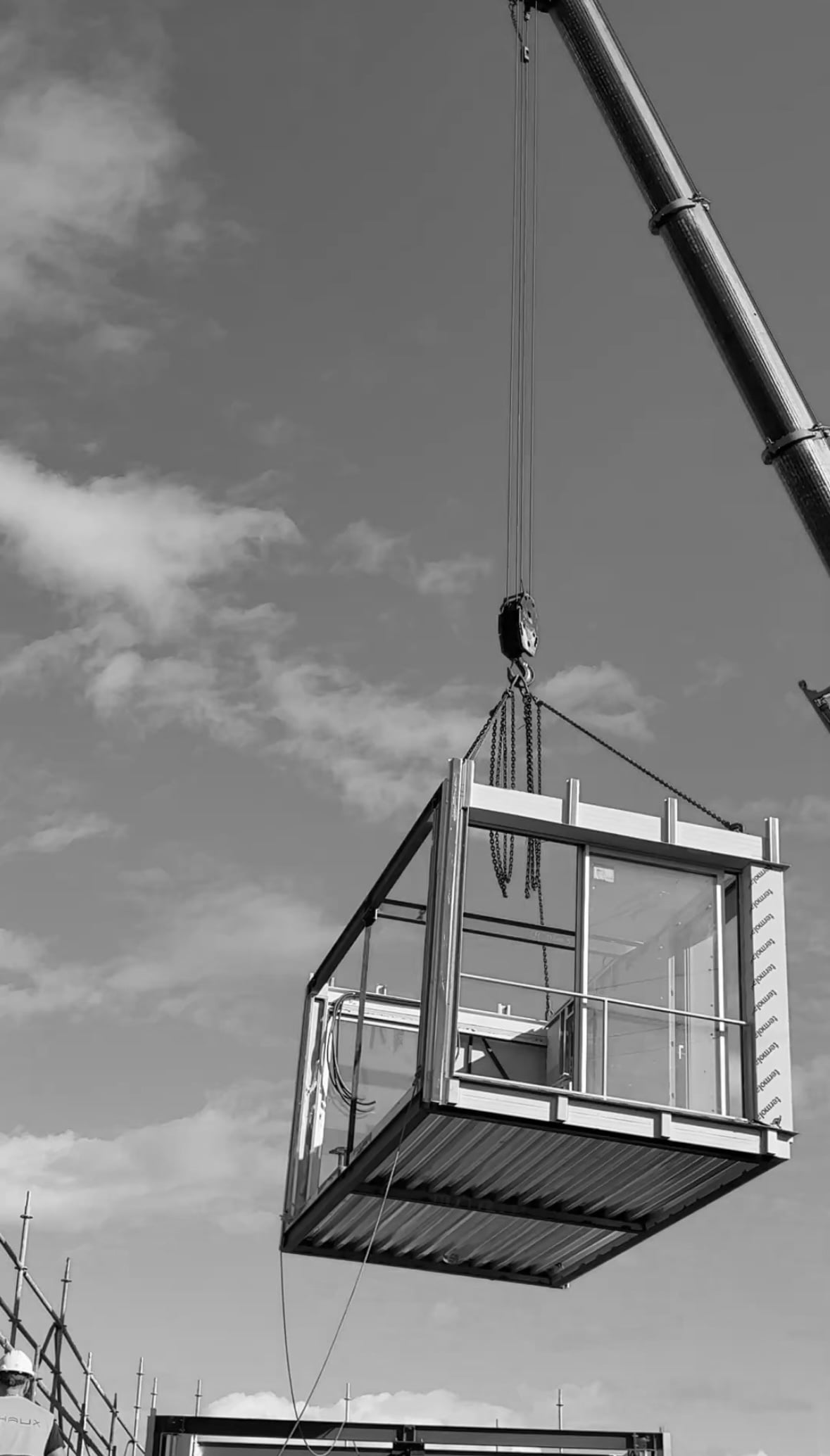
Elevated on piers for a lighter touch on the ground, the house detaches itself from the terrain’s irregularities—a prefabricated hallmark that allows it to be installed almost anywhere. Casa Guadalupe was no exception, its structure hoisted into place by crane.
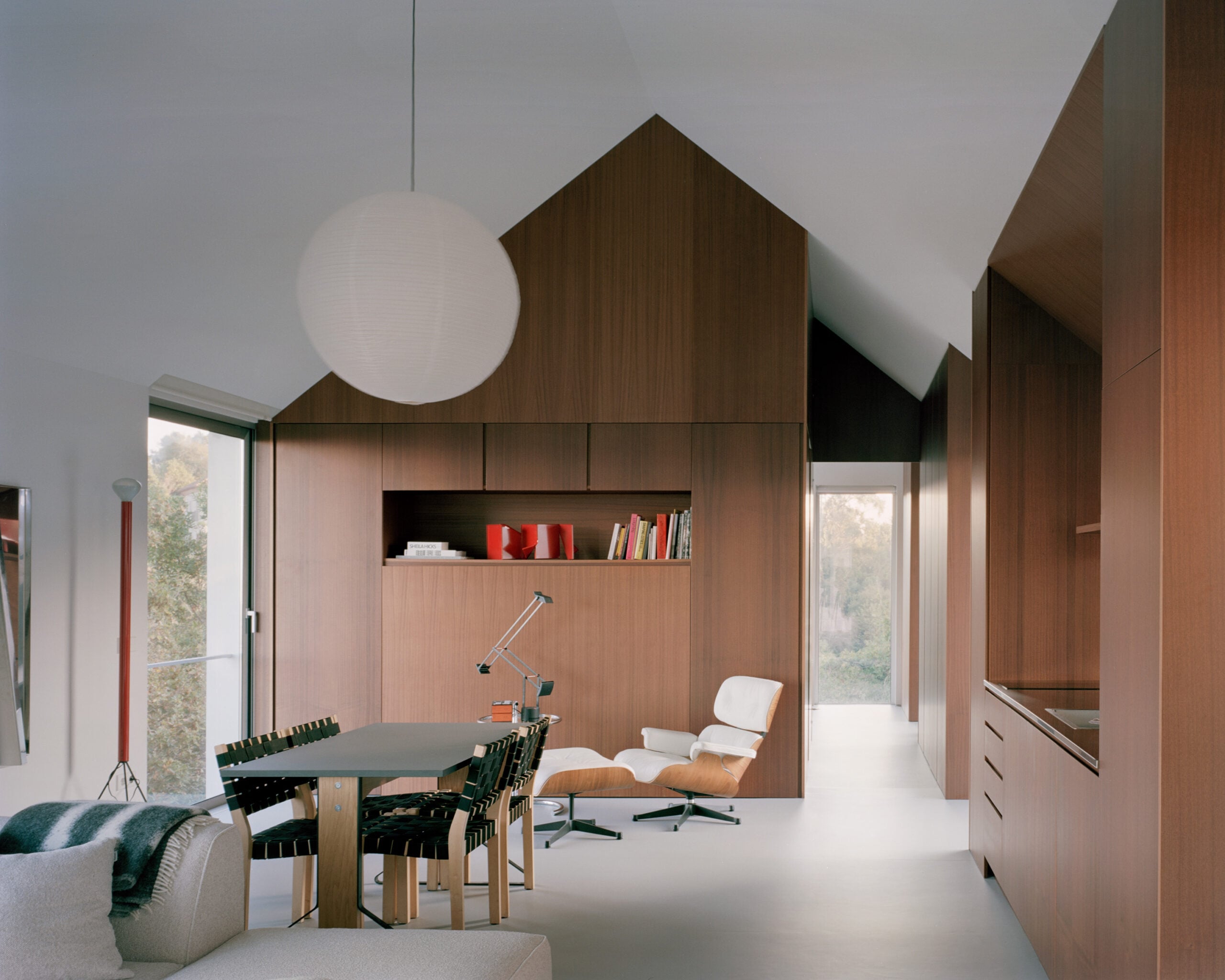
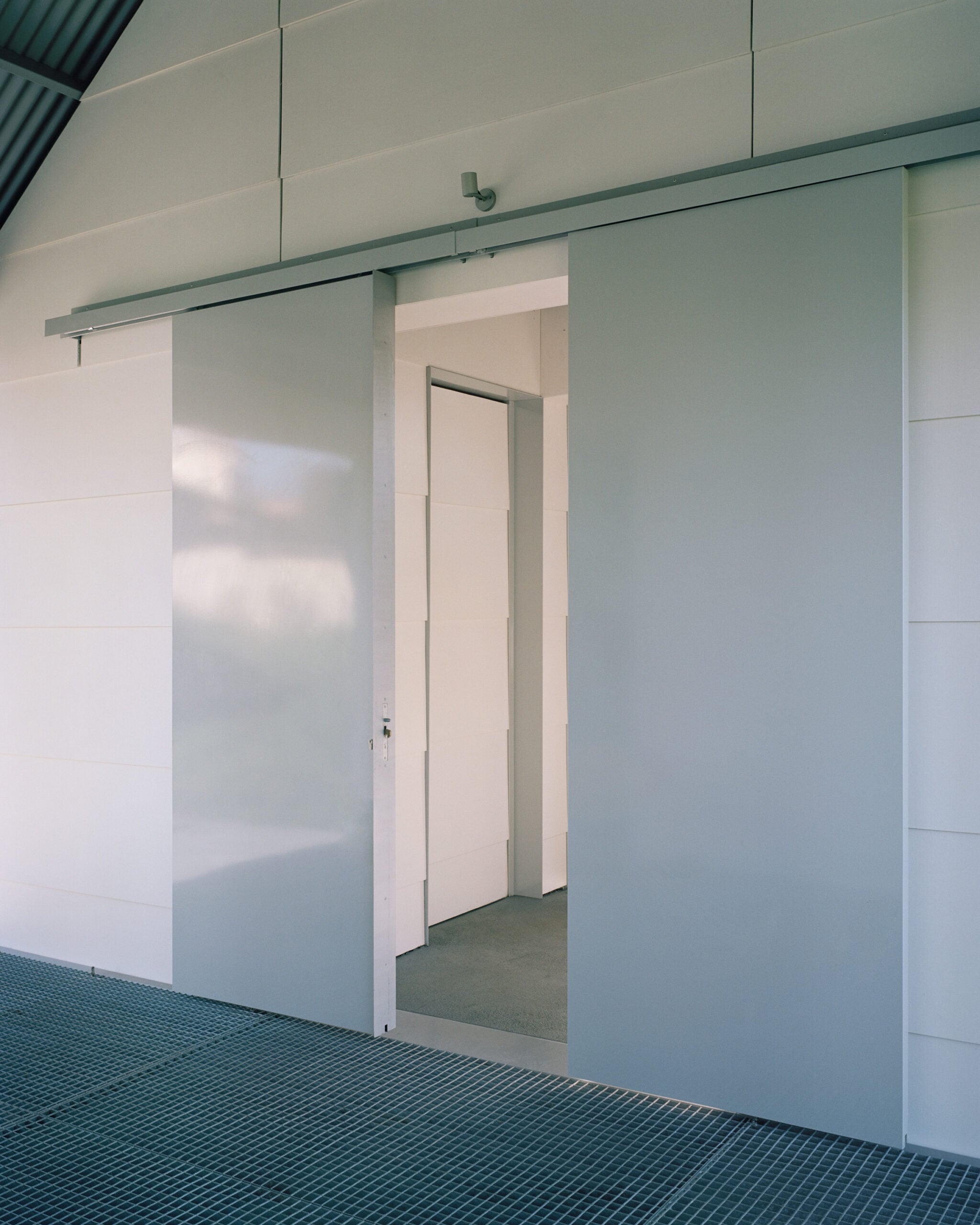
The exterior reads as an exercise in formal restraint, following the studio’s rigorous aesthetic with muted tones, here expressed through structural steel, a corrugated metal facade, and expressive detailing. The interior, however, introduces a deliberate counterpoint—largely driven by the client’s requests. Warmer materials and wood-lined surfaces soften the experience, marking a subtle departure from HANGHAR’s typically austere palette. This tension between exterior discipline and interior domesticity speaks to what I think is a productive friction inherent in the client–architect relationship.
METROPOLIS sat down with Eduardo Mediero to learn more about the project:
A Controlled System
Francisco Brown: Can you start by telling me about the client and how the project began?
Eduardo Mediero: It’s a funny story. The client reached out about three years ago—someone I met at the GSD [Harvard Graduate School of Design]. She’s an architect from Madrid who moved into tech and now works in San Francisco. Her husband, also an architect, now works for a prominent tech group as well. They’re deeply cultured and sophisticated, with a strong understanding of architecture. While they were interested in contributing ideas and references, they ultimately trusted us with the design process. That balance made the project what it is.
Casa Guadalupe is primarily for the couple. She’s from Gijón and wanted a home for holidays, family visits, and occasional rentals, though that wasn’t the priority. The site it’s shared with her parents, who live nearby. They use the land for weekend gatherings—gardening, lunches—but rarely enter the house. So in a way, we had two clients: the couple and the mother, who needed outdoor space for hosting. The house had to coexist carefully on the site—present, but not dominant.
FB: You chose prefabrication for the project. Was that about cost efficiency or something else?
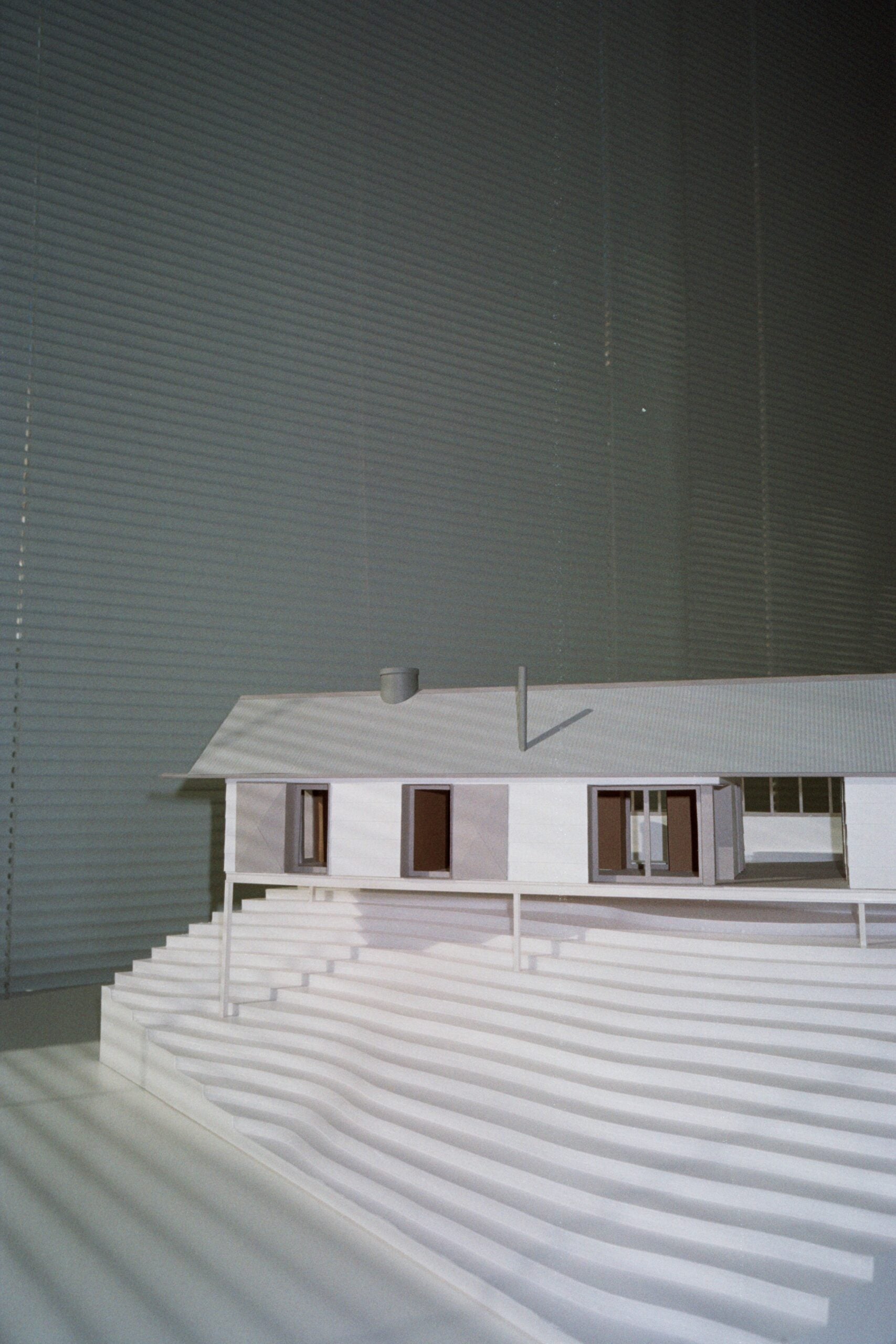
EM: People assume prefabrication reduces cost—it doesn’t. It’s roughly the same per square foot. The real advantage is time and control. This house was completed in seven months, which is nearly impossible for a single-family home. More importantly, it’s a highly controlled, professionalized process. Construction becomes predictable. Instead of uncertainty on site, you have a clear schedule—week 14, windows; week 15, installed. No delays. You’re part of a system. It shifts the conversation from builders to engineers and technical teams. Everything is resolved in advance, often down to the millimeter in 3D. There’s no improvisation on site—it’s more like rehearsing a performance until opening day. What I find compelling is challenging the idea that prefab equals generic. You can create highly specific, one-off architecture—it just requires rigor and detail. For me, the future lies in combining industrial systems with artisanal intent.
An Optimal Approach for Designing at a Distance
FB: Was this level of precision necessary for the project, or more of an experiment?
EM: It wasn’t experimental in terms of construction—the systems are standard: steel beams, concrete slabs. What’s different is the process’s organization. The client lives abroad, and I’m based in Madrid, so a controlled system made the project more manageable. It wasn’t a manifesto—it was simply the right approach for this context. But it does make the process more legible for clients: there’s a schedule, a logic, something they can follow.
FB: Do you think the house’s more contemporary language creates any tension with the surrounding context?
EM: Interestingly, no. Asturias is quite rural—informal, unstructured, even messy in places. We approached the house more as an agricultural or vernacular typology than a conventional residence. There are new “modern” houses in the area—white boxes that could exist anywhere—but those feel more foreign to me. Our house, with its barn-like qualities, steel structure, and muted tones, actually resonates with existing rural structures. It’s not traditionally residential, but it feels familiar.
A Productive Tension with Clients
FB: Maybe you want to share how the design shifted once you moved from the exterior into the interior?
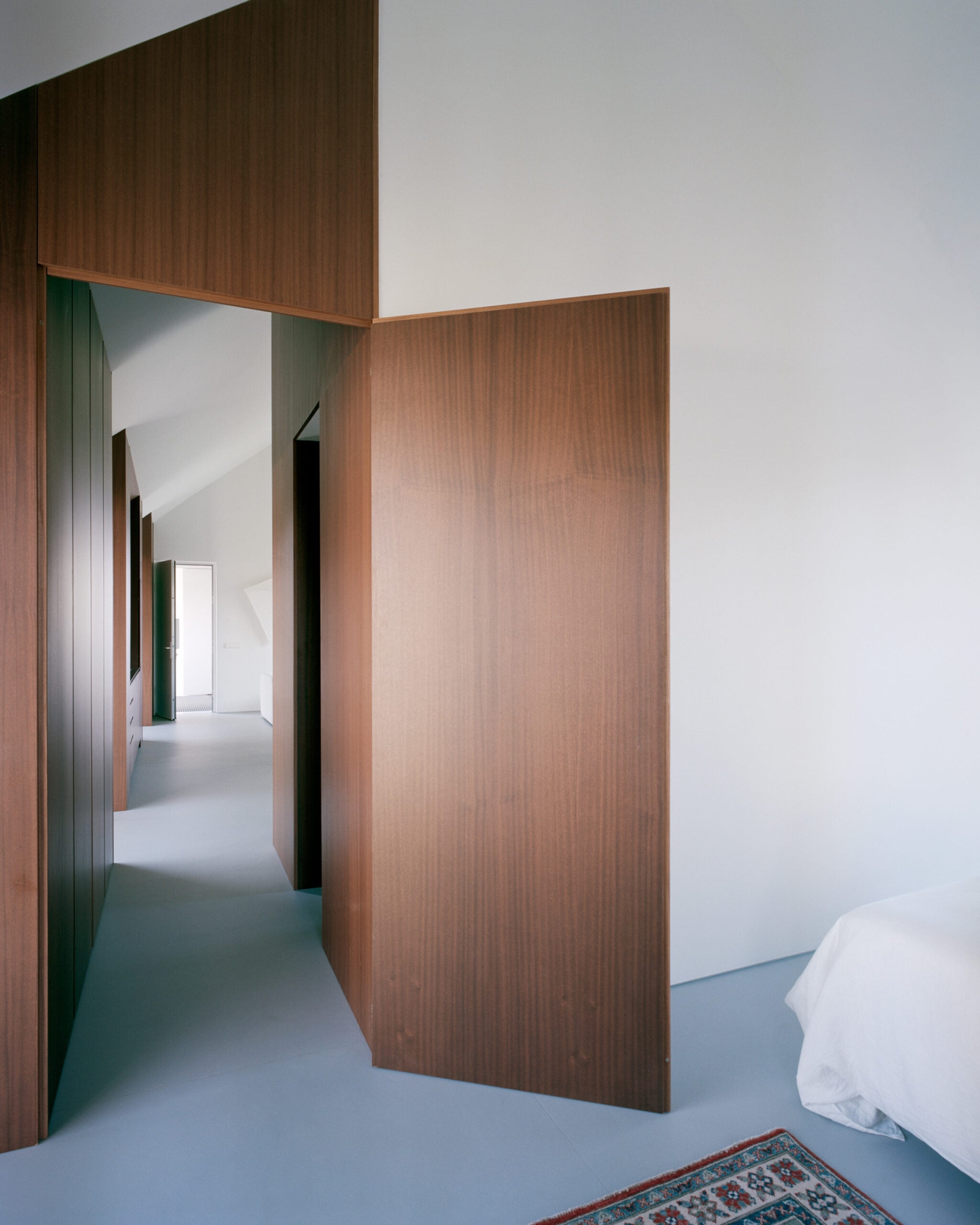
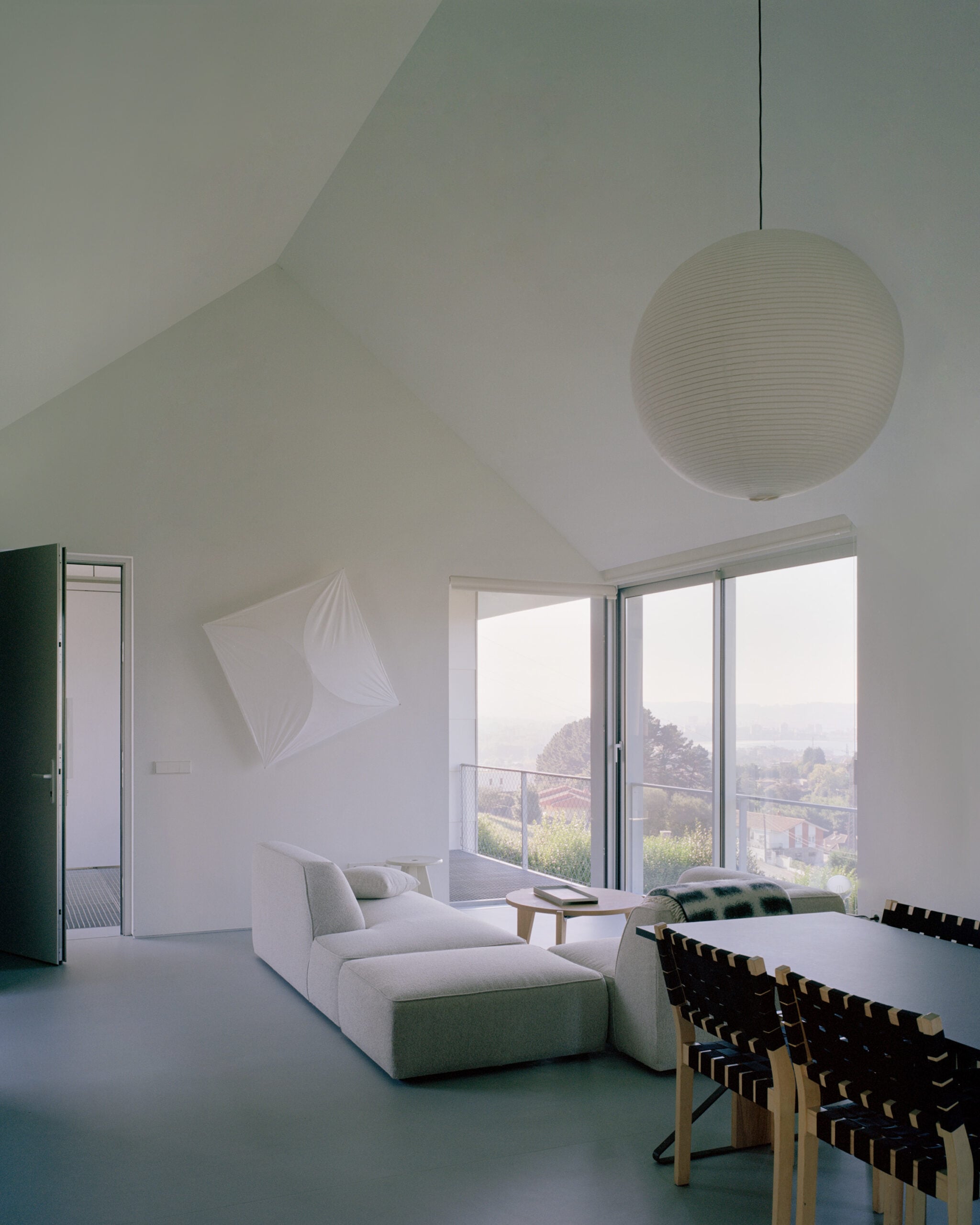
EM: I would have continued the industrial language inside, but the client wanted warmth. Her reference was John Pawson—something calm and minimal, but cozy. So there’s a clear contrast: the exterior is industrial and precise; the interior is warm, with custom cabinetry and a more familiar domestic language. It’s almost two worlds. There were some constraints from prefabrication—for example, we couldn’t use a continuous poured floor due to the modular construction. Instead, we used a sealed vinyl system to achieve a similar effect. But otherwise, the interior was more flexible and tailored.
FB: That contrast actually feels like a strength—it creates tension and richness, that otherwise would follow your more familiar aesthetics
EM: Yes, and sometimes you need that push from the client. Left to my own instincts, I might have made it more consistent [with the exterior]—but this tension makes the project more interesting.
A Lesson on Decision Making in Architecture
FB: Looking back, what did this project change in your approach?
EM: It fundamentally changes how you think about design. When the process is so defined, it shapes the architecture—dimensions, materials, structure. Design becomes inseparable from construction.
It also makes you more aware of architecture as a sequence of decisions rather than a singular idea. That’s why we documented the process in detail—it’s as important as the final result.
That’s probably the biggest lesson I’ll carry forward.
FB: Mil gracias Eduardo.
Would you like to comment on this article? Send your thoughts to: [email protected]
Latest
Viewpoints
Detroit Month of Design: A City’s Work in Progress
Now in its 16th year, the celebration offers insights into the Motor City’s ongoing accomplishments without glossing over its hurdles.
Projects
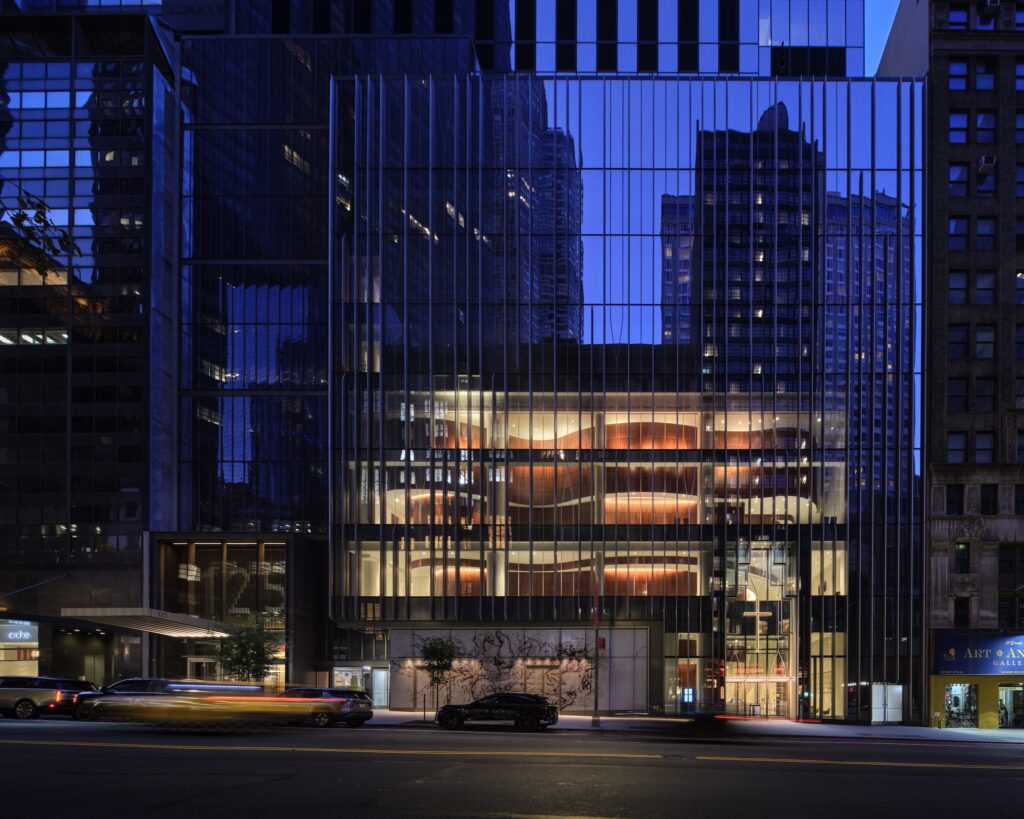
How a Hybrid Building Helped an Historic Manhattan Congregation Remain in Place
On Billionaire’s Row, FX Collaborative designed a new home for Calvary Baptist Church combined with an office tower.