


November 11, 2026
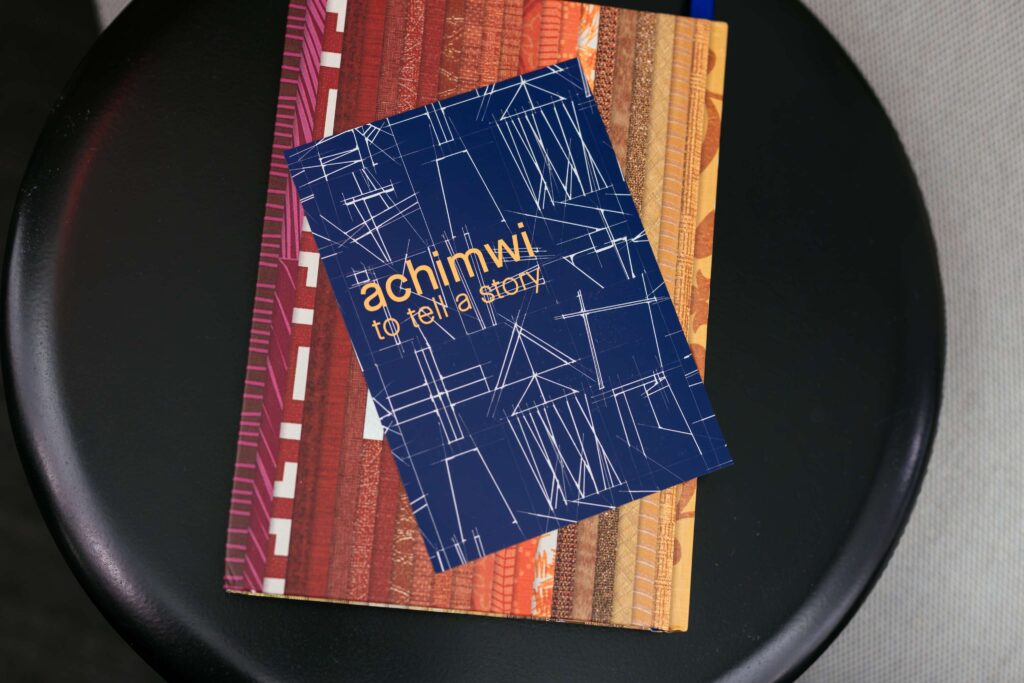
achimwi: Wolf Gordon Works with Lenape Artists
Tree and Garland
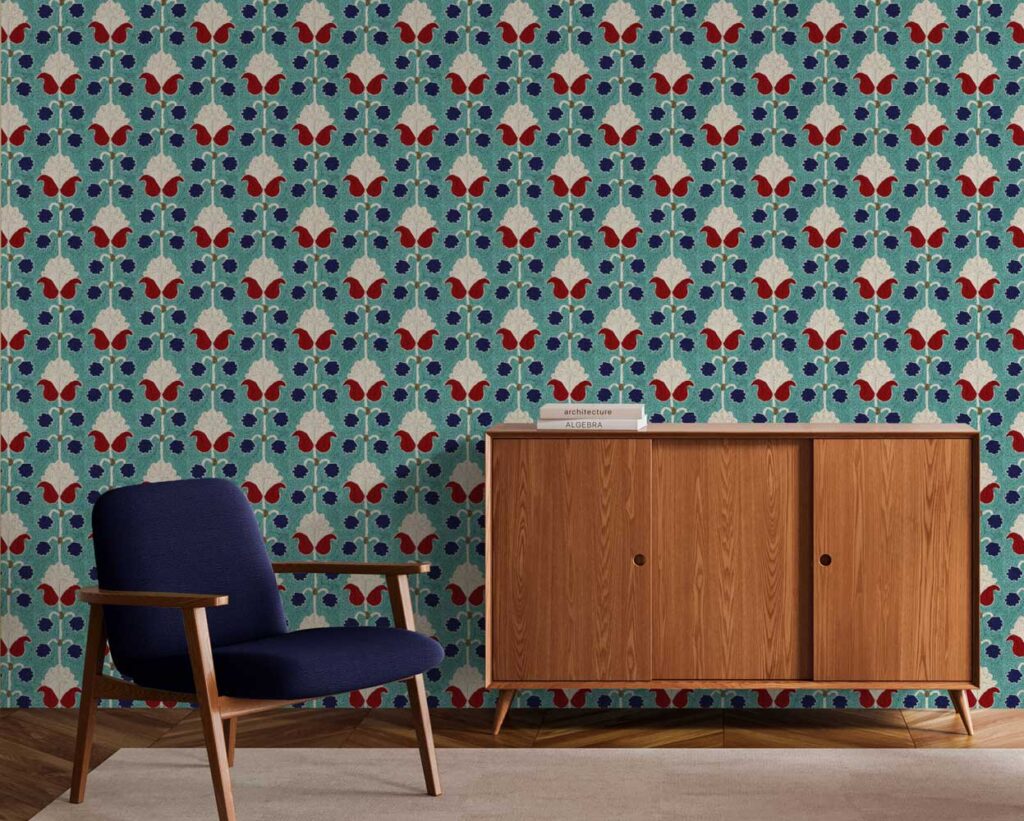
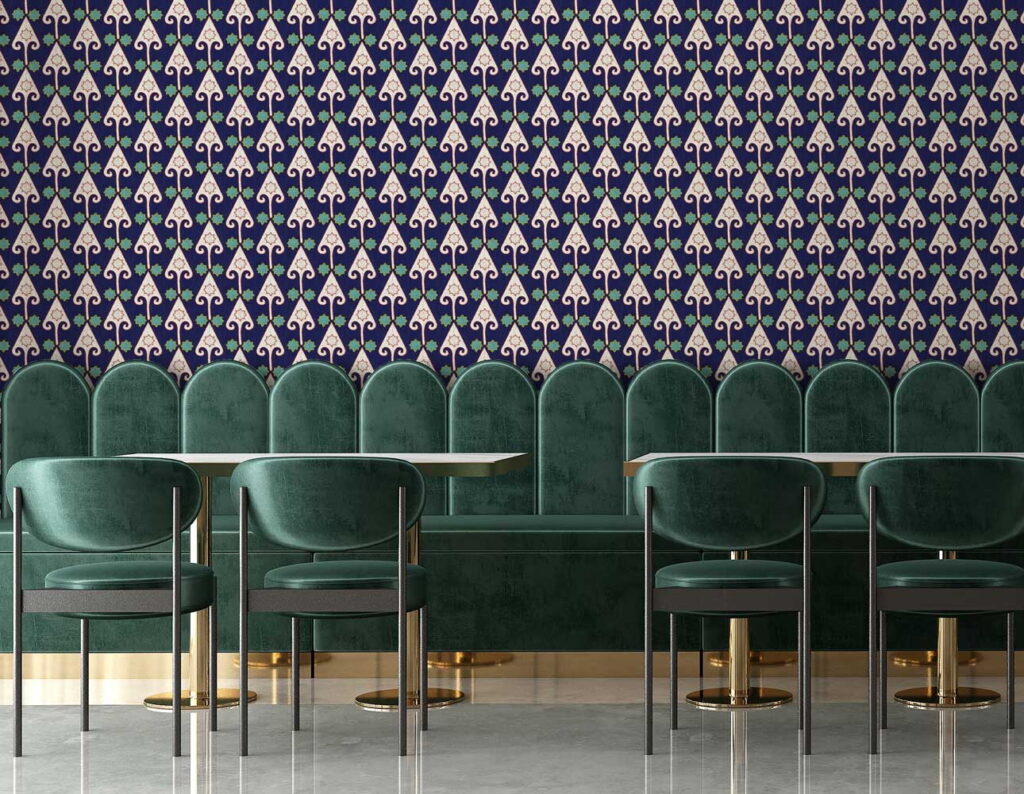
Tree and Garland by Annette Ketchum translates the graphic language of her intricate beadwork into wallcovering patterns. The designs draw from motifs found on ceremonial bandolier bags, garments that remain part of contemporary Lenape life. Ketchum understands them as living expressions of identity, passed down through generations and worn at community gatherings and celebrations.
To translate the beadwork, Wolf-Gordon photographed the original pieces at high resolution, capturing their patterns and dimensional qualities. The resulting wallcoverings use raised inks to suggest some of the tactile character of the beads, bringing the visual complexity of the original work into an architectural surface.
For Ketchum, the making process is inseparable from cultural continuity. Her sons and grandsons now wear her bandolier bags, and they return each year to participate in Powwows. The work therefore extends beyond ornament as part of an ongoing practice of generational transmission.
“It’s not easy, and it’s not simple. It’s a commitment. And it is patience and endurance, perseverance, and lots of prayers. Lots of prayers would go into these, because when you’re sitting there beading, it gives you that time to reflect,” Ketchum said.
Touching Leaves Woman
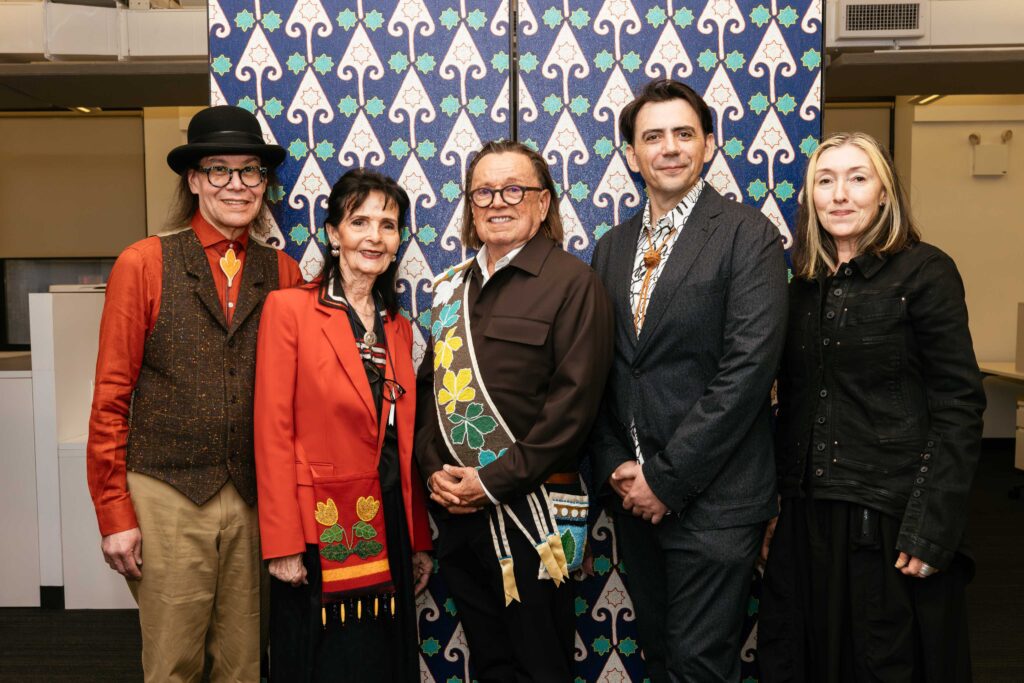
Composer Brent Michael Davids’ Touching Leaves Woman approaches the wallcovering as a musical score. The composition, written for four voices and birdroarers—an instrument Davids designed using a spinning piece of wood—honors Lenape elder Nora Thompson Dean, whose work preserving the Lenape language and culture inspired generations, including Joe Baker.
Rather than translating a conventional musical notation into a decorative graphic, Davids developed a spatial score that communicates how performers should enter, listen, and contribute to the composition. The notation is reproduced on a Bildenwood veneer wallcovering, bringing the visual structure of the music into an architectural material. The surface becomes both an image and an invitation to consider sound, collaboration, and collective experience.
“It’s a group listening project too; everybody reads a score. […] You have to listen to everyone else, when they come in and when they leave, to know when you’re supposed to add your part to the music,” explained Davids. For him, the work depends on relationships between performers rather than on individual expression. Each voice must respond to the others, making listening as important as playing. That principle also connects the composition to the broader intentions of achimwi: cultural knowledge is sustained through exchange, participation, and continuity.

Stomp and Messengers
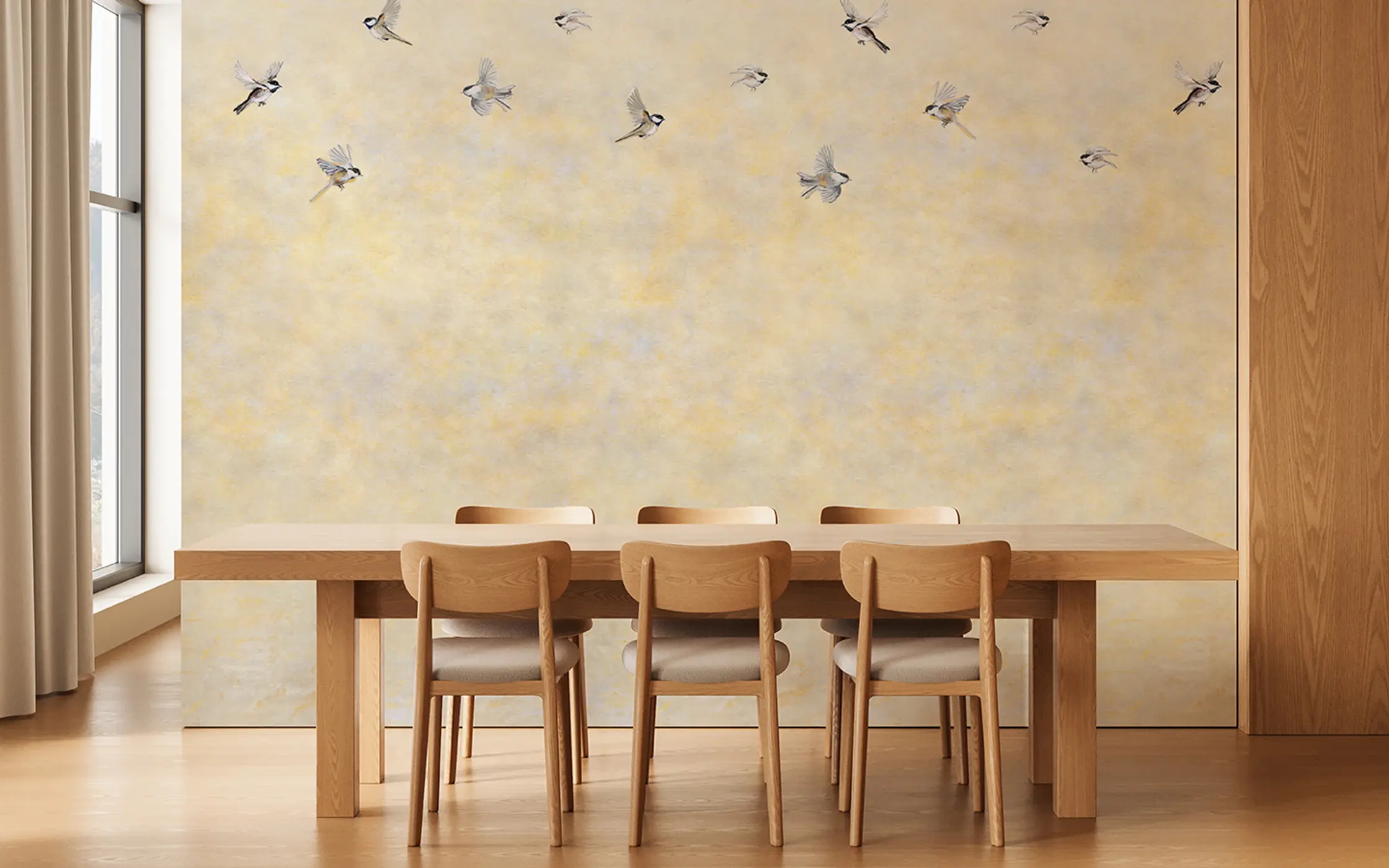
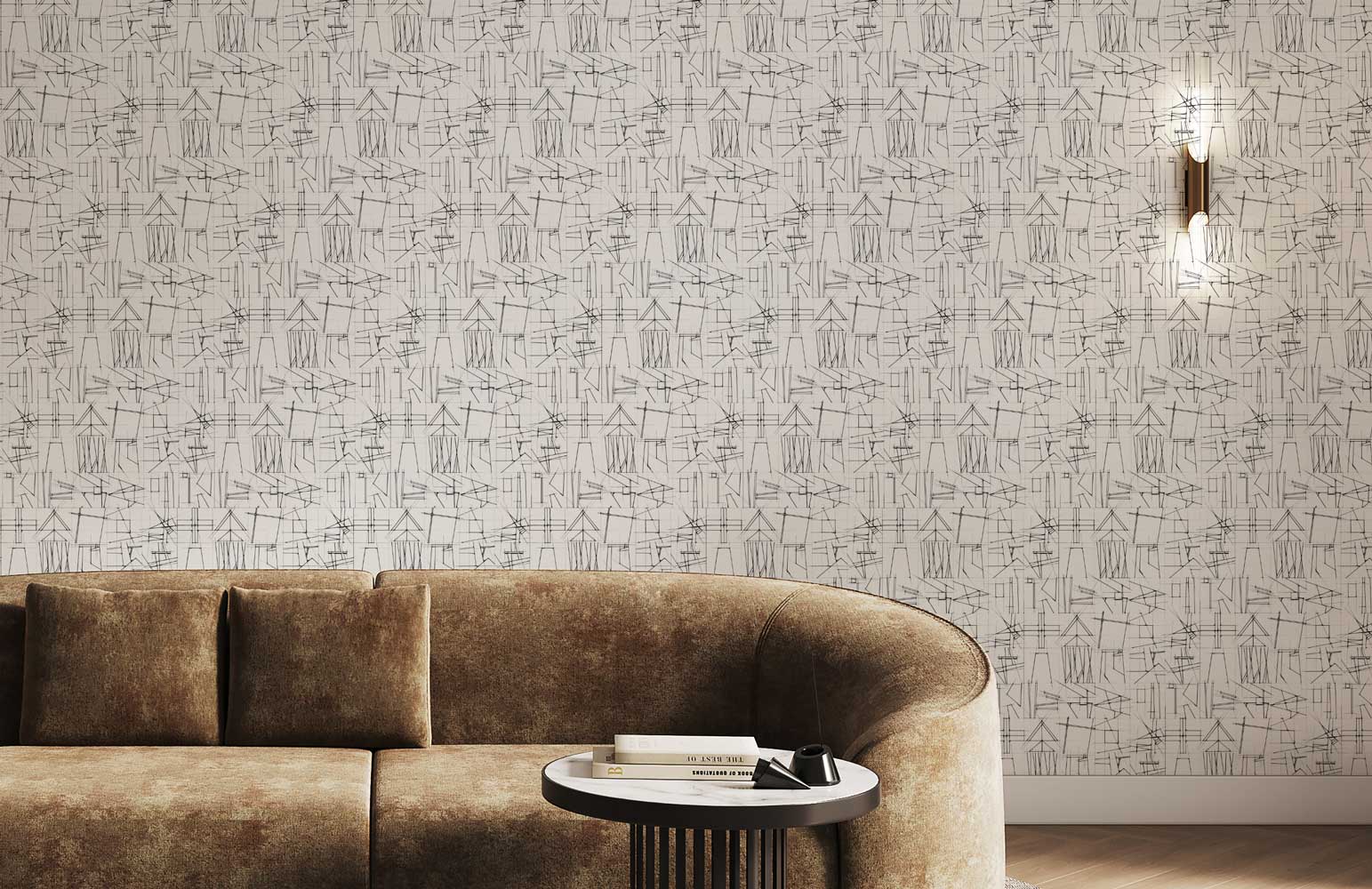
Artist and Lenape Center co-founder Joe Baker contributed two designs, Stomp and Messengers, each translating a different aspect of Lenape culture into a graphic surface. Stomp takes inspiration from the rhythms and footwork of traditional dance. Its composition evokes movement and collective performance, while raised inks add a dimensional quality that reinforces the design’s physicality.
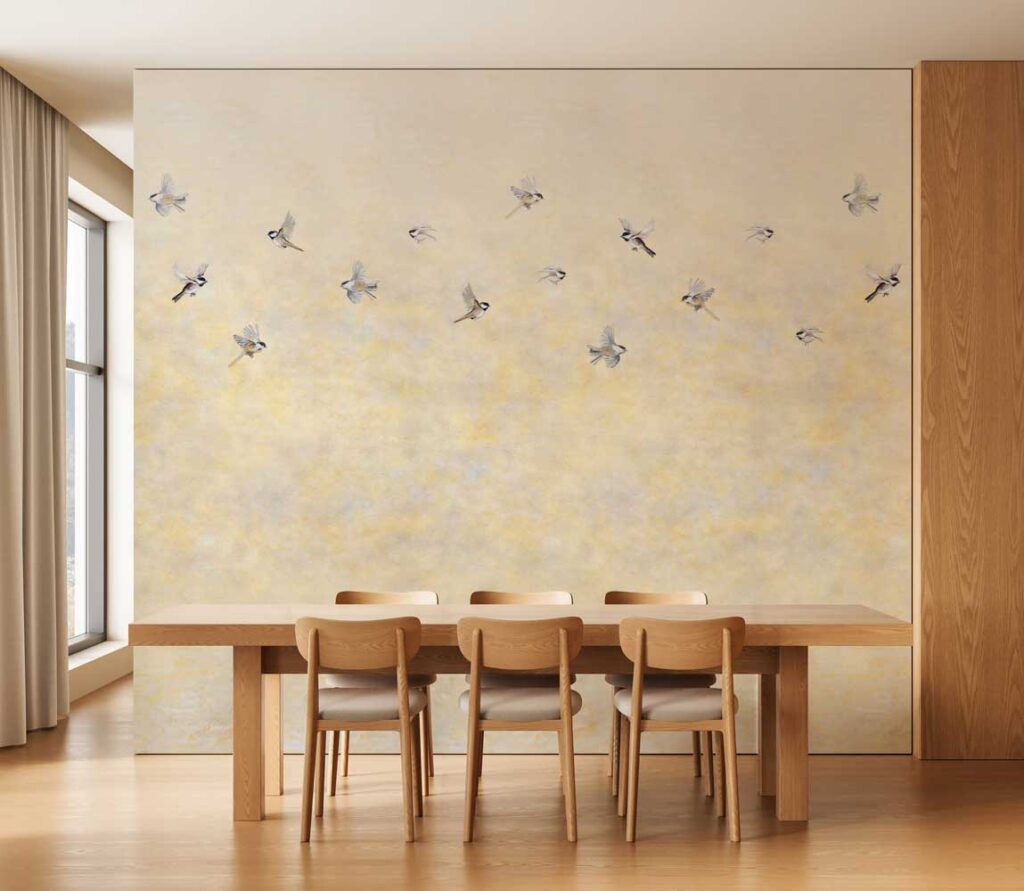
Messengers draws on the chickadee, a bird understood in Lenape culture as a messenger. Set against a golden ground printed on silver Mylar, the design combines symbolic meaning with a reflective, contemporary material treatment.
Baker sees the wallcoverings as an opportunity to challenge the ways Indigenous art is categorized and presented. Too often, he argues, Native cultural production is framed as a historical artifact or craft, rather than as an evolving artistic practice. The collection instead places Lenape visual language within contemporary design, without severing it from its cultural origins.
“Culture and tradition is forward. It’s informed by the past, by the history, but it also responds to the future. Lenape epistemology is about the future,” Baker adds.
Lenapehoking and The Giving of Tobacco
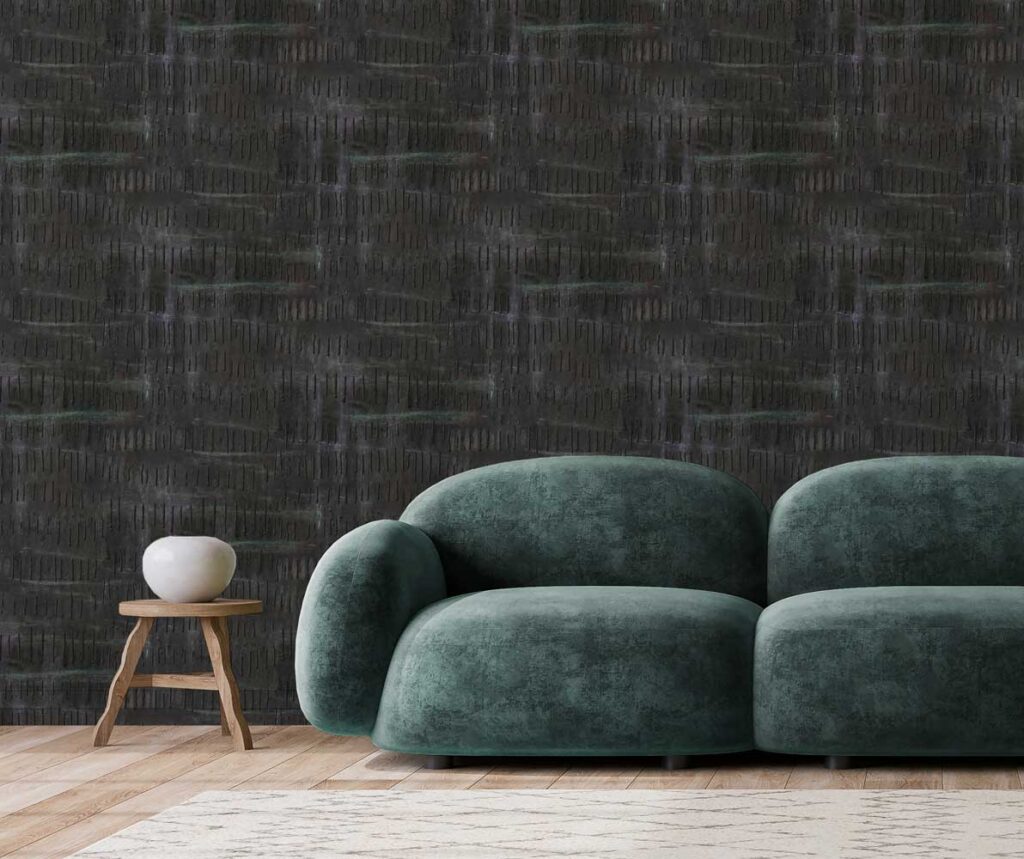
Created by Ahchipaptunhe, the pieces explore the relationship between land, memory, and cultural identity. For Lenapehoking, the artist drew on aerial photographs and road maps of Mid-Atlantic towns whose names retain traces of Lenape language. Abstracted into lines, pathways, and layered color, these references become a visual mapping of ancestral territory—one that challenges conventional cartographic representations by foregrounding Indigenous presence.
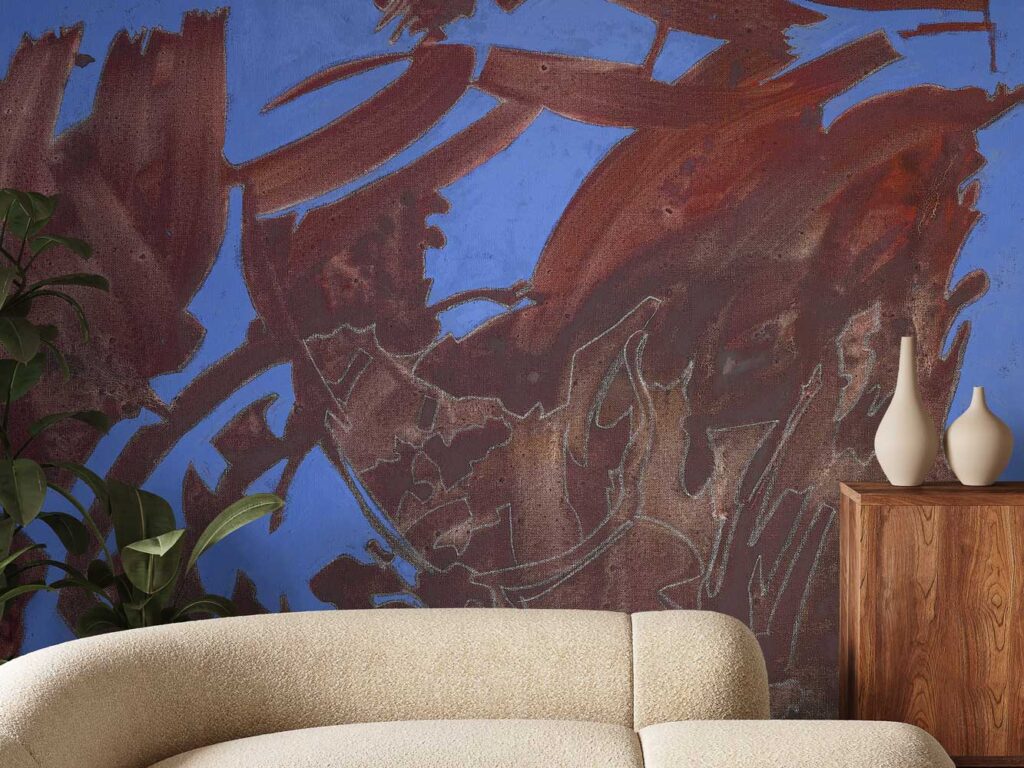
The Giving of Tobacco, meanwhile, draws on an oil painting that treats tobacco as a traditional medicine and a gesture of gratitude. The work reflects the Lenape understanding that taking from the land carries an obligation to give back.
“Sometimes I want to put so much of my story into it, but also I need to be able to express that story to you or to others. You might not know it as I do, so how can I go back and give them the necessary details?” Ahchipaptunhe added.
Translating the original paintings into wallcoverings required selection and interpretation. Working with Wolf-Gordon’s Customs Lab, Ahchipaptunhe considered which elements of each composition could carry the story into a new medium without losing its meaning.
Would you like to comment on this article? Send your thoughts to: [email protected]
Latest

Viewpoints
3 AI Architecture Tools Rethinking Workflows
From consolidating AI models to rethinking BIM and automating drawing-to-model conversion, tools like xFigura, Motif, and QikBIM target different points in architecture’s increasingly fragmented digital workflow. The g…
Profiles
Toni L. Griffin Is Reimagining What a Just City Can Be
The architect, urban planner, and 2026 ULI Prize for Visionaries in Urban Development recipient has spent decades developing frameworks for reparative, justice-centered urbanism. Through the Just City Index, her practice…