



February 9, 2026
Emergent Vernacular Architecture Studio Builds for Community Resilience
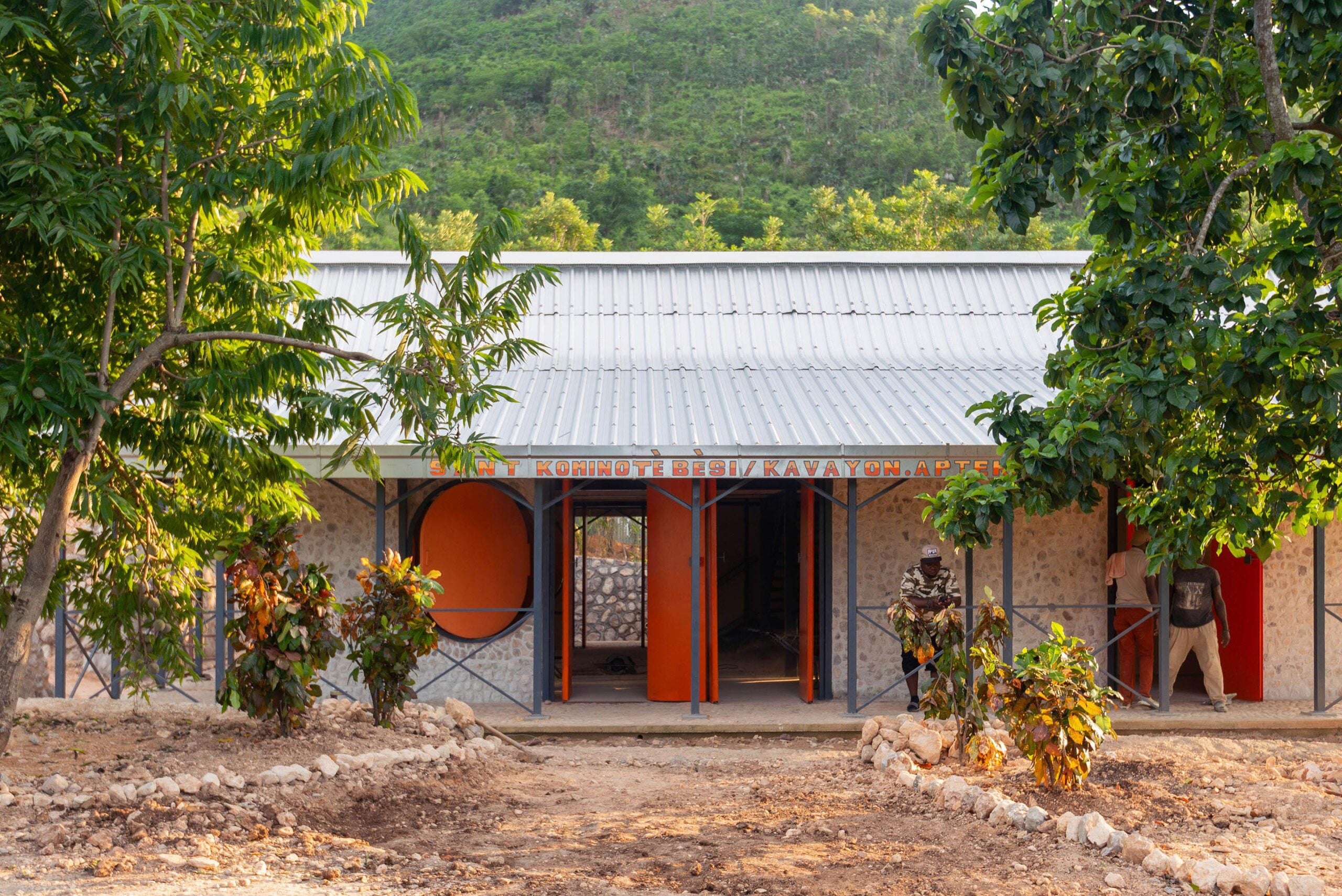
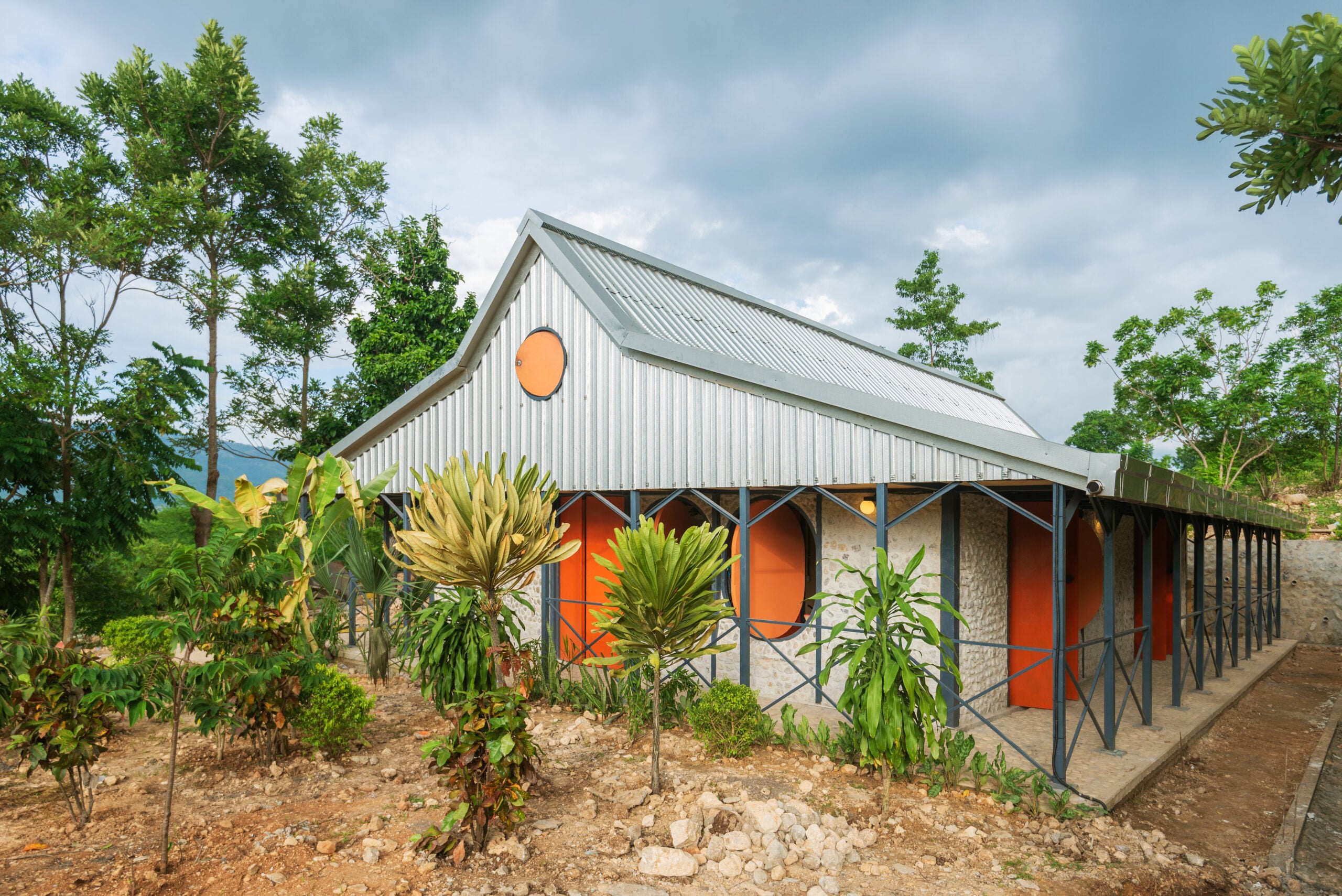
Against this backdrop, the two-year construction of the project in the rural community of Bercy-Cavaillon was also beset by further hurricane warnings, flooding, soaring inflation, and shortages of materials and fuel. “Finding alternative and resilient ways of building became an urgent necessity,” says Andrea Panizzo, co-founder of the practice, which is also known as EVA Studio. Its response was to construct the two-story building—including a multipurpose hall, an office, and a cafeteria on the ground floor, with storage and a dormitory above—with a combination of a reusable steel frame and local materials, such as river stones and earth plasters for seismic and hurricane resistance and easy local replication and maintenance. “We drew on local know-how in steel work while using as many materials as possible from the region,” he says. “We wanted to prove that it was possible to build in a very remote place with something other than concrete, which has come to represent modernity for many.”
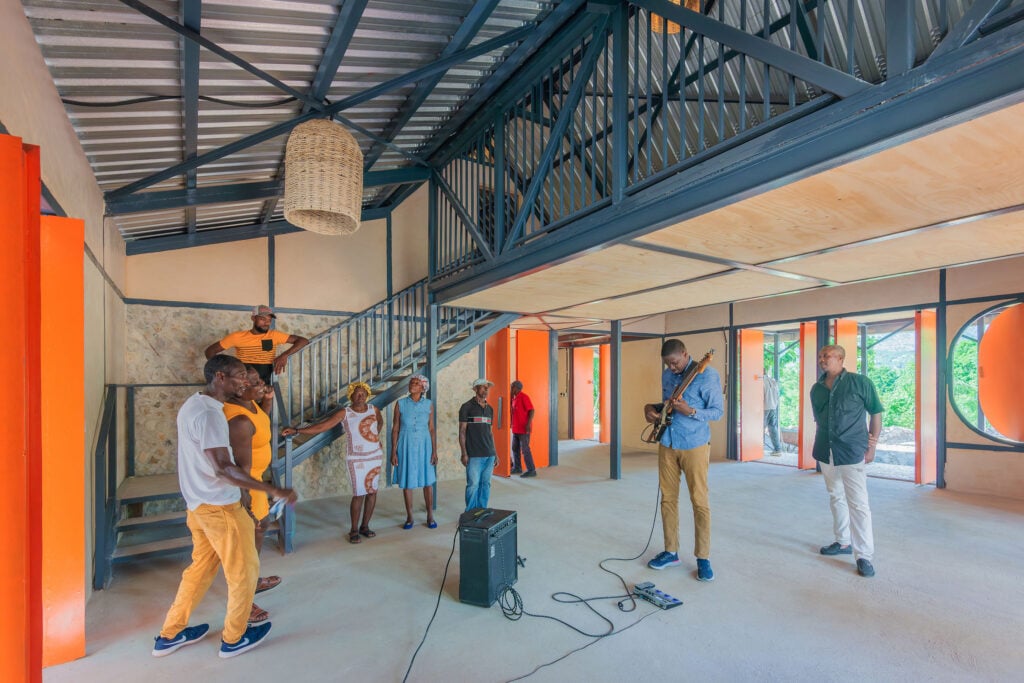

But most of all, the team learnt about community resilience. “At one point the client [FOKAL, which supports democracy, education, arts, and community development in Haiti] ran out of funds for the project and we wondered how we could possibly finish it,” Panizzo explains. “But the community said that all they needed was a few thousand Euros to provide meals to volunteers. There’s a Haitian Creole term, konbit, which refers to collective, non-monetary work for a common cause. It was remarkable to see local residents come together to support the construction—a reminder that the solutions to a problem can almost always be found in a community.”
Italy-born Panizzo began working in Haiti several years before founding EVA Studio with Simone Pagani in 2015—but his journey there took a circuitous path. After graduating with a Master of Architecture from the Politecnico di Milano in 2005, he worked for well-known practices, including Bennetts Associates in London and Massimiliano Fuksas Architects in Rome, but by 2010 he had grown disillusioned with the industry and decided to take a hiatus. He travelled to Bolivia to work with a local organization helping children who used to live on the streets, where he met a collective of architects from the UK who were working on an arts center for the organization. He decided to lend a hand. “I started connecting the dots,” he says. “I realized that architecture could serve the majority, not just the privileged few. It could add value to places within some of the most marginalized communities.”
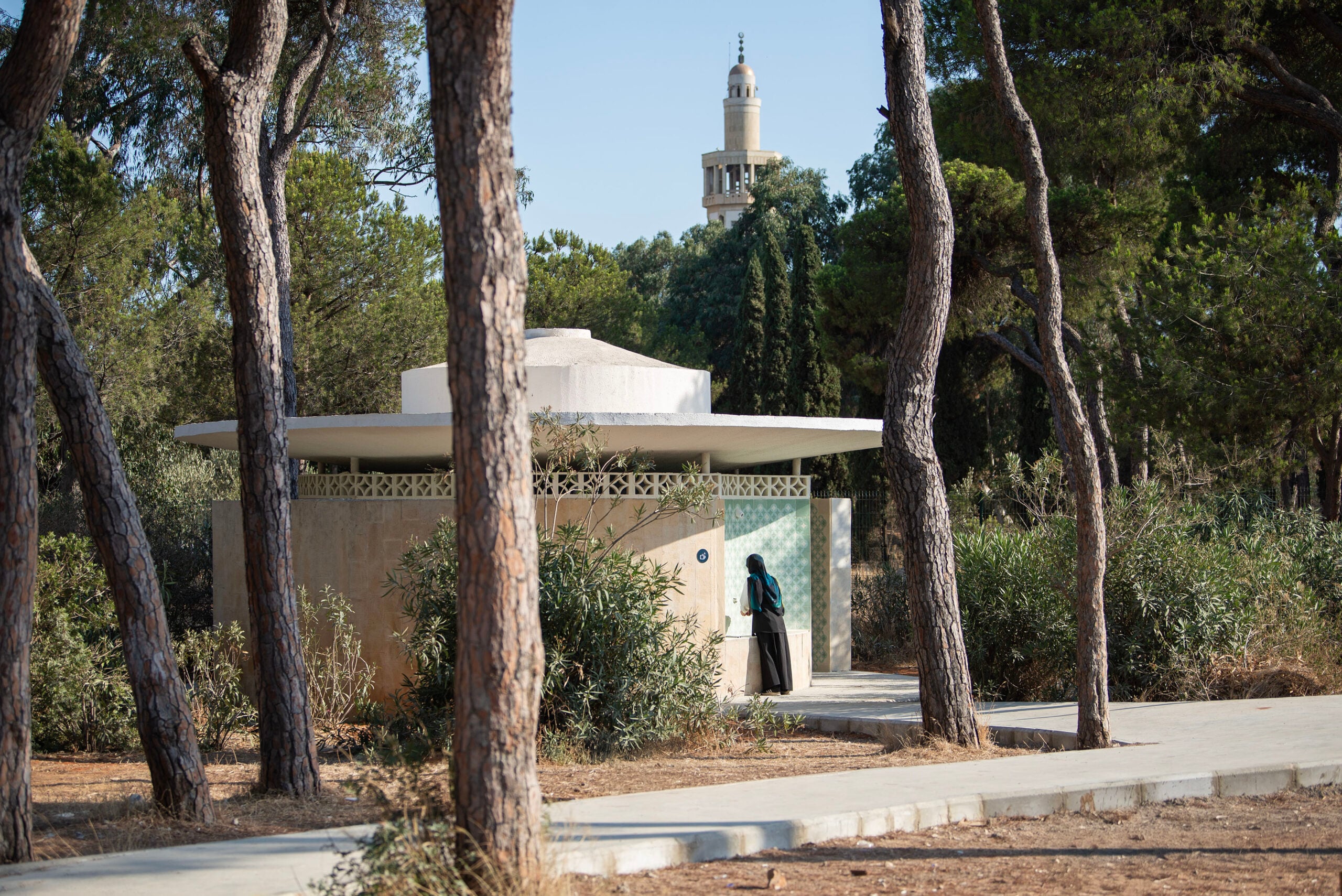
After the earthquake devastated Haiti that year, he joined nonprofit Architects Without Borders to help rebuild the country, before working with a local contractor in rural areas for several years, then starting EVA Studio. Today, it works on public spaces for the communities that need it most, everywhere from Haiti to Morocco and Comoros, where Panizzo is currently masterminding the construction of classrooms for a series of schools, using unfired clay bricks.
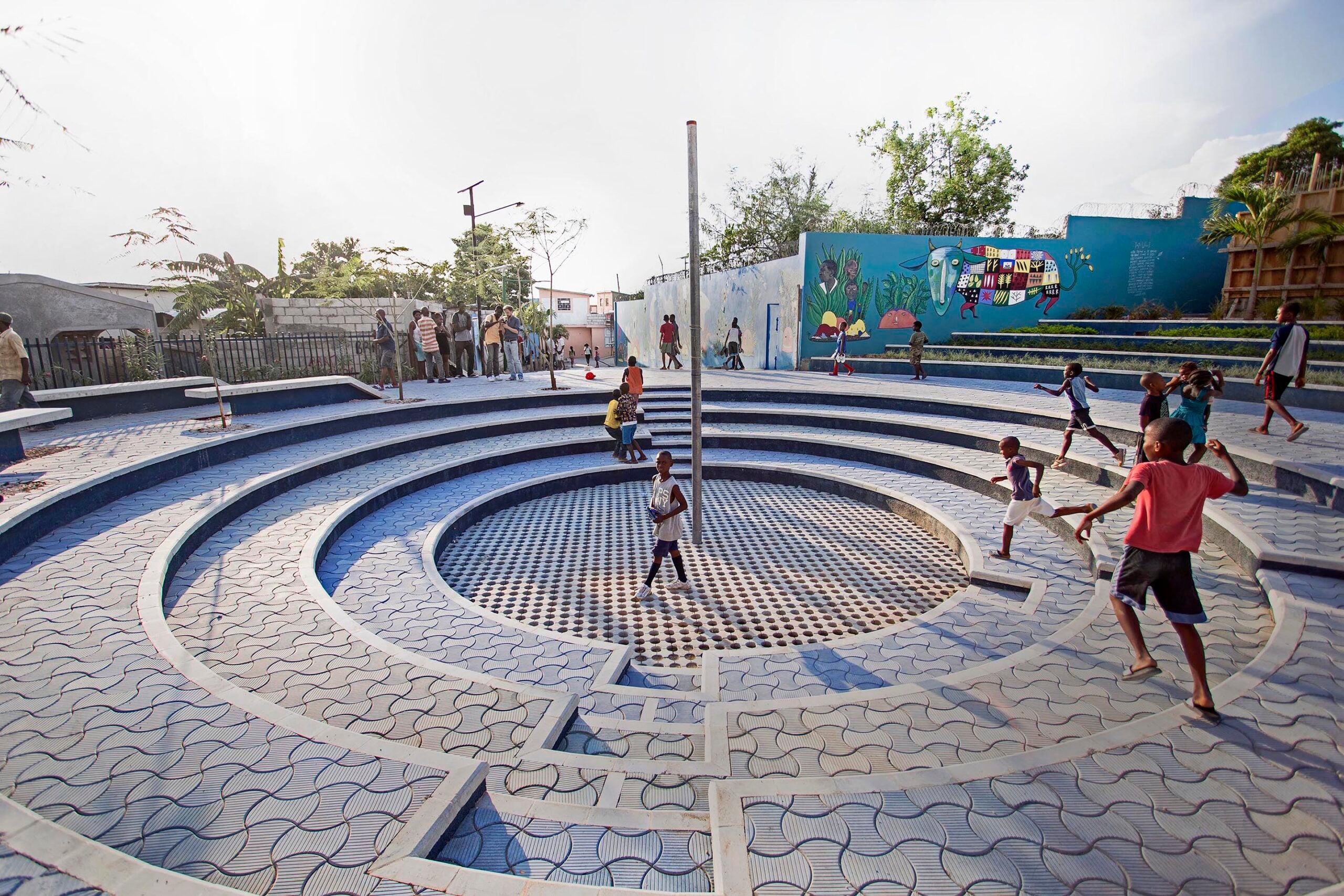
“Every project begins with an extensive process of community engagement,” he says. “Participation gives residents a sense of ownership and pride.” One of EVA Studio’s early projects was the 2016 Tapis Rouge in Carrefour-Feuilles, an informal neighborhood on the outskirts of Port-au-Prince badly damaged by the earthquake and with almost no shared public spaces. At its heart is an open-air amphitheater developed and built with the help of local residents, providing them with a space in which to gather, sheltered by Flamboyant trees. “What I’ve learned from Haiti is that civic space is where social ties are created and resilience is formed,” says Panizzo. This subtle intervention, blending with the topography of the landscape, is ringed by a wall painted with murals by local artists and children.
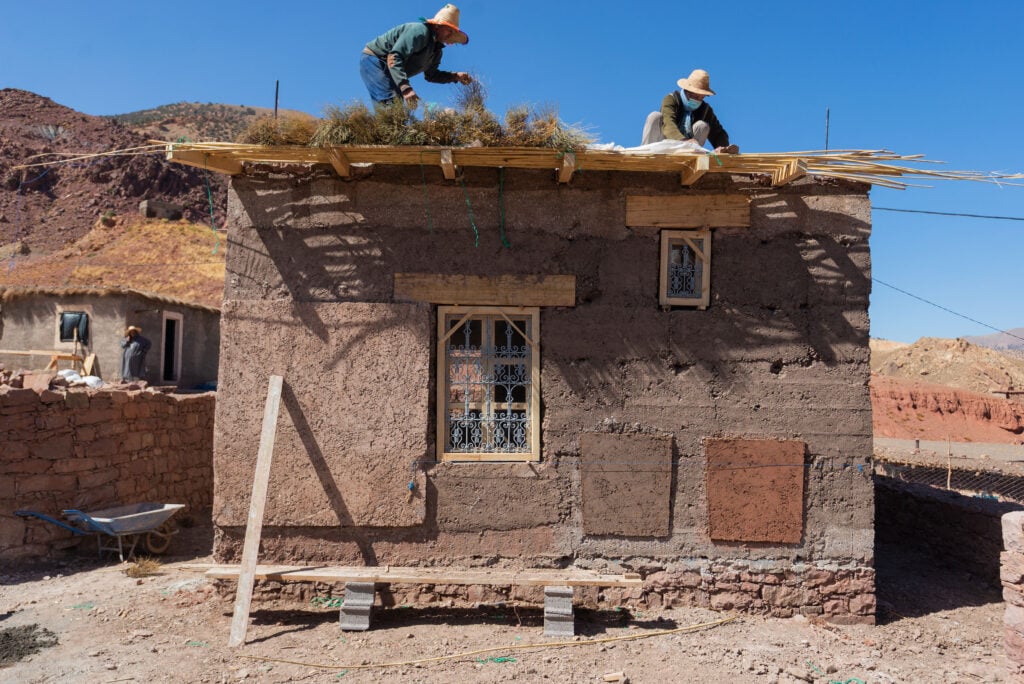
The practice’s projects, as its name suggests, are shaped by local vernaculars, such as the centuries-old tradition of rammed earth in Morocco’s Atlas Mountains, where it is building a preschool, an artisanal center, a teacher’s house and a public garden with Denmark-based non-profit, the Re:Arc Institute, using excavation spoils. In the Bercy-Cavaillon project, it has taken cues from the Haitian galata, a cross-ventilated granary traditionally used for storing crops, while creating new recipes for earth plasters that draw on the past. “The principles of resilient, climatic architecture are embedded in the vernacular,” he says. “Our role as architects is to look at what’s possible with local knowledge, skills, and materials.”
Would you like to comment on this article? Send your thoughts to: [email protected]
- No tags selected
Latest
Viewpoints
Detroit Month of Design: A City’s Work in Progress
Now in its 16th year, the celebration offers insights into the Motor City’s ongoing accomplishments without glossing over its hurdles.
Projects
How a Hybrid Building Helped an Historic Manhattan Congregation Remain in Place
On Billionaire’s Row, FX Collaborative designed a new home for Calvary Baptist Church combined with an office tower.