



May 4, 2026
BLDUS Unveils a Cork-Wrapped Home in a Washington D.C. Alley
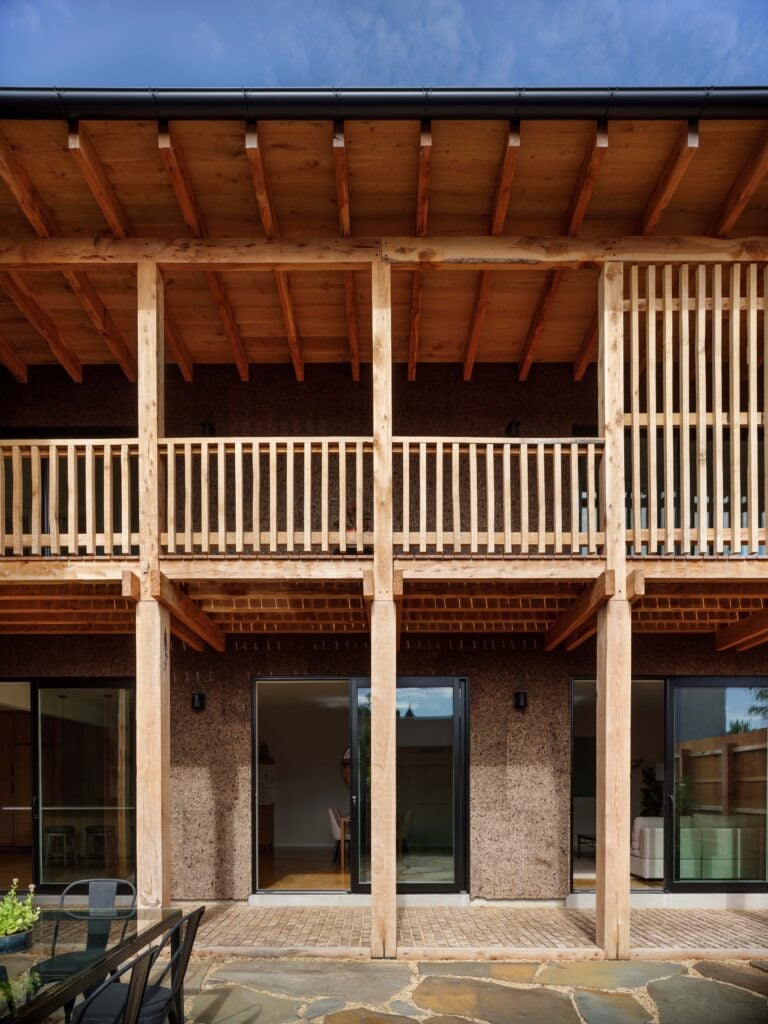
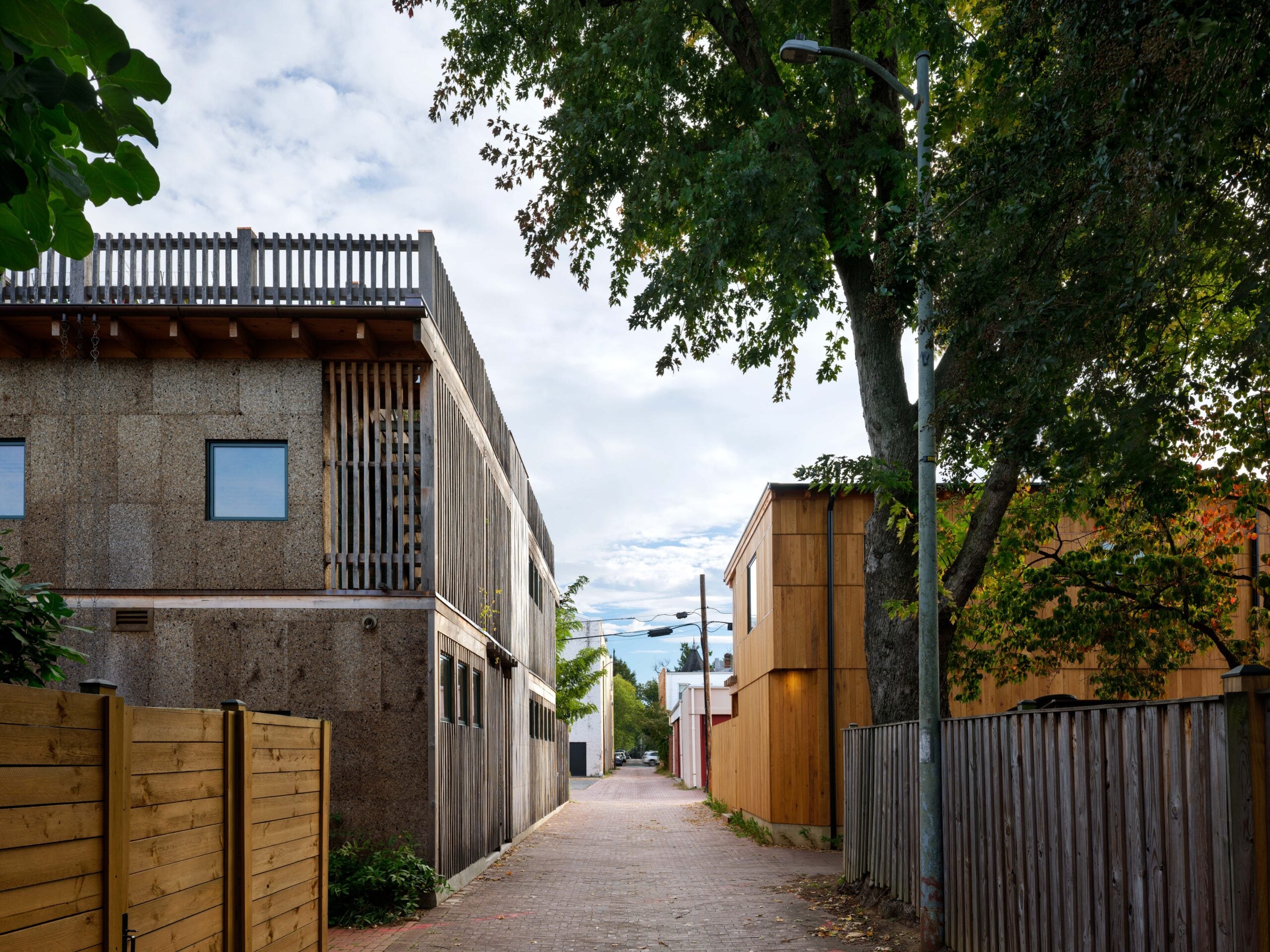
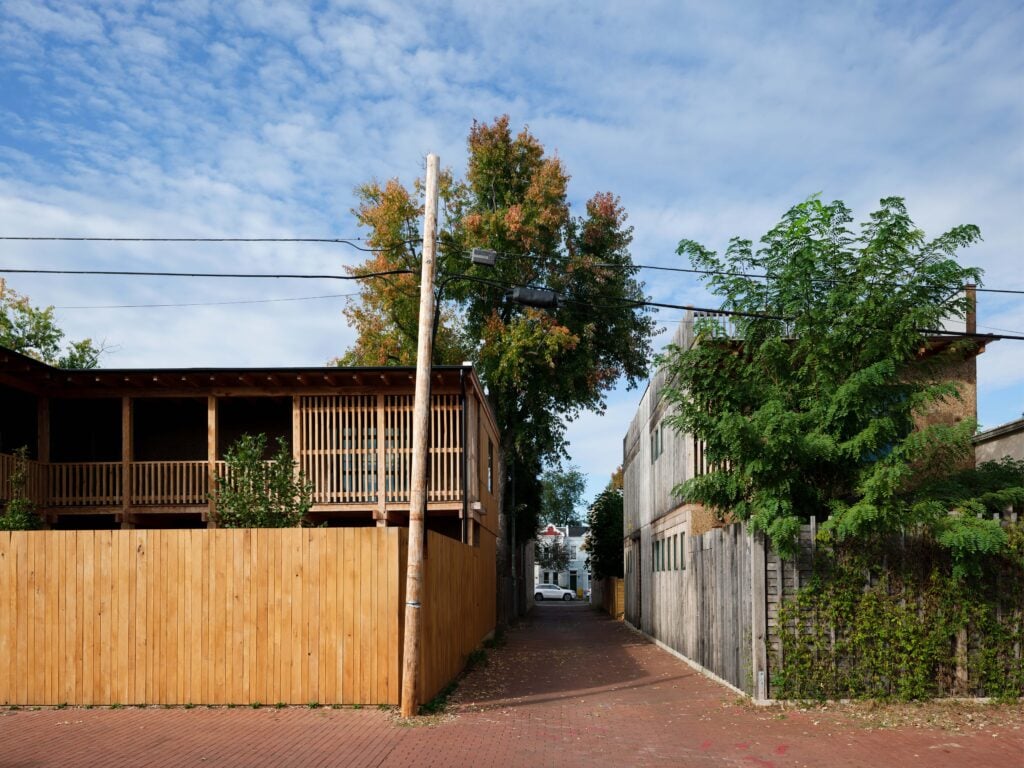
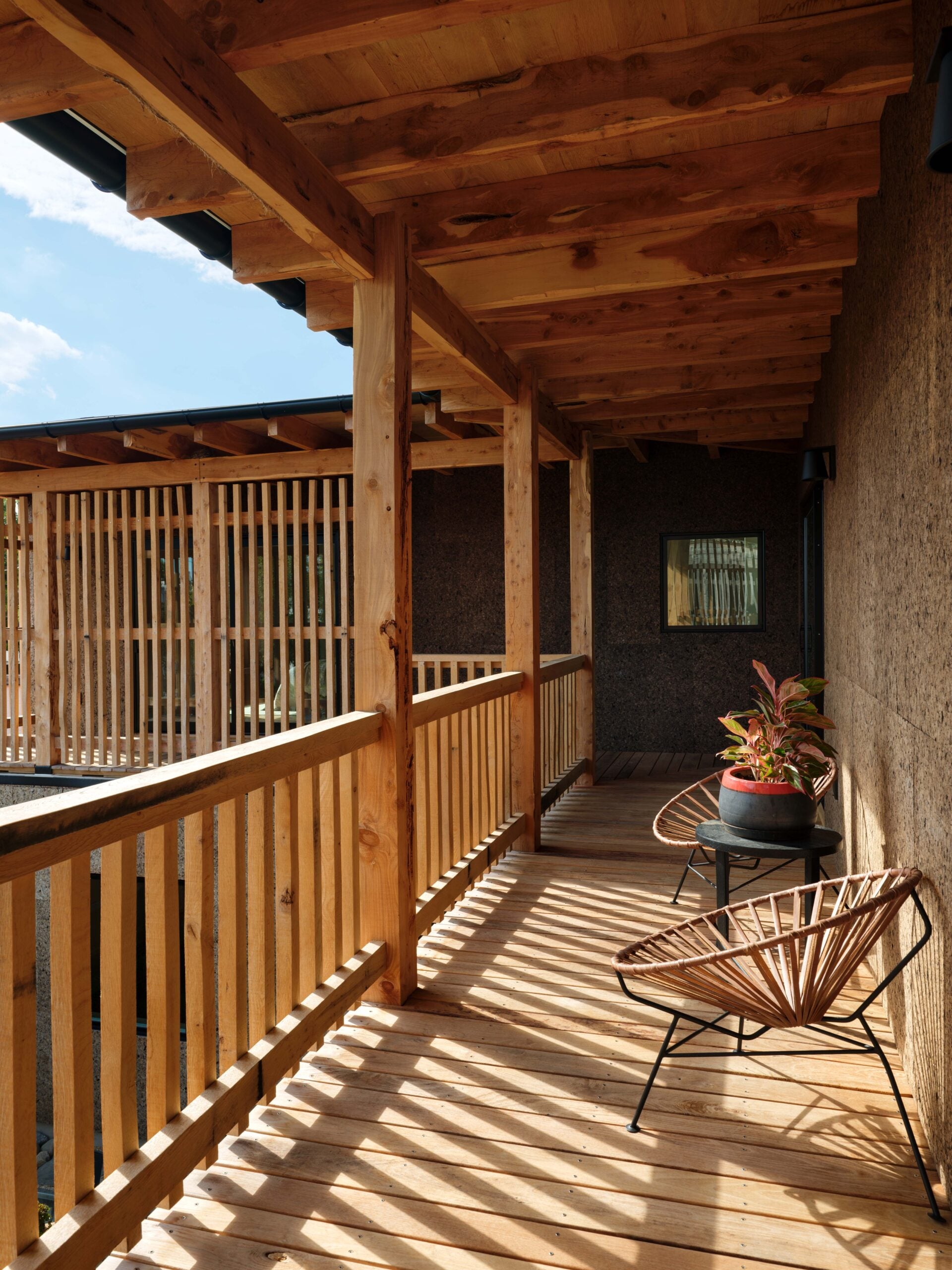
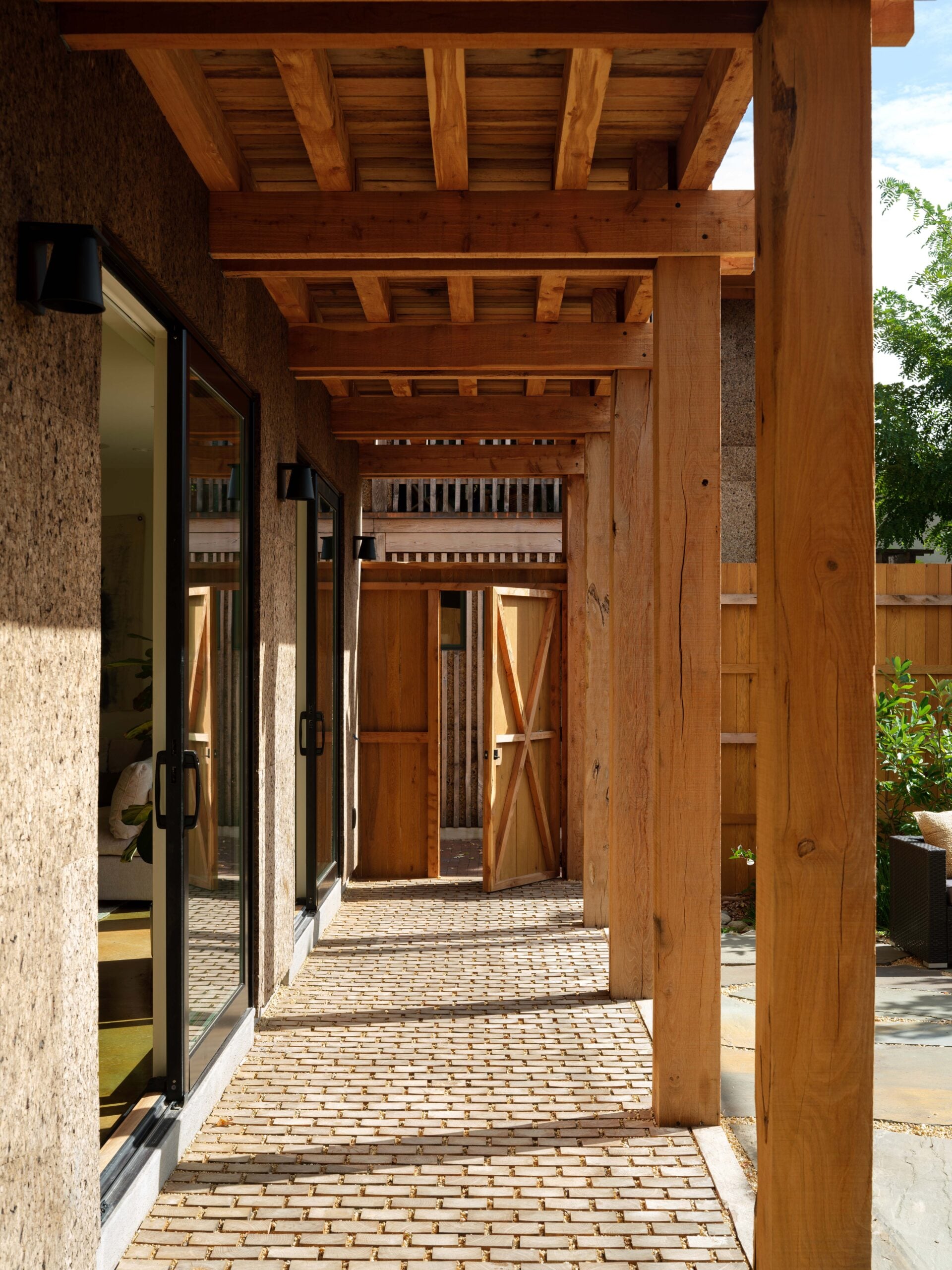
The home hugs the southeast corner of the 2,700-square foot parcel in the alleyway behind duplexes and townhomes. The L-shaped plan wraps around a corner garden with a double-decker exterior zone that forms a covered porch on the ground floor and a long balcony on the upper level.
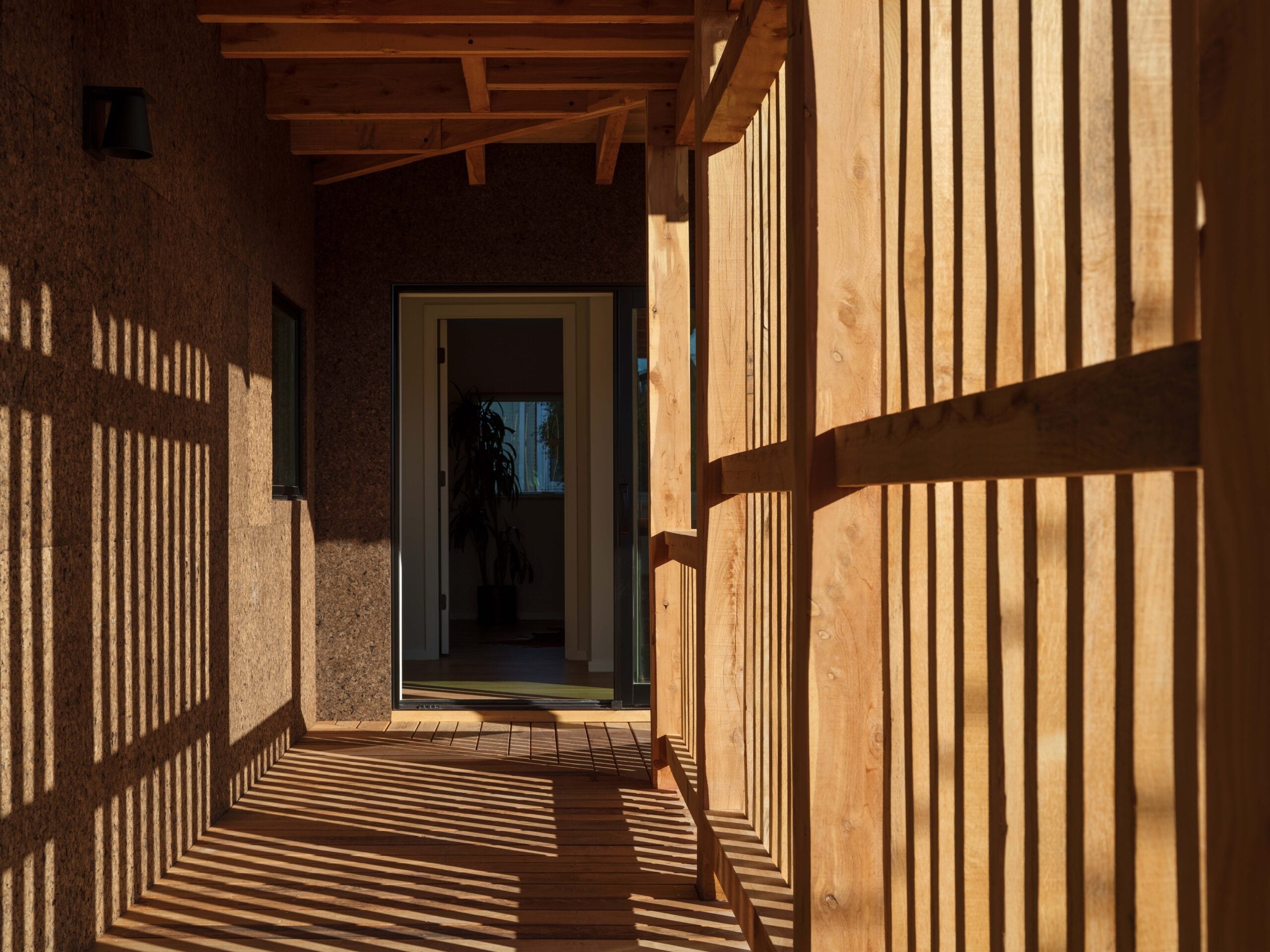
“We continue to be fascinated by porches, how they act as thresholds and layers and spaces and circulation all at once,” Linn explains, “and by palisades, which allow fences and buildings to blur together into the same things.”
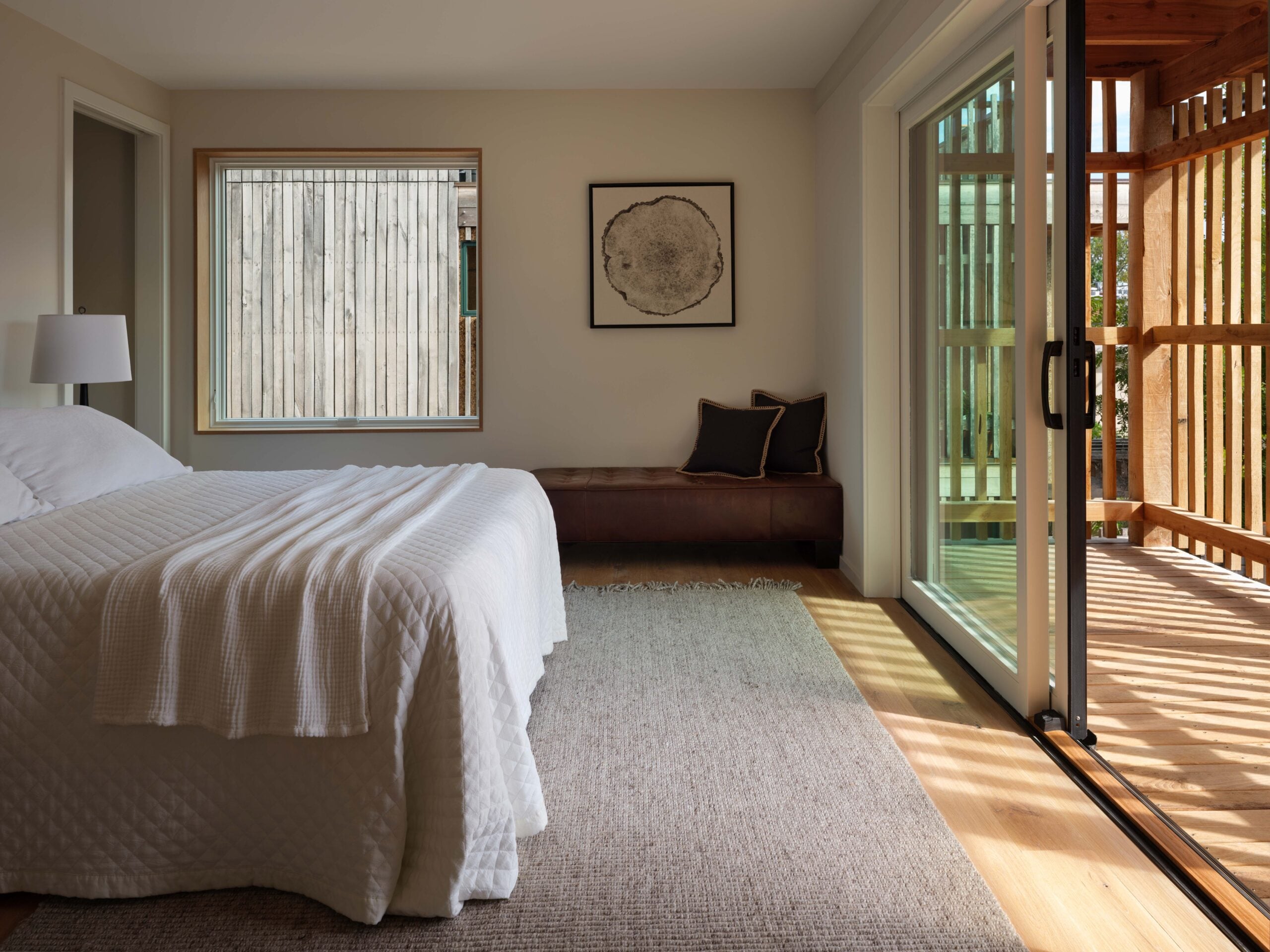
Inside, the ground floor contains a garage and open-plan kitchen, dining, and living space that open to the porch through sliding doors. Upstairs, four bedrooms and three bathrooms are arranged on a single-loaded corridor that bends around the balcony, bringing light in from multiple sides of the house.
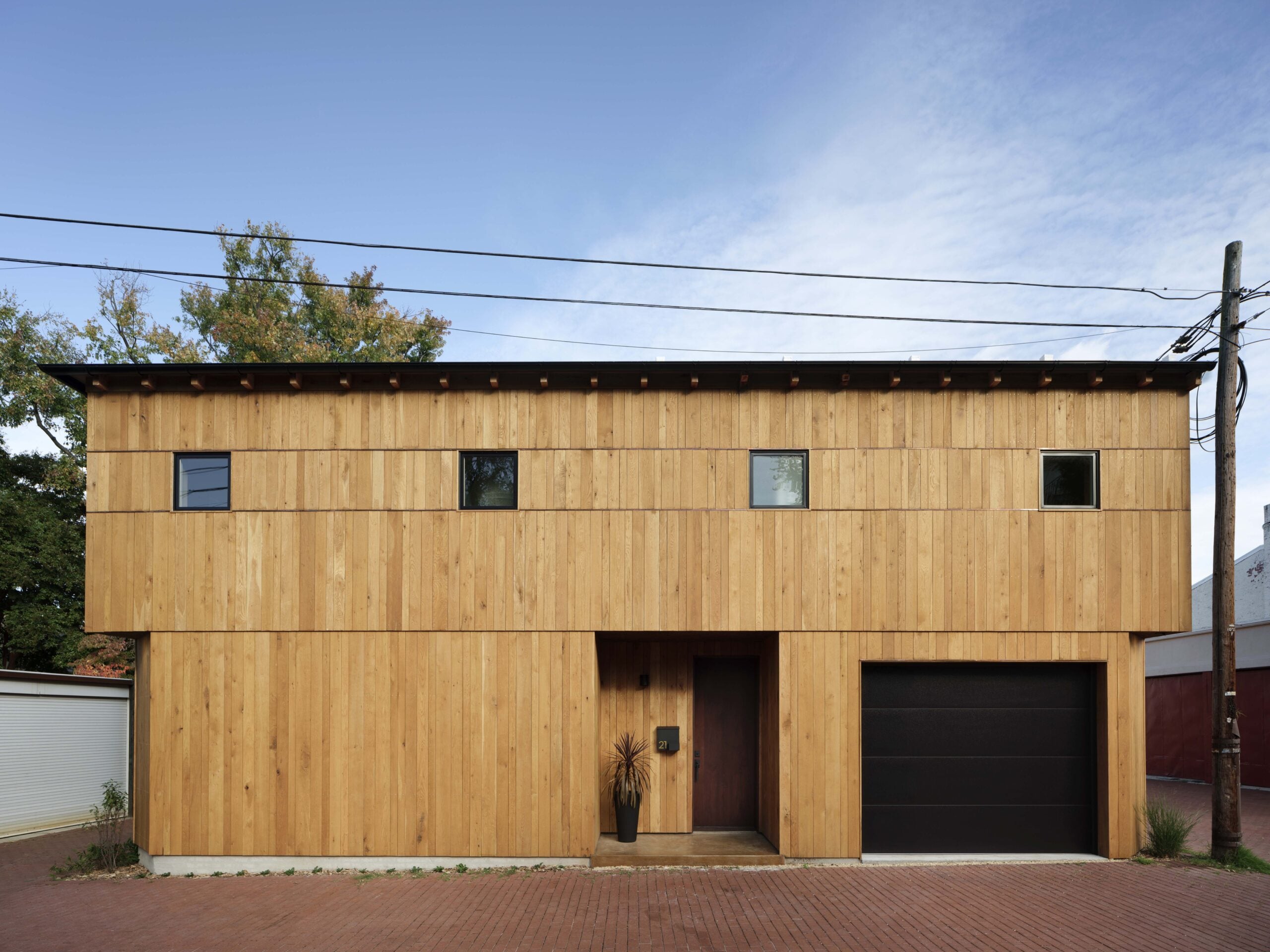
The corners of the ground floor have been chamfered to accommodate navigation and infrastructure in the alley. In addition to adding nuance to the home’s silhouette, the chamfer changes the footprint from a rectangle to an octagon—a shape present in the designs of famous U.S. architects like Thomas Jefferson, Frank Lloyd Wright, and Orson Squire Fowler.
“In these back alleys, wood fences are the vernacular language and have been since the founding of DC,” Becker notes, calling out the locally sourced redwood, cedar, and black locust boards that transition from the garden boundary to the building enclosure. “Eucalyptus House embraces its court by embracing the language of the fence.”
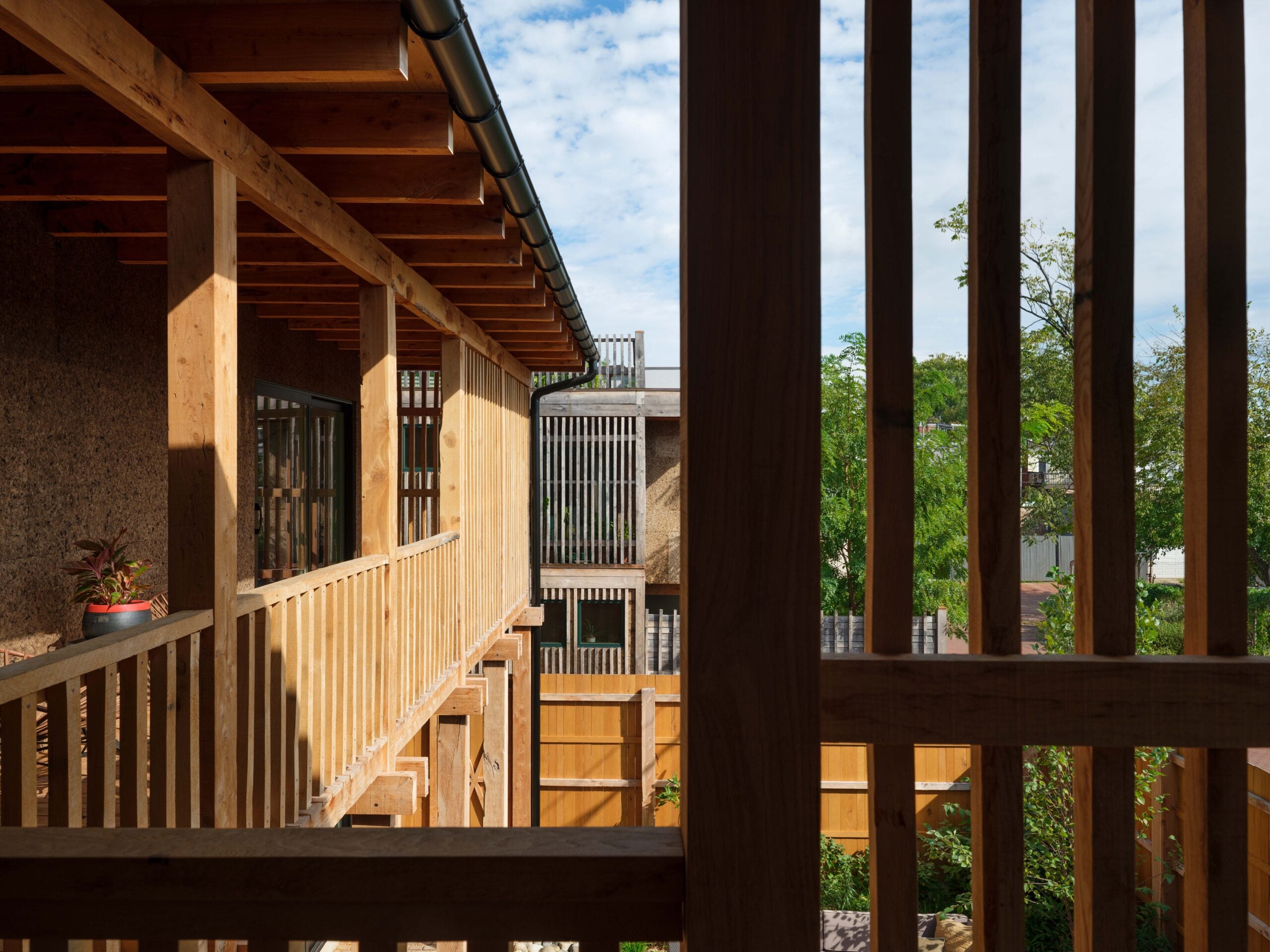
Eucalyptus House is framed with BamCore’s hybrid eucalyptus-wood plywood panels that reduce thermal bridging and create a continuous insulation cavity within the wall assembly that is then wrapped in insulative cork cladding.
“The resulting envelope is a highly insulated and tightly sealed shell that keeps conditioned air inside the house, reducing the demand for newly created conditioned air,” says Linn. “During shoulder seasons, the screened sliders facing the garden can be opened to bring the outdoors into the living experience.”
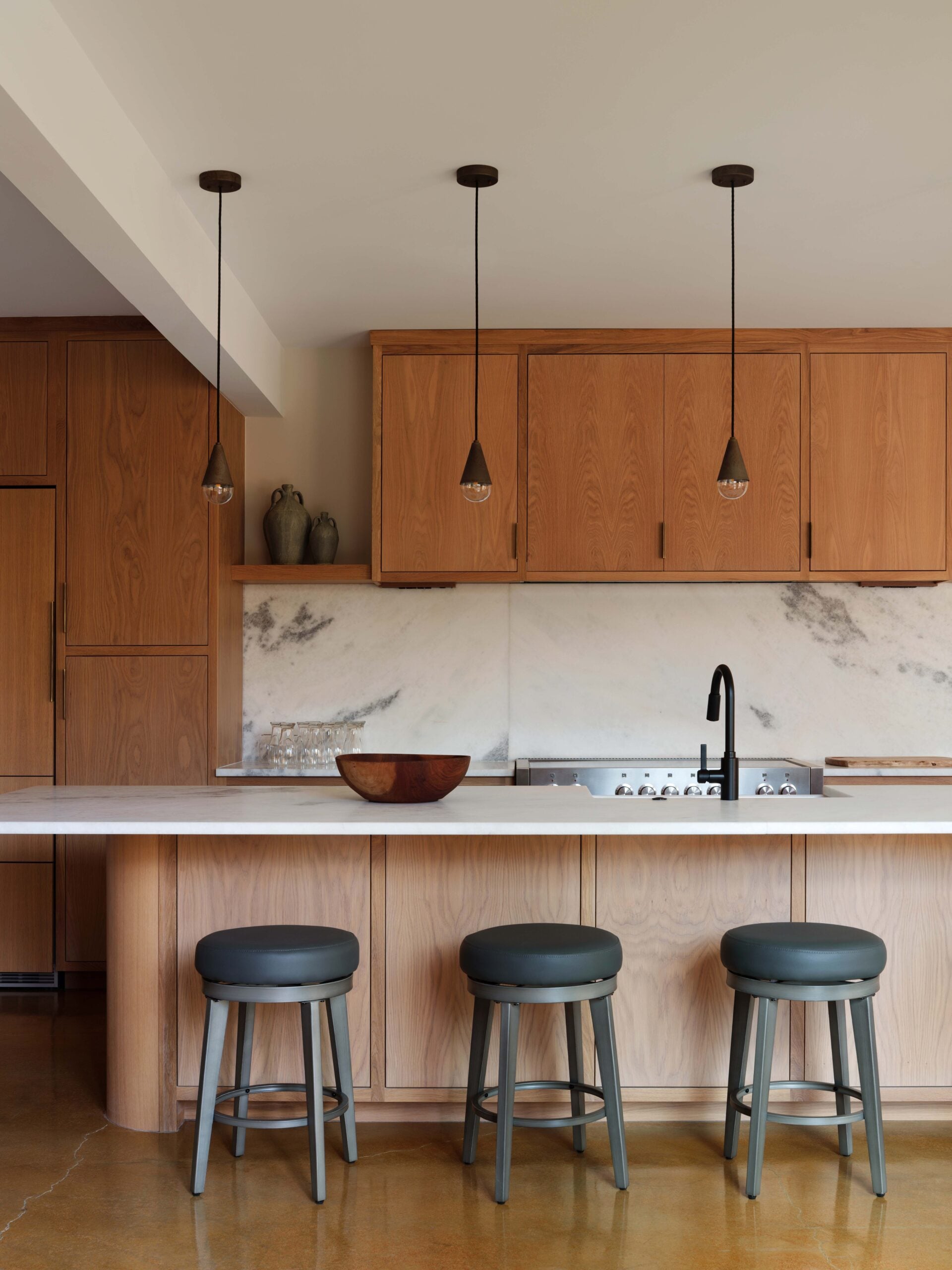
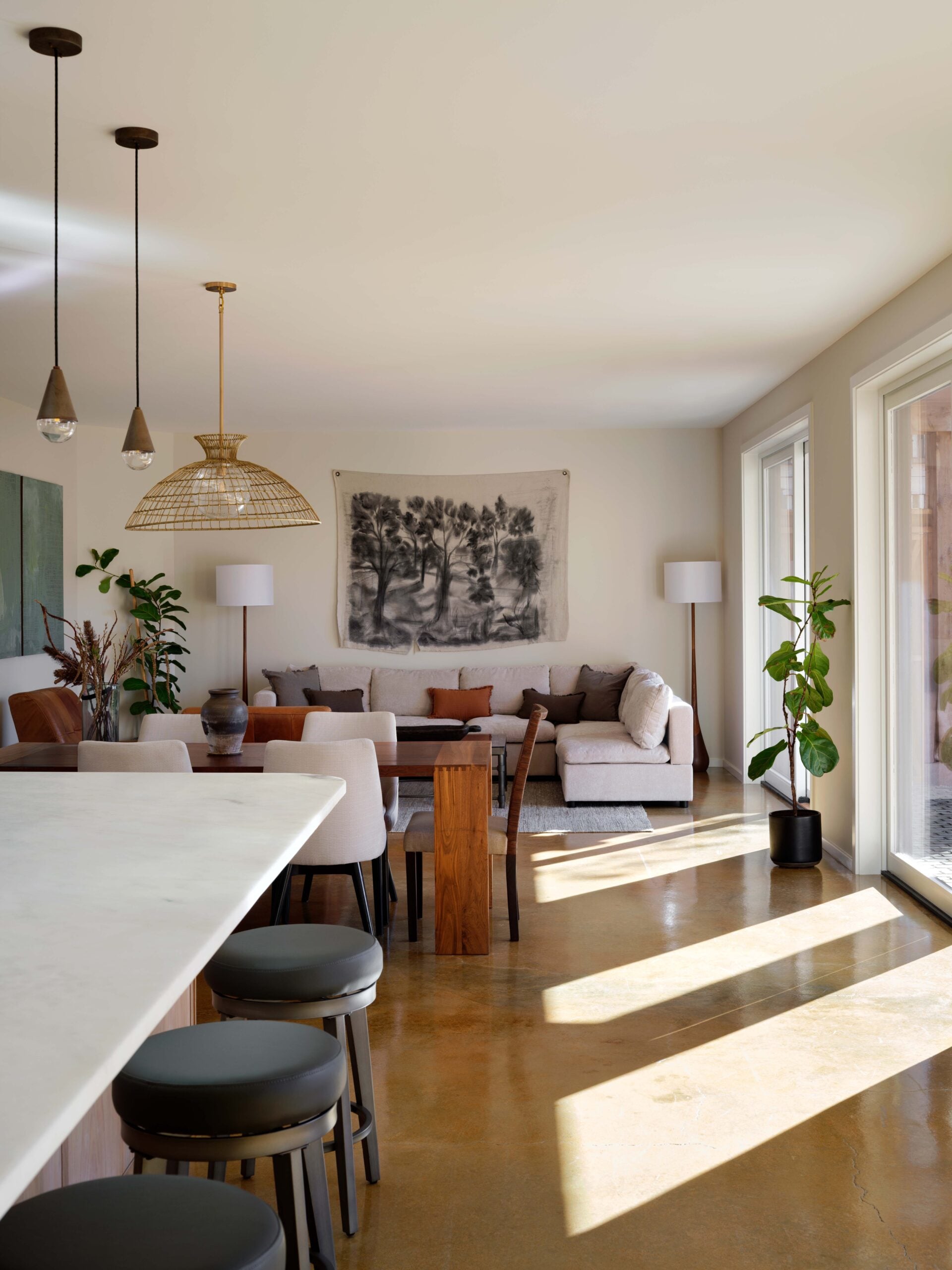
Despite the home’s speculative construction, Schmidt Development was committed to transparent material sourcing and carbon footprint reduction, BLDUS says, highlighting the local material harvesting and the reuse of garden pavers from other projects.
The project’s biggest challenge—and one of its many successes—was the ability to capture a sense of seclusion in the busy alley and to prioritize nature within the urban context.
Would you like to comment on this article? Send your thoughts to: [email protected]
- No tags selected
Latest
Projects
In India, Prestige University Offers Lessons in Climate Craft
The IGBC Platinum–rated education project is part of Sanjay Puri Architects’ quest for creative—and delightful—responses to a warming planet.
Viewpoints
Drawing Collective Housing Back Into a Common Language
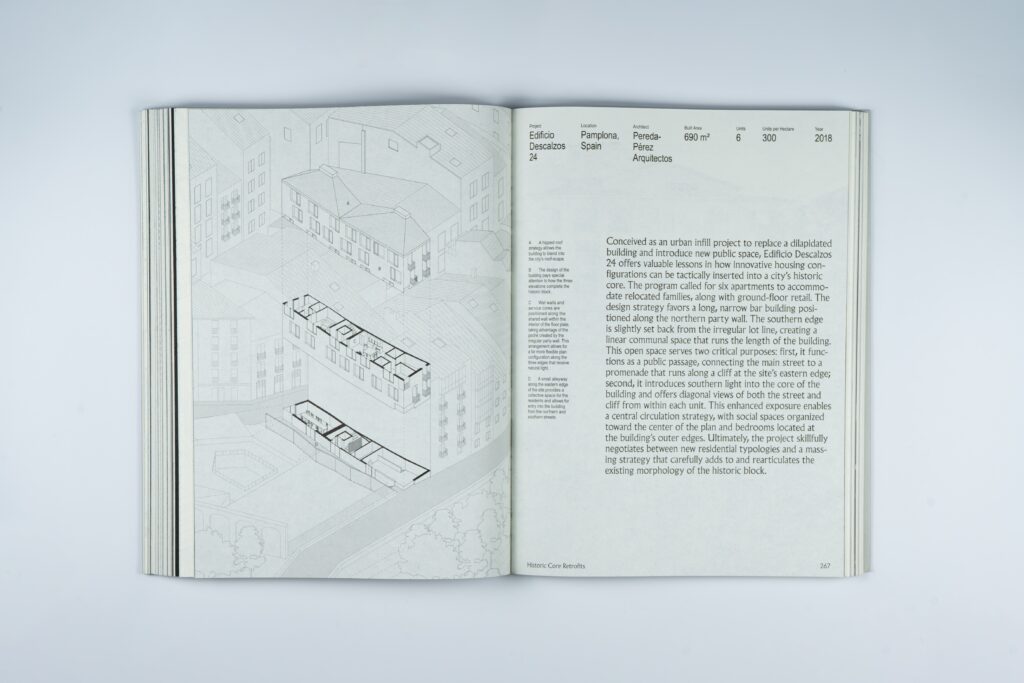
Felipe Correa’s Collective Living and the Architectural Imaginary, and why this survey of a century of collective housing was built to argue a point, not cover the field.