


November 25, 2026
Designing for the Music City
Nashville’s identity is intertwine with its music industry. From the recording studios and publishing houses of Music Row to its performance venues, entertainment companies, and increasingly diverse creative businesses. Yet, Nashville is undergoing a dramatic transformation. Population growth, increased tourism, new development, and the consolidation and reinvention of the music industry are changing the city’s urban fabric, raising questions about how to preserve its distinctive character while accommodating new demands. For David M. Powell, principal at Nashville-based HASTINGS Architecture, these transformations are both professional and personal. Having moved to Nashville in 1991 with an architecture degree and ambitions of pursuing a career in music.
In a conversation with METROPOLIS Senior Editor Francisco Brown, Powell discusses how the relationship between architecture and music has informed his practice and why Nashville’s rapid expansion has made architectural design an increasingly profound responsibility.
How did your interest in music and architecture come together, and how did that relationship develop into such an important part of the HASTING’s practice?
Hastings is now a 41-year-old company. We’re a second-generation firm, and I’ve been here for 19 years, so I’ve been part of nearly half of its history. I moved to Nashville in 1991 with an architecture degree in hand, but also with the intention of playing music.
It was a difficult time to find an architecture job because the economy was struggling, but I also loved music. I figured I might as well live somewhere I could play music, whether I found an architecture job or not. As it turned out, I found a job fairly quickly and joined a band that also secured a record deal.
It’s a very Nashville story. Many of the clients I brought into my first practice, and later into HASTINGS, came through my relationships in the music industry.
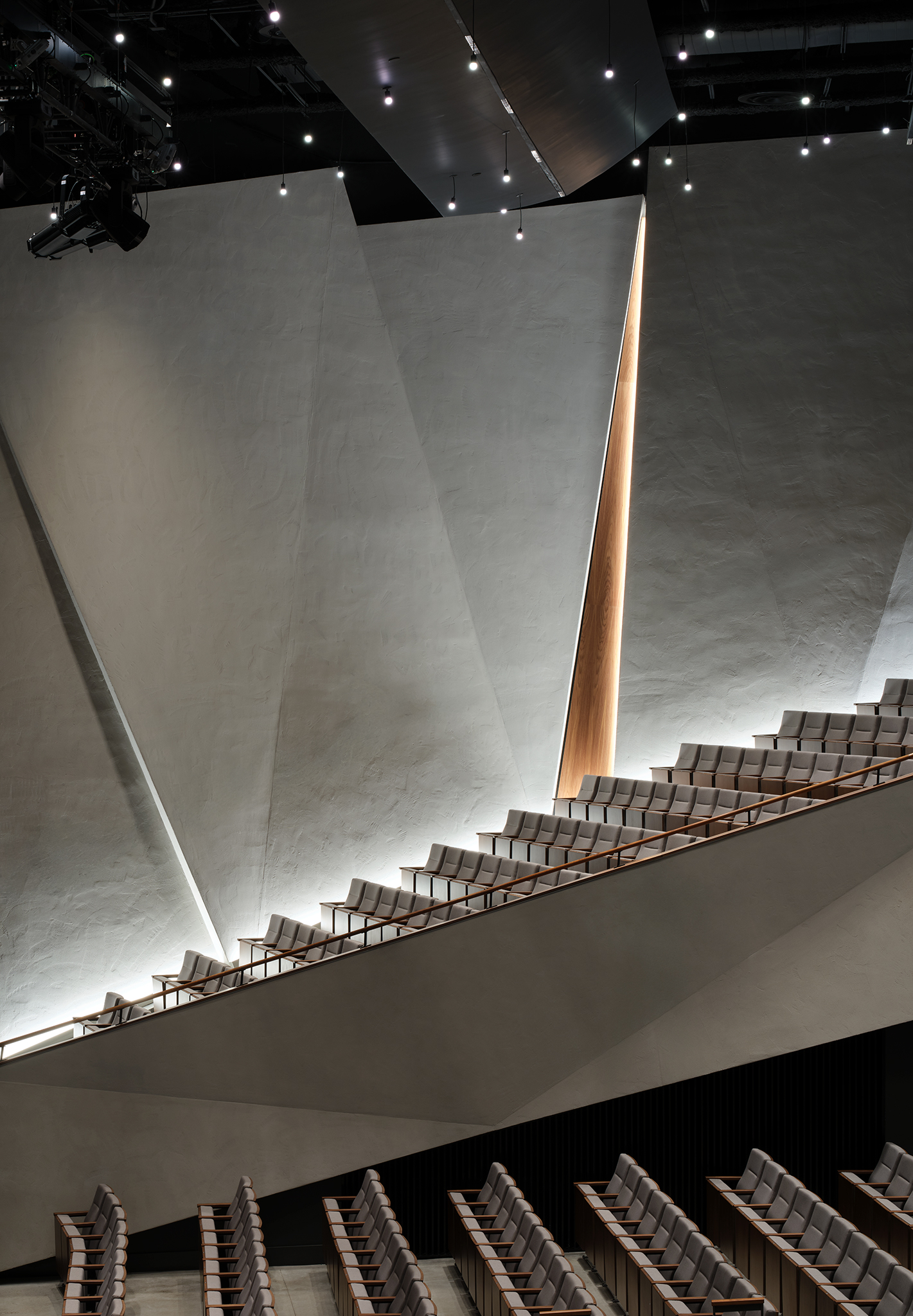
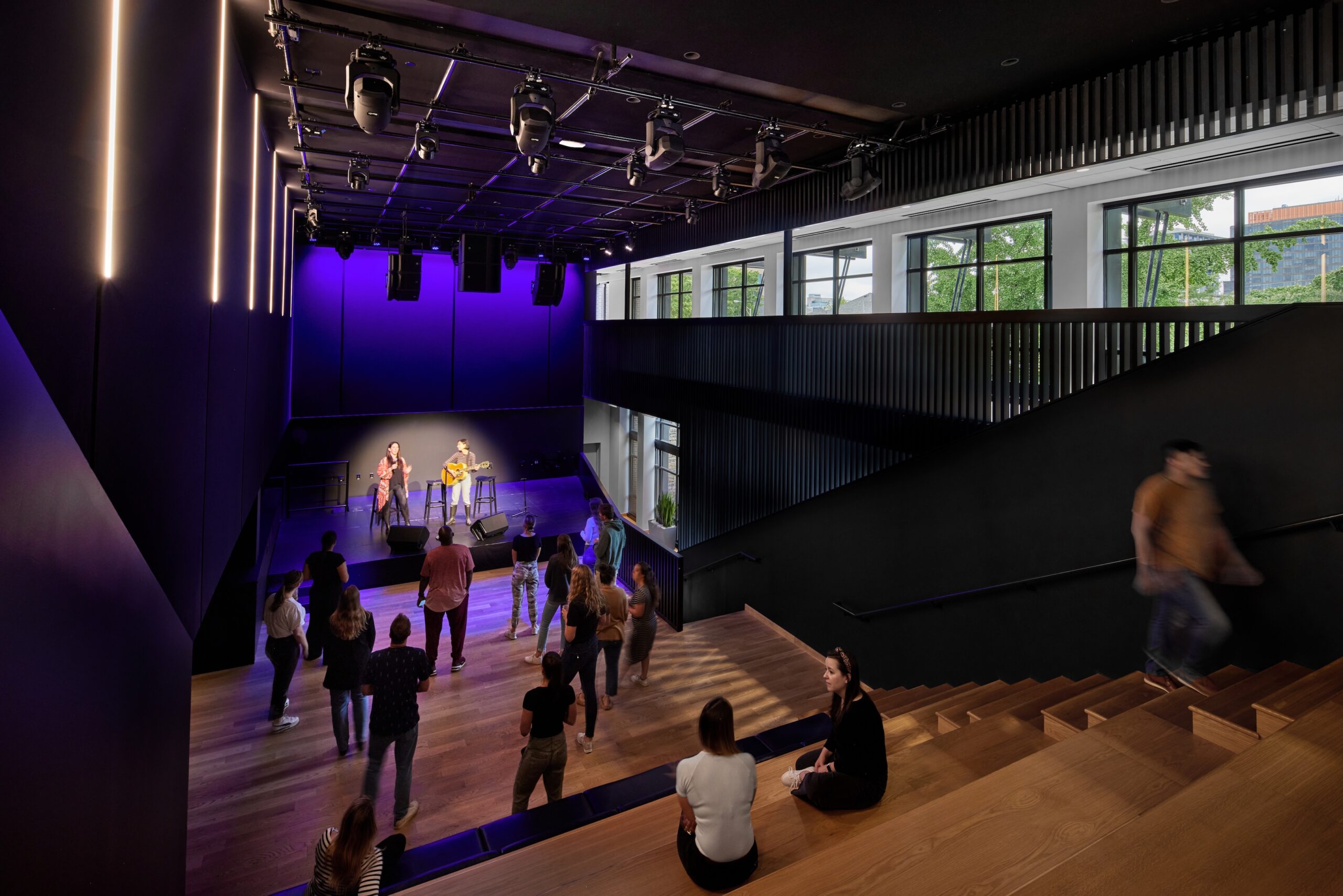
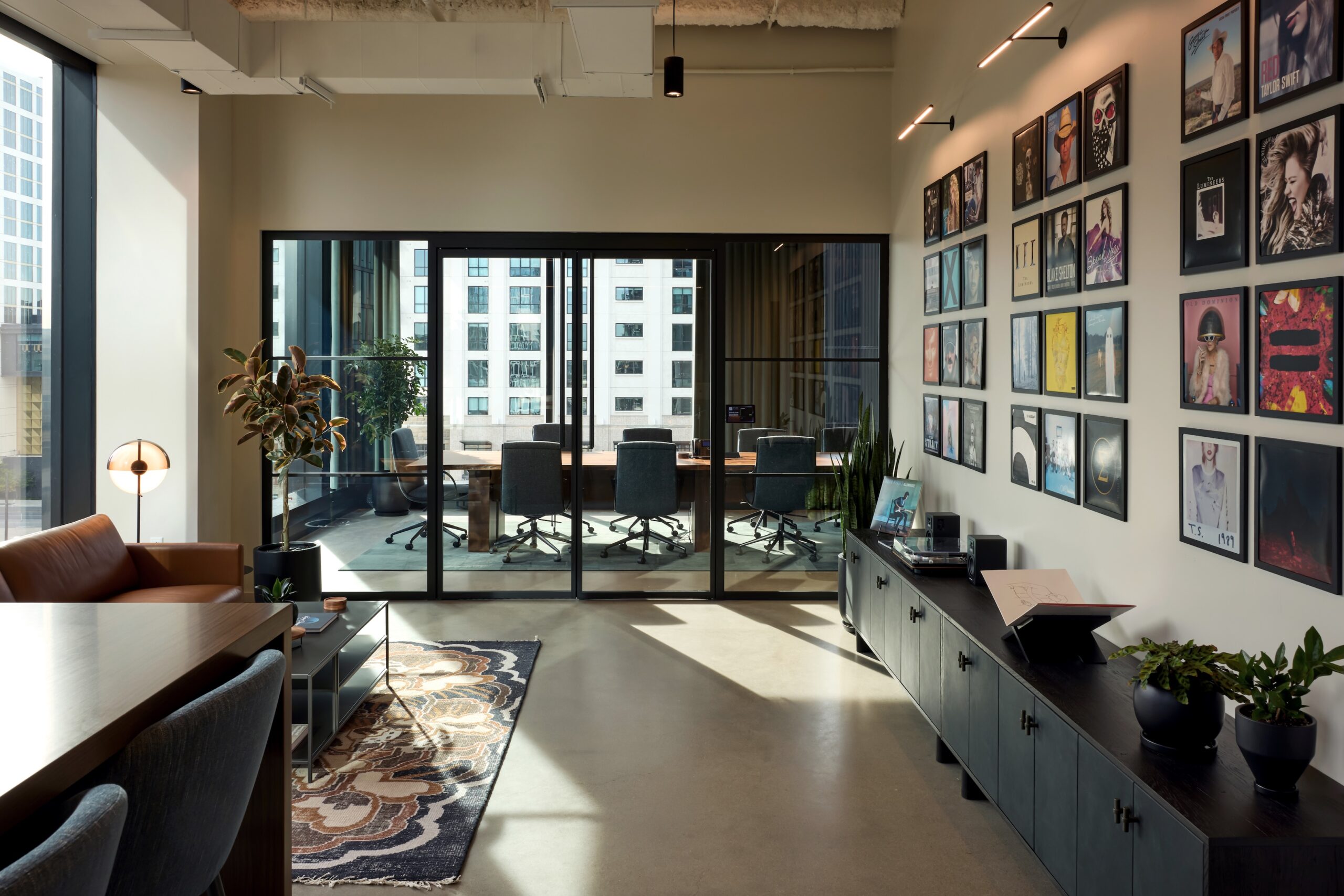
Today, music and entertainment represent an important part of our practice. We work with record labels, publishing companies, recording studios, content-capture spaces, listening rooms, writing rooms, artist agencies, performing rights organizations, broadcast studios, and performance venues. We have developed such a broad portfolio because we understand the industry.
HASTINGS itself was founded by Jim and Jeanie Hastings, the parents of one of my partners. They were a smaller firm but their work was fundamentally about serving their community. We’ve grown considerably. We’re now approaching 110 people and work across the country. In Nashville, the community is deeply rooted in a cultural vernacular that springs largely from music. Those two histories eventually converged. I brought my personal relationships and experience in the music industry, while Hastings brought its longstanding commitment to Nashville and its community.
As Nashville has grown, so has the entertainment industry. What was once primarily associated with country music now encompasses multiple genres, film productions, television, and other creative businesses.
Beyond the technical requirements of designing recording studios, how does your personal experience with music influence the design process?
The technical knowledge is certainly important, but there’s also a personality and a particular tone to the work. And it’s not just the music industry; it’s the Nashville music industry.
Many of our projects here are Nashville offices for national or global companies. We might work with a local team while also coordinating with a global headquarters. Warner Music and ASCAP are examples, as is WME.
We also understand the different perspectives within the music industry. We know how an artist, a producer, a label executive, a recording engineer, and a studio owner think. Those are very different perspectives. Everyone has their own agenda and personality.
Consider the difference between designing a broadcast studio for a Christian radio station and creating a writing room for a country music publishing company—You’re designing for very different people, purposes, and environments.
Several people in our office are musicians or former musicians, or came to Nashville because of their interest in music. Our director of interiors, Claudia [Lofton], has been around the industry for a long time because her husband is a drummer for The Wild Feathers. She understands that world from a different perspective.
So, yes, it’s much more than acoustical engineering, although that’s a critical component. It’s about understanding the character and atmosphere you’re trying to create for different artists and the entire chain of events involved in making music.
The music industry has undergone enormous changes, particularly with the transition from physical media and traditional record labels to digital distribution, streaming, and content creation. How have these shifts affected the spaces you’re designing?
When the digital age arrived, I think it’s fair to say the music industry was caught flat-footed. Nobody really knew how to respond to the sudden availability of so much music. The traditional revenue model was completely disrupted, and companies were trying to figure out how to remain relevant and financially viable while adapting to a new reality.
Brands consolidation, labels acquired other labels, also significantly reduced the amount of space the industry needed. Music Row diminished tremendously, which I think many Nashvillians regret because it’s such an important part of the city’s history.
Some moved downtown, particularly after the Country Music Hall of Fame relocated, and the new convention center opened around 2010, following the recession. That period marked the beginning of the tourism boom we now experience around Lower Broadway. But downtown has become so chaotic, with the volume of tourism and entertainment, that some companies are leaving again.
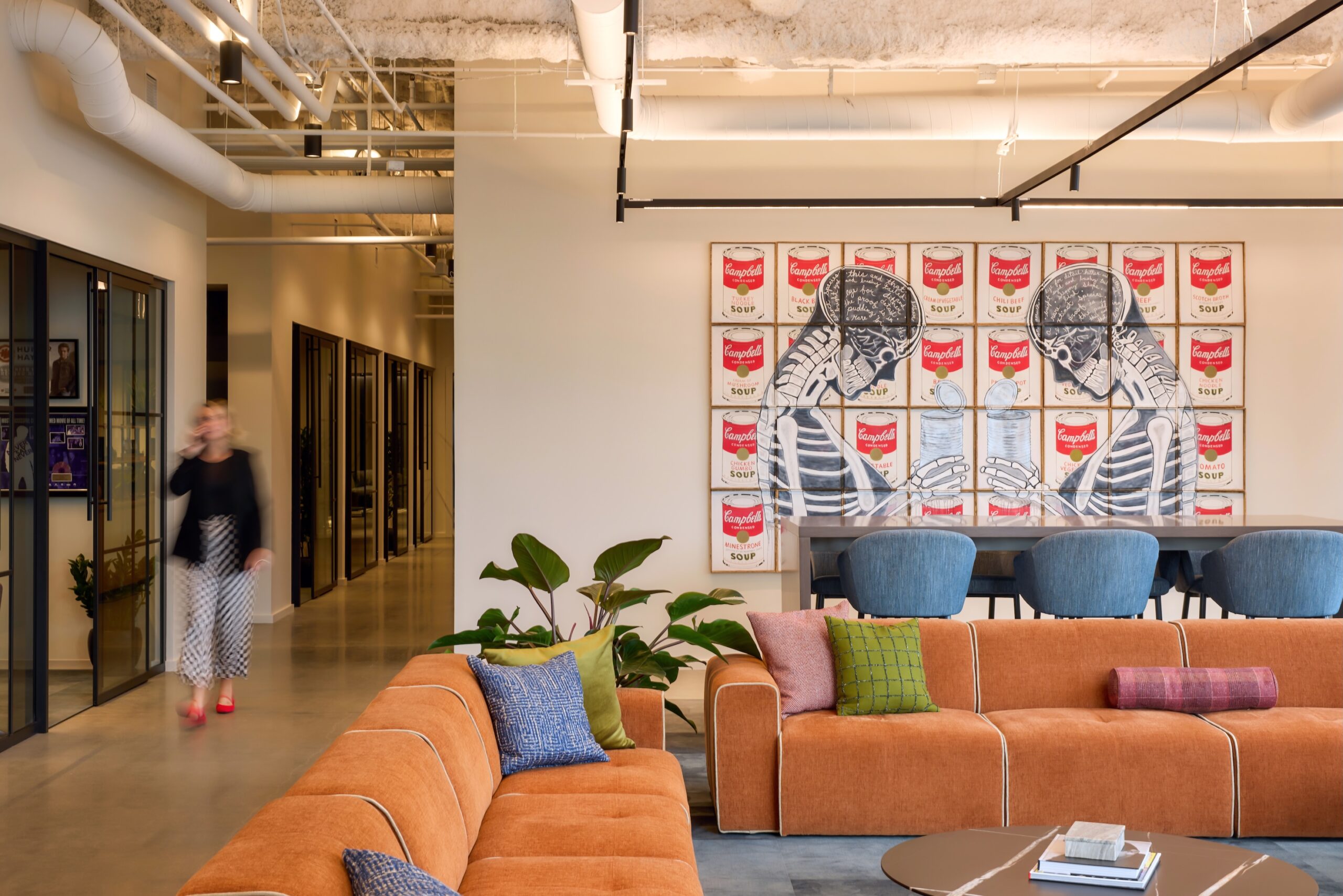
Some are moving to Nashville Yards, where there’s a wonderful creative office building. We’ve designed spaces there for AEG and L-Acoustics, and CAA, one of the artist agencies, is also moving into the development. Others are relocating to neighborhoods such as Wedgewood-Houston.
So, evolution has involved not only fewer companies but also smaller spatial requirements. What’s particularly interesting to me, though, is that the industry may have been overcorrected.
When we worked with Sony Music roughly 12 or 13 years ago, the company moved into a downtown building with just one relatively small performance room. We later returned to retrofit that space into a content-capture facility. Now they’re moving again.
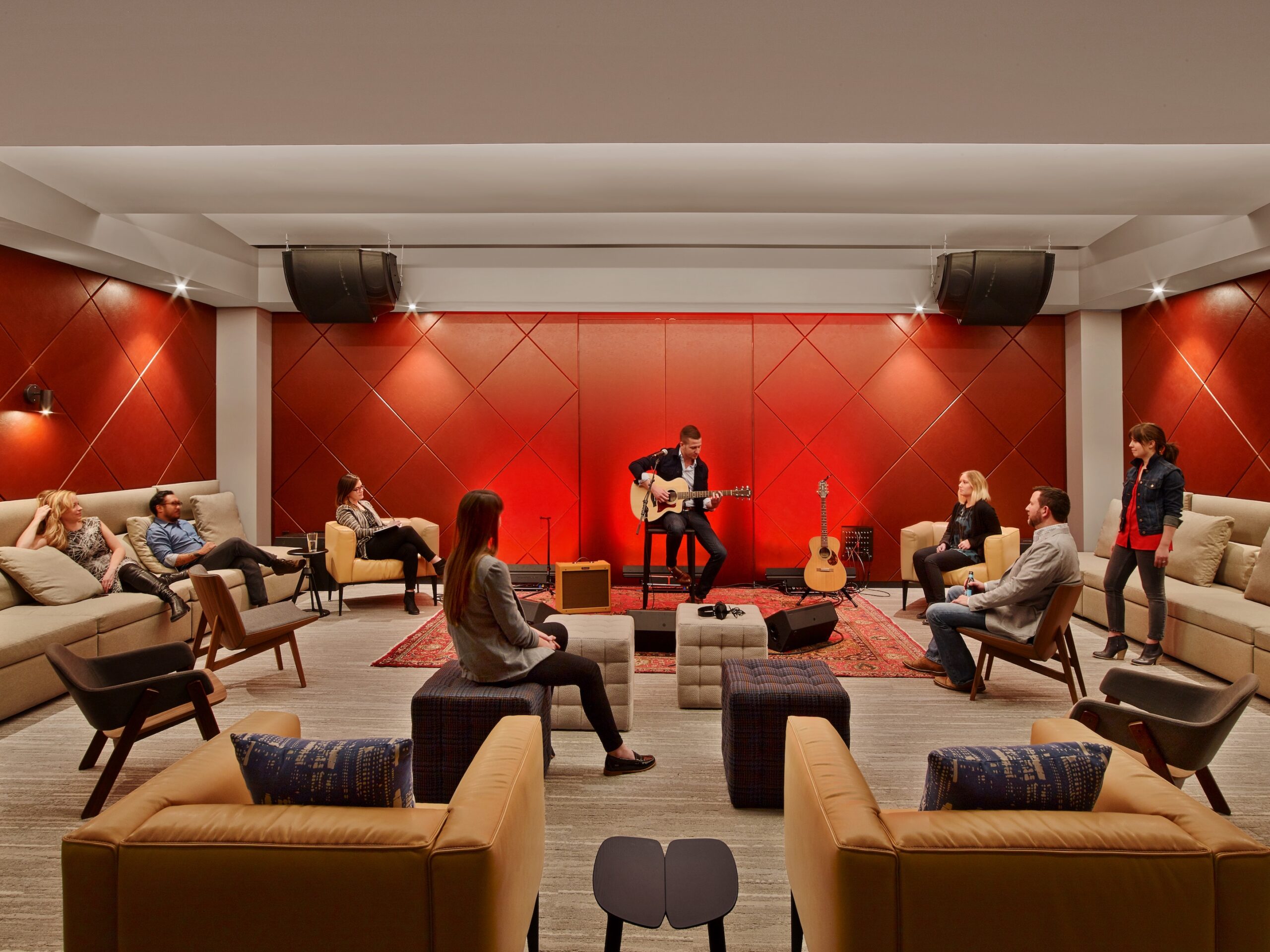
Now companies are coming back around to the idea that they want artists to come into the office and feel part of the family and the culture. They don’t want artists writing and recording somewhere else. As a result, many of the new spaces we’re designing include smaller performance areas that can also function as content-capture studios.
We’re incorporating writing rooms with much more robust acoustic treatments, almost like miniature recording studios, where people can write and record without hearing what’s happening in the room next door.
Listening rooms are also returning. We’re not going back to the excess of space that existed previously, but we’re adding more specialized environments so that offices become more than workplaces. They become places that actively bring artists back into the organization.
Content capture is another important part of this transformation. We were already seeing the beginnings of that trend before COVID-19, but the pandemic accelerated it dramatically. Artists couldn’t tour, so live music and performances increasingly had to reach audiences through recorded and streamed content.
At Sony, for example, we added a recording studio with a control room that also served as the control room for its content-capture space. We also completed a major renovation at Warner Music to introduce a studio dedicated to content capture.
It has been fascinating to see how these spaces have evolved. The industry is rediscovering the importance of bringing artists into its physical workplaces while also recognizing that those workplaces need to support entirely new forms of content creation.
Nashville is experiencing unprecedented growth, which raises questions about how the city can preserve its character while accommodating new development. How does this context influence your approach to working with existing buildings?
We’ve witnessed the radical transformation of the city firsthand. The growth is unprecedented.
There are tremendous opportunities and a lot of energy, and our own firm has grown alongside the city. But there are also consequences. Traffic has worsened, housing has become increasingly expensive, and workforce housing is a major concern. We don’t have a substantial mass-transit system, and everything downtown is becoming more expensive.
The people who work in the hospitality industry—the bartenders, baristas, hotel employees, and the musicians performing in the honky-tonks—increasingly struggle to afford to live downtown or even park there. These are the people who contribute to the experience that makes Nashville what it is, yet they’re being pushed farther away.
All of this raises a significant question: Has Nashville changed too much? Is it evolving in a direction that compromises what made it special in the first place?
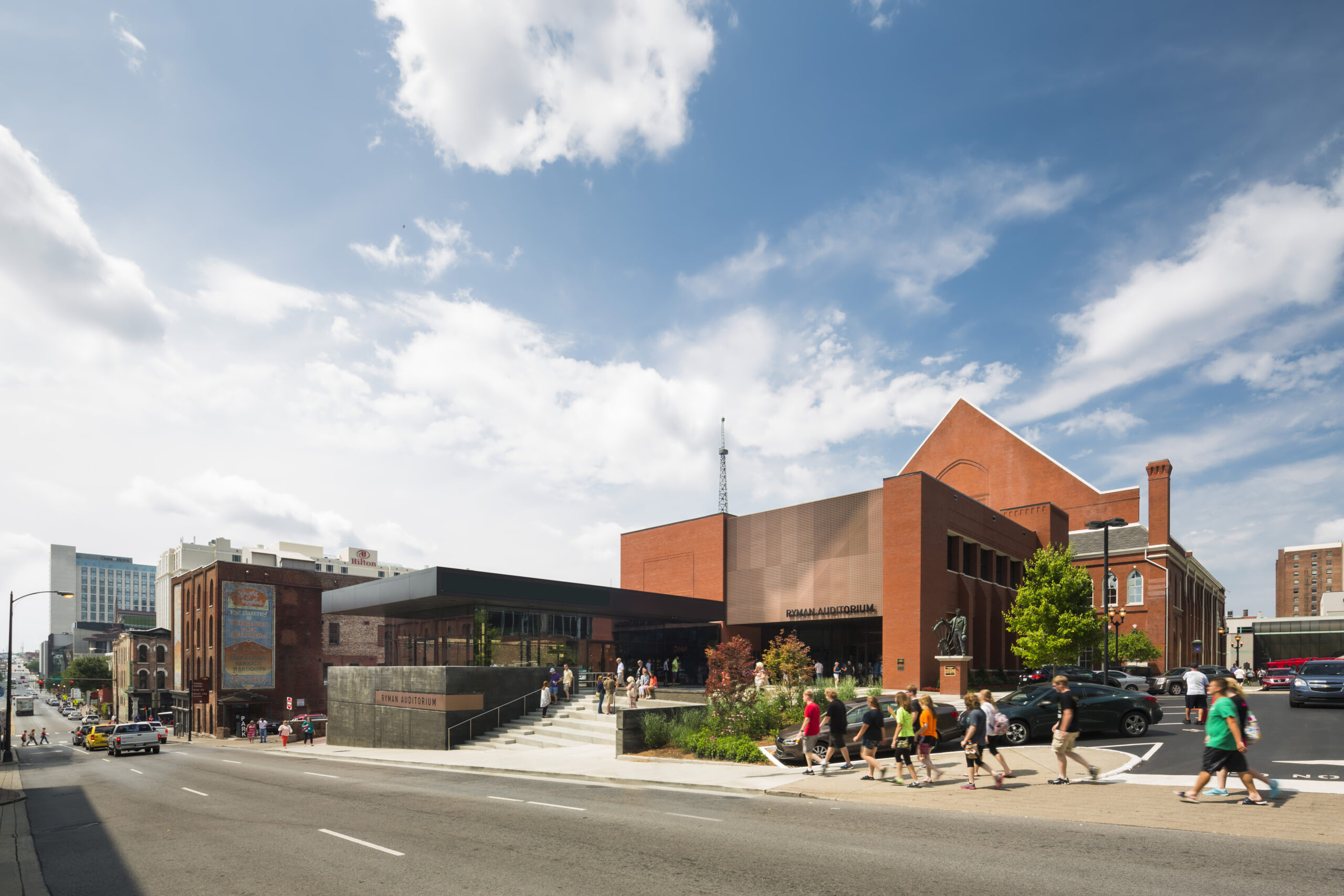
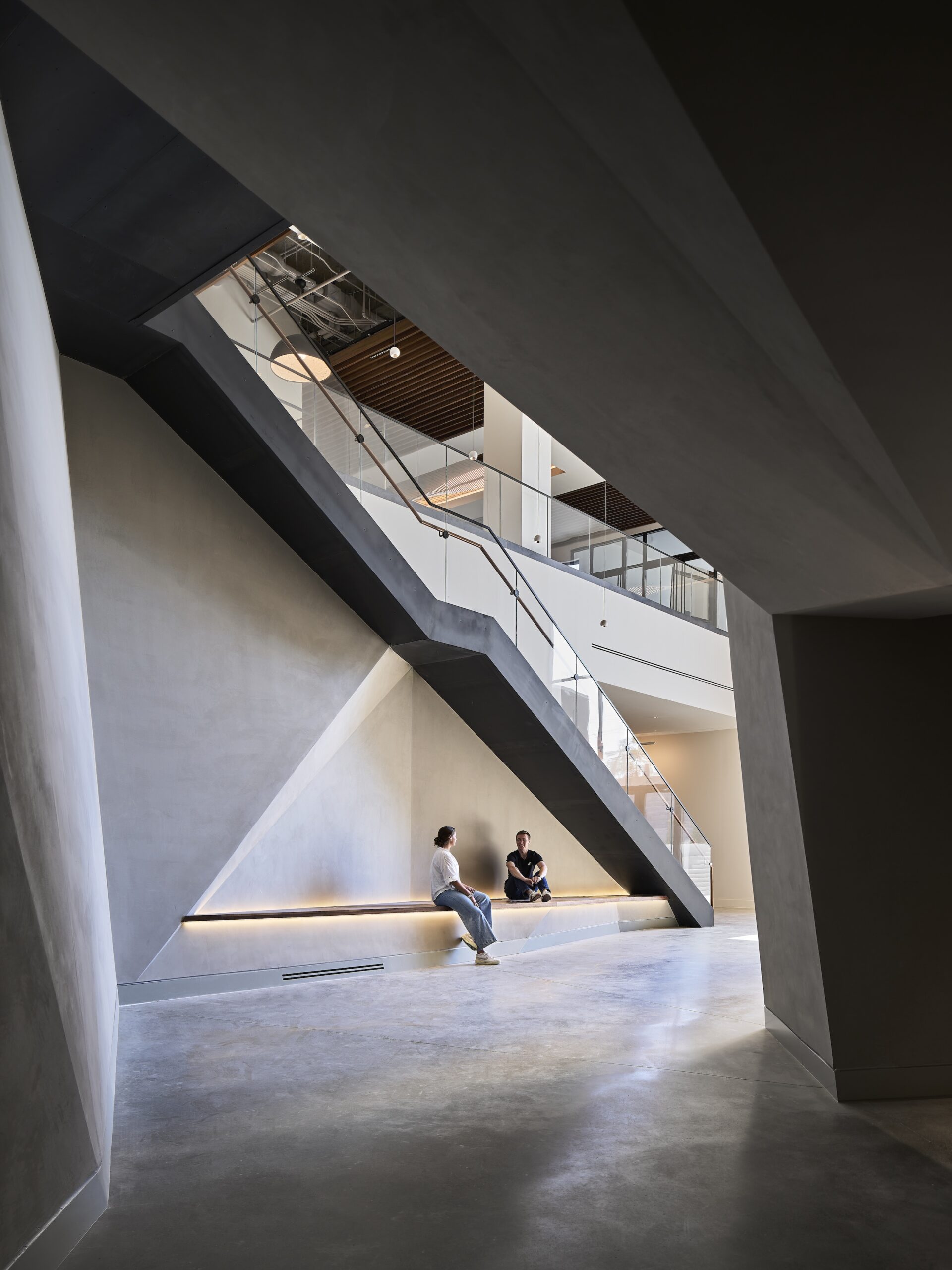
That’s where historic buildings become incredibly important. Preserving, saving, or reinterpreting them is essential. Our own building is an example of both approaches. The exterior is a true preservation project, while the interior is a contemporary intervention.
Preserving historic character as the city grows and changes is critical. And I would extend that idea beyond officially designated historic buildings. Even the seemingly forgotten or disposable buildings—the Butler buildings, warehouses, and other industrial structures that people might consider unimportant—have value.They contribute grit, character, and a certain funkiness to the city. We don’t want Nashville to become nothing but a collection of glass towers. It needs variety and a sense of its history.
For us, that responsibility begins with understanding the context and the stories associated with a place. We talk a lot about concepts and narratives. Even when we’re designing a completely new building, we want to understand the site’s history and the surrounding neighborhood. The architecture might be very contemporary, but it should still tell a story that respects its context.
Looking ahead, as Nashville continues to grow and HASTINGS expands its geographic reach, are there particular aspects of your design process or interdisciplinary approach that you see developing further?
We’re excited to take the process, practice, approach, and mindset we’ve refined over four decades in Nashville and expand them geographically.
We’ll never leave Nashville behind. It will always be our heart and our home. But it’s been increasingly exciting to see how people in other markets are responding to our approach and our particular background.
There are many firms that specialize in hotels, multifamily housing, offices, academic buildings, or recording studios and performance spaces. What’s distinctive about us is that we have substantial experience across all those areas. We don’t just do a little bit of each; we do a lot of work in all of them.
We bring the same passion and commitment to the community impact of every project, but we’ve also learned how much these different typologies can inform one another.
For example, understanding acoustics in a recording studio, listening room, or writing room can inform how we approach the acoustics of a hotel lobby. Similarly, we can take the hospitality experience of a boutique hotel and ask how those ideas might translate into an office, a record label, or even an academic building.
We’ve also had to learn how to advocate for the impact architecture can have on a community because we’ve witnessed our own community changing so dramatically. That experience has sharpened our perspective and helped us develop a particular sensitivity to the relationship between architecture and place.
The byproduct of that commitment is that people have increasingly asked us to work in their cities and communities. That’s been incredibly rewarding, and it’s something we’re excited to continue pursuing.
We’re keeping one foot in Nashville while putting the other on the boat as it makes its way around the dock. We’re continuing to spread the love.
Would you like to comment on this article? Send your thoughts to: [email protected]
Latest
Projects
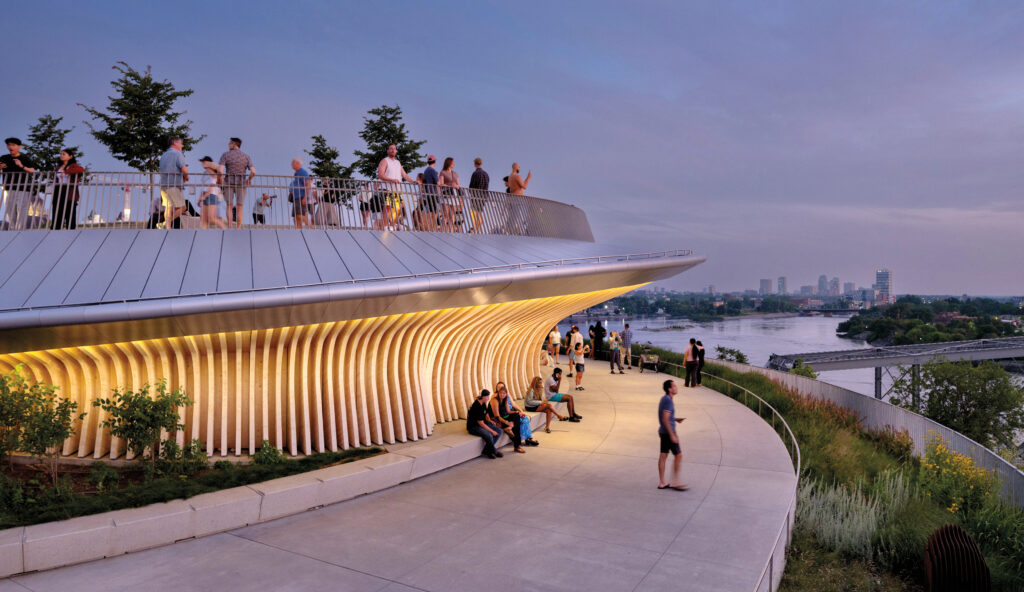
Kìwekì Point Is A Cultural Landscape Rooted in the River
In Canada’s capital, the transformation of a once-overlooked lookout into Kìwekì Point reconnects visitors with the landscape and the region’s Indigenous heritage.
Viewpoints
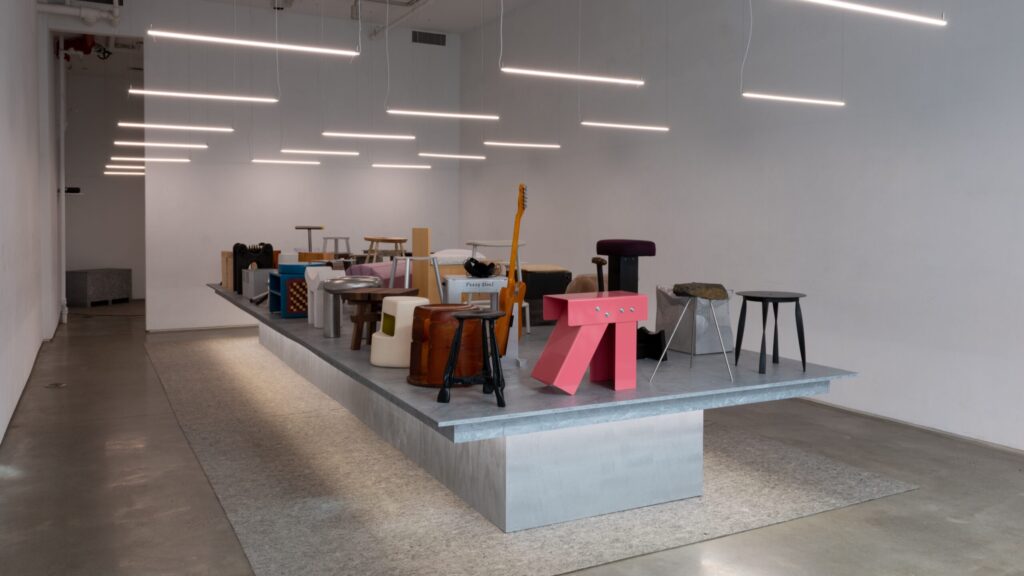
A83’s STOOLS Turns a Humble Seat into an Architectural Experiment
The exhibition brings together 44 stools by architects and designers, using the seat as a testing ground for material experimentation, formal invention, and a little irreverence.