


November 24, 2026
Kìwekì Point Is A Cultural Landscape Rooted in the River
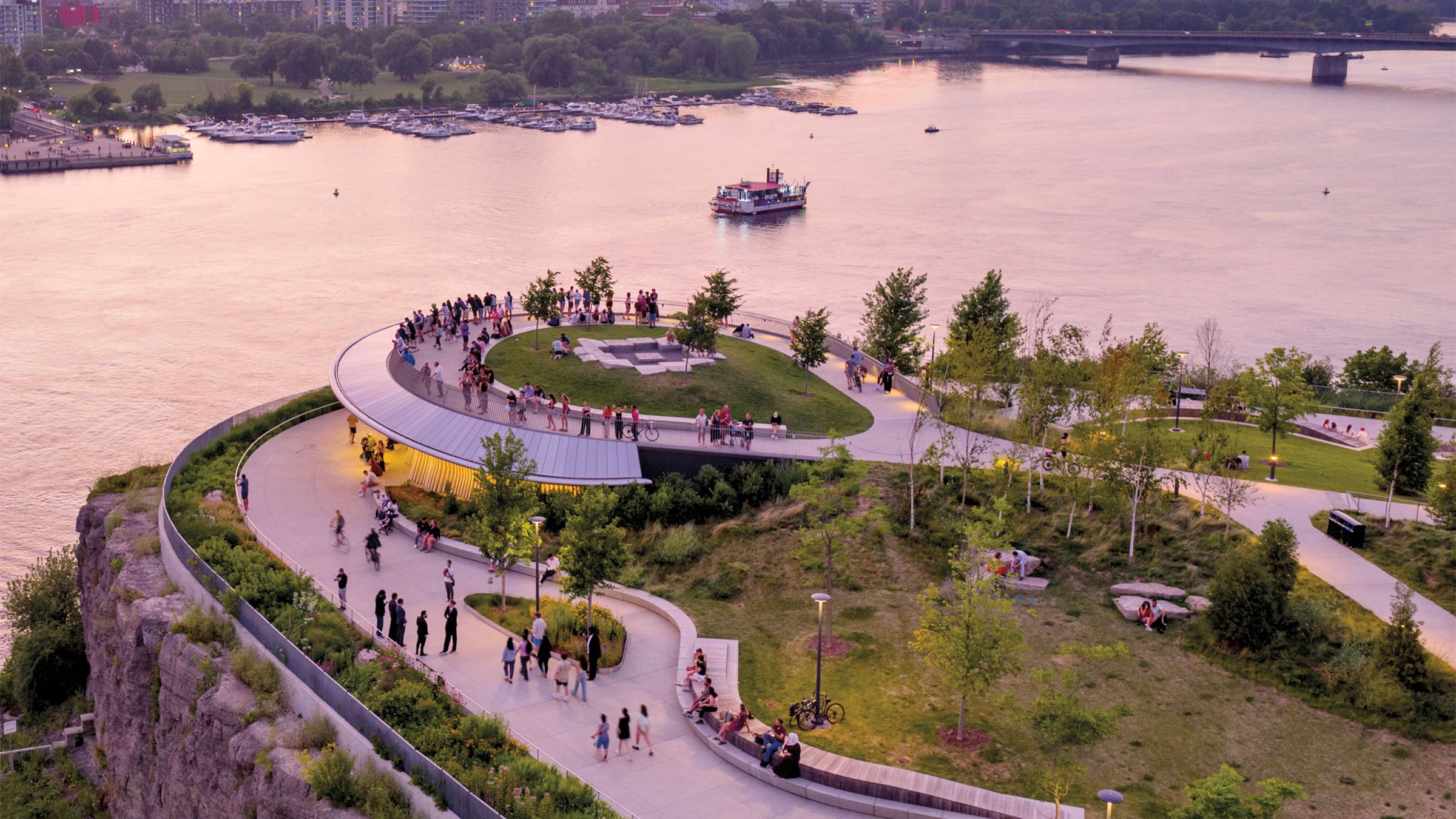
With your arms spread wide atop old Nepean Point, wind whipping by and the Ottawa River spread out far below, you feel like you’re flying. To the left, Canada’s picturesque Gothic Revival Parliament buildings perch on a nearby bluff like gleaming chess pieces. Across the river, in Quebec, Indigenous architect Douglas Cardinal’s curvilinear masterpiece, the Canadian Museum of History, crouches by the riverbank like a great turtle. But until recently, few visitors were able to enjoy this striking view. Hidden behind the tall back walls of the National Gallery and cut off by a major arterial road, the area barely saw any visitors—except lonely stoners and intrepid wanderers. Today an ambitious redesign has transformed the site into Kìwekì Point, giving the iconic view the design that it deserves.
When Janet Rosenberg & Studio (JRS), Patkau Architects, and ERA Architects—alongside Blackwell Structural Engineers—won an international design competition hosted by the National Capital Commission (NCC) in 2017 to redevelop the land, they turned to an essential part of the landscape for inspiration: the river.
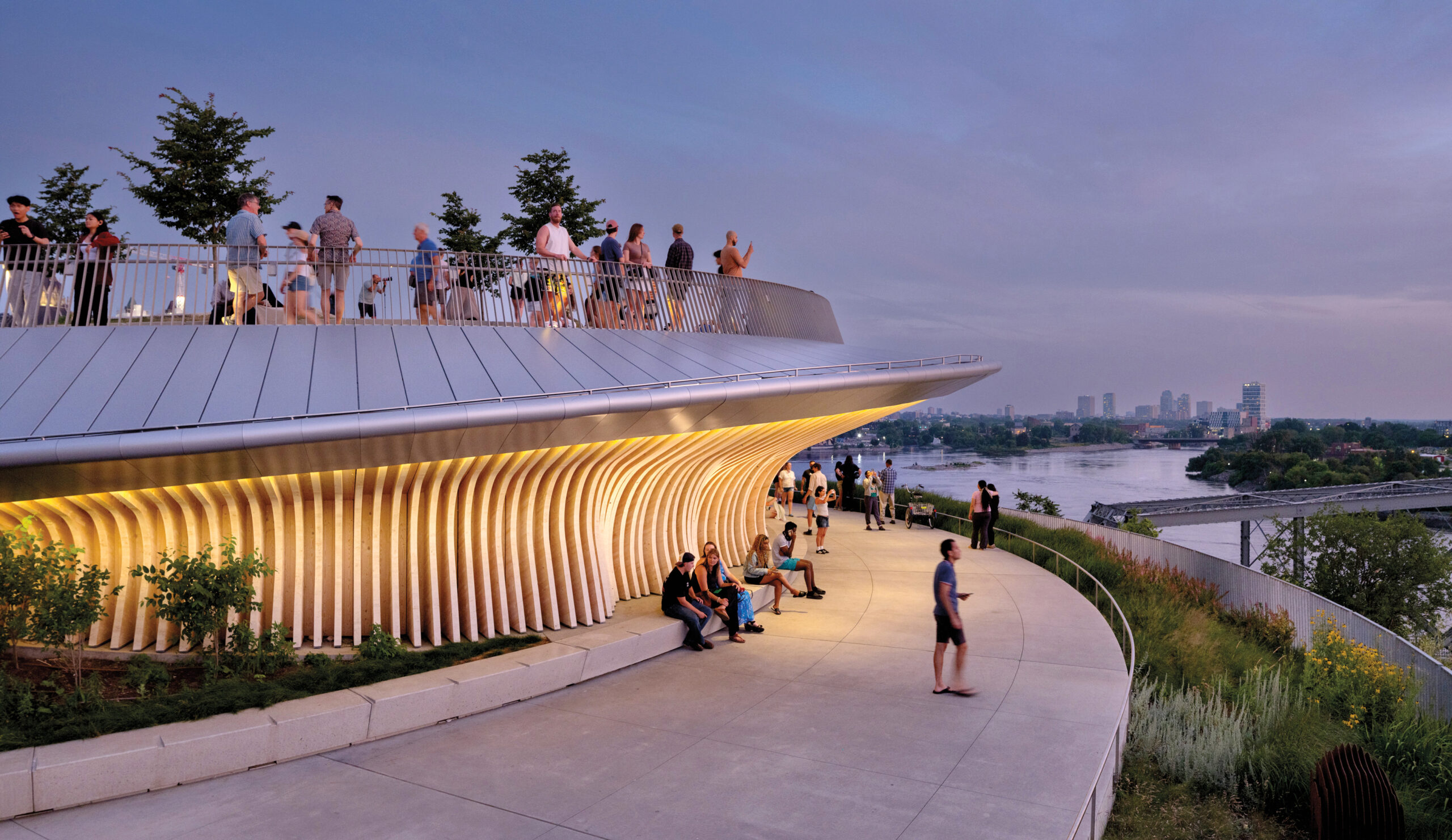
“Most projects in the city of Ottawa are within this context of old-fashioned architecture, and so they tend to respond to it,” says Nicholas Gosselin, senior associate at JRS. “Our context was the river. That immediately created a common bond with the local Indigenous nations when they first joined the project, because we weren’t trying to make our project align with the city; we were trying to make it align with the landscape.”
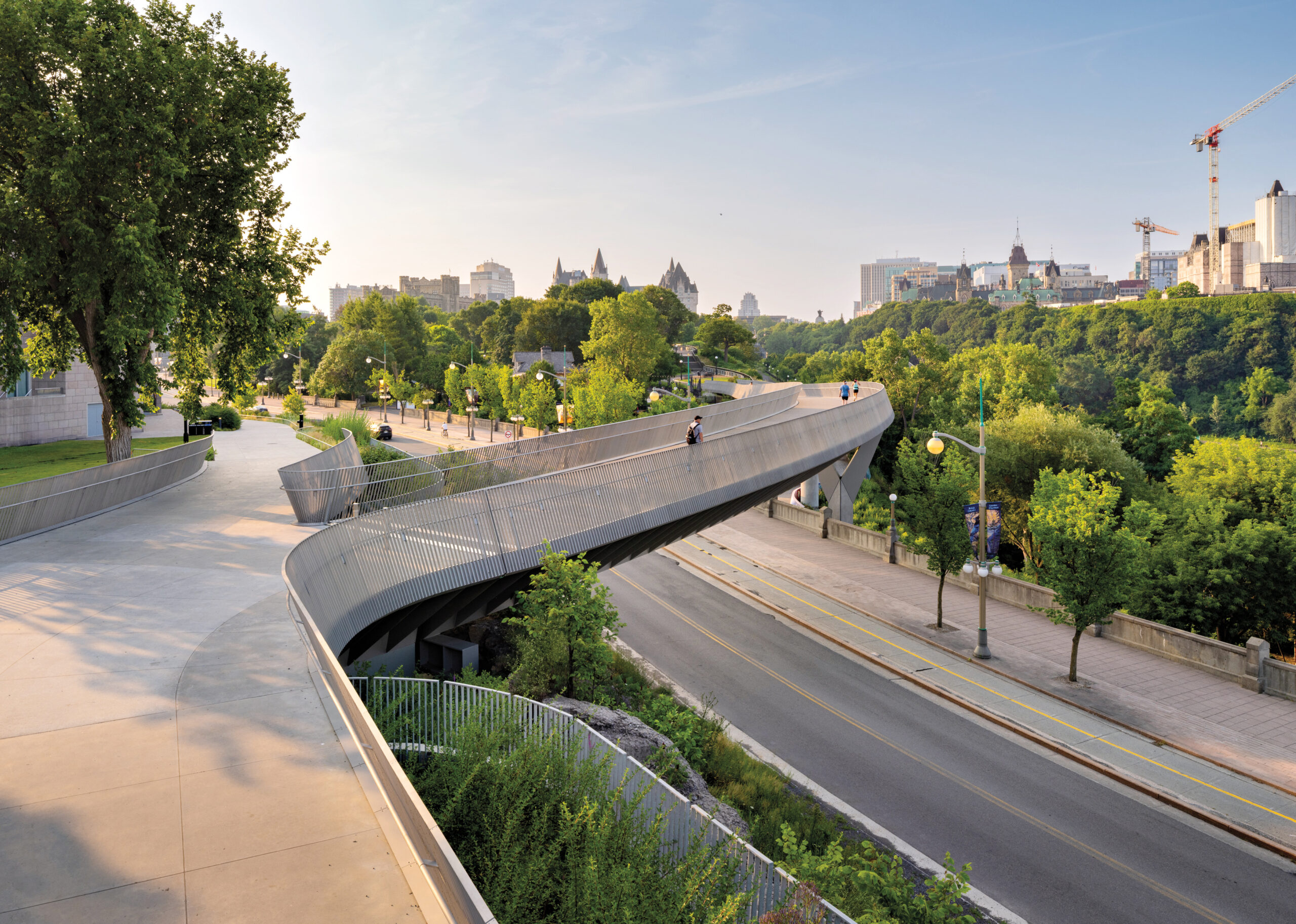
One of the most dramatic changes was the addition of Pìdàban Passage, its name coming from the Algonquin word for “dawn.” The new footbridge links bustling and beloved Major’s Hill Park to Kìwekì Point, now allowing users to follow the shoreline directly across the road to the park.
“Our approach was to make the bridge really quiet,” explains Greg Boothroyd, principal at Patkau Architects. “When you’re walking, you just have the guards and the view, and the structure is below.”
Reshaped as a gently rising meadow, Kìwekì Point invites visitors through paper birch, trembling aspen, and other local tree species as well as swaying native grasses toward the summit, where a lookout structure with a striking organic shape juts out into the horizon. Nestled underneath, warm timber slats carve out a secluded seating nook that offers respite from the sheer scale of the view. Originally named “Whispering Point” for an artist’s soundscape that was never realized, the spot now whispers with wind rushing through tall grasses and leaves rustling underfoot.
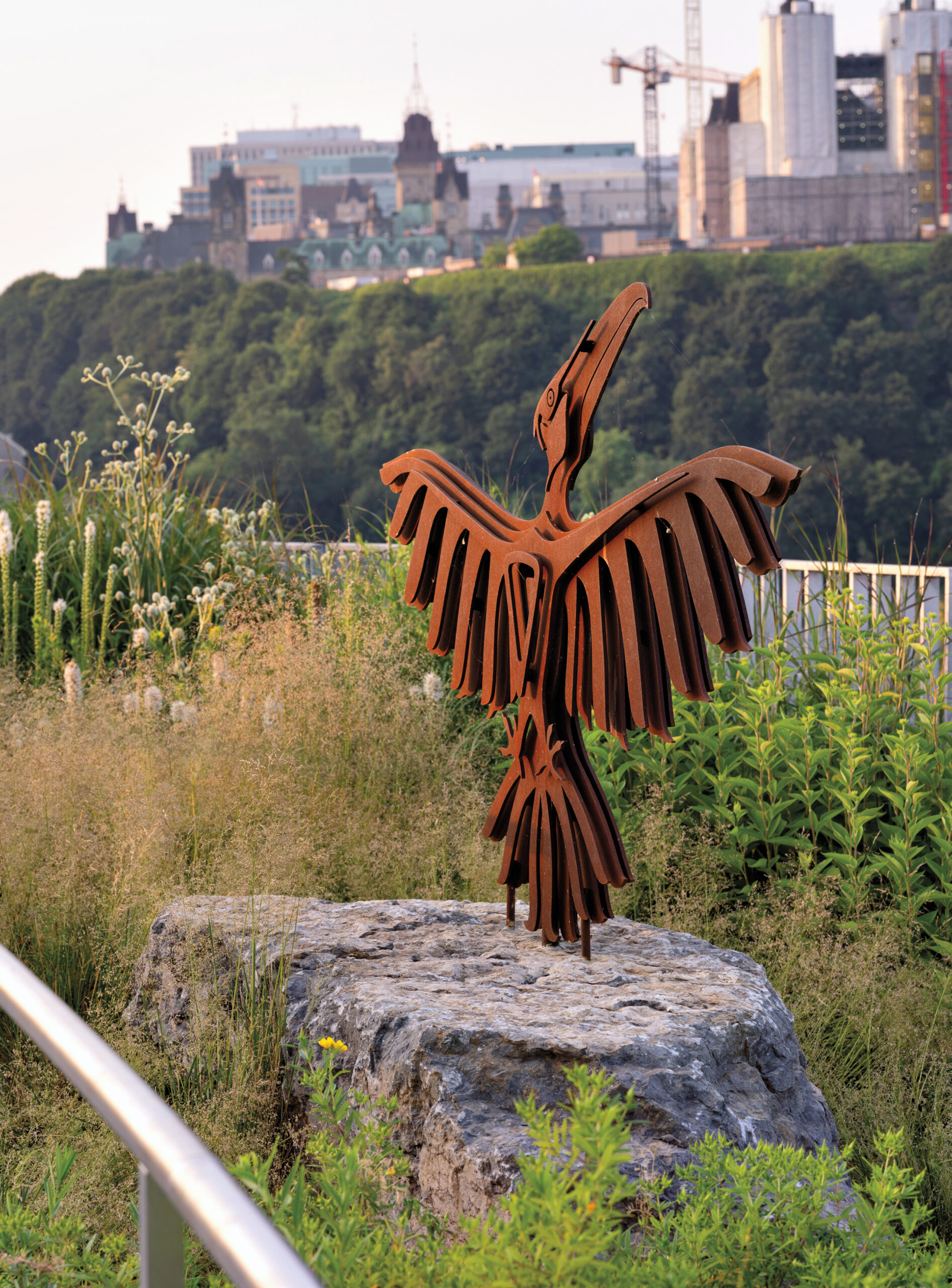
“If you slow down and you listen, landscapes talk,” says Wayne Swanton, partner at JRS. “Different trees and plants make different sounds, depending on how the wind’s moving through them. It’s kind of like an orchestra in a sense.”
Since opening last year, Kìwekì Point has become a hot spot for Ottawans. Having grown up in the city myself (I smoked my first clove cigarette at that very spot), I’d never seen it so full of life: big groups took pictures at the lookout, children played on the hillside, and many more wandered through the landscape. It seems fitting that Kìwekì Point’s new name means “a return to one’s homeland.” Like the landscape returning to the river, the people are flowing back too.
Would you like to comment on this article? Send your thoughts to: [email protected]
Latest
Viewpoints
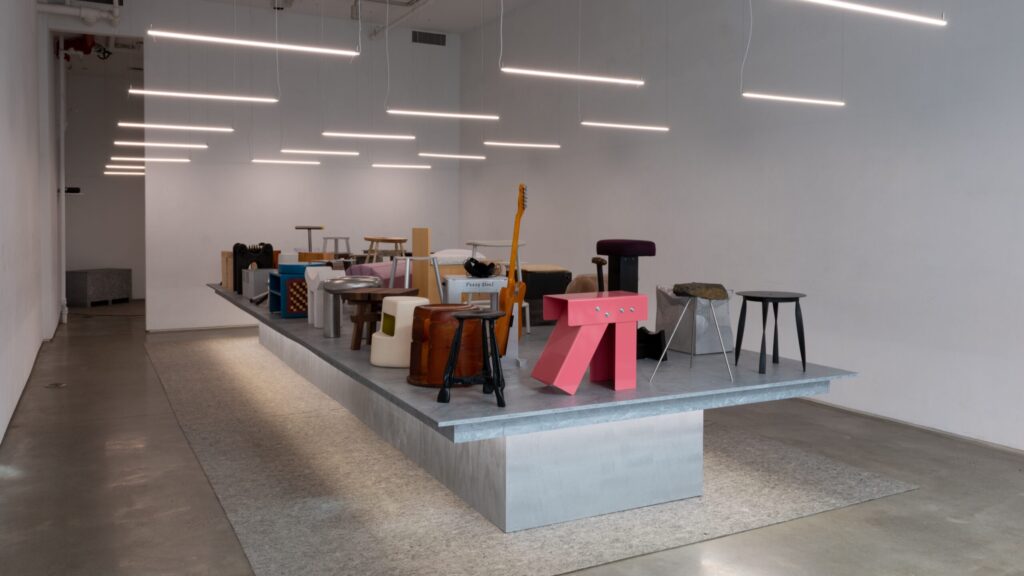
A83’s STOOLS Turns a Humble Seat into an Architectural Experiment
The exhibition brings together 44 stools by architects and designers, using the seat as a testing ground for material experimentation, formal invention, and a little irreverence.
Viewpoints
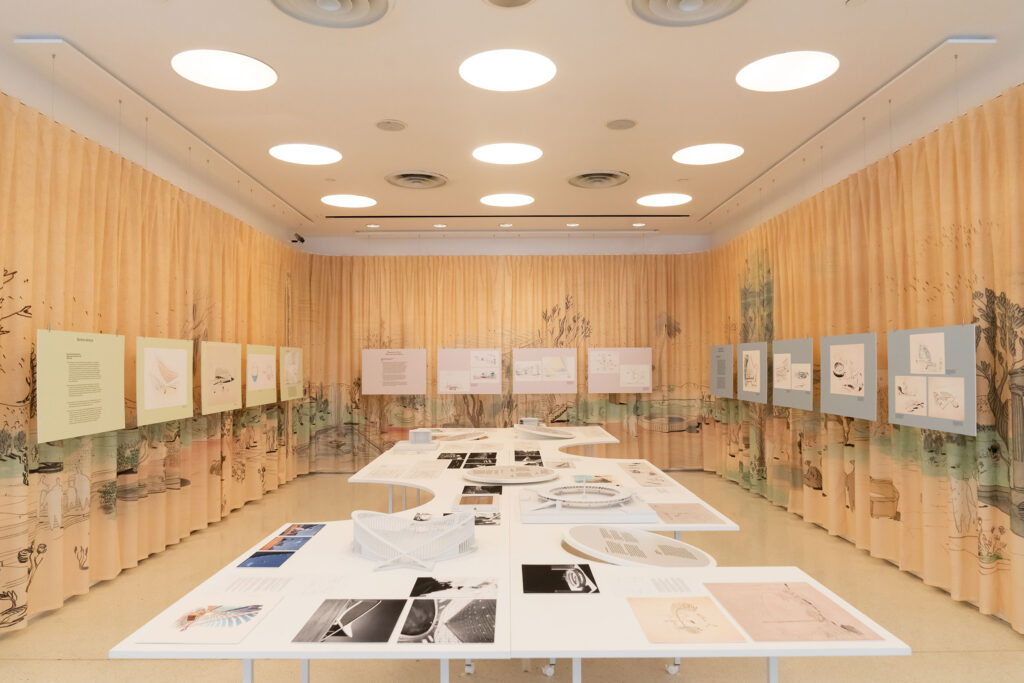
Uncovering The Humanist Modernism of Maciej and Stanisława Nowicki
On view at New York’s Center for Architecture, Humanist Modernity: Maciej and Stanisława Nowicki explores the legacy of the pioneering Polish architecture duo.