



April 2, 2026
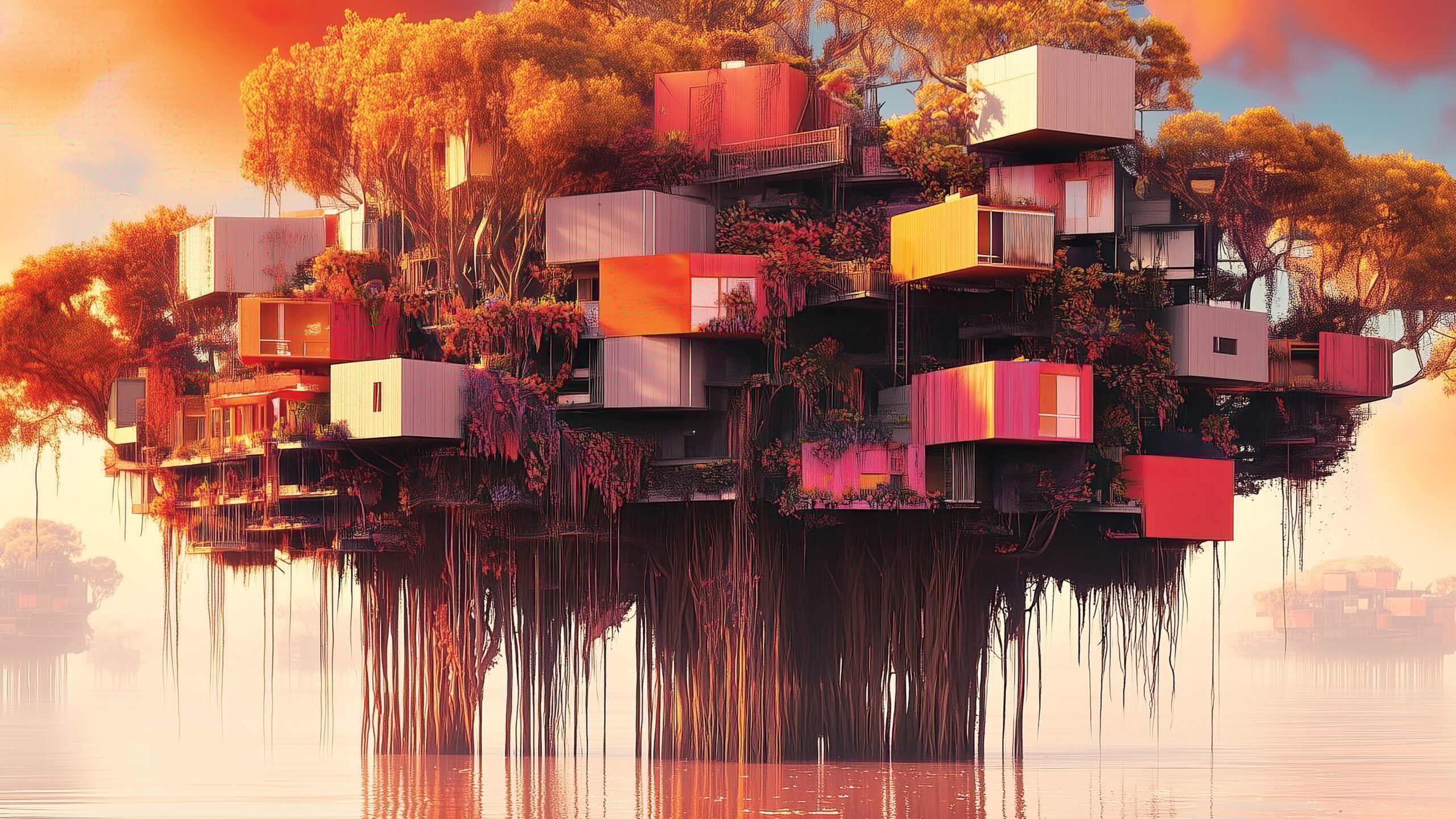
Liam Young Is World-Building With Spatial Design
Moving beyond the limits of the traditional site plan and drawing sets, speculative architect, SCI-Arc professor, and filmmaker Liam Young describes new tools—film, gaming engines, immersive media, and cross-disciplinary collaboration—as essential instruments for a practice operating at a planetary scale. At the heart of his argument is the belief that today’s crisis is not technological but imaginative: We lack compelling visions of futures large enough to meet the realities we face. Here, METROPOLIS speaks with Young about his new exhibition, Planetary Imaginaries (on view at SCI-Arc through March 8), and the expanding role of architects as world builders.

Francisco Brown: You’ve described yourself not only as an architect, but as a world builder. What does world building mean to you, and why do you believe architecture should play a larger role in it?
Liam Young: In Los Angeles, especially in Hollywood, world building means constructing the entire narrative universe around a story. In our studio, we create a world first, and within it we can set a film, a prequel, a sequel, a video game, or an immersive experience.
But world building isn’t just screenwriting—it’s spatial design. It’s thinking about the world in which the objects we design actually sit. We live in a condition of global supply chains, planetary material flows, and vast infrastructures. To design today is to design within that expanded field. I think world building is the design genre of our generation.

FB: When did you realize this could become a formal medium—one you would eventually shape into a master’s program at SCI-Arc?
LY: The “seeds were planted” with Unknown Fields, the documentary studio I run with architect Kate Davies. We set out to explore the hidden landscapes behind the modern city. To truly understand a building, a chair, or a phone, you can’t look at it in isolation—you must trace the sites that produce it and the sites it produces, from extraction to waste.
We once followed the iPhone supply chain from the Apple Store back to rare-earth mineral mines in Inner Mongolia. That was nearly twenty years ago. It made clear that there is no singular site anymore. Everything is globally connected—physically and conceptually.
Architectural drawings don’t adequately describe these atomized networks of systems, infrastructures, and landscapes. So, we began rethinking what a site plan could be. That thinking eventually evolved into the program at SCI-Arc. Architects need new visual languages to describe the true scale of what they’re shaping.

FB: Do you think that world building emerging from architecture schools lacks consideration of ecological systems? At times, it appears dystopian or preoccupied with decaying infrastructures. Is that a fair reading?
LY: World building, by definition, includes all layers—human and nonhuman, natural and artificial, physical and digital. Architects are uniquely positioned for this because we sit between culture and technology. Architects and creatives constantly collaborate across disciplines with filmmakers, writers, scientists, and engineers. Architects are generalists. We know a little about everything. In a world where everything is connected, that generalism becomes powerful.
What’s disappointing is that architects often become instruments of capital—designing luxury homes, trophies, icons for regimes. The avant-garde frequently serves those with money and power. Yet our training equips us to operate much more strategically.
The aim of the Fiction and Entertainment program at SCI-Arc is not to dissolve architecture, but to expand it. Architects can work in tech companies, film studios, video game design, politics, planning departments, and curation. If we don’t expand, we risk becoming a marginalized luxury service. The world builder can operate across these territories and see relationships between technological systems and so-called nature, which is itself deeply constructed.

FB: In Planetary Imaginaries, you argue for moving beyond exhausted aesthetics. What does that mean?
LY: I describe my work as constructing “planetary imaginaries”—imaginary worlds at the planetary scale. The crises we face are planetary, so the visions we construct must match that scale.
The problem is that planetary-scale projects are often portrayed as dystopian—Bond villains, evil corporations, and their techno-utopian architects “Master Planning” Earth. Meanwhile, hopeful futures fetishize the local: neighborhood gardens, small-scale grids, backyard farming. These ideas stem from the 1960s and ’70s environmentalism, but the scale of today’s crisis makes them insufficient.
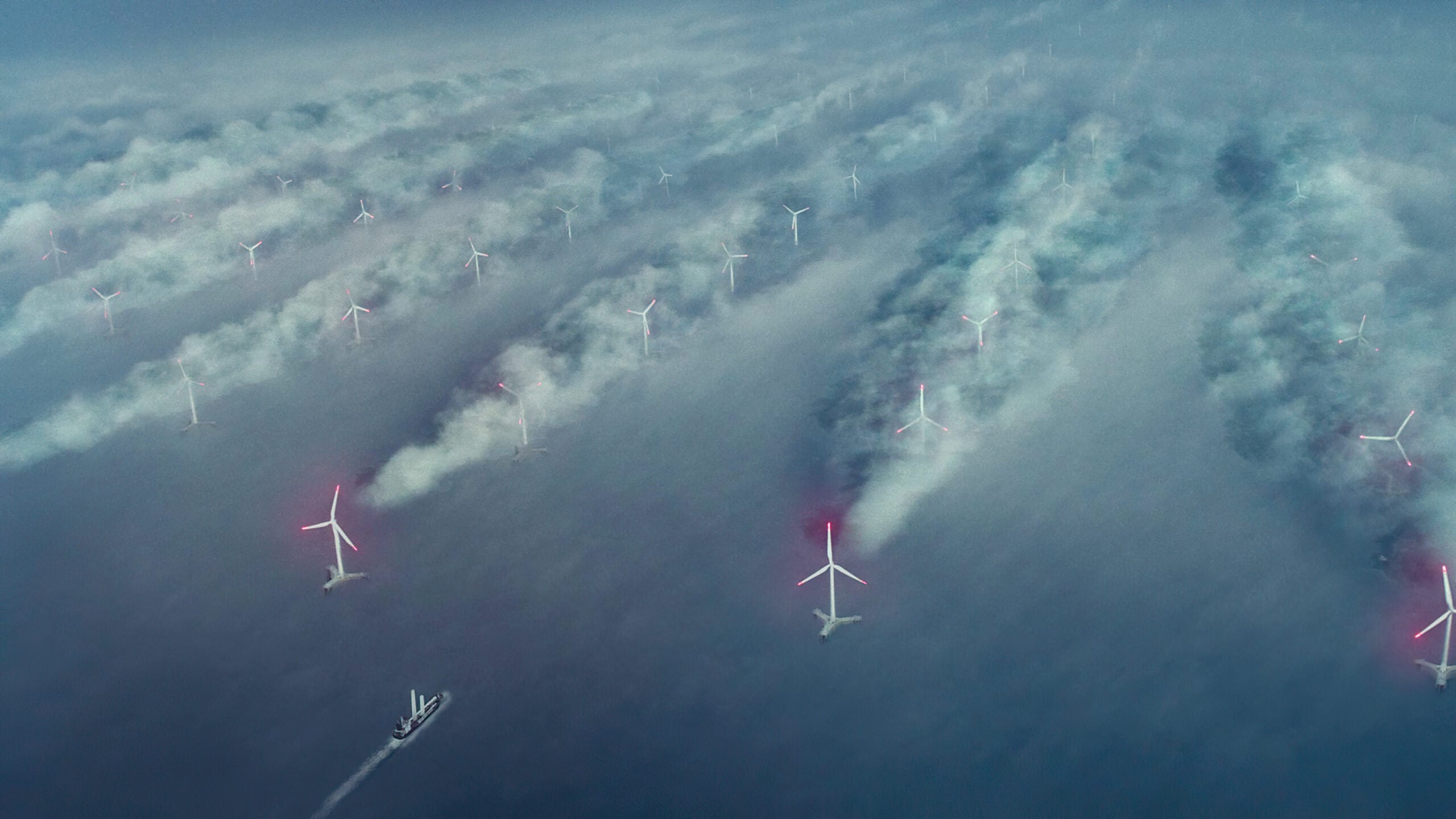
We need new imaginaries that are pragmatic and viable at the planetary scale. The future may not look green in the pastoral sense. It may look like vertical farms lit by red and blue LEDs, powered by vast renewable systems. It may look like hyperscale data centers, centralized to minimize damage from distributed failures. It may look like repurposed oil infrastructure pulling carbon from the air, vast wind farms, or even geoengineering.
The tragedy is not technological failure—it’s a failure of imagination. The front line of climate discourse is cultural. The futures we imagine become the futures we build. That’s why working in film, games, and popular culture matters. We need to recalibrate what a hopeful future looks like.

FB: What has surprised you most in developing this work and teaching it?
LY: What’s been powerful is seeing how these methods have influenced the broader school and are now standard tools in architectural education. That’s part of a broader technological shift.
We’ve moved from the 2D rectangle—the cinema screen—as the dominant storytelling format to immersive worlds: VR, domed environments, large-scale stage experiences. The language of cinema—cuts and edits—becomes less relevant. Instead, we talk about thresholds, transitions, and spatial sequences. There is a contribution to new processes. Immersive media is fundamentally architectural. Students aren’t graduating into the same world anymore, and opportunities for architects within immersive media are too significant to ignore.
Would you like to comment on this article? Send your thoughts to: [email protected]
Latest
Projects
UC Berkeley’s Newest Building Is All About Human Interactions
The long-awaited project highlights uncomfortable truths about Los Angeles’s cultural sector and civic health.

Projects
ZD+A Brings a Modernist Mexico City House in Line with its Context
Architect Yuri Zagoin Alazraki reorganized the speculative house to respond to its site and create unique spaces for contemplation.