



June 1, 2026
Gourmega Reconfigures the Communal Table
By the time this issue goes to print, Gourmega—the latest venture by Jon Gray, cofounder of Ghetto Gastro—will be fully operational in downtown New York. When I visited the space during opening week, however, the energy was notably calm. With a guest lineup that included Hollywood A-listers and family friends, Gourmega felt like a shared lunch experience where guests could talk about Black culture, food rituals, and the restaurant interiors—an atmosphere that reflects the project’s overall attitude toward a designed dining experience.
Located in a narrow storefront, the restaurant will function as a café during the day and a dinner spot at night. With this dual purpose, the project poses questions on gathering, hierarchy, and how the restaurant structures social interaction. To answer these questions, the client invited architect Mariam Issoufou to design the space and furniture. The project—her Niger- and New York–based studio’s first in the city—posed significant challenges in both time and budget. The client allocated just five months for design and construction.
Gray frames the project as an act of being “selfishly selfless … in making things from a desire for what I want to exist in the world,” adding that “the world doesn’t need more shit.… [It’s about] being super intentional with what we build and what we create and doing it from a space of love.”
Issoufou’s approach begins with a research “excavation.” A deep dive into the history of the surrounding urban environment informs the restaurant while defining its ethos and place in the city. The site sits on one of Manhattan’s earliest free Black settlements, once known as the “Land of the Blacks.” Issoufou explains, “So [I thought] there’s already something to grab onto from that point of view. And for me, that’s why it really doesn’t matter, because the minute I have this substance to work on, my challenge is just to figure out how do I give this a design form.”
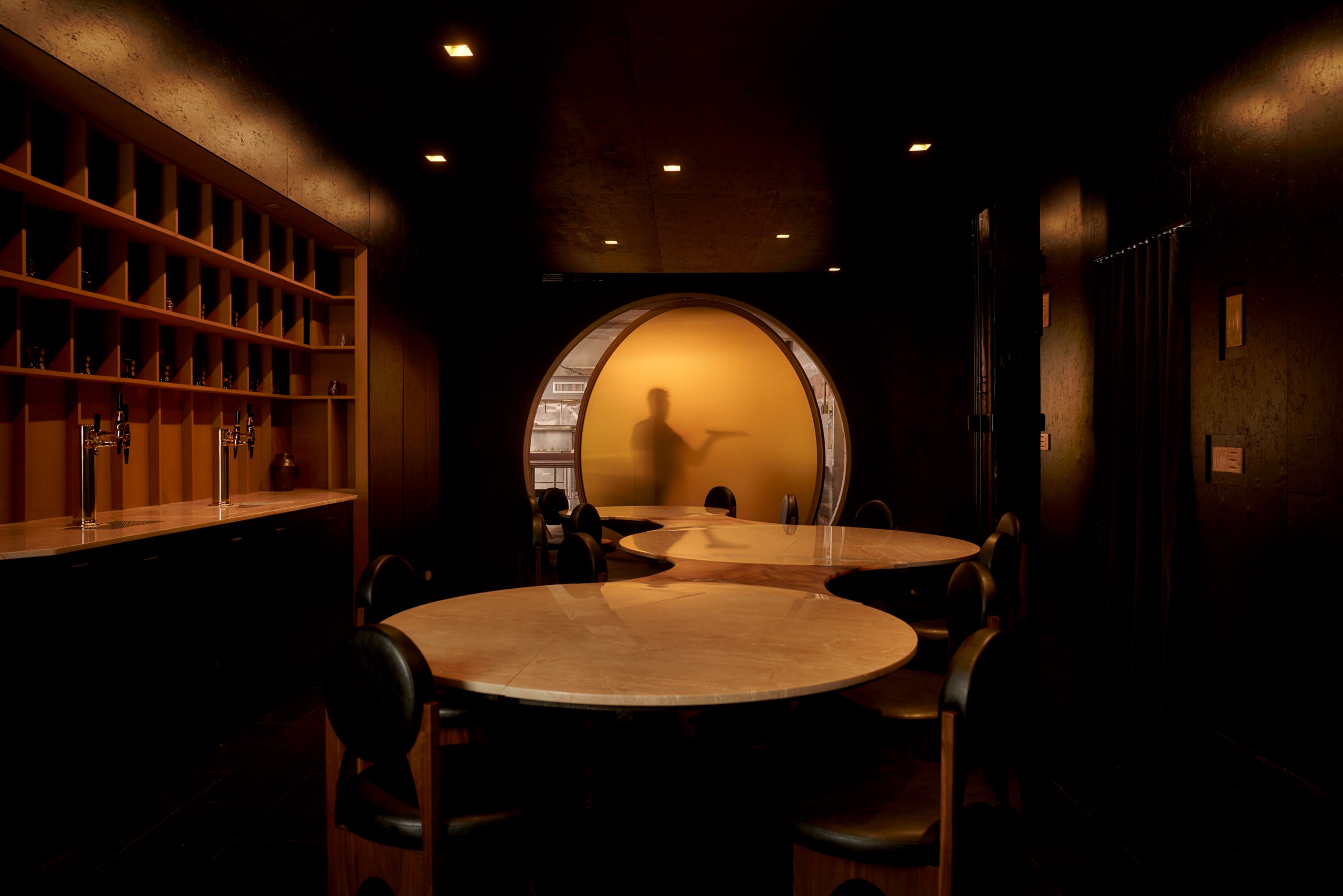
Central to this is a rethinking of communal dining. “What does ‘communal table’ mean?” Issoufou asks. “Because having to sit around one object doesn’t bring people together necessarily … Are you actually talking to each other?” In response, the studio developed a modular system consisting of three connected round tables that can be separated into seven smaller units during the day, collapsing and expanding social configurations as needed. This flexibility resists the hierarchy of the traditional head of table, aligning with Gray’s desire to “rebel against proximity to power.”
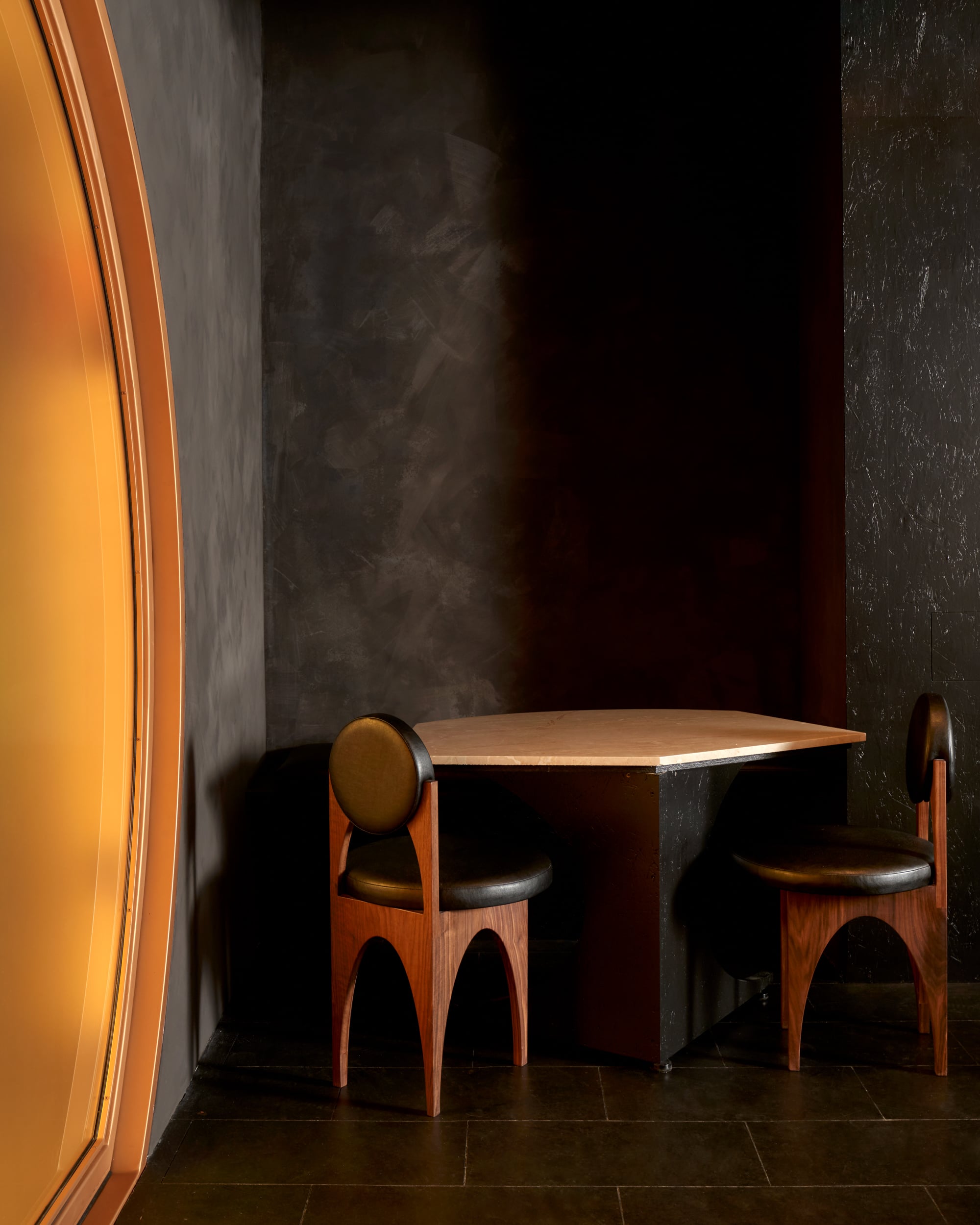
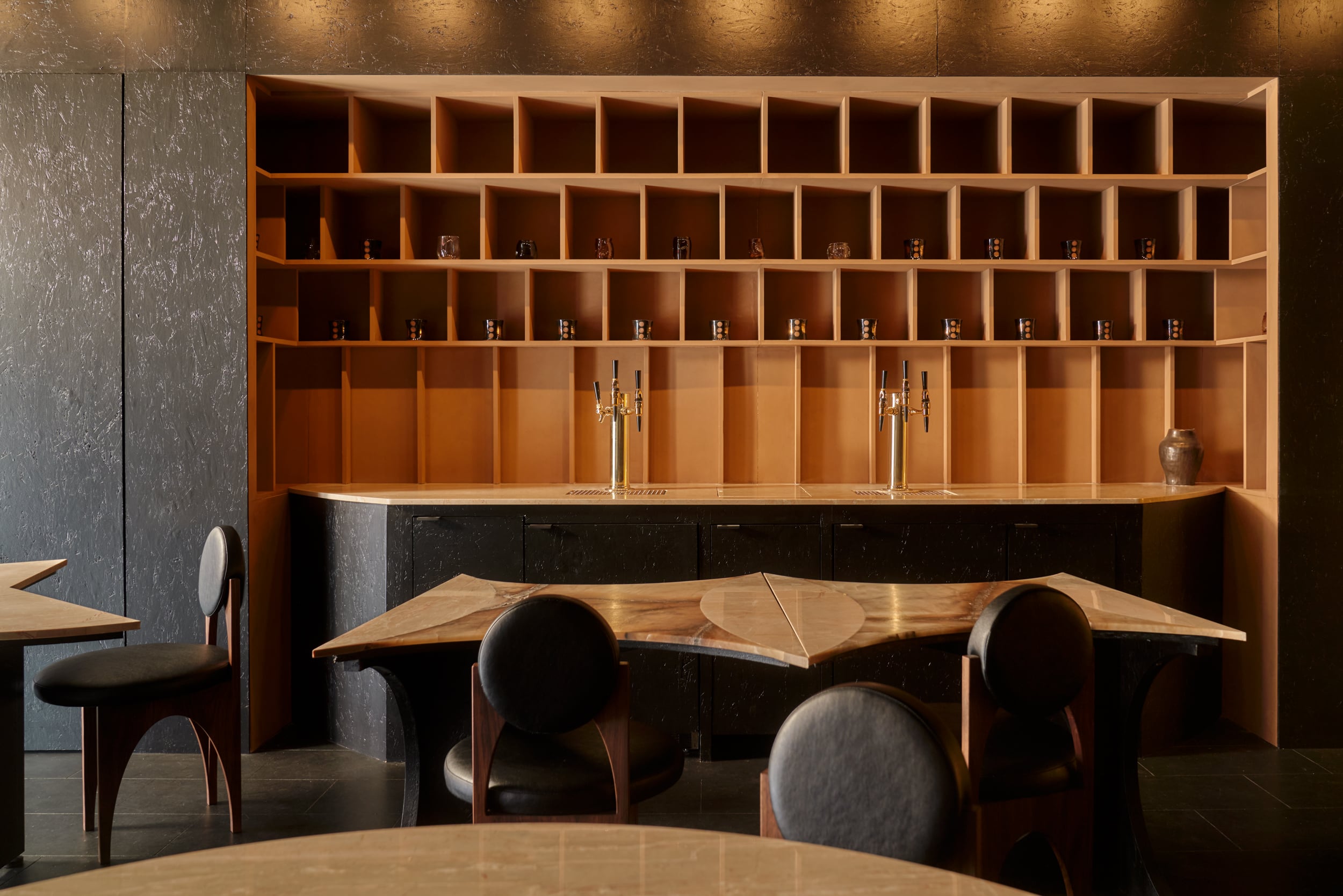
The dark interiors are composed of painted chipboard partitions, while travertine and alabaster tabletops and surfaces elevate the dining experience. Walnut chairs with black vegan leather upholstery, also designed by the studio, hover between café seating and throne-like presence.

A translucent yellow circular pivot door marks a critical threshold, linking the dining room to a soup kitchen operated in collaboration with Rethink Food. This gesture collapses distinctions between production and consumption, foregrounding food as both cultural and civic practice.
The project also draws from the legacy of mid-20th-century integrated social clubs known as Black and Tan clubs, where “people would go and dance, and every race would be together,” explained Gray. One of them was just two blocks from the site. This reference inspired Gourmega’s broader identity as a site of convergence—where “breaking bread” becomes a mechanism for “building bridges,” Gray adds.
Articulated through subtle interventions like a bathroom mural and bronze wall sculptures by Nigerian designer Nifemi Marcus-Bello, inspired by the Benin Bronzes, Gourmega is shaped by traces of erased histories, while its spatial logic proposes new modes of gathering. As Issoufou puts it, the aim is “to get to the heart of what it means to be in community with others”—a project not just of dining but of reassembling relation itself.
Would you like to comment on this article? Send your thoughts to: [email protected]
Latest
Viewpoints
Detroit Month of Design: A City’s Work in Progress
Now in its 16th year, the celebration offers insights into the Motor City’s ongoing accomplishments without glossing over its hurdles.
Projects
How a Hybrid Building Helped an Historic Manhattan Congregation Remain in Place
On Billionaire’s Row, FX Collaborative designed a new home for Calvary Baptist Church combined with an office tower.