



November 14, 2025
Max Strang Is Advancing Florida’s Architectural Legacy with Environmental Modernism
“I know we are regarded for our work in the tropics and subtropics, but saying ‘environmental modernism’ definitely evokes a wider mission,” Strang explains. After all, a home in the tropical modernist style may appear to be more environmentally astute than it actually is, while “environmental modernism” puts an unequivocal stake in the ground in terms of climate resilience—which includes sensitivity to location, use of materials, efficiency in design and performance, and disaster preparedness. The AIA honor reflects the architect’s leadership in this increasingly urgent area. “There’s a track record there,” Strang says. “In raising homes off the ground, for example, we’re combining the science and the architecture.”
Strang himself grew up in a home designed by Gene Leedy (1928-2019), a founding father of the so-called Sarasota School of Architecture, and later worked for Leedy, even purchasing the master’s Winter Haven house after the elder architect died. Leedy was prescient in utilizing environmentally sensitive home positioning, breezeways, and shady overhangs—features that proved to be vastly influential in Strang’s work.
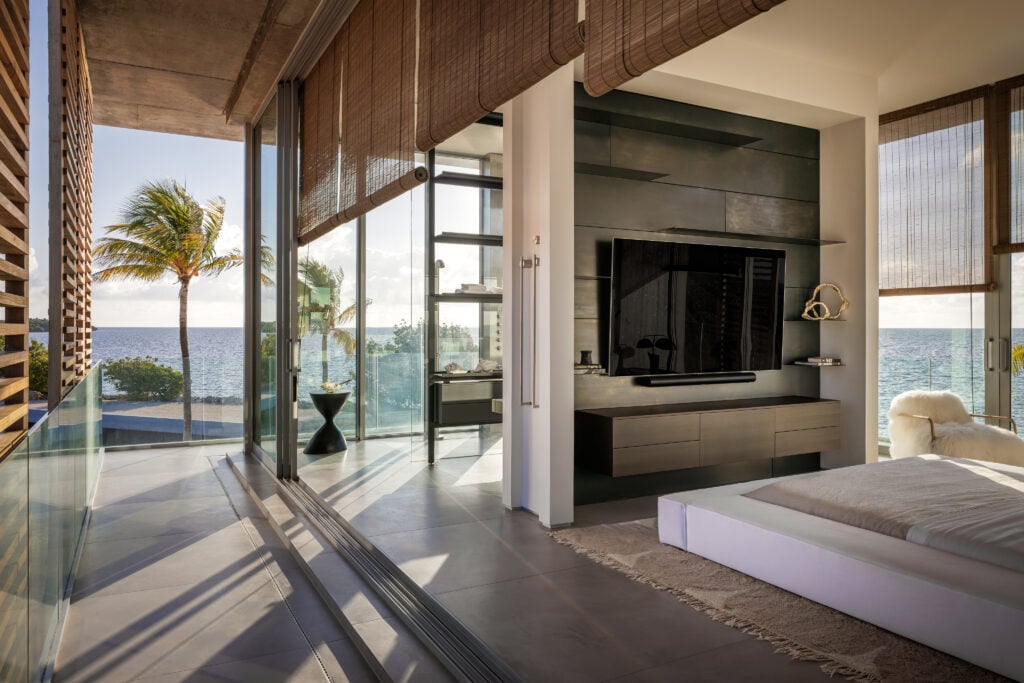
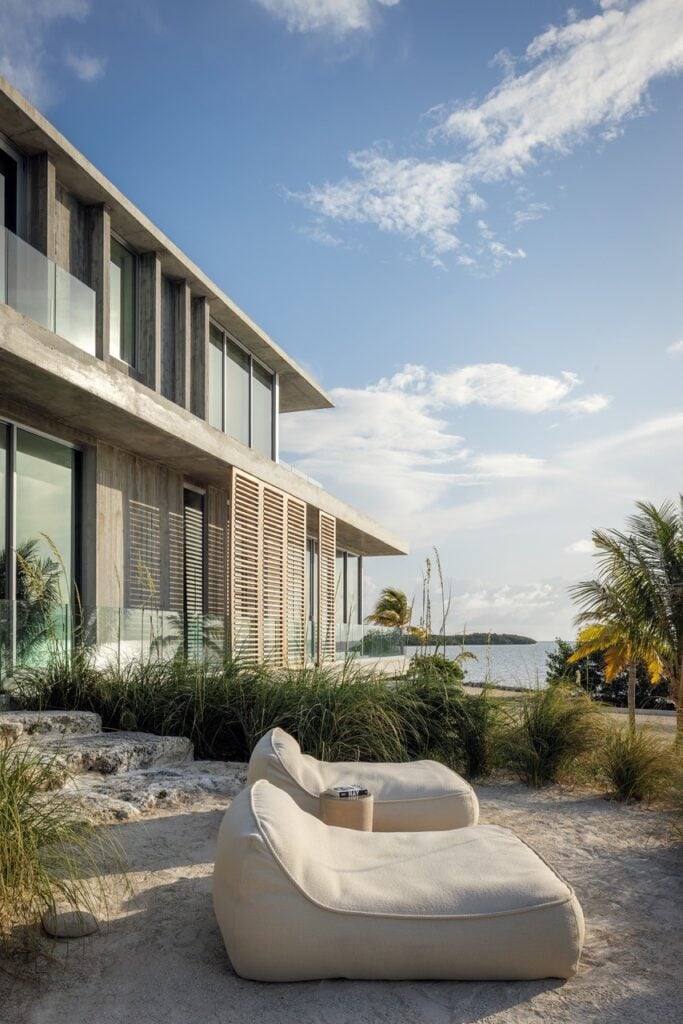
Strang also cites visionary Sarasota developer Philip Hiss (1910-1988) and the latter’s travels to Indonesia as a key influence: “He went to Bali and saw all kinds of inspirations there, and brought those ideas back to Florida, to Sarasota specifically, and started to hire the likes of Paul Rudolph and others to pursue that type of architecture. That’s really the genesis of the Sarasota School.” Strang says that the Rock House, “the house that I’m probably most associated with, was heavily influenced by Balinese architecture. The whole upper deck is this amazing covered terrace.”

The home, which Strang designed and his family lived in for six years, is known for its appearance in the 2006 film version of Miami Vice. With the help of cinematic magic, Rock House stood in for a fictional drug lord’s South American lair near Iguazu Falls (which straddle both Argentina and Brazil); Strang says that people still knock on the door asking to see the famed waterfalls. Environmentally conscious aspects include the use of local limestone, broad overhangs, cross ventilation, and natural daylighting.
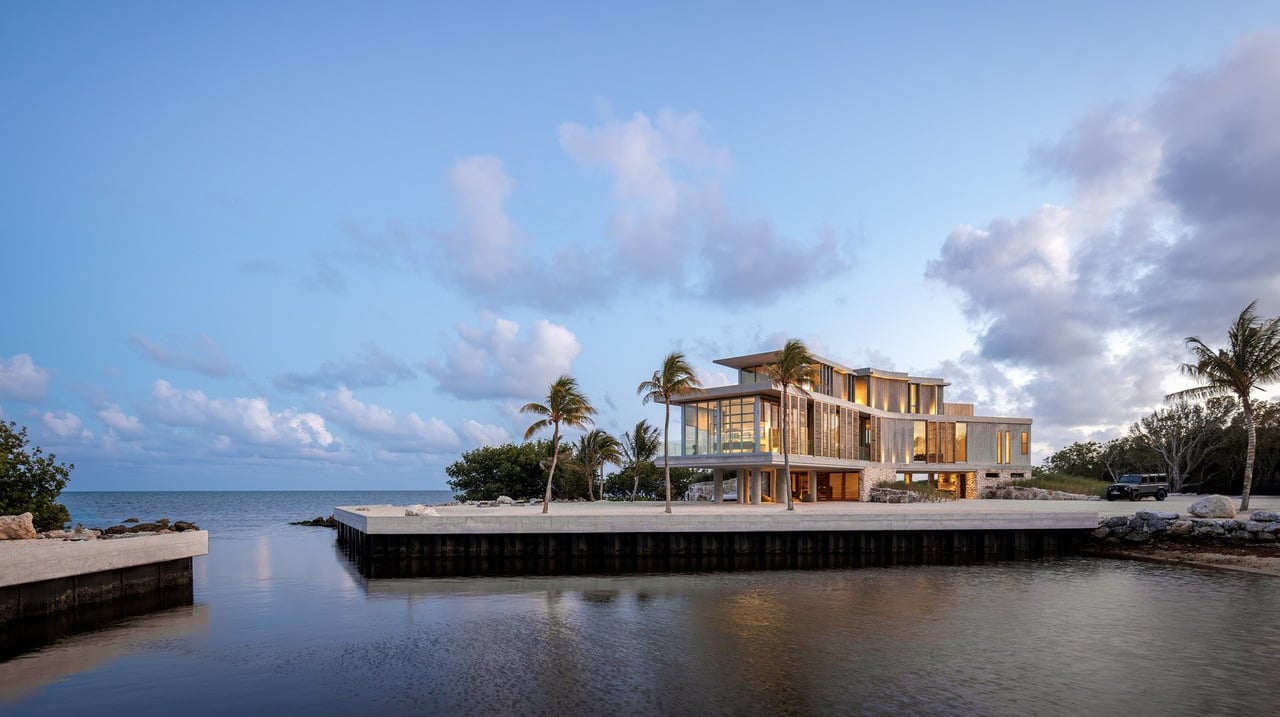
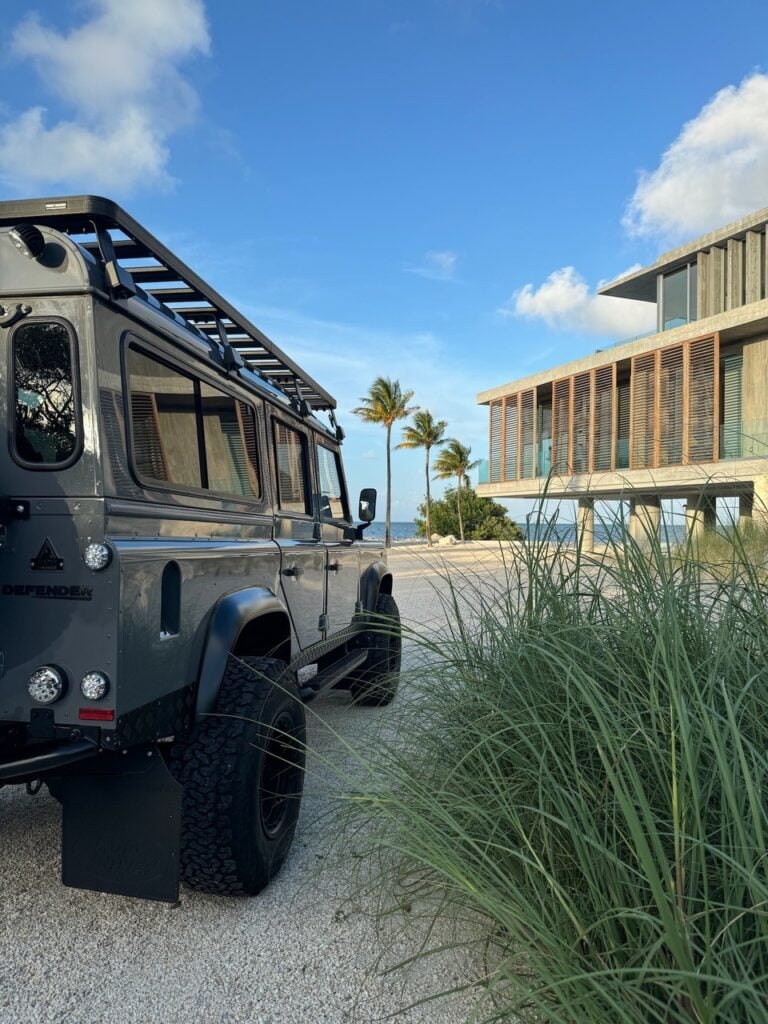
While Rock House feels like it’s tucked into an equatorial jungle, the 60 waterfront homes designed by the firm reflect the value of coastal resilience. Elevation is key, as in the Van der Vlugt Residence, located in a flood zone in Key Largo. Raised ten feet off the ground to combat both sea level rise and storm surges, the open-air first level includes a covered terrace with a gym facing the water and a cluster of concrete columns that support the 50-foot cantilever above plus the two upper floors.
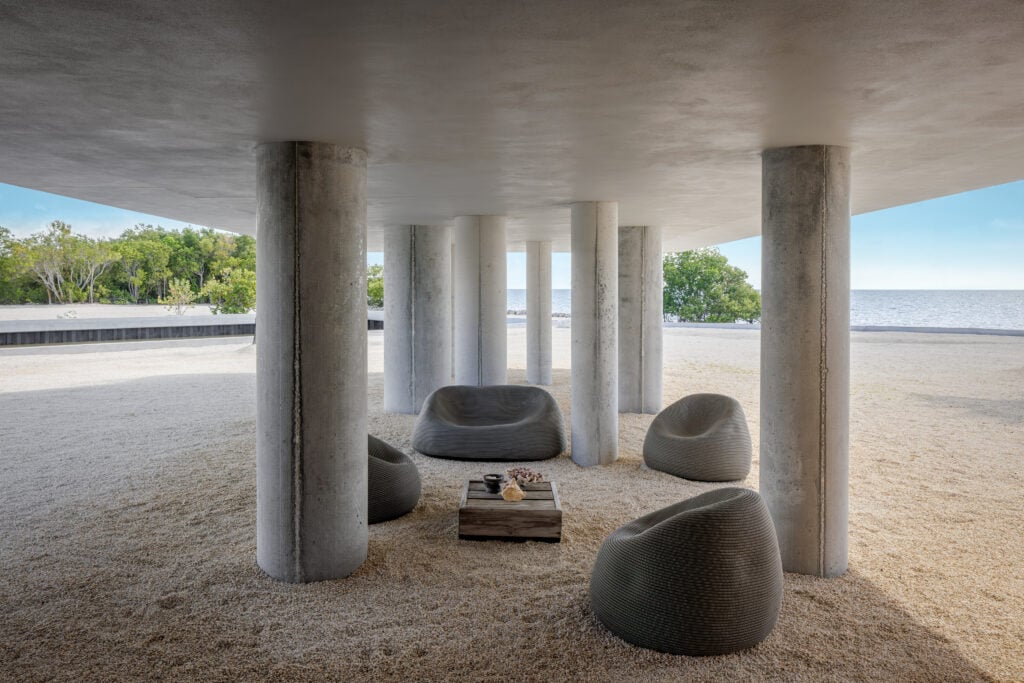
Strang acknowledges that concrete usage “is a tricky subject in the architectural community,” because while the material takes a lot of energy to produce, it is meant to “age gracefully,” in his words — the key to durability and sustainability.
“Look at Rome,” he says. “Look at the Pantheon,” which is crowned by the world’s largest and oldest unreinforced concrete dome. “We have a disposable architectural trend here, but that is built to last.”
Max Strang’s Three Lessons from the Sarasota School
Excerpted from the essay, “Lessons of Resiliency”
“Now is the time to apply those “Sarasota School” lessons and equip our homes, buildings, and cities with the strategies of resiliency. Rudolph’s Walker Guest House, a diminutive powerhouse of architectural design, hints at the strategy of raising the home above the ground. This strategy was more boldly realized with the design of the Leavengood Residence and the unbuilt design for the Walker Main House. The first takeaway of those latter designs is the simple response of ensuring homes are built higher above the ground. As the seas rise and threats of localized flooding increase, coastal homes must be prohibited from using traditional “slab-on grade” construction methodologies. Yes, it’s more expensive, but those costs pale in comparison to the long-term financial implications of not building with the future in mind.
Currently, the Army Corps of Engineers establishes requirements regarding the minimum elevations of new structures. An opportunity exists for local municipalities to go beyond these mandated minimums. The numerous and expensive costs associated with raising existing homes will be difficult to overcome, however, it makes sense that new construction conform to stricter standards. Coastal cities need to encourage their residents to build higher. In the long run, the savings on insurance premiums and costly repairs will be enormous. The rewards for building higher clearly outweigh all upfront costs.
The second takeaway from the “Sarasota School” is the prospect of using the area beneath the home as functional and aesthetically inspiring spaces. Current building and zoning codes prevent the effective utilization of the areas beneath a raised home. I propose that such codes be refined to allow homeowners to enjoy the full potential of these covered, outdoor spaces. A home that exceeds the minimum required height above the ground provides a much greater opportunity to create enjoyable outdoor living spaces below. A major driver of ‘climate change’ and ‘sea level rise’ is our culture’s reliance on fossil fuels to power inefficient buildings. To mitigate this issue, new buildings must become more energy efficient. Sarasota’s early modern homes offer wonderful examples of this. Thus, the final takeaway from the ‘Sarasota School’ is the consideration of ‘passive design’ features such as deep overhangs, sun-shading devices, evaporative cooling, daylighting, and cross-ventilation.”
Read the full essay here
Would you like to comment on this article? Send your thoughts to: [email protected]
Latest
Viewpoints
Detroit Month of Design: A City’s Work in Progress
Now in its 16th year, the celebration offers insights into the Motor City’s ongoing accomplishments without glossing over its hurdles.
Projects
How a Hybrid Building Helped an Historic Manhattan Congregation Remain in Place
On Billionaire’s Row, FX Collaborative designed a new home for Calvary Baptist Church combined with an office tower.