



November 6, 2025
This Studio is Reworking Indian Modernism by Hand

Over time, Indian architects, craftspeople, and institutions such as the National Institute of Design (founded in 1961 with Bauhaus and Ulm influences) adapted and humanized this vocabulary, making modernism livable. Unlike its European counterpart, Indian modernism was never singular—it was plural, authored as much by anonymous carpenters as by famous designers, negotiated between imported ideals and local realities.
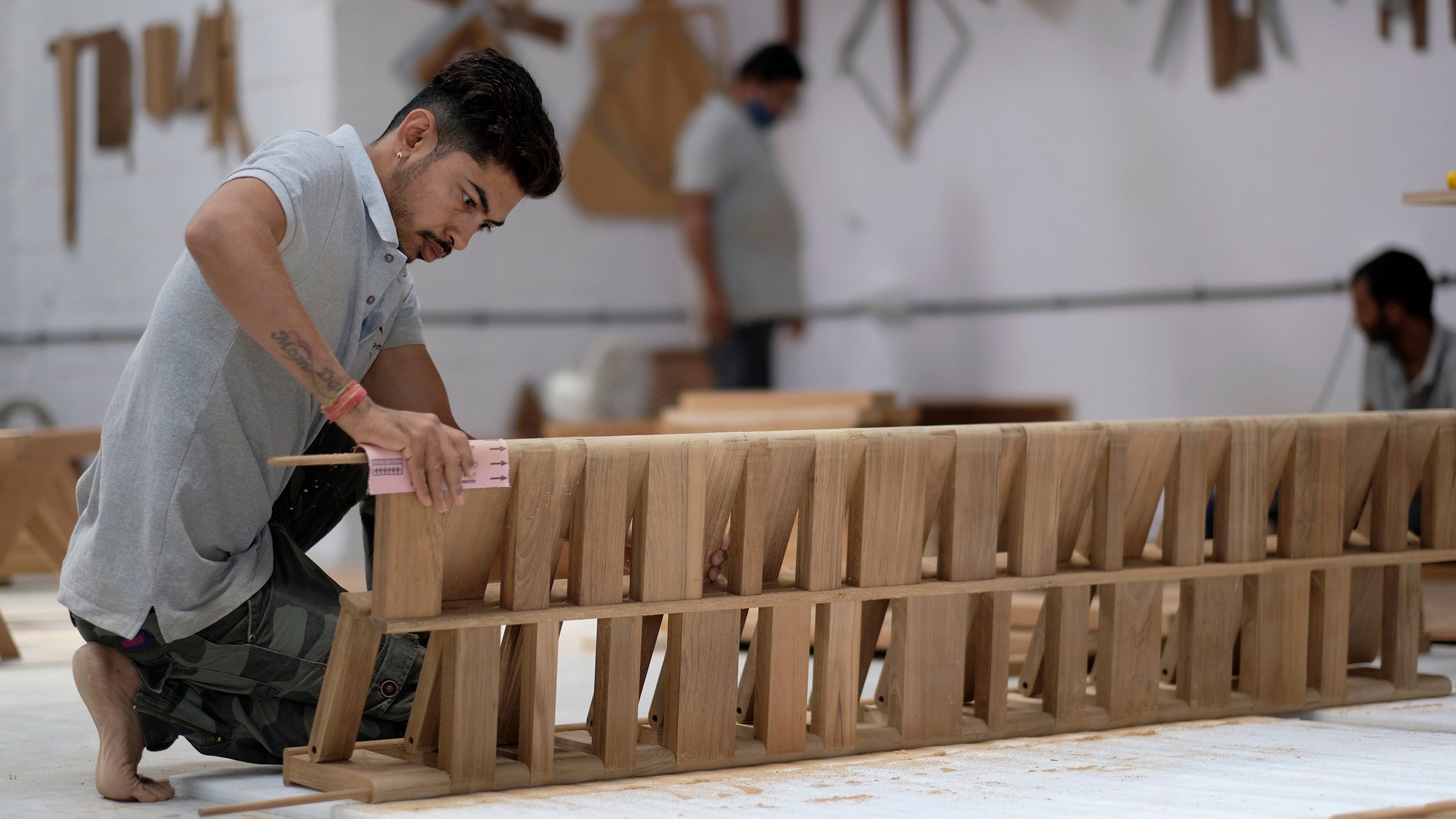
Phantom Hands continues that conversation today. Aparna and Deepak come from opposite worlds—she from design and art, he from technology—but share a common ethos: to marry craft with mechanics, and excellence with empathy. “I’m a creator at heart,” Aparna says. “Collecting was enjoyable, but it didn’t offer the fulfillment that making does.” Craft, for her, is how values take shape. Their 100-person Bangalore workshop now bridges aspiration and responsibility, aiming to achieve global standards of design without losing sight of India’s material and cultural roots. Nothing happens without people, and the pursuit of excellence need not come at their cost.
R&D as Experimentation and Play
At the core of Phantom Hands is a simple idea: sustainability is not a badge to be displayed but a practice to be lived. The pandemic tested that conviction. When local factories shuttered, many displaced workers went door to door seeking jobs. Phantom Hands absorbed them—garment stitchers, upholsterers, and other craftspeople—into full-time roles.
Garment workers (mostly women) did what they already knew best, made bags. They began sewing woven and canvas bags that now serve as both packaging and part of the client’s unboxing ritual. Upholsterers helped establish an entirely new department. What began as an emergency measure evolved into a model of ethical production—one that fused livelihood with design and proved that sustainability could mean expanding care rather than contracting scale.
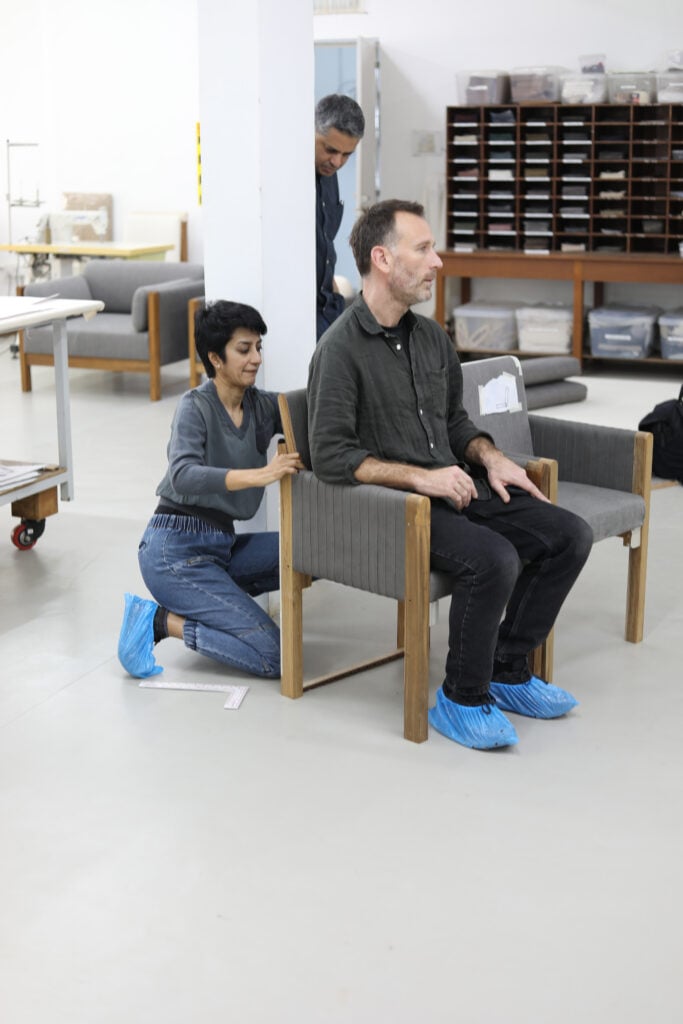
In most industries, R&D is about patents, IP, and product pipelines. At Phantom Hands, it’s about experimentation and shared learning. Formalized in 2020, during the pandemic, the studio’s R&D unit documents what other workshops might discard: videos of failed jigs, voice notes about drying times, scribbled finishing recipes, photographs of weaves that went wrong. Carpenters, upholsterers, finishers, packers, and designers all contribute.
By making process legible and accessible, the studio dissolves hierarchies between drawing-hand and maker-hand. Tacit gestures become teachable, durable knowledge. The result is refined furniture and a different logic of innovation—one where solutions emerge iteratively from the shop floor rather than descending as blueprints from above.
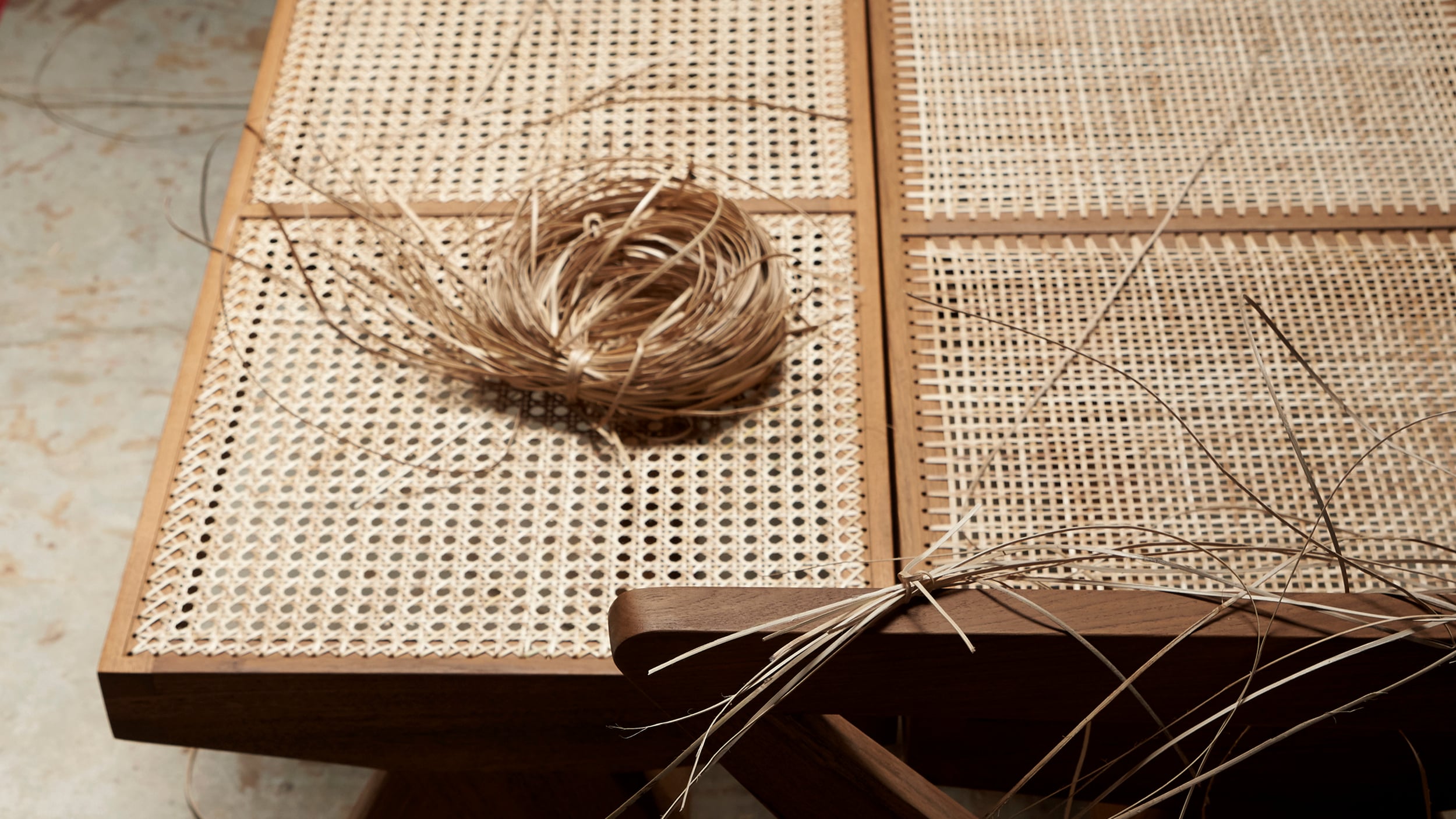
Material Choices, Ethical Stakes
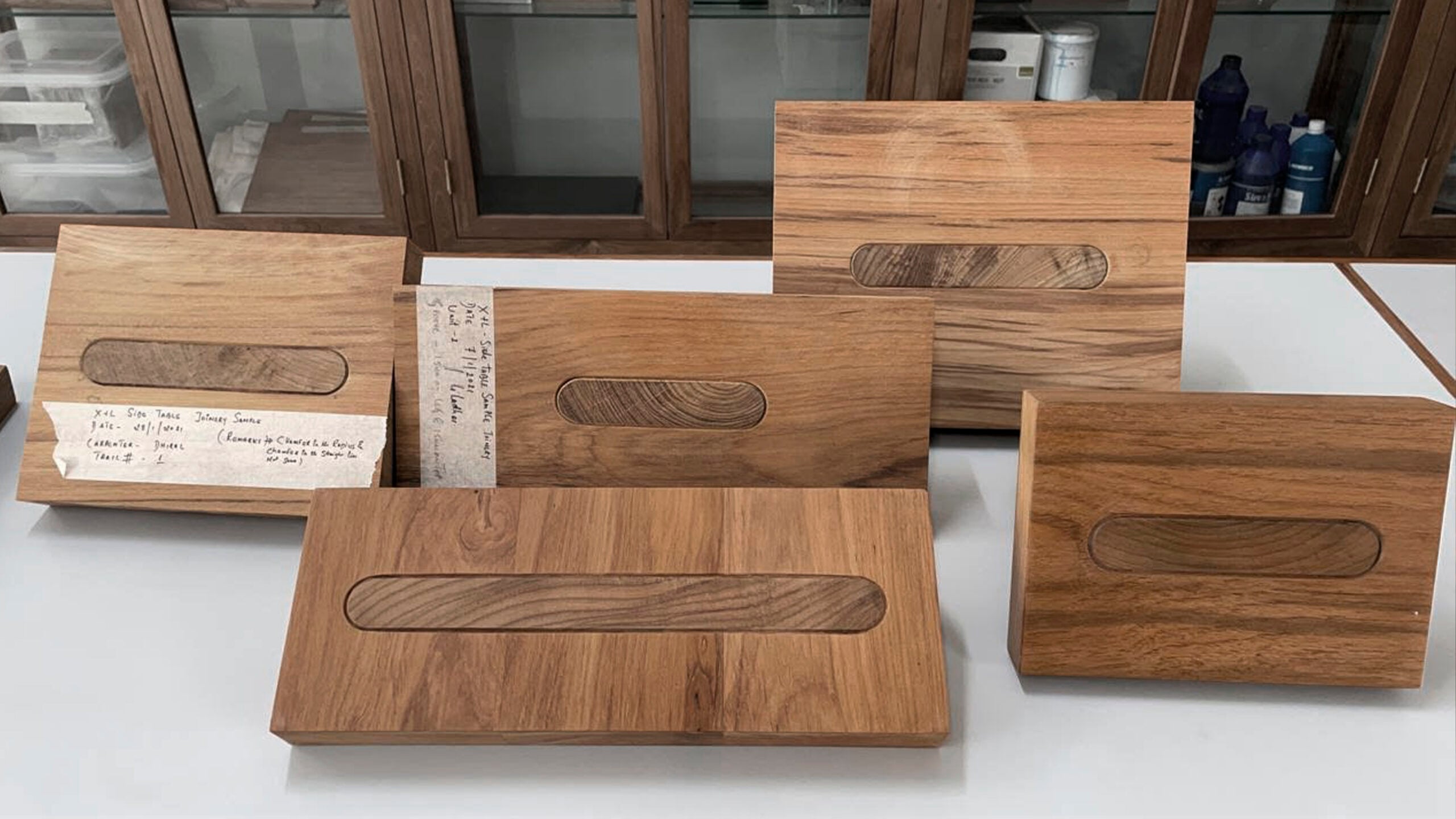
Material decisions at Phantom Hands are both pragmatic and political. Indian teak remains foundational, but its supply comes through government-controlled auctions of timber grown on cordoned forest land—systems often opaque and entangled with corruption, smuggling, and the long history of Indigenous land being taken into state control. “Things can easily go amiss,” Deepak notes.
To ensure accountability, the studio also sources FSC-certified American hardwoods like red oak and cherry, where forestry management and chain-of-custody data are verifiable. Finishes and adhesives have been overhauled as well: solvent-heavy polishes and toxic glues have been replaced with water-based stains, hard-wax oils, and non-VOC adhesives. “The glue we use now costs ten times more than what’s commonly available,” Deepak explains, “but it was a no-brainer—you can’t have workers inhaling toxic fumes.”
Phantom Hands’ design collaborations span eras and disciplines, each one pushing the workshop outward.
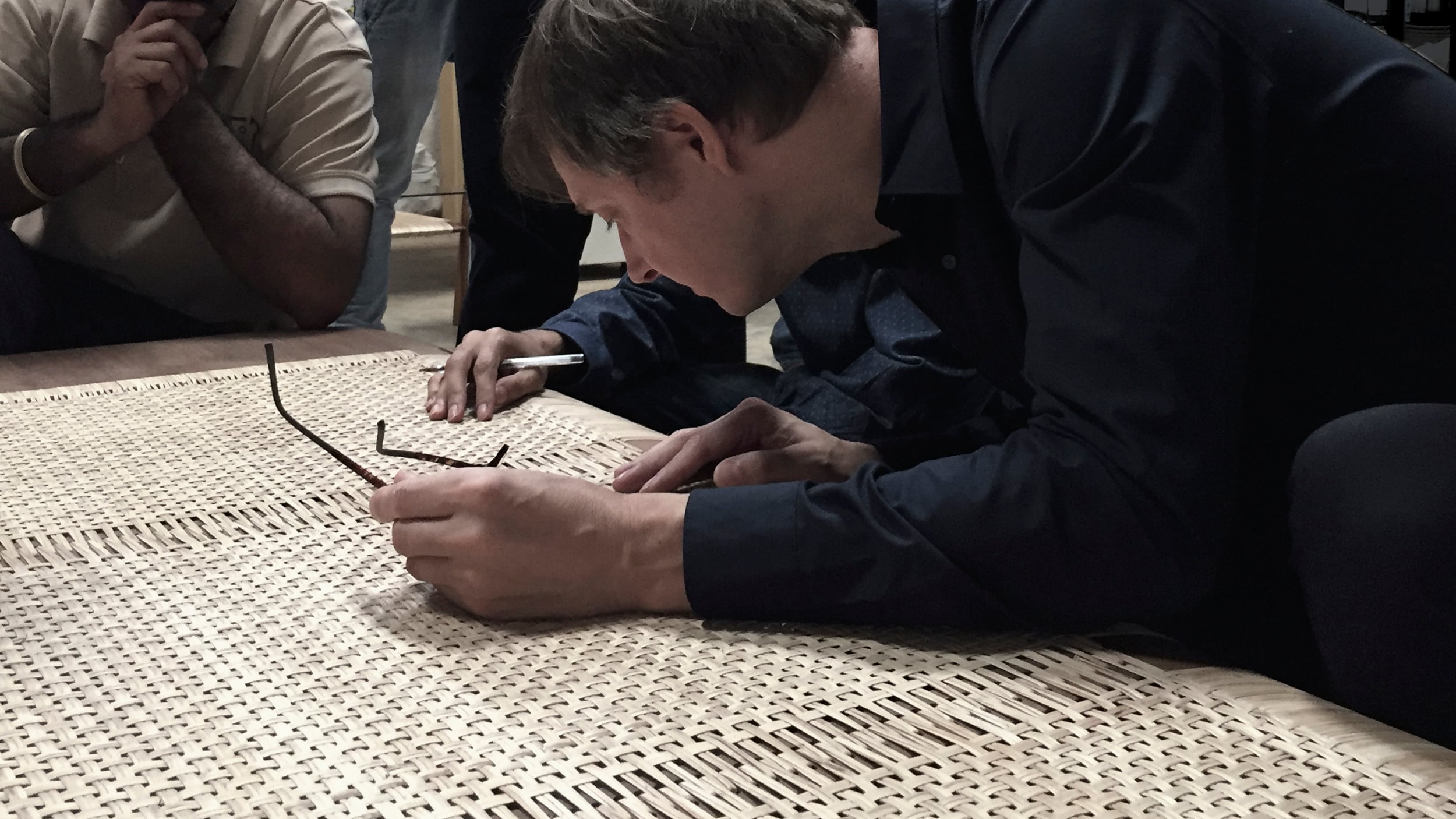
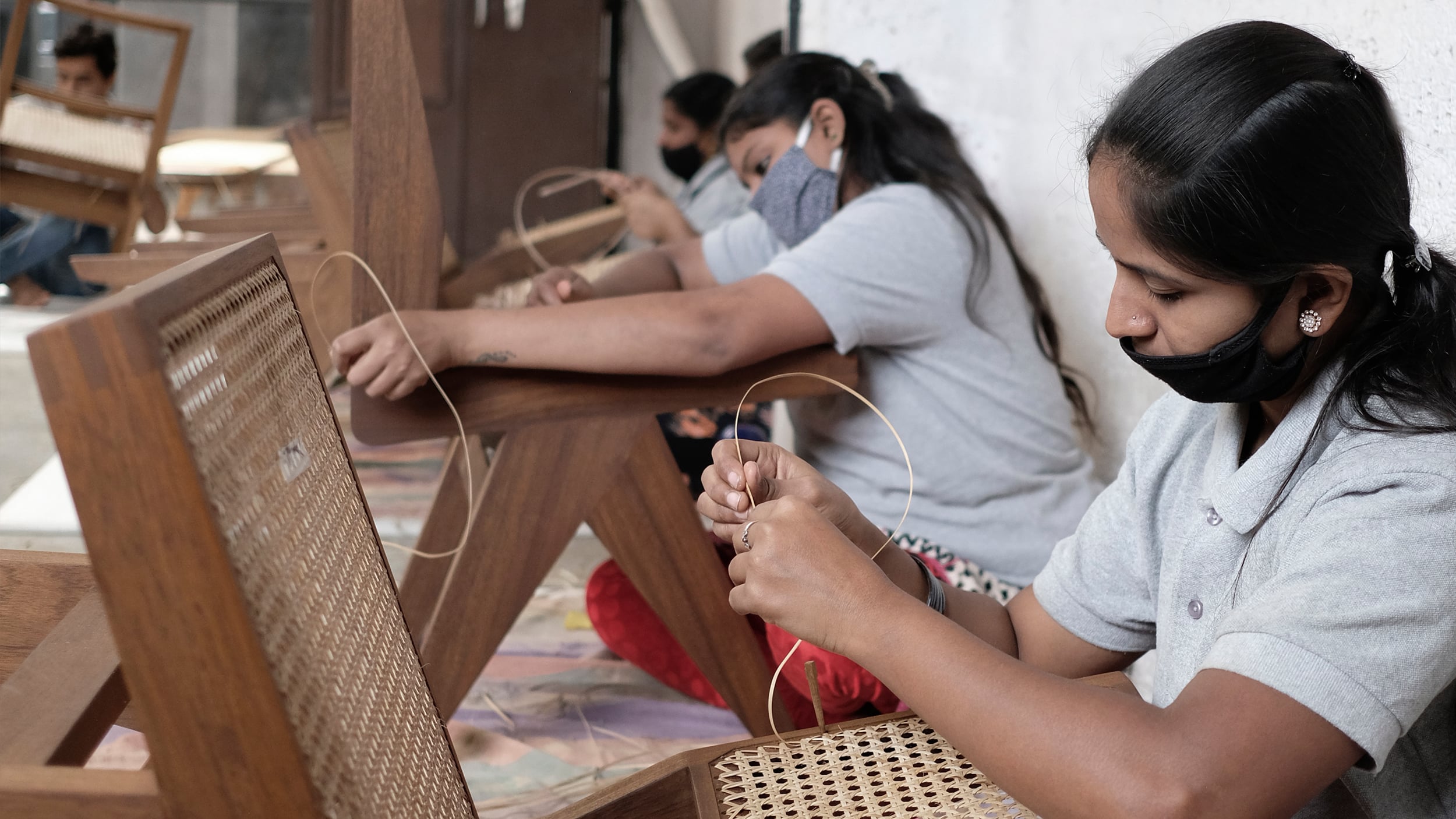
Project Chandigarh revisits the 1950s furniture originally designed for the city by Pierre Jeanneret and Indian collaborators, restoring the integrity of joinery, cane weaving, and finish that had eroded over decades of reproductions. The studio’s Geoffrey Bawa re-editions, developed with the Bawa Trust in Sri Lanka, extend this principle of restoration, reviving pieces conceived through collective authorship among architects, boat builders, and artisans.
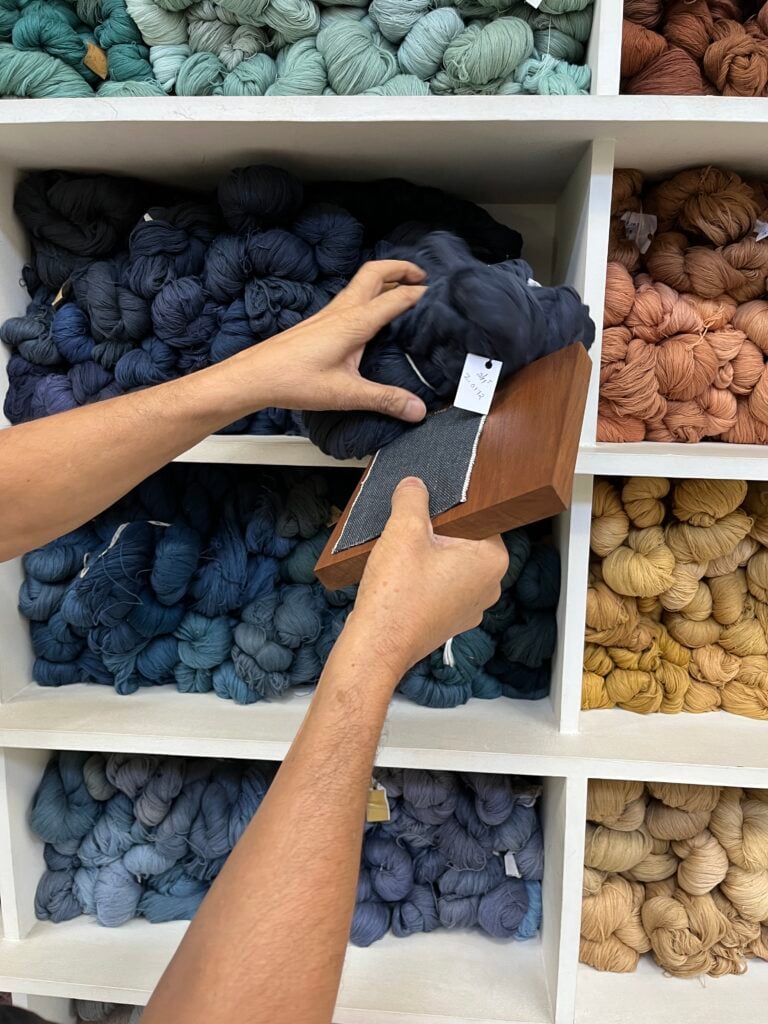
Textile designer Padmaja Krishnan brings hand-dyed and woven fabrics into Phantom Hands’ upholstery, embedding irregular textures that honor the tactile imperfections of craft. These textiles, along with the studio’s stitched and woven packaging, extend the same ethic of care that guides their furniture-making.
Swiss graphic designer Felix Pfäffli introduced a burst of play and color. His work with Phantom Hands was less about furniture form and more about visual language—an exercise in translating vibrancy from print and screen into material. “It was incredibly exciting to take something so graphic, so alive, and test how it could live on wood and fabric,” Aparna recalls. Matching colors across media proved technically impossible, but the attempt opened up new ways of thinking about surface, texture, and contrast—reminding the team that innovation is often found in translation, not replication.
Leadership, too, is cultivated from the ground up. Skill, not schooling, is the measure of mentorship. Talented craftspeople lead small teams and, increasingly, mentor design students—a quiet transformation that makes sustainability as social as it is environmental. “Of course, we aspire for excellence in the object,” Aparna says, “but the process teaches us so much more. The people who worked on it carry that pride and creativity forward—it all compounds into dignity in the work.”
Phantom Hands complicates easy dichotomies. It is both steward of South Asia’s modernist legacies and an experimental atelier open to play. Preservation and innovation are reconciled by method—through testing, record-keeping, and a willingness to let production itself define what’s worth keeping.
From this practice come lessons worth carrying forward: treat sustainability as a living process, not an afterthought, definitely not a slogan; see innovation as a social practice grounded in shared knowledge; and embrace pragmatic globalism—mixing local materials with certified imports when transparency demands it.
If sustainability is a way of working, Phantom Hands is building the method in public.
Would you like to comment on this article? Send your thoughts to: [email protected]
Latest
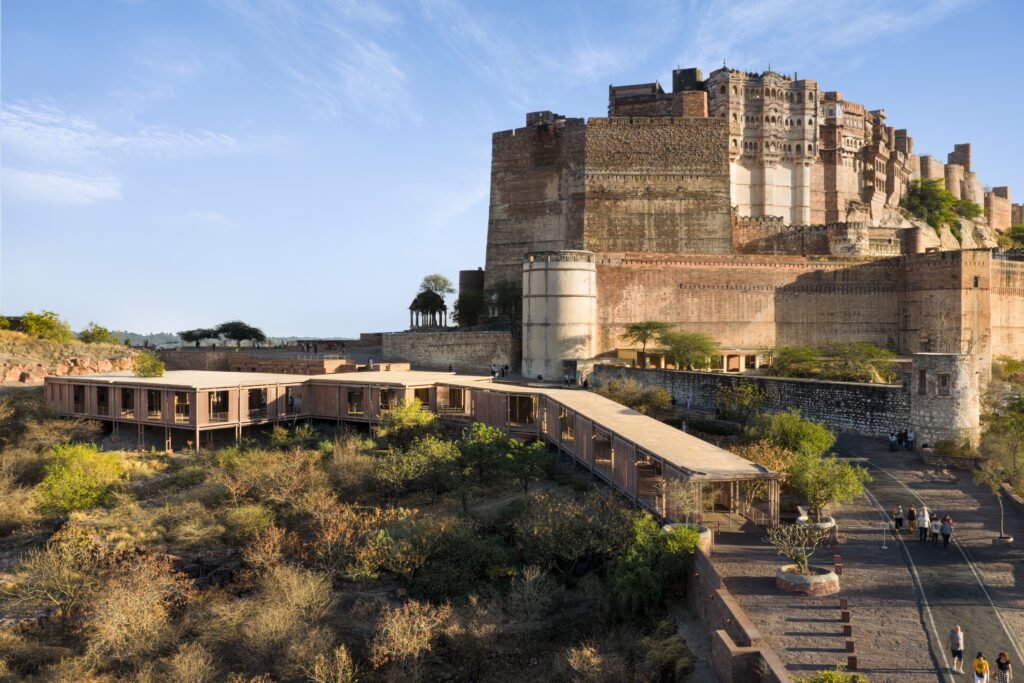
Projects
In Jodhpur, Studio Lotus Builds a Modular Future for Stone
Visitor Center at Mehrangarh Fort, sandstone-and-steel pavilions streamline visitor circulation, preserve rocky desert terrain, and give regional stone working traditions new applications.

Viewpoints
Celebrating the Craft of Architecture
METROPOLIS’s July/August 2026 issue, produced in partnership with Architizer, spotlights 25 standout projects and practices from the 2026 A+Awards.