



April 6, 2026
Material Bank Streamlines Material Sampling Across Europe
Material sampling is one of the most tangible parts of the design process and often precedes final specification decisions. Behind the scenes, however, it can involve a fragmented logistics chain. Samples frequently ship individually from different manufacturers, arriving in multiple packages over several days. For firms managing projects across offices and regions, this steady stream of deliveries can slow evaluation and add unnecessary coordination.
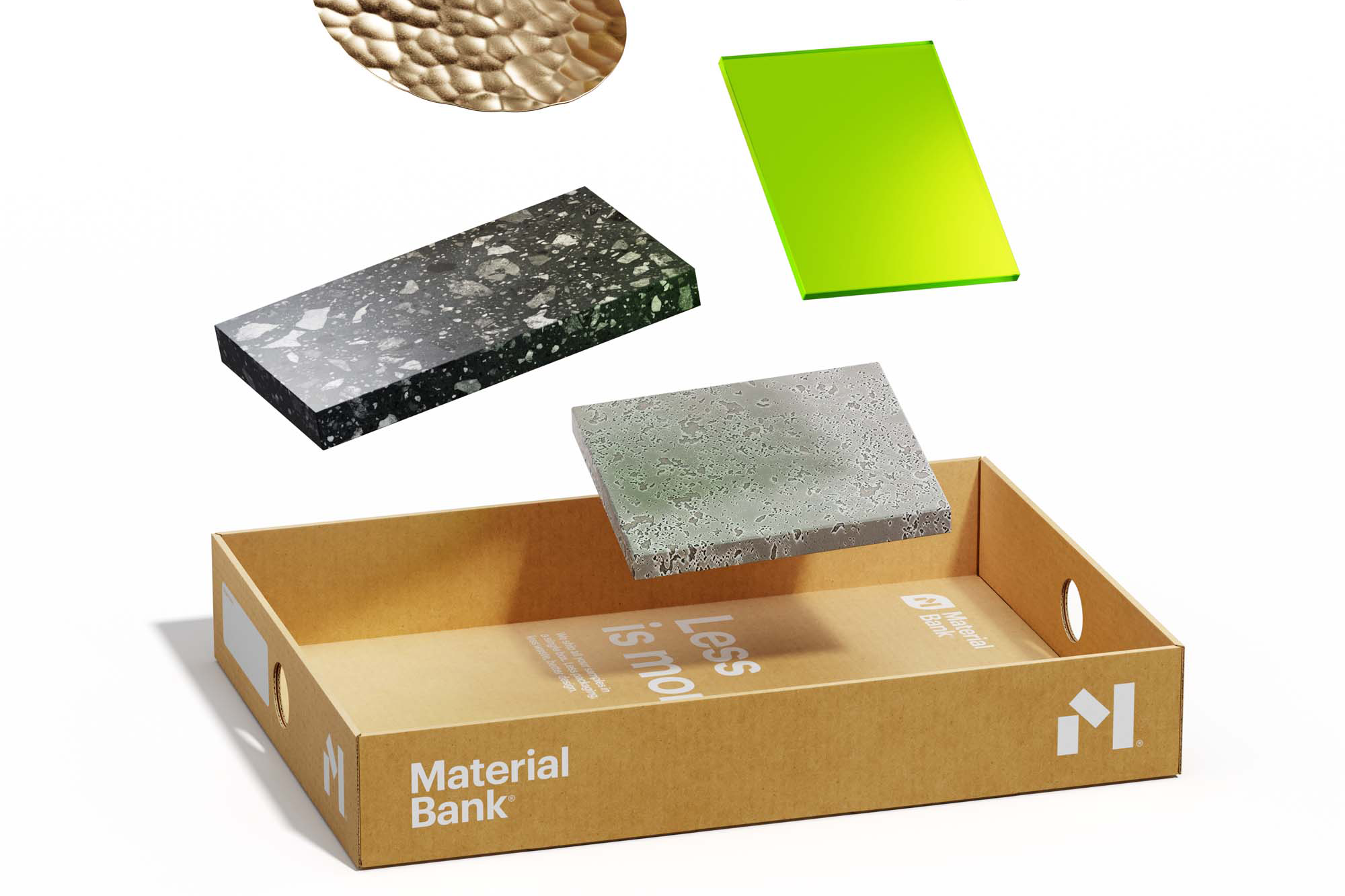
Since launching in the U.S. in 2019 and expanding into Europe in 2023, Material Bank has introduced a centralised system designed to simplify how samples are requested and delivered. The digital marketplace allows architects, interior designers, and corporate buyers to search more than 56,000 materials across 40 categories—including flooring, textiles, ceramics, wallcoverings, paint, acoustics, and tile — and receive samples from multiple brands consolidated into a single box delivered the next day.
Local manufacturer representatives remain connected to the process, ensuring designers still have access to product expertise and project support.
A Centralized Platform for a Fragmented Process
Material Bank connects more than 450 European and global manufacturers with design professionals requesting their materials. Instead of navigating numerous brand websites and coordinating separate shipments, users can search, filter, compare, and order samples in a single session.
Behind the platform is a centralised logistics model in which participating manufacturers stock samples within Material Bank facilities. Orders from multiple brands can then be gathered, consolidated, and shipped together in a single delivery.
For design teams working across offices and time zones, this structure helps streamline a process that has historically required significant coordination and often resulted in multiple shipments and excess packaging.
Rethinking the Logistics of Sampling and Sustainability
Material sampling has traditionally involved multiple individual shipments for a single project. Each package requires its own packaging materials and transport route. When time is limited—particularly during project deadlines—designers may also coordinate several shipments simultaneously or visit multiple manufacturer showrooms to evaluate materials quickly.
Material Bank’s consolidation model addresses this logistical challenge by combining samples from multiple manufacturers into a single delivery. While this does not eliminate the environmental impacts associated with shipping samples, it reduces the number of individual parcels typically sent to design studios and the associated packaging and transport.
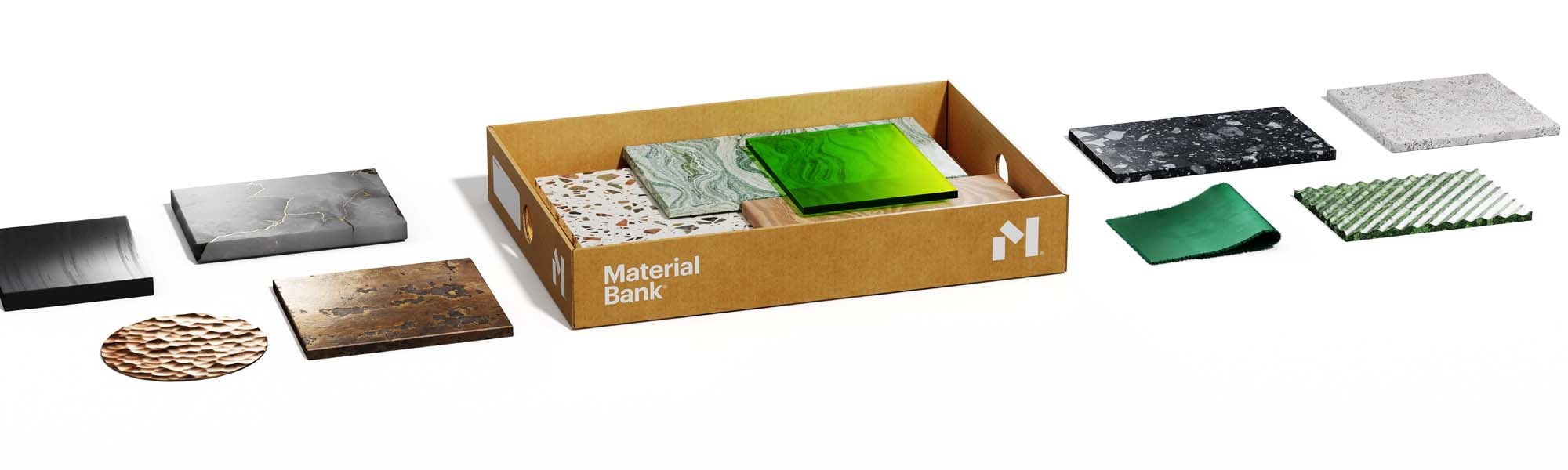
To date, the company reports saving more than 7 million individual packages from being shipped by consolidating orders into fewer deliveries. This figure is calculated by comparing the number of separate shipments that would have occurred if each manufacturer shipped samples independently with the number of consolidated shipments fulfilled through the platform. Since launching in Europe, Material Bank has observed an average of 4 packages saved per order through this consolidation approach.
As the design industry continues working toward more rigorous climate and resource targets, operational improvements — even small ones — can contribute to broader progress. The sampling phase represents one practical area where logistical changes can help reduce friction and waste.
Supporting Better Decisions
Physical samples remain essential for evaluating materials. Designers still need to assess colour, texture, durability, and performance before selecting products for projects.
Material Bank’s platform focuses on simplifying the logistics of obtaining those samples. By pairing digital search tools with consolidated delivery, the system allows design teams to spend less time coordinating shipments and more time evaluating materials.
“At UNS, we believe materials are key to engaging people with places and experiences. We see interior design as a powerful medium through which sustainability can be made tangible—the right material choices can help people understand and feel sustainability.
Material Bank, as a key supporting partner, helps us combine human experience and storytelling with technical material performance and excellence. By providing fast access to material samples and transparent product data, it makes responsible material selection easier and more efficient.” —UNS Interiors
For manufacturers, the platform provides visibility to a professional design audience through a centralised marketplace while maintaining relationships through their local representatives.
Rather than replacing the existing ecosystem connecting designers, manufacturers, and representatives, the platform aims to streamline one part of the process—helping samples move more efficiently from manufacturers to design teams.
Learn more at materialbank.eu.
Would you like to comment on this article? Send your thoughts to: [email protected]
Latest

Viewpoints
Detroit Month of Design: A City’s Work in Progress
Now in its 16th year, the celebration offers insights into the Motor City’s ongoing accomplishments without glossing over its hurdles.
Projects
How a Hybrid Building Helped an Historic Manhattan Congregation Remain in Place
On Billionaire’s Row, FX Collaborative designed a new home for Calvary Baptist Church combined with an office tower.