



June 15, 2026
3 Projects Strengthening Communities Through Design
The METROPOLIS Planet Positive Awards celebrate projects that positively impact both people and the planet. Beyond reducing carbon emissions and improving environmental performance, the winning projects demonstrate how design can strengthen the social fabric of communities.
Last year’s honorees in housing, education, and civic design share a commitment to creating spaces that serve diverse users, expand access, and support well-being. Whether through affordable housing, inclusive public amenities, or learning environments that foster connection, these projects show how architecture can help build stronger, healthier communities for generations to come.
Submit a project for the 2026 Planet Positive Awards here.
Multifamily Winner
Handel Architects | Sendero Verde | New York, New York
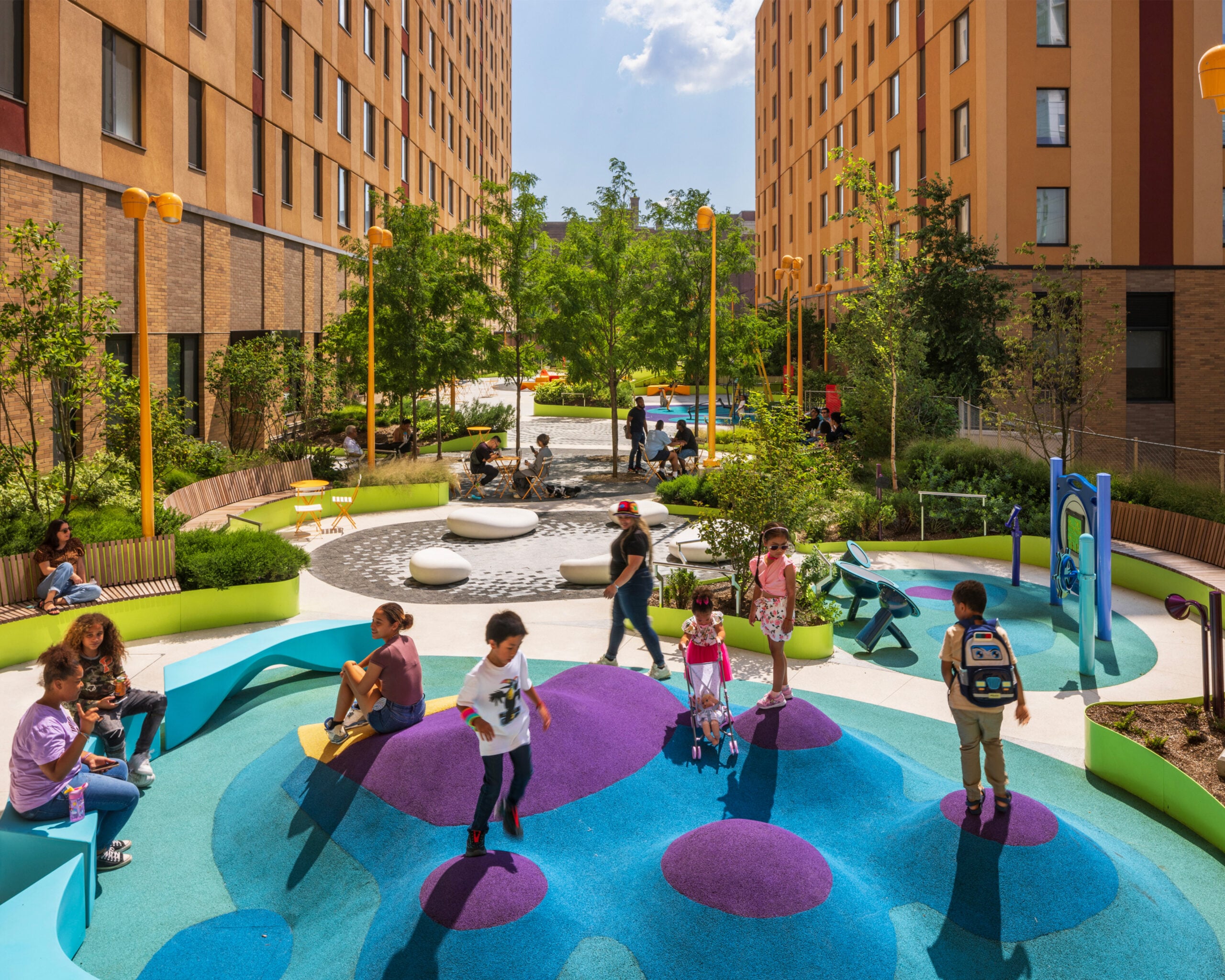
Sendero Verde, North America’s largest Passive House residential building, raises the bar for sustainable, affordable housing. Located in East Harlem, it provides homes for over 700 families, including nearly 100 units for formerly homeless residents, and features a Harlem Children’s Zone school, community gardens with rainwater irrigation, and robust social programming.
To meet Passive House performance goals on a budget, the design team employed innovative, cost-effective strategies, including liquid-applied vapor barriers and PVC-frame triple-glazed windows. The resulting design dramatically lowers long-term operating expenses, using 50 percent less energy than a comparable New York City high-rise.
Residents benefit from reduced utility bills, superior acoustics near Metro-North tracks, and high-quality indoor air delivered via MERV-13 filtered energy recovery ventilators. With its central courtyard and gardens fostering community and connection, Sendero Verde demonstrates that large-scale affordable housing can achieve sustainability, wellness, and high-quality design without prohibitive costs.
K-12 Education Winner
Perkins Eastman DC | Benjamin Banneker Academic High School | Washington, D.C.
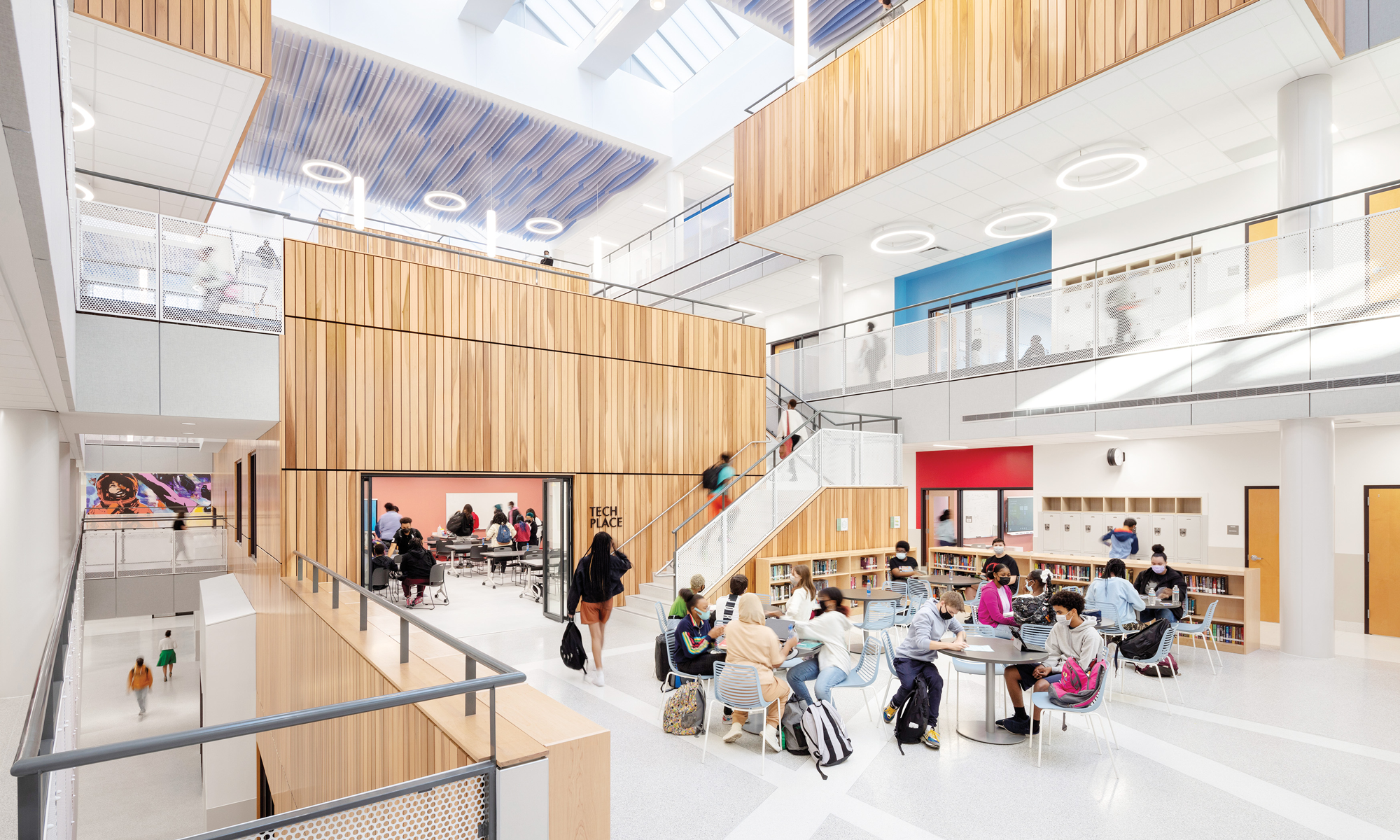
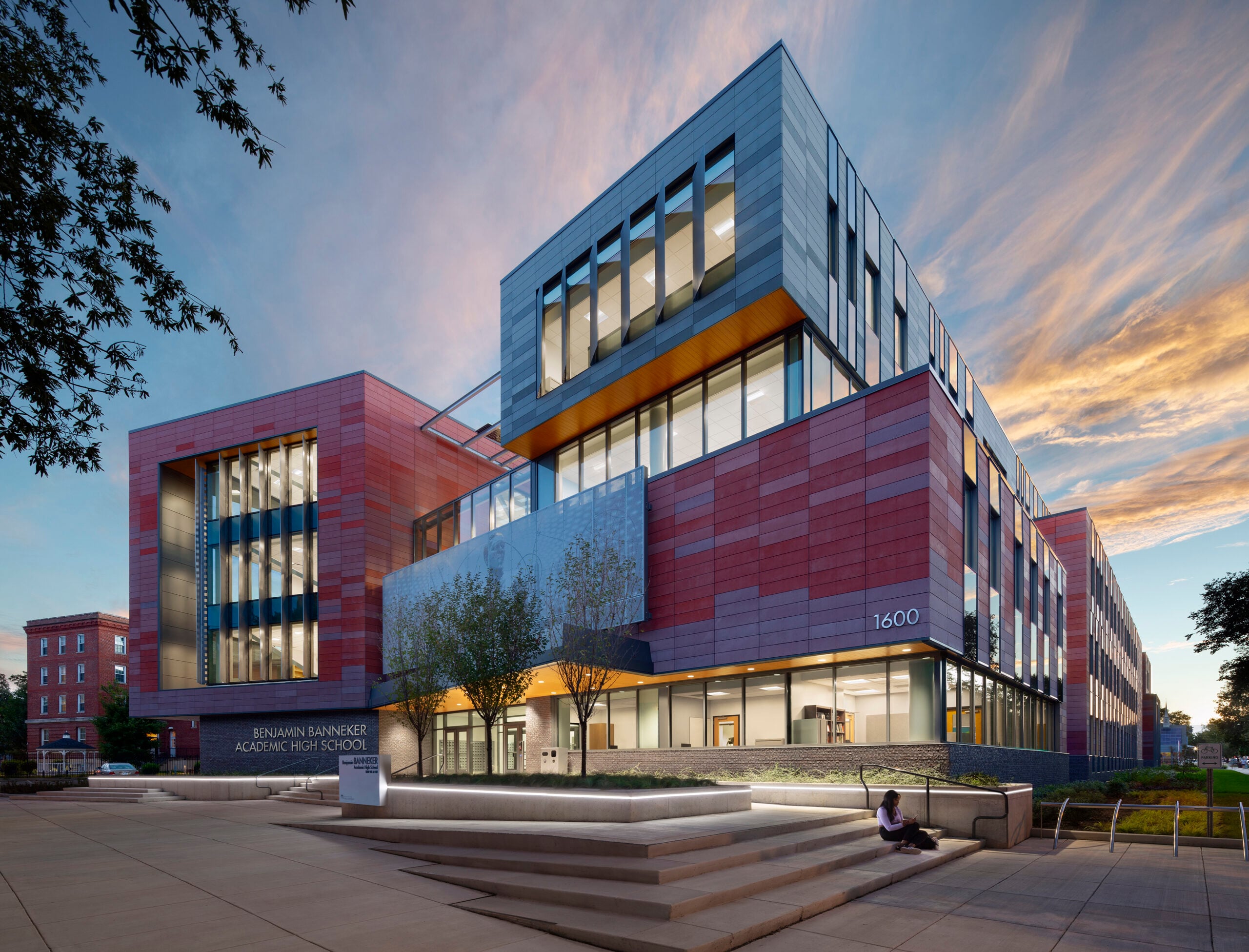
For its design of the new building at Benjamin Banneker Academic High School—a public school in the historic center of Washington, D.C.—Perkins Eastman DC employed holistic strategies to deliver social, economic, and environmental value. The heart of the building is a four-story Central Learning Commons, a unifying atrium that connects academic programs and social spaces, culminating in the “Skyplace” terrace with views of the Washington Monument.
LEED v4 BD+C Platinum–certified, the fully electrified building achieves an EUI of 20.2, under the original target, through photovoltaics on the roof and south facade shading devices, and site-mounted panels. Passive strategies and high-performance systems maximize thermal comfort and air quality, while skylights bring natural light deep into the footprint. Stress-reducing features—like warm materials, outdoor classrooms, and accessible green spaces—enhance student and faculty health and engagement.
As one of the first two D.C. schools pursuing Net-Zero Energy, the school sets a new standard to be built upon for future modernizations across the district.
Civic Winner
HDR | Orange County Sanitation District Headquarters | Fountain Valley, California
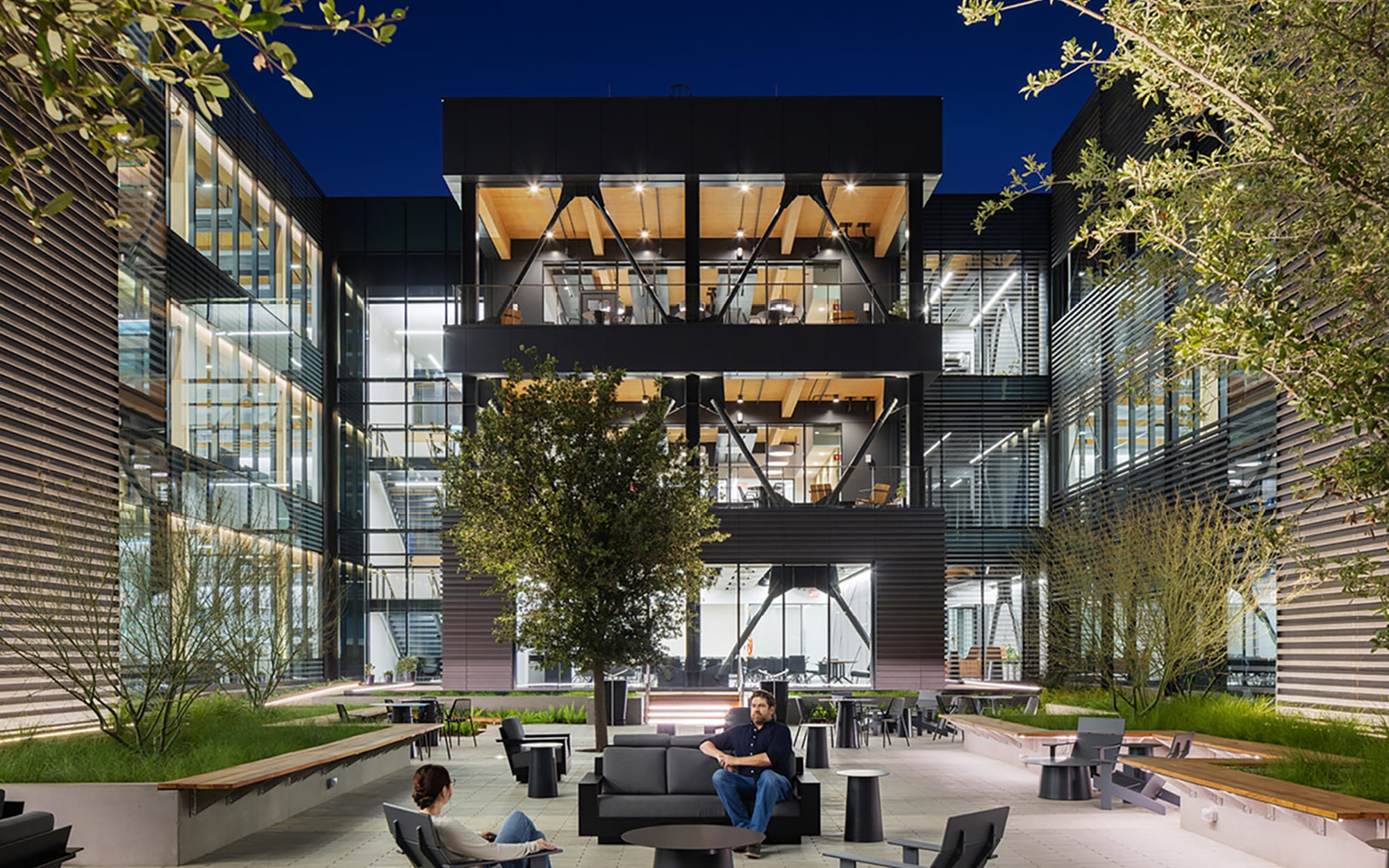
This 109,000-square-foot facility—the first hybrid mass timber building for a public utility in Southern California—supports wastewater services for 2.6 million people while converting its own processes to reliance on renewable energy.
Biogas from sewage treatment provides 60 percent of the building’s energy needs, while photovoltaics generate 104 percent, delivering net-zero operational energy. A high-performance envelope with silicon-glazed curtain wall and terracotta rainscreen withstands the site’s high-pollution, high-salt conditions, while optimized orientation, shading, and efficient systems reduce solar heat gain loads and enhance comfort. The building promotes occupant well-being with views of nature and daylight reaching 97.5 percent of occupied spaces. Additionally, current tracking of material submittals indicates that the project is 90 percent free of Red List materials.
With exhibits and public meeting areas, accessible via a pedestrian bridge, the headquarters also serves as a community education hub. Orange County Sanitation District Headquarters is currently completing the reviews for LEED Gold and ILFI Net Zero Energy certifications.
Would you like to comment on this article? Send your thoughts to: [email protected]
Related
Programs
Here Are the 2026 Planet Positive Awards Project and Innovation Finalists
Discover this year’s finalists in the Project and Innovation categories before winners are announced this fall.

Programs
The Hidden Cost of Design Workflows
As architecture and design firms pursue ambitious sustainability goals, Bitreel is showing how reducing workflow waste can be as important as reducing material waste.
Programs
METROPOLIS Arch30 Atlanta: Emerging Leaders Gather at TVS
Atlanta’s next generation of architects, affiliated with leading firms, convened for METROPOLIS’s Arch30 event, celebrating innovation, collaboration, and professional growth.