



May 21, 2026
On Maui, an Off-Grid House Is Tuned to Culture and Climate
A few years ago, Hawaii Off Grid’s David Sellers was part of a group helping develop a climate action plan for the island of Maui. Reading one of the reports the group commissioned, he got stuck on a startling fact: The average sea level at Kahului Harbor had risen a full five inches since 1950. The prevailing wind direction had also shifted, he says, from northeast to due east. “This is climate change that I can see in my lifetime,” says Sellers, who grew up in Texas and studied architecture and building science at Delft University of Technology in the Netherlands.
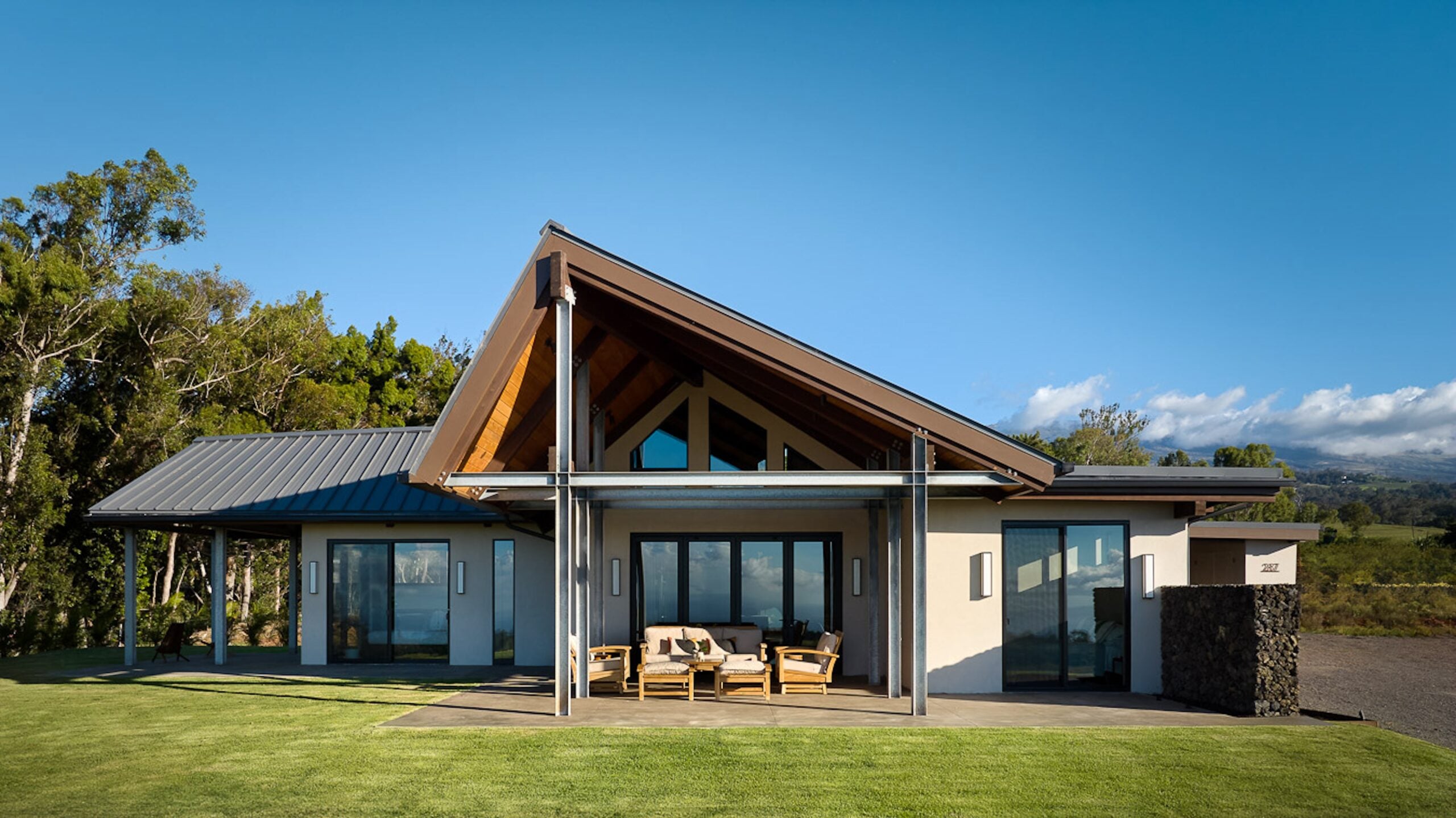
The need for an architecture capable of responding to the many changes wrought by a warming climate was the driving force behind the design of Kupono Hale, a single-family residence perched on the northern slopes of the Haleakalā volcano that is completely off grid yet produces enough solar energy to power the home and charge the owner’s electric vehicle. What at first glance could be mistaken for a typical Hawai‘i Contemporary dwelling—simple volumes covered with gabled roofs—is a demonstration of how to combine passive design principles with renewable energy systems and local, upcycled materials.
Hidden behind layers of stucco, Kupono Hale’s walls are constructed with custom insulated composite concrete forms made partially from expanded polystyrene foam salvaged from local surfboard shapers. Developed by Hawaii Off Grid, the technology, known as Surf Block, mixes cement and recycled EPS and shapes it into five-foot-long, CMU-style blocks that can be cut, stacked, and arranged in endless combinations. The blocks are lightweight and fire resistant and serve as both the forms for a wall’s poured-in-place concrete and its insulation, achieving, according to the company, double the R-value of a standard wall assembly while diverting waste from the landfill.
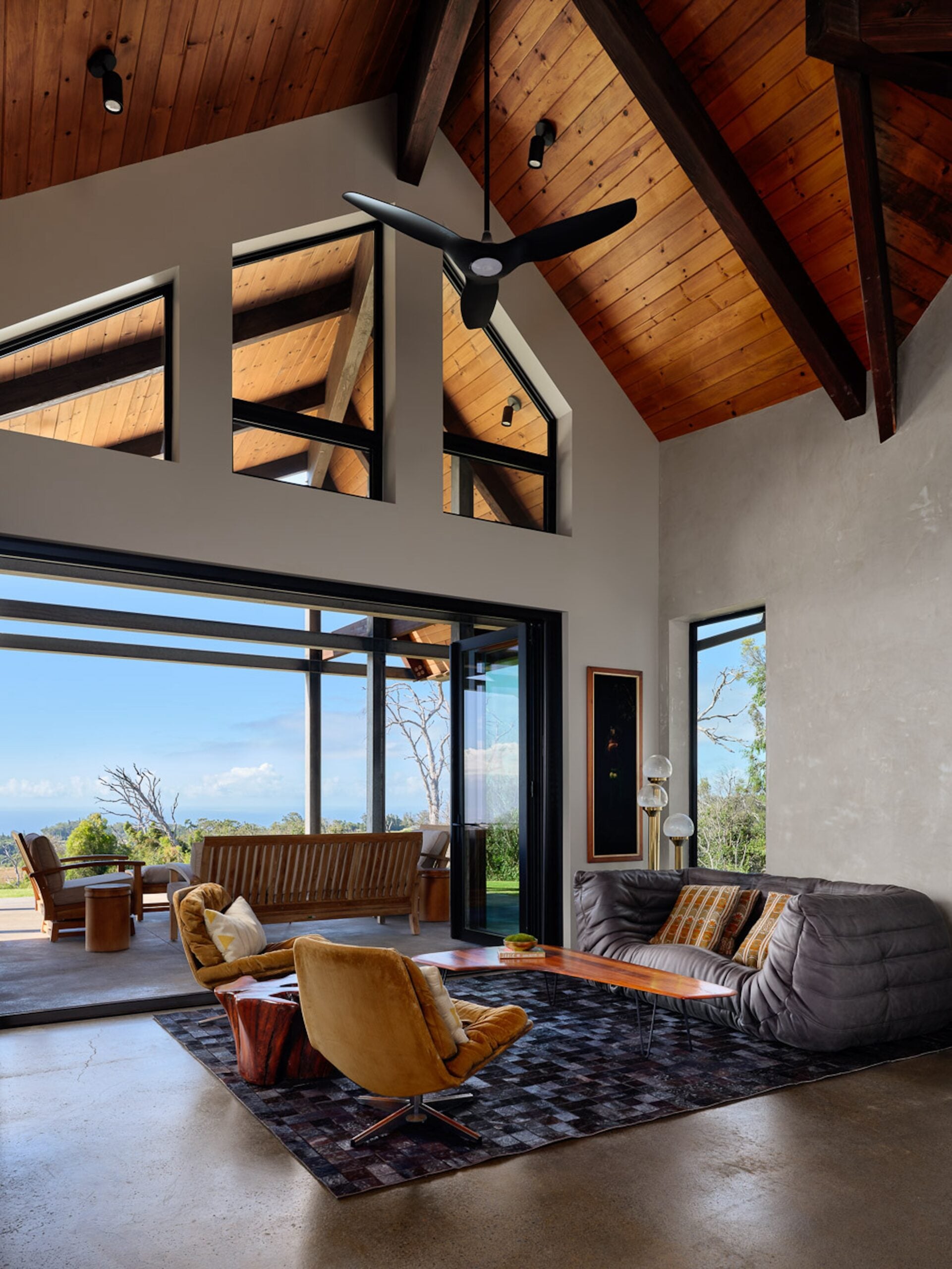
A more visible environmental feature is the house’s parabolic roof. The form emerged from a desire to orient the house toward the site’s most dramatic view while adhering to passive design principles. The architects turned the house ever so slightly on its axis but kept the ridgelines of the roof aligned with the sun’s path, creating a roof with a compound curve that is optimized for passive heating and cooling. Forming the roof are glulam beams and ceilings made from locally sourced Cook pine, a tree introduced to Hawai‘i as part of an ill-fated effort to establish timber plantations. “We have all these 80-, 90-, 100-year-old trees that are actually safety hazards [and] a nuisance,” explains Sellers, who has since milled Cook pine from his own property.
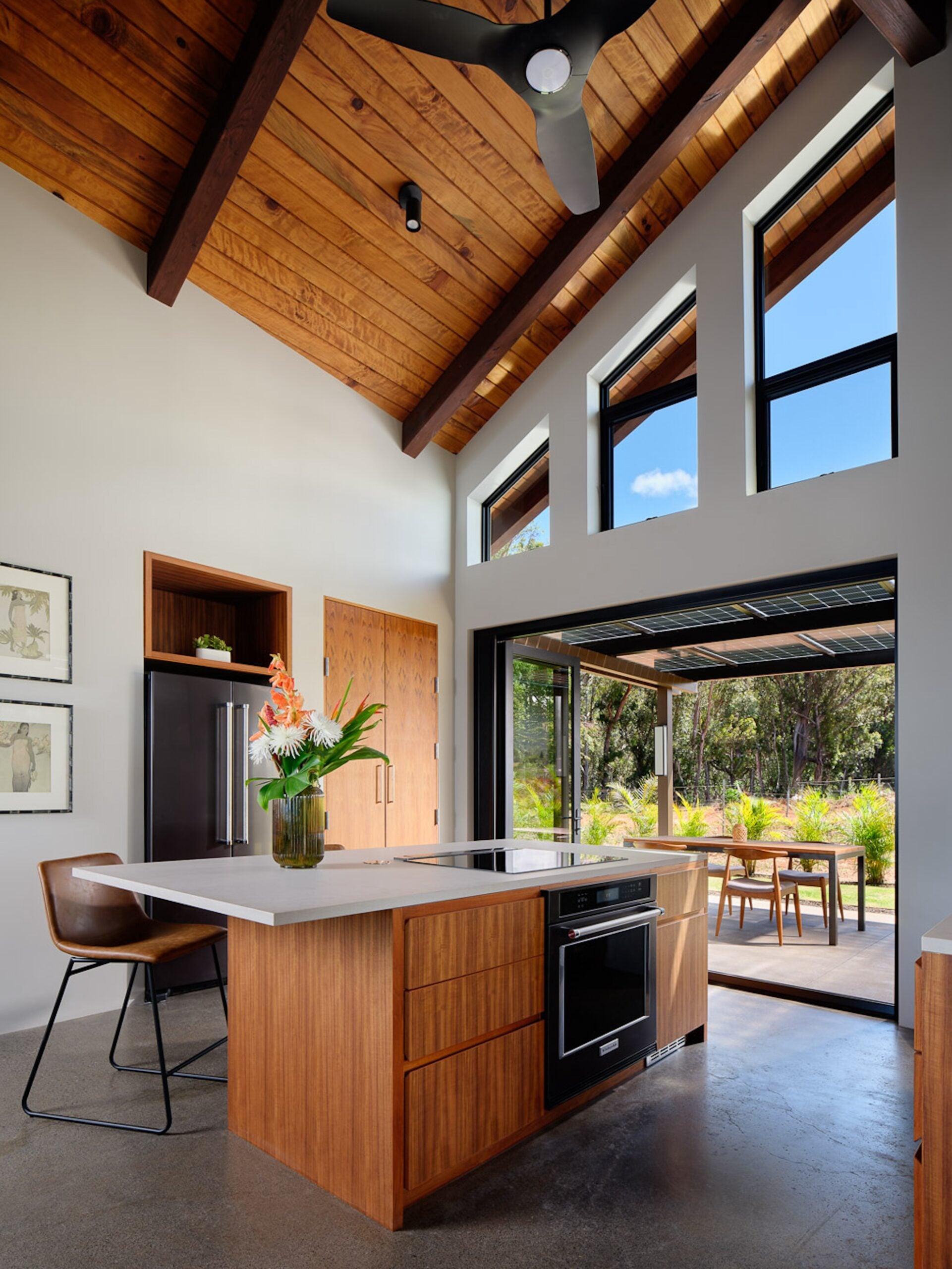
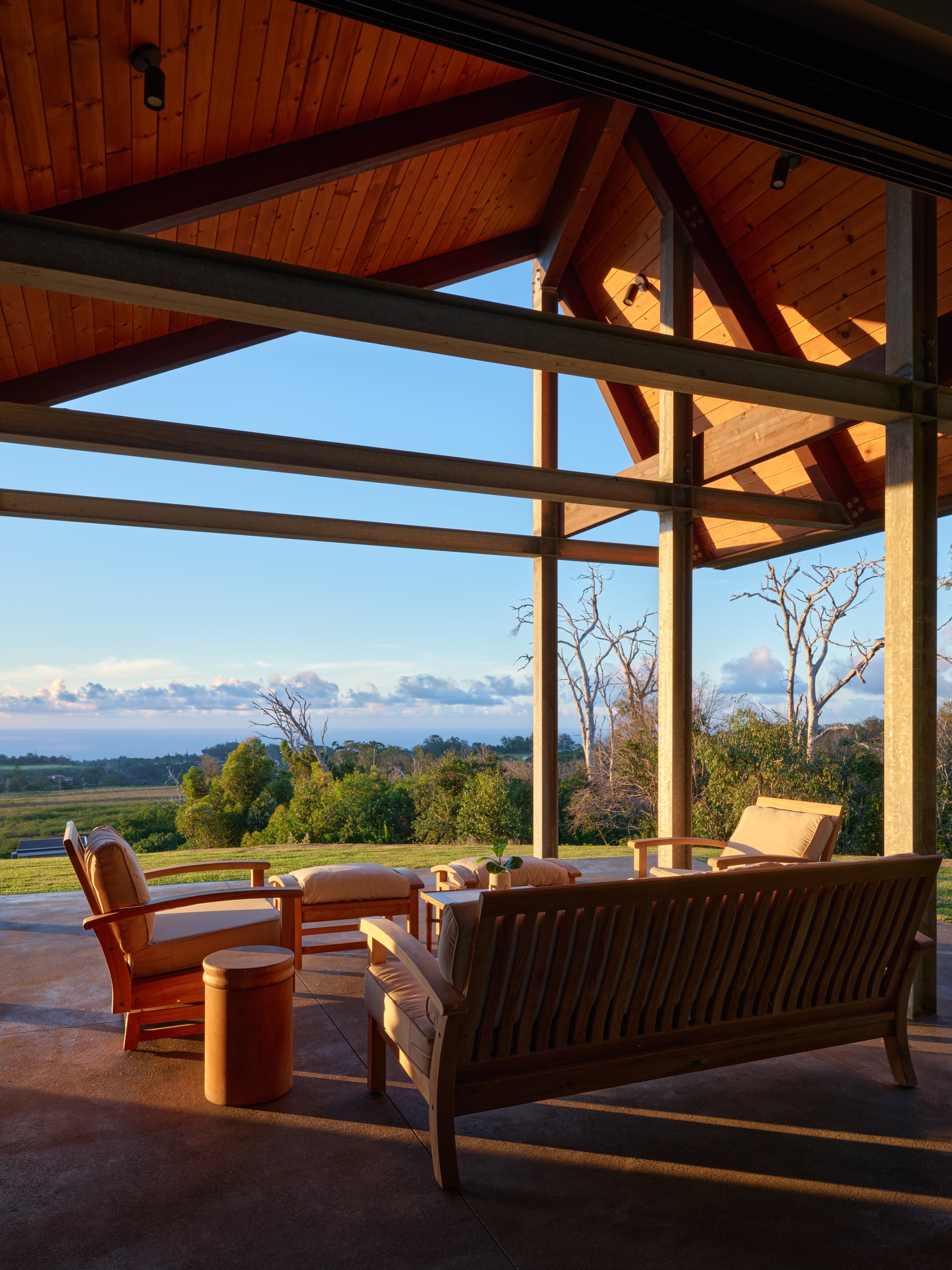
Helping keep its energy demand low is the home’s size. The two-bedroom house’s interior measures just 998 square feet, and yet with the high ceilings, ample windows, and three lanais, the residence feels much bigger. It’s a proportion made possible by Hawai‘i’s mild climate, but it also reflects the islands’ culture. “Outdoor lanai are a big part of our vernacular,” Sellers says. “When you see a building, it should tell you a story. It should tell you about time, it should tell you about place, and it should tell you about climate.”
Would you like to comment on this article? Send your thoughts to: [email protected]
Latest
Viewpoints
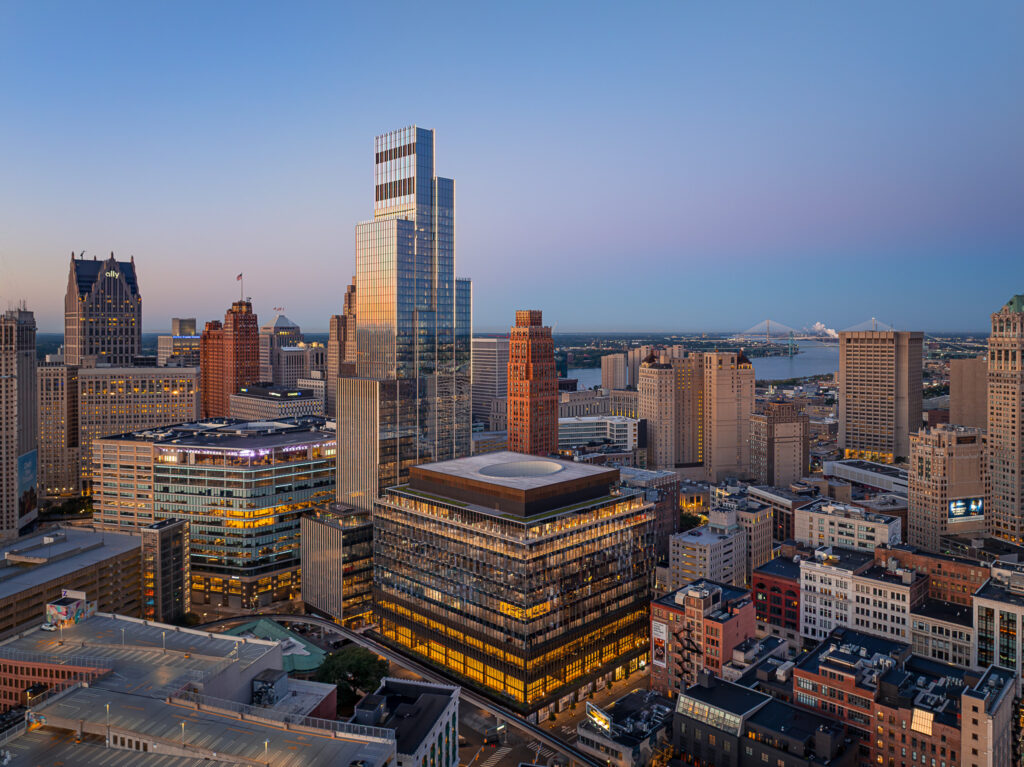
Detroit Month of Design: A City’s Work in Progress
Now in its 16th year, the celebration offers insights into the Motor City’s ongoing accomplishments without glossing over its hurdles.
Projects
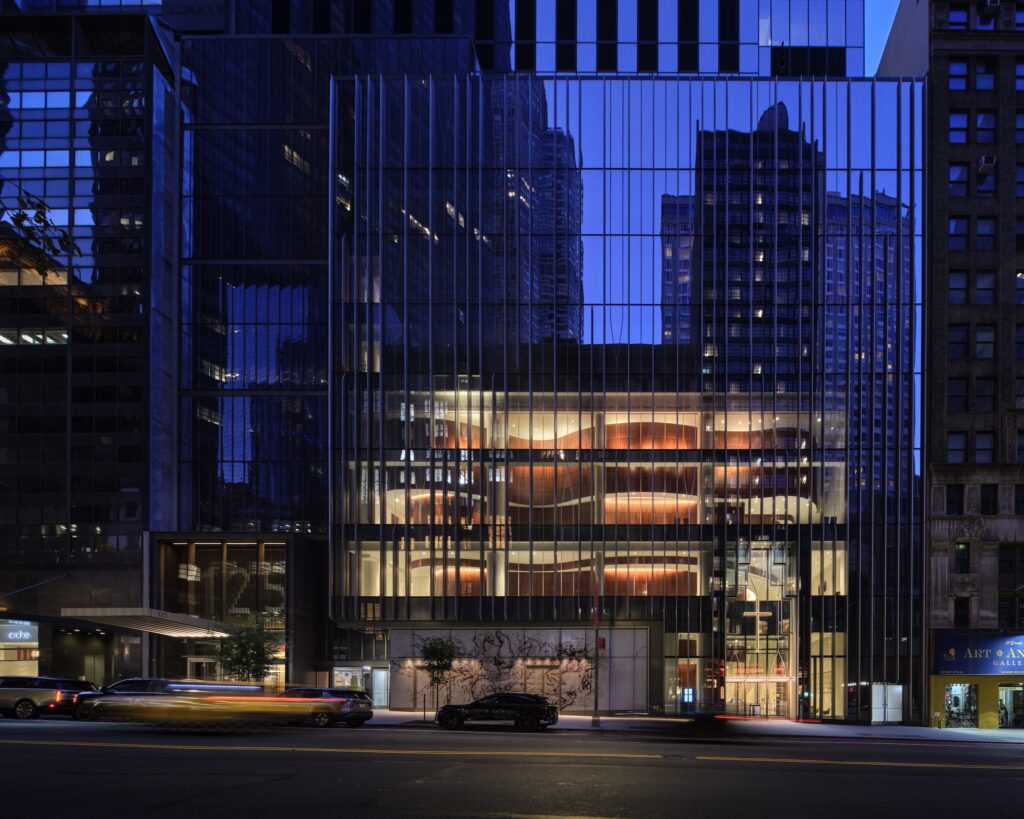
How a Hybrid Building Helped an Historic Manhattan Congregation Remain in Place
On Billionaire’s Row, FX Collaborative designed a new home for Calvary Baptist Church combined with an office tower.