



January 22, 2026
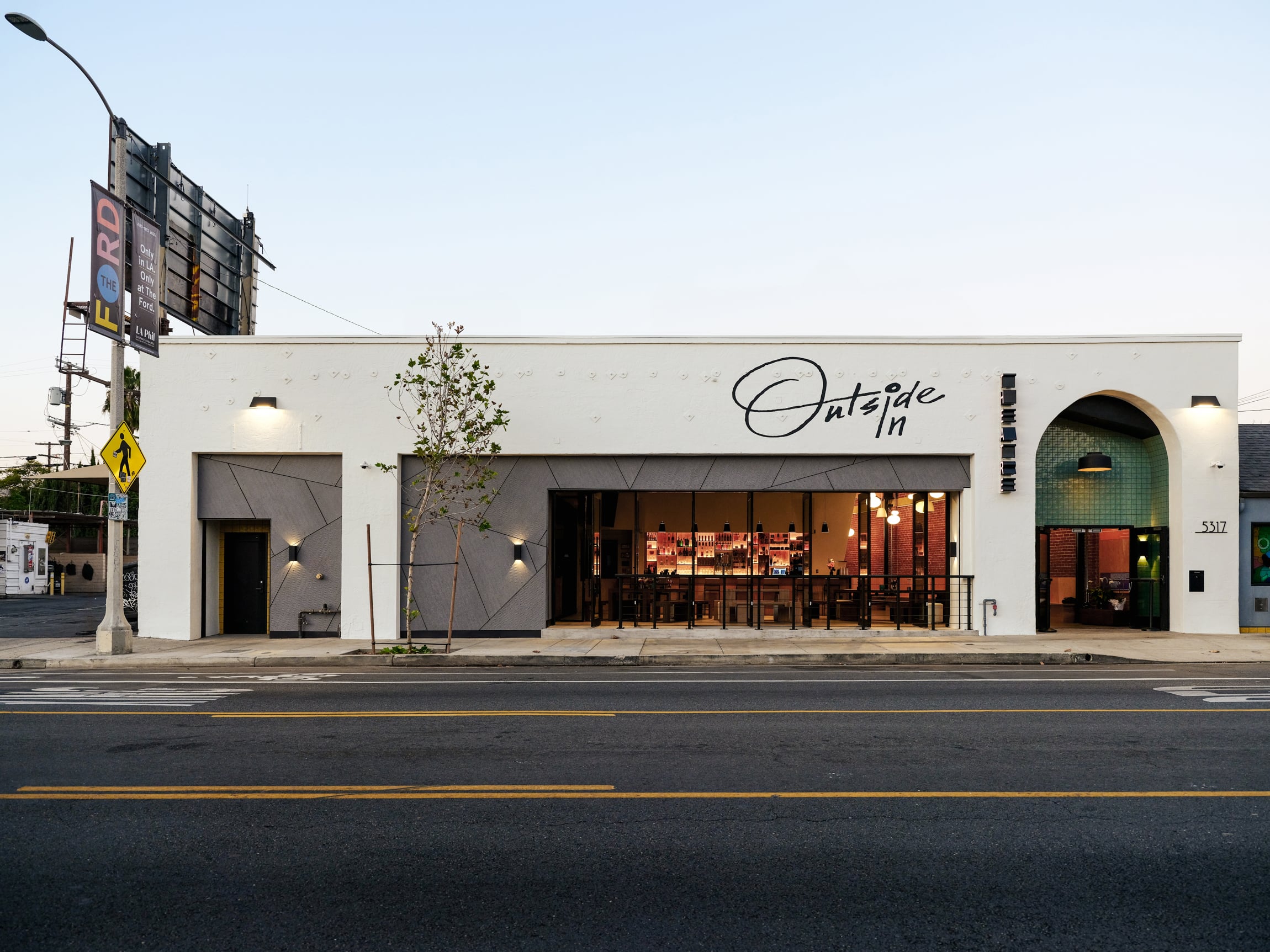
An Old Car Dealership is L.A.’s Newest Inclusive Community Theater
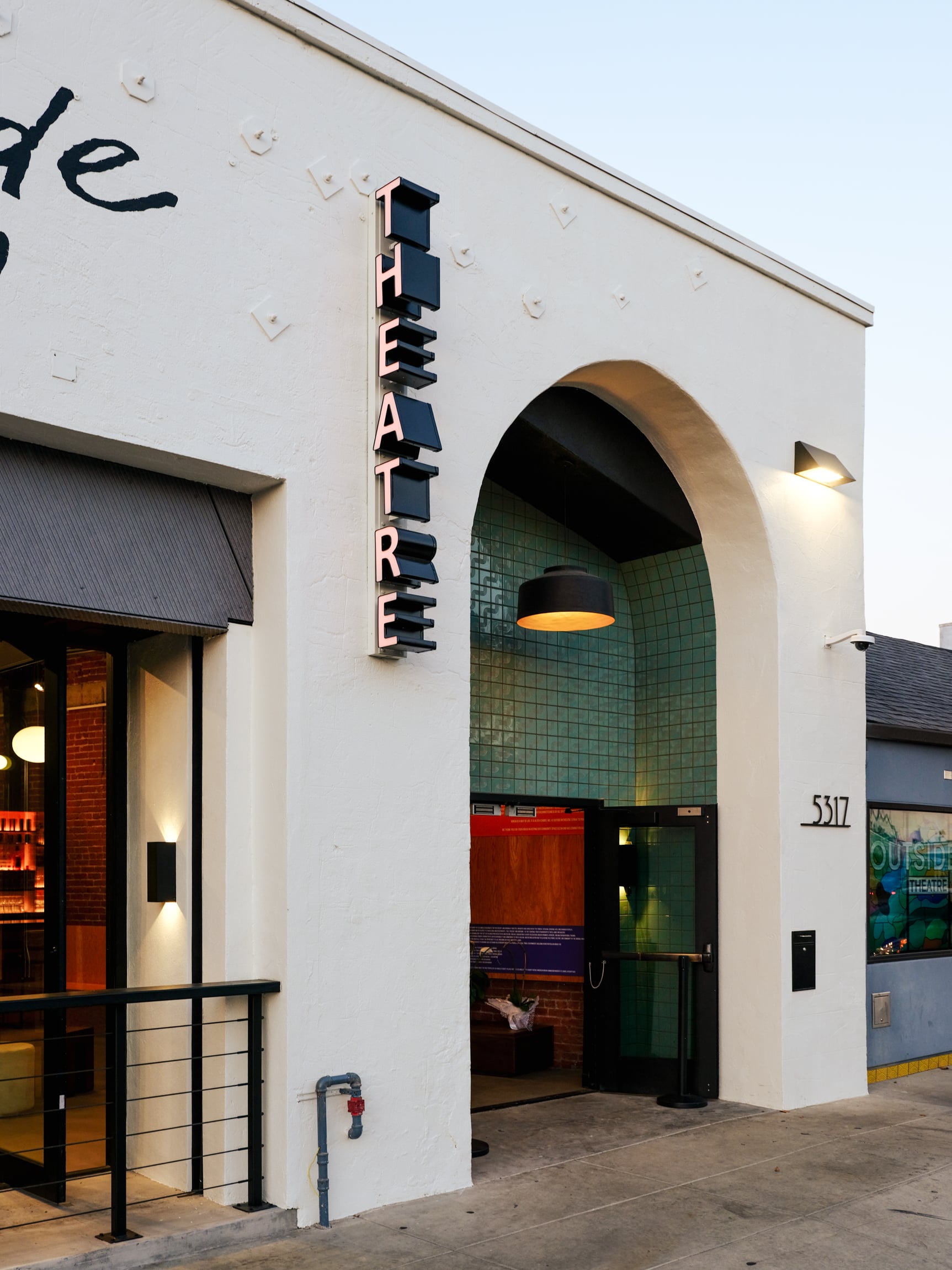
“You can interact with the [show’s cast], and you build this sense of community—and that adds more richness to the experience,” Jeevanjee explains while standing in the spacious multipurpose lobby that doubles as a bar/cafe during performance times. Casual communal picnic tables and benches are placed around the plywood-clad and exposed brick room, which, through expansive doorway openings, flows to a sidewalk-facing patio that engages with the streetscape. Next to the full bar and prep kitchen—a rare amenity in such venues—is black box space with accordion glass doors that provide sound-proofing while maintaining visibility. Throughout the interiors, previously painted brick and wood trusses were striped to reveal their original materiality and honor the site’s history.
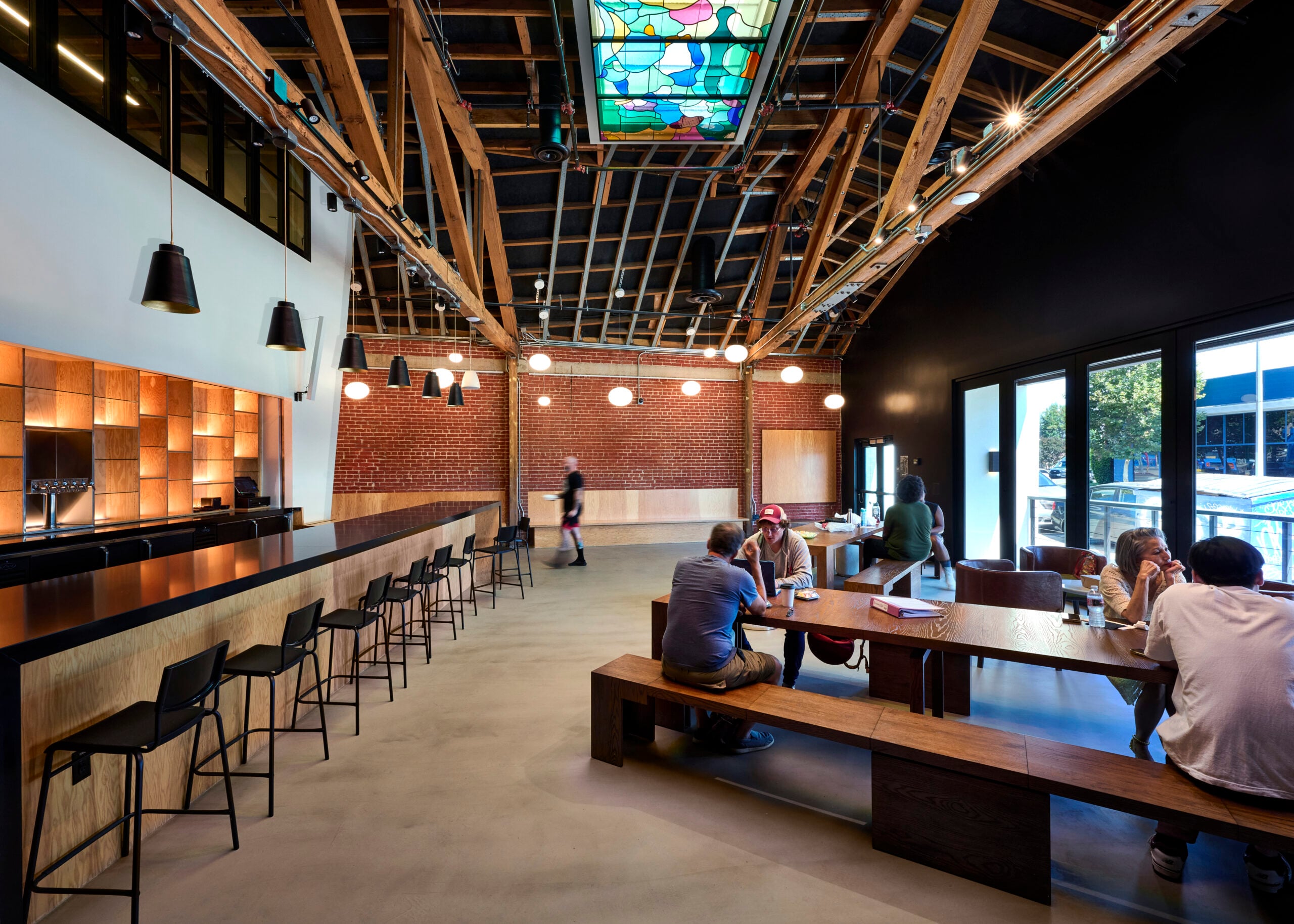
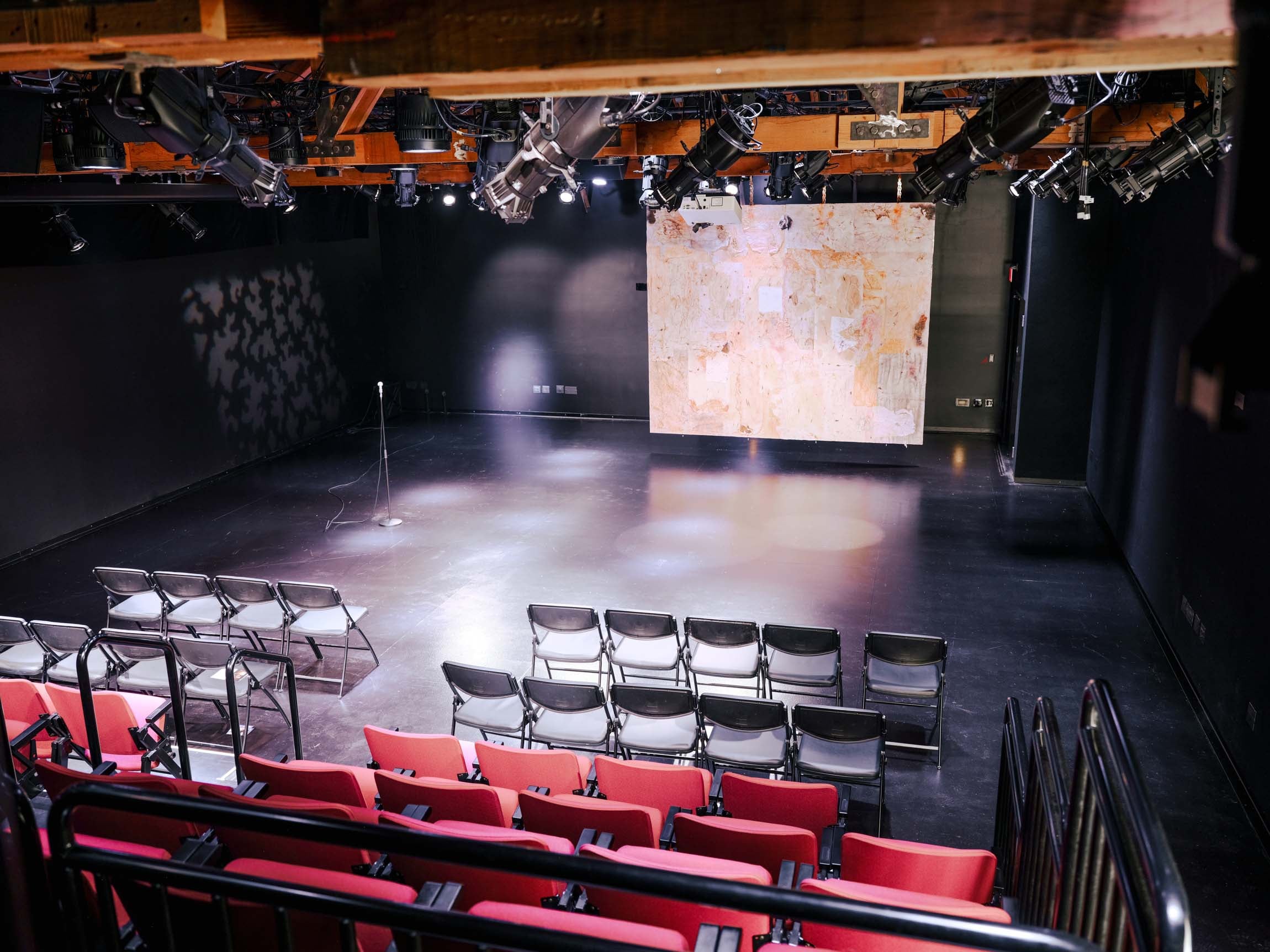
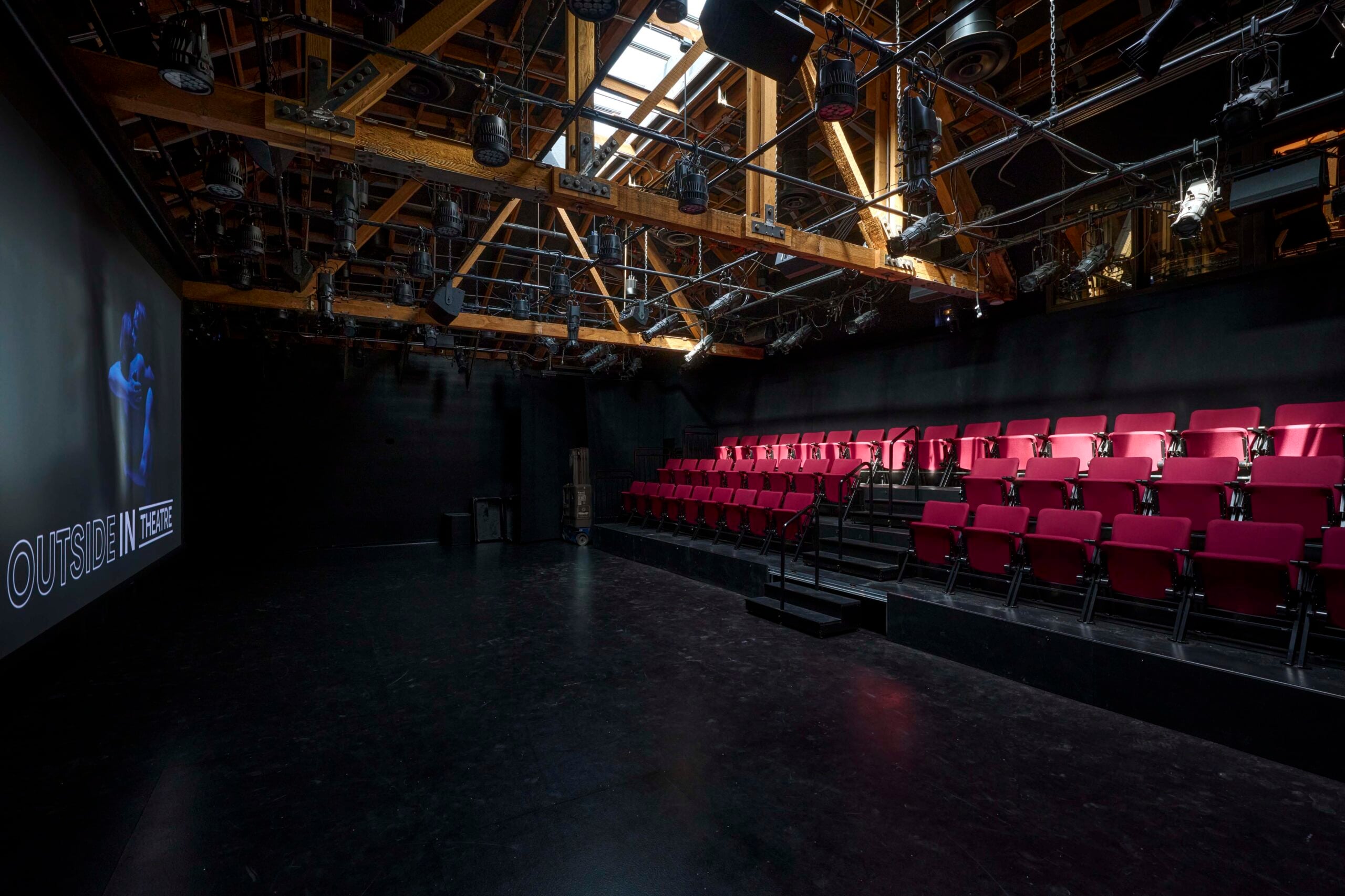
A 99-seat black box theater occupies the rear of the volume where the wedge-shaped building tapers. The mezzanine-level state-of-the-art tech booth above is equipped for live-streaming and ever-evolving technical needs. Unlike other theaters that typically contain multiple grade changes and stairs, the primary performance space and back of house are a continuous level, making the facility optimally accessible for casts and crews. Plus, equipment typically kept in the booth is movable and can “be either remotely worked or taken downstairs,” notes Jessica Hanna, producing artistic director.
LOC’s expertise in adapting existing industrial structures for schools and workplaces (including revamping Hollywood Bowl’s dressing rooms) came to bear when figuring out the puzzle of how to insert classroom and office space within the building’s network of bow trusses. Consulting firm TheatreDNA also provided technical guidance.
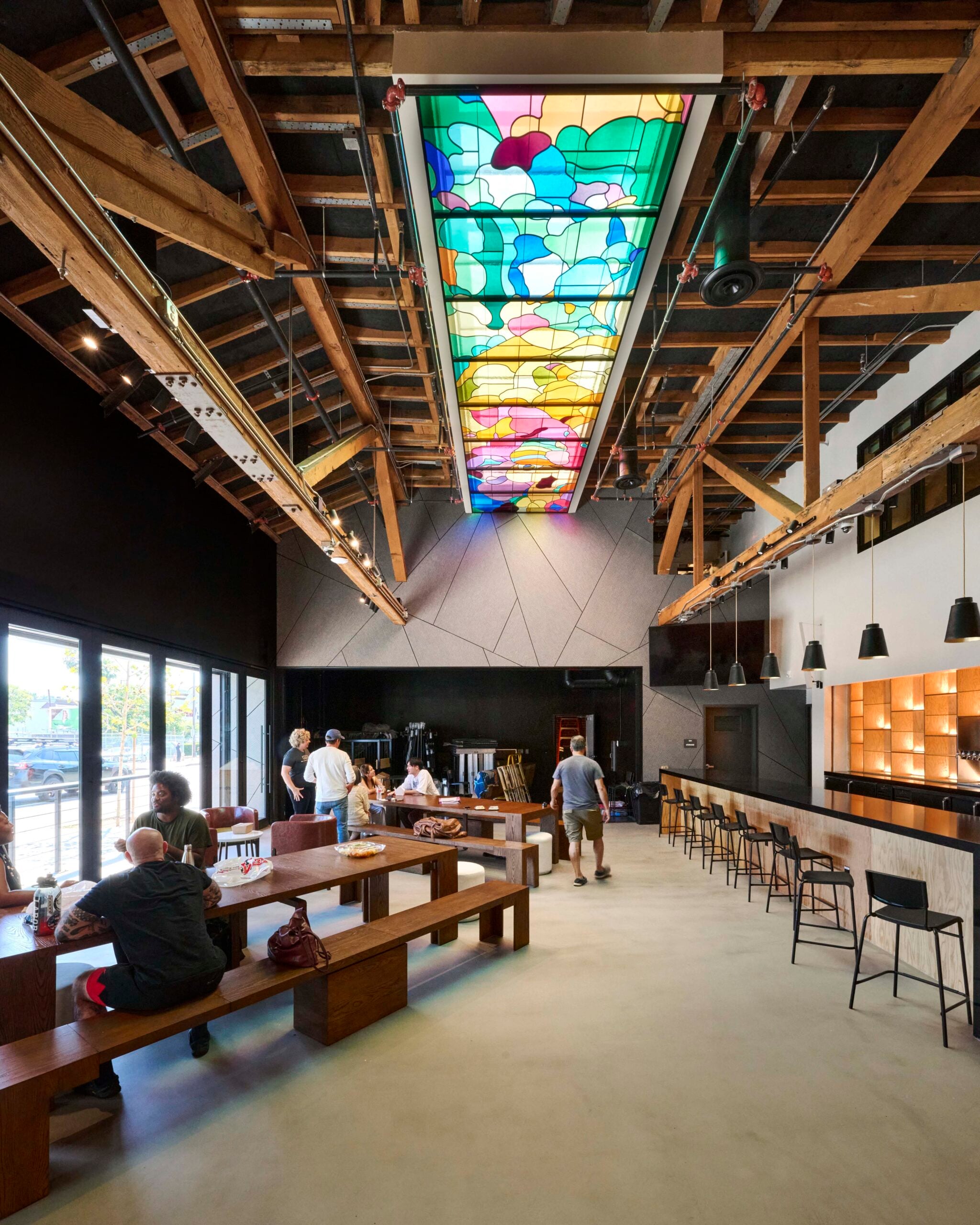

The architects’ connection to the area’s context is evident in the pièce de résistance stained glass in the lobby. “We presented a couple of designs, and this one was inspired by Mike Kelley,” Sharma says of the preliminary sketch co-founder Daniel Blinkoff saw while the team was figuring out how to enhance plans for a large skylight. Just over a mile away, Judson Studios (which since 1897 is the nation’s oldest continually operating family-owned stained glass studio) subsequently brought the concept to life in the form of a colorful glass abstraction of Kelley’s stuffed animal sculptures.
In addition to welcoming in soft, natural light, the element functions as a symbolic bridge between local cultural touchstones. “Bringing in Judson helped cement that,” Jeevanjee adds, and LOC incorporated materials by simpatico L.A. creatives Ravenhill Studio lighting and Block Shop’s collection with Fireclay Tile.
LOC and Outside In’s partnership is ultimately about how creativity and collaboration reach beyond these walls. The opening of the Huron Station Playhouse located nearby in Cypress Park inside a former streetcar electrical substation also speaks to a renewed desire for IRL experiences in unexpected places. “Theater has to reflect the world we want to live in. We’re world builders and problem solvers,” Hanna says. “Now more than anything, we need that empathy muscle to be working. That’s what this place is. It’s an empathy machine.”
Would you like to comment on this article? Send your thoughts to: [email protected]
Latest
Viewpoints
Detroit Month of Design: A City’s Work in Progress
Now in its 16th year, the celebration offers insights into the Motor City’s ongoing accomplishments without glossing over its hurdles.
Projects
How a Hybrid Building Helped an Historic Manhattan Congregation Remain in Place
On Billionaire’s Row, FX Collaborative designed a new home for Calvary Baptist Church combined with an office tower.