



June 24, 2026
At Its New Seattle Office, IA Aims for Harmony
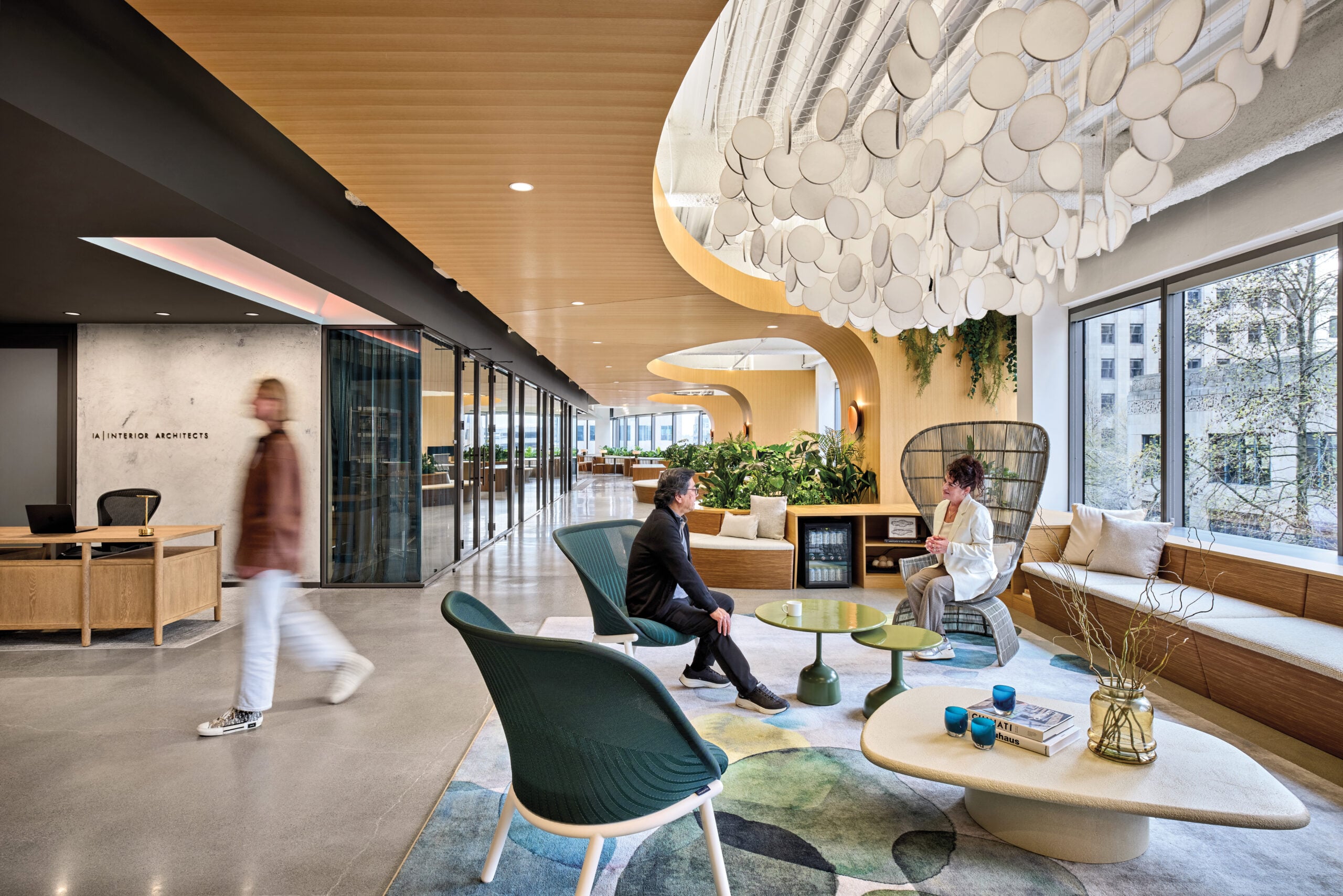
Stepping off the elevator into a glassy high-rise in downtown Seattle, one hears birds chirping gently in the background. Sound is just one of the senses considered in the newly outfitted offices of IA Interior Architects, which were designed around a set of guidelines the firm has developed called the Harmonic Principles: a framework for human-centered workplaces.
“Our work can be very stressful,” says IA co–managing director Dave Kutsunai. “We’re trying to create a place that isn’t high energy to fuel the stress but does the opposite and counters it.” Informed by neuroscience and built on the foundation of biophilic design, the Harmonic Principles help link these wellness outcomes to performance and culture: harmonizing the goals of design through nine concepts like “positive affordances,” “sensory richness,” and “authentic purpose.” Besides the soundtrack, the framework also led IA to incorporate a range of energetic zones in the office, from noisy to quiet, giving people choice in how and where they work. The ultimate goal? “It’s designing a place where people feel good,” says Kutsunai.
Interwoven with human needs in any workplace design are business priorities—an understanding of which IA has honed over the years through crafting offices for clients like Amazon, T-Mobile, and Uber. “The biggest driver in workplace design today is the need for agility in the face of an uncertain future,” says Kutsunai. For some time, IA has suspected that this need for flexibility and resilience could be answered by circularity.
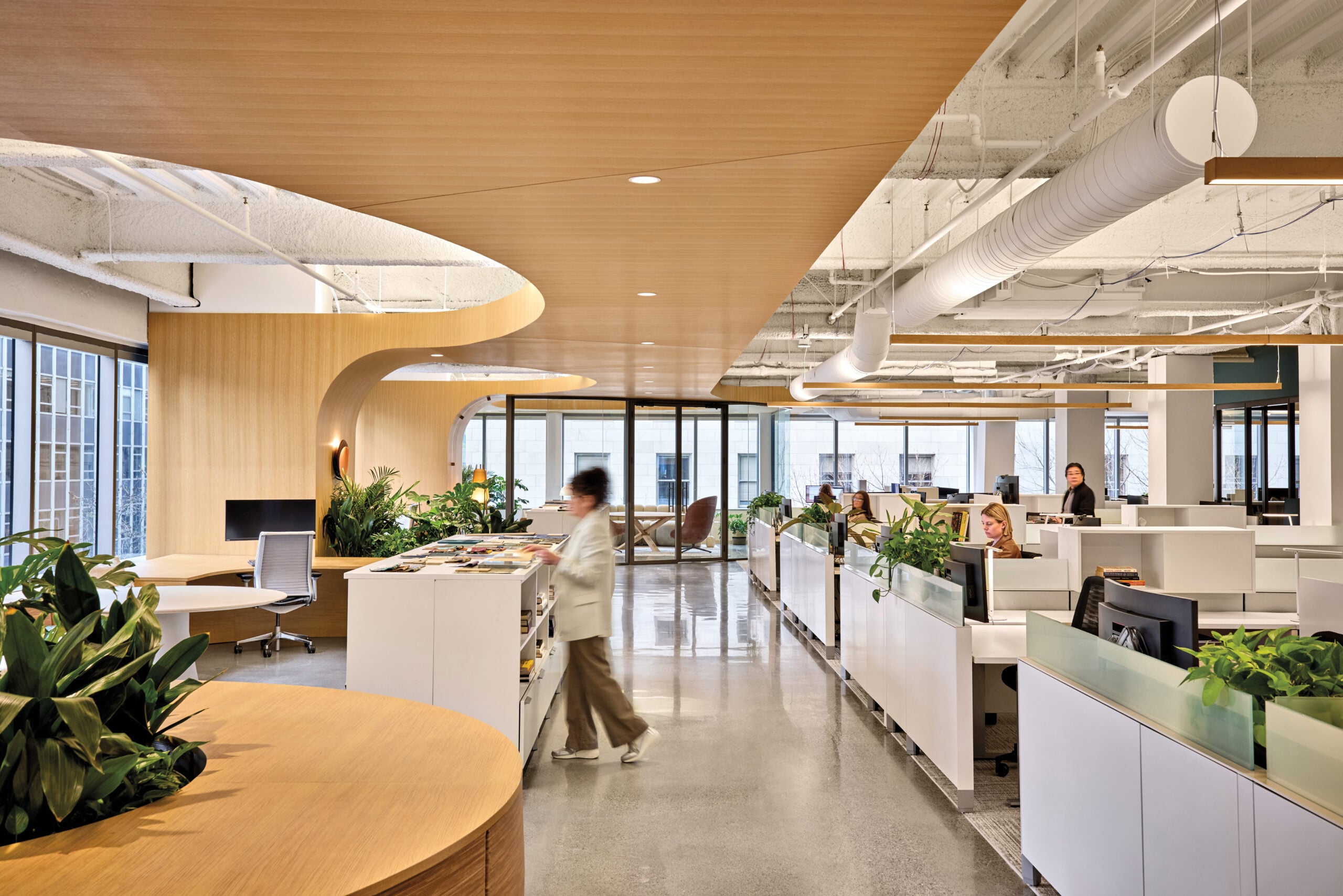
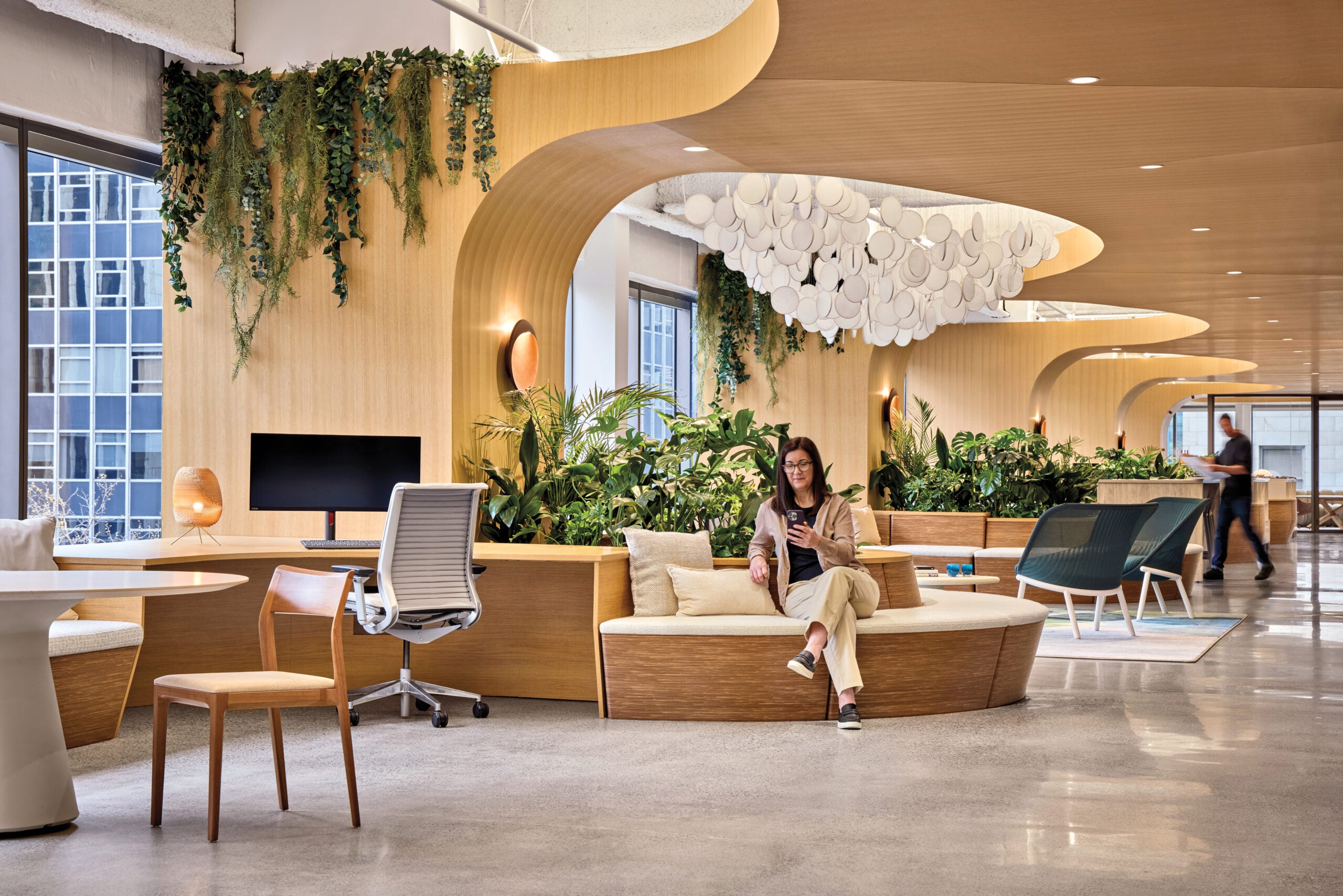
Using its Seattle office as a proving ground, IA centered the design around a transformable element that is also hypersustainable. Swooping through the long, narrow space is a long banquette that runs the entire length of the office, featuring six alcoves with different seating options. 3D printed from biobased materials by Columbus, Ohio–based furniture maker Model No., the banquette is one of the largest applications of 3D-printed commercial furniture to date and can be ground down and reprinted if the needs of the office change.
“The curves and angles of the banquette would have been cost prohibitive with traditional construction,” says Kutsunai about the decision to 3D print. “It was faster, less expensive, and regenerative.” For IA, keeping materials in play as long as possible is both sustainable and smart business. Besides the banquette, IA reused 85 percent of the furniture from its previous Seattle office and incorporated demountable walls for breakout rooms.
For years, eco-friendliness was seen as an add-on in workplace design. Today, it has converged with the core need for agility and flexibility. “Sustainability has always been a hard sell,” says Kutsunai. “Now, for the first time, the sustainable solution through circularity is the response to the primary business driver. It allows you to change fast and at a lower cost.”
Model No.
The biggest piece of furniture in IA’s Seattle office is also the most sustainable one. Curving along the office’s street-facing side is a 3D-printed, serpentine banquette (above) fabricated from a renewable bioresin. The material, a recycled wood-flour composite primarily made of sawmill waste, reads as warm and organic, with a soft walnut-wood tone. Modular and infinitely renewable, the banquette is one of the largest commercial applications of the technology in the country. Printed on site in Columbus, Ohio, over the course of 75 days by sustainable furniture company Model No., the banquette epitomizes IA’s interest in circular design.
Because there are no coatings or paints applied to the printed elements, there is no risk of chemical contamination at end of life. Model No. even ground down some of the project’s test samples and reprinted them into a lamp, side table, and glider chair for the office. “That is probably the clearest illustration of the closed loop in practice,” notes Model No.’s CEO, Michael Cao. “Most 3D-printed furniture so far has been art objects. We’re trying to make it a contract-grade option.”
Would you like to comment on this article? Send your thoughts to: [email protected]
Latest
Viewpoints
Detroit Month of Design: A City’s Work in Progress
Now in its 16th year, the celebration offers insights into the Motor City’s ongoing accomplishments without glossing over its hurdles.
Projects
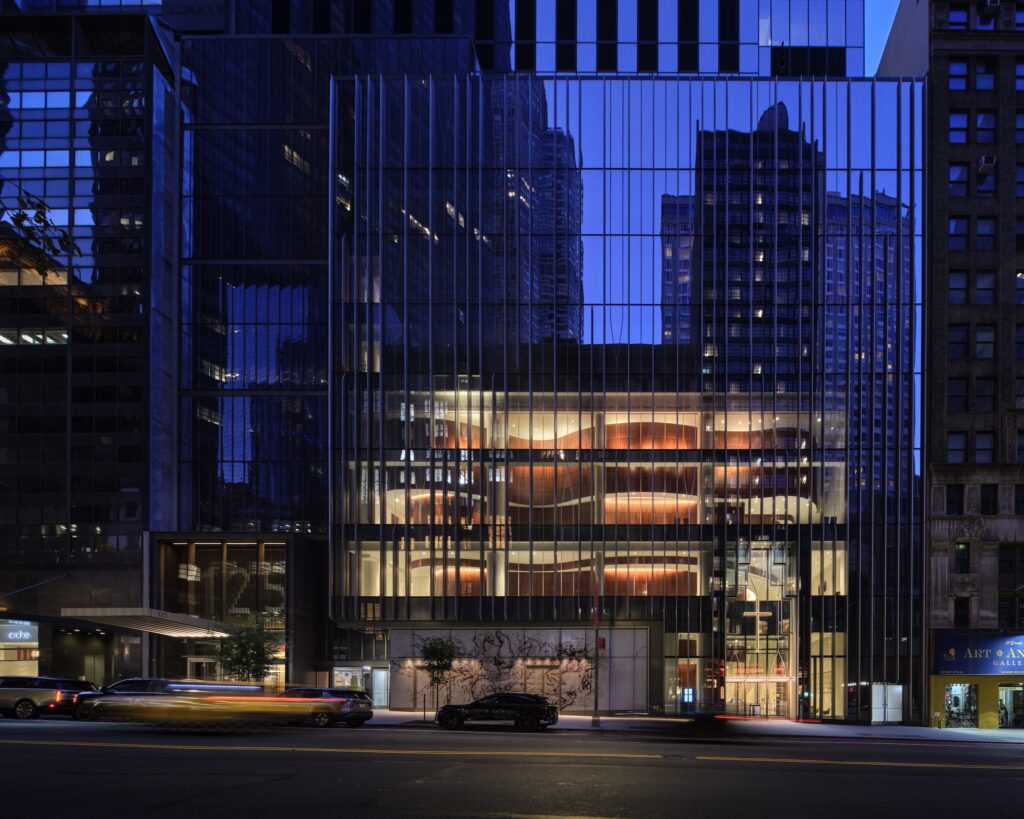
How a Hybrid Building Helped an Historic Manhattan Congregation Remain in Place
On Billionaire’s Row, FX Collaborative designed a new home for Calvary Baptist Church combined with an office tower.