



June 16, 2026
Building New York’s First Passive House Community
Starting With Carbon Neutral
This sustainable siedlung came about thanks to Greg Hale, senior advisor to the New York State Energy Research and Development Authority, and Peter Malik, whose career has spanned conservation, real estate development, and law. They met at the National Resource Defense Council some 15 years ago and hatched the plan to build a passive house community.
They required an architect, and found an eminence in Buck Moorhead, a pioneer in sustainable design since the 1980s and current Board Chair of New York Passive House. They were all dissatisfied with the often-thin veneer of environmentalism on top of structures that are fundamentally carbon hogs; green lipstick on a pig. Malik explains, “Developers typically push the sustainability level of houses as far as they can without affecting profit margins and we did it backwards. We said we’re going to make it a carbon neutral community and then we’ll figure out how to make the numbers work.”
Malik and Moorhead were both clear fans of the area; they had houses in the vicinity already. They were also drawn by prices less eye-watering than more easterly portions of those mountains. The passive house proposition is typically seen as construction that is more expensive upfront but delivers lower energy and replacement costs over time—but they wanted to make this as easy a sell as possible.
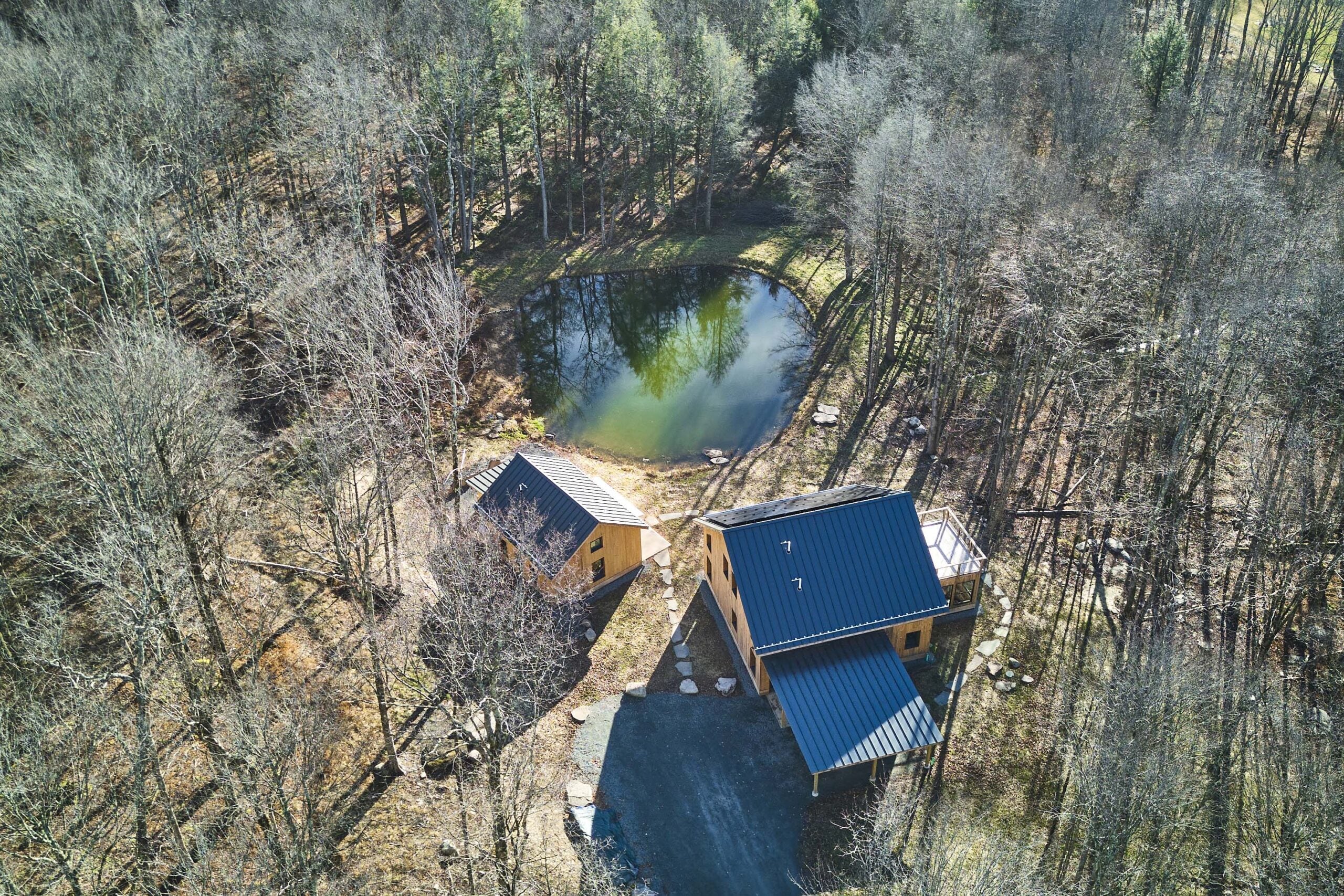
They also weren’t looking for a typically flat plot of land for tract homes; they found a vertiginous site. Malik recalls, “the broker said ‘this is gorgeous but it’s going to be very difficult to develop.’ It features both unbuildably steep slopes and wetlands but it was just stunning.” A large proportion of land you can’t build on would scare off most developers but their intention was never to pack the site with residences. Preserving nature was the point, so they clustered building sites along roads. Malik said, “The backside of everybody’s lot is pretty much wild.”
Lots have been determined in advance and envelopes for building are portions of each of these, but there is some discretion in siting for the buyers; if the main glazed walls will all face southwest for maximum solar gain.
Passive House Construction: Doing Things the Hard Way
Passive house design is tricky; a repeat series of steps where the easiest means to accomplish one goal are generally things you’ve forbidden yourself from doing. Malik notes, “The simplest and most energy-efficient way to build a passive house would be to build a bunker with tiny windows—but you probably wouldn’t want to live in it.”
They hit upon the expedient of largely using off-site panelized construction, finding the right match in Bensonwood of Walpole, New Hampshire. The manufacturer employs a certified passive house designer and they found its systems a strong start, tweaking these elements to produce designs that were modern and high performing.
Moorhead, who has designed numerous houses on his own, was making a leap into a new kit of parts. “This is the first time I’ve done that before. It turned out to be fascinating. To get the economy of working with them, you really need to work within their system. We studied dozens of their homes and thought, ‘can we merge this; move that around’?” He found a number of expressive possibilities designing within the system of two-foot panel widths.
When working on the initial Balsam model home Moorhead explains, “I was painting watercolors and it hit me that if I articulated that corner with a separate color it would add visual nuance and help us shade the structure.”
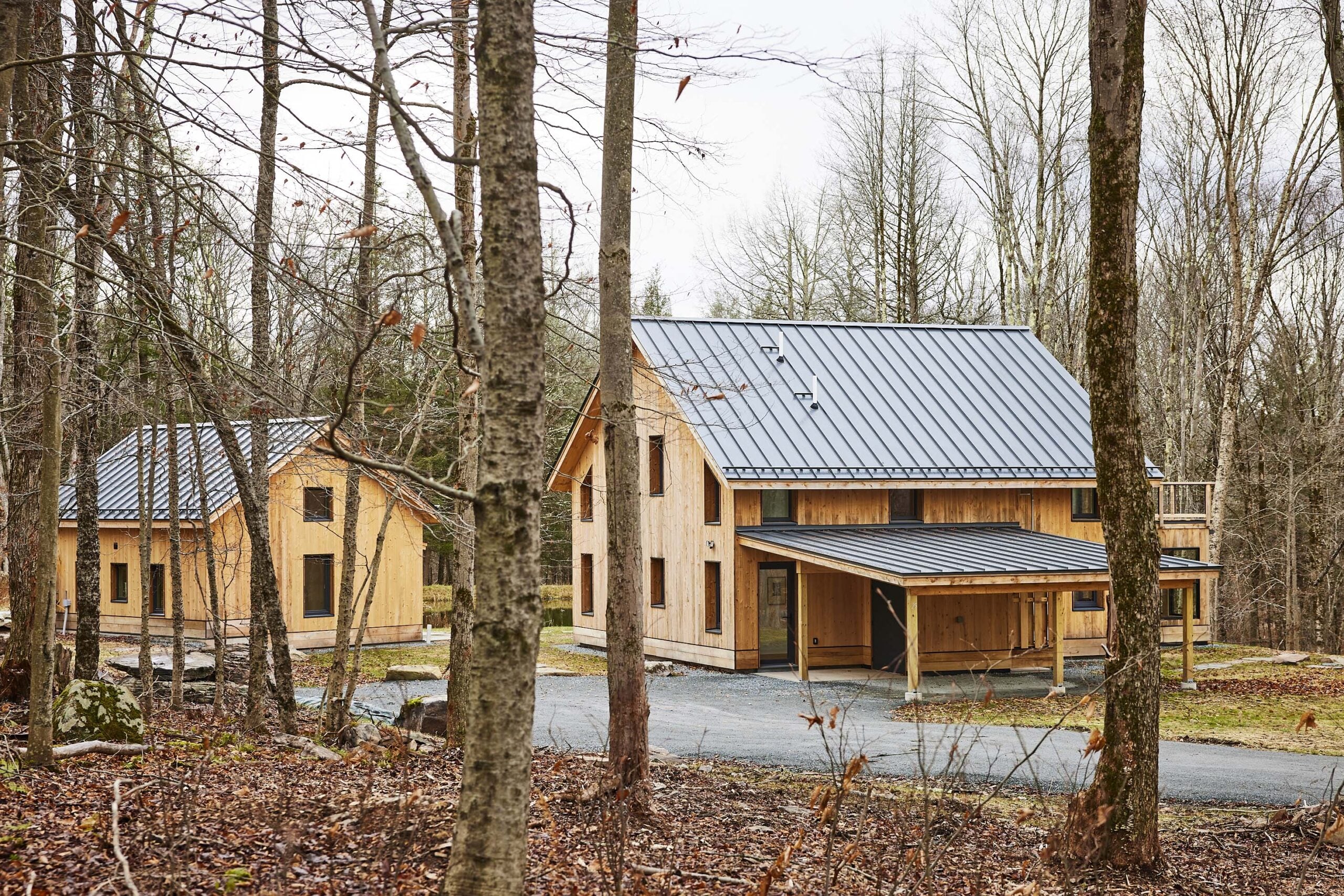
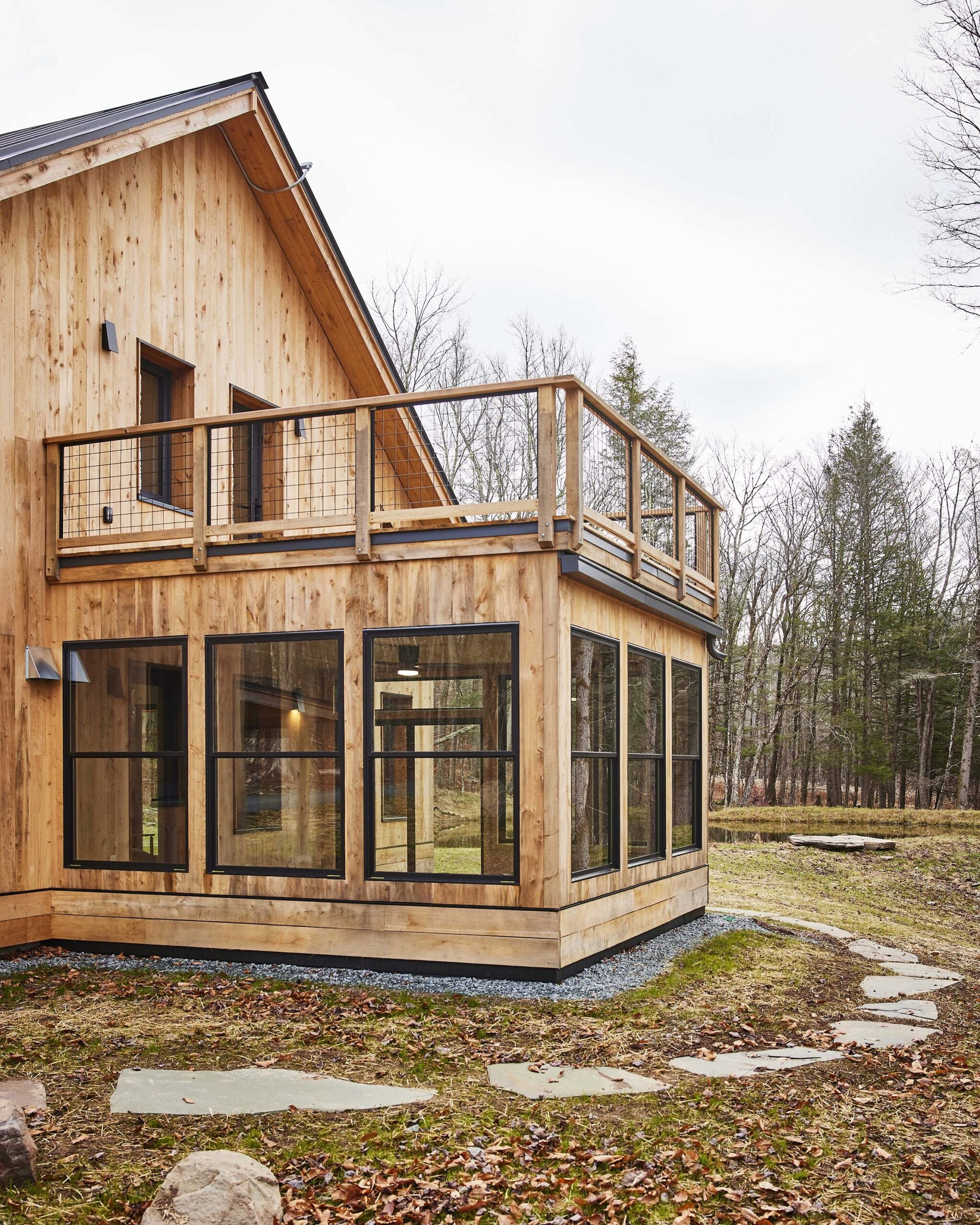
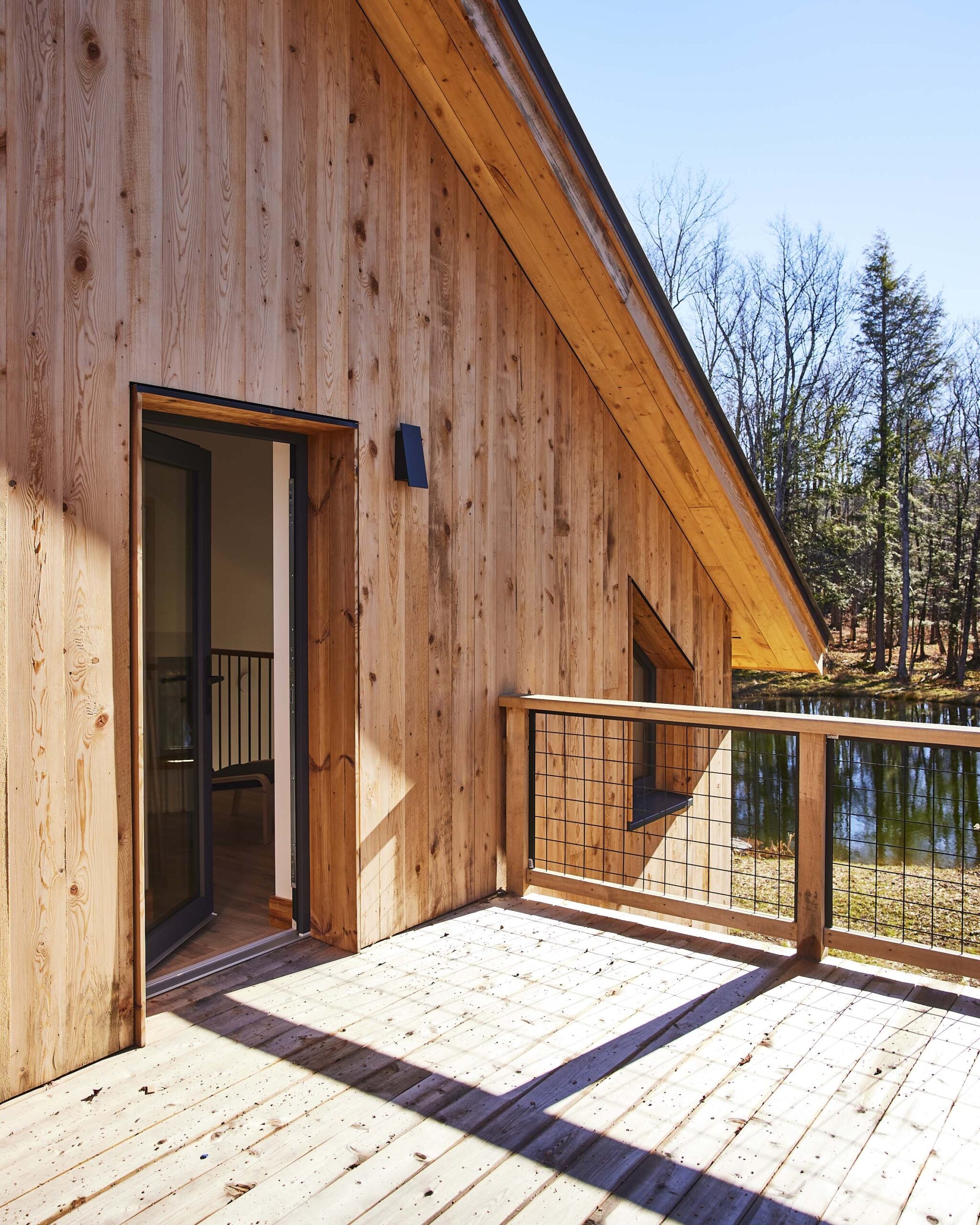
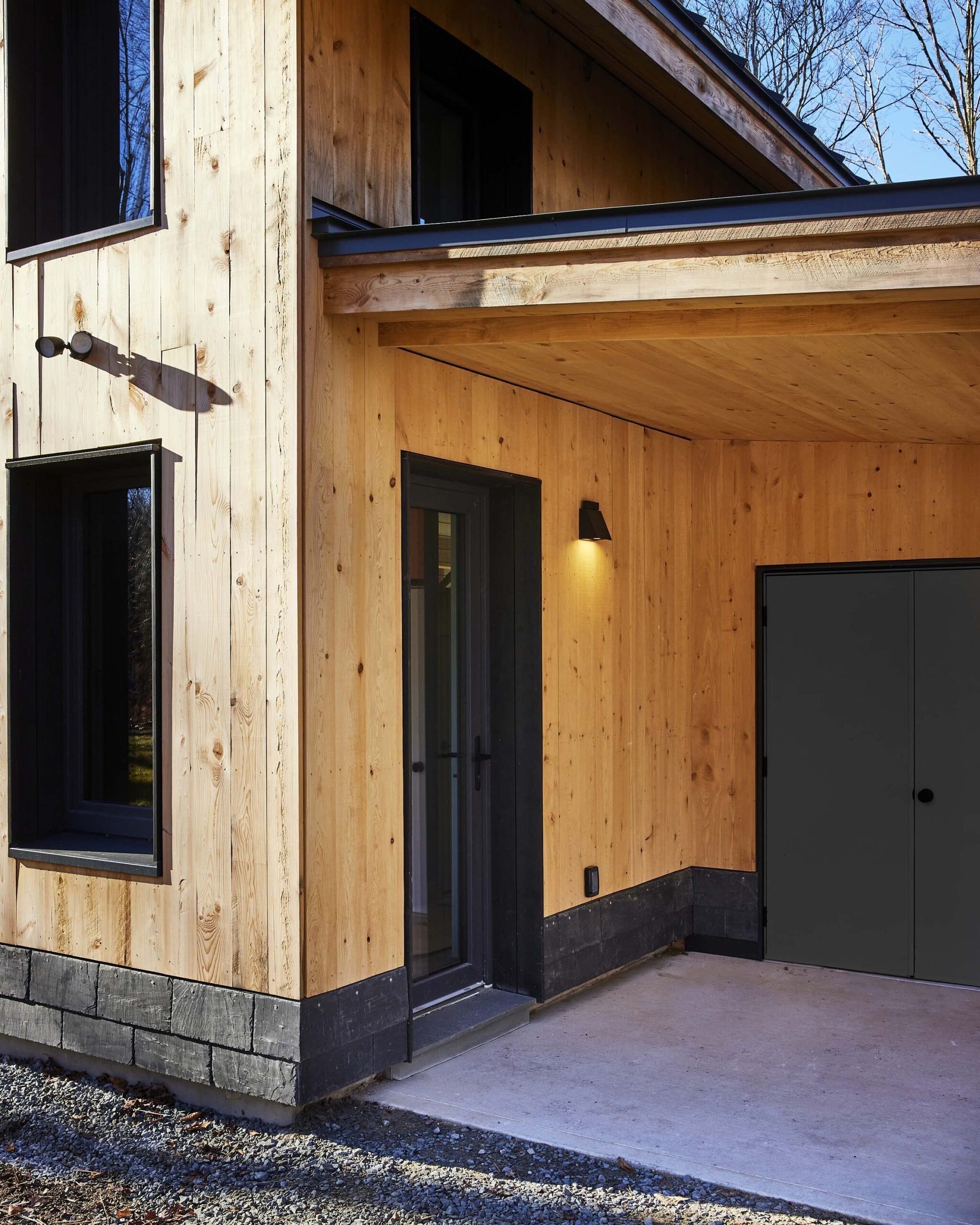
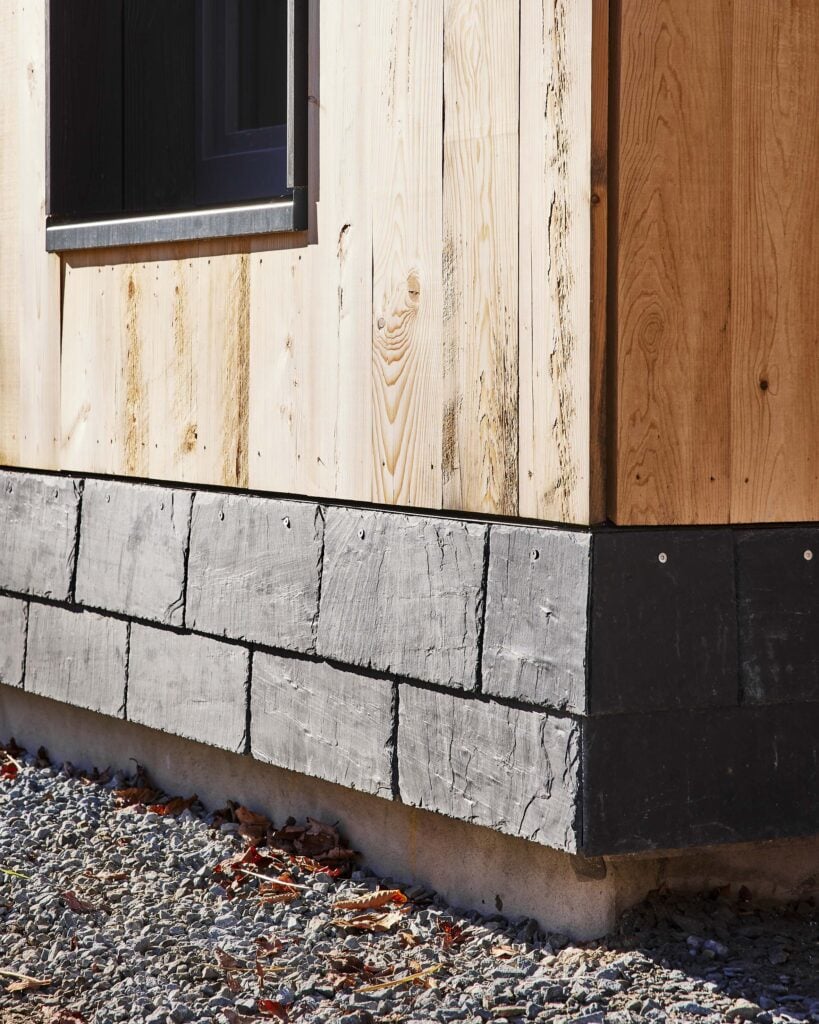
They have built three of these Balsam models (2,283 square feet) and three of a later smaller and lower-cost Red Hill models (1,783 square feet). Each have 3 bedrooms and 2.5 bathrooms. These designs feature some cutting-edge elements, and others that are as traditional as one can get. They are fronted in rough green hemlock, just as any nearby barn would be. Moorhead says, “There’s no need to stain it and it will likely last for 100 years.” Aesthetic and performance goals were deftly melded in some details; the reveal on the perimeter of the house, for example, where siding boards don’t touch. Moorhead explained, “You don’t ask a material to do something which it can’t do readily. The wood will naturally twist. The gap detailing allows it to do that.” It’s also accomplishing a very real practical goal as a rain screen, designed for cladding to dampen and then dry out. Moorhead adds, “You’re not designing to keep all the water out; that panel system will keep 97 percent of water from going in through the gap.”A tapered fiberboard system behind serves as a drainage plane.
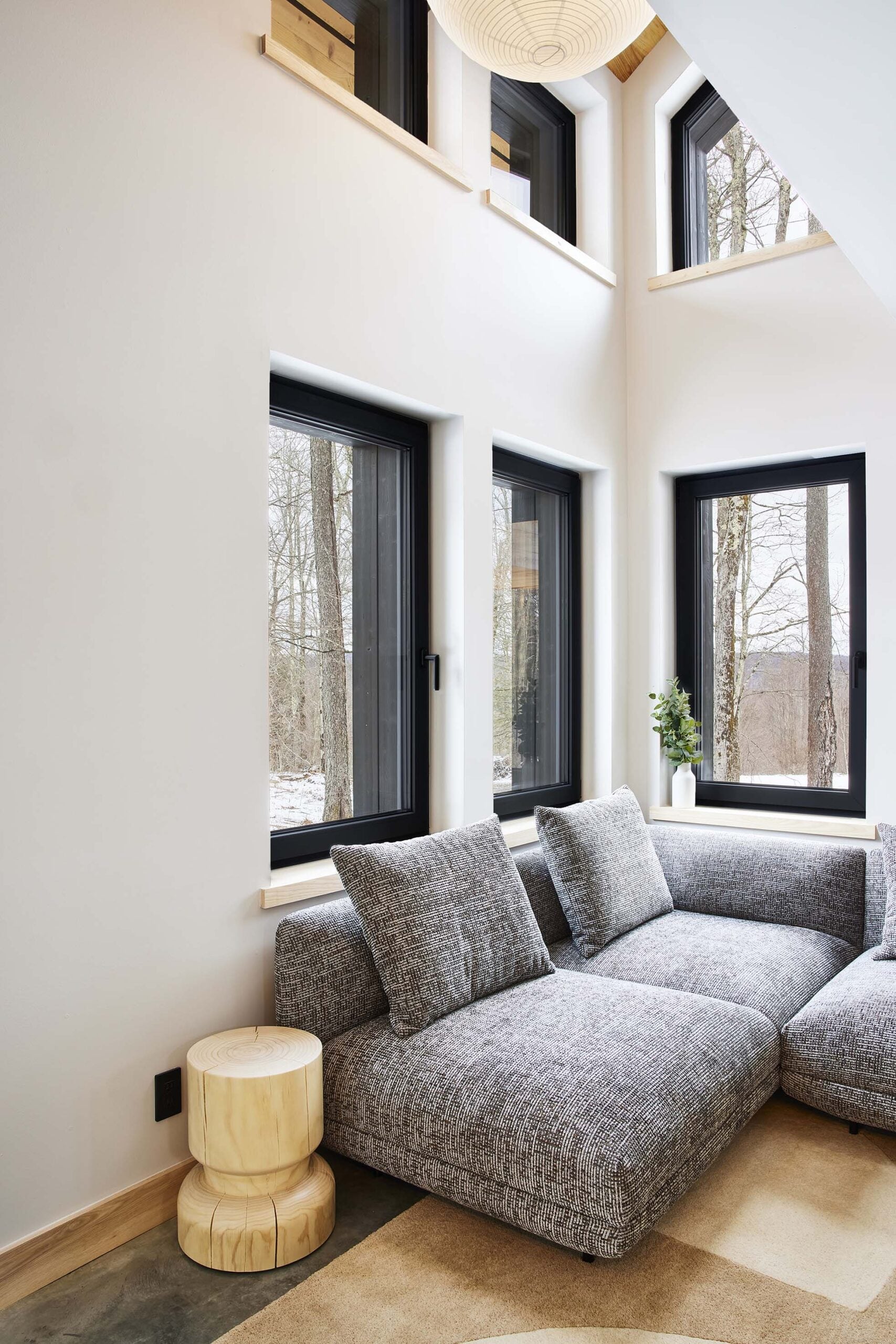
Striving for a tight seal otherwise to retain heat or cool and eliminate thermal bridges was much of their work. Hale attests to countless “tweaks of eighth of inch here, a sixteenth here” in their quest to achieve a final product that “fits together like a glove.”
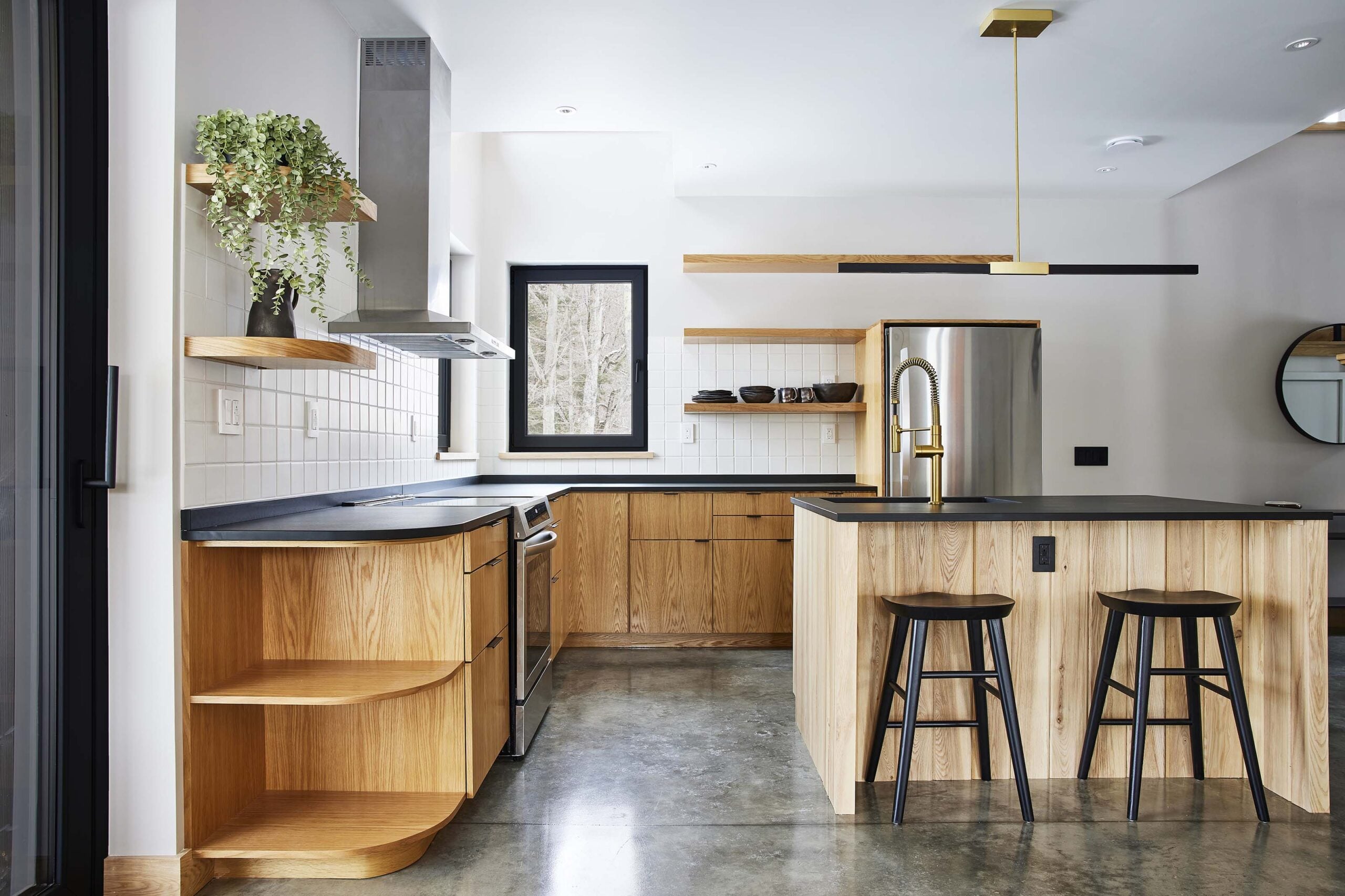
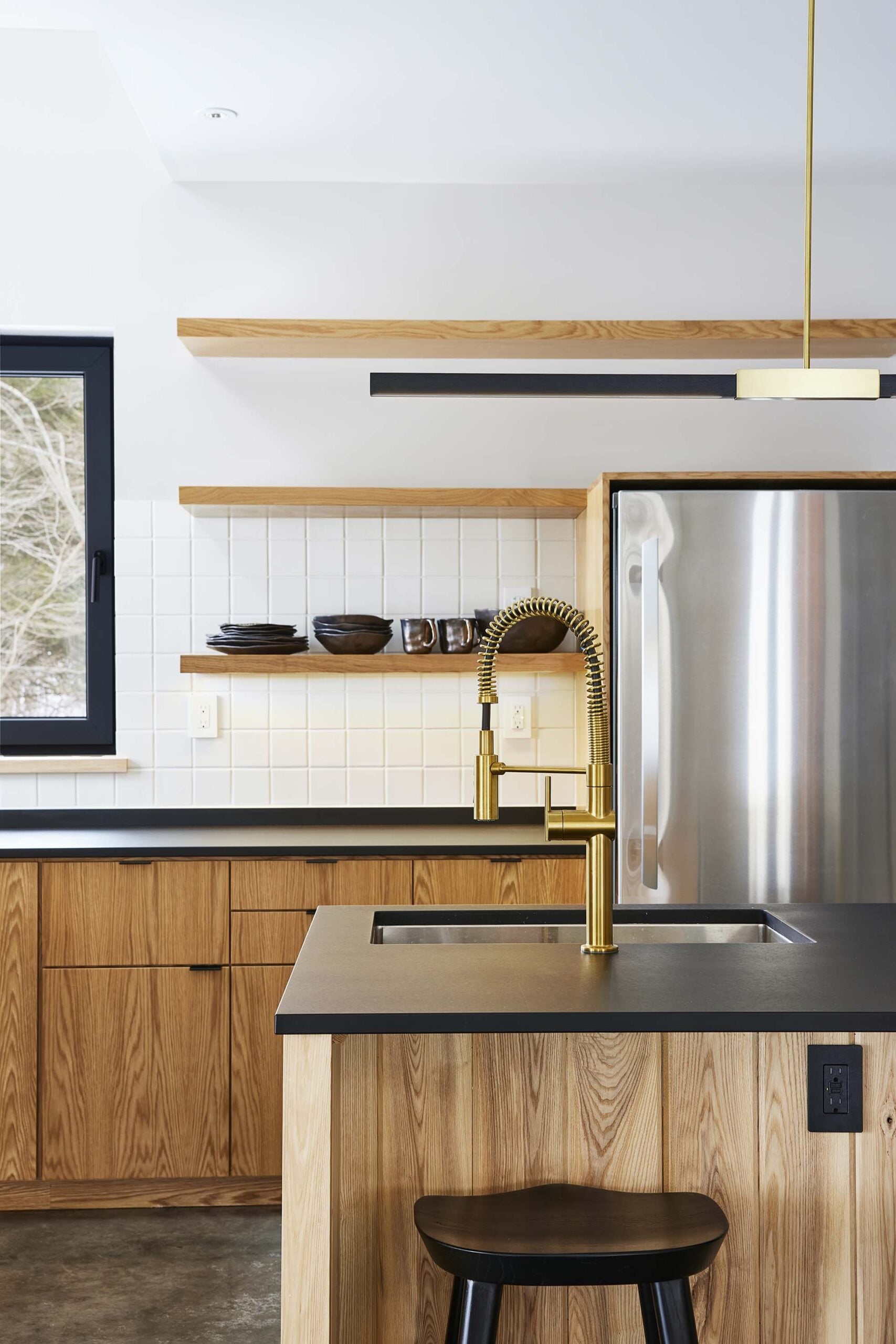
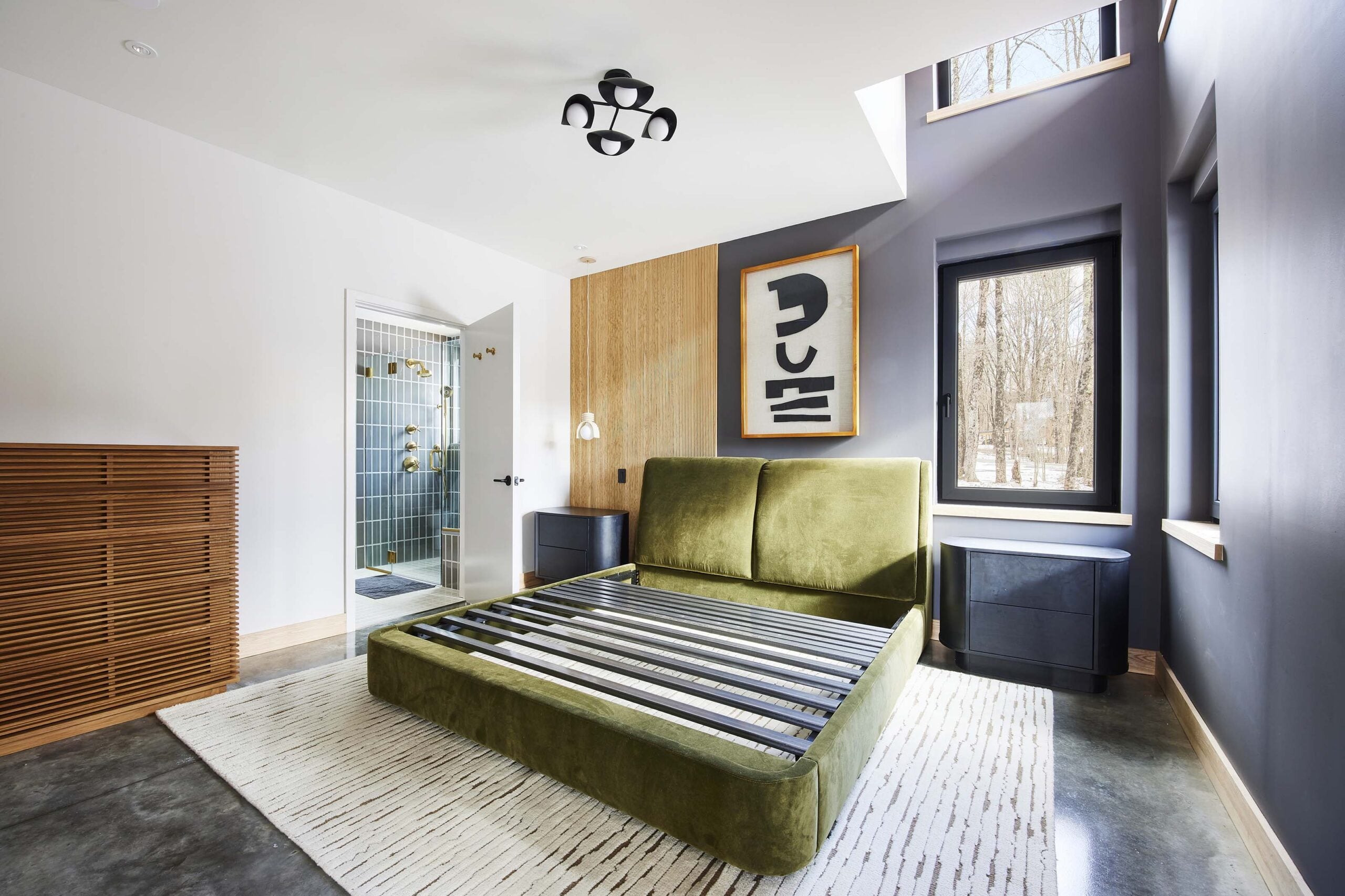
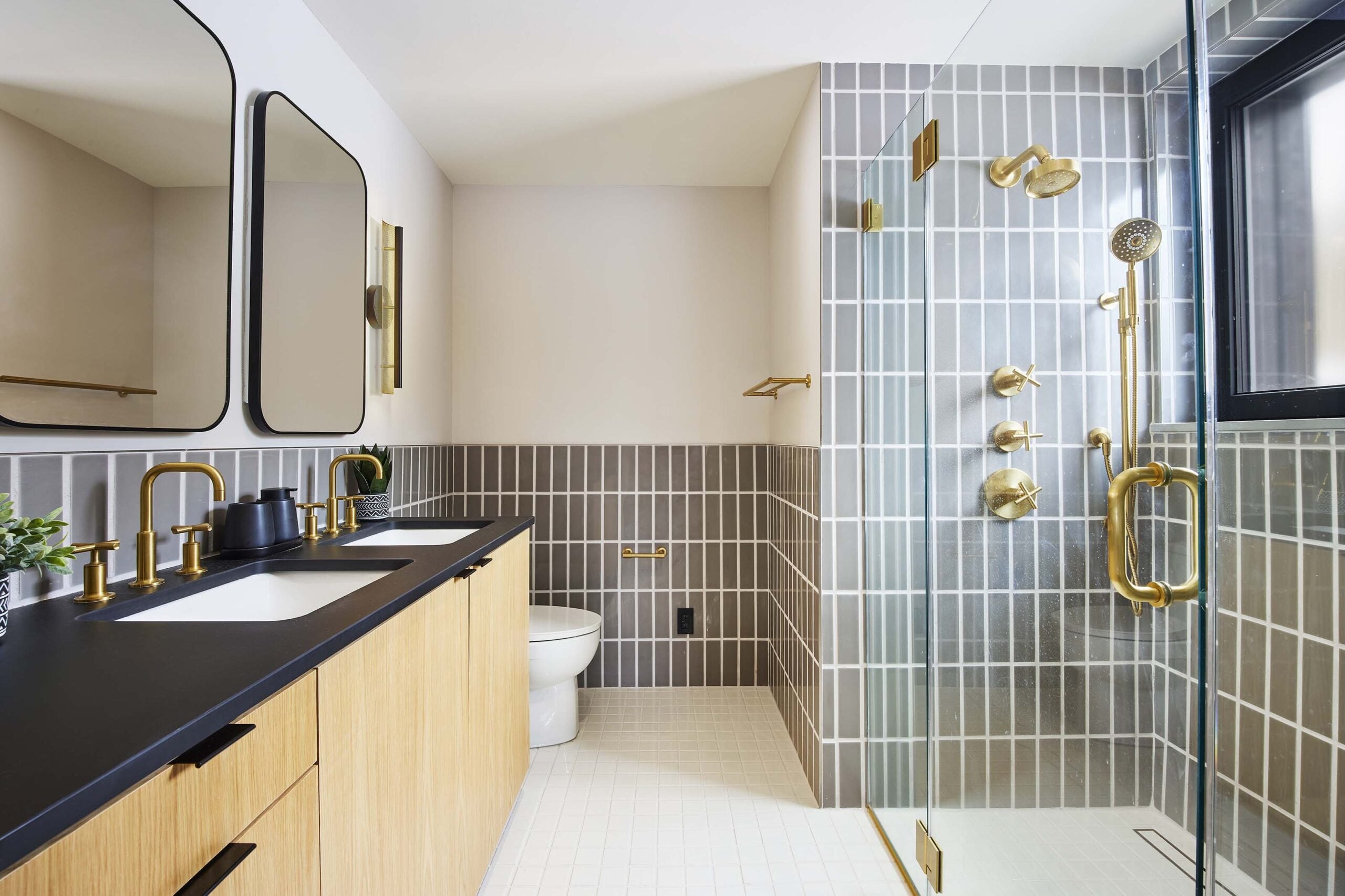
Sourcing was another central concern. Malik notes, “If you don’t think about embodied carbon in your building materials, it could take you forty years to get back to zero.” The project minimized the use of high-carbon steel and concrete. Concrete is found only in foundations. Inside, they used maple, cherry, and ash from the construction sites as baseboards, trim, ceilings, and panelling. Countertops are Richlite made out of recycled compressed paper. Appliances are fully electric, including JennAir refrigerators, and ranges. LED lighting within is by Stickbulb and bathroom tiles by Fireclay. The only imported element was Unlilux triple-glazed windows from Germany (we just don’t make windows of this quality domestically.) The benefit is that these should last for half a century.
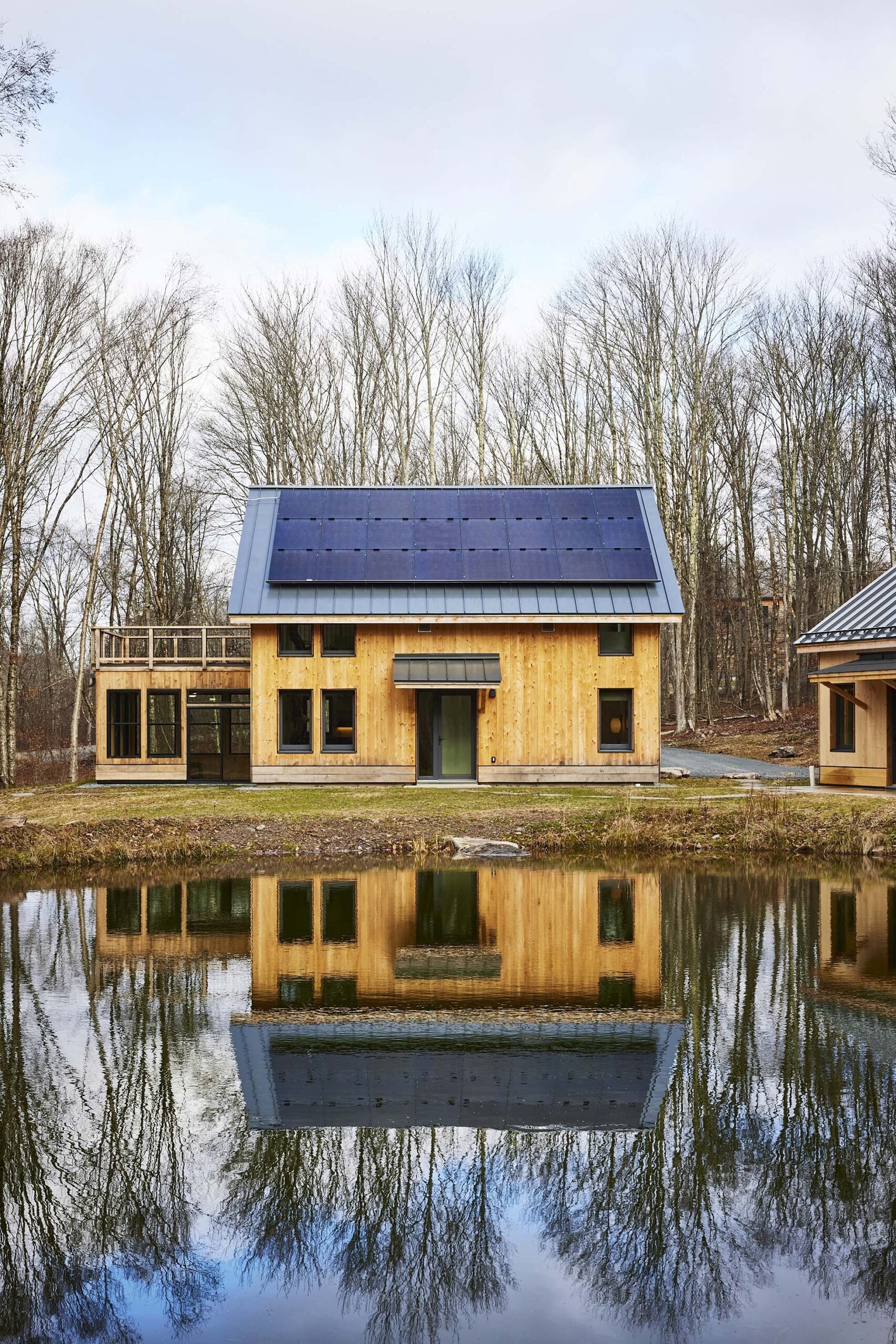
There was also an effort to avoid often egregiously carbon-intensive insulation materials; instead, wall insulation is carbon-sequestering dense pack cellulose and foundation insulation is Glavel, a recycled glass. Hale found himself won over, “I had been spending some nights here and when it came time to sell the model I didn’t want to sell to anybody else. So I moved in.” He then served as a test case of the performance of the house. “It works. There are no drafts at the windows and we have been through two winters here now. When it’s cold and windy, it stays toasty. It stays cool in the summertime too.” Power outages have been imperceptible and solar performance strong. “If the grid went down for three months I’d be fine. If I put in another battery and a couple more panels I could cut my ties to the grid.”
Hale did find a single heating and cooling system on the first floor wasn’t quite adequate; temperature differences were still about five degrees between floors, so he then installed units on each floor. They’ve continued with some other minor tinkering concerning threshold details on subsequent models. Moorhead explains, “It’s great to have a chance to take a second or third swing at those kinds of things.”
How Do You Sell Sustainability?
The challenge, when it came to attracting buyers otherwise was that passive house virtues are often invisible. Hale says, “Not everybody understands good construction. It all looks new from the outside. It’s very hard to see how it going to perform or how it’s going to last.We have been trying to find people who can spot that difference.”
They have found several of these.
Julie Pyun and her husband have lived in a Balsam model for a bit over a year. She commutes to New York City once a week and her husband is retired. She cited “the modern rustic design” and “the option to be independent from the grid” as prime factors in their decision. “We also love the huge energy cost savings component of the house.” Average monthly utility bills for residents have been $67 dollars. The house’s tight seal has been a boon in other regards, “for someone who suffers from environmental allergies all year, it has been a sigh of relief to live in a house that circulates fresh air 24 hours a day.” They also make very regular use of the trail network. “We feel healthier and happier in this community.”
Julie Baron Sehrt, her husband, and two young daughters have used another Balsam as a weekend home since 2023. “What pulled us into TCP in particular was the ethos of the project itself (sustainability, community, etc.) and the quality and aesthetic of the homes. We have amazing hiking trails, ponds, scenic overlooks, that are thoughtfully designed for the community. And the performance of the home itself has been unparalleled. It’s been a dream combination!”
COVID-19 emigres or second-home buyers did drive a surge in housing costs across the Catskills, fueling affordability problems across much of the area, more acutely in other portions of the area but also in more distant Sullivan County. A repeat regret on the part of the developers’ has simply been the difficulty in delivering a more affordable project. Hale relates, “We didn’t start out trying to sell $1 million houses.” Their initial costs were below $300 per square foot but pandemic related supply shocks and subsequent inflation brought this number over $400 per square foot. “The second house cost about forty percent to build than the first one,” he says. “We want to make it smaller, make it simpler, and continue pushing the cost down cause I think that’s where scale will happen.”
They regard this as a demonstration project, vital work for a more sustainable future. It’s already received accolades: the Red Hill model was a Green Builder Home of the Year winner for 2025. The Balsam model won the same award the prior year. They are ging through the process of Passive House certification. Malik concludes, “We’ll share our approach, our lessons learned because the planet needs it. Once we succeed here, hopefully we could do it in any number of states.”
Would you like to comment on this article? Send your thoughts to: [email protected]
Latest
Projects
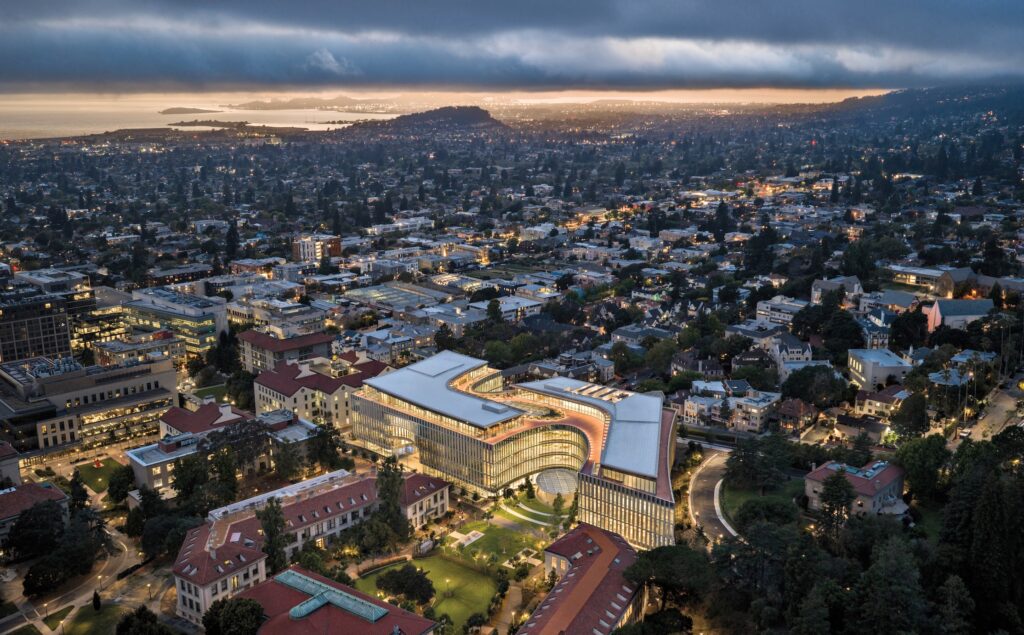
UC Berkeley’s Newest Building Is All About Human Interactions
The Barbara and Gerson Bakar Gateway—home to the university’s College of Computing, Data Science, and Society—gently reminds data scientists and AI researchers of what’s really important.

Projects
ZD+A Brings a Modernist Mexico City House in Line with its Context
Architect Yuri Zagoin Alazraki reorganized the speculative house to respond to its site and create unique spaces for contemplation.