



January 6, 2026
A New Airport by Foster + Partners Is a Celebration of Culture and Light
Before the official opening of Cambodia’s Techo International Airport in Phnom Penh on October 20, dozens of travelers were already flooding Instagram with video tour Reels and photos in front of the 30-foot-tall bronze Buddha statue in the center of the light-filled terminal. At that point, the airport had already seen a month’s worth of flights.
Designed by Foster + Partners, the airport’s artful blend of natural and artificial light does more than just create the perfect selfie lighting; it contributes to the terminal’s warm, calming atmosphere while significantly reducing the need for energy-intensive artificial illumination throughout the day.
“[The airport] is a celebration of Cambodian culture and light—forming a new gateway to the country,” says Stefan Behling, head of studio at Foster + Partners. “It is also one of the most sustainable airports in the region, filled with natural daylight, incredible local greenery, and strong visual connections to the outside.”


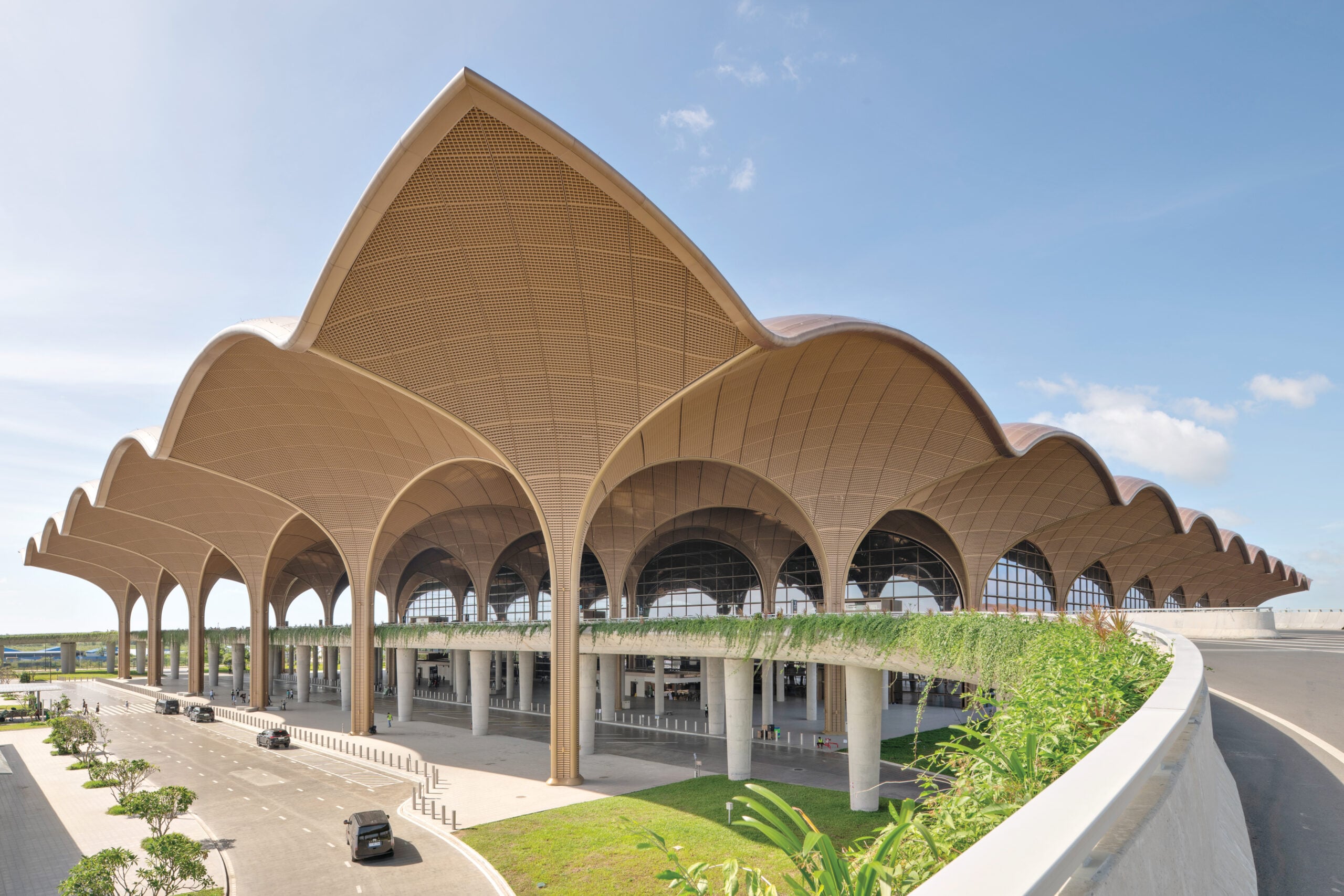
Comprising a central terminal with two aerofoil-shaped wings, the project features an undulating, modular steel roof canopy—its most striking feature—which stretches across the entire concrete superstructure, from drop-off to air side, and crescendos at the center of the building, echoing the forms of Cambodia’s famous palaces and temples. “The layering of roofs to the center is what you would find in the Angkor Wat’s architecture and in the historic Khmer architecture,” explains senior partner and project lead Nikolai Malsch in an early construction video. The overhanging roof responds to Cambodia’s tropical climate, providing much-needed shading for the exterior and interior spaces and reducing the need for mechanical ventilation.
The roof is supported by the treelike structural system, spanning 118 feet. Underneath, a suspended latticed soffit, inspired by traditional Cambodian basket weaving, helps filter daylight. Integrated artificial lighting not only addresses the challenges of evenly illuminating the deep interior spaces of such a large terminal but also helps create an ephemeral atmosphere that both captivates and calms even the most nervous passenger. At night, when the light from the building’s 180 skylights stops pouring in, this lighting system glows through the screens, transforming the interior into what the firm describes as a “spectacular light sculpture.”
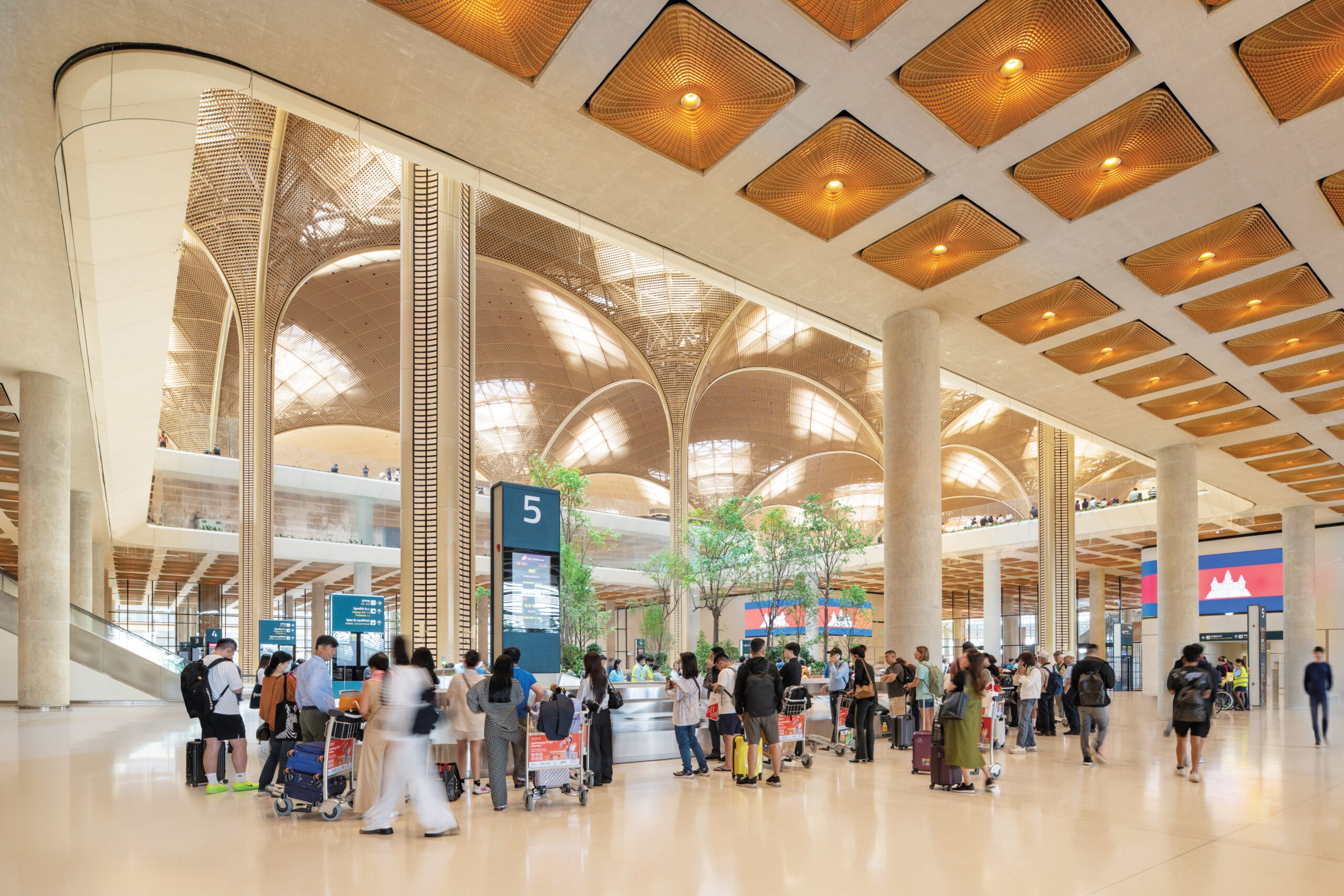
Inside the terminal, the designers aimed to highlight the country’s history and evolving identity through the placement of 200 handcrafted sculptures, in addition to the terminal’s massive central Buddha. “The sculptures depict various traditional Khmer forms, including Nagas, a serpent-shaped group of deities,” Malsch notes. Native rumduol trees, alongside local palms and various flowers, fill the central atrium, contributing to a sense of place. With time, one can imagine how these plants will grow to fill the site, both indoors and out.
Located 20 kilometers south of Phnom Penh’s center, Foster + Partners’ 2.5 million-square-foot, $2 billion facility is part of a master plan that will include a lake, a high-speed rail link, and a new bus station to encourage public transport, reduce car traffic, and increase connectivity to the city. The facility is set to run almost entirely on energy generated by on-site solar. Partner Matthew Hayhurst adds, “Our holistic vision encompasses the airport’s relationship with its immediate surroundings and the city. The terminal building overlooks a new public park, enhancing connections with nature and supporting general well-being for all passengers.”

Techo International Airport replaces the nearly 70-year-old Phnom Penh International Airport, which only had one runway, and its arrival is a key component in the nation’s vision for the future. The newly opened first phase of the project will accommodate up to 13 million passengers a year (nearly triple the number the old airport saw in 2024). Due to the innovative modular construction, which helped get the airport built in under five years, the site is also equipped to handle future expansion—an additional southern wing will contribute to the airport being able to accommodate up to 30 million passengers by 2030.
Given that Cambodia experienced a 23 percent increase in international tourists from 2023 to 2024, it’s a necessary improvement. “The ambitions for the client were very simple: to put Phnom Penh on the map,” notes Malsch. “What we see already is that everybody we talk to is already very proud of this project. It will be a huge change for the city and the whole nation.”
Would you like to comment on this article? Send your thoughts to: [email protected]
Latest
Viewpoints
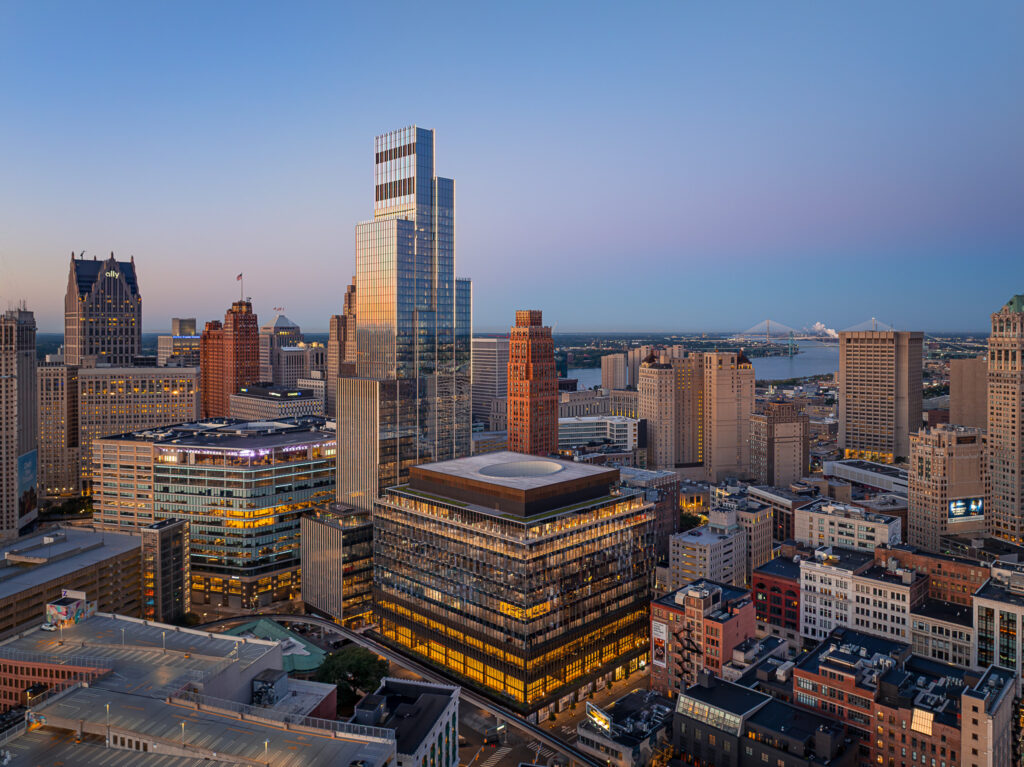
Detroit Month of Design: A City’s Work in Progress
Now in its 16th year, the celebration offers insights into the Motor City’s ongoing accomplishments without glossing over its hurdles.
Projects
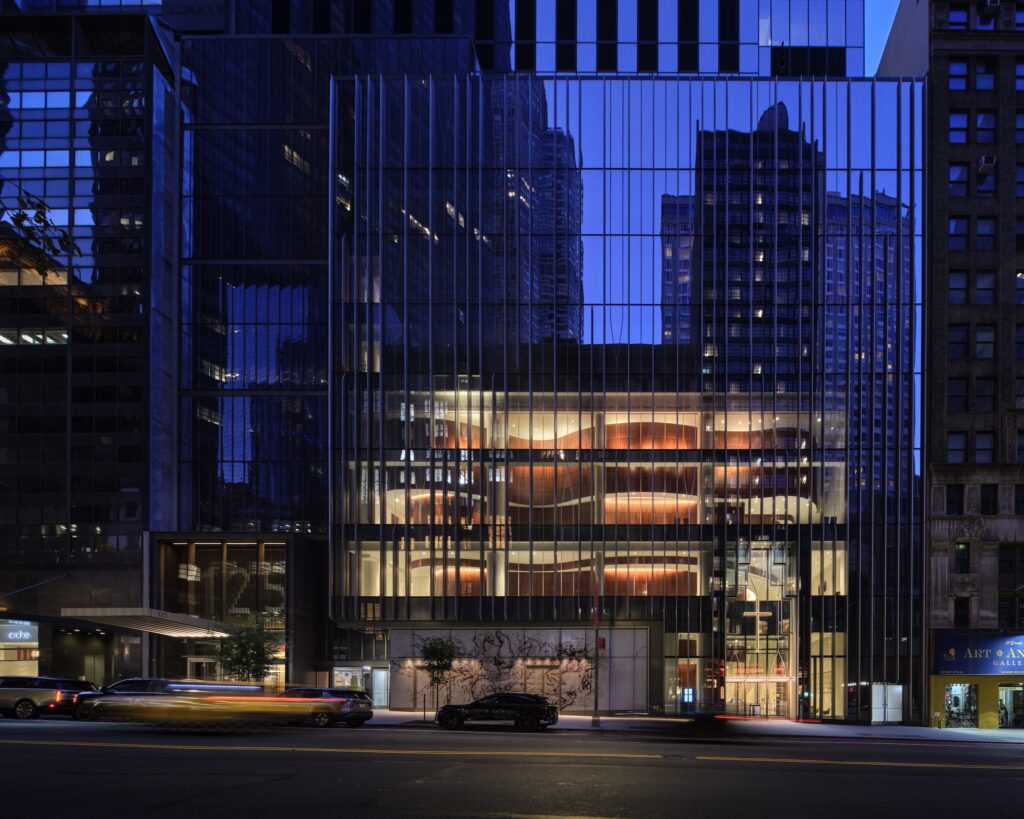
How a Hybrid Building Helped an Historic Manhattan Congregation Remain in Place
On Billionaire’s Row, FX Collaborative designed a new home for Calvary Baptist Church combined with an office tower.