



March 31, 2026
This UVA Campus Building Asks Students to Slow Down
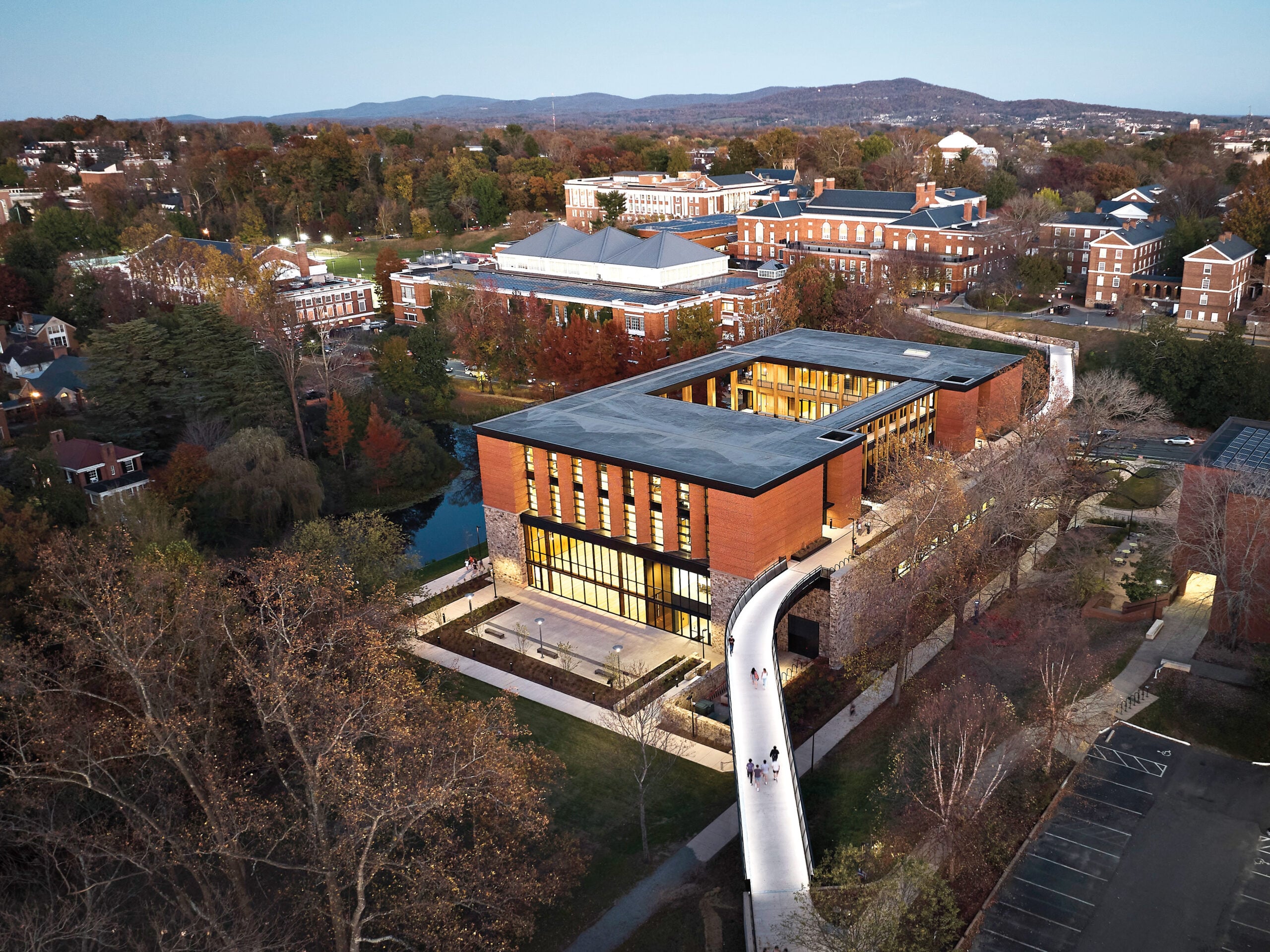
Thomas Jefferson’s Academical Village at the University of Virginia (UVA) established what would become a model for educational campuses, fusing architecture, landscape, and learning into a single environment. More than 200 years later, UVA’s new Contemplative Commons seeks to rethink education design once again, responding to what have become epidemic levels of anxiety, isolation, and burnout among students—at UVA and nationwide. Designed by San Francisco–based Aidlin Darling Design, the 57,000-square-foot building is both a calming refuge and the home of the Contemplative Sciences Center, a cross-disciplinary hub dedicated to the study of wellness itself. Shared by all 11 schools at UVA, the Commons encourages intentional collaboration, co-teaching, shared spaces, and the development of new initiatives.
The Commons occupies a former parking lot and basketball court at a key crossroads on Grounds (the local name for the UVA campus), linking Upper and Lower Campus. It sits adjacent to the Dell, a restored retention pond and landscape designed by Nelson Byrd Woltz, populated with native plants and marked by stone edges, broad steps, and low walls. The architects conceived a U-shaped building that cradles this serene spot, with nearly every major room opening toward water, trees, and sky. “There’s a psychological security in this typology,” says Aidlin Darling principal Kent Chiang. “It offers refuge, but with outlook.”
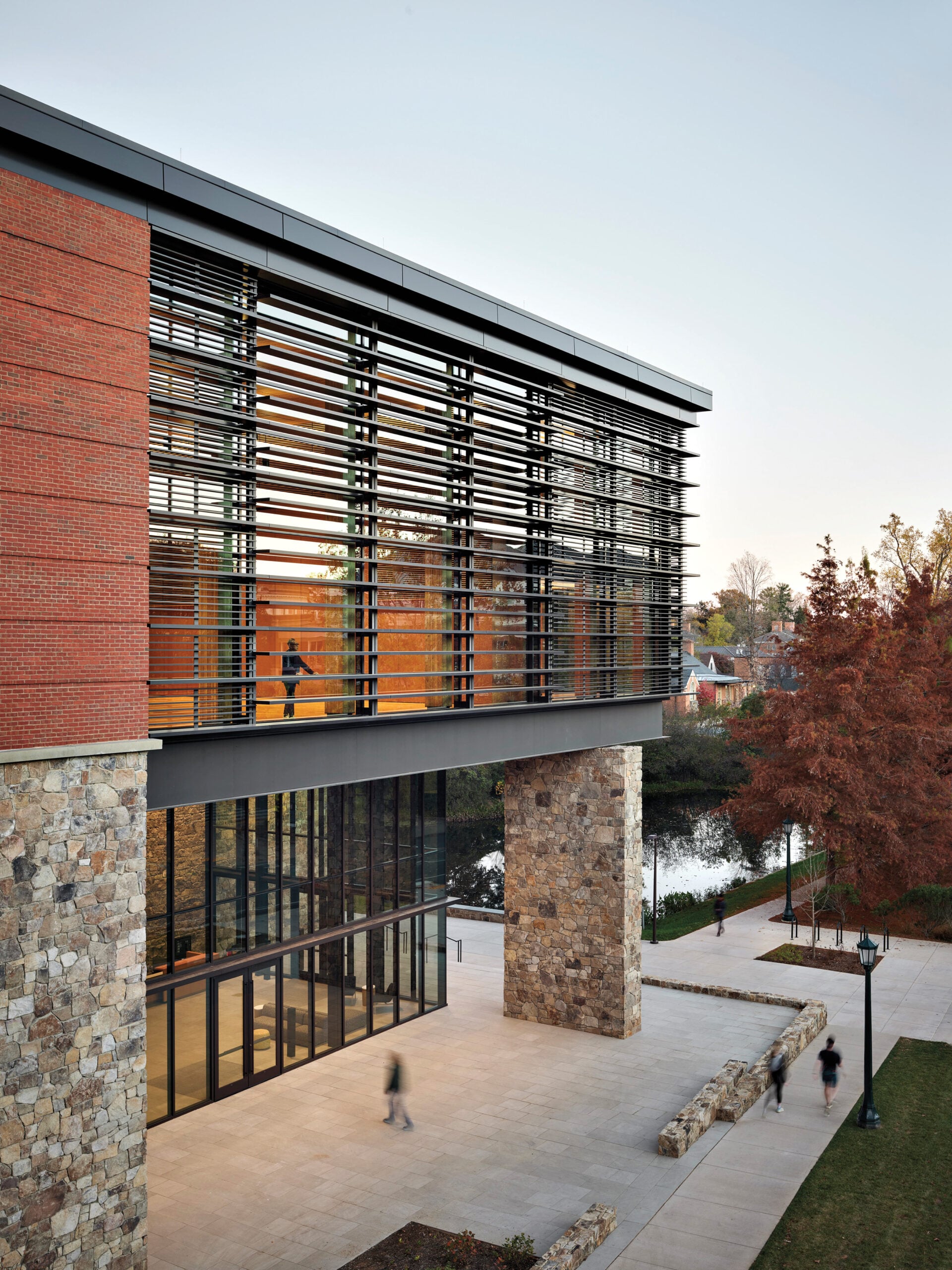
Materially, the complex negotiates UVA’s famously conservative architectural culture in a modern yet respectful way. “The architects who can be inspired by our language and history and site, those are the ones who are successful here,” points out Alice Raucher, the university’s architect.
Designing From the Ground Up
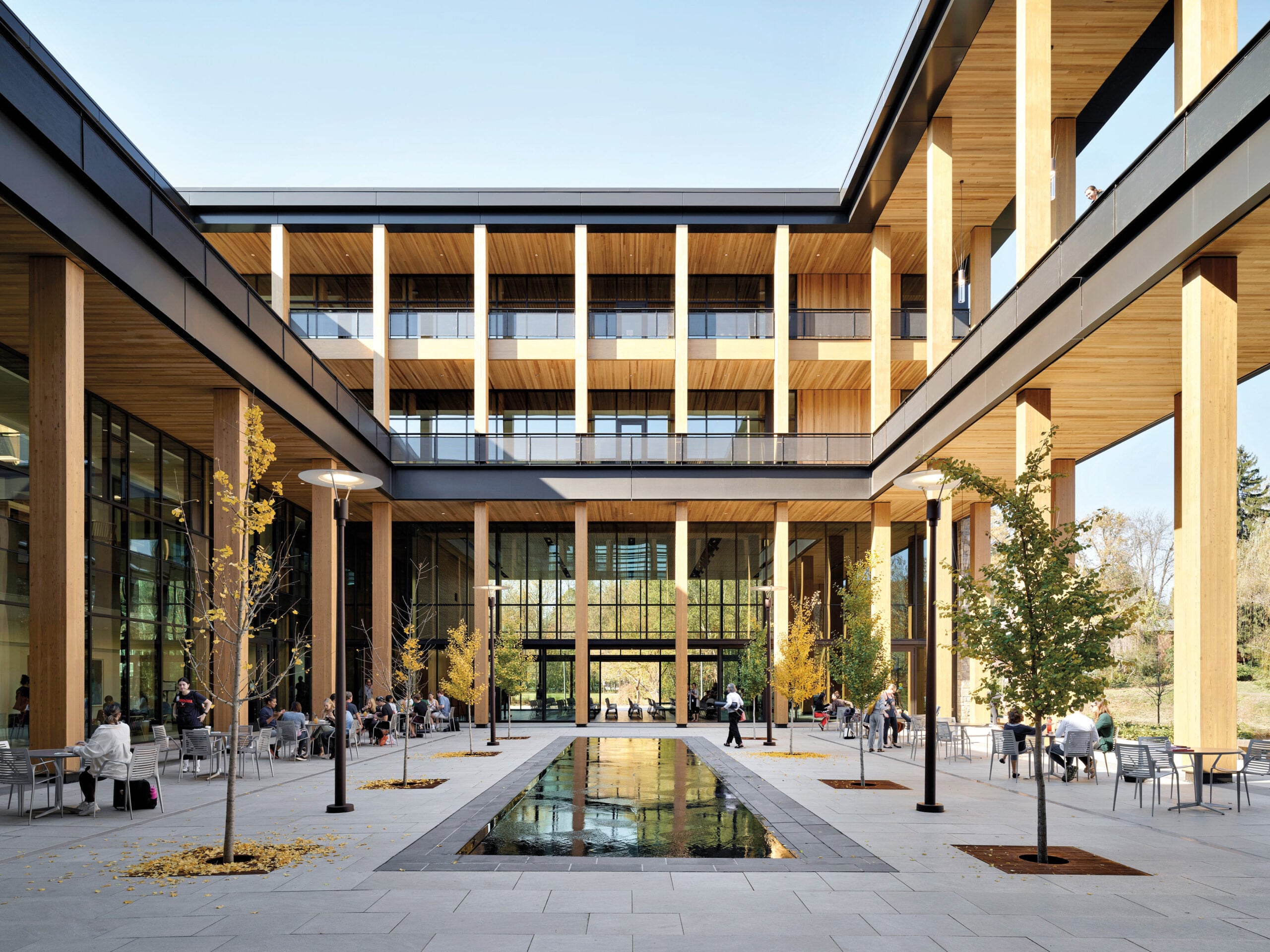
The overall composition follows the campus’s classical logic: heavy bases, rhythmic colonnades, articulated middle areas, and lighter upper volumes. Subtly introduced, red brick ties the building to the broader fabric of Grounds. At its heart—framing and echoing the Dell—is a large courtyard, where stone walls reflect the Dell’s hard surfaces, mass-timber columns evoke its trees, and open-air loggias allow light, air, and views. It has quickly become one of the most popular spots on campus.
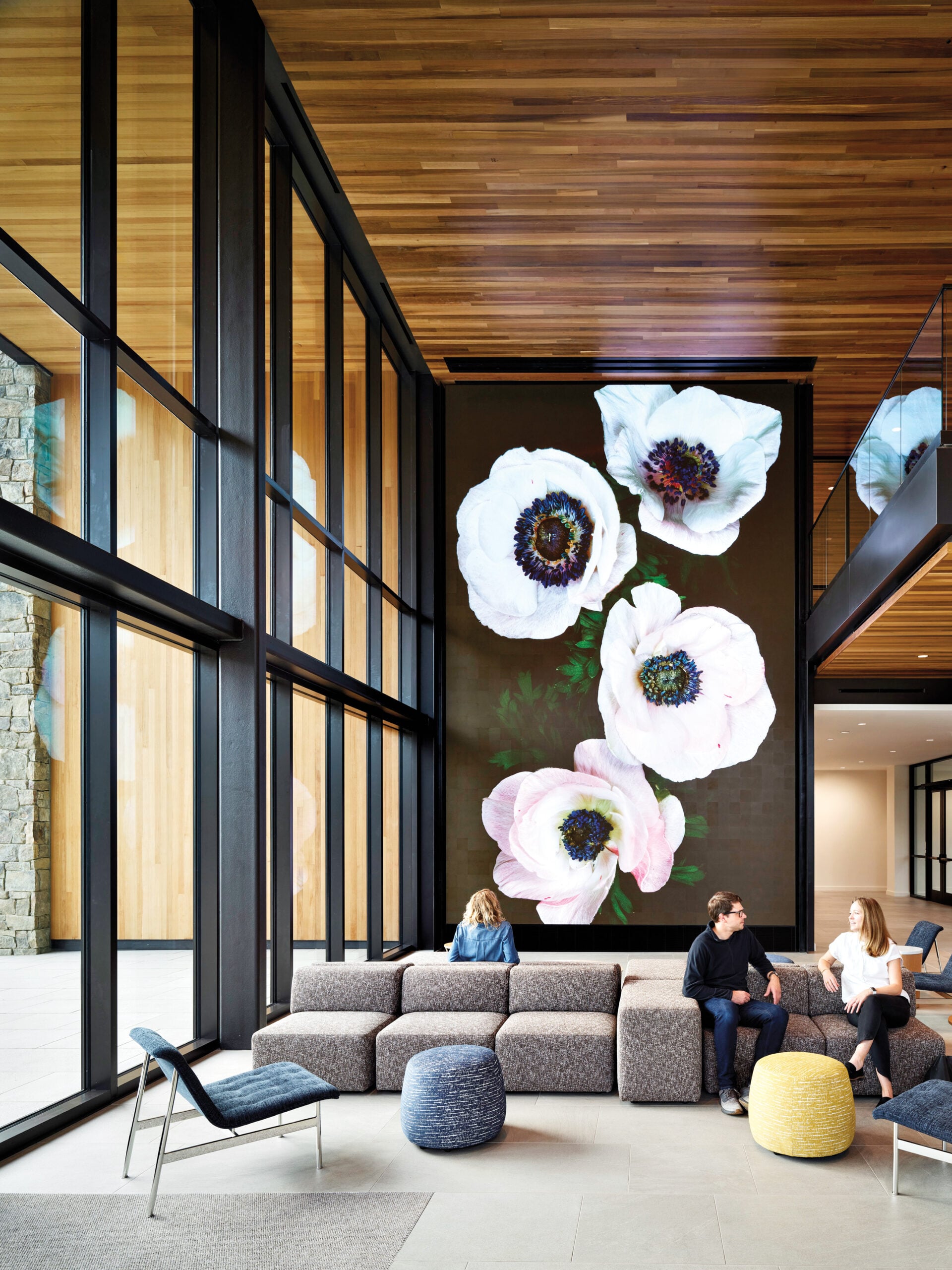
The complex was designed to be porous and legible. Circulation unfolds along the glazed corridors and open-air spaces facing the courtyard, making studios, gathering spaces, and quiet zones visible. Inside, traditional classrooms are replaced by a series of flexible learning studios. From double-height spaces like Convergence Hall and the Vision Room to the smallest studios, furniture can be cleared midclass and meditation cushions rolled out from in-room storage.
One of the project’s most consequential moves is a living bridge at the third level, providing a long-missing accessible connection between student residences and the Academical Village. Lined with greenery and places to sit, it “becomes a pedestrian superhighway,” says Aidlin Darling principal Joshua Aidlin. “People use it all day long, whether or not they ever enter a class.”
Sustainability is integrated throughout the project: radiant floor heating; canted aluminum fins paired with thick brick piers for solar shading; rainwater collection for irrigation; and bird-safe glass.
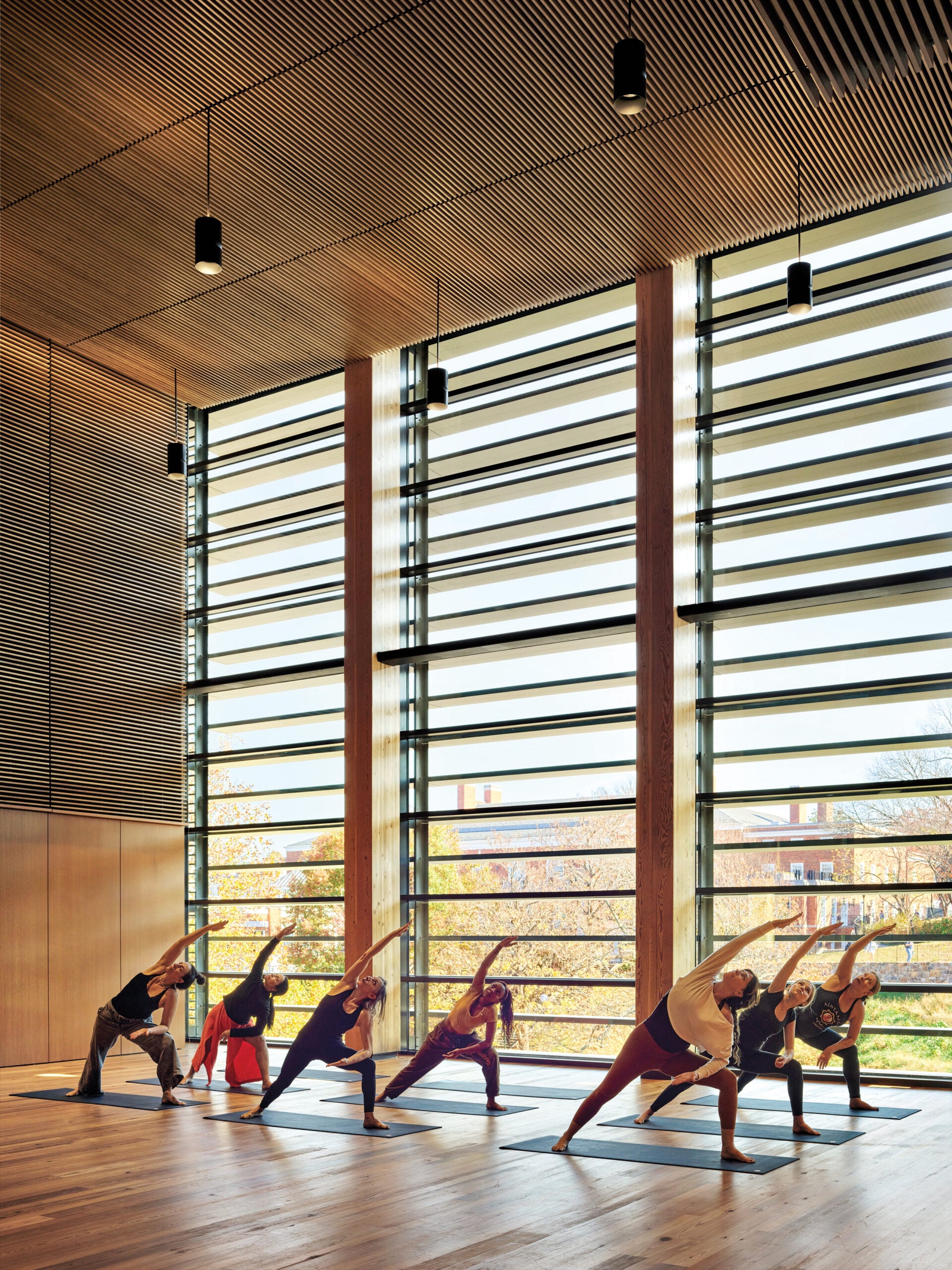
A Step Forward
Faculty and staff at UVA’s Contemplative Sciences Center spent years advocating for a building that treated mental health as a shared academic and cultural priority. Many pushed for something modern—something that, as Raucher notes, has always been in the school’s DNA. “Jefferson was never dogmatic about one language,” she says. “He was just interested in having world class architecture as a starting point.”
Raucher calls the university’s approval of the Commons “a watershed moment,” helping pave the way for new and upcoming campus projects from firms like Hopkins Architects, TenBerke, Höweler + Yoon, Elkus Manfredi, ZGF, and others. “I think we’ve moved past the days when it was so difficult to even think about doing anything contemporary here,” she says.

Would you like to comment on this article? Send your thoughts to: [email protected]
Latest
Viewpoints
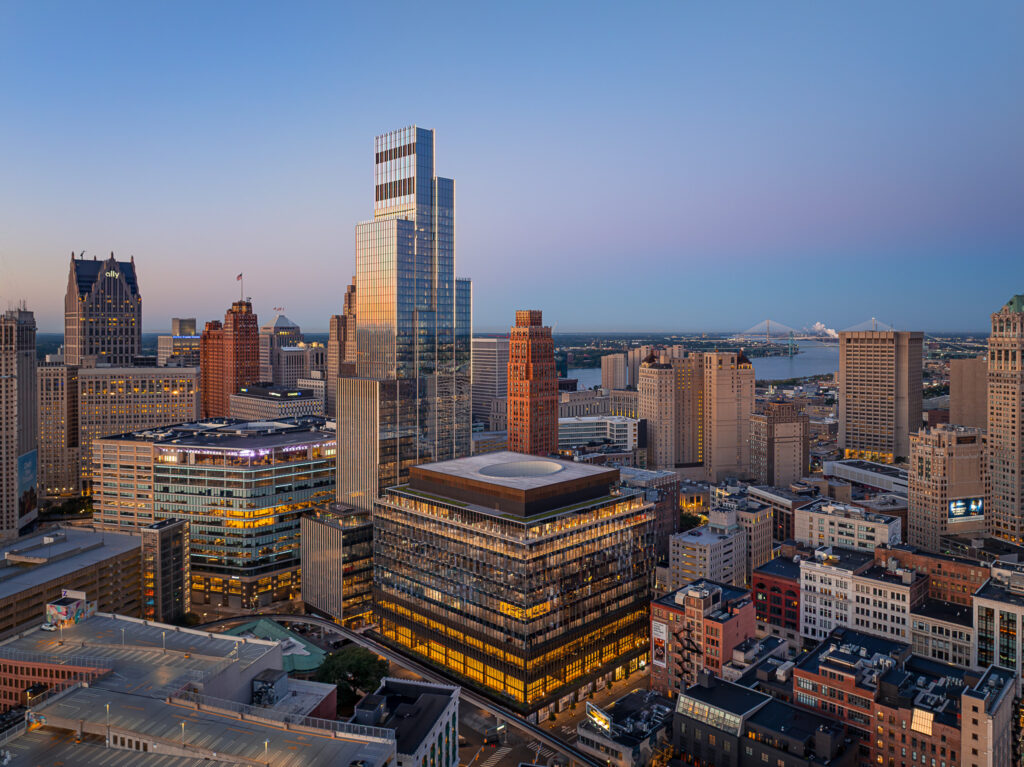
Detroit Month of Design: A City’s Work in Progress
Now in its 16th year, the celebration offers insights into the Motor City’s ongoing accomplishments without glossing over its hurdles.
Projects
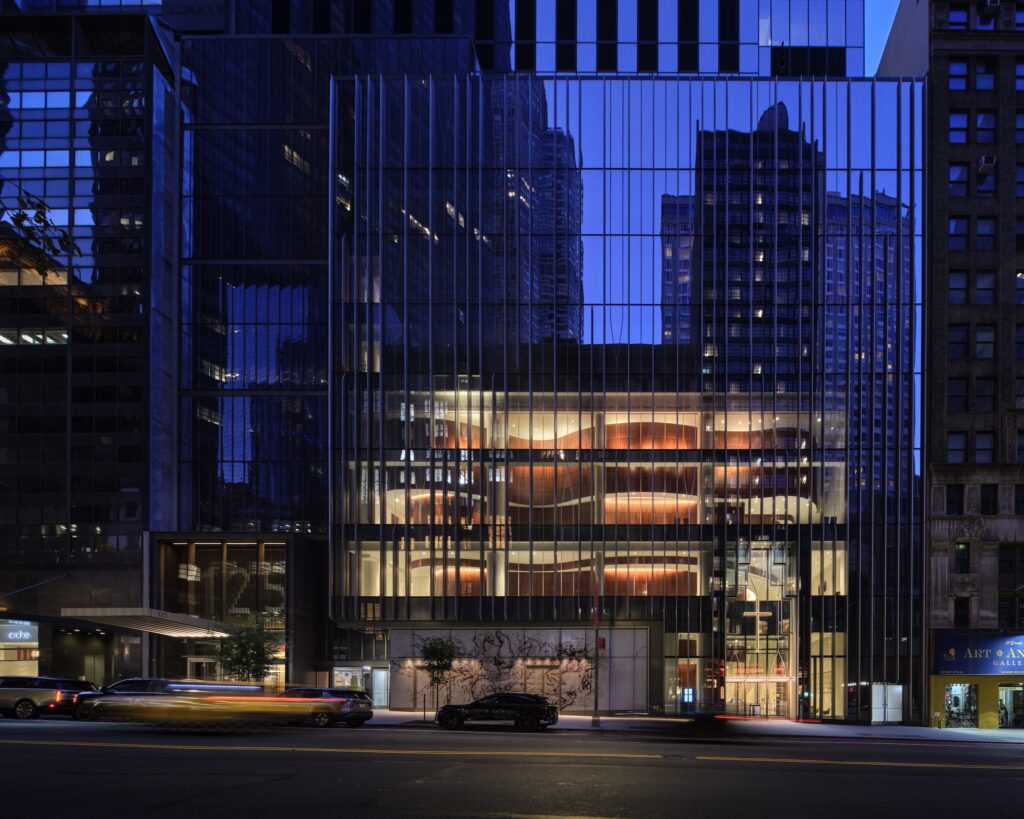
How a Hybrid Building Helped an Historic Manhattan Congregation Remain in Place
On Billionaire’s Row, FX Collaborative designed a new home for Calvary Baptist Church combined with an office tower.