



March 20, 2026
Denmark’s Tallest Timber Tower Tests Circular Construction at Scale

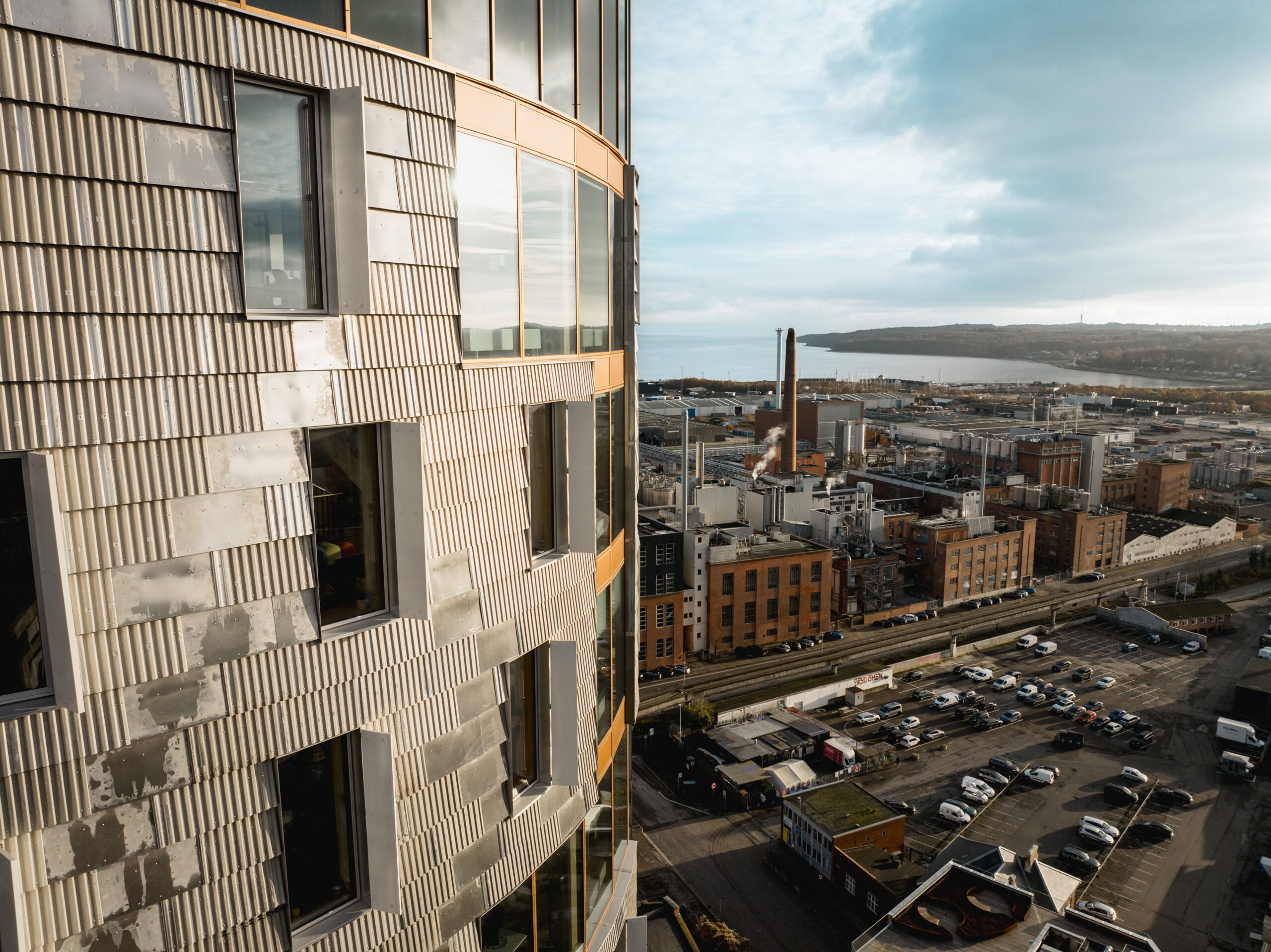
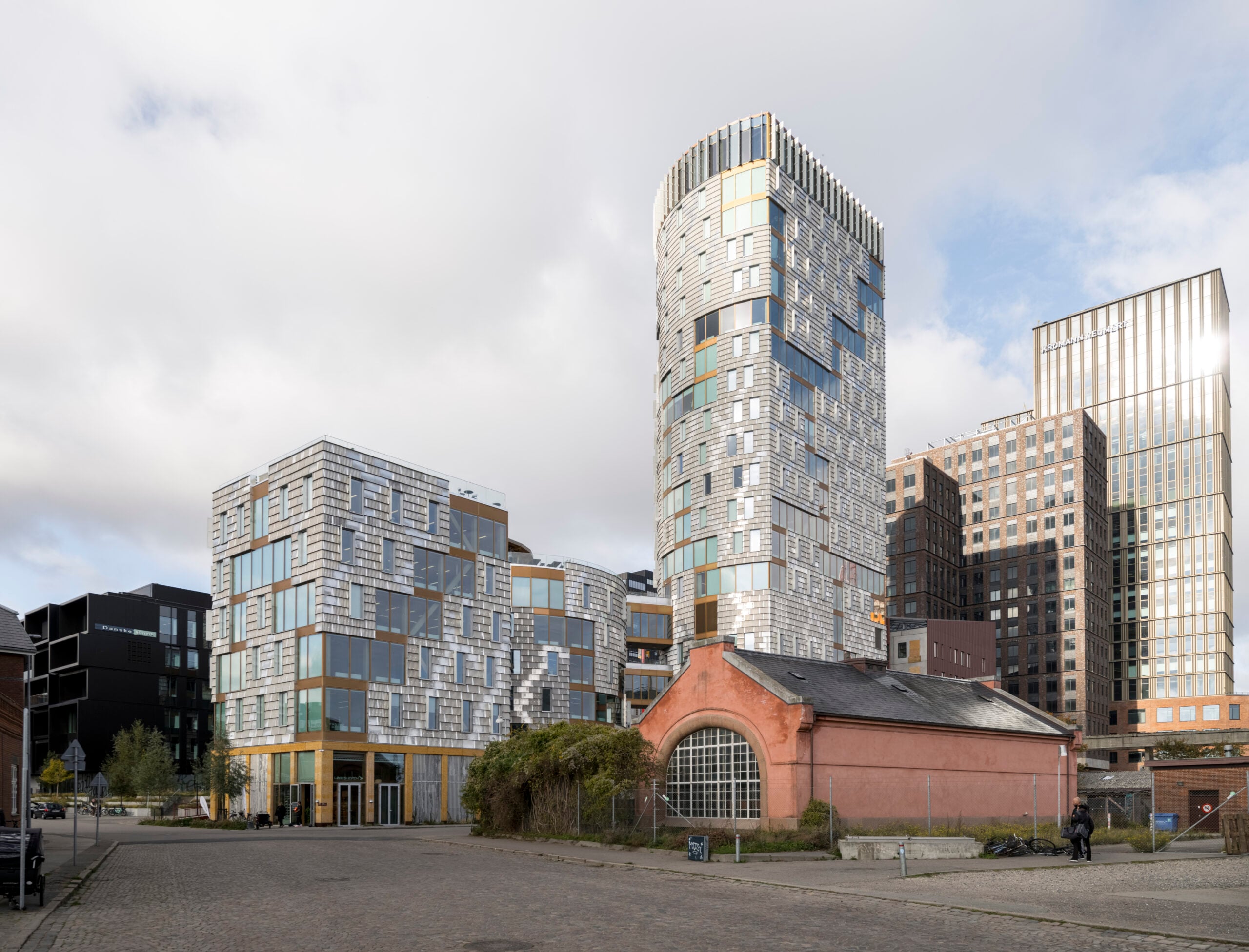
The name is the brief. In Danish, træ means tree, timber, and three—capturing the project’s biogenic material, ecological ambition, and trio of interconnected volumes. The rounded towers rise from a compact site, maximizing daylight while forming a sculptural waterfront presence. T1 reaches 256 feet and is joined by two six-story volumes. All are structured with cross-laminated timber (CLT) slabs and glulam columns anchored by concrete cores. The hybrid system balances timber ambition with structural and regulatory demands.
The three-building composition creates permeability rather than monumentality. An undulating pedestrian bridge links the ground plane to Aarhus’s emerging “highline,” while active ground-floor uses—including a socially operated restaurant—and a meandering exterior walkway draw people through the site.
Aligning with Lendager’s philosophy—form follows availability—the project treats the building as a material ecosystem rather than a fixed palette. “My context is a world full of resource problems that need to be converted to resource potentials,” says Founder & Creative Director Architect Anders Lendager.
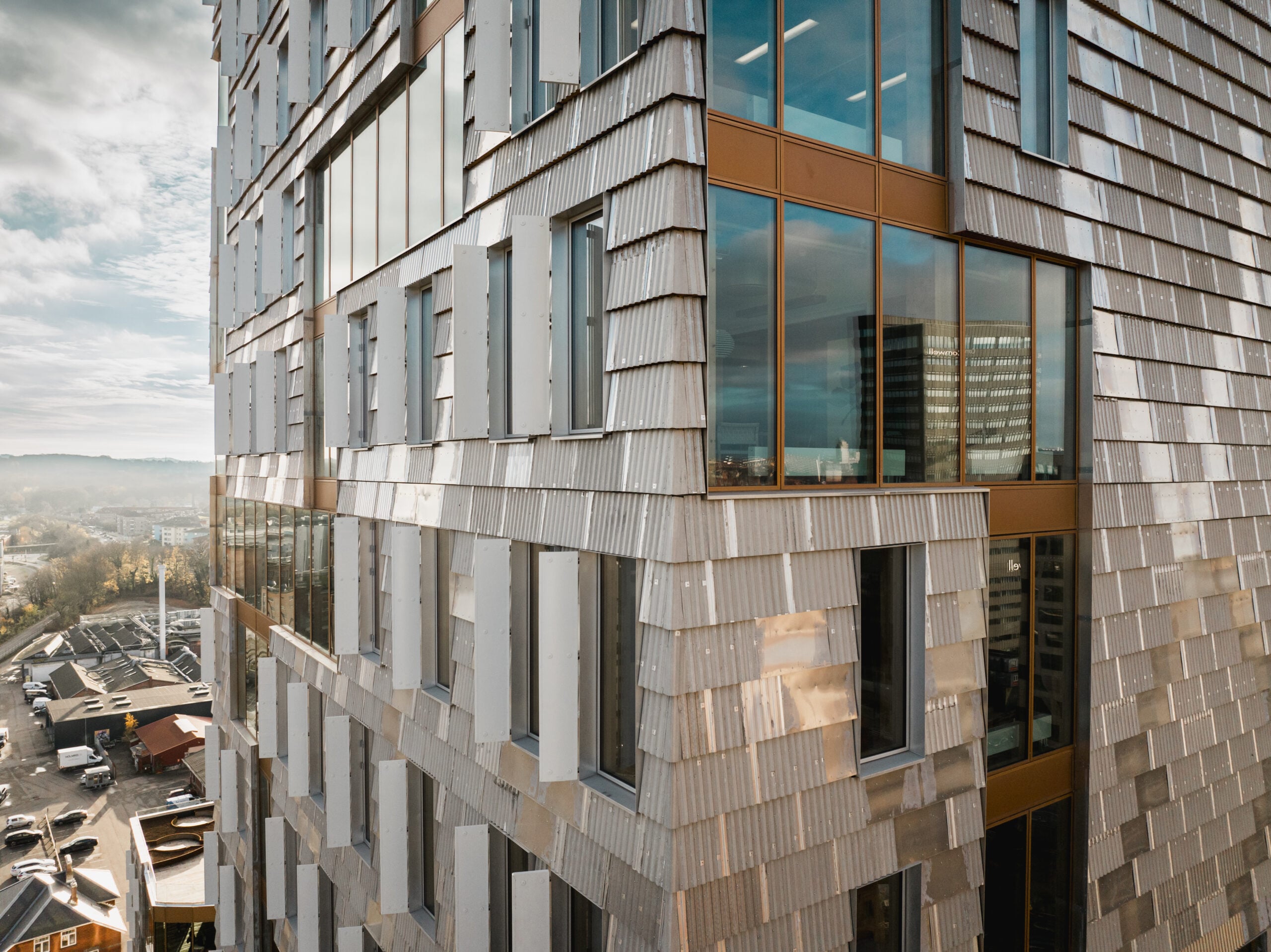
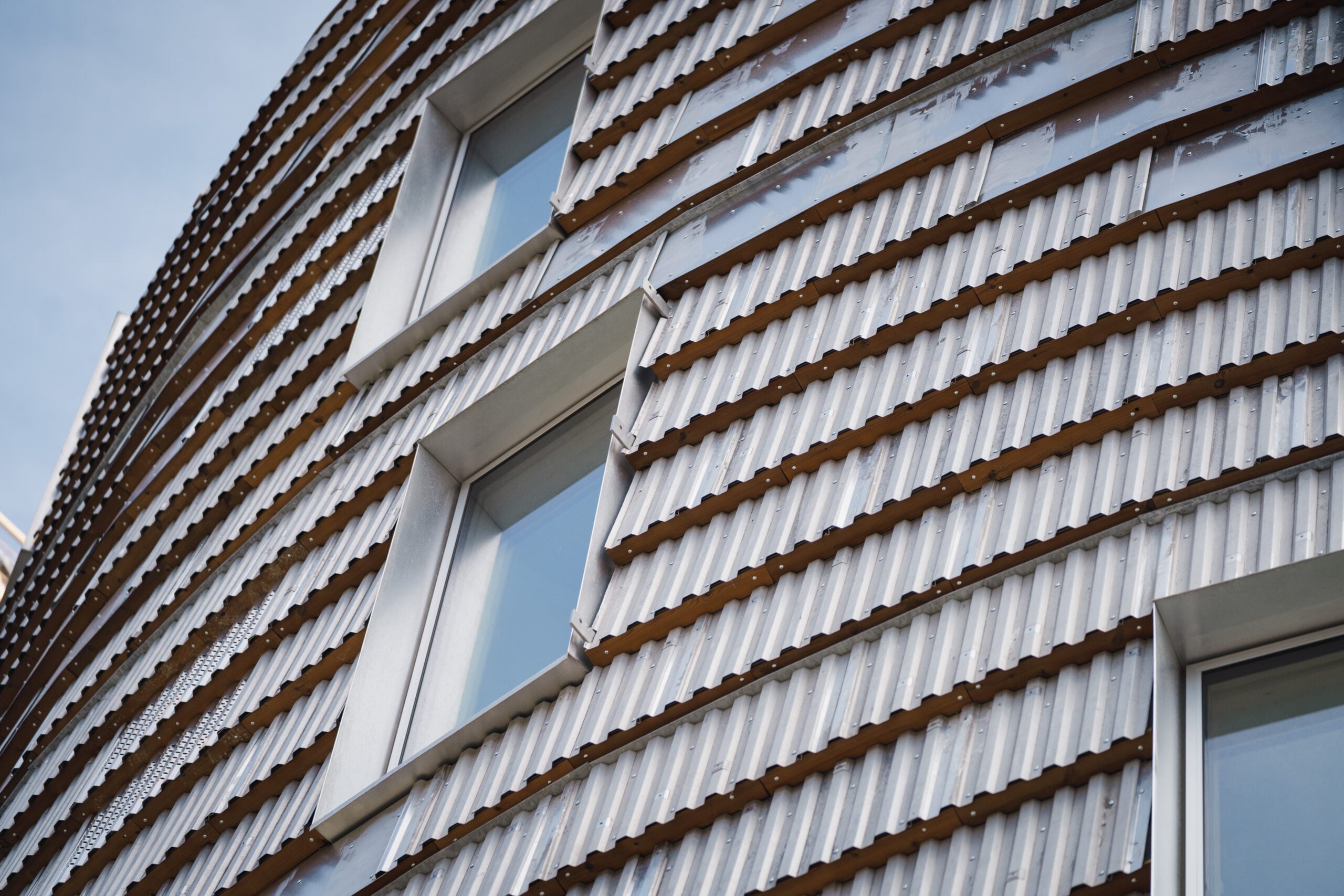
One of the most visible examples is the reuse of decommissioned wind turbine blades, cut and adapted into exterior sun-shading devices. Their incorporation required extensive fire testing and façade adjustments to prevent flame spread——illustrating the regulatory hurdles involved in transforming waste into viable building components. “Burning it or putting it in the ground is environmentally insane, but it’s an insane big potential,” Lendager says.
In addition, the project links social and environmental sustainability. Local homeless residents were involved in aspects of site life and maintenance, and the development hosts volunteer initiatives that provide daily meals for families in need.
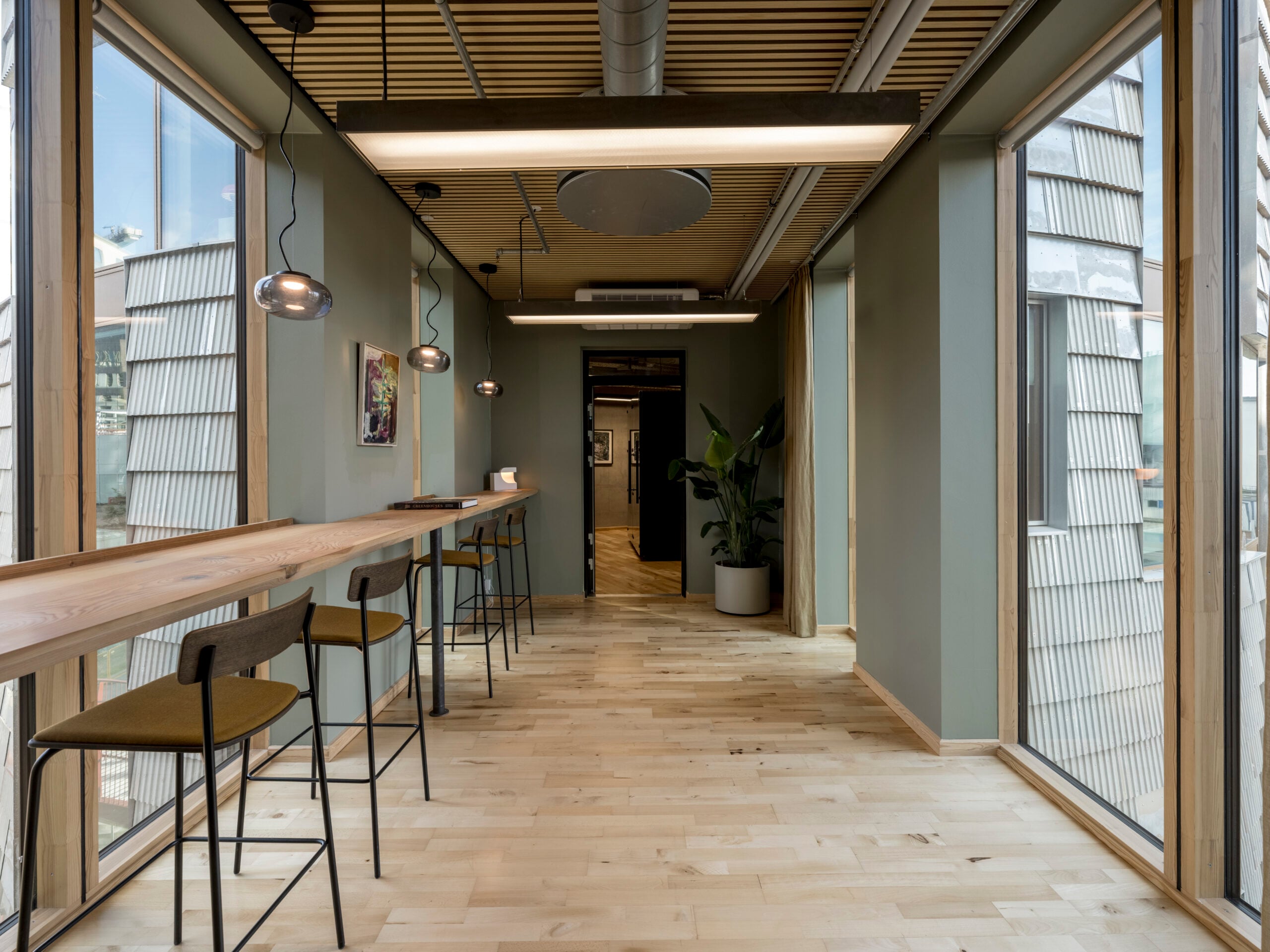
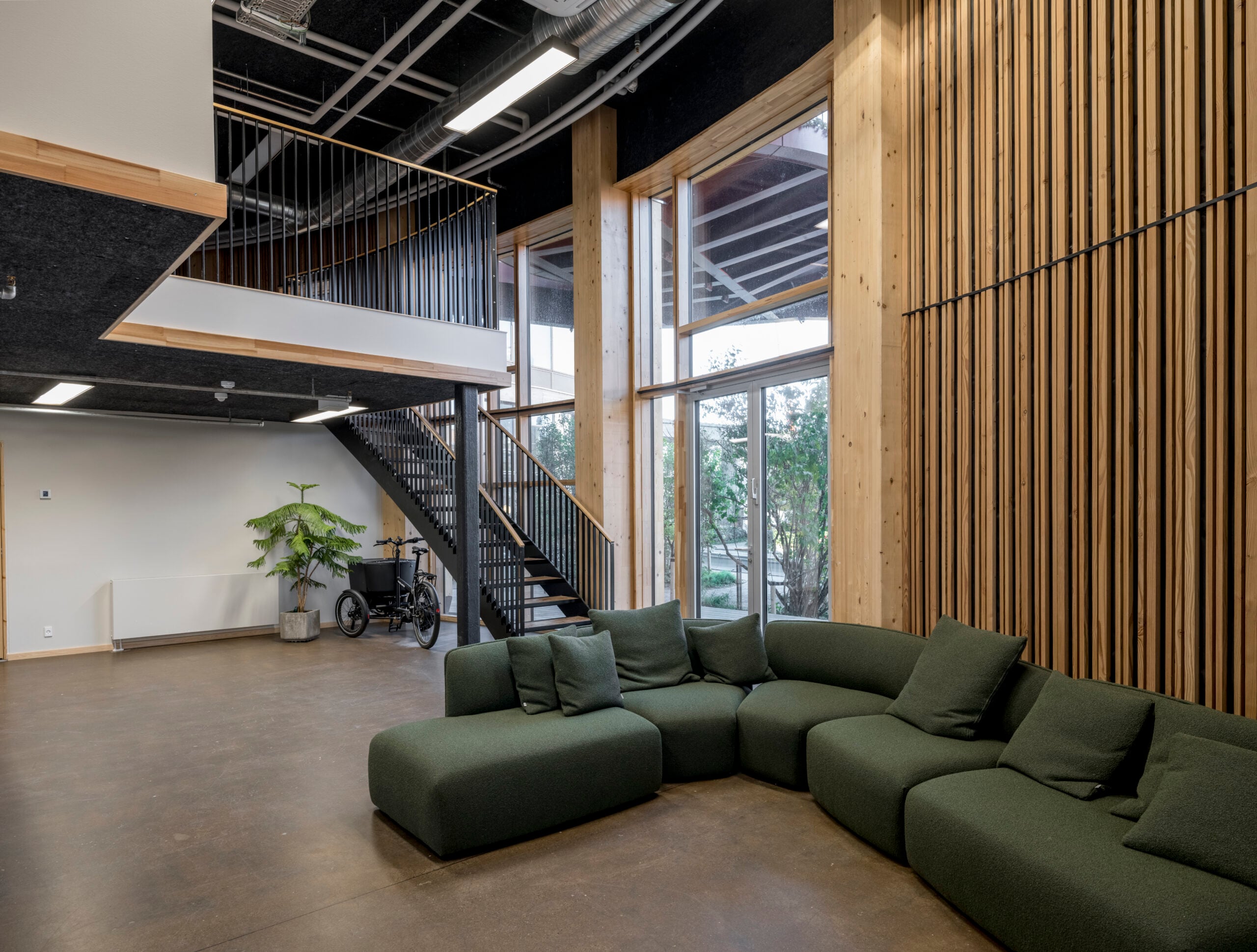
“If we create something we call very sustainable and that life doesn’t exist inside it, we have totally missed our purpose,” Lendager says.
Significantly, the team chose not to pursue formal sustainability certification, instead following a value-driven framework that allowed environmental strategies to evolve alongside design development and technical testing—an approach that privileges measurable outcomes over checklist compliance.
Measured against a conventional concrete benchmark, the project achieved a 26 percent reduction in CO₂ emissions, with 21 percent attributed to timber-led design and 5 percent to the integration of reused materials.
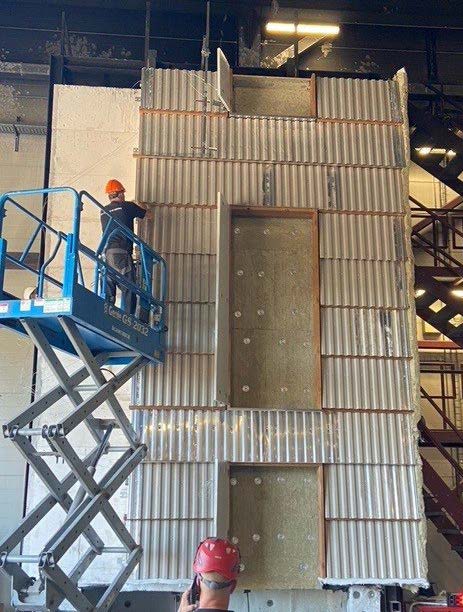
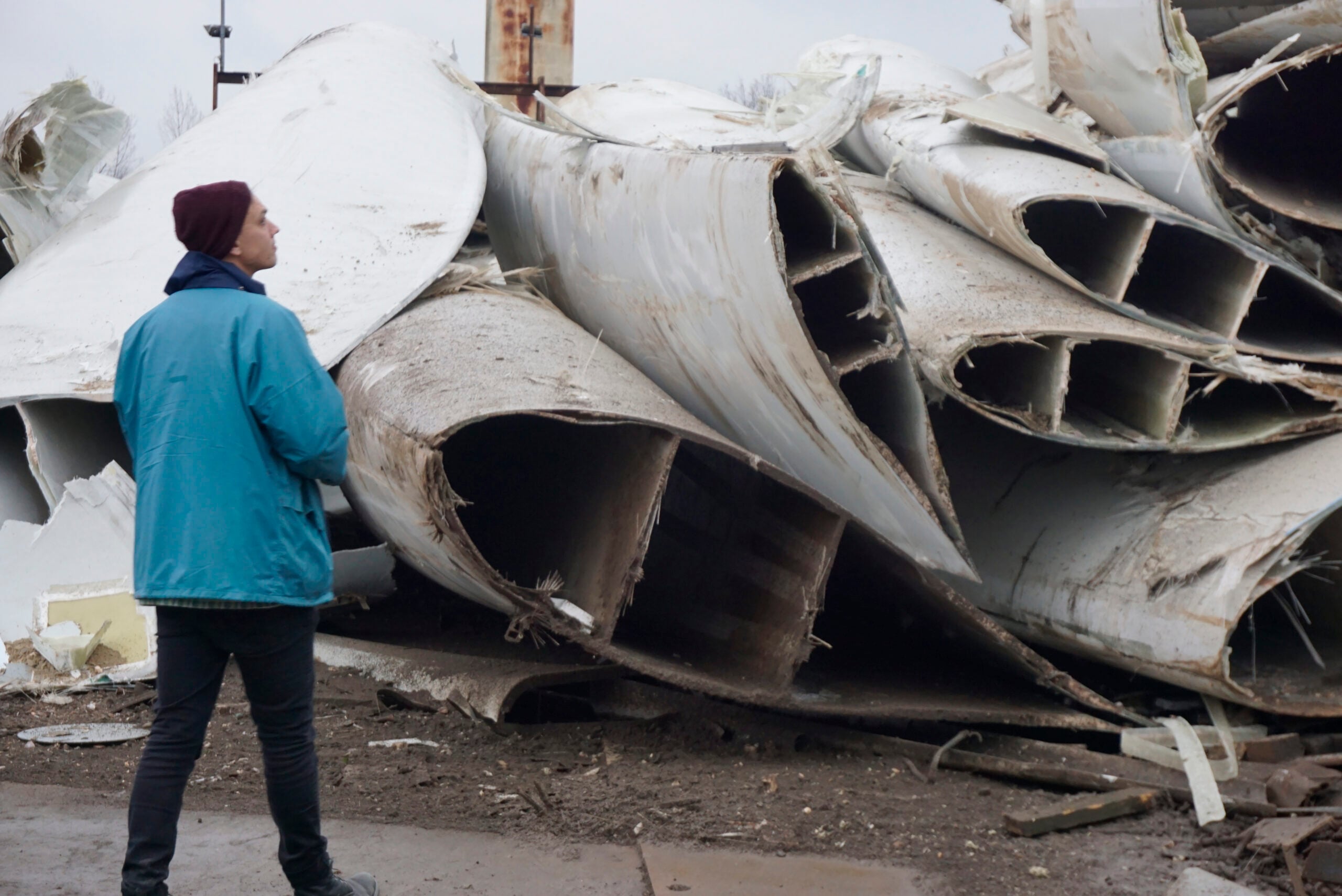
“It totally rethinks the whole value chain and what is possible to do at this point,” Lendager says.
As he sees it, projects like TRÆ must act as lighthouses for the industry—visible examples showing not just what is possible, but what is at stake if building practices fail to change.
Would you like to comment on this article? Send your thoughts to: [email protected]
Latest
Viewpoints
Detroit Month of Design: A City’s Work in Progress
Now in its 16th year, the celebration offers insights into the Motor City’s ongoing accomplishments without glossing over its hurdles.
Projects
How a Hybrid Building Helped an Historic Manhattan Congregation Remain in Place
On Billionaire’s Row, FX Collaborative designed a new home for Calvary Baptist Church combined with an office tower.