



February 18, 2026
A Historic California Schoolhouse Becomes a Home for Quantum Research
Tucked into a residential enclave of Orange, California, just northwest of Chapman University’s main campus, a century-old schoolhouse has found an improbable new life.
The Spanish Colonial Revival Killefer School is a local landmark. In 1944, after the primarily Mexican-American Cypress Street School closed nearby, its students effectively integrated Killefer three years before California schools were required to desegregate, and a full ten years before schools nationally did so.
Los Angeles-based EYRC Architects had the task of maintaining the building’s palpable sense of history while incorporating Chapman’s Institute for Quantum Studies located in the Daniele C. Struppa Research Park—one of the few research centers of its kind in the country, firmly facing the future.
“This building is part of the neighborhood’s collective memory,” says EYRC partner Patricia Rhee. “Something people watched decline for decades and now get to see reawakened.”
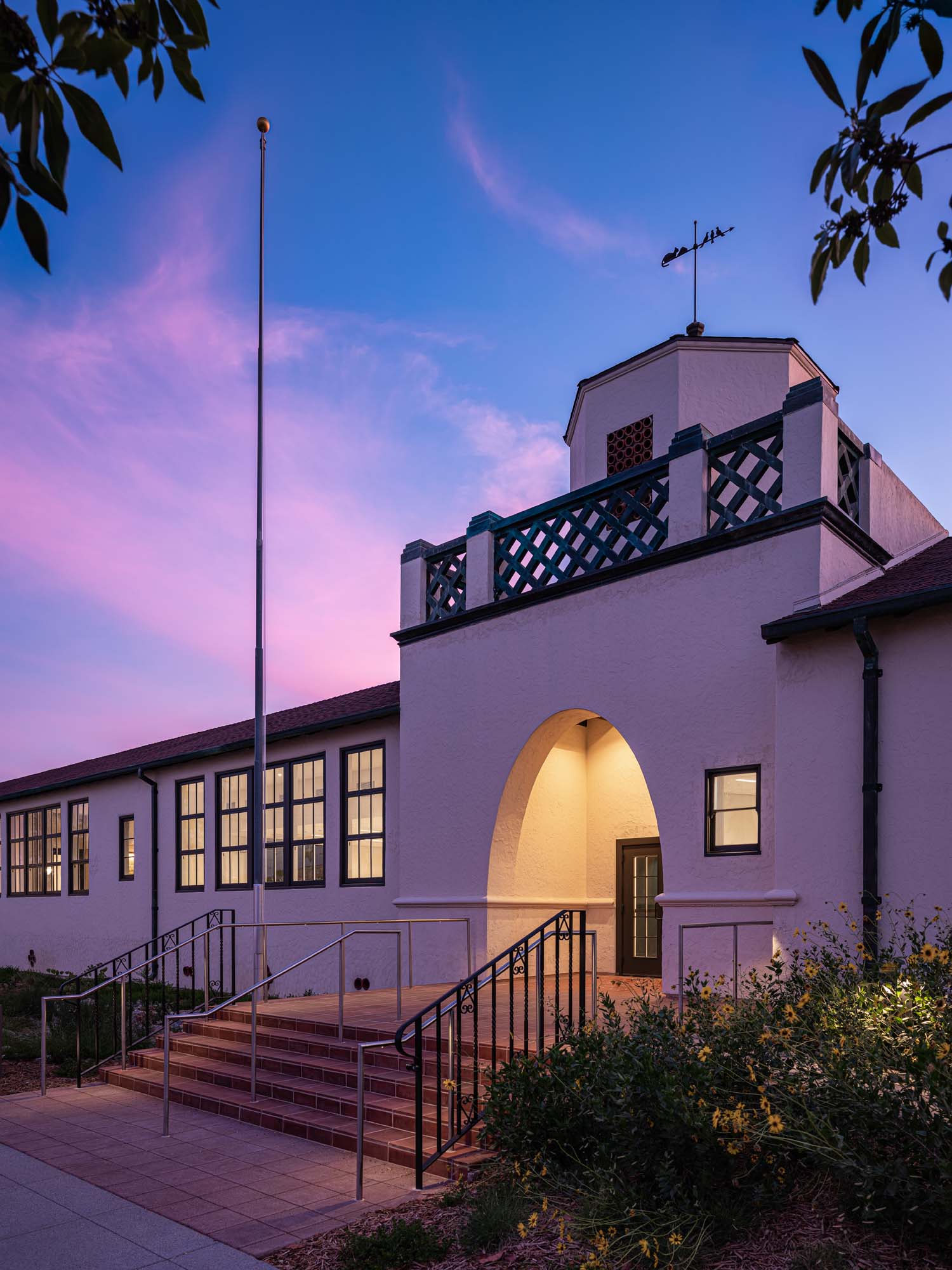
Indeed, when Chapman acquired the property the school was in severe disrepair—graffiti on the walls, windows shattered, classrooms abandoned. But beneath the neglect lay a gem capped by an eight sided bell tower and red asphalt tile roof, anchored by a grand arched entry and flanked by decorative ironwork and rows of wood-framed windows.
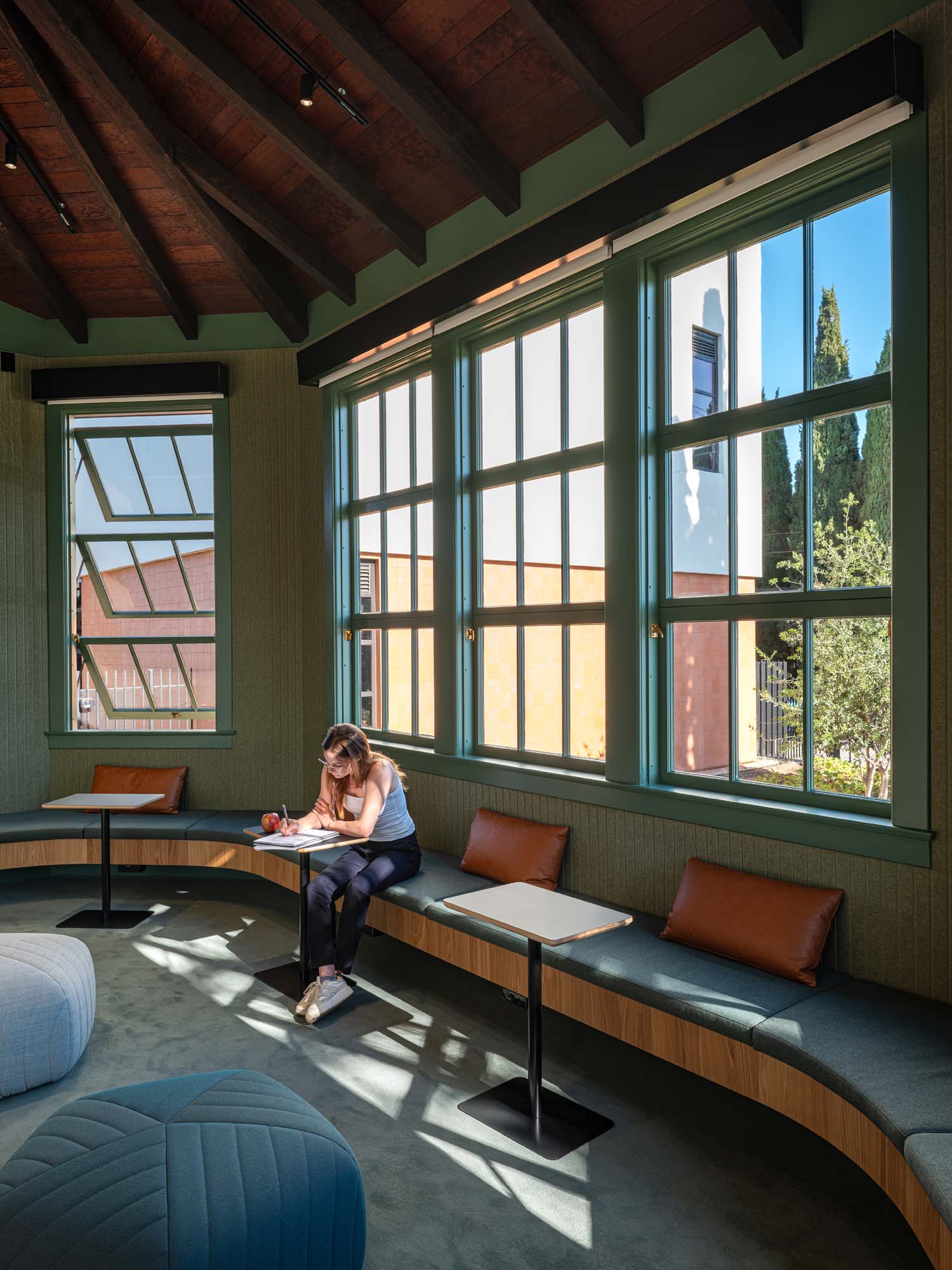
EYRC tried to preserve as much of this palette possible—a task that local preservationists assiduously held them to. For one, they worked with local heritage glazing specialists to restore dozens of original windows, including tall wood sash and awning units, some dating back to the 1920s.
“We wanted to keep that tactile quality—the slight creak when they open, the way the light catches the glass differently throughout the day,” says Chad-Jamie Rigaud, EYRC designer.
Building a Campus Within a Campus
Inside, original wood floors were restored with salvaged boards from another campus building; decorative gates found in the basement were refurbished and rehung as sculptural accents; and blackboards were reinstalled in creative places for physicists who still prefer chalk.
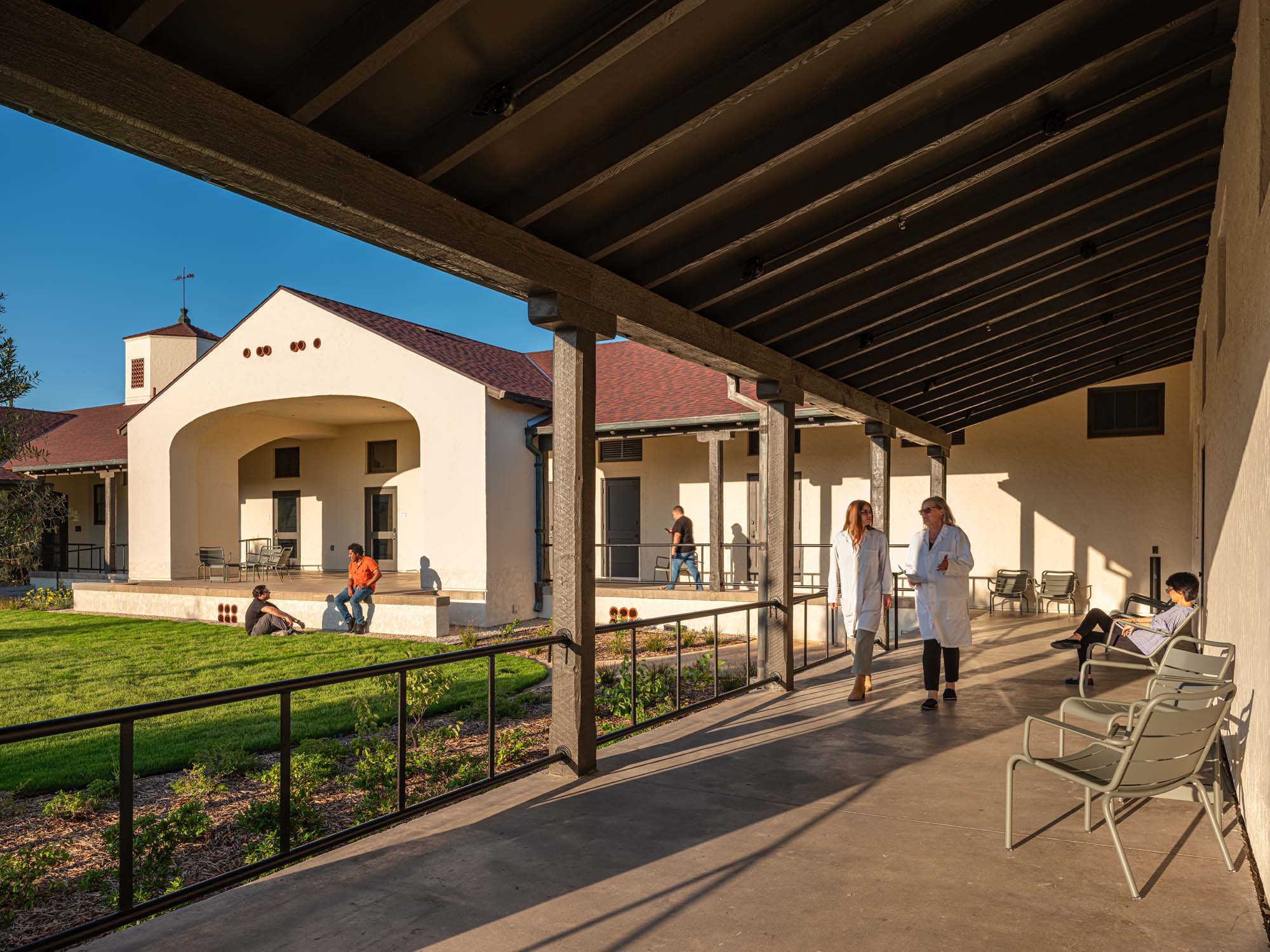
Central to the redesign is a trio of courtyards, each shaped for a distinct use. Together, they form what Rhee calls “a campus within a campus.”
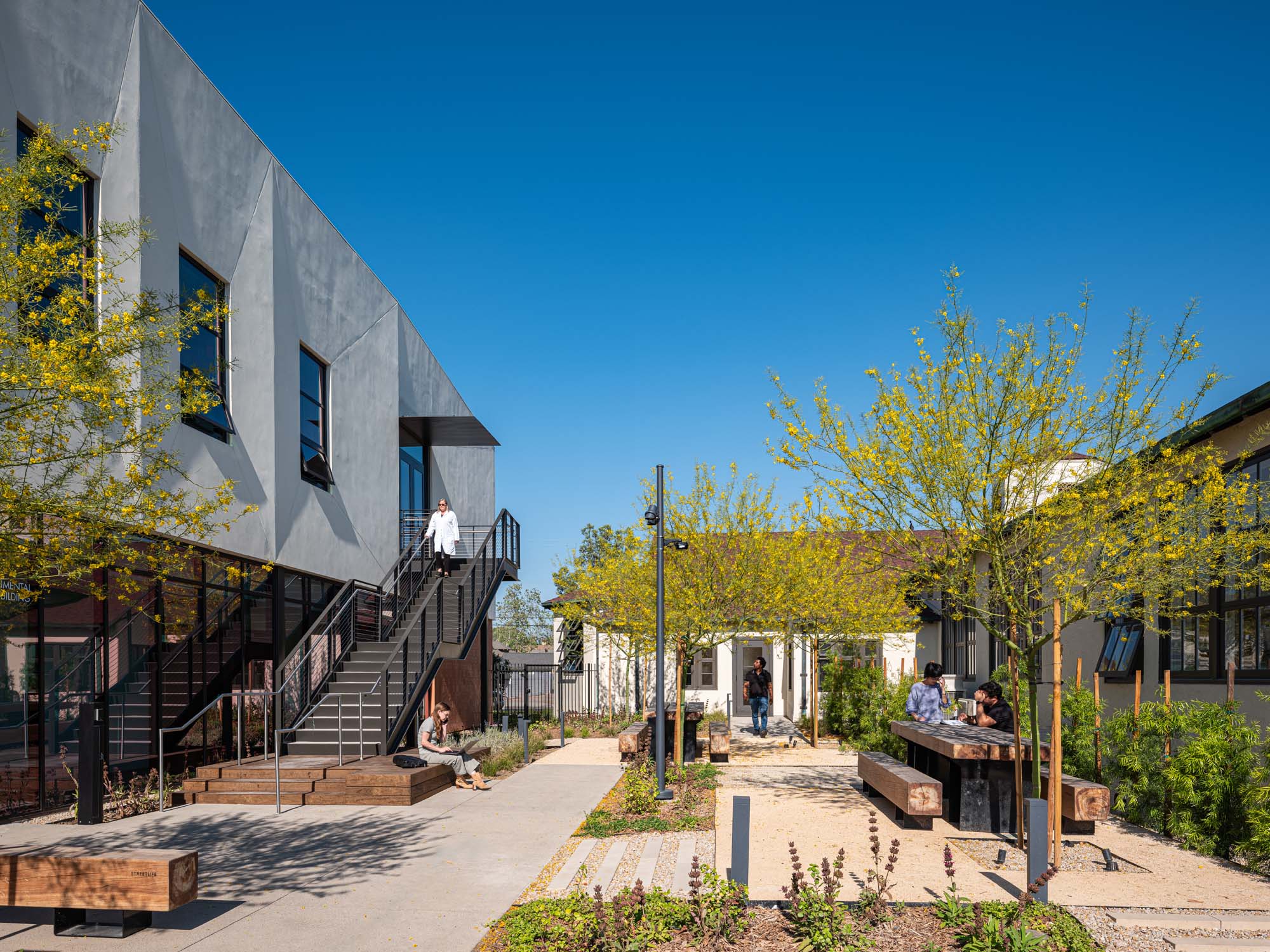
The Central Courtyard, once an abandoned dirt play yard, is now a flexible green for public events, lectures, and discussions. To the south, beneath a hundred-year-old oak, EYRC designed a quiet garden for walking and reflection. A looping path of decomposed granite encircles the tree, along with low benches and native grasses. The north courtyard, by contrast, is overtly social—a shared commons outfitted with picnic tables and barbecue grills linking the new lab building and the historic school.
“The theorists were scattered all over before,” says Rigaud. “Now they finally have a home base—and they’re constantly running into each other. That’s the point.”
At the heart of the restored interior sits the apse—formerly the school’s library and assembly hall—a flexible gathering space that somehow feels simultaneously like a classroom, reading room, and chapel. The vaulted space now hosts colloquia, lectures, performances, and impromptu debates. EYRC preserved its arched geometry and timber trusses but layered in subtle contemporary interventions: felt acoustical panels, concealed lighting, and a restrained palette of sage green and warm plaster that accentuates daylight filtering through the restored windows.
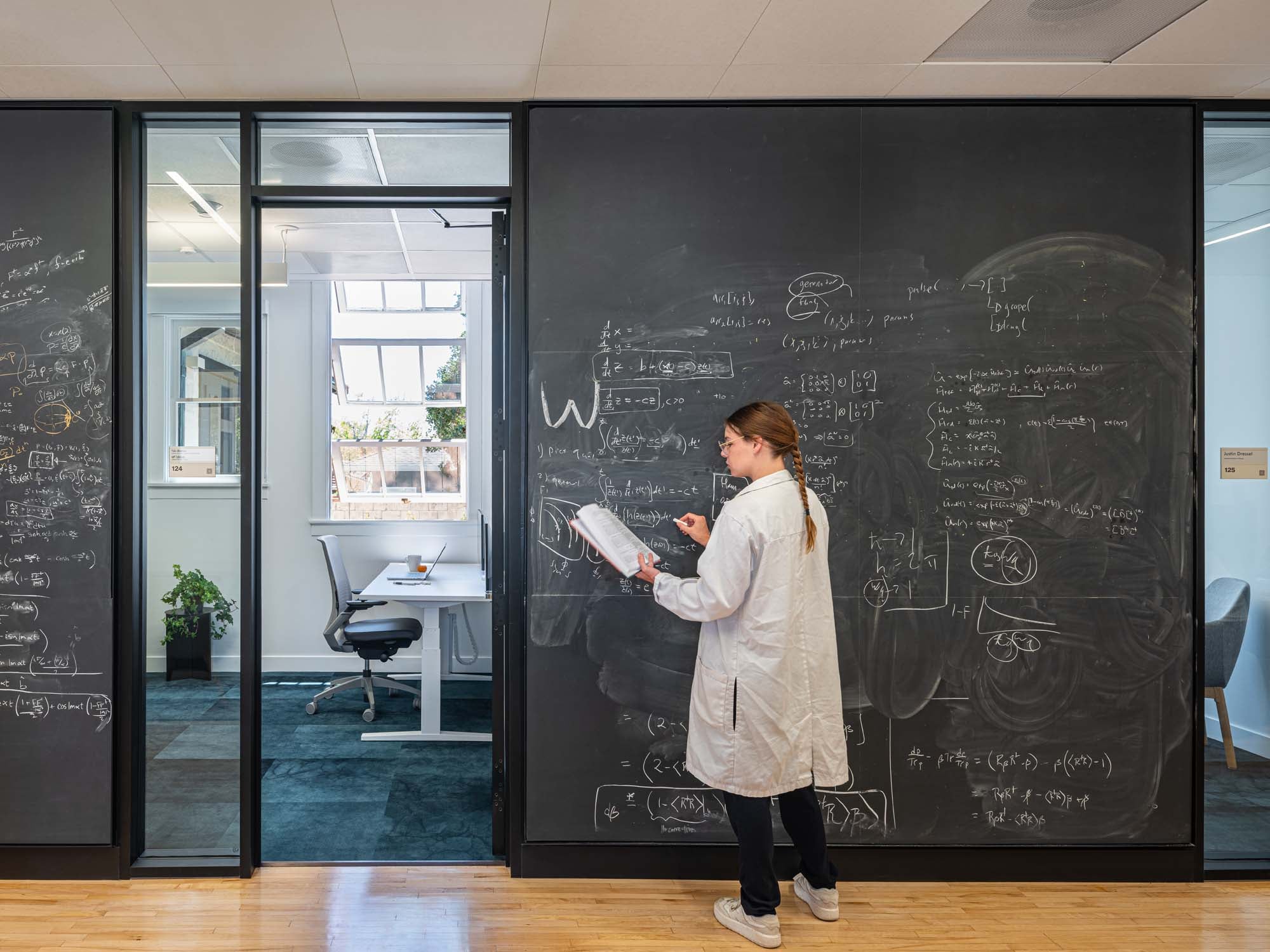
There is also a welcoming common room and kitchen, small nooks, and a video display sharing the building’s history, but most of the historic building is now dedicated to offices and research spaces. The building’s former classrooms have become open offices with high ceilings and low blackboards. (This was, after all, an elementary school. )
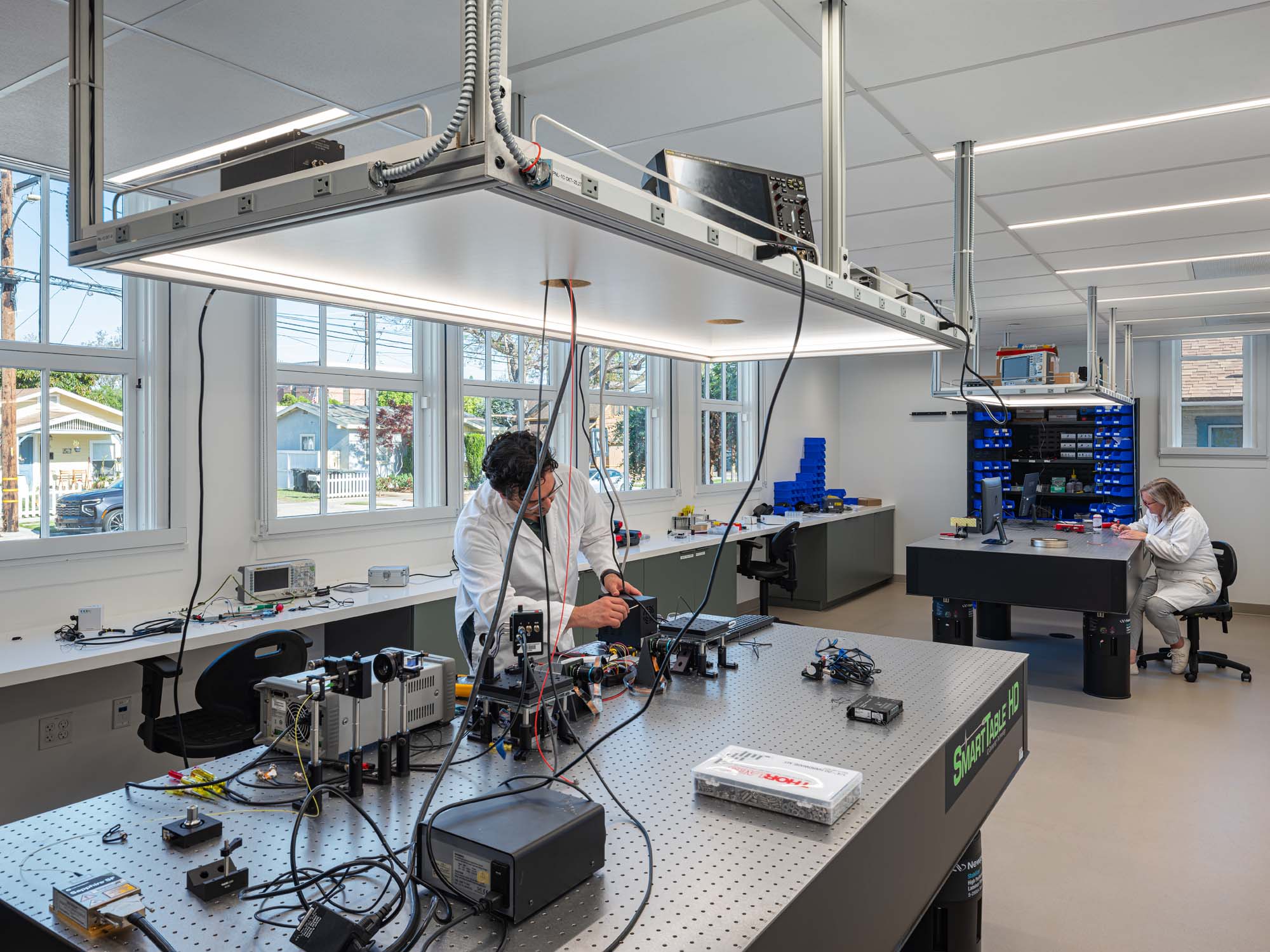
A few of the smaller rooms now function as labs, reserved for theoretical and computational work that doesn’t require heavy equipment. But the messier, vibration-sensitive work is centered in EYRC’s adjacent two story lab building, which provides flexible, light-filled labs for experimental research.
Set back slightly from the street, the new lab building literally bows toward the historic school, its gentle angle and restrained massing deferring to the older structure’s scale.
Its rectilinear form, open-air stair, and outdoor walkways echo the rhythm of the historic arcades. The subtle setback, helping the lab recede, also protects the residential character of the neighborhood.
Redefining the Role of the Research Complex
The restoration reinforces how preservation overlaps with sustainability. By reusing nearly the entire building shell—and much of its existing material—EYRC minimized embodied carbon while extending the building’s useful life. The restored windows enable natural daylighting and cross-ventilation, reducing energy loads, while the thick plaster walls and shaded courtyards moderate temperature without mechanical intervention. The landscape design reinforces those goals through stormwater capture, native planting, and passive cooling via tree canopies and permeable surfaces.
The result is a humane workspace that feels both intimate and efficient—closer to an academic retreat than a research complex. “Research doesn’t have to happen in a white box,” Rhee said. “It can happen in a place with memory.”
The Institute is one of several adaptive reuse projects that define Chapman’s growing cultural footprint. Just blocks away, the Hilbert Museum of California Art has transformed an auto body warehouse into a light-filled gallery celebrating regional art, while the Sandi Simon Center for Dance has revived an old Orange packing plant as a kinetic home for performance.
Such projects articulate Chapman’s simultaneous embrace of progress and preservation, spearheaded by the school’s vice president of campus planning and design, Collette Creppell.
“Chapman keeps proving that innovation doesn’t mean starting from scratch,” Rhee reflected. “They keep finding the future inside the past.”
Would you like to comment on this article? Send your thoughts to: [email protected]
Latest
Viewpoints
Detroit Month of Design: A City’s Work in Progress
Now in its 16th year, the celebration offers insights into the Motor City’s ongoing accomplishments without glossing over its hurdles.
Projects
How a Hybrid Building Helped an Historic Manhattan Congregation Remain in Place
On Billionaire’s Row, FX Collaborative designed a new home for Calvary Baptist Church combined with an office tower.