



November 18, 2025
How Adaptive Reuse Is Shaping Austin’s Neighborhoods
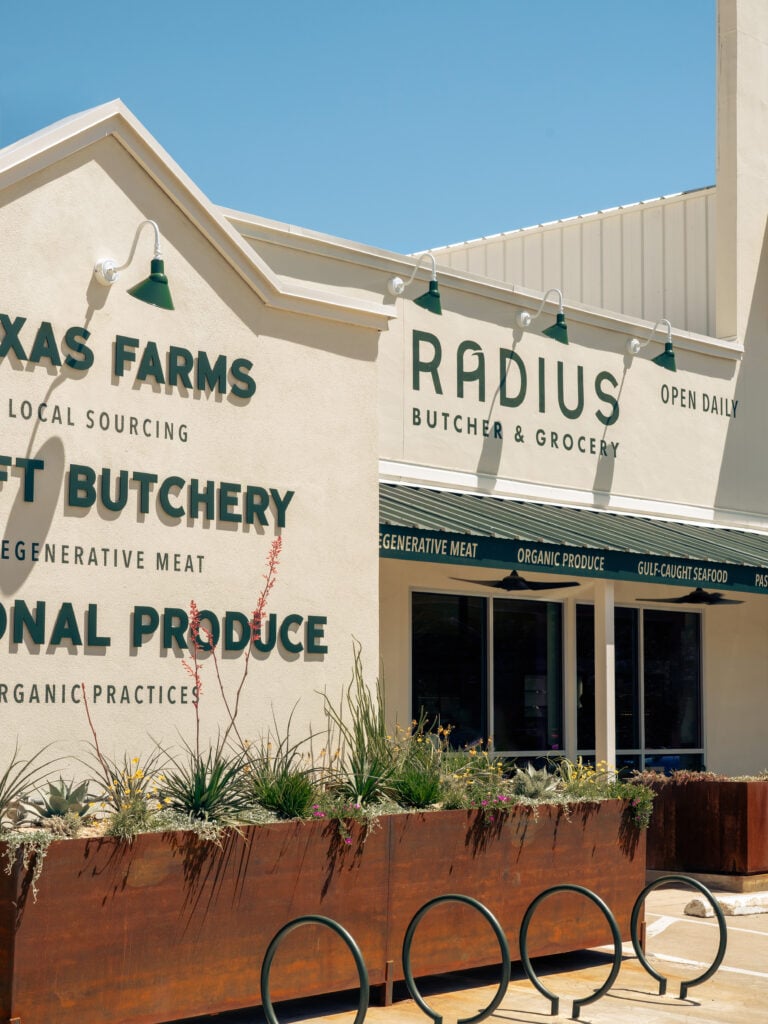
Fishner hired Michael Hsu Office of Architecture to approach the renovation as a continuation of sorts rather than a reinvention.
“There was a good amount of redesign, but we were able to keep the bones,” says Fishner. Though not a designated historic building, the project reused the core footprint, plus much of its loyal customer base.
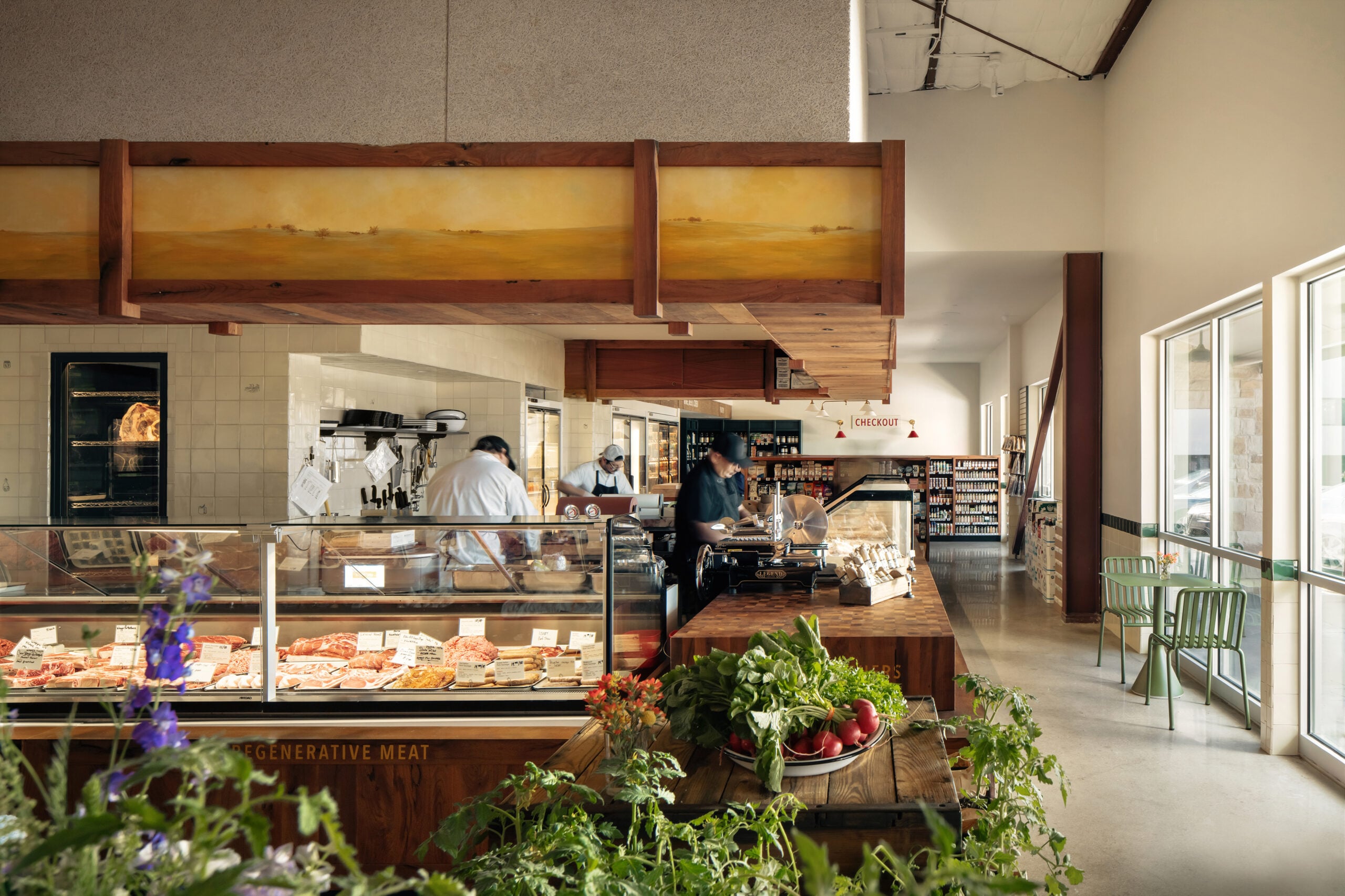
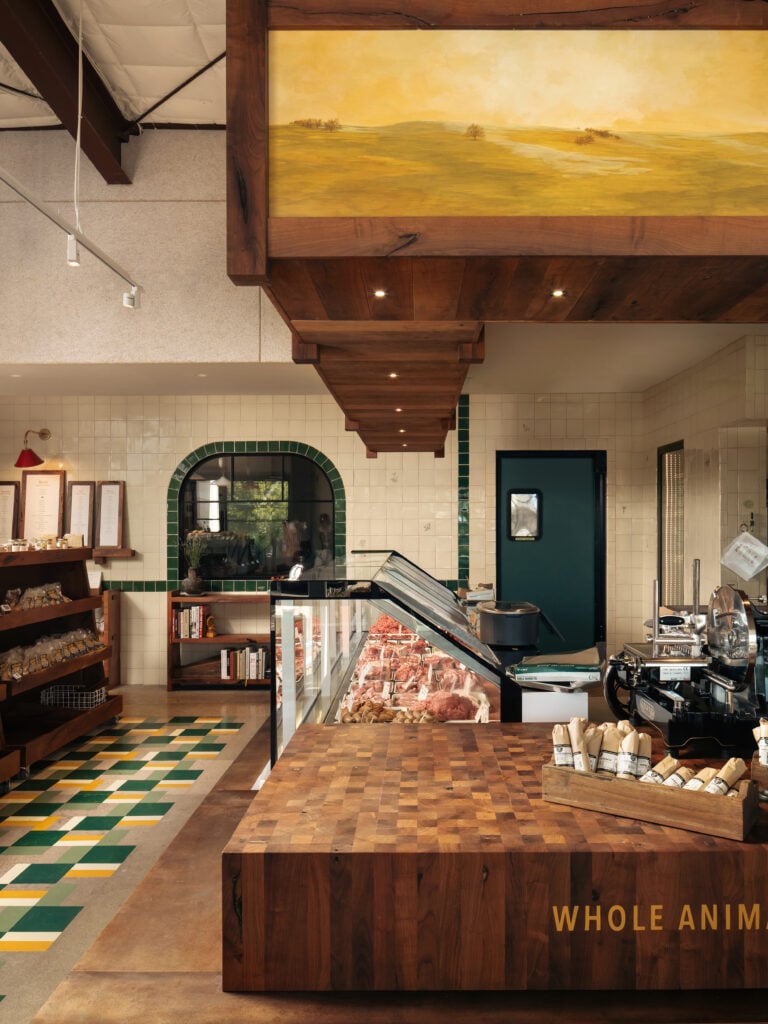
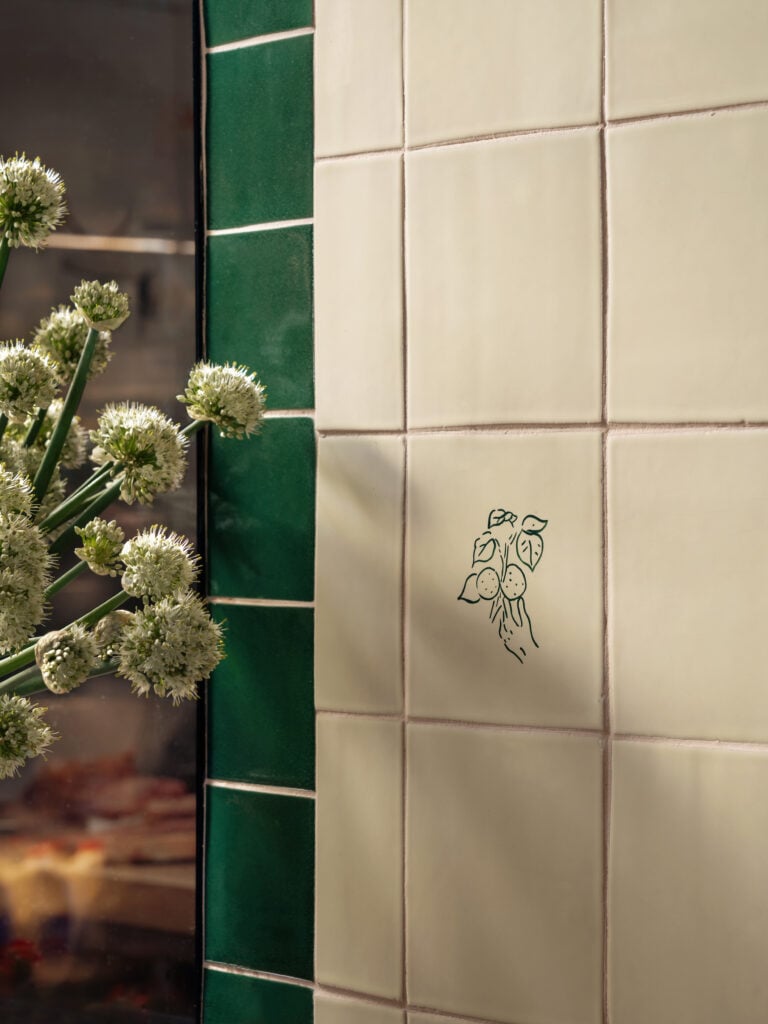
Inside, the store is anything but utilitarian. Monumental butcher blocks double as workstations and stage, with custom millwork from Phil Jackson Studio and hand-painted tile vignettes by Austin artist Jana Swec that illustrate the store’s ethos and the farmers behind its products. “The main idea was focusing on the craft of butchering,” says architect Chet Morgan. “We wanted to tell the story of the farms and people behind the food.”
Instead of hiding the process, it is on full display. The butcher counter now anchors the plan, visible through a glazed opening so customers can watch every cut. A ceiling-mounted rail connects the exterior delivery door to the walk-in freezer, a visible reminder of the choreography between front and back of house, something not often seen at a large-scale grocer.
Beyond the architecture, the design honors Salt & Time’s legacy as a neighborhood fixture. “Our goal was never to replace it,” says Morgan. “We wanted to amplify what it was.” The building’s exterior shell was preserved but given a renewed presence within the larger complex.“We wanted to make sure it felt like it had always been there,” he adds.
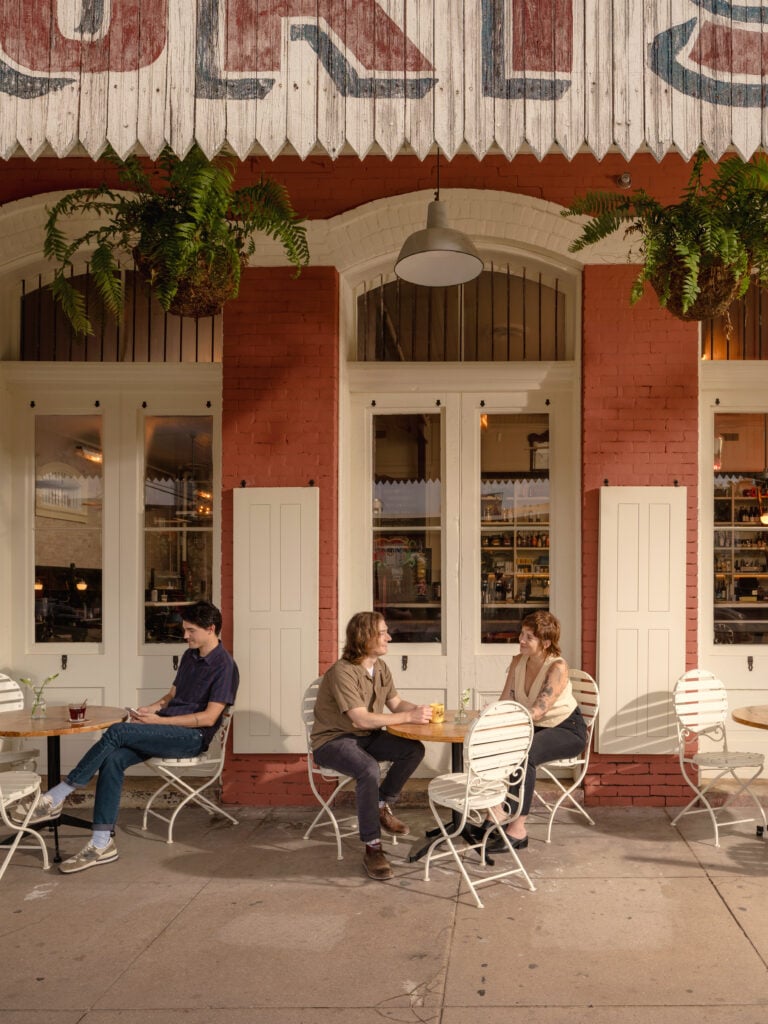
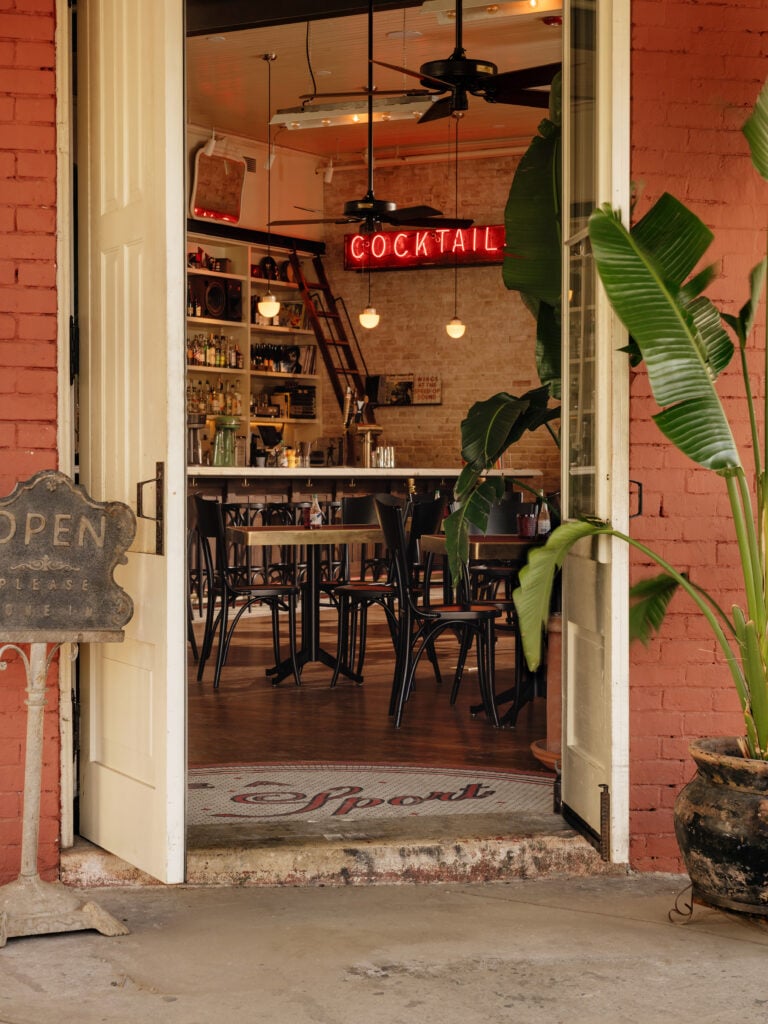
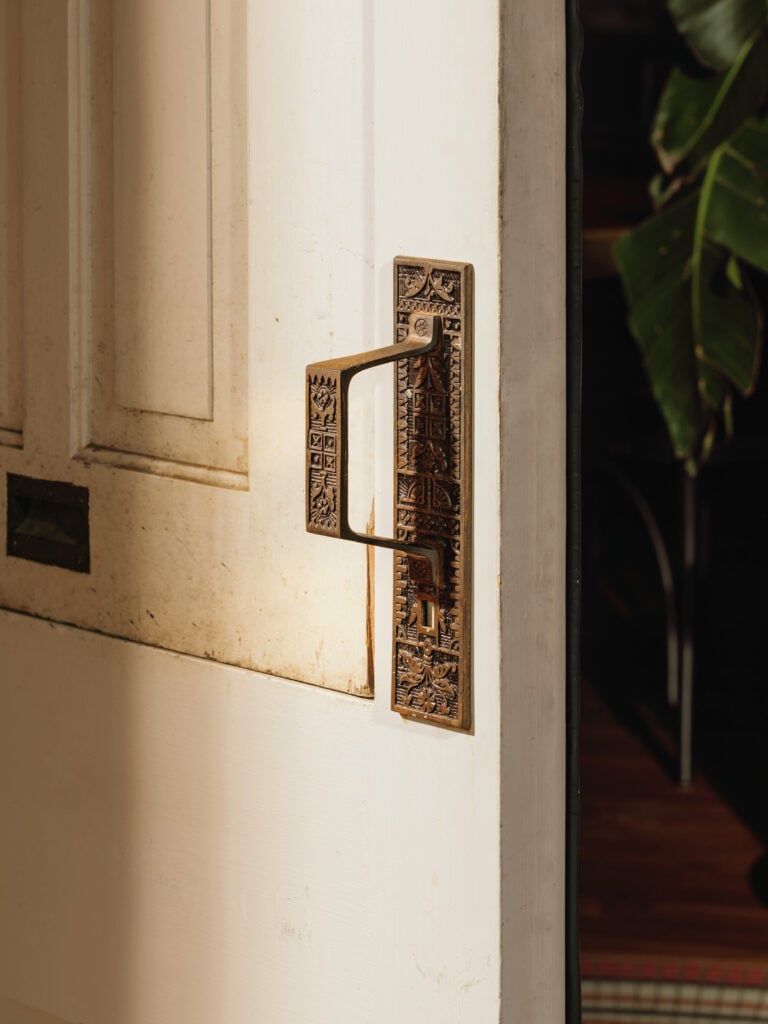
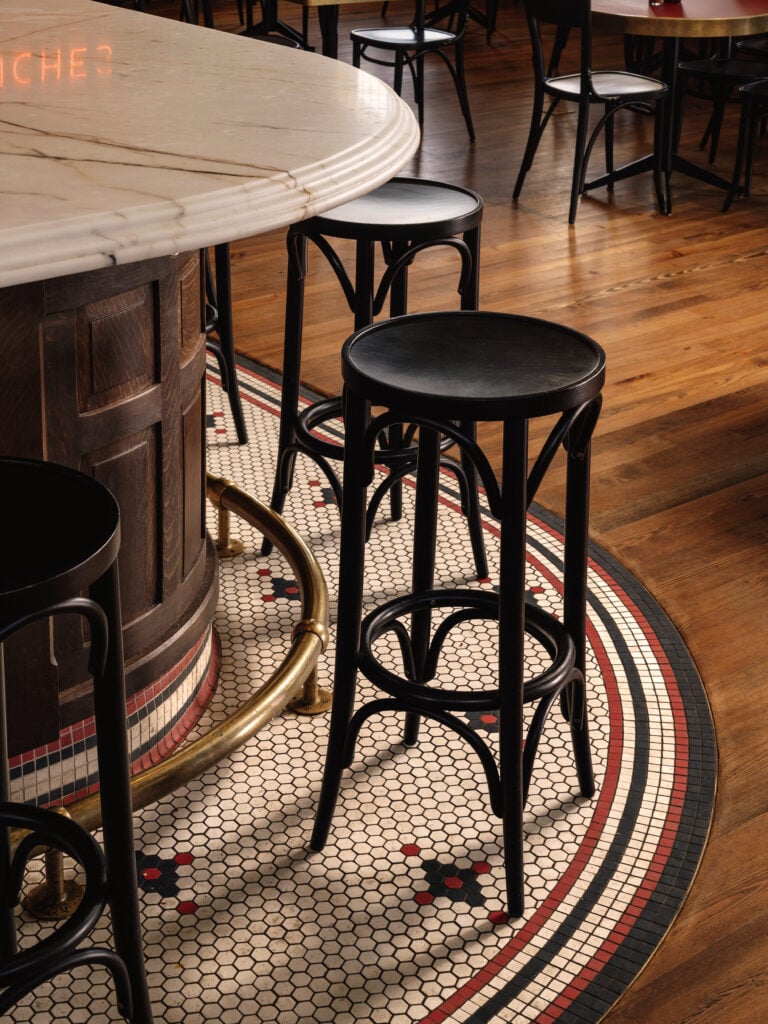
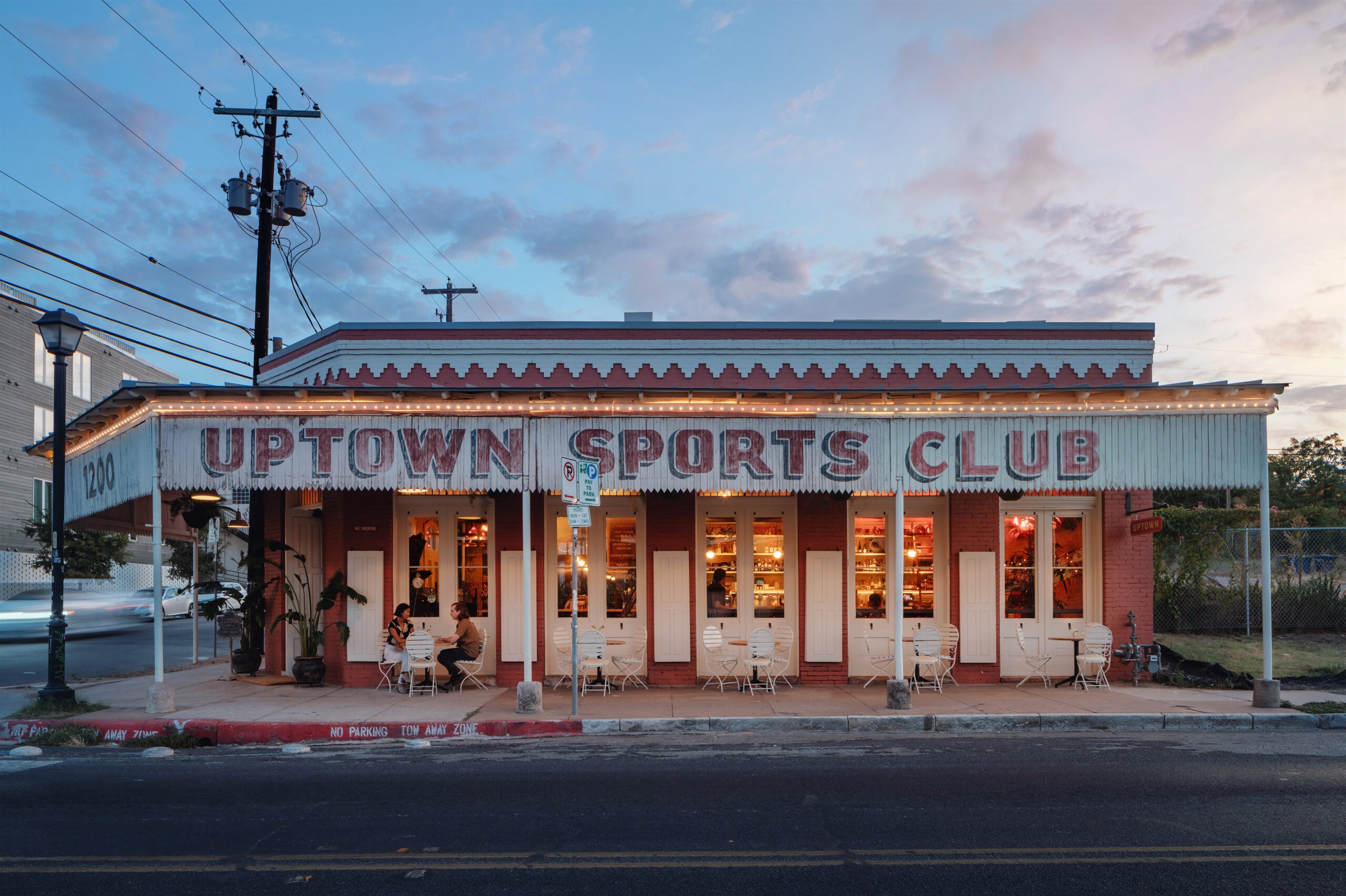
That goal extends to the material palette. Everything is sourced locally: tiles made in San Antonio, Texas mesquite millwork crafted nearby and a wall map tracing their farming partners, all within a tight radius around Central Texas. The firm has taken a similar approach nearby at Uptown Sports Club, a revival of a long-vacant East Sixth Street building that has functioned in the neighborhood as a bakery, grocery, bar, and butcher shop. In the new dining space, Hsu preserved the brick walls and original wooden doors and windows of the original 1893 building while incorporating salvaged pine flooring, a beadboard ceiling, and art deco booths.
These projects serve as welcome reminders that sincere sourcing and thoughtful preservation help create spaces where sustainability and neighborhood identity coexist.
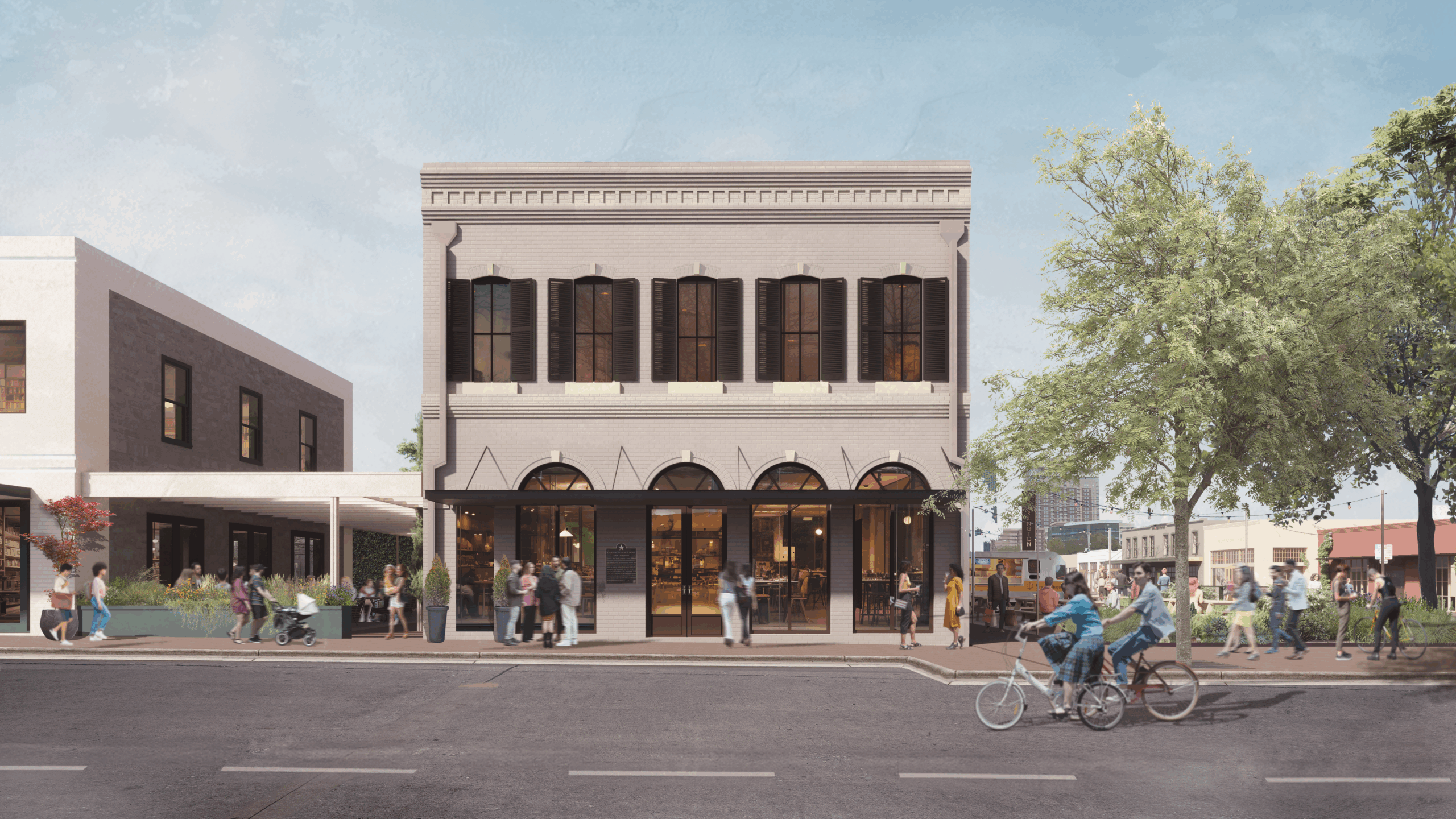
Clayton Korte
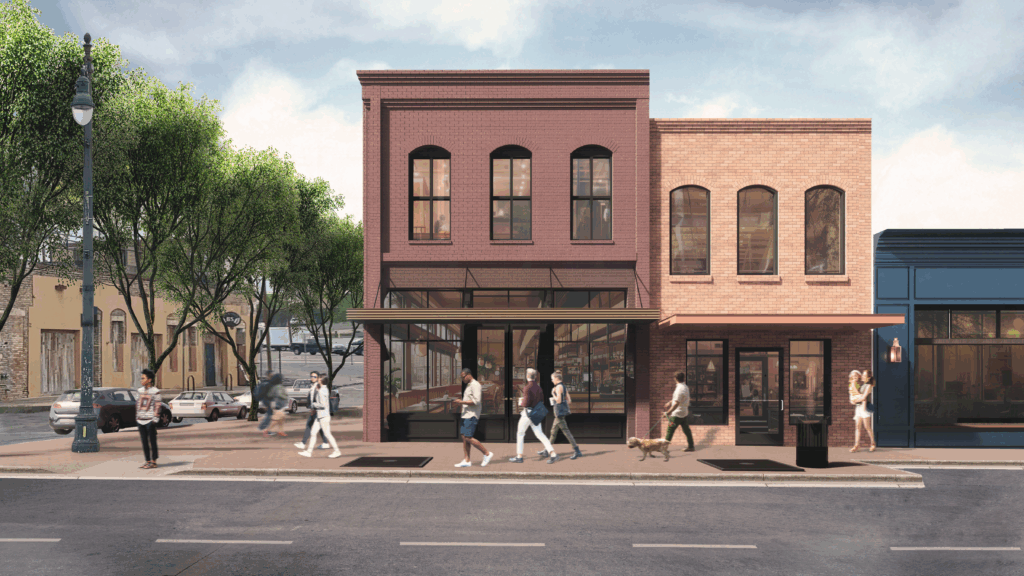
Austin’s Sixth Street is synonymous with the late-night crowd, gritty bars that overflow with University of Texas students, live music, comedy venues and more that dot the east-west corridor. But Clayton Korte and Stream Realty Partners are currently bringing much-needed updates to entice daytime visitors back to the historic thoroughfare, which contains the largest collection of Victorian-era commercial buildings in the city. Luckily, its landmark designation has made its preservation possible. But where does Sixth Street go from here?
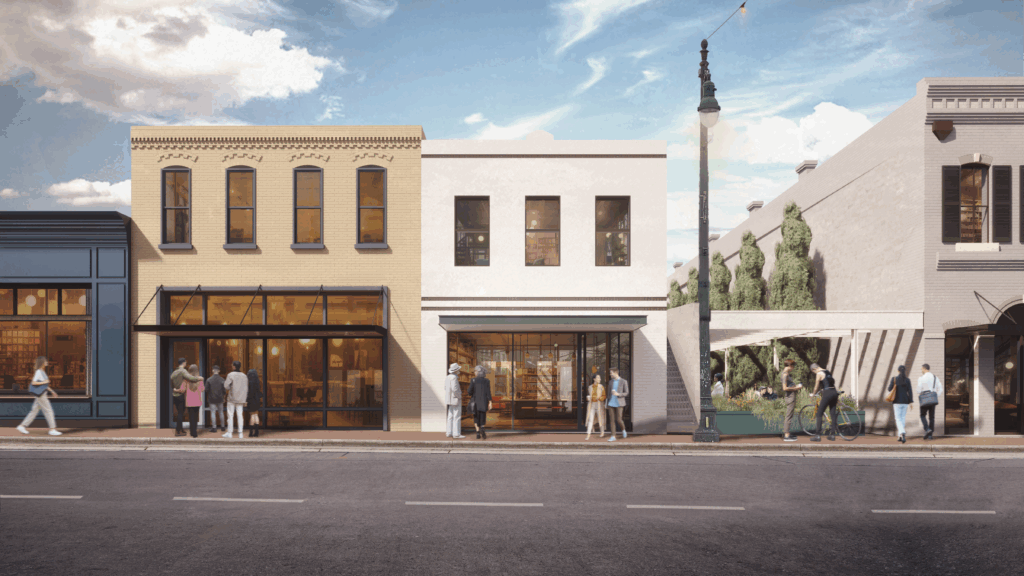
Inspired by photography and neighborhood history, Clayton Korte principal Paul Clayton and associate Sky Currie have come up with a plan that celebrates what was there and what’s to come. The multi-phase project, which includes the renovation of 29 buildings totaling some 200,000-square-feet, features updates across six blocks bordered by I-35 to the east and Congress Avenue to the west.
“Some [of the buildings] were more significant than others,” says Clayton. “You have registered Texas landmarks, local landmarks and contributing buildings, each with their own requirements.”
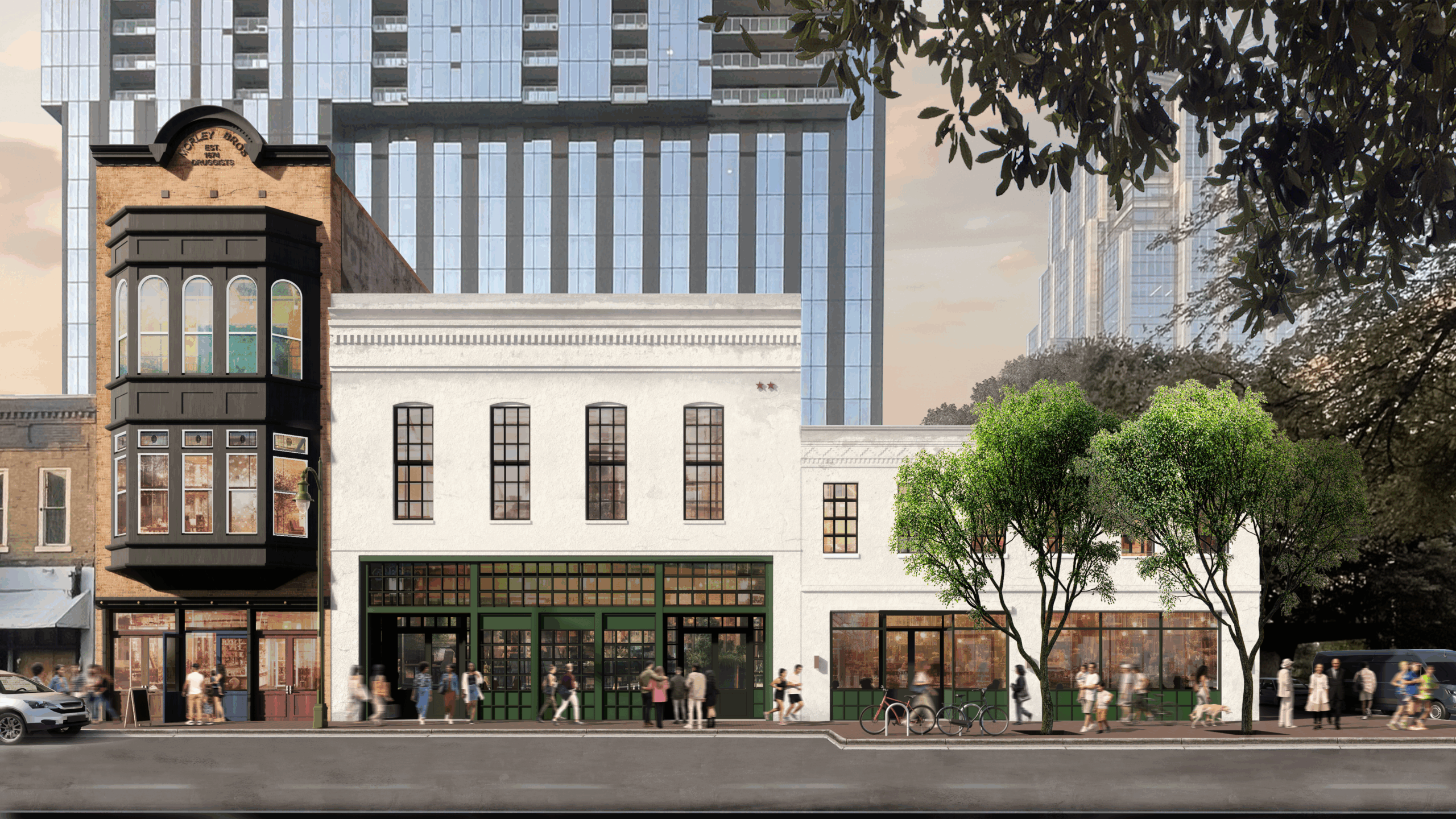
Over the last 100 years, the district has undergone massive change. In the late 1800s, when segregation was rampant in the rest of the South, it was a melting pot, a multicultural center for commerce and community. In 1872, E.W. Carrington opened the city’s first Black-owned grocery at 520 E. Sixth St., while 400 E. Sixth, the oldest building on the street, housed Jewish, Chinese and Lebanese establishments.
In lieu of a set style, the architects are building on a consistent scheme, reviving the street’s identity through evident updates like paint colors, new millwork and new windows, along with structural changes that are necessary for both safety and future-proofing. Tenants are already excited about the changes they have seen, which include enhanced security, colorful road markers and initiatives from the Downtown Austin Alliance to reinvigorate the streetscape.
“We’re happiest when we can reclaim stories of the past and what makes us who we are,” says Currie.
Change is inevitable, but through the thoughtful restoration of spaces that hold memories of the earliest Austinites, Clayton Korte and its team hope the importance of adaptive reuse and communal gathering places lives on.
Would you like to comment on this article? Send your thoughts to: [email protected]
Latest
Viewpoints
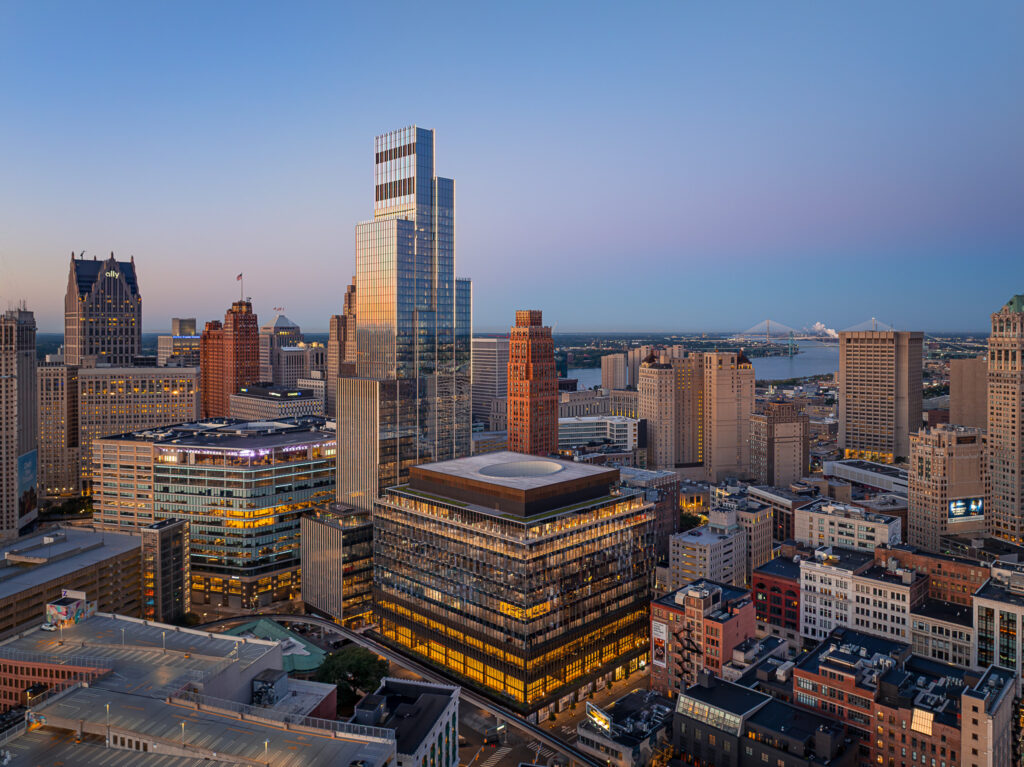
Detroit Month of Design: A City’s Work in Progress
Now in its 16th year, the celebration offers insights into the Motor City’s ongoing accomplishments without glossing over its hurdles.
Projects
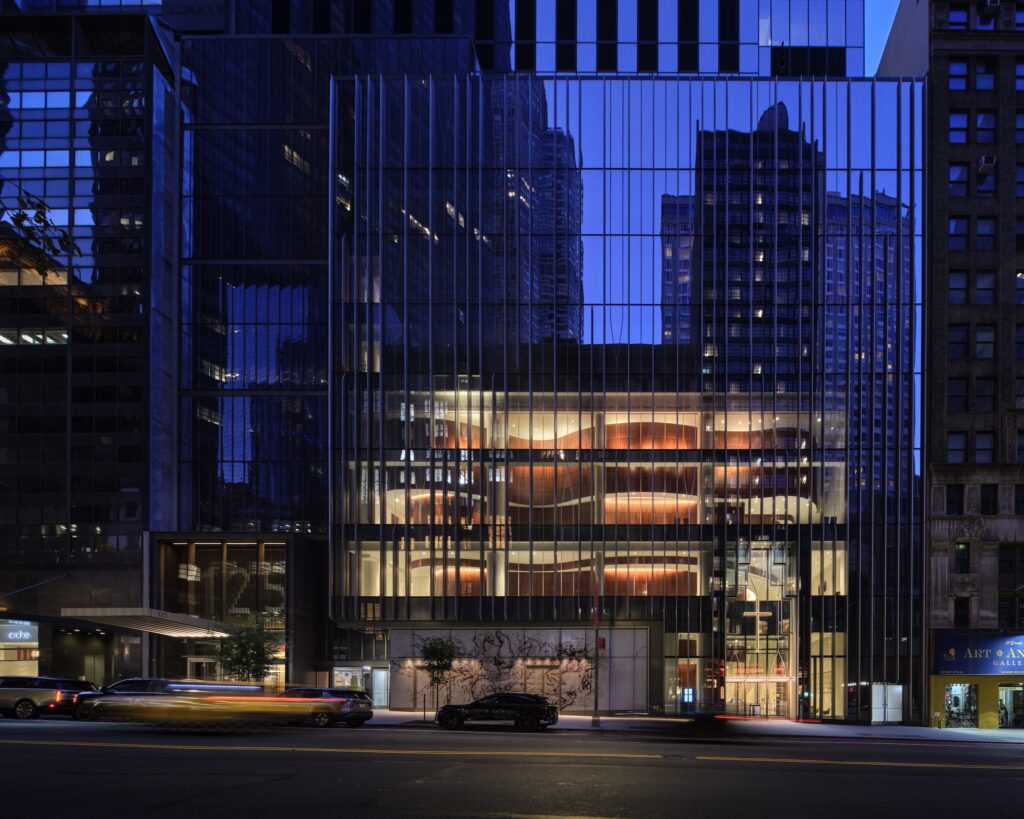
How a Hybrid Building Helped an Historic Manhattan Congregation Remain in Place
On Billionaire’s Row, FX Collaborative designed a new home for Calvary Baptist Church combined with an office tower.