



March 17, 2026
In Chicago, Adaptive Reuse Projects are Amplifying Local Nonprofits’ Missions
Building Skills: Revolution Workshop
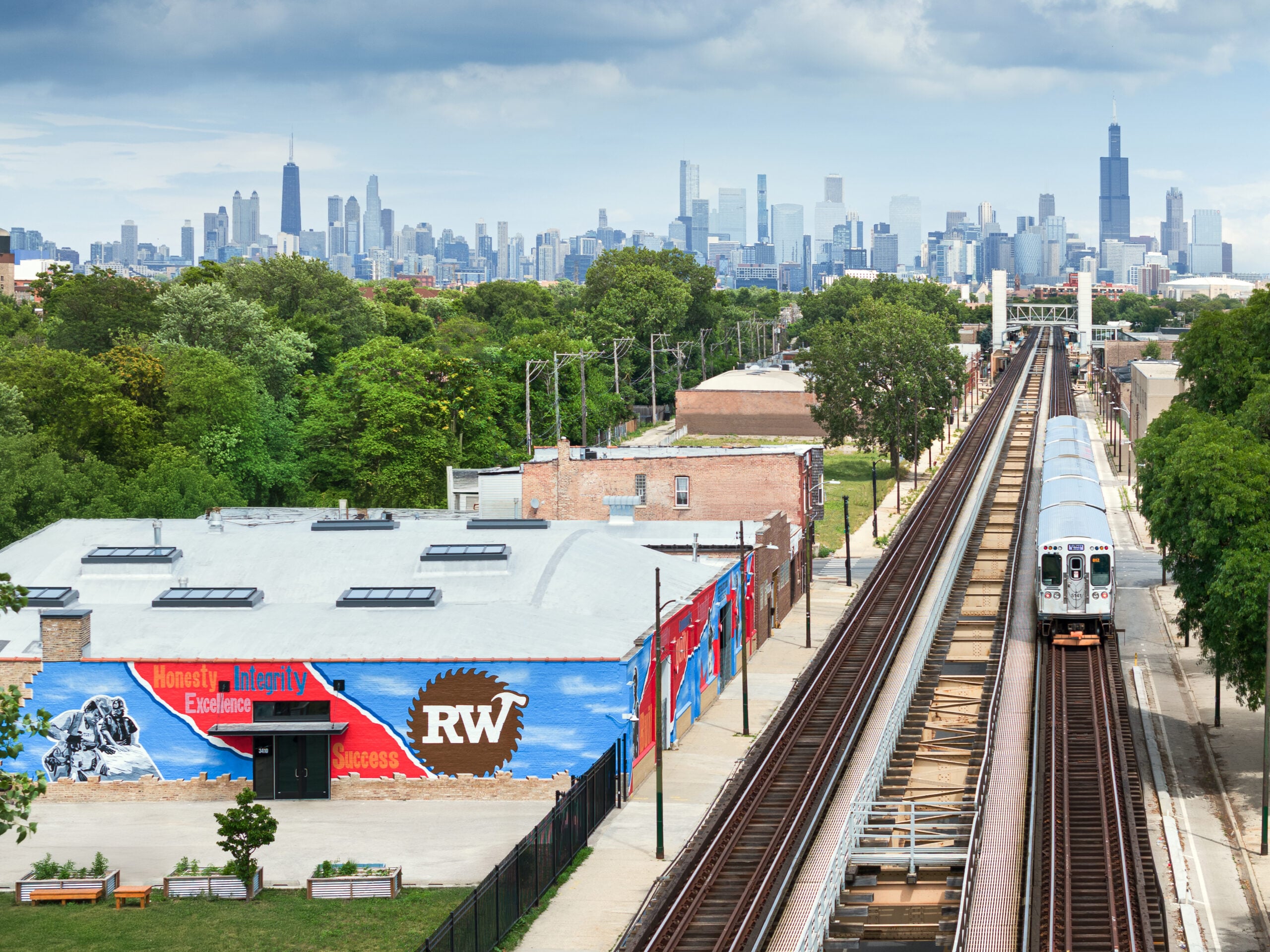
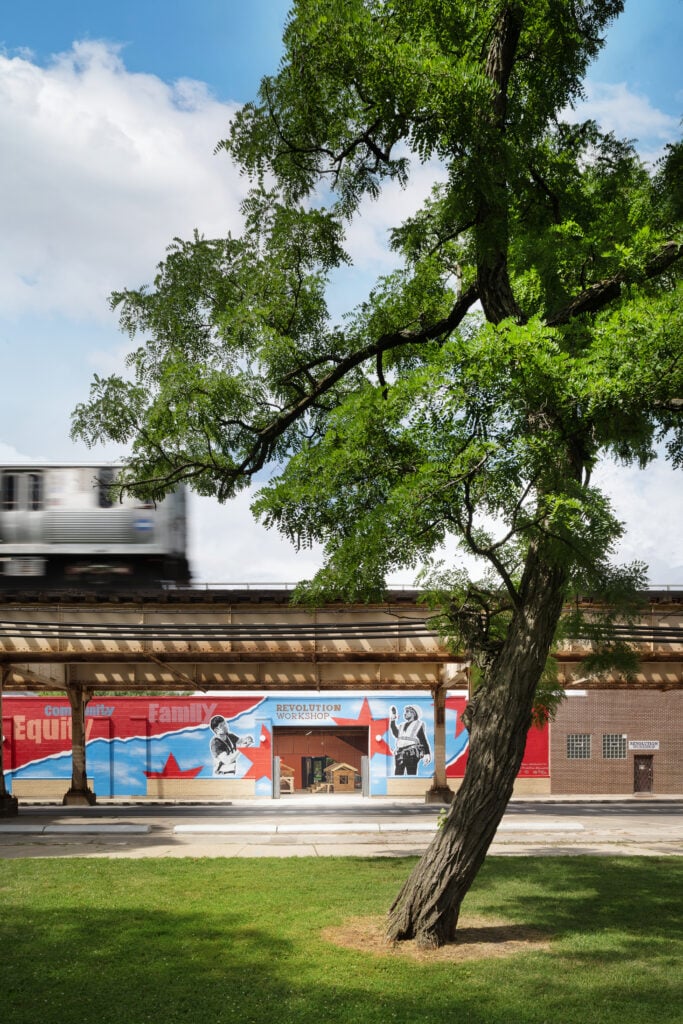
In East Garfield Park, on Chicago’s West Side, the scars of de-industrialization and population loss run deep, so it takes a sense of communal collaboration to make great things happen once again. As such, at the Revolution Workshop building trades education facility, Future Firm and their client are doing just about everything they can for each other. The architecture firm helped Revolution attain public financing, the workshop was their own general contractor, and they are building other Future Firm projects as well.
“People who are invested in making change in disinvested neighborhoods know that the typical way we [develop] a project on the North Side that has all the money is very different from the way we try to make projects happen in places like this,” says Future Firm founder Ann Lui. East Garfield is “changing very quickly, but [it needs] to change in a way that benefits everyone.”
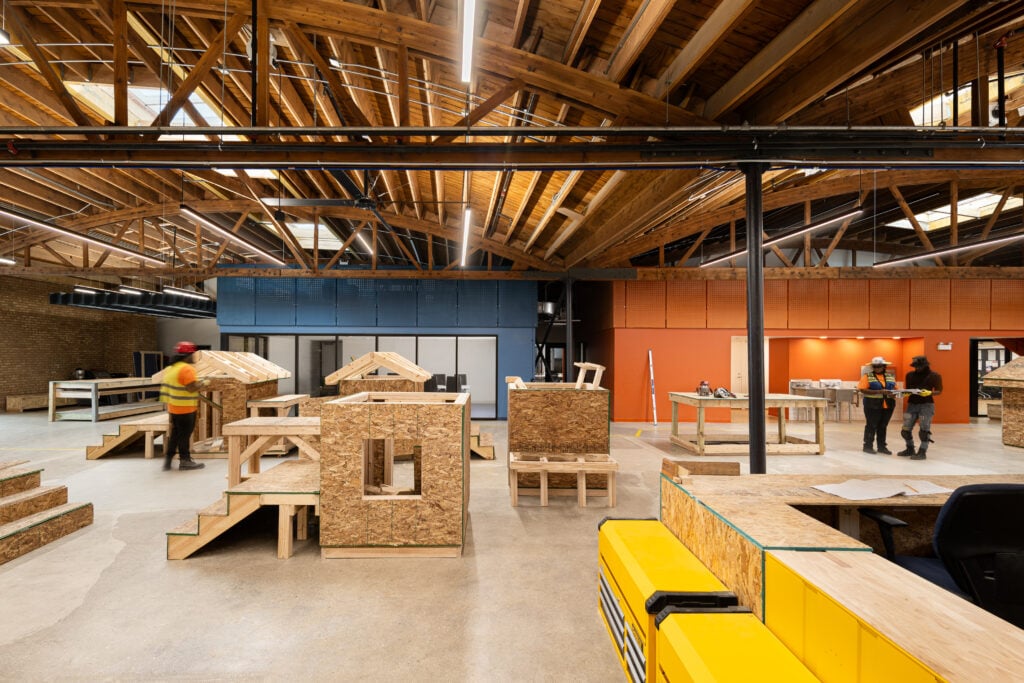
Founded in 2017 in a former soda warehouse, Revolution Workshop expanded into an adjacent warehouse. Here, they teach people from underrepresented communities wood framing, electrical installation, HVAC, and more.
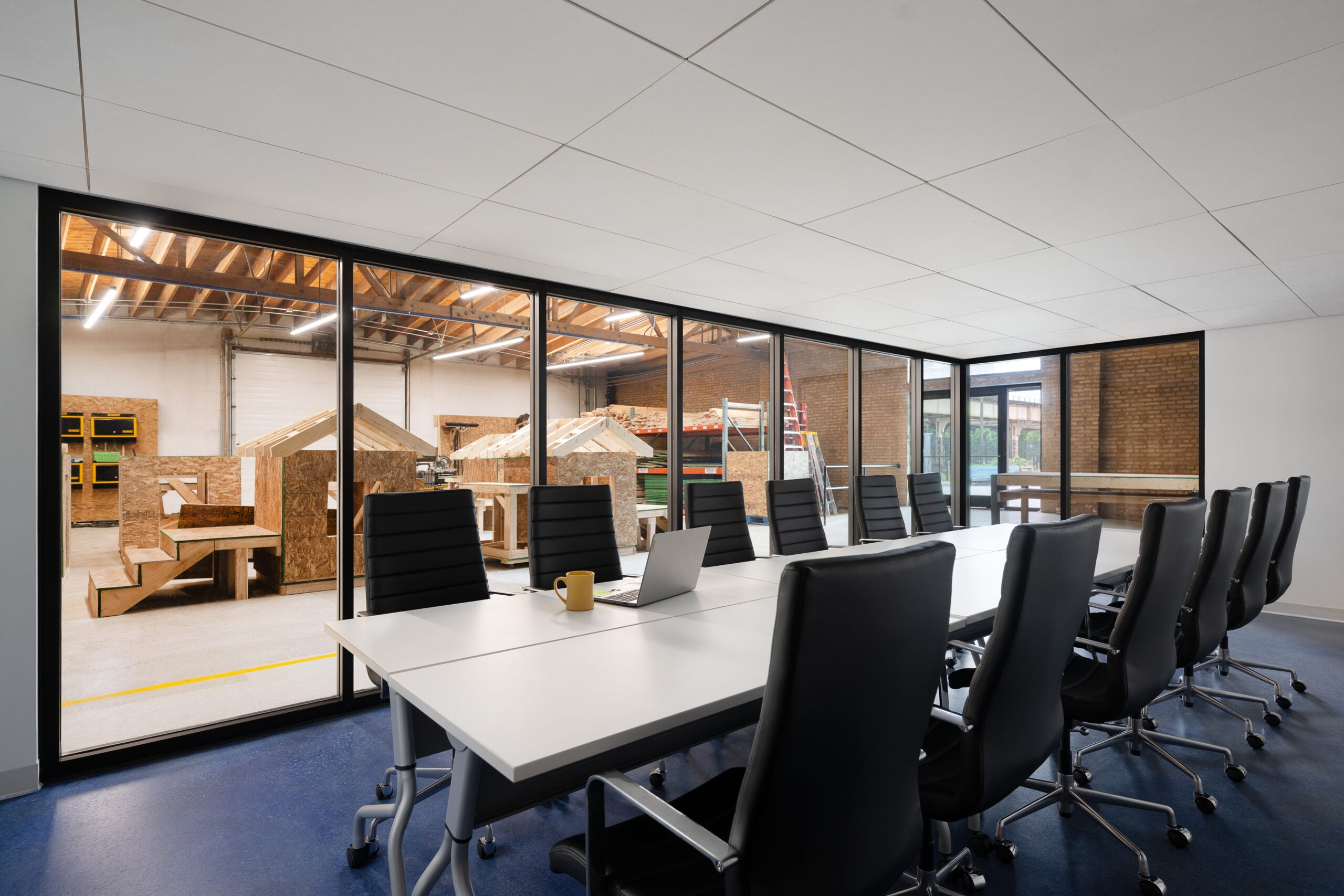
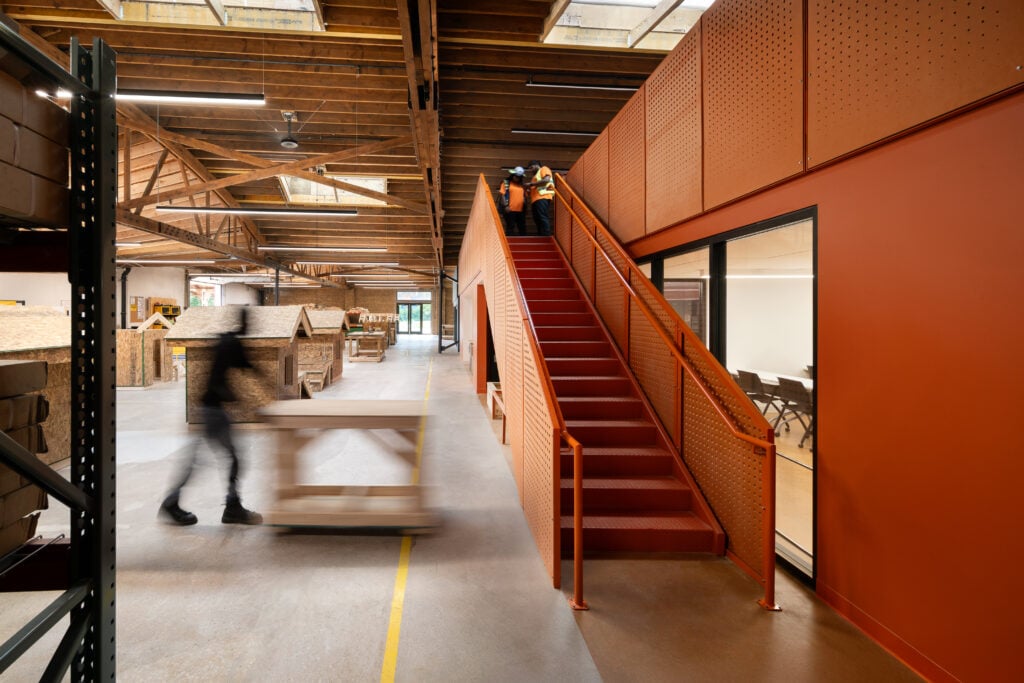
The primary task for Lui’s design was to acoustically divide the noisy shop floor from the quiet office and classroom functions. Future Firm divided the combined building north-to-south, keeping the rowdy shop floor closer to the rumbling elevated train to the south, and acoustically sealing and conditioning the northern section for classroom and office use. These spaces became even more critical in light of Revolution’s suite of wrap-around supportive services: training on financial literacy, mental health, and job placement.
The sonically isolated space is divided between two pavilions, color-coded blue for staff and orange for trainees. Both of these pavilions are lined with an MDF panel with a perforated drill bit gauge pattern.
The goal for Future firm was to design space that felt like a “welcoming autobody shop,” says Lui, and the staff and trainee pavilions are a sharp and contemporary presence amid the shop vacs and industrial-scale ceiling fans. There’s enough design sophistication to elevate and dignify the space, but nothing to make it seem like a place where steel-toed boots have to step softly.
The Sound of Change: BandWith
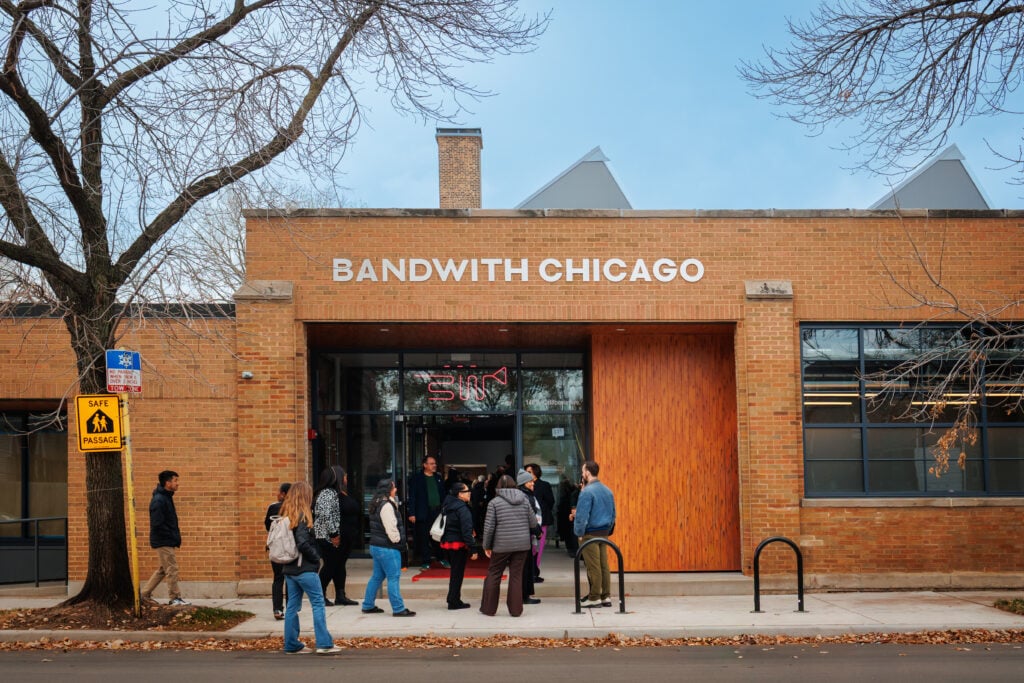
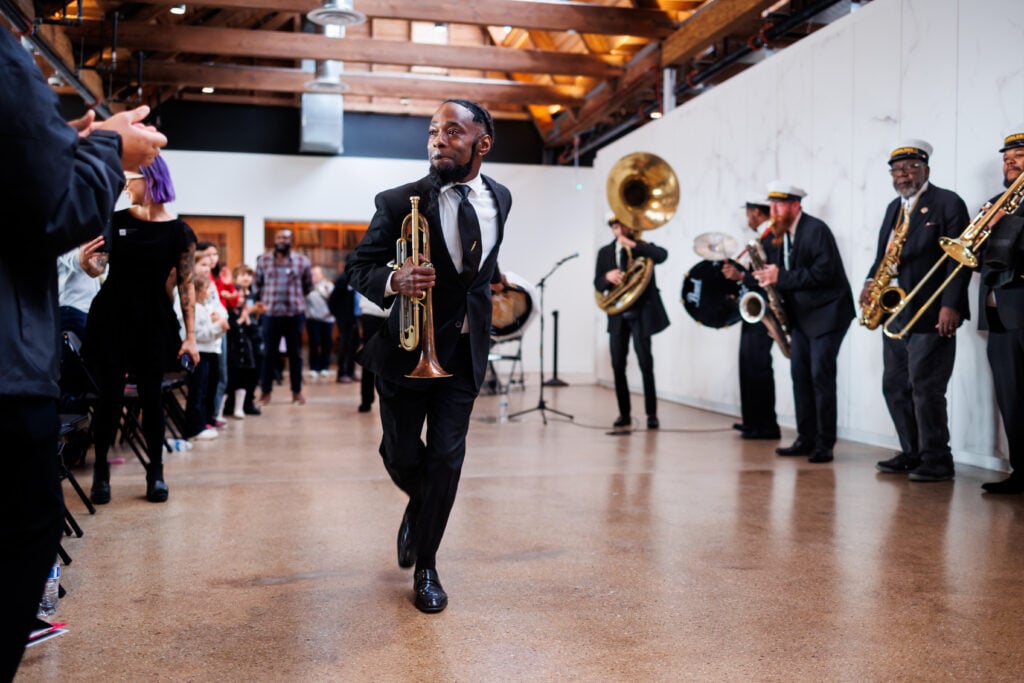
The need to acoustically isolate the more serene elements of construction training at Revolution Workshop completely determined its plan. But at the BandWith youth music school, getting spaces for band, chorale, and drumline instruction to harmonize within an open-plan, 21,000-square-foot coffin factory was an even bigger job.
Its architects at LJC couldn’t just subdivide the entire building into isolated cells, lest they invoke a tragedy: cutting off the interior from the natural light provided by its signature sawtooth skylights.
BandWith was certainly squeezed in their previous home, a nearby non-profit community center. “I’d be in my bookkeeping meetings, and there would be a guitar lesson happening,” says Annie Palamino, who started BandWith in 2013 when the charter school she taught music at cut her program.

To make sure her Excel sheets wouldn’t have a soundtrack, LJC placed auxiliary functions that require the most acoustic isolation under a low roof that runs along the perimeter of the building. Much of the central area is taken up by a large community event space. A glass-walled dance studio pavilion is placed near the center of the building, beckoning eyes and attention to the most visually intriguing performing art on offer. Shoving its most sensitive functions to the side and making programs that deserve first-chair status as open and transparent as possible means that the open event room, with its exposed sawtooth framing reaching up 21 feet, is the center of attention. “Everybody who walks in needs to experience those skylights,” says Nicholas Moen, Associate Principal with LJC.
A wood-paneled music library is an artifact space. In addition to mysterious disc-shaped relics packed in sleeves of cardboard and plastic, there are also fragments of building’s former life as a casket factory. Copper-toned wall sconces, numbered service ticket holders, and doorframe decorations give the space an aged and calming patina.
The most visible and refined acoustic treatment is the project’s use of Turf acoustic felt. Its veins of dark striations convincingly resemble marble, and its dense texture sells this illusion even after you touch it.
A mosaic mural outside draws neighbors in to see what’s playing beneath the sawtooth roof, all part of an uplifting trajectory Palamino envisions for her students. “We’ve been a program for many years,” she says. “We’re going to become a performing arts center. [Our students] deserve a beautiful performing arts space.”
Finding Sanctuary: La Herencia
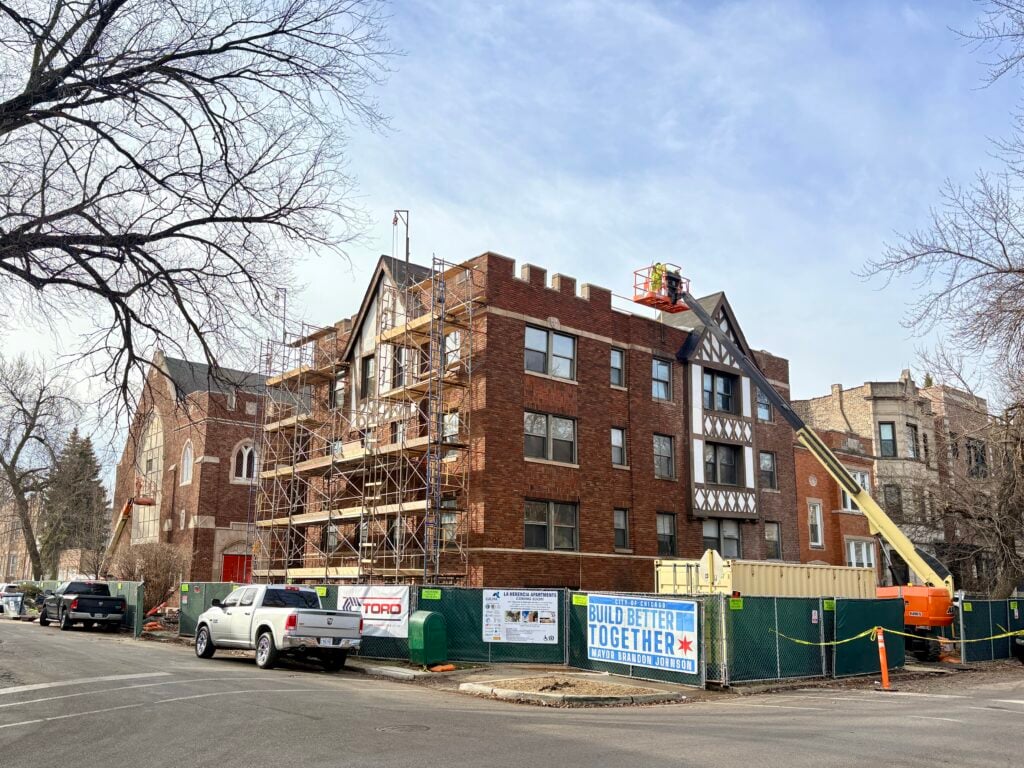
La Herencia expands affordable housing in the rapidly gentrifying Logan Square neighborhood by filling the sanctuary of the former Humboldt Park United Methodist Church with additional housing units; a process that required lining up 11 funding sources over many years. “A lot of Biblical expressions feel like they apply,” says Lincoln Stannard, co-executive director of LUCHA, the project’s affordable housing developer. “We’ve been wandering in the wilderness for 40 years.”
This time and travail was driven by two firsts. La Herencia will be the first church sanctuary in Chicago to be turned into housing units, and the first church in the city to be turned into 100 percent affordable housing. Selling the church to LUCHA was the last best thing the congregation could do for the community they sought to protect fiercely. “We as a congregation have lost our Latinx families who have been displaced out of this neighborhood through the evils of gentrification,” Paula Cripps-Vallejo, Humboldt Park United Methodist Church’s reverend, said at a community meeting.
As such, Canopy’s design is a bulwark of continuity. “We really wanted to maintain the flavor and feel of the original architecture,” says Jaime Torres, Canopy founder.
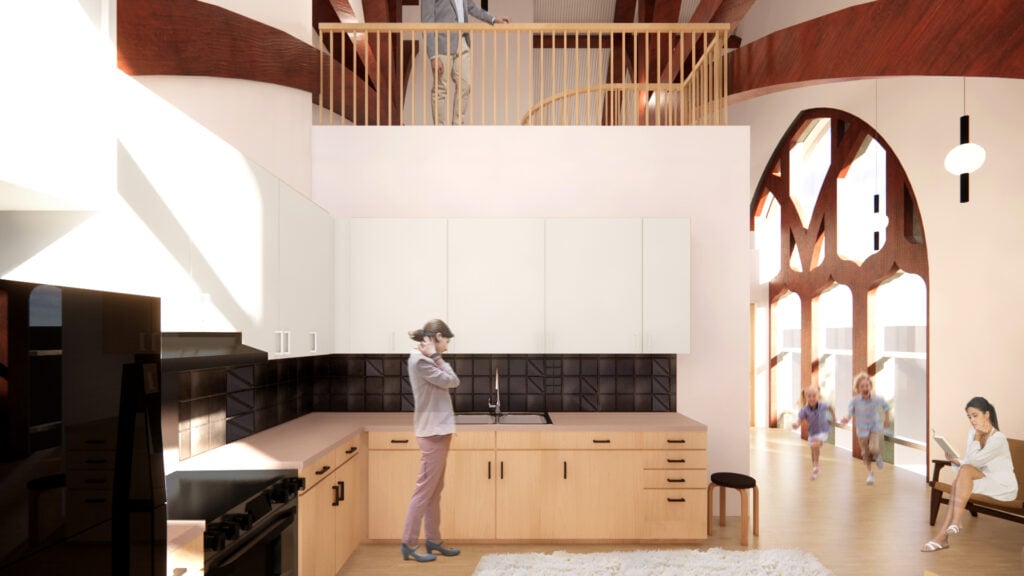
The sanctuary will host units on three levels. The upper story units reach high into the rafters and preserved wood trusses, 22 feet from floor to ceiling; enough room for a mezzanine space fit for an office or child’s playroom.
The church’s most prominent exterior feature is its triple-height arched Gothic window lined in wood tracery, and Canopy’s design will restore it and add operable sections. This window will span across multiple units, showcasing intimate scenes of family life where there was once only an empty clerestory void.
Canopy is also restoring and preserving the church’s Bavarian alpine wood-framed gables. It’s the slightest bit kitschy, but it’s also a reminder that importing design and building traditions into Chicago is a universal immigrant experience meant to make the city a bit of their own. “We chose to celebrate the ways this building has always been a part of the immigrant experience,” says Stannard.
“The most important thing,” says Torres, “is maintaining the legacy of this being a sanctuary for emigrating people to the city of Chicago.”
Would you like to comment on this article? Send your thoughts to: [email protected]
Latest
Viewpoints
Detroit Month of Design: A City’s Work in Progress
Now in its 16th year, the celebration offers insights into the Motor City’s ongoing accomplishments without glossing over its hurdles.
Projects
How a Hybrid Building Helped an Historic Manhattan Congregation Remain in Place
On Billionaire’s Row, FX Collaborative designed a new home for Calvary Baptist Church combined with an office tower.