



October 16, 2025
Inside and Outside Johns Hopkins’ New Bloomberg Student Center
A Campus Hub That Faces Every Direction
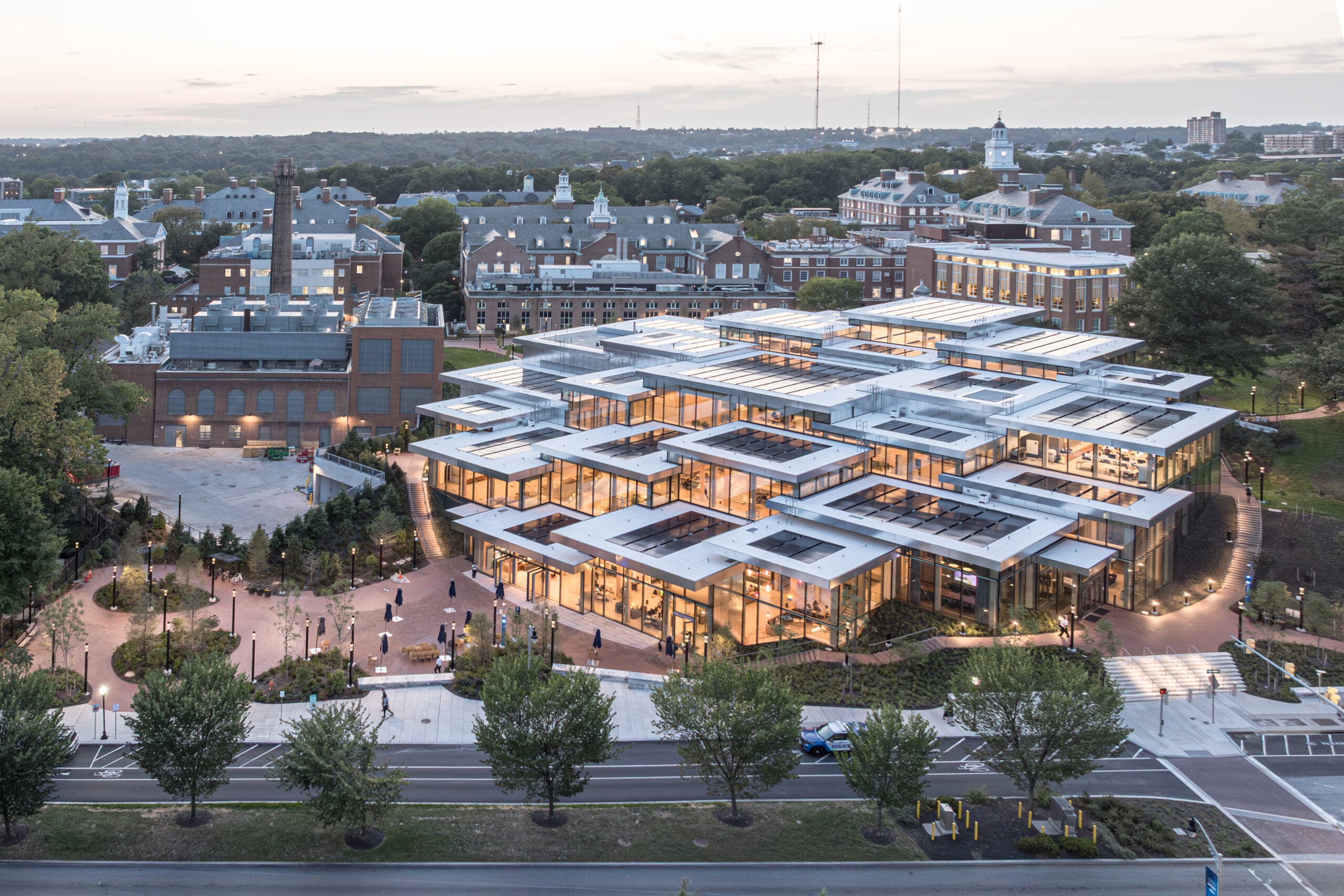
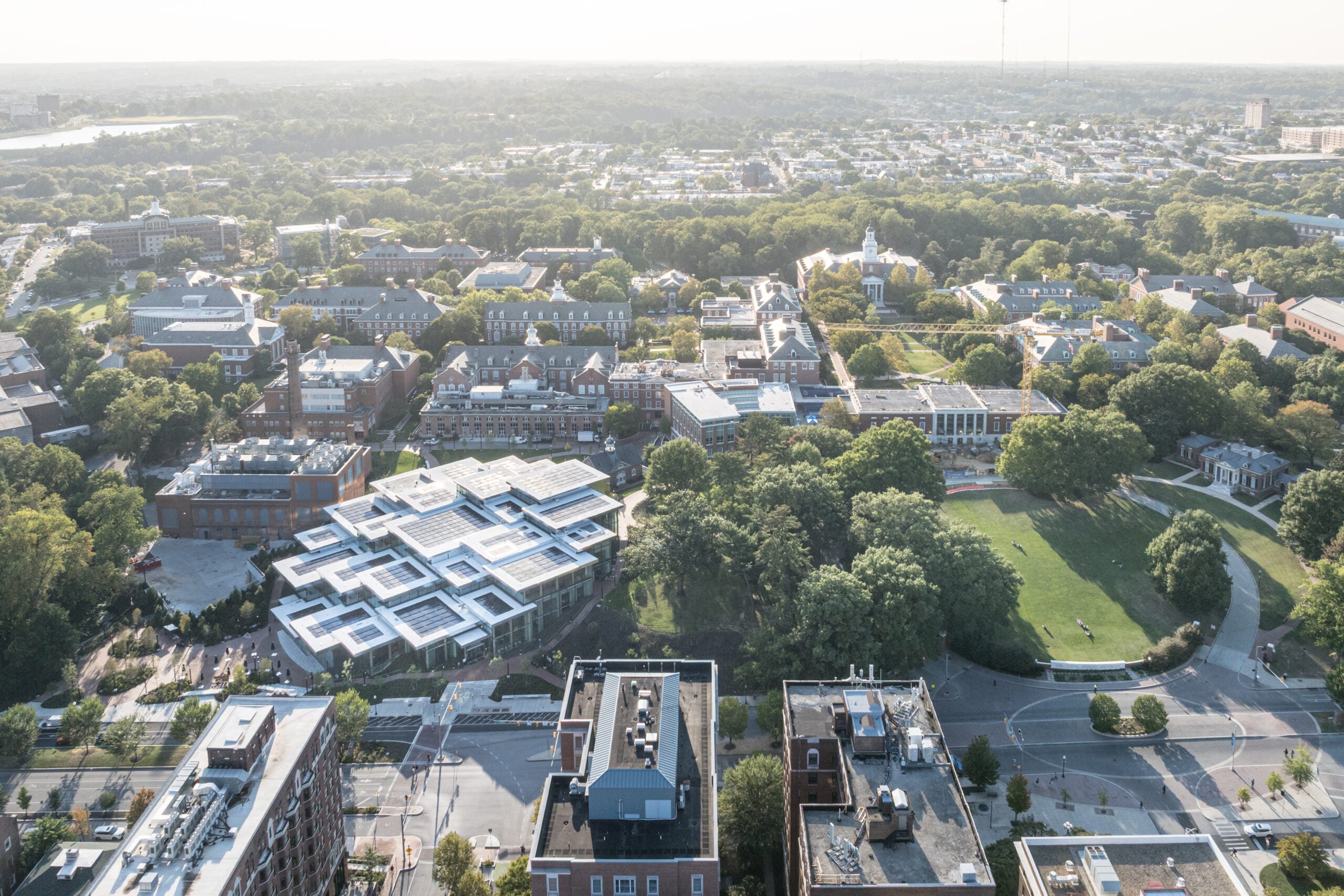
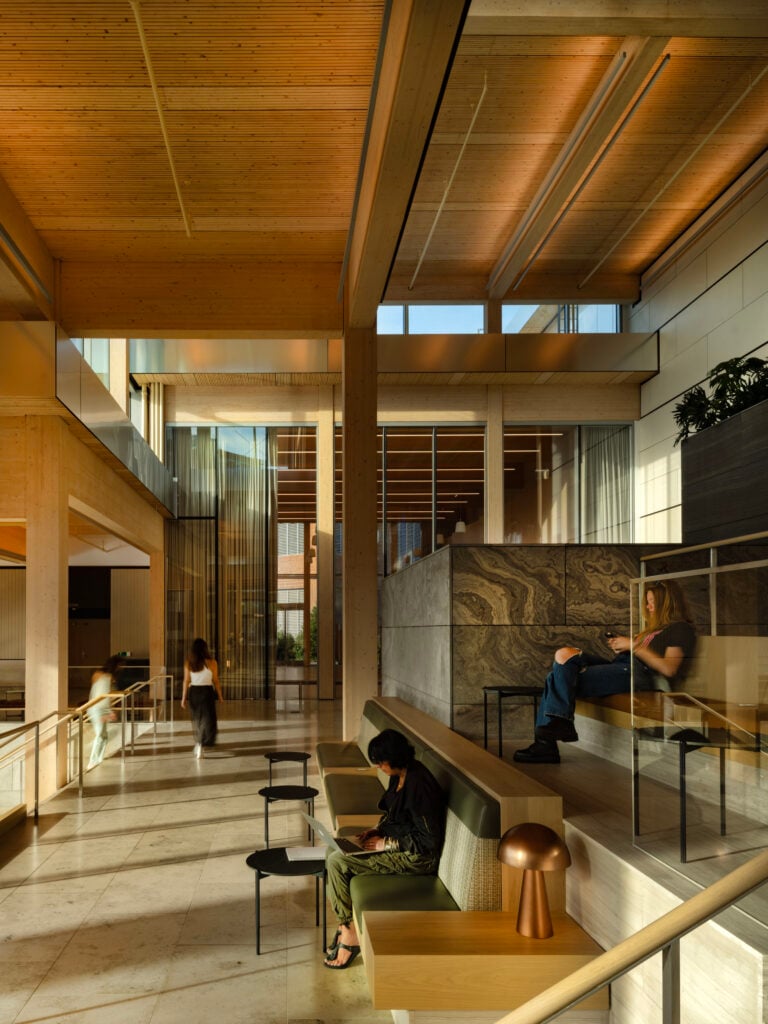
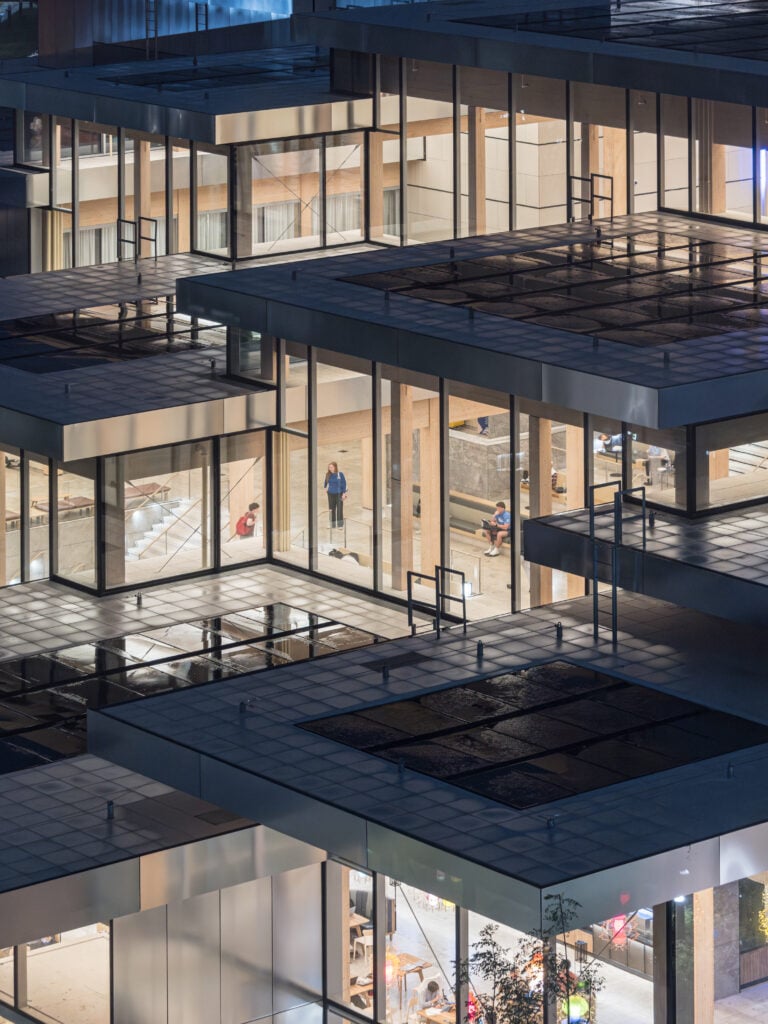
“When we first visited the site, we noticed the Beach as an inviting public space distinct from the formal quads on campus,” recalls Leon Rost, partner-in-charge at Bjarke Ingels Group (BIG), which designed the 150,000-square-foot building with Rockwell Group as interior architect and Shepley Bulfinch as executive architect. “We wondered if we could produce a space that offered similar qualities—topographical, inviting, sun-soaked.” The resulting building takes shape as a cluster of 29 mass-timber-framed rectilinear volumes of varying sizes and heights, ascending the gentle northward incline and allowing ample sunlight to pour in through the double- and triple-height glazing and the gaps created by the roof planes’ differing elevations.
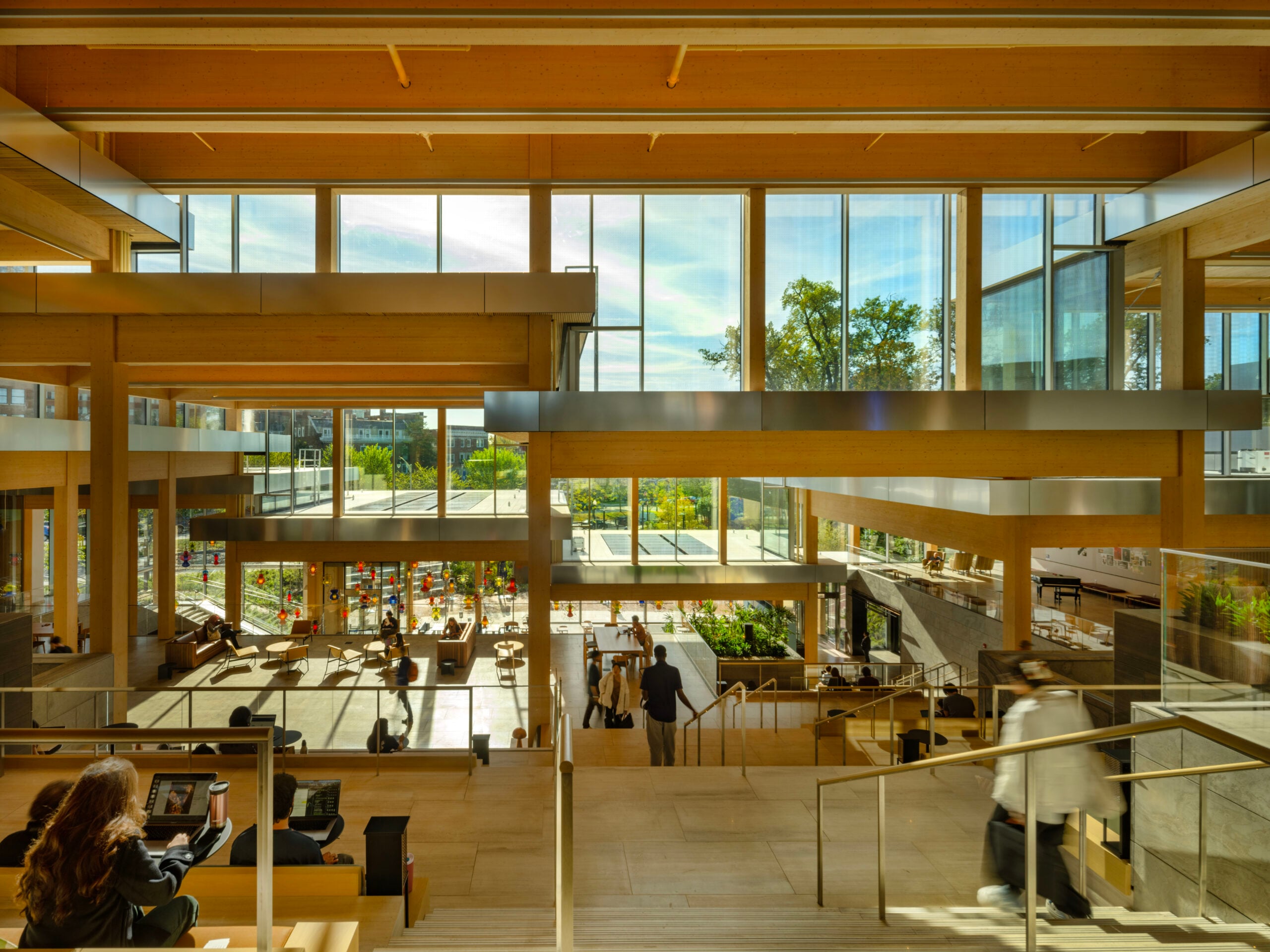
“The size and number of the roof planes fluctuated to correspond directly with the program,” continues Rost. The largest and most central roof plane is suspended over what’s known as the “living room”—the sun-flooded heart of the building, where all paths converge and from which other spaces radiate. Elsewhere, smaller roof planes mark the four “entry vestibules,” each located at a different elevation.
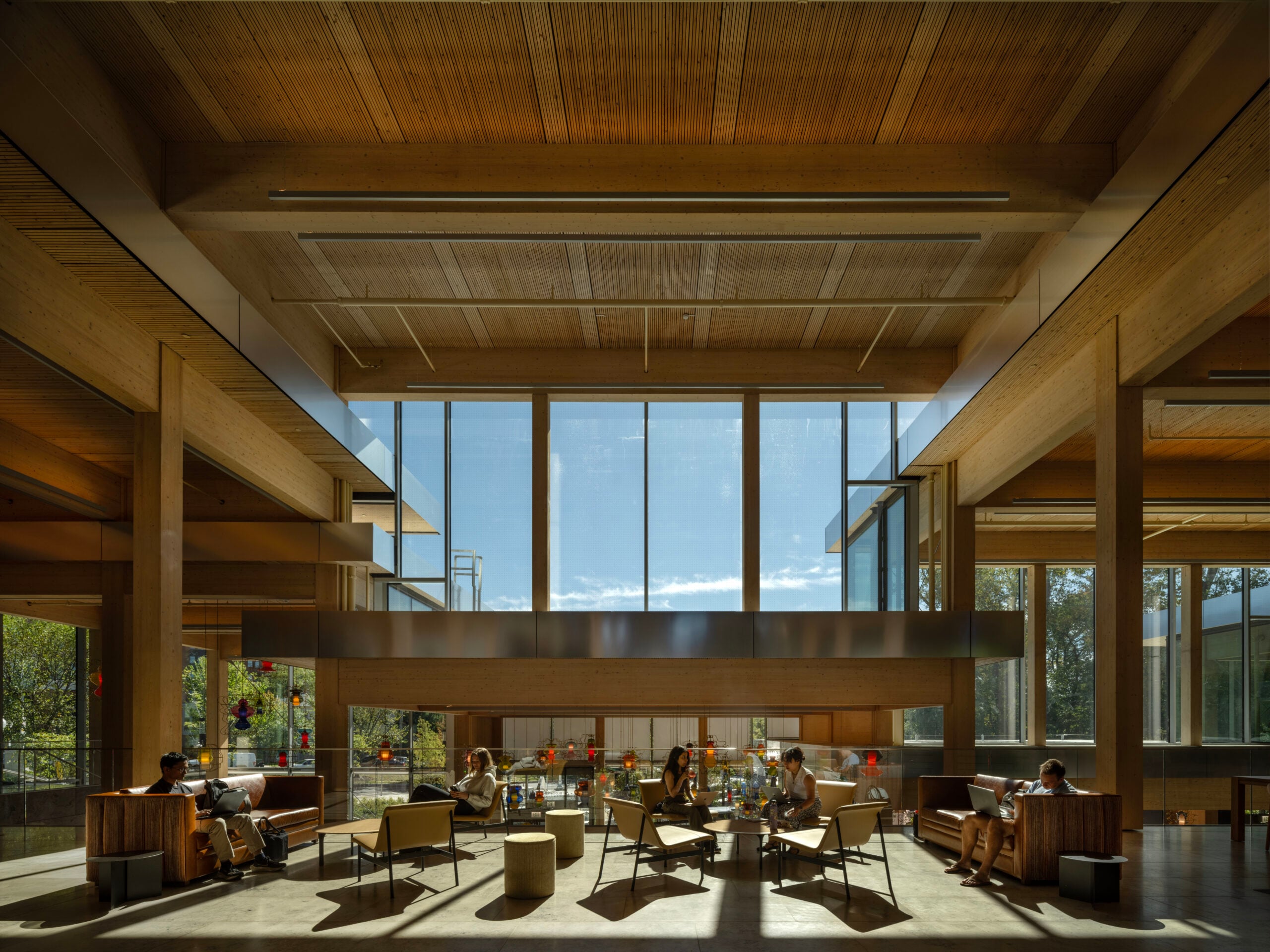
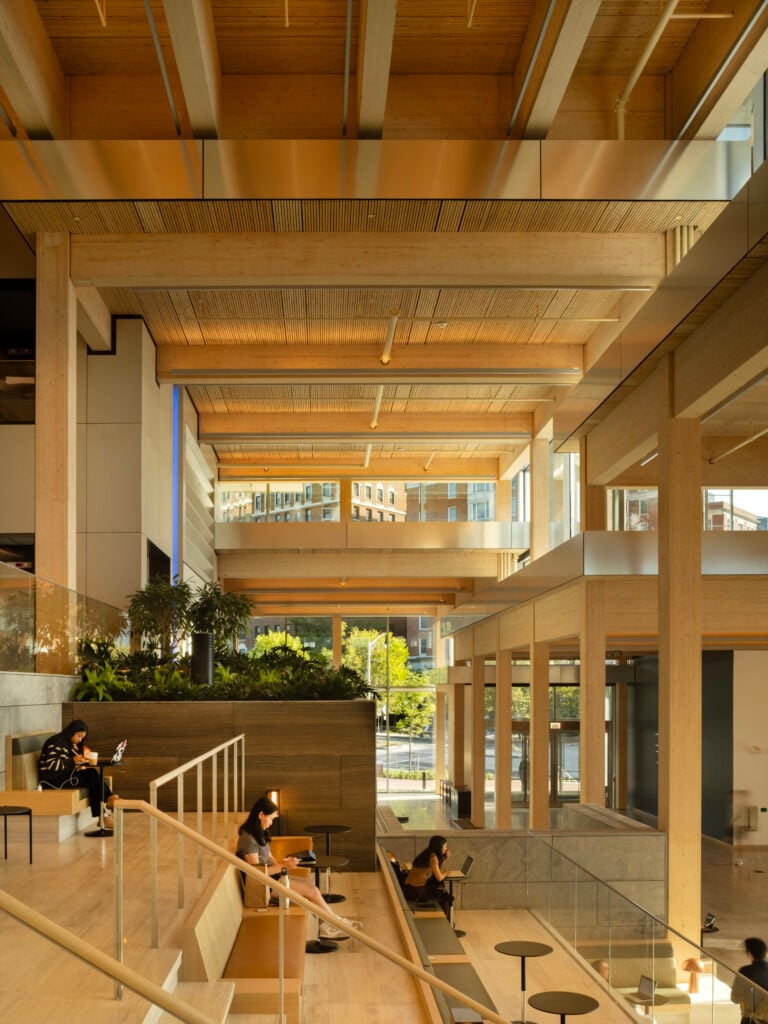
In the living room, Rockwell Group designed a large, 130-seat stair that enables—not just circulation among all four floors—but also open relaxation, meeting, and collaboration on its white oak and limestone bleacher seating. The atrium-like space features alternating upholstery colors, movable furniture, planters, and cleverly integrated lighting to create what David Rockwell, founder and president of the firm, calls “a slightly town-square effect.” It’s also where the structural mass timber and Eramosa limestone tracing the treads and risers are best able to shine—or more accurately, glow—thanks to ribbons of warm daylight and lighting fixtures from L’Observatoire International discreetly recessed into the ceiling grooves.
The student center’s program was informed by a robust polling and canvassing process that solicited ideas from students, faculty, and staff. The university heard a clear call for “a creative outlet as a foil to the academic rigor here,” says Lee Coyle, the university’s director for capital projects and planning. “There have always been jokes about the library being the student center,” he adds, referring to the notoriously bookish student body. “It was important to provide a place for creative release—something beyond the academic grind.” The building now houses a 250-seat black-box theater open to the public, dance and music rehearsal studios, a food hall, arts and ceramics rooms, multipurpose spaces, and ten lounges sprinkled throughout.
Architecture That Connects City and Campus
While the structural mass-timber system provides warmth, tactility, and human scale, Rost says it also presented the project’s biggest challenge: “Without being able to bury mechanical, electrical, and plumbing systems in drywall and dropped ceilings, every system had to be precisely coordinated.” An air distribution system within the main stair diffuses conditioned air under the seated treads, while radiant heat beneath the stone “puts the heating and the cooling where people are,” Coyle says. Double- and triple-paned glass, a partially subterranean footprint, and shaded roof overhangs reduce demand on HVAC systems and enhance energy efficiency. Photovoltaic panels covering each roof plane generate about 40 percent of the building’s required energy—a major contribution toward the university’s LEED Platinum target.

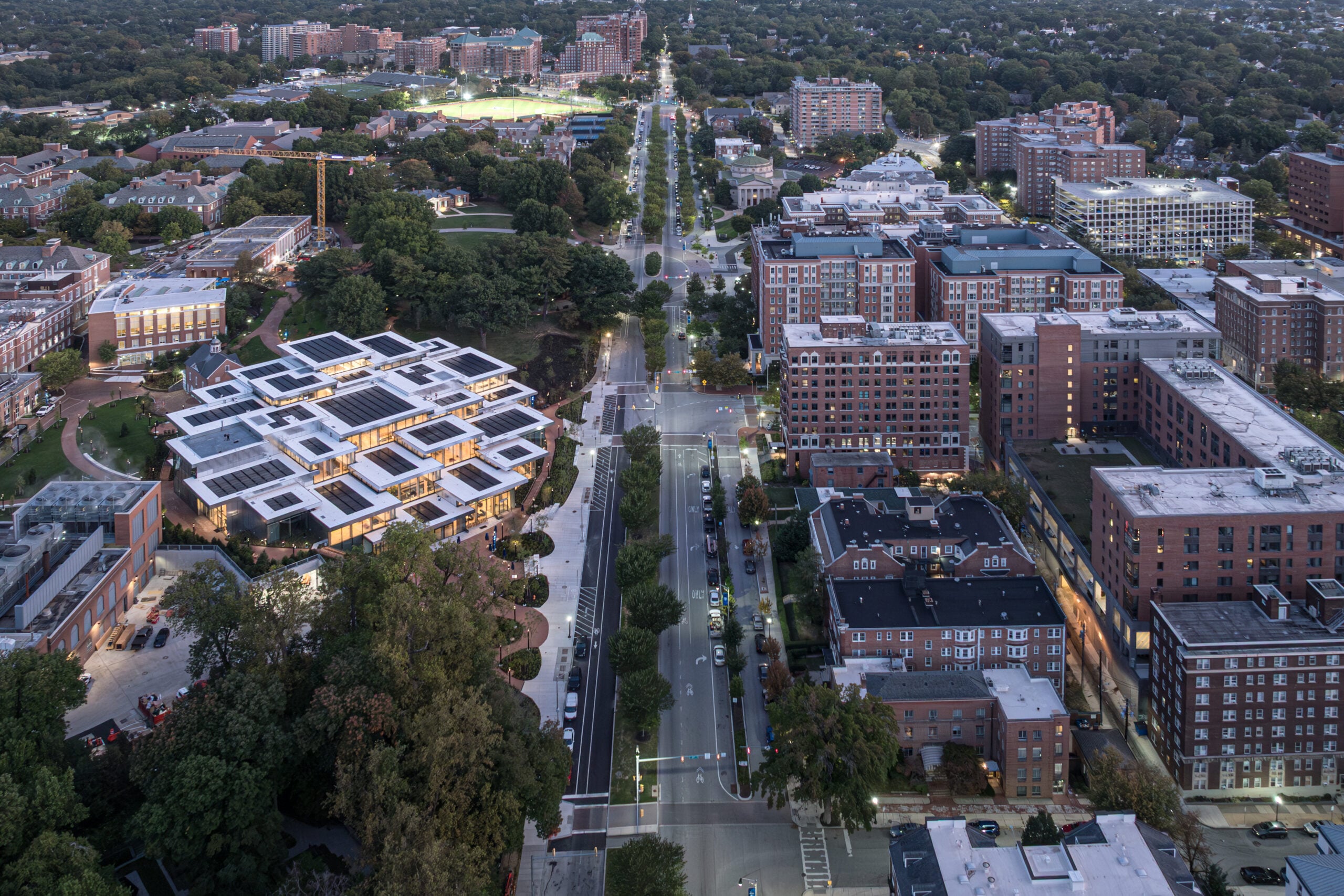
Outside, the building sits obliquely to Charles Street—the north-south thoroughfare that bisects East Baltimore from West, campus from residential community—a divide the university has sought to reconcile in recent years. By eschewing a strict linear alignment with either the street to the east or the academic buildings to the west, the 45-degree rotation opens opportunities for aesthetic continuity, landscape integration, and social interaction in the spaces between. Brick plazas and stairways connect to the legacy campus’s Georgian character, while Michael Van Valkenburgh Associates (MVVA)—in charge of the landscape —wove in a series of lush, interspersed pockets of greenery inviting approach from all directions. Seen in this spatial context, the building becomes a catalyst for a more interconnected campus life—linking the academic with the social, the historic with the forward-looking.
Would you like to comment on this article? Send your thoughts to: [email protected]
Latest
Viewpoints
Detroit Month of Design: A City’s Work in Progress
Now in its 16th year, the celebration offers insights into the Motor City’s ongoing accomplishments without glossing over its hurdles.
Projects
How a Hybrid Building Helped an Historic Manhattan Congregation Remain in Place
On Billionaire’s Row, FX Collaborative designed a new home for Calvary Baptist Church combined with an office tower.