



February 25, 2026
Inside Balenciaga’s Low-Carbon Factory
In fashion, the most consequential design decisions are no longer made on the runway but in the factory. As decarbonization mandates tighten, the industry is being forced to translate ESG (Environmental, Social, and Governance) rhetoric into physical infrastructure. Meeting 2030 climate targets will require an estimated €4.4 billion in investment across Europe, according to TEHA Group’s Just Fashion Transition 2025 study—yet more than half of suppliers, particularly within Italy’s dense luxury-manufacturing network, lack the capital to adapt.
This funding gap is pushing responsibility upstream, compelling global brands to rethink not just materials and logistics but the architecture of production itself. Balenciaga, part of the Paris-based Kering group, positions its new leather-goods hub, The Plant, as a prototype of that shift—an investment grounded in a supply chain that remains overwhelmingly Italian, with 81 percent of Kering’s suppliers located in the country in 2024.

An Existing Factory, Reconsidered
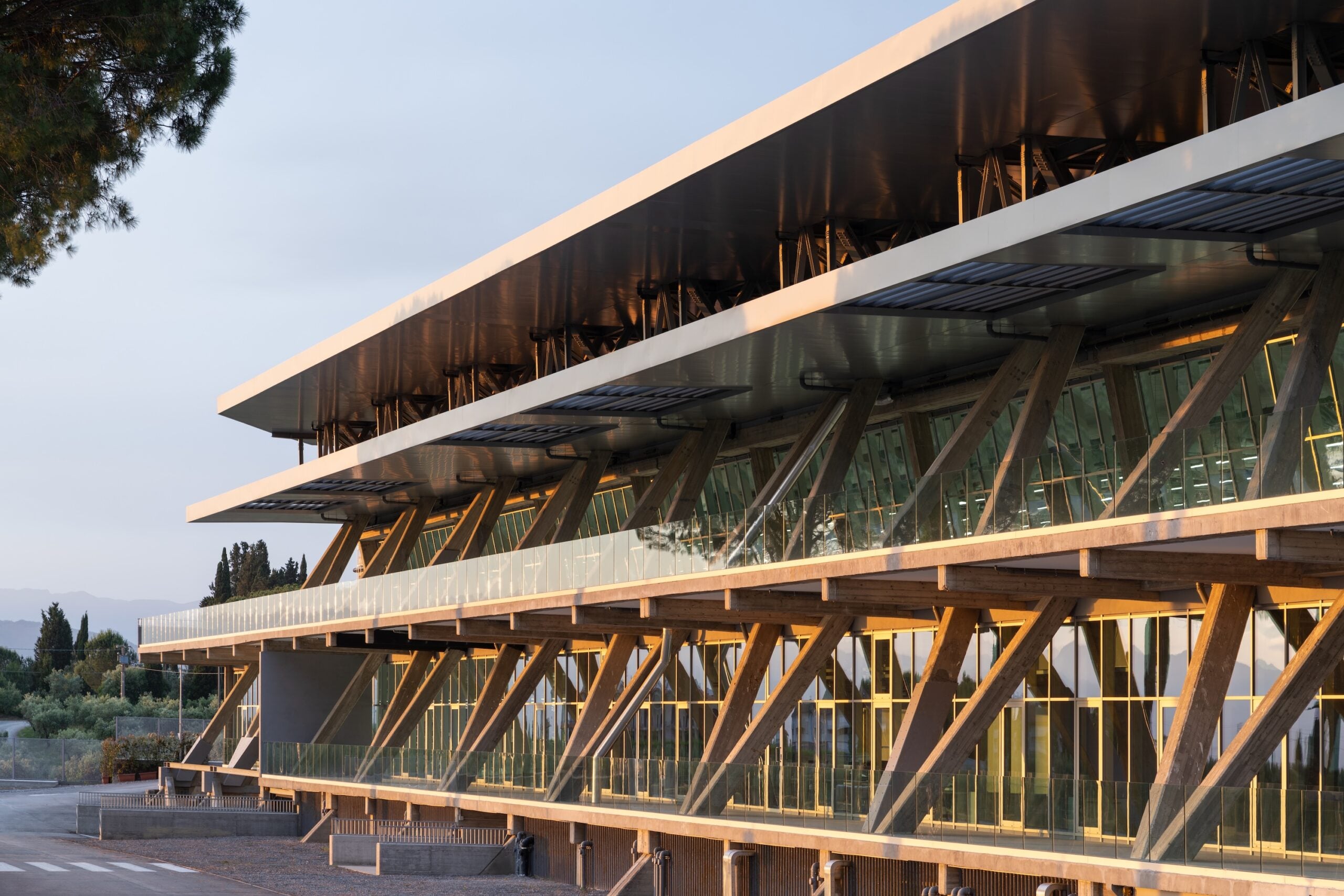
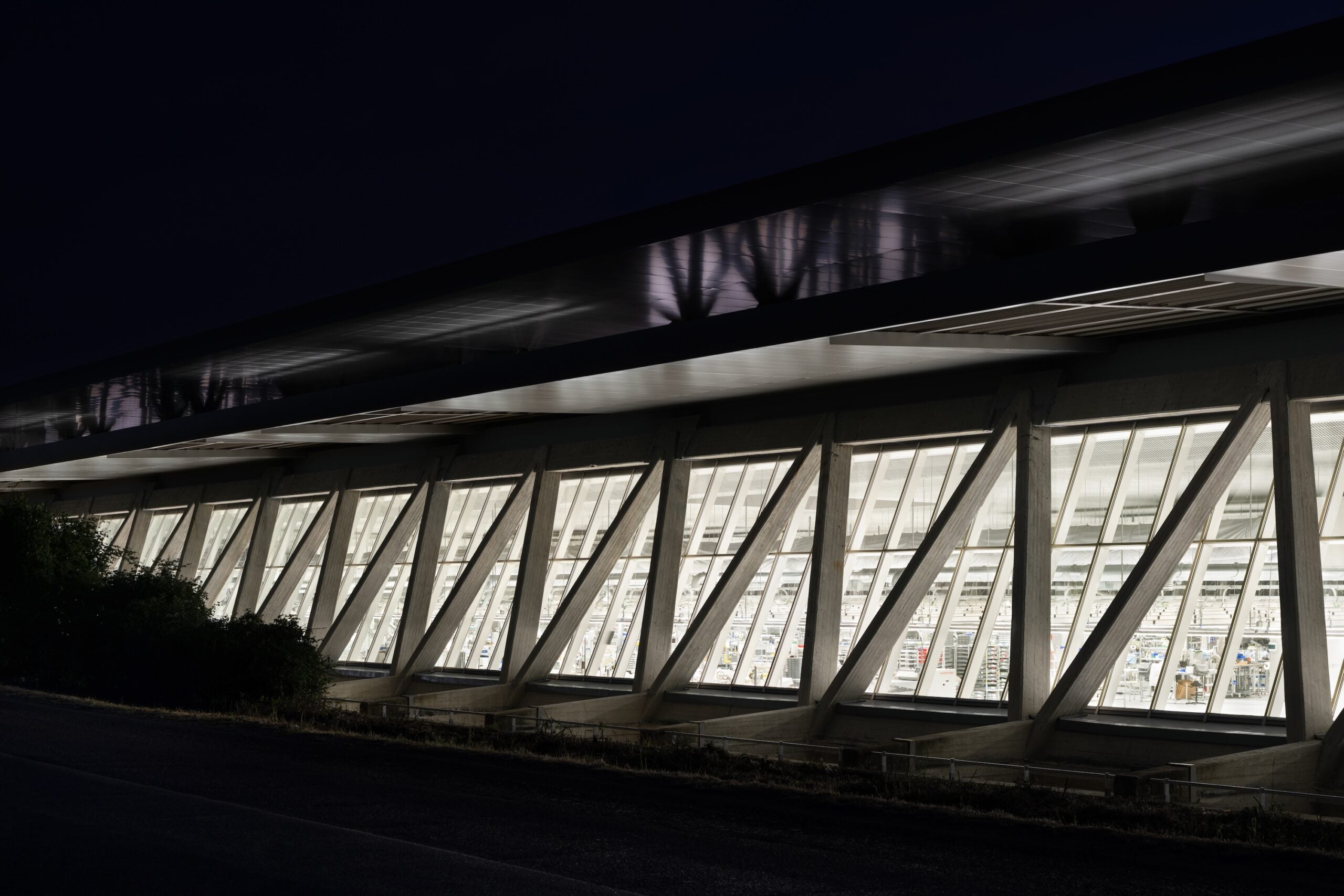
Designed by MetroOffice Architetti, the project transforms a disused 1960s leather factory into Balenciaga’s first manufacturing and training campus in Italy, spanning 3.95 acres. Located in Cerreto Guidi, the site sits within Tuscany’s Arno Valley corridor between Florence and Pisa—a constellation of specialized towns that underpin one of the world’s most influential fashion and leather-goods supply chains.
Conceived to meet LEED Platinum standards, the project treats reuse as its primary climate strategy. “Retaining the structure allowed the preservation of the grey energy already embedded in the building, avoiding the impact associated with demolition and new construction,” says MetroOffice Architetti, cofounder Fabio Barluzzi. The intervention works largely by reduction—an approach he describes as one of “subtraction, stratification, and transformation.”
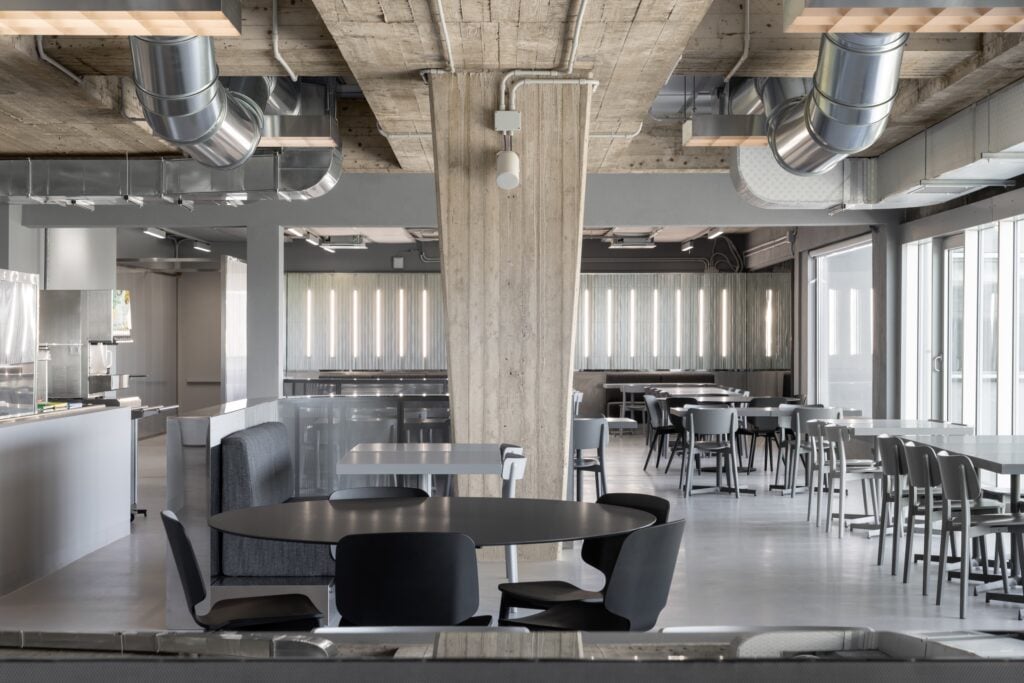
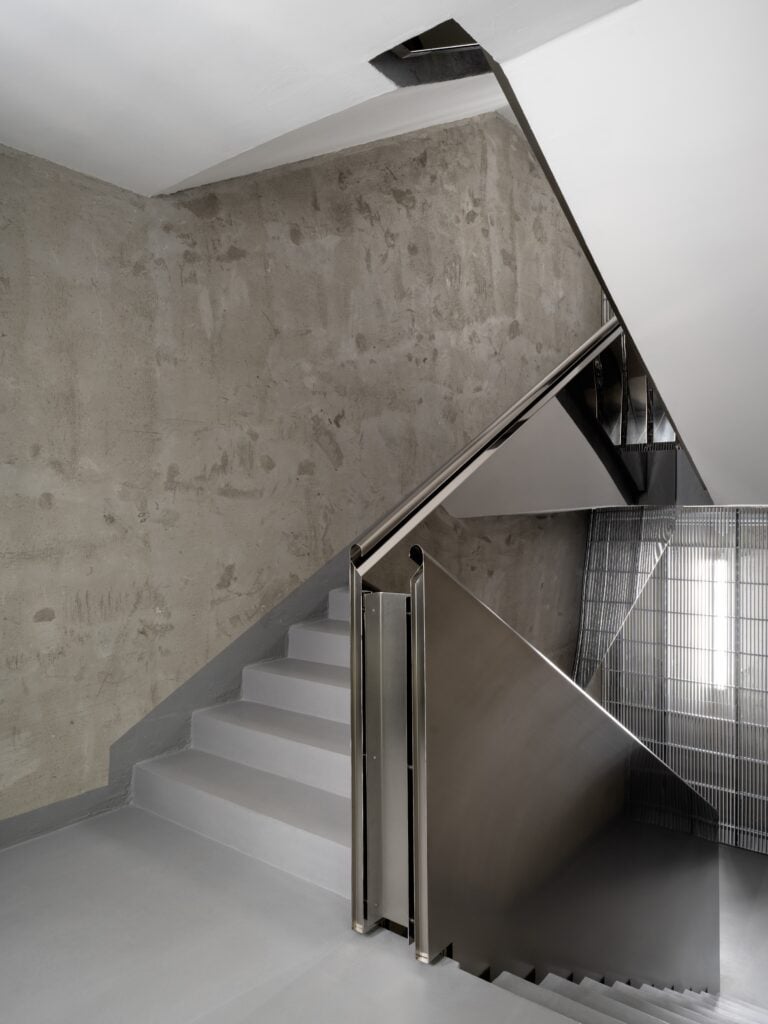
The original concrete-and-steel frame was repaired and reorganized to accommodate contemporary production, with new steel elements optimized for minimal material use and future disassembly. The result preserves the legibility of the industrial structure—V-shaped columns and long-span trusses—while recalibrating it for a different manufacturing model.
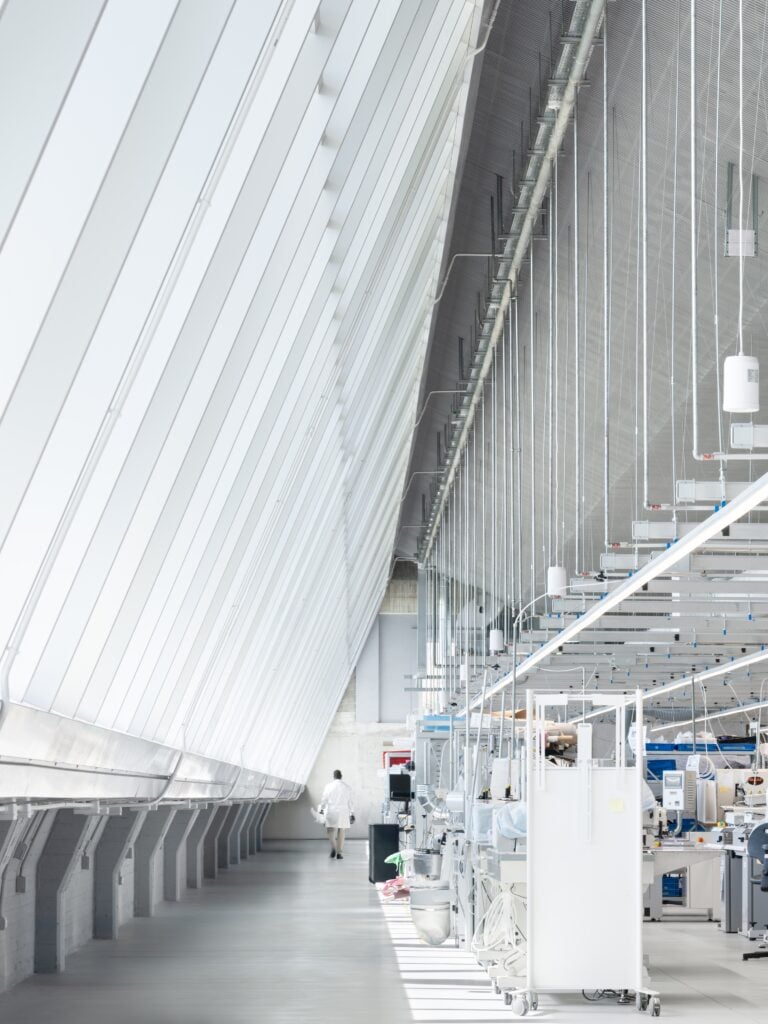
A defining intervention is the new double-roof assembly, conceived as an environmental mediator rather than a simple cover. Two offset slabs create an interstitial zone that draws in diffuse daylight through polycarbonate elements, integrates operable openings and metal louvers to regulate glare and ventilation, and accommodates photovoltaic arrays above. The roof becomes a layered climatic device, reducing reliance on mechanical conditioning while producing energy on site. Complementing this strategy, select partitions and ceiling elements use thermo-acoustic panels made from recycled textile fibers derived from Balenciaga’s own production waste, embedding a tangible circular-economy loop into the building fabric.
Together, these moves reposition the building as an environmental system rather than a passive container. The facility now operates as an all-electric plant, using heat pumps, daylight-responsive lighting, and centralized monitoring to reduce operational demand.

Energy On Site
On-site energy generation extends this logic from building to infrastructure, forming part of Kering’s broader shift toward distributed renewable energy across its facilities.
In 2024, the company reported 324,403 MWh of renewable energy use, alongside 14,237 MWh generated and self-consumed on site—a 67 percent increase since 2022. Spanning roughly 1.18 acres of roof, the photovoltaic array has a nominal capacity of 518 kWp and is expected to generate between 550,000 and 650,000 kWh annually under local climatic conditions, says MetroOffice Architetti cofounder Barbara Ponticelli, significantly reducing grid reliance while supporting the building’s all-electric operation.
Teaching the Work
While production remains the primary function of The Plant, it is paired with an in-house school, built around the months-long Master Bag Maker apprenticeship. New hires enter the factory floor only after intensive technical training. By formalizing the transfer of savoir-faire from master artisans to younger recruits, Balenciaga treats skill as critical infrastructure rather than interchangeable labor. This approach aligns with Kering’s sustainability strategy, which explicitly calls for preserving craftsmanship and safeguarding expertise.
As regulators move to curb waste—including EU rules, effective this July, restricting when large fashion companies may destroy unsold clothing and footwear—the industry’s environmental transition is becoming structurally unavoidable. The Plant suggests how manufacturing itself is being redesigned—not relocated or offset, but physically reworked—to meet the environmental demands now reshaping fashion.
Would you like to comment on this article? Send your thoughts to: [email protected]
Latest
Viewpoints
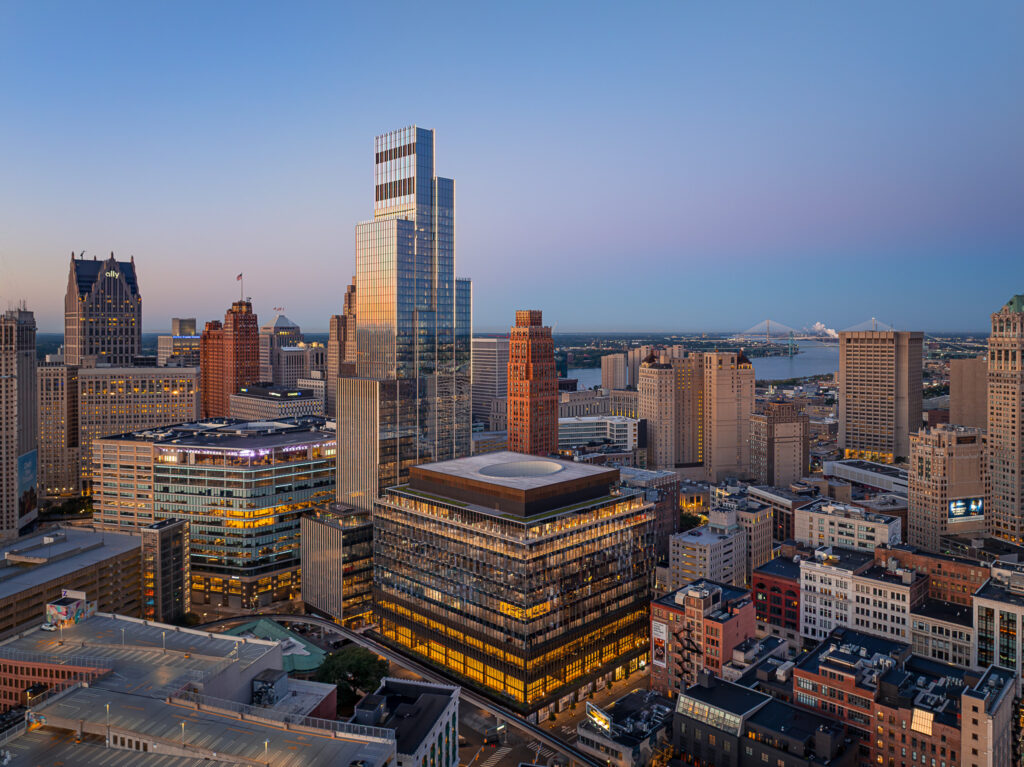
Detroit Month of Design: A City’s Work in Progress
Now in its 16th year, the celebration offers insights into the Motor City’s ongoing accomplishments without glossing over its hurdles.
Projects
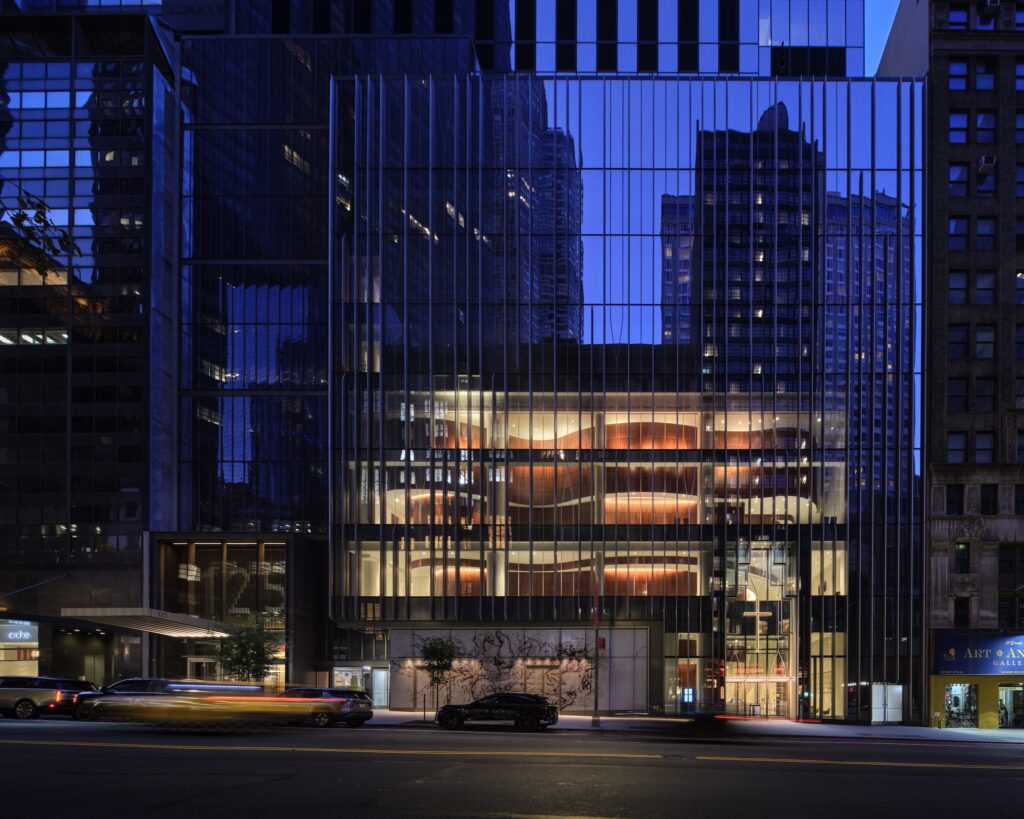
How a Hybrid Building Helped an Historic Manhattan Congregation Remain in Place
On Billionaire’s Row, FX Collaborative designed a new home for Calvary Baptist Church combined with an office tower.