



November 4, 2025
Inside Moldova’s Real-Life Hobbit Houses
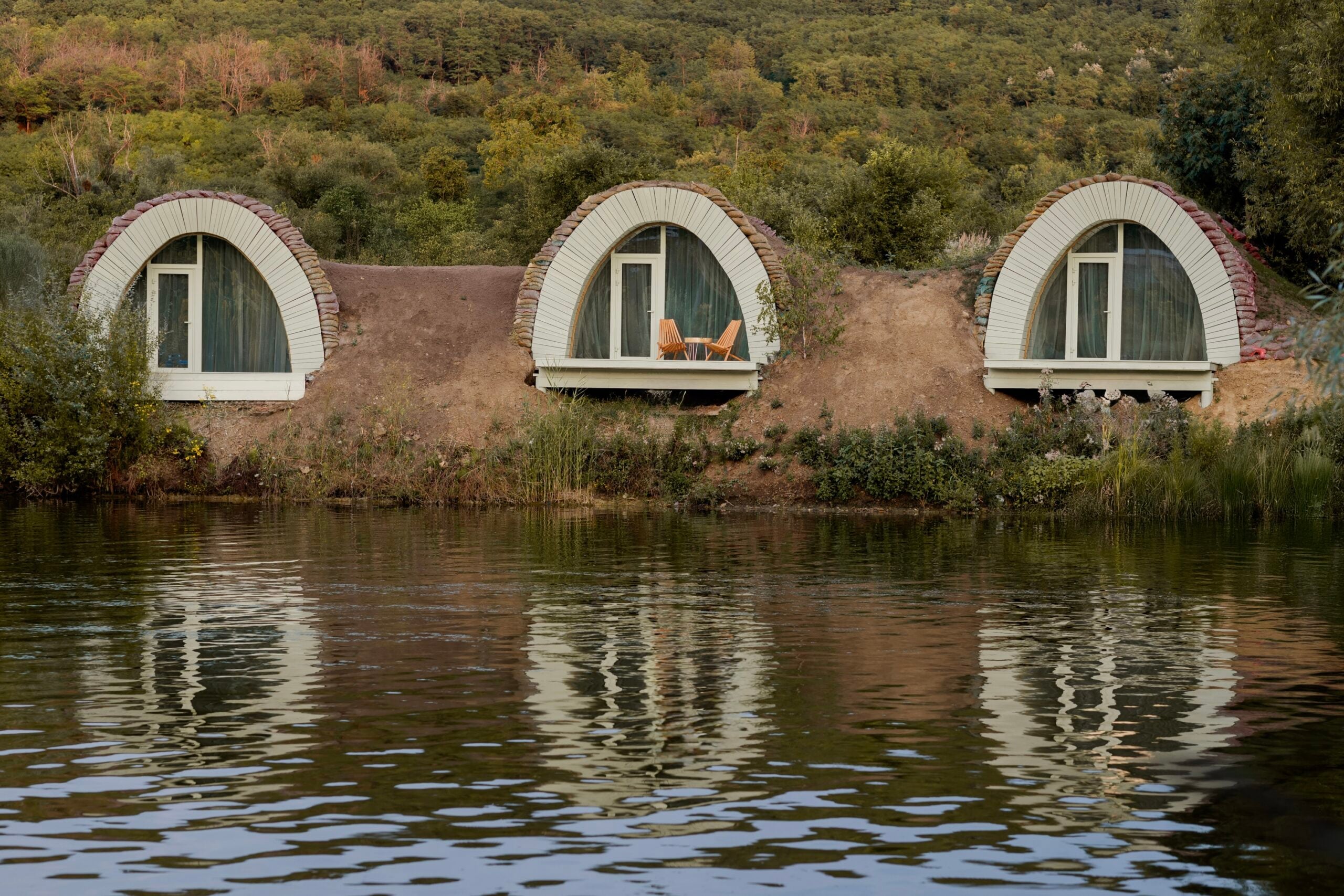
Mirza treats the reference to Tolkien’s bucolic fantasy as metaphor. For LH47, the hobbit is less a character and more an ethic—of humility, belonging, and ecological balance. “The ‘hobbit’ reference is both mythic and practical for us,” he says. “It evokes stories of homes that are purposeful yet unpretentious, deeply embedded in the land and culture.”
The early sketches, Mirza recalls, centered on “soft shapes and a feeling of enclosure balanced by openness.” From the outset, the work was guided by atmosphere, by the sensorial and emotional weight of form: “a quiet retreat, tactile materials, and the gentle threshold between home and nature.”
That sense of calm and elemental simplicity carries through every decision—from the thick straw-bale insulation that regulates temperature, to the clay plaster that breathes humidity in and out, to the locally-sourced timber frames. For LH47, “Our interest has always been in low-tech sustainability—methods and materials that are inherently ecological.”
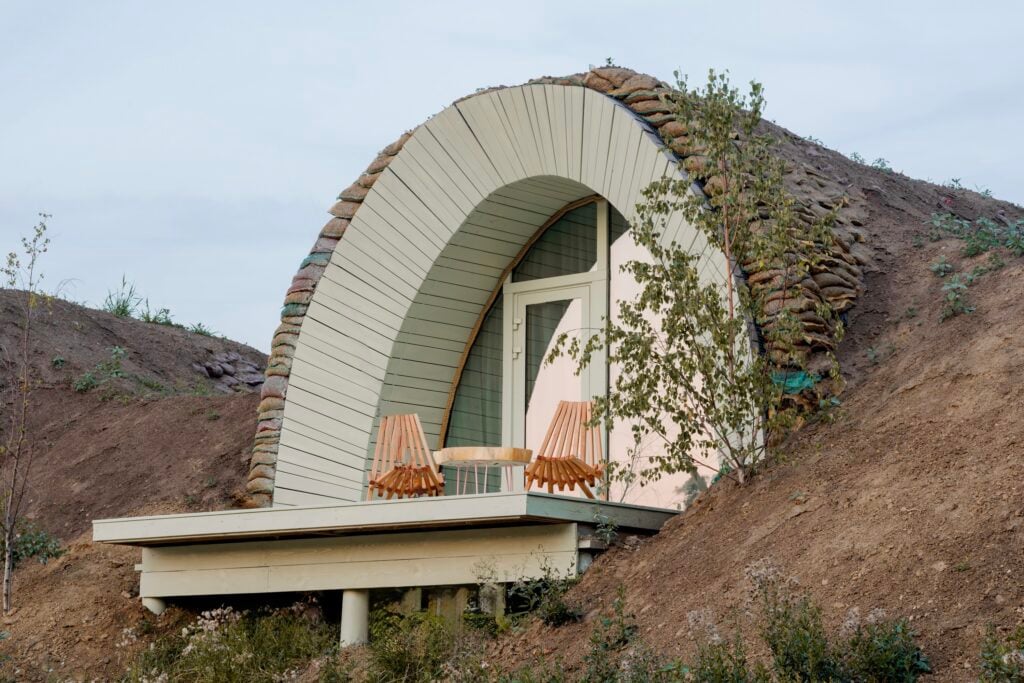
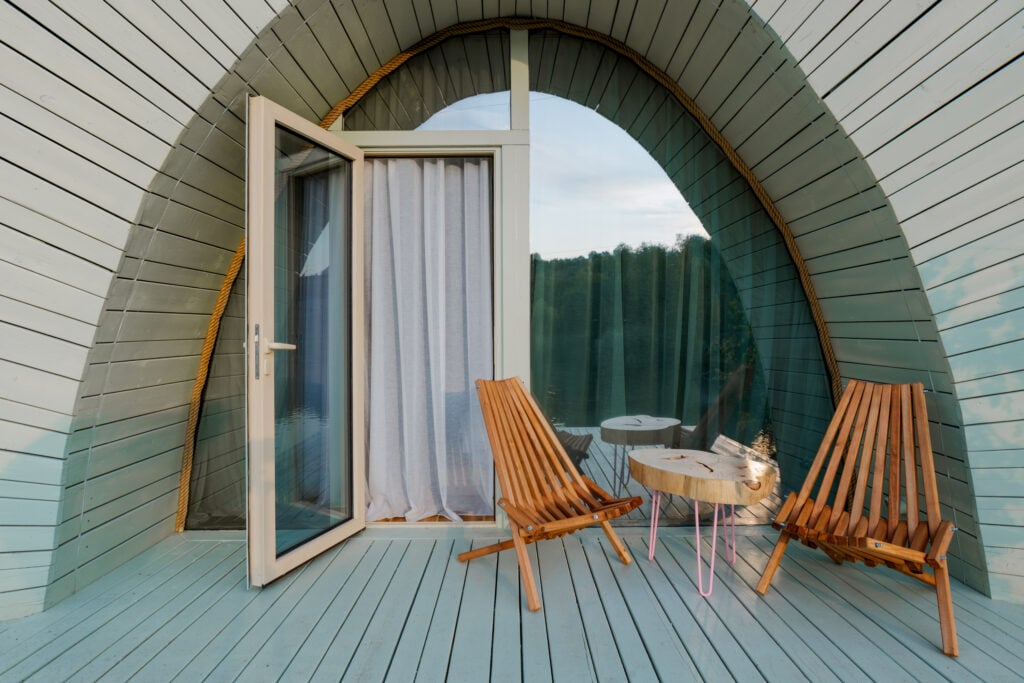
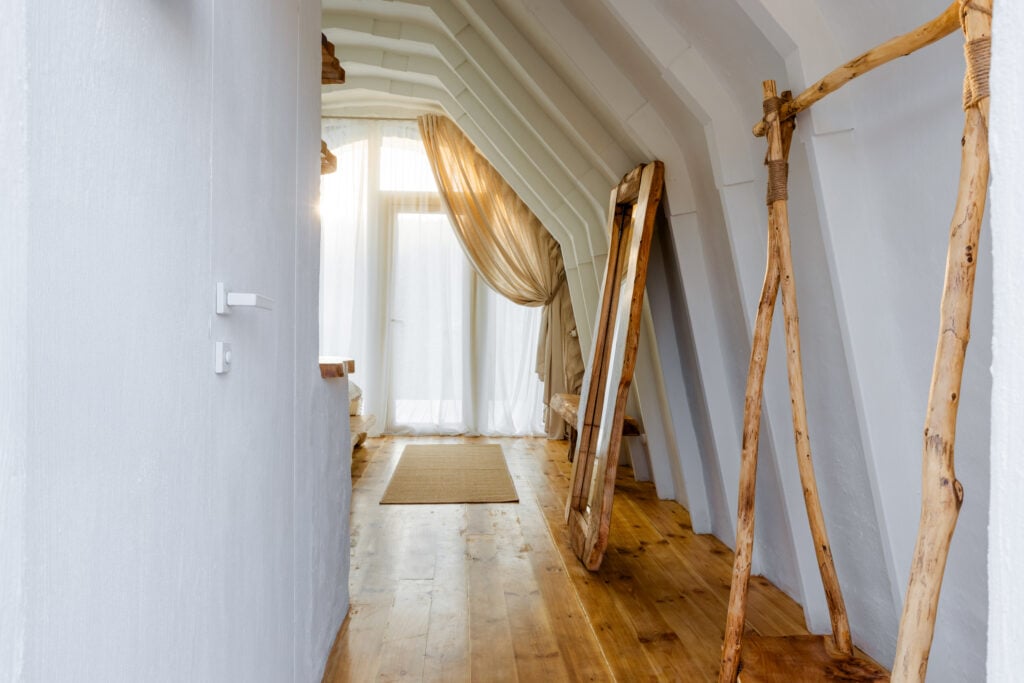
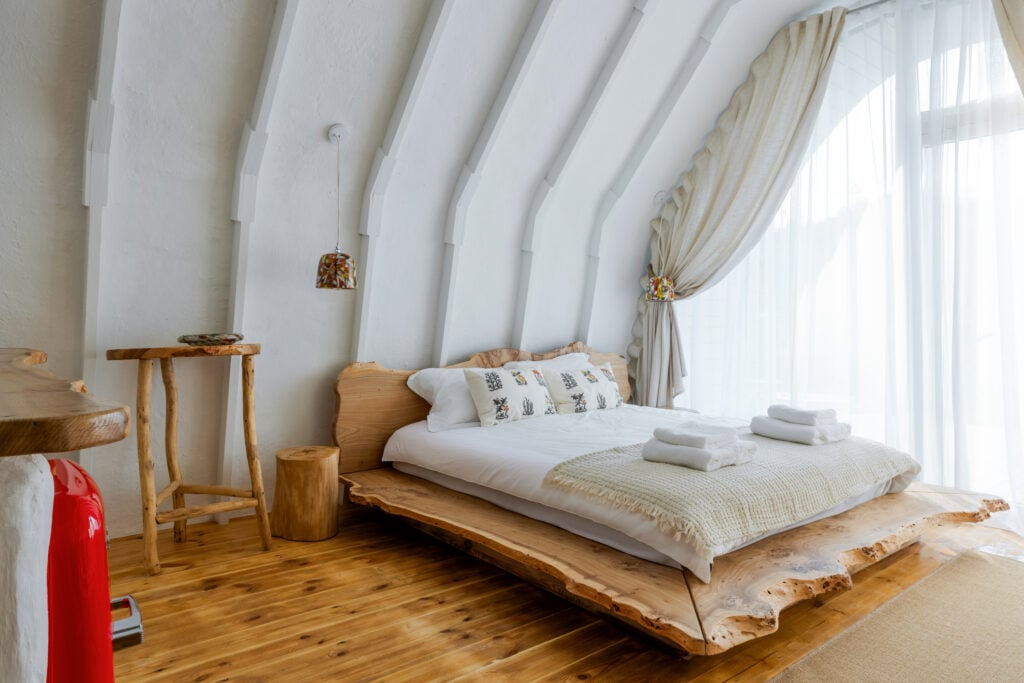
“Moldova is a land of hills,” Mirza reminds, this embeddedness is literal as well as symbolic. The three domed cabins are half-buried into the lakeshore’s natural contours, each opening out to the water through a large panoramic window. Each house reads as terrain, or form that emerges from it, its green roof blending with the surrounding grassland. “To disappear into the landscape,” Mirza says, “means making architecture that is listens—responsive to site, culture, and ecology. Nature itself becomes the protagonist.”
That responsiveness was not confined to design. The process of building, Mirza emphasizes, was a continuous conversation between architects, craftspeople, and site conditions. “Knowledge exchanges happened daily—about joinery details, clay mixes, or how to craft ergonomic furniture from local timber.” Specialists trained the team in straw-bale and clay plaster techniques, while interiors—ceramic lamps, timber beds, tactile finishes—emerged through collaborations with the local furniture studio Lemnaria and artist Eugenia Burlacenko.
“This kind of mutual learning revived skills and built strong community bonds,” Mirza notes. The project thus became part workshop, part revival of Moldova’s nearly forgotten material traditions. The studio realized the project independently as a signature initiative; a gesture of architectural entrepreneurship. The return on investment, calculated at in just a few years, proved something rare: that slow craft can still be smart business.
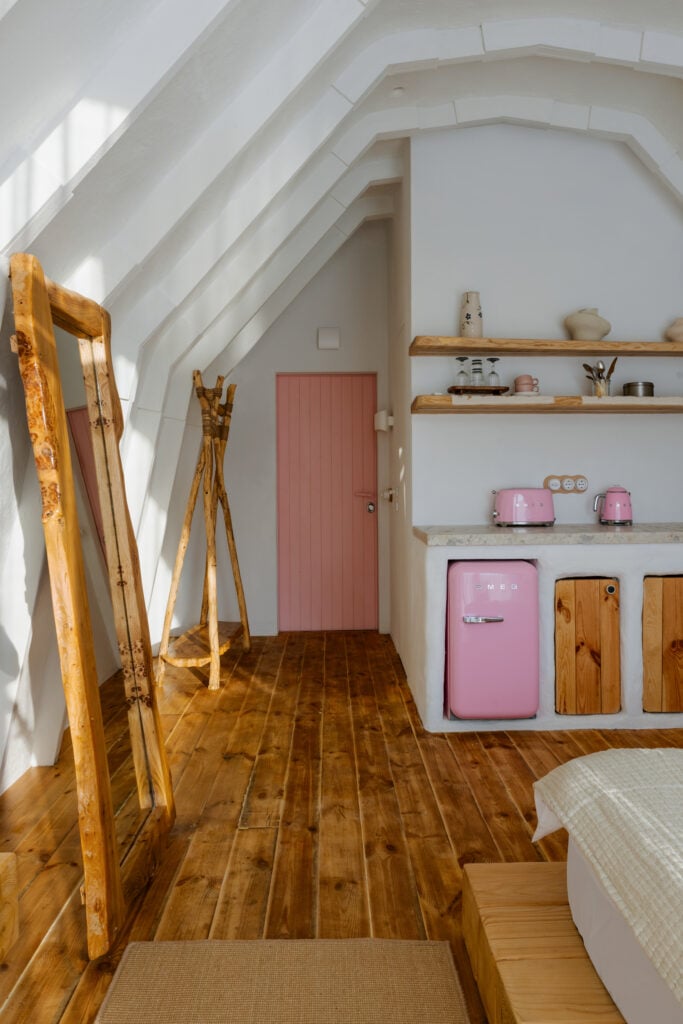
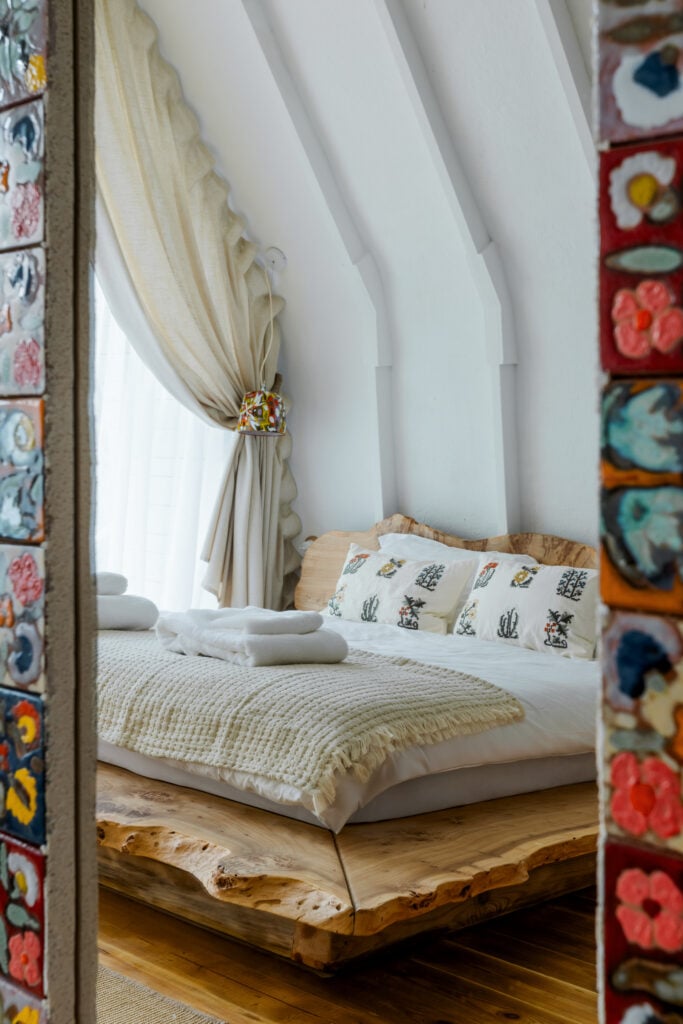
That openness to improvisation also defined LH47’s problem-solving approach. When the team faced difficulties stabilizing soil on the green roofs, a local builder suggested adapting agricultural netting (an everyday mesh used to safeguard crops from wind and erosion, and stabilize soil) instead of imported systems. “It was an improvisation, but it proved stronger and more ecological than our initial ideas,” Mirza recalls.
Inside, the Hobbit Wake Houses feel both ancient and modern—like something found rather than built. Rounded ceilings absorb sound, and the hand-finished walls diffuse light into a soft, mineral glow. “We wanted guests to feel a sense of deep comfort and quiet surprise,” says Mirza. “Visually, the cabins blur with the earth, but inside they offer warmth, textured surfaces, and hand-crafted details that invite touch and contemplation.”
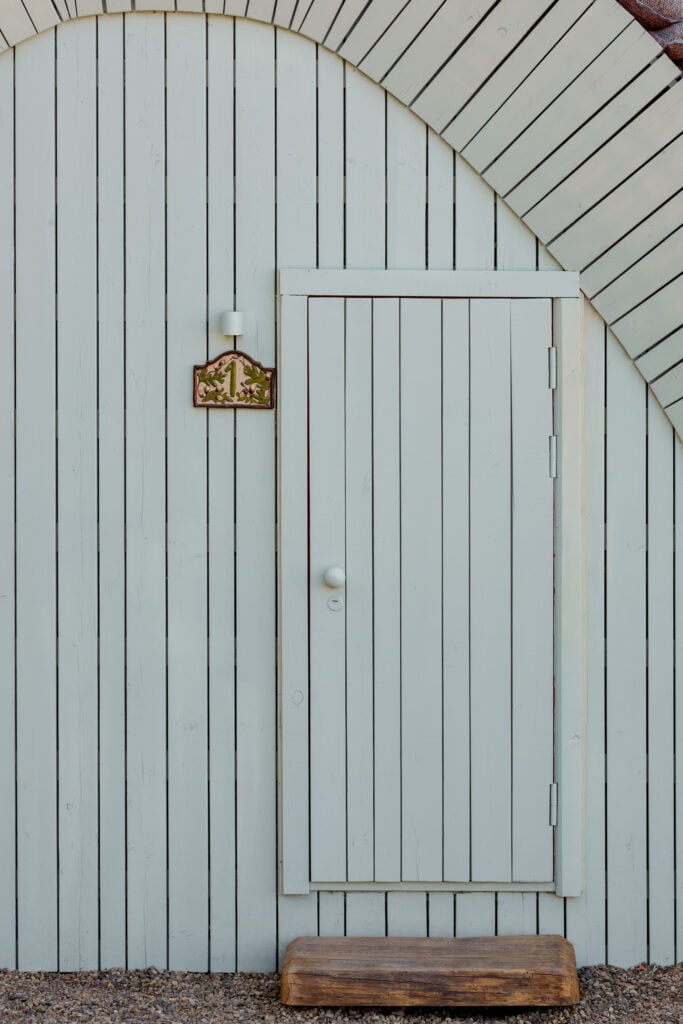
The experience is sensory, almost monastic: an architecture of delay, where small gestures like the curvature of a bench and the weight of a timber door feel magnified by silence. Rather than commanding attention, the architecture teaches presence.
Would you like to comment on this article? Send your thoughts to: [email protected]
- No tags selected
Latest

Profiles
Beyond Symbolism: Farshid Moussavi on the Ismaili Center in Houston
The cultural building and community center reinterprets Islamic design philosophy through geometry, climate-responsive design, and generous civic spaces.

Projects
Art Stages Built Into A Hillside & An Old School
PS21 and The Campus Upstate are reimagining cultural infrastructure from within.