



June 18, 2026
Is Structural Stone the Key to Decarbonizing the Built Environment?
Taha, who founded Groupwork architecture practice in 2003, chose volcanic rock from Sicily and Norway to build the load-bearing stone exoskeleton of a trio of towers with raked profiles on London’s Finchley Road in collaboration with Webb Yates Engineers, which are due to complete in May. The tallest of these residential structures reaches ten stories, a Mount Etna-like peak in the northwest of the city.
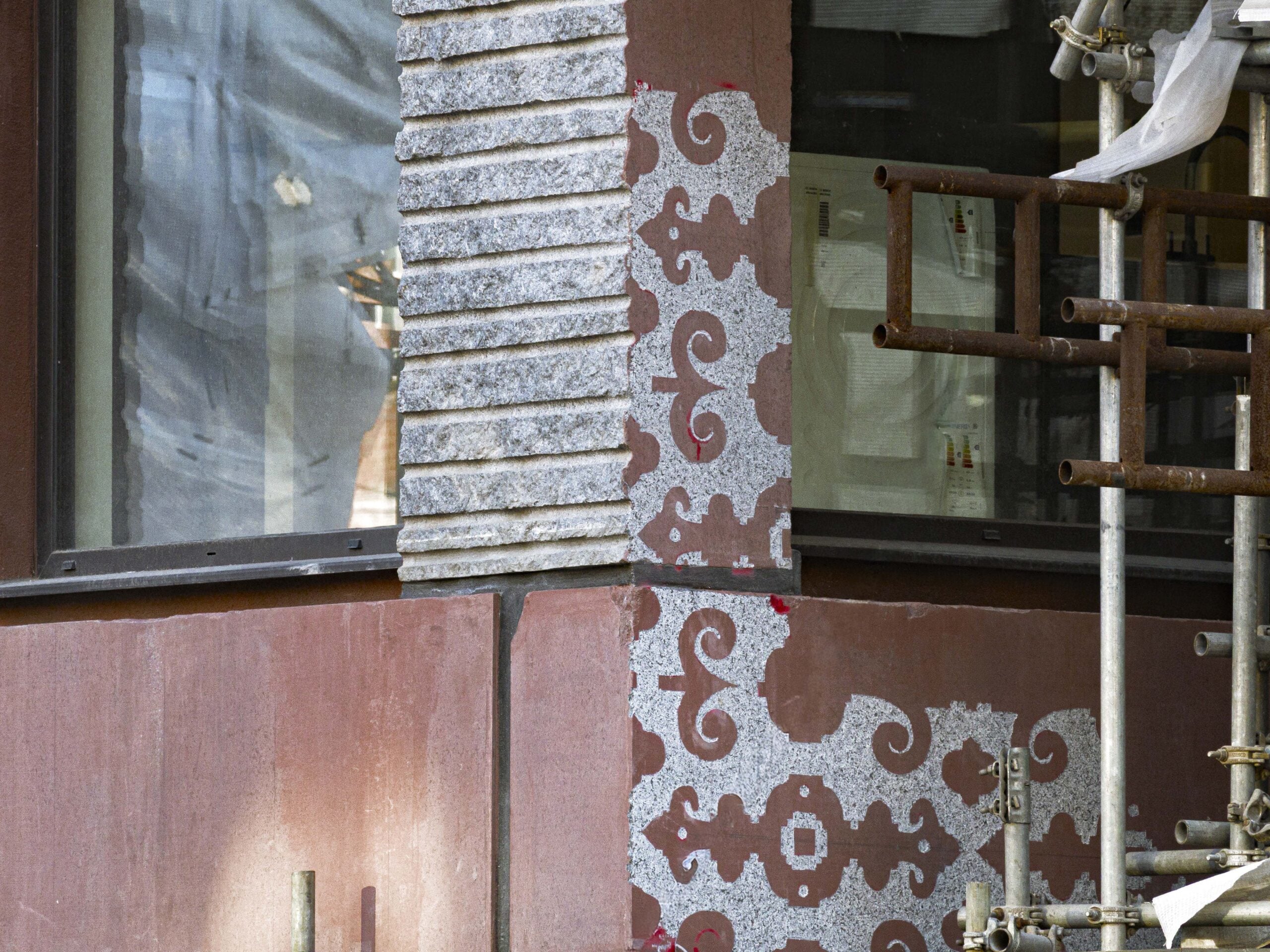
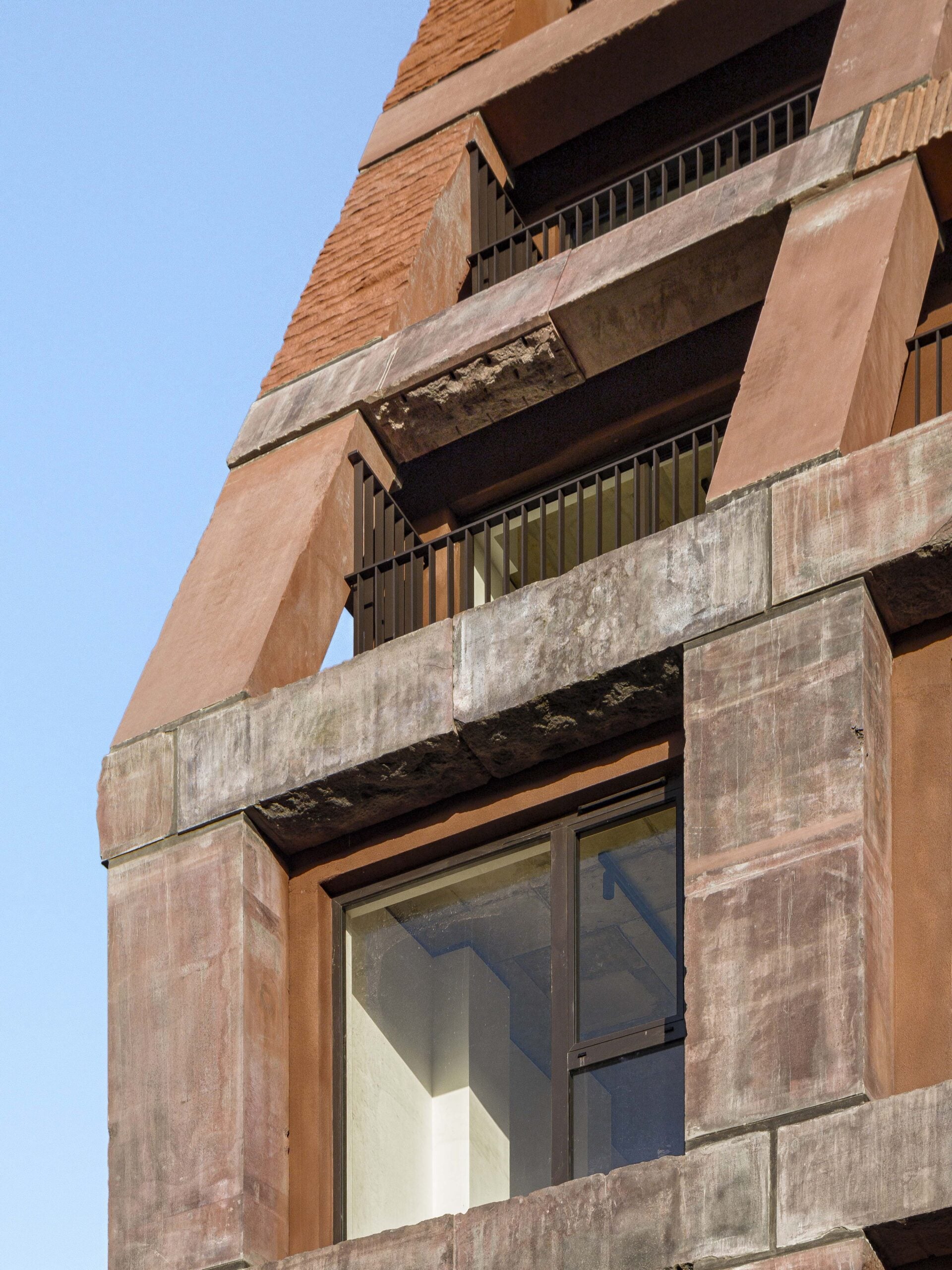
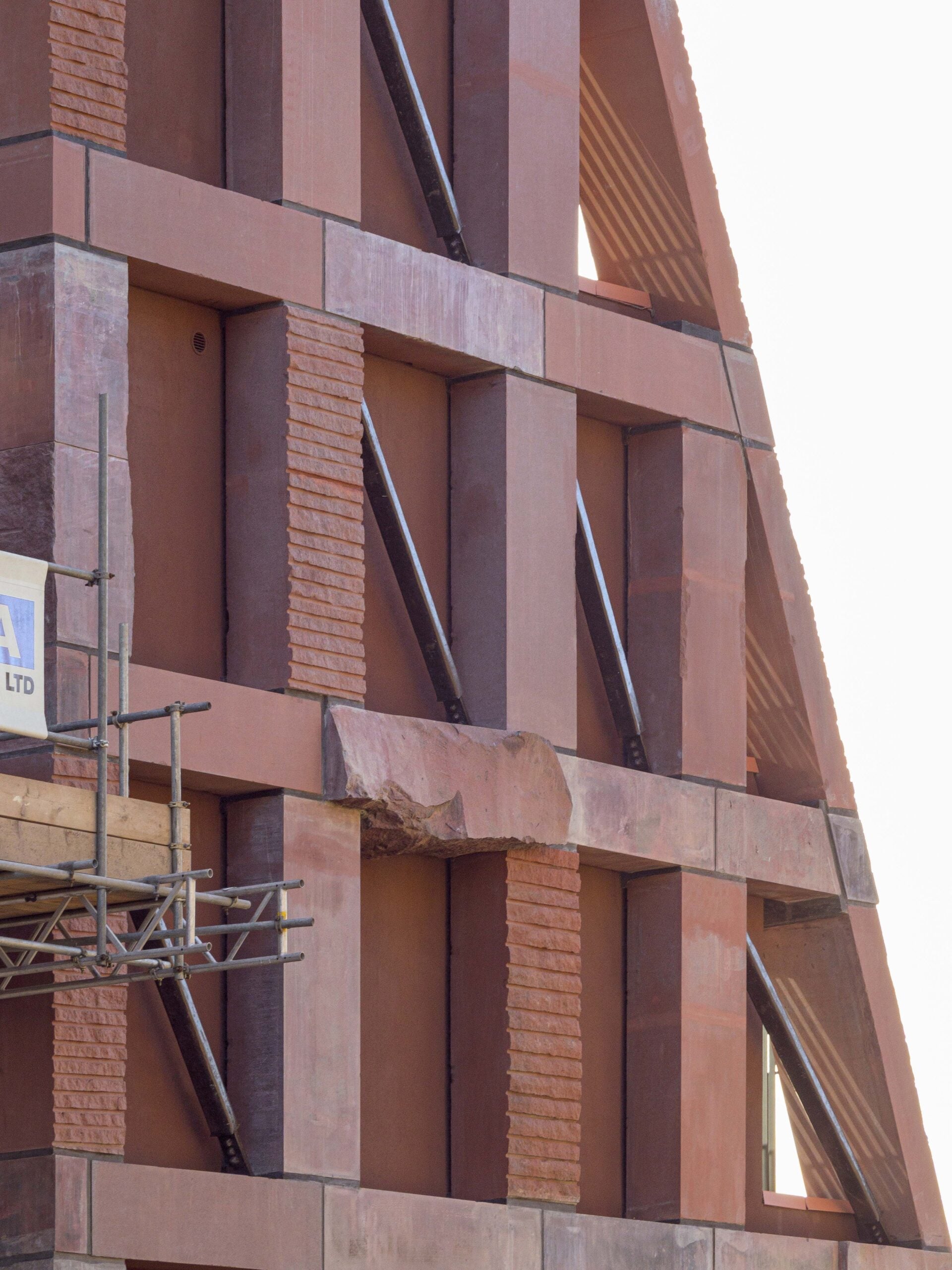
“We’ve used basalt, which has very high heat resistance and compressive strength,” says Taha. “It meant we could use a lot less of the material than if we had used limestone, saving the client money and lowering transport emissions.”
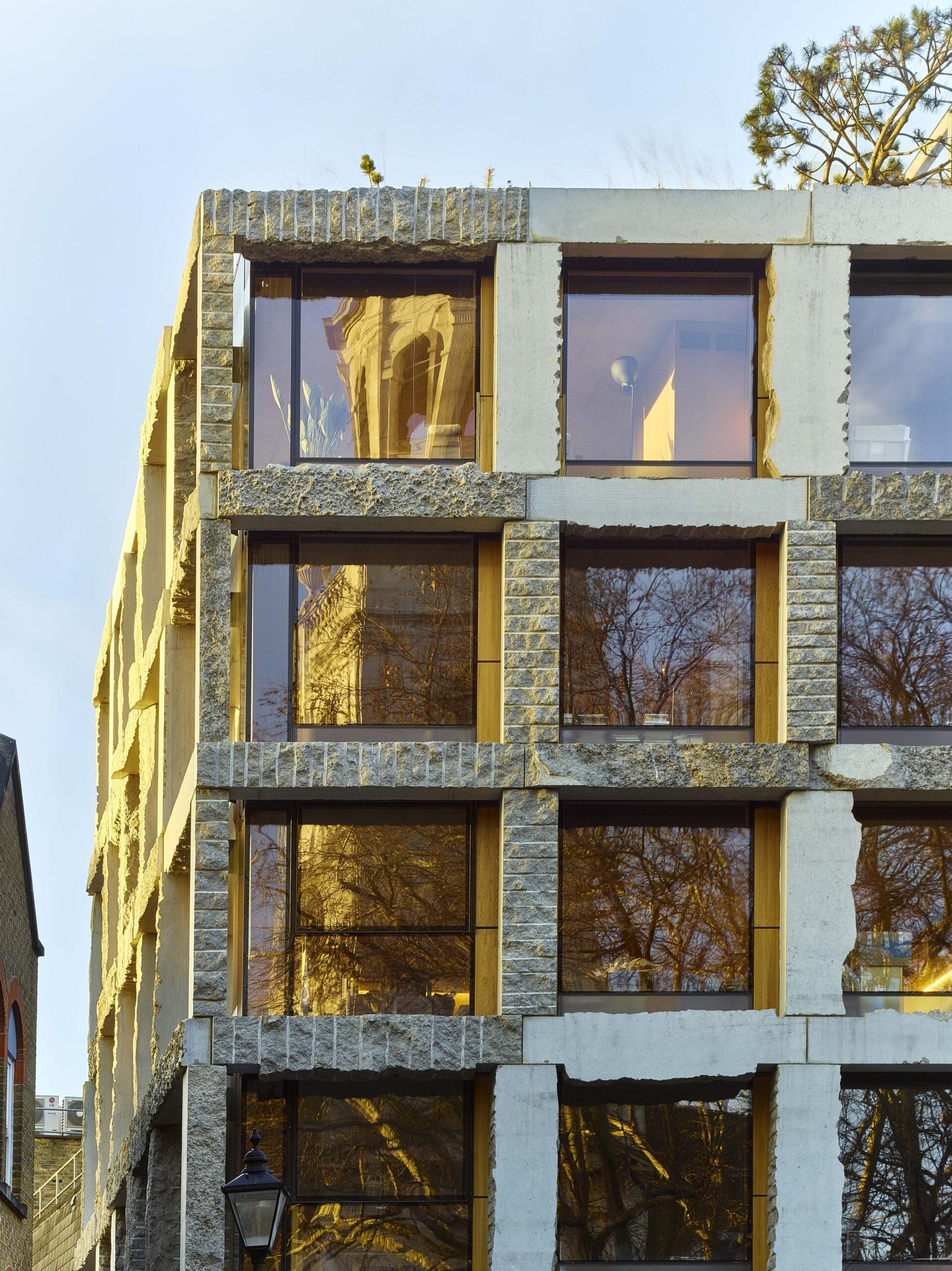
The building is an evolution of his Clerkenwell Close building, a seven-story, mixed-used landmark with a limestone superstructure that once housed his home and office. Clerkenwell Close has a rougher, more expressive face to Finchley Road’s smooth facade. When Groupwork couldn’t find quarries that could cut stone to the requisite size in the UK, he looked across the channel to those spanning the same limestone seam in France, a country that has maintained some of its stonemasonry tradition. This is thanks, in part, to a boom in building with structural stone in the post-war period due to a shortage of steel and concrete.
“On our quarry tour we discovered that the giant slabs coming out of the ground weren’t the homogenous tones and textures you see on the small samples that arrive in your office,” he says. “They have fossils and bands of green and orange in them.” Taha was drawn to the pieces with a rich patina. “We wanted to reveal the spirit of the material in the building’s superstructure,” Taha adds. Modern technology meant that the columns and beams could be cut in a way that minimizes waste.
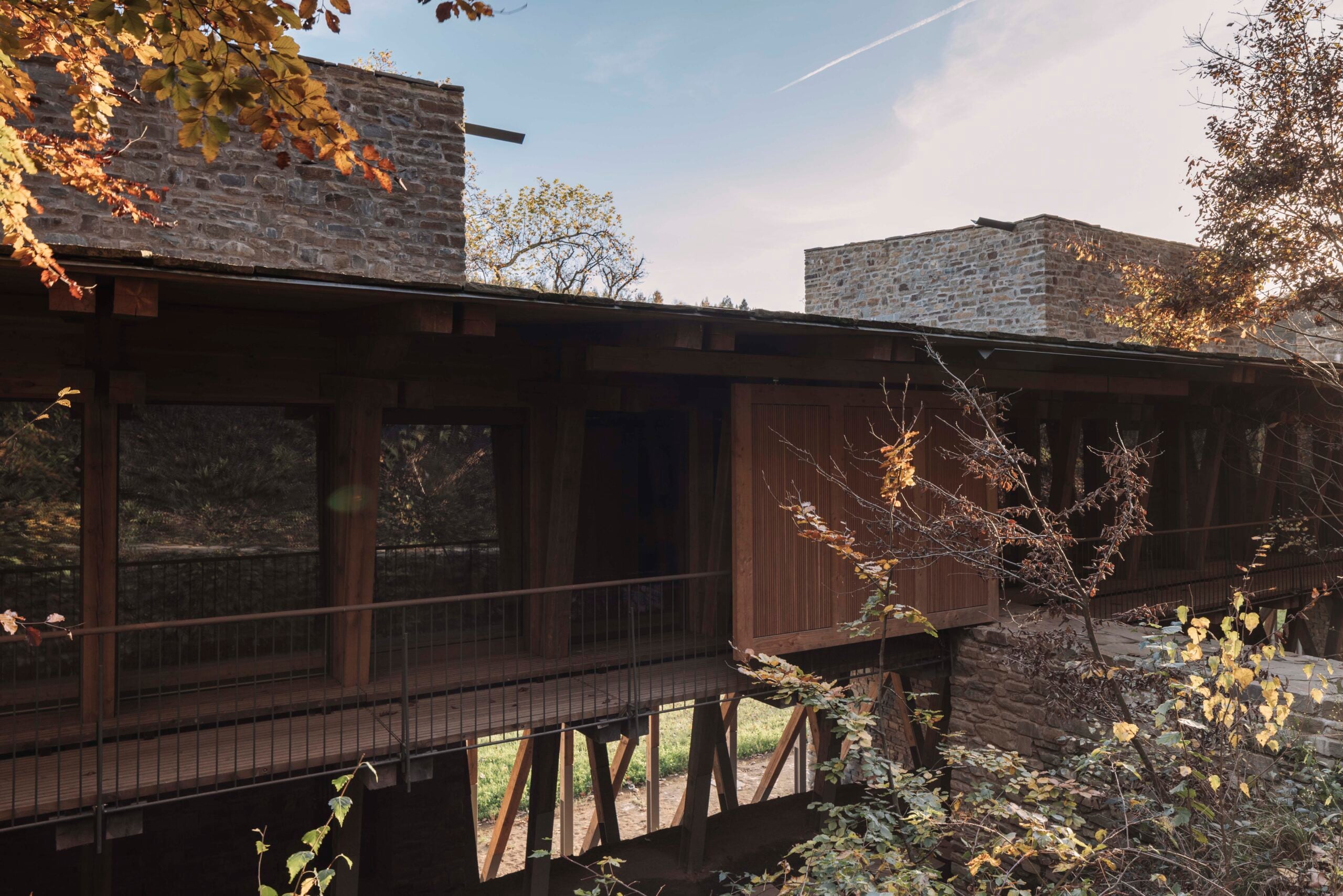
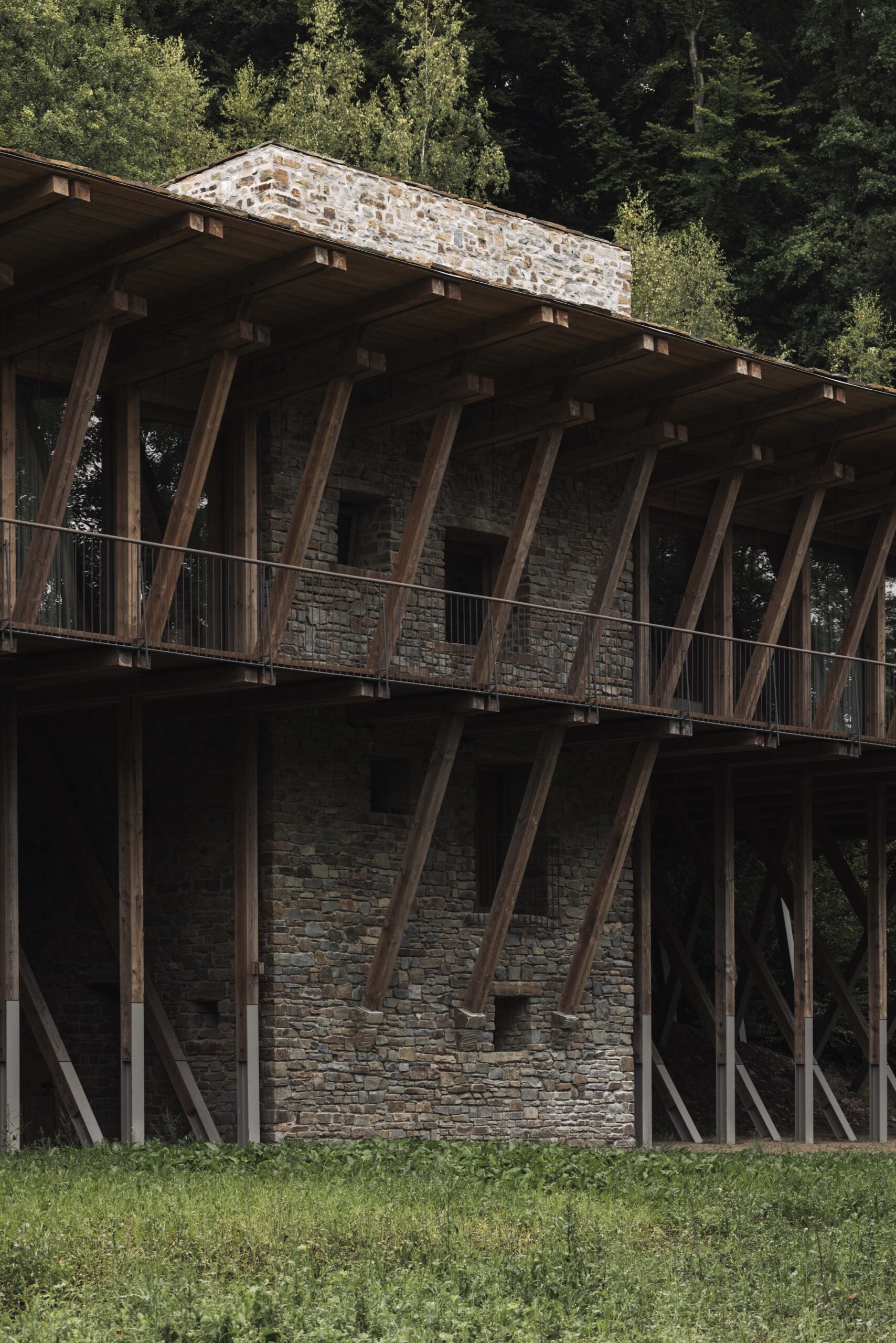
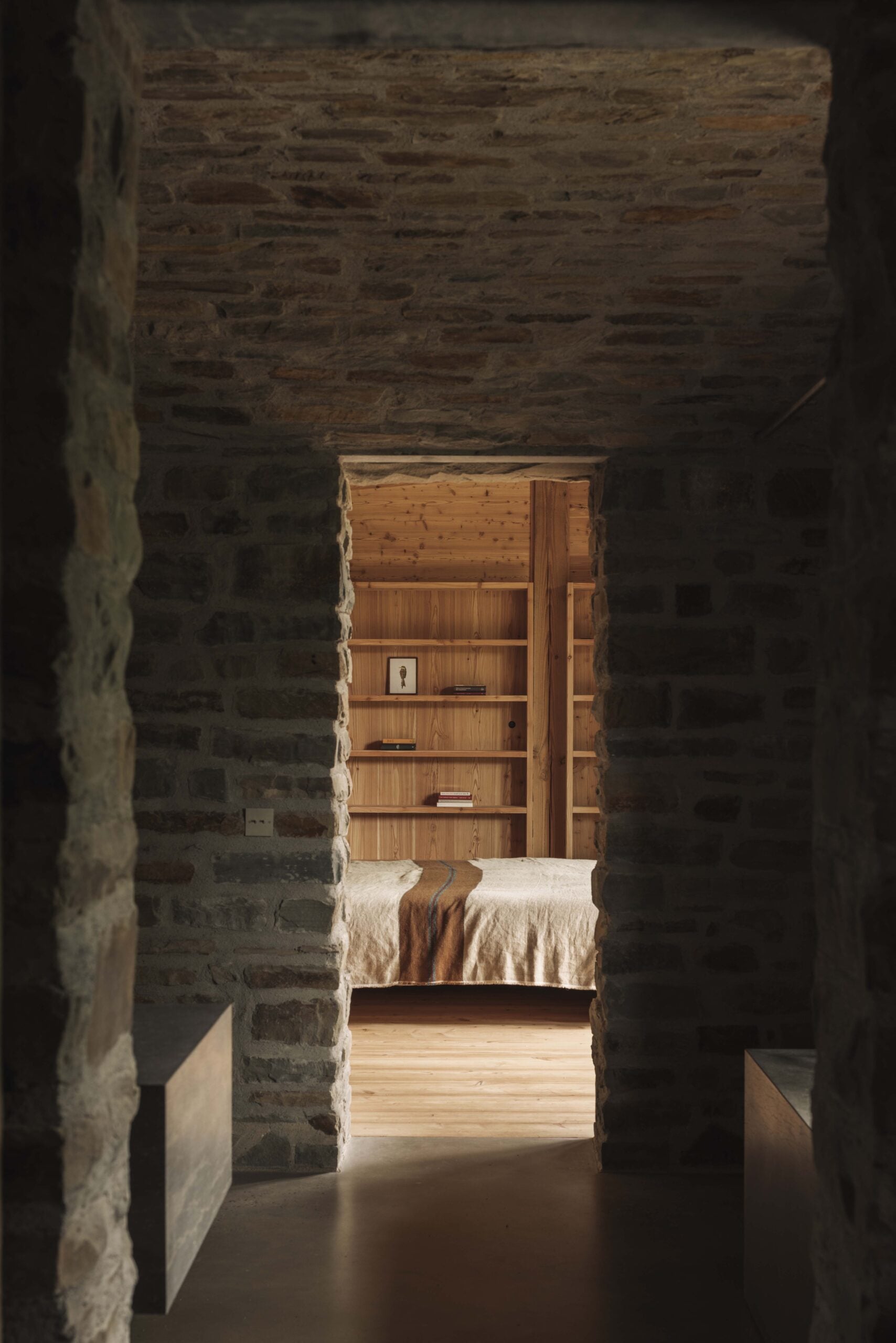
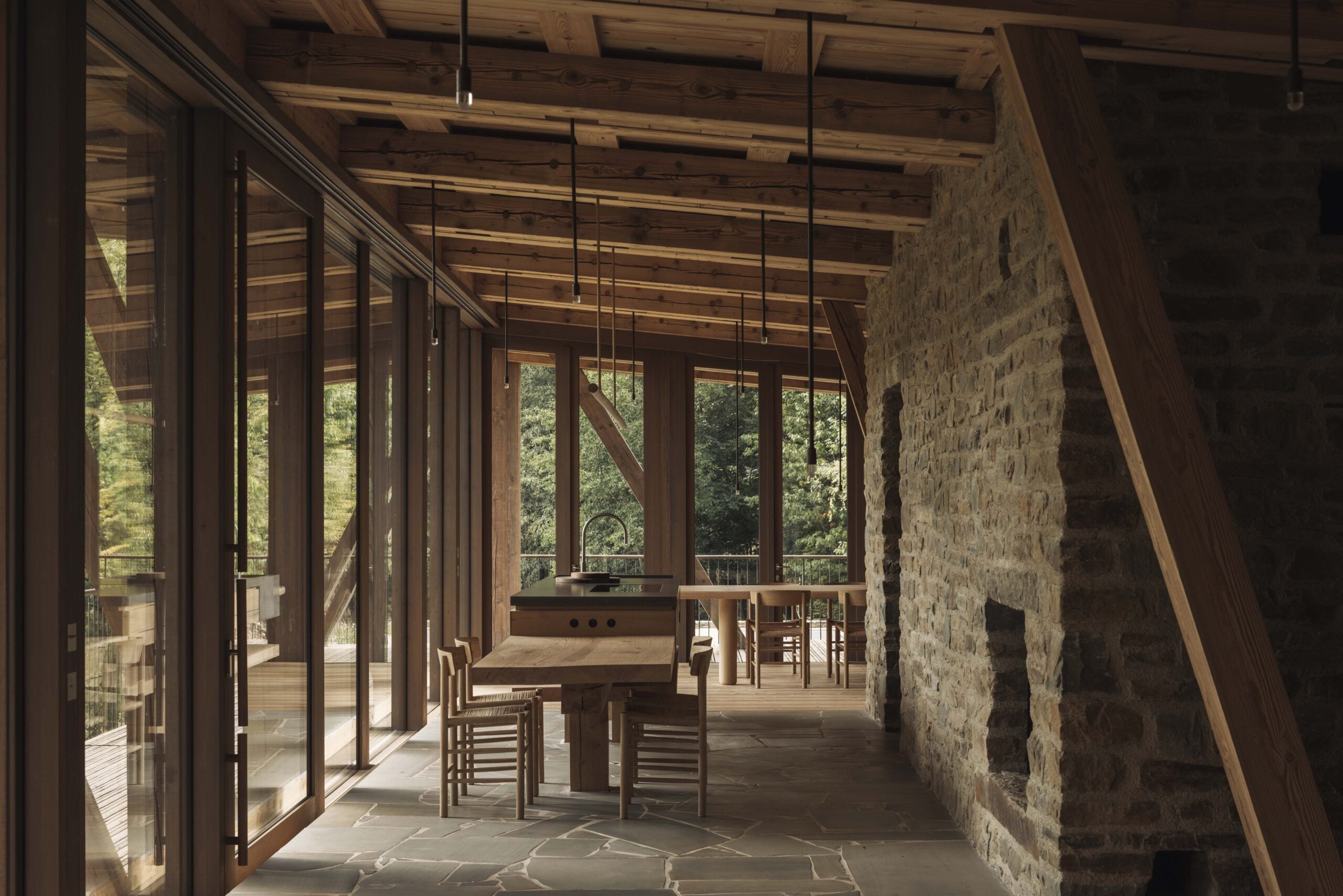
Single residential dwellings—freed from the regulatory restraints of multi-story towers—are often a good test bed for ideas that can be applied more broadly. That was the thinking behind Woodstock House, a private home by Brussels practice BC Architects & Studies & Materials in a forested valley in Belgium’s Ardennes. Cofounder Wes Degreef challenged himself to use materials from within a 30km radius and forgo concrete altogether—a seemingly modest goal, but in a construction world that privileges concrete, steel, and clay bricks, it is trickier than it sounds.
Woodstock House’s structural stone walls are made from Grès du Condroz, a Belgian sandstone with varied tones ranging from green and grey to ochre and brown. These are founded on the schistous bedrock through layers of compacted gravel, an ancient technique in the region. Its three stone towers—which form the core of the house’s living spaces—were built a la chaux (with lime), another vernacular method that eliminates cement. These support the timber decks of this ship-like home that is both low in embodied carbon and deeply in tune with its surroundings, the stone withstanding the swelling waters of the adjacent river. “In every project, we explore how we can harness local materials and crafts,” says Degreef, whose practice works with bio-, geo- and urban-sourced materials. “But it’s also about showing that you don’t need concrete to build a house.”
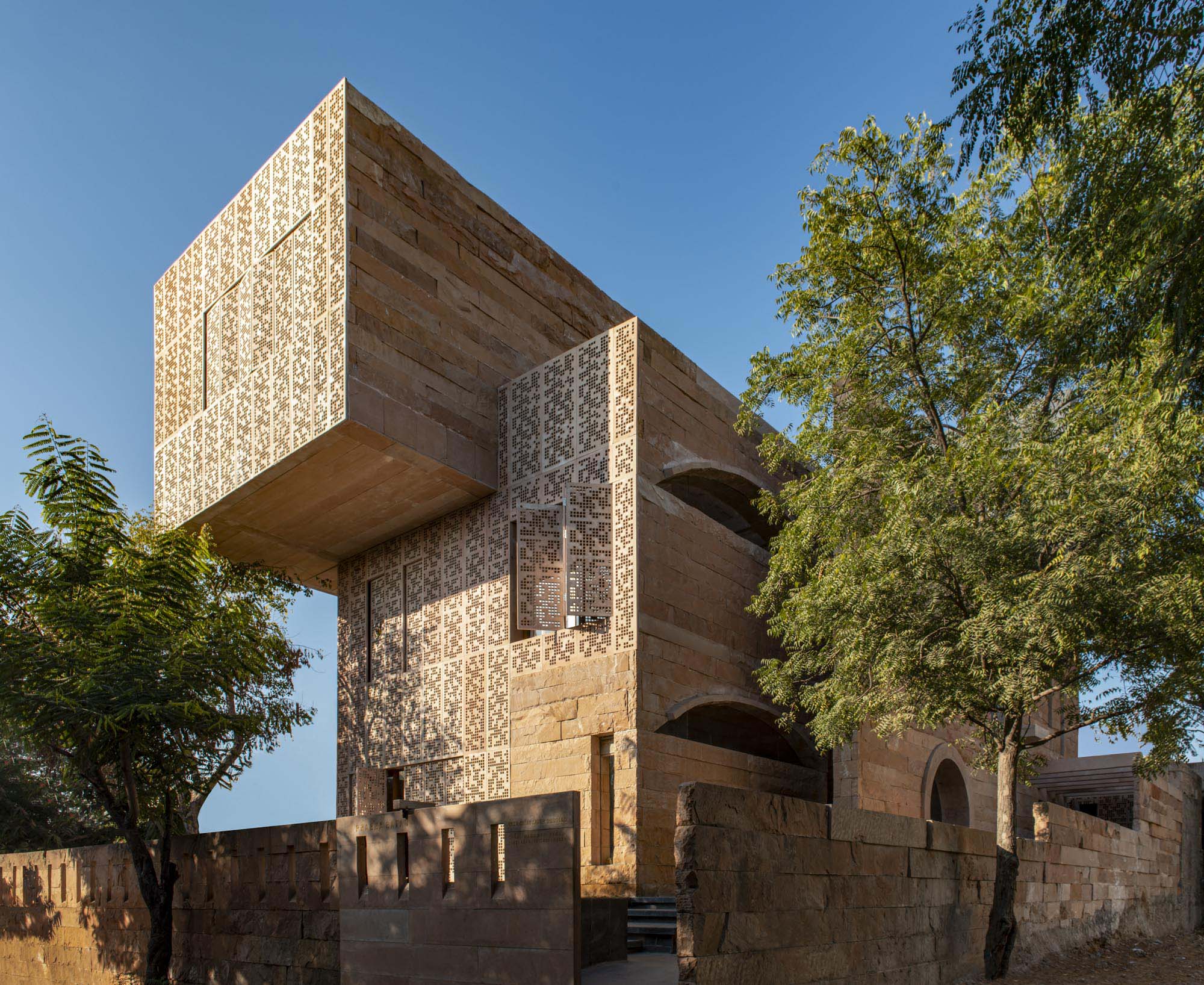
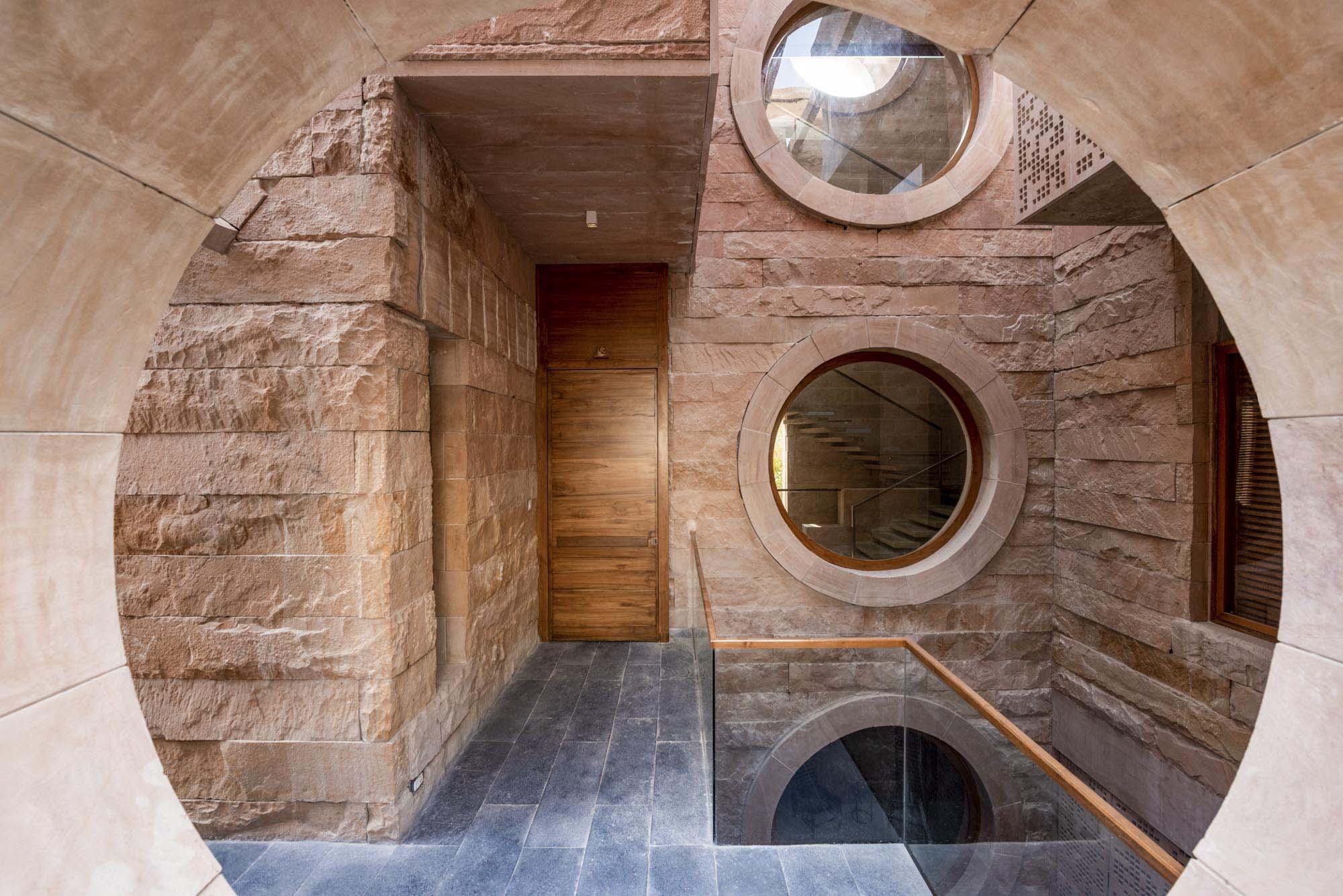
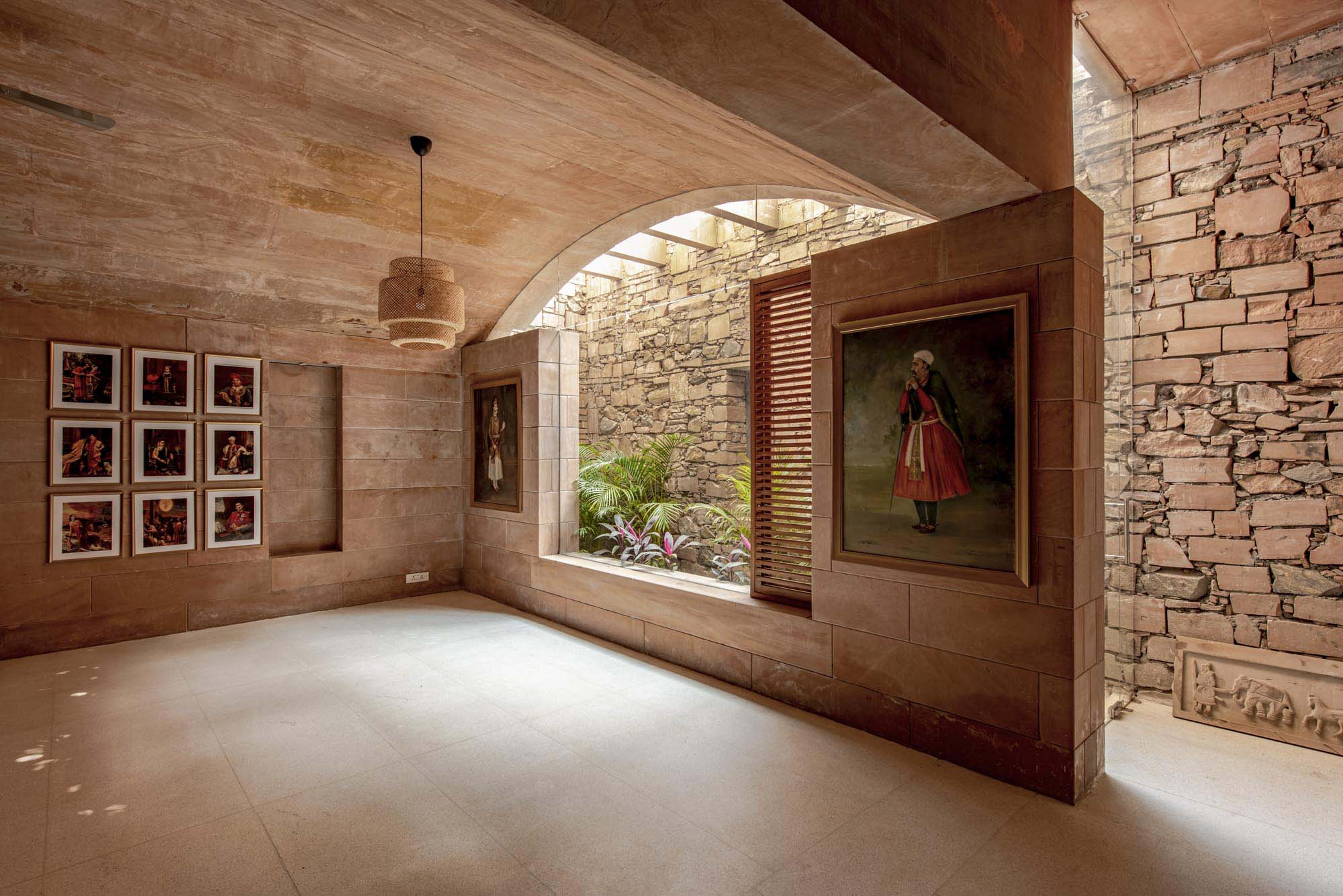
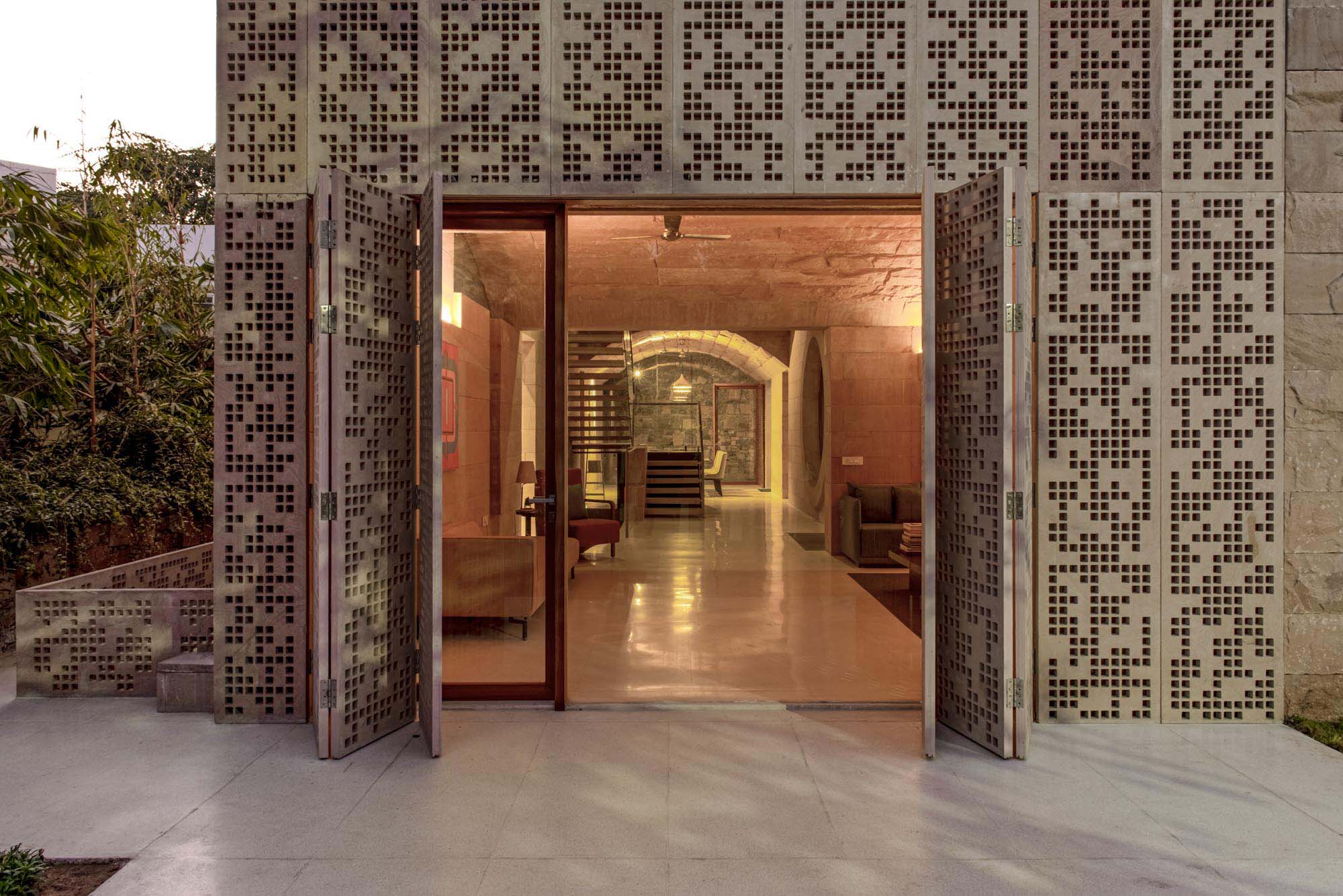
It’s a proof of concept, much like the Stone House by architect Kamal Malik in the Indian city of Jaipur, for which he has also swapped cement with lime. It is built with the same local salmon-pink sandstone as historic landmarks, such as the 1799 Hawa Mahal in the city. To echo the 18-inch-thick walls of historic structural stone houses but reduce material consumption while creating an effective thermal break, he created two six-inch walls with a six-inch cavity, bonding them together with gun metal ties for earthquake-resistance—sometimes cited as a problem for stone buildings. The result is a cool and colorful tribute to the city’s architectural legacy that also reduces material consumption by 30 percent.
But structural stone is not just the stuff of luxury private homes and residential towers. On Spain’s Balearic Islands, the government’s local housing agency Instituto Balear de la Vivienda (IBAVI) has been reviving the tradition of building with marés—a sandstone formed in the Pleistocene by the compression of sea-sand and seashells—from the islands, road-testing it on small social housing projects that can later be applied to larger buildings. IBAVI architect Carles Oliver estimates that marés reduces carbon emissions by 60 per cent compared to concrete, while its porosity regulates humidity and temperature, in conjunction with cross-ventilation and Neptune grass insulation. The vaulted, flexible living spaces in its project in the rural Mallorcan village of Santa Eugènia must surely be among the world’s most beautiful social housing units.
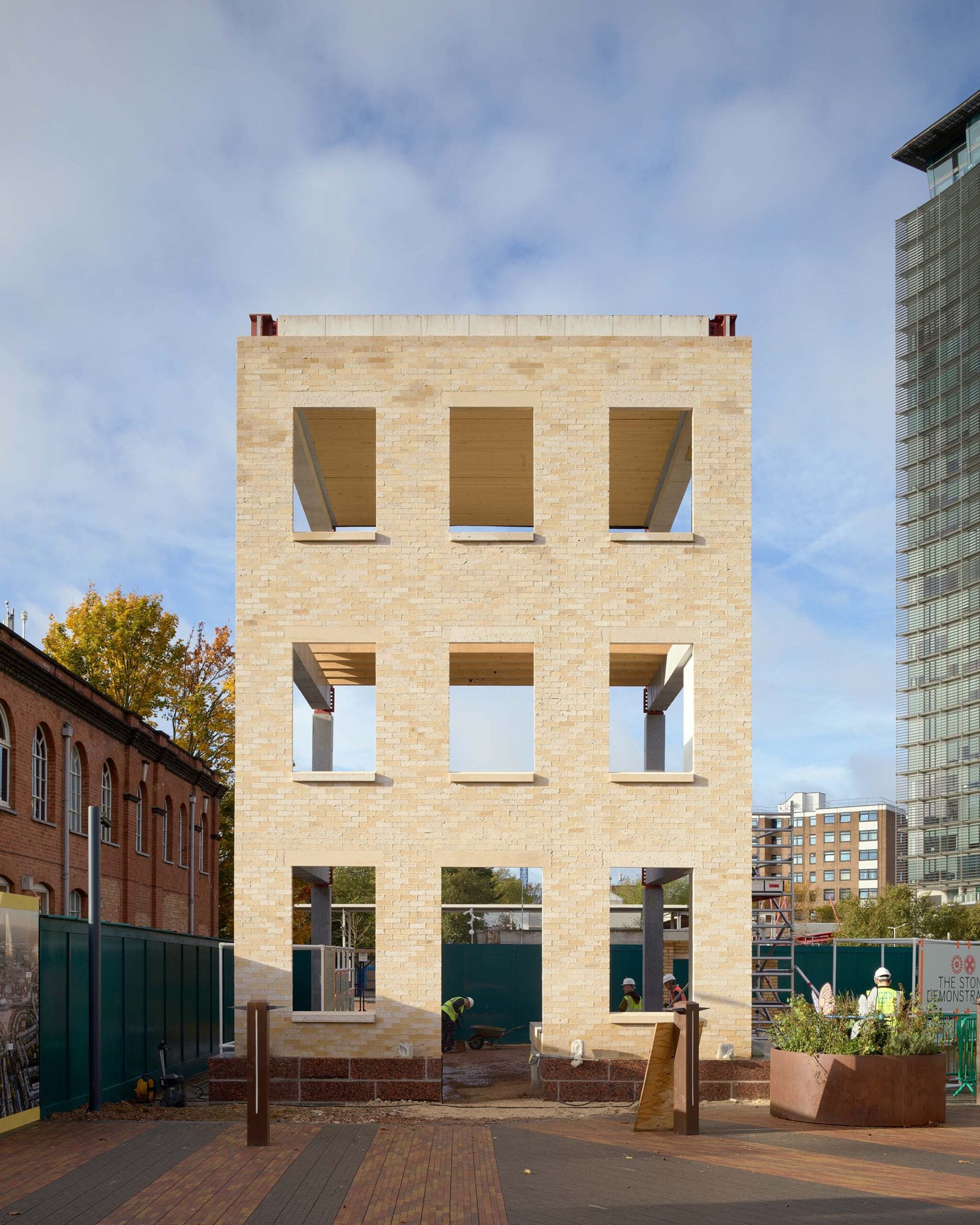
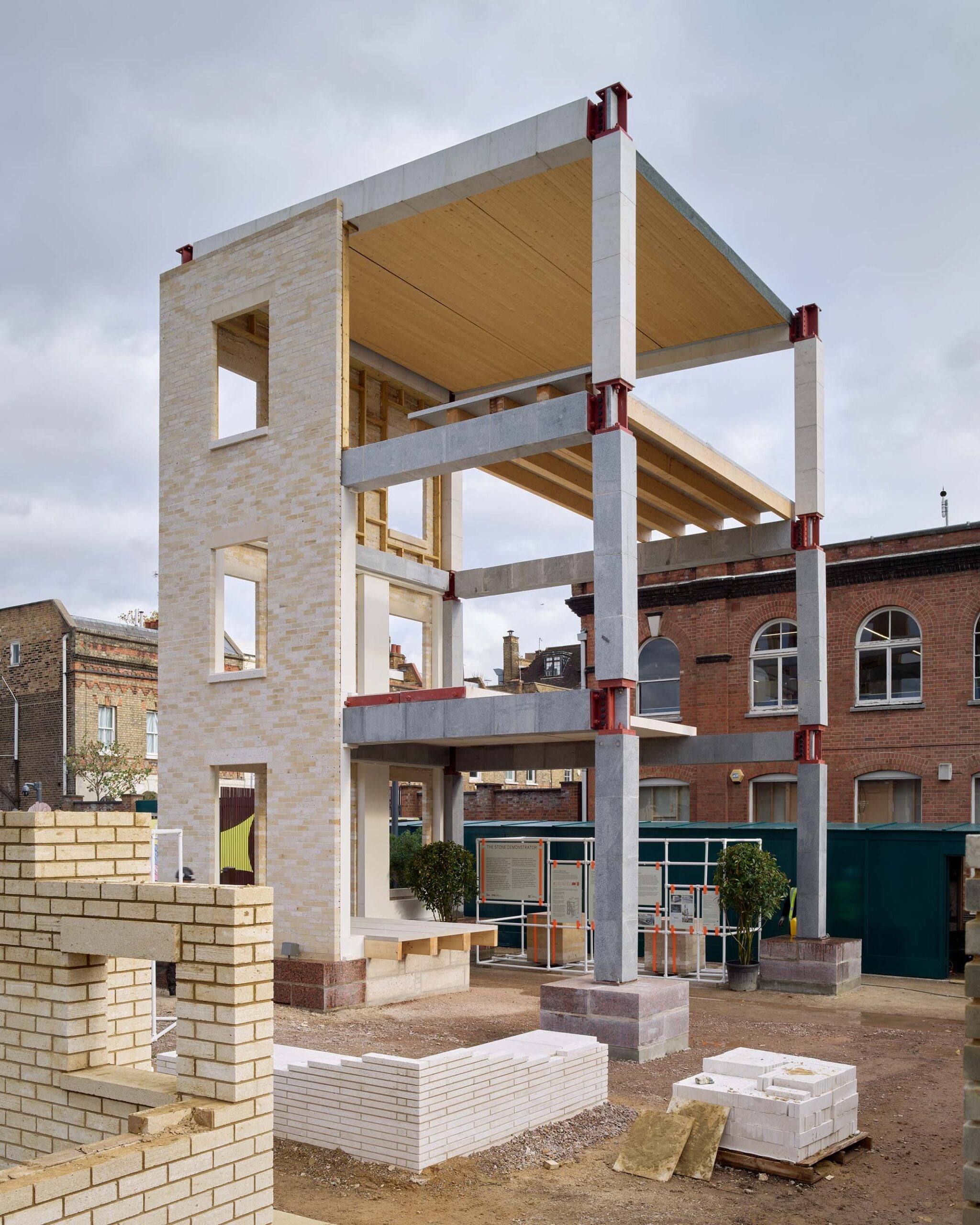
To accelerate the uptake of stone and simplify construction processes, Amin Taha believes stone bricks are the key. Kiln-fired clay brick production generates some 500 million tons of CO2 emissions across the globe, but stone bricks require minimal processing, and, unlike the ingredients of their clay counterparts, they can all come from the same quarry. Amin Taha estimates that stone bricks produce up to 98 per cent less carbon emissions than fired clay bricks and—when cut from discarded stone, that figure could be even higher. There are practical considerations, too. “You can immediately hand those to a bricklayer—they don’t require specialist training to use,” he says.
Last December Groupwork designed The Stone Demonstrator, a three-story prototype to show off the possibilities of stone bricks and pre-tensioned beams and columns, which still stands on the Earls Court Development Site in London. This collaboration with Webb Yates Engineers, Arup, and the Future Observatory (a research program at London’s Design Museum) is deliberately simple in form to show the conservative construction industry that switching to stone is a no-brainer. “We didn’t want to design a spectacle,” says Taha. “It’s a dumbed down library of options that leaves nothing to the imagination.”
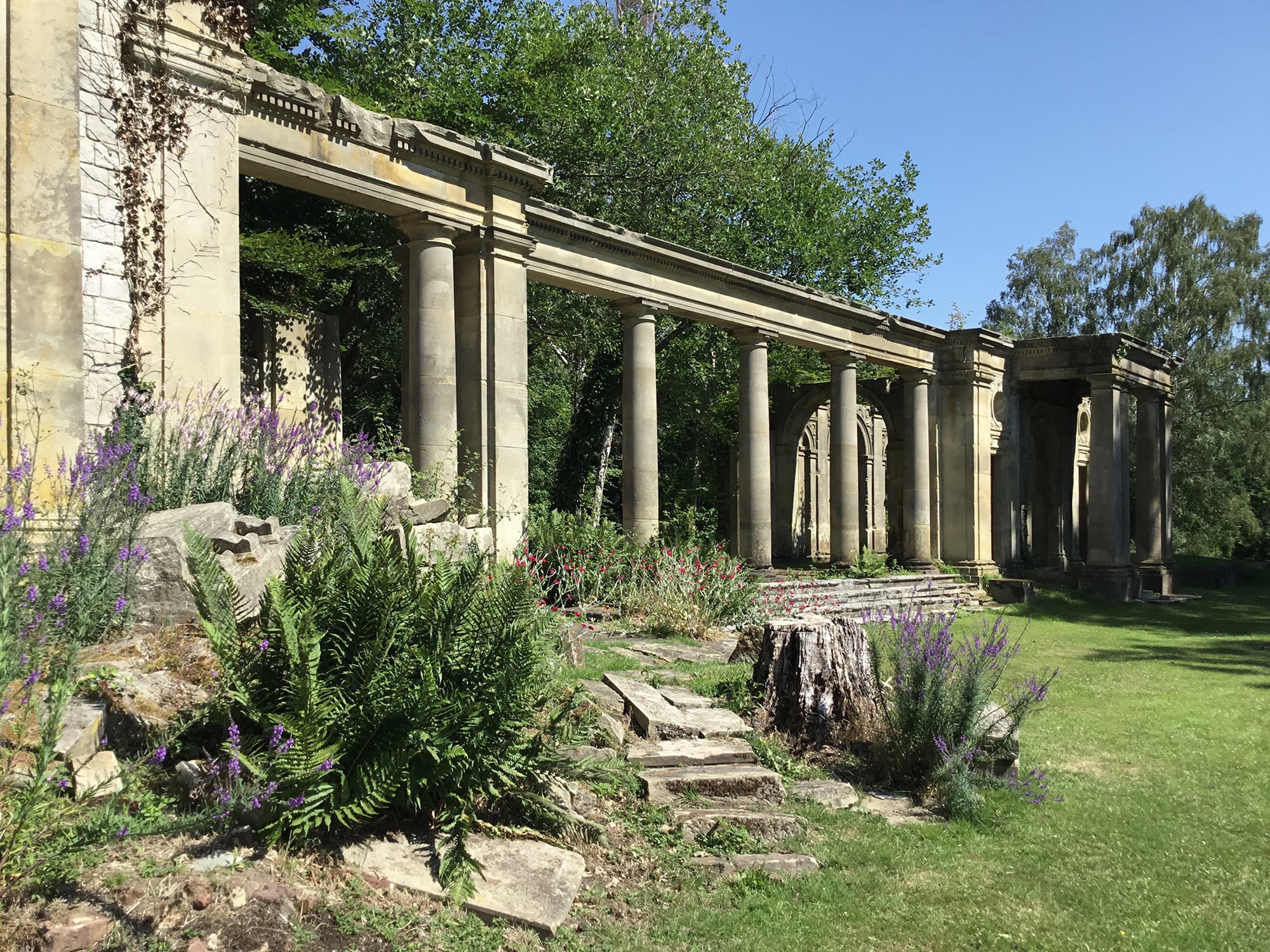
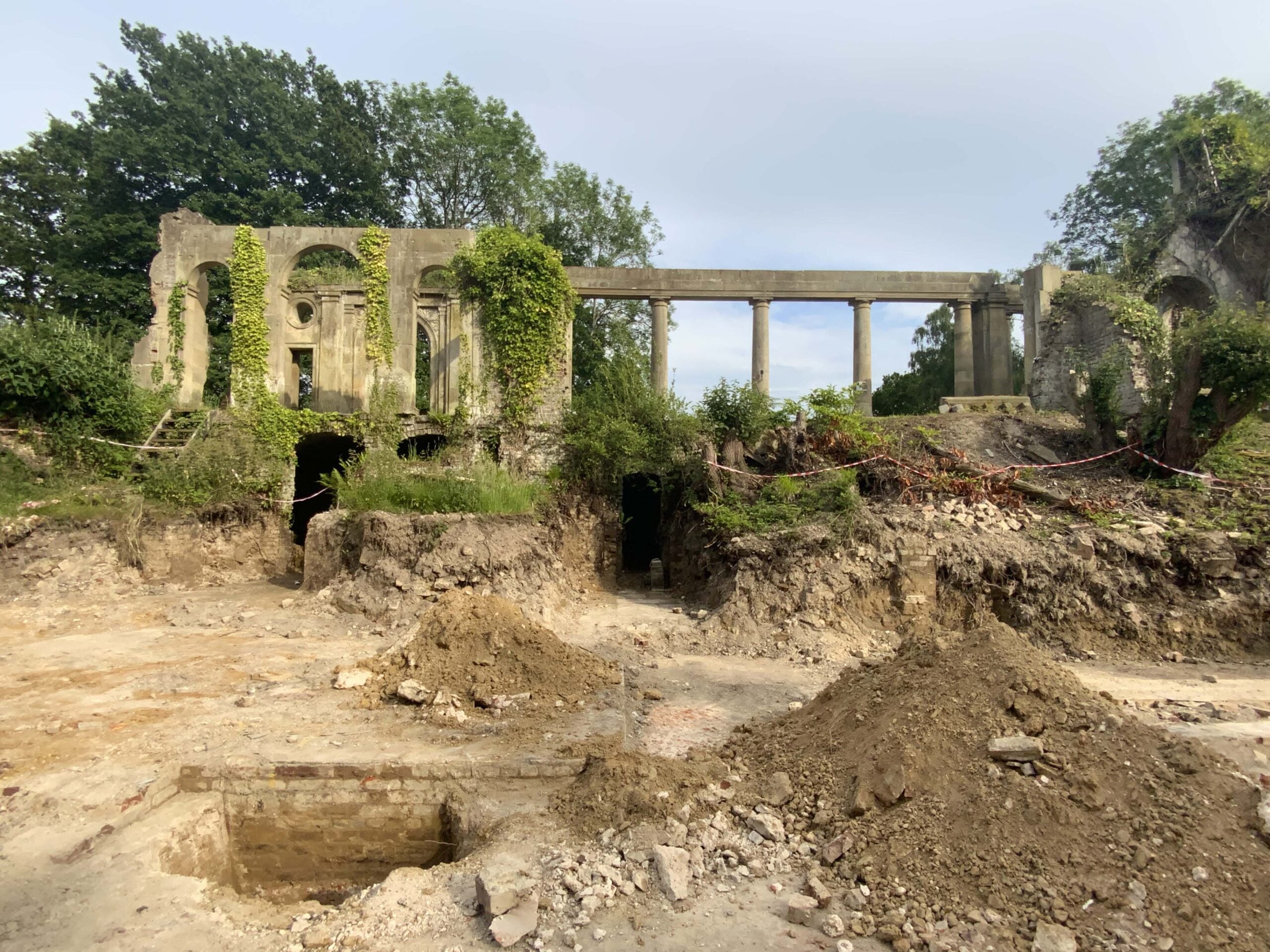
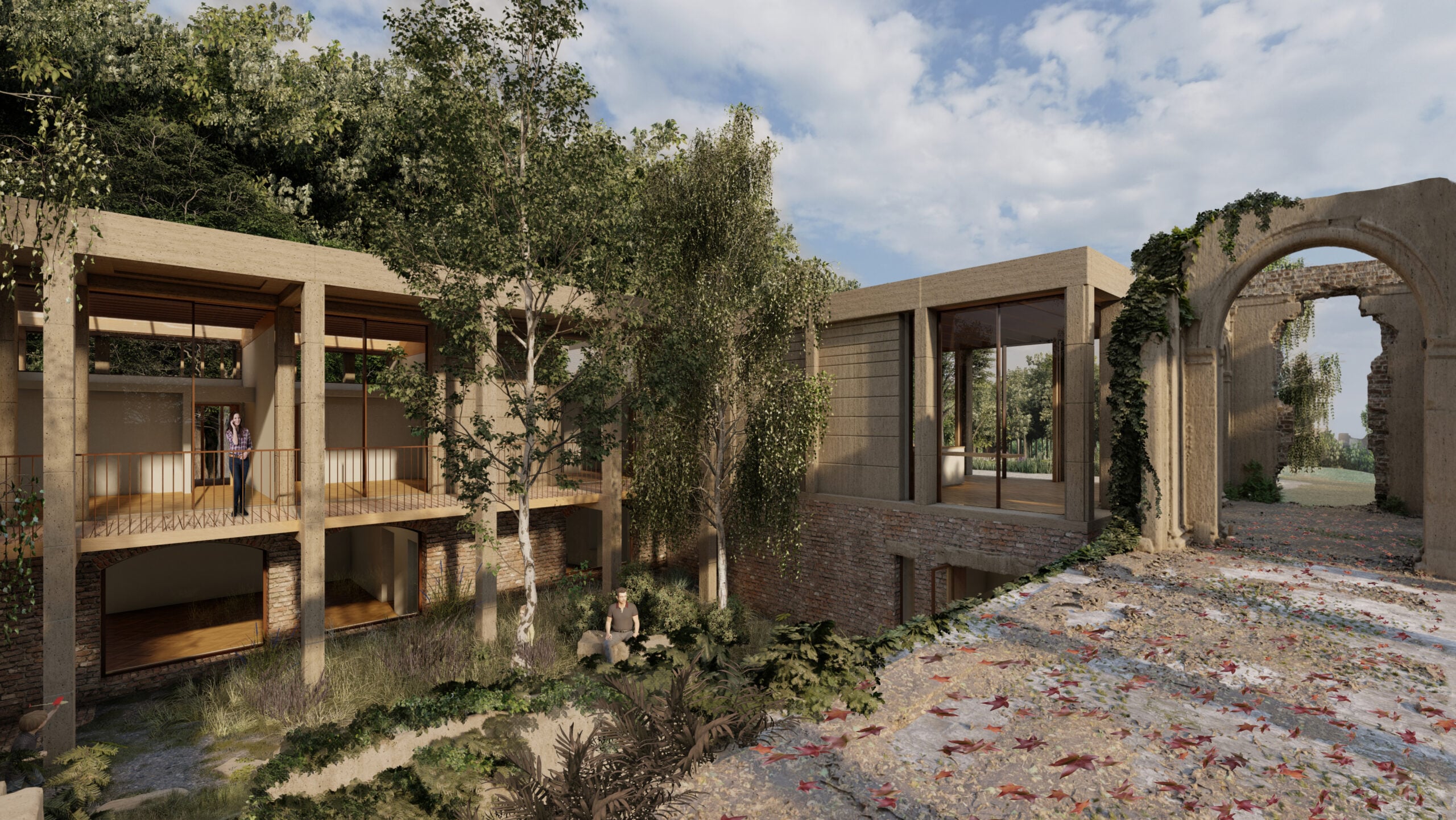
But what of the stone spoils of demolished buildings? On a hilltop overlooking Windsor Castle in the British town of Eton, CSK Architects are using stone and bricks salvaged from the rubble of an 18th-century mansion to build a contemporary home called Phoenix House that connects with an existing stone colonnade—the only remnant of the former house still standing. To create its structural stone portals, directors Matthew Barnett Howland and Dido Milne have scanned the fragments in 3D to sort pieces according to size and incorporate them into their design while maximizing material reuse. Rough stones with broken edges will be mixed with clean cut pieces. “The stones have seen many life cycles, and we’re interested in finding an architectural language in their reuse,” explains Milne.
When Phoenix House becomes a ruin once more in future centuries, these columns should remain intact, ready for a future reimagining of the country house. The design—which also incorporates timber from storm felled trees on the site—shows how natural materials, contemporary technology, and circular thinking are the cornerstones of decarbonizing the built environment.
Would you like to comment on this article? Send your thoughts to: [email protected]
Latest
Viewpoints
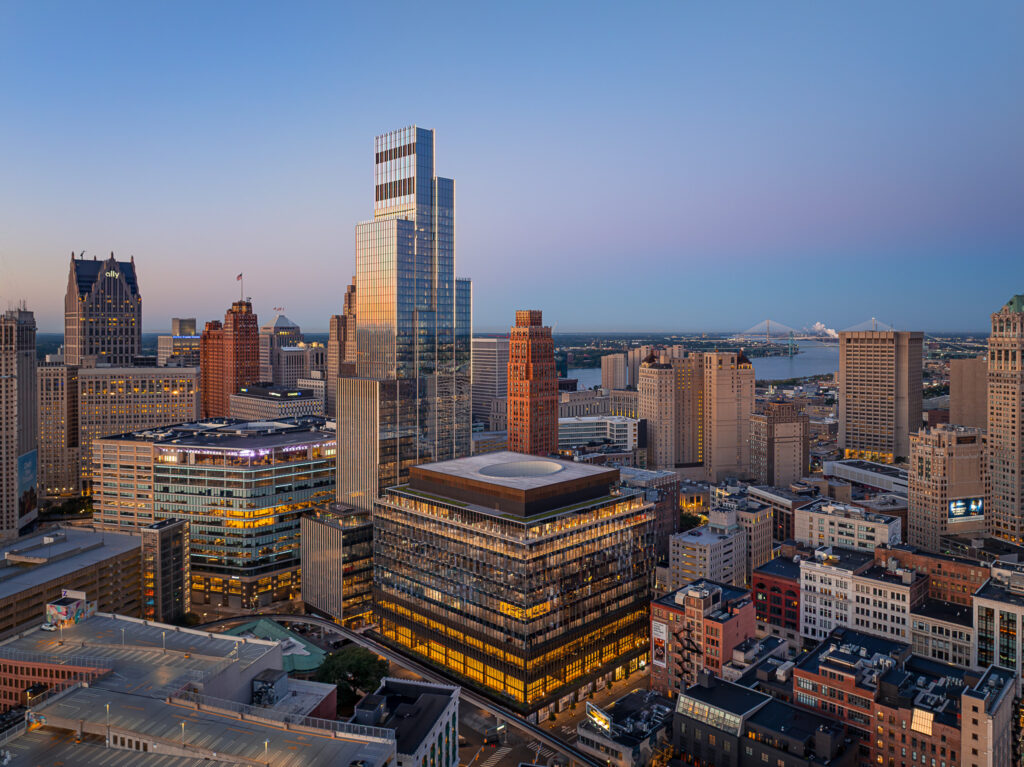
Detroit Month of Design: A City’s Work in Progress
Now in its 16th year, the celebration offers insights into the Motor City’s ongoing accomplishments without glossing over its hurdles.
Projects
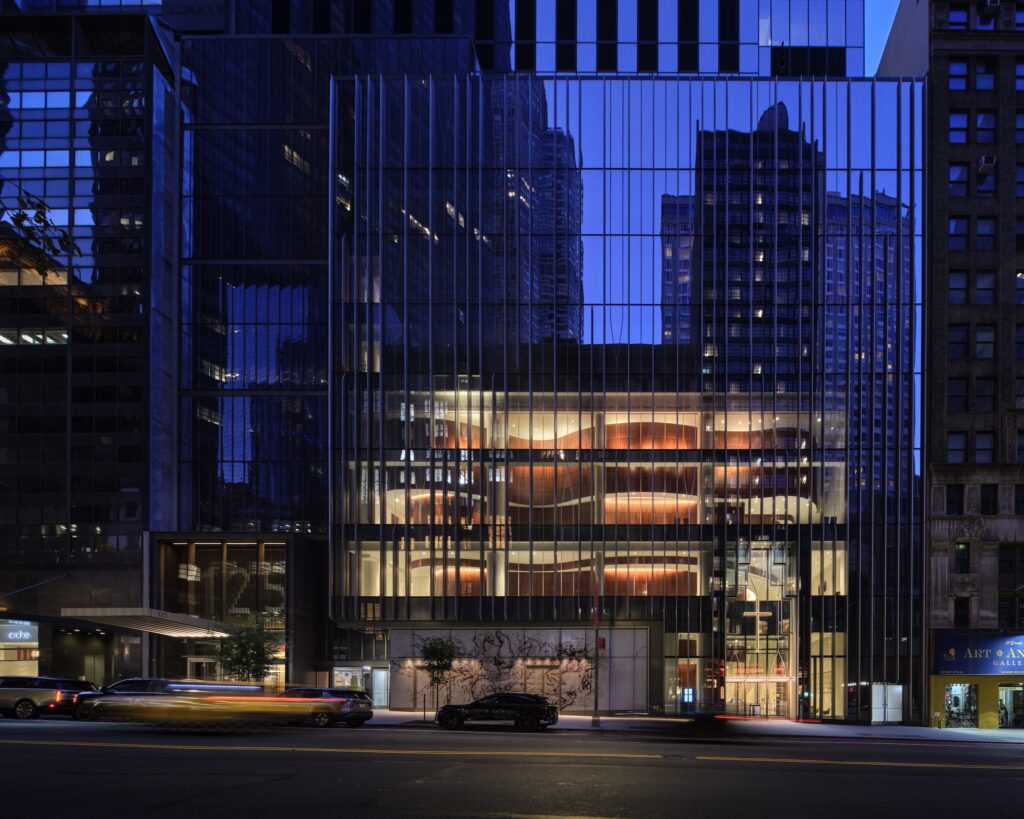
How a Hybrid Building Helped an Historic Manhattan Congregation Remain in Place
On Billionaire’s Row, FX Collaborative designed a new home for Calvary Baptist Church combined with an office tower.