



February 5, 2026
Natural Habitat: Brooklyn’s New Mass Timber Community
Courtyard as Threshold
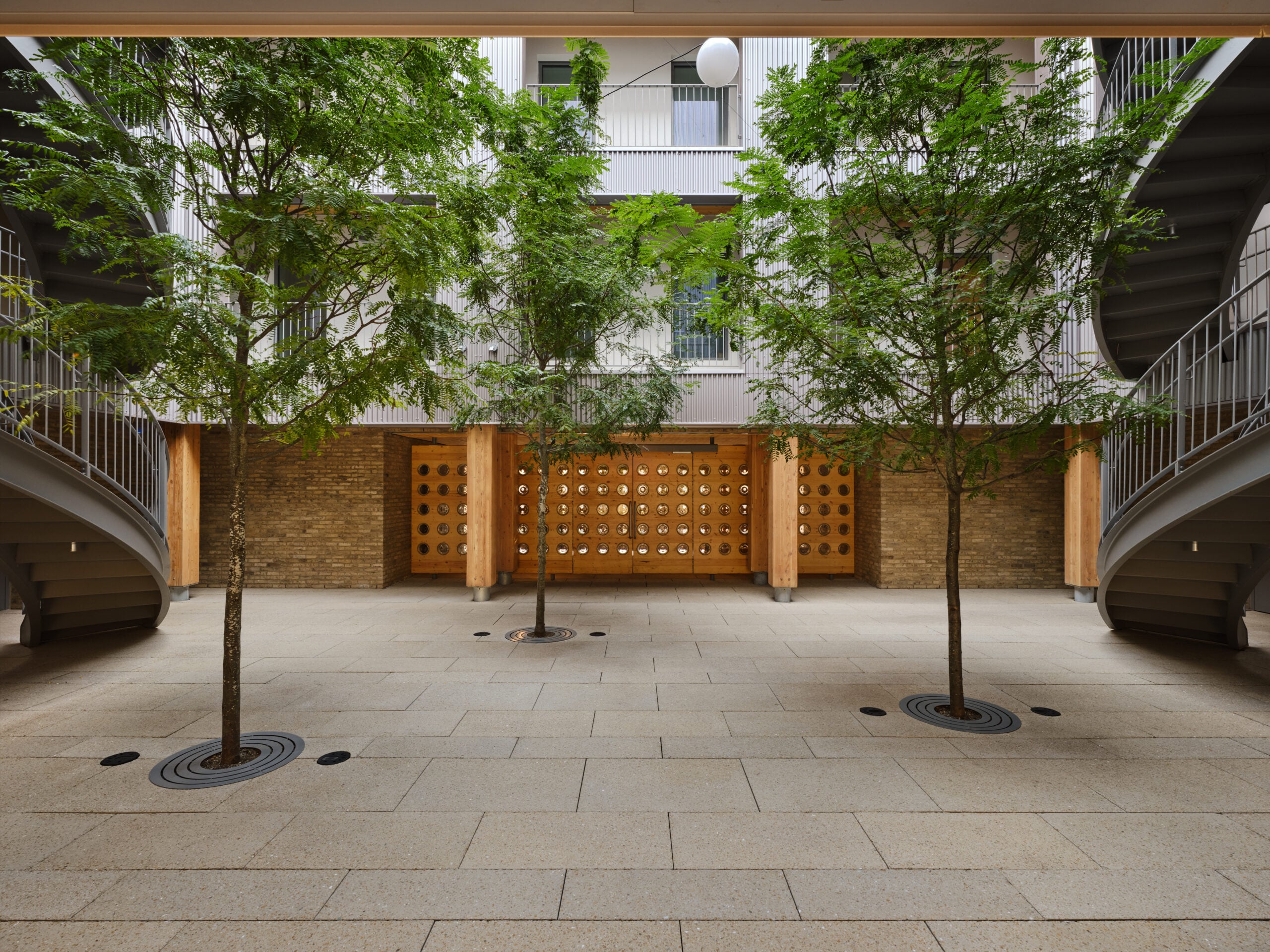
“One of the real first concepts of this project was to walk through a wood entry gate and feel the wood structure,” says architect Brent Buck. “We’re trying to bring nature to New York and give people a more organic living experience.”
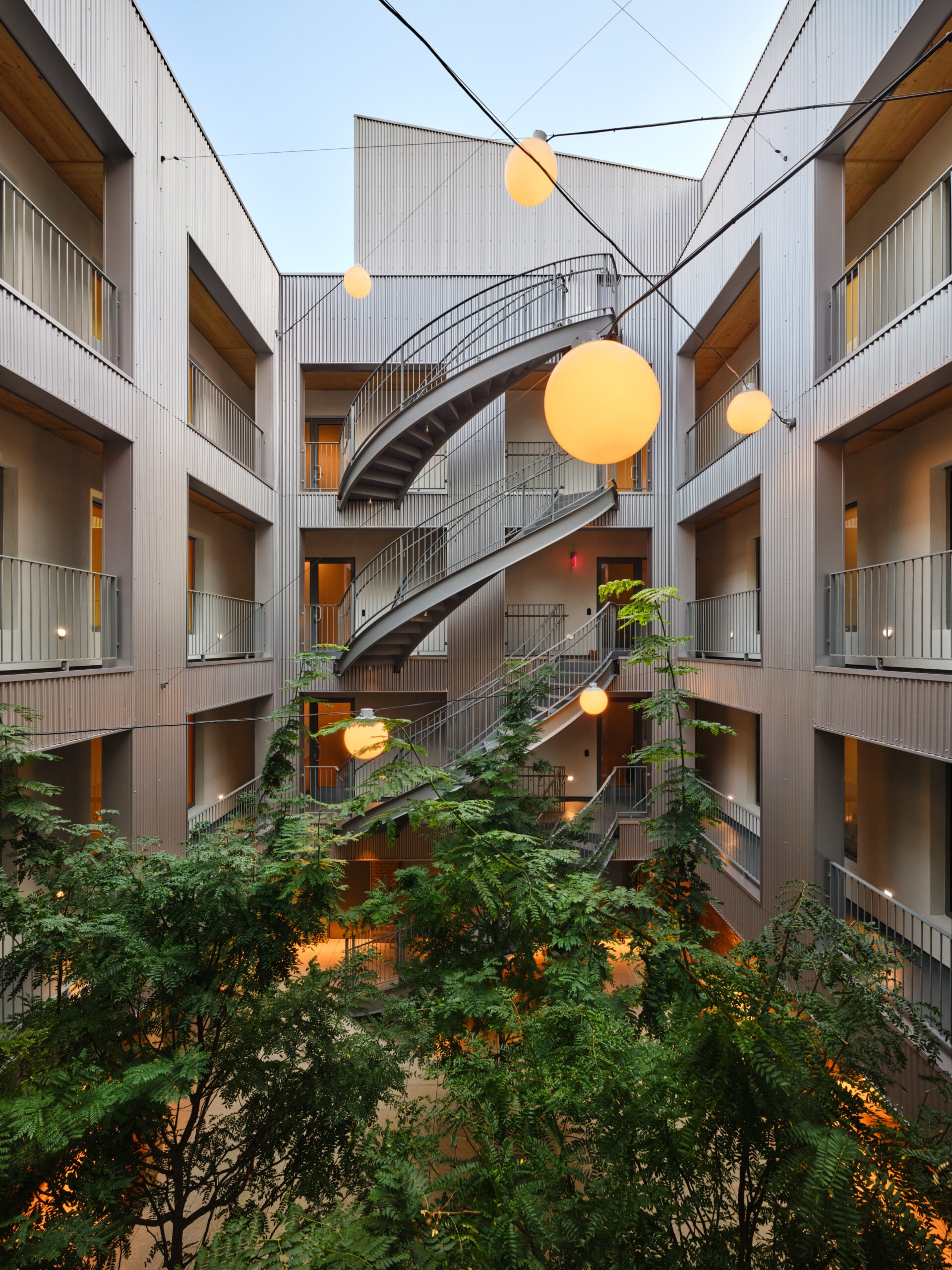
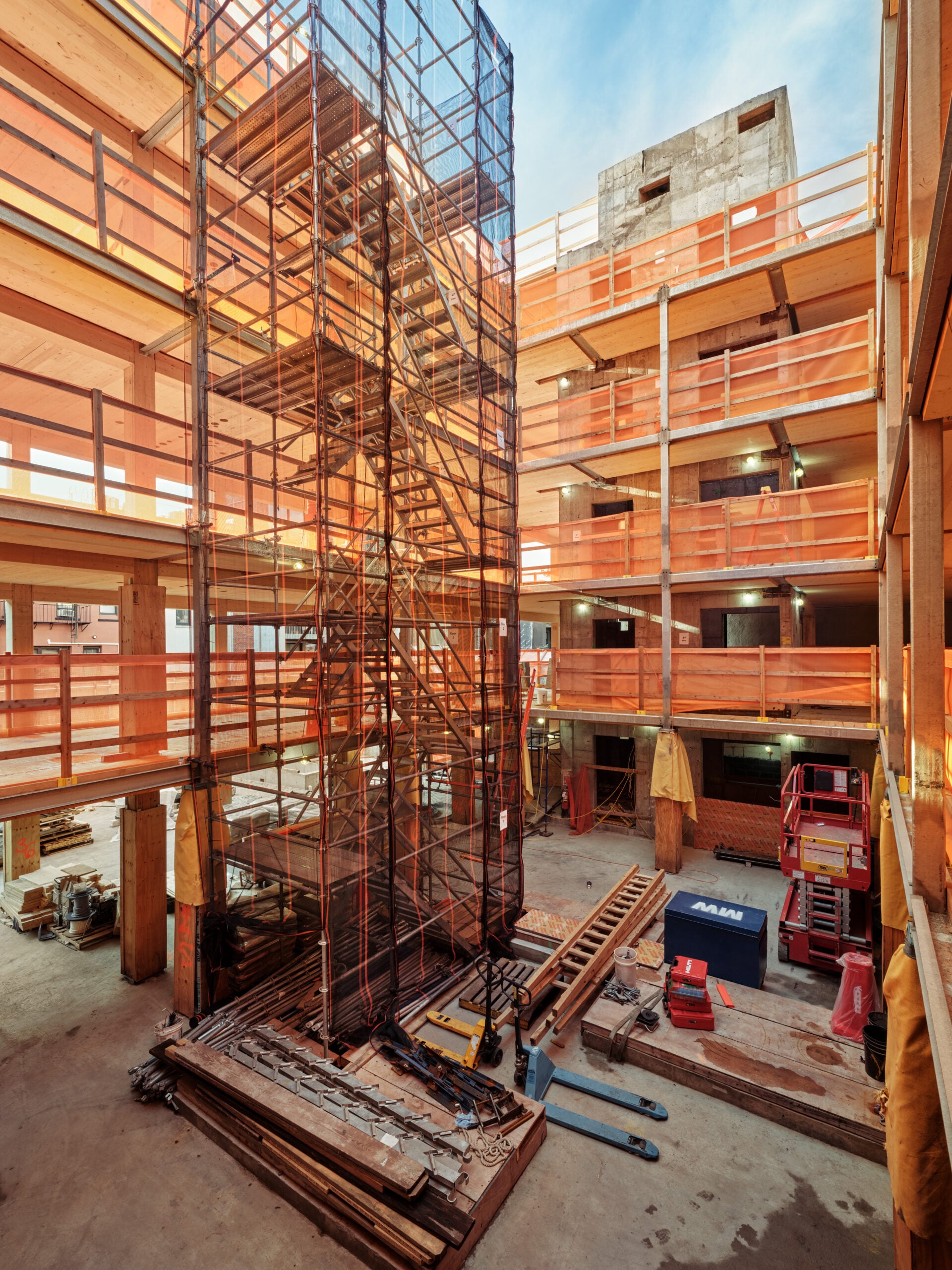
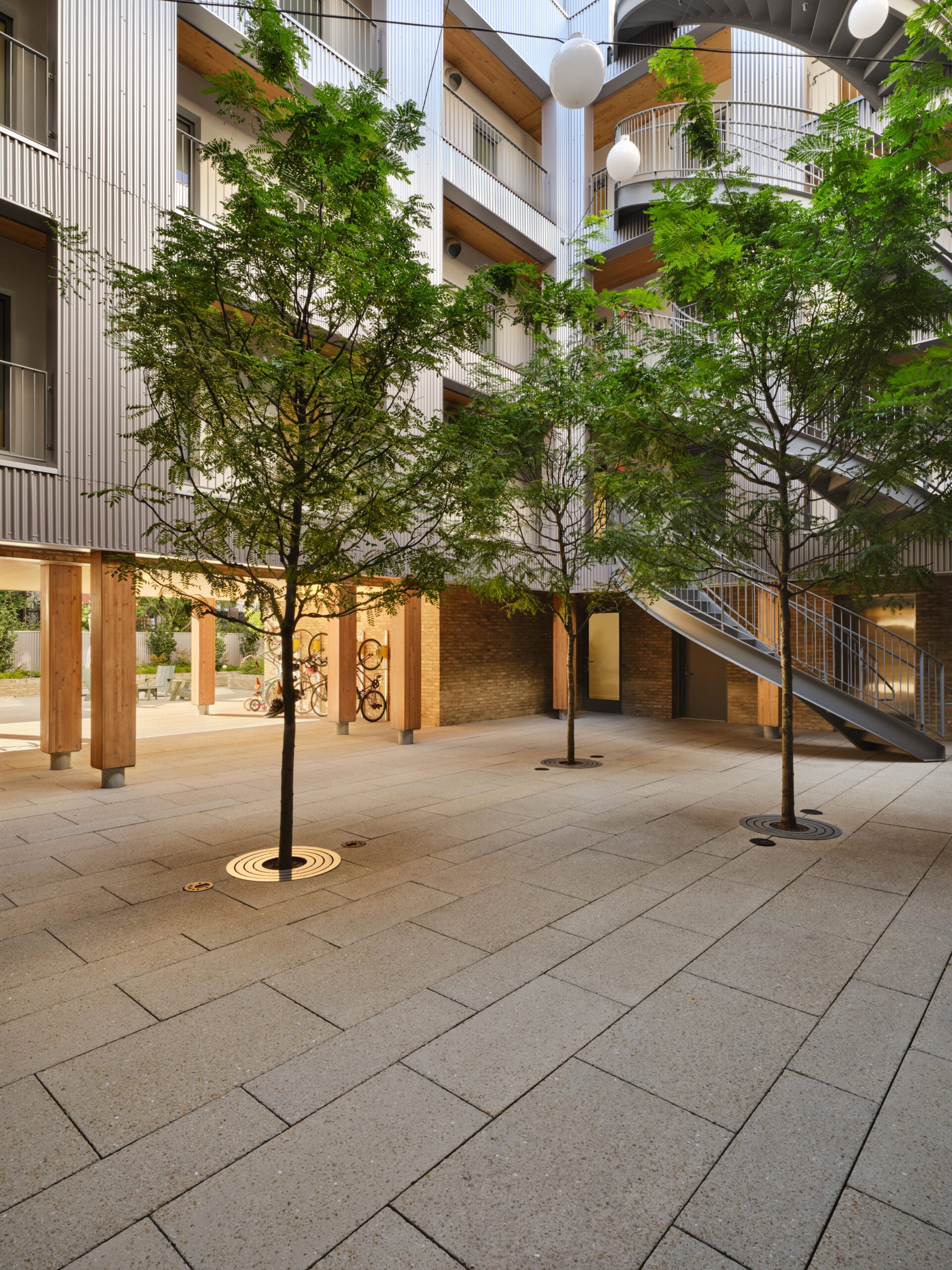
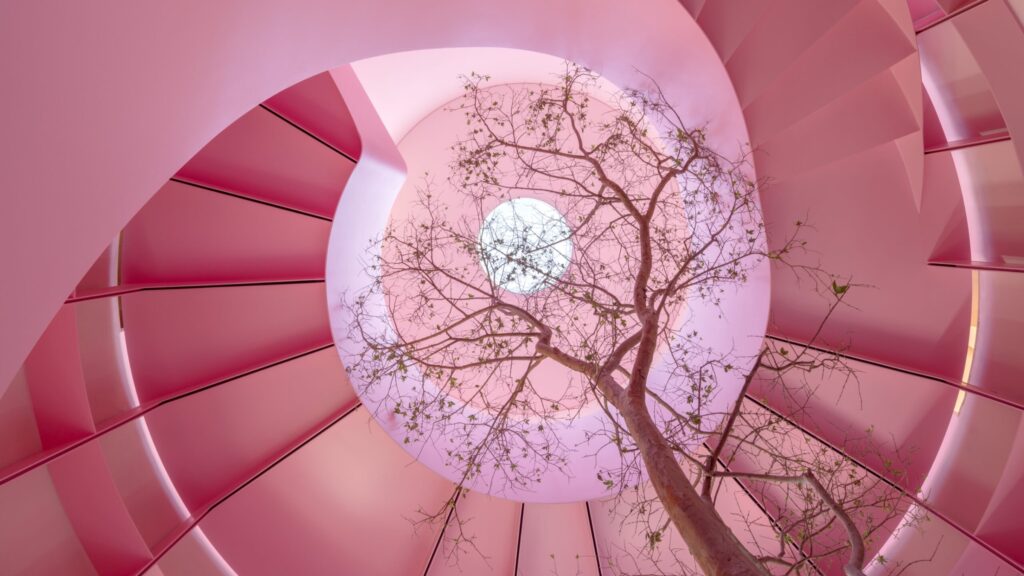
Rather than treating circulation as a purely functional necessity, Frame 122 organizes daily movement around a shared exterior courtyard. Apartments line the perimeter of the site, enclosing an open-air communal space that residents pass through before reaching their units. Dual curving staircases rise from the courtyard to open walkways, creating moments of pause and encounter along the way.
“We have these incredibly noisy and complex city lives, and the courtyard became this moment of pause,” Buck explains. “These sculptural staircases became a joyful way to move through the building—and a place where people run into each other in unscripted ways.”
Each apartment benefits from three solar exposures, maximizing daylight and reinforcing visual connections between the courtyard and the interiors throughout the day.
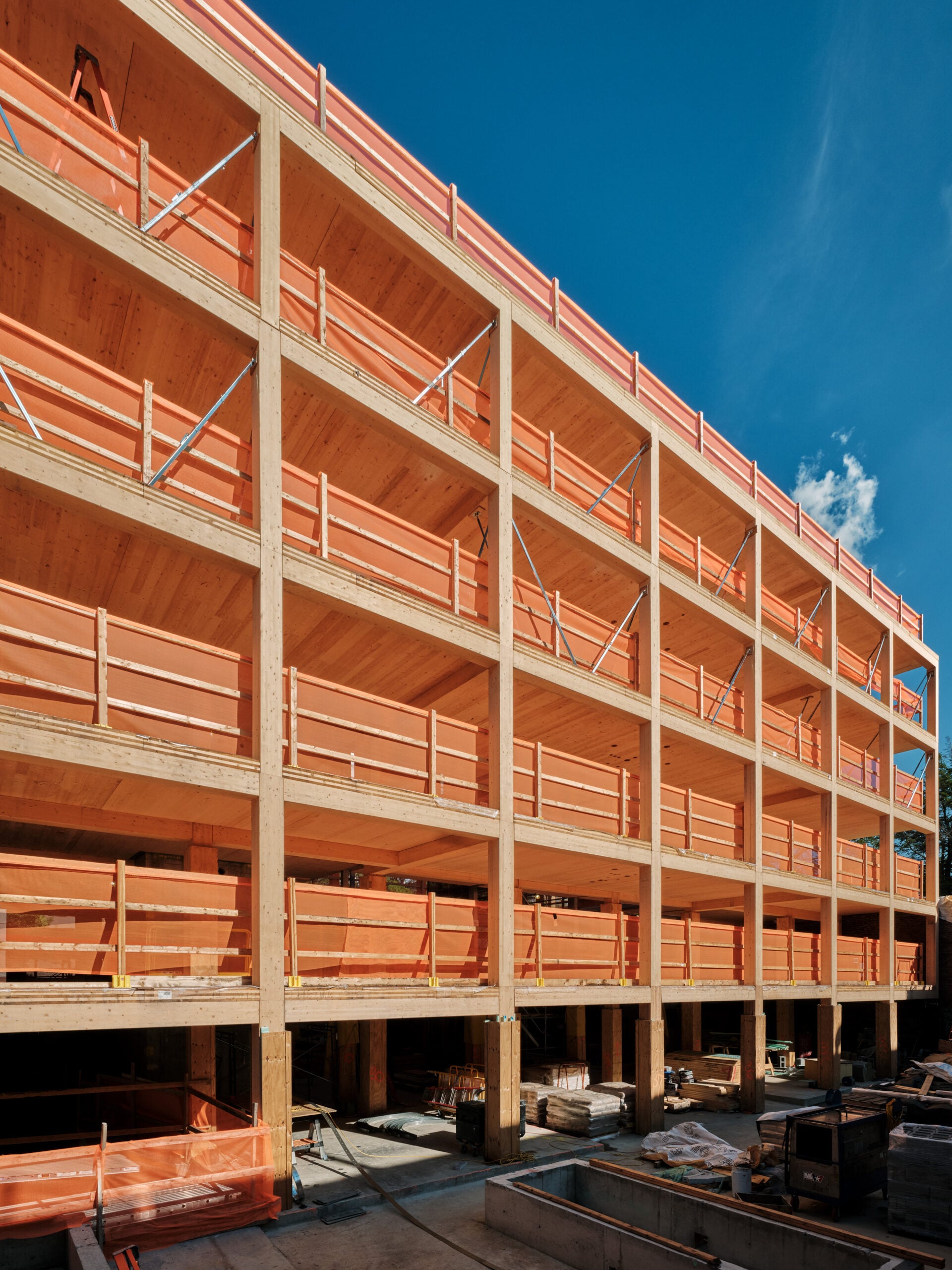
Mass timber was selected as the building’s primary structural system for its environmental, experiential, and logistical benefits. CLT panels support the floor and roof assemblies, while glulam beams define interior spaces, leaving the structure exposed throughout the apartments. The result is a warm, biophilic interior environment that contrasts sharply with conventional multifamily construction.
Living with Timber
“Because we have an exterior lobby space, it allowed us to create these wood entry gates that hint to occupants and passersby that this is a mass timber structure.”
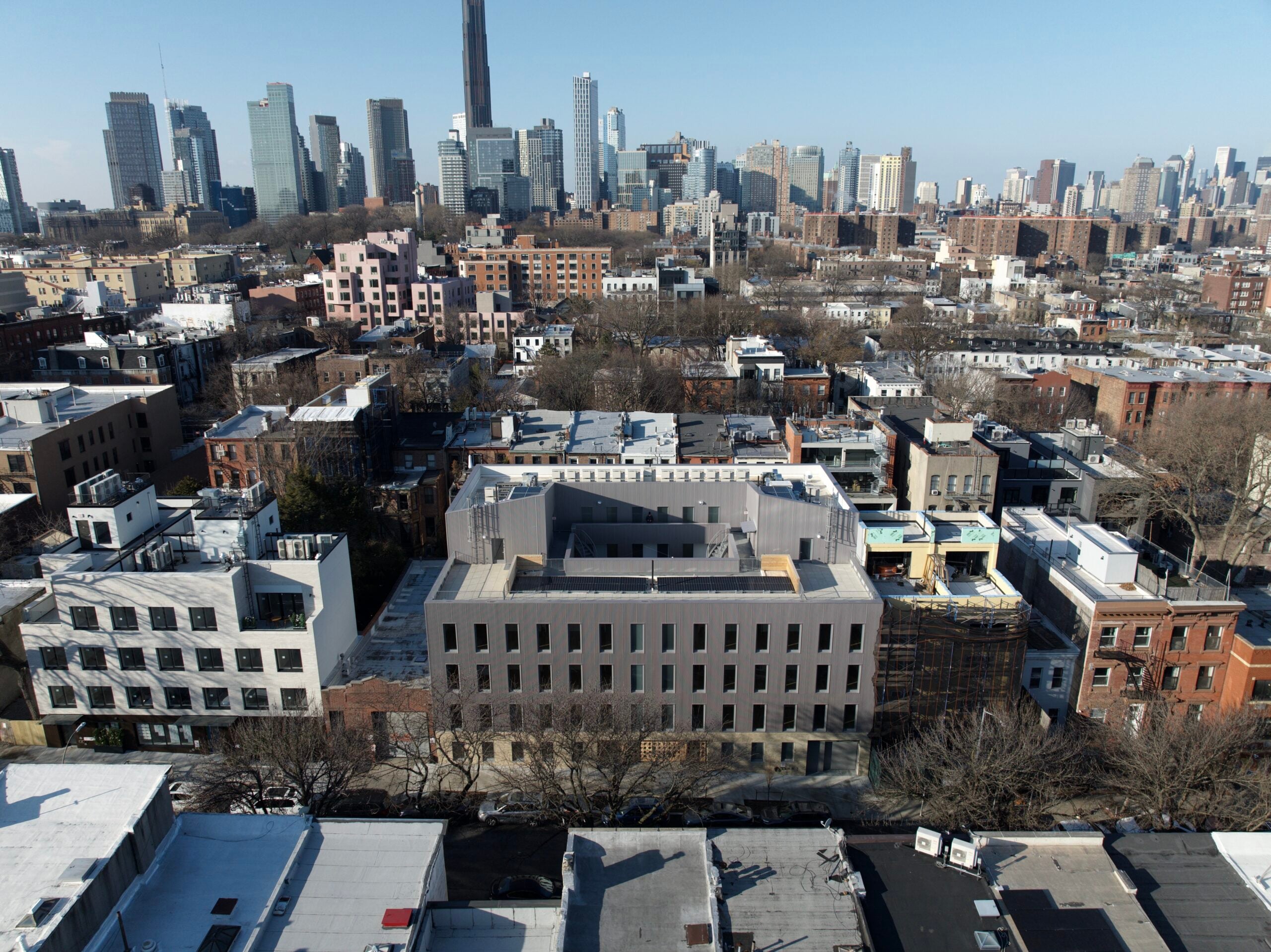
Prefabrication reduced on-site assembly time and construction impacts on the surrounding neighborhood. As Buck notes, the site remained unusually quiet during installation, with the scent of spruce, pine, and fir lingering after rainfall.
For developer Joanne Wilson, sustainability was the project’s central driver rather than a secondary ambition. Frame 122 meets passive housing standards, with blower door testing conducted on every apartment and Energy Recovery Ventilators delivering continuous fresh air. Triple-glazed windows enhance both thermal performance and acoustic comfort.
“It all came down to doing the right thing for the environment,” Wilson says. “As we continue to grow housing, it’s our responsibility as citizens to do better—and cross laminated timber was where we chose to start.”
Community, Made Visible
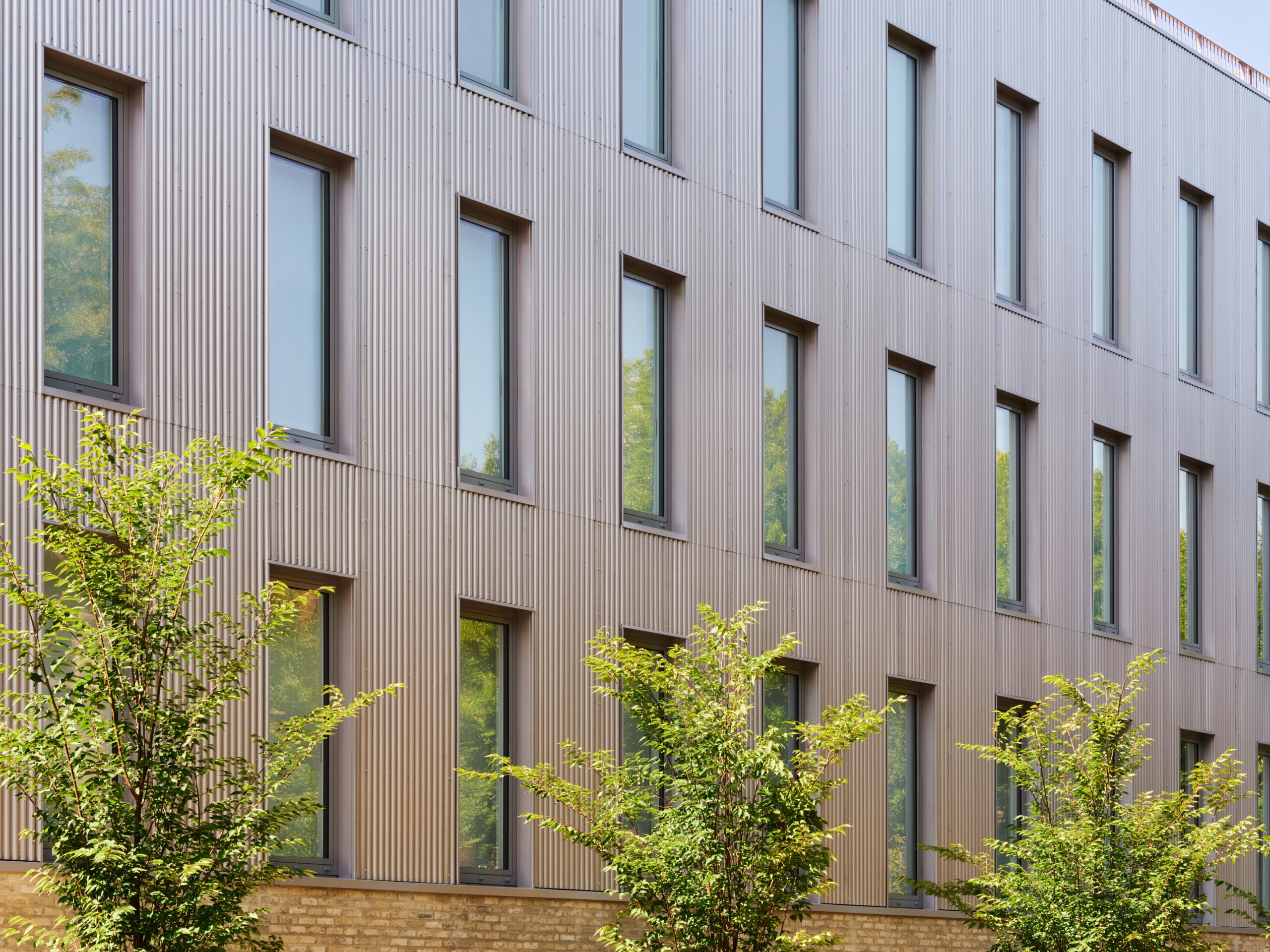
The courtyard has quickly become a social anchor for residents, hosting informal gatherings and reinforcing a sense of shared ownership.
“Having the interior courtyard and the stairs really creates a sense of community,” says tenant Alex O’Daily. “Tenants organize monthly potlucks—it really challenges the idea that New Yorkers are cold or unfriendly.”
Subtle details reinforce this ethos: reclaimed barn beams repurposed as benches, fifteen recessed bricks marking each apartment, and custom uplighting that casts a warm glow through the timber structure at night.
While Frame 122 is intentionally modest in scale, its implications are significant. By combining mass timber construction, passive performance, and community-oriented design, the project offers a compelling prototype for future multifamily housing in New York City.
“It’s incredibly difficult to build here,” Buck reflects. “But hopefully this building inspires other architects and developers to keep pushing this type of development forward.”

Would you like to comment on this article? Send your thoughts to: [email protected]
Latest
Projects
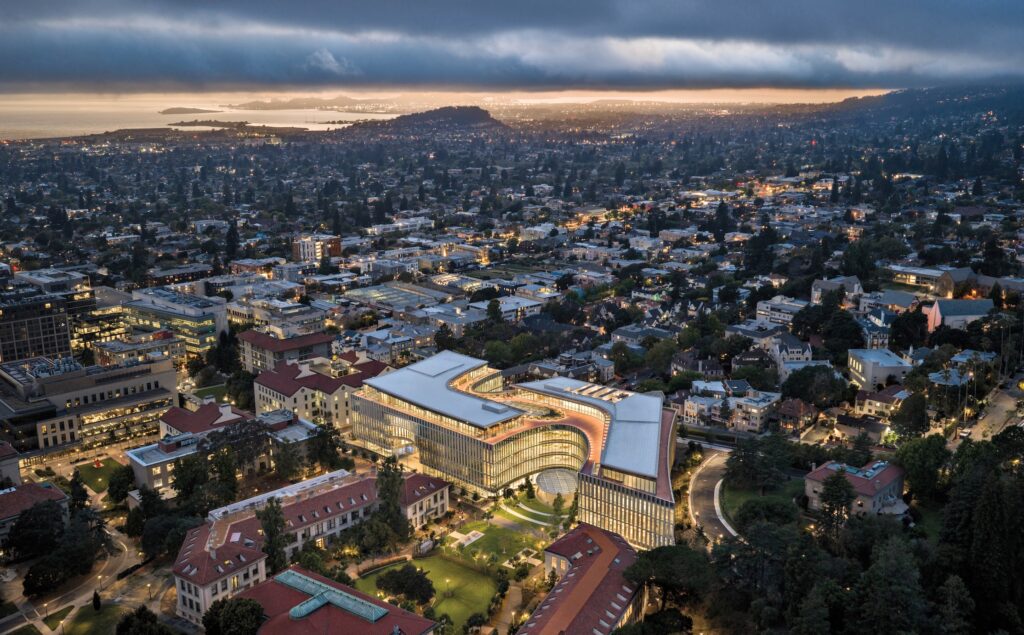
UC Berkeley’s Newest Building Is All About Human Interactions
The long-awaited project highlights uncomfortable truths about Los Angeles’s cultural sector and civic health.
Projects
ZD+A Brings a Modernist Mexico City House in Line with its Context
Architect Yuri Zagoin Alazraki reorganized the speculative house to respond to its site and create unique spaces for contemplation.