



February 26, 2026
Norway’s New Government Quarter Was Designed to Rebalance Power
After the attacks, the then-prime minister Jens Stoltenberg’s answer was that violence should be met with “more democracy, more openness, and more humanity, but never naivety.”
“That statement has been a leading light for us, and we’ve implemented those words into the design—creating an oasis in the city that fosters our democratic traditions,” says Gudmund Stokke, founding partner of Nordic. His own aspirations were that the buildings should be “dignified, durable, friendly, and beautiful.”
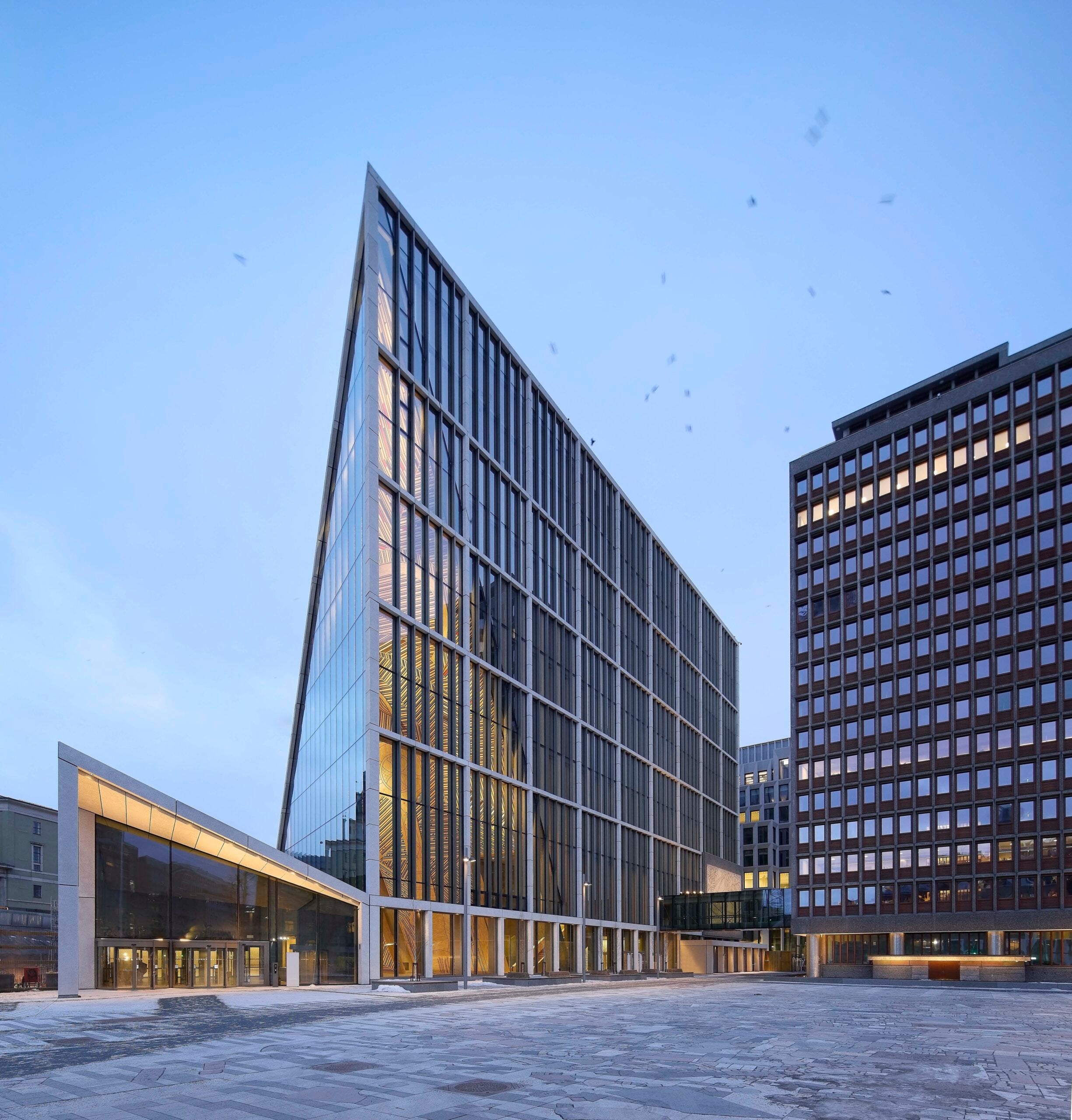
At the 1.3 million square-foot pedestrianized masterplan, this is achieved by rejecting a fortress-like model of governance, in favor of embracing the local context, surroundings, and people. Open squares, parks, walking routes, public artworks, and glass facades offer a permeable environment that the architects say is a contrast to the original site, which had narrow passages and garage accessways that made it unwelcoming.
Navigating Trauma-Informed Design
The security is there, of course—as Stokke says of the attack: “That national trauma is still with us”—so both staff and passers-by expect that. The architects explain that about 60 percent of the total $2.5 billion cost of the building is related to security requirements, ranging from blast-resistant construction to the car-free public realm flanked by sturdy seating and artworks. The point is perception: rather than signalling hostility—itself a securitization tactic—the design deliberately opts to foreground transparency.
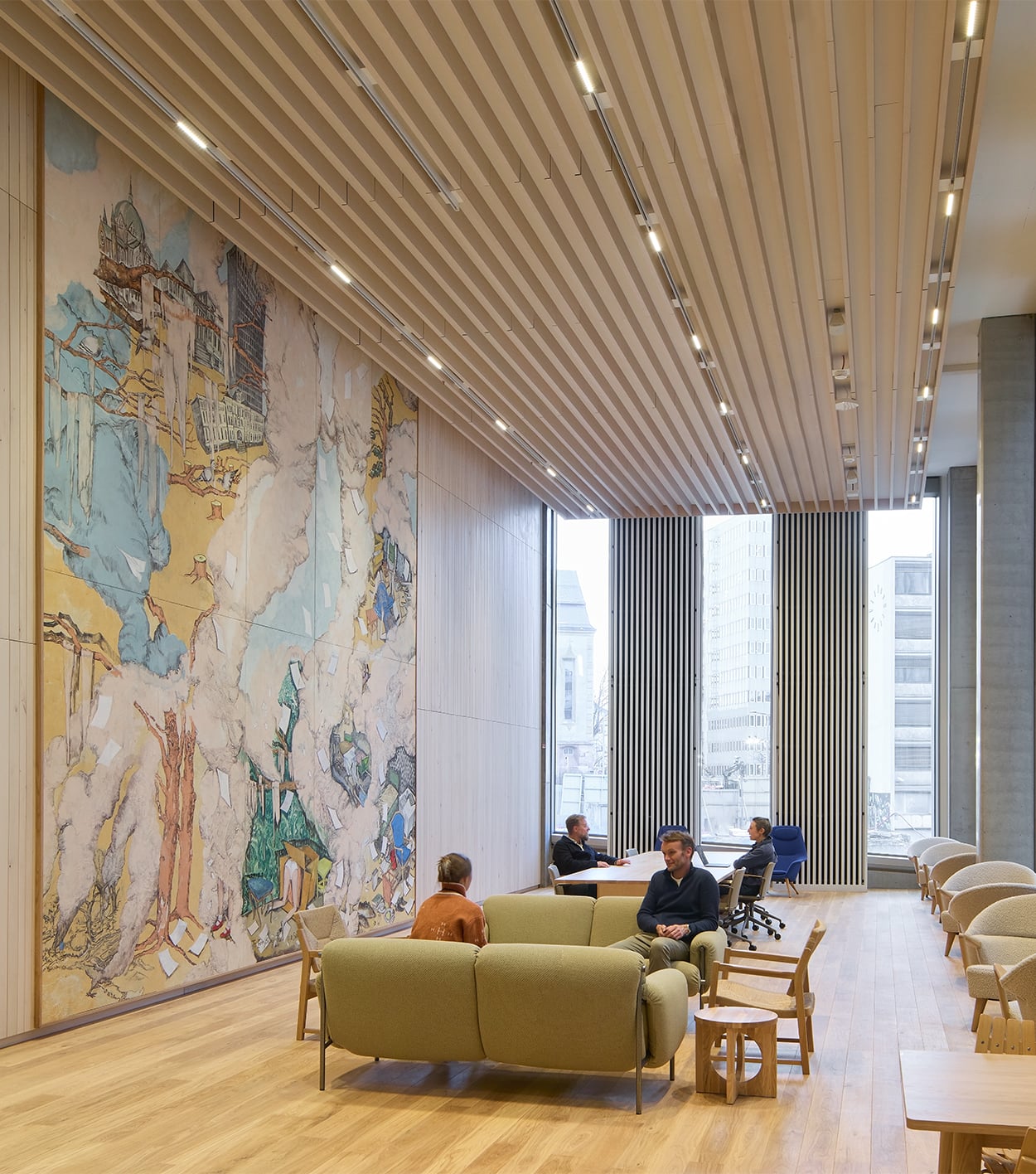
When complete, the campus will include five new buildings and two restored structures—including the original 1906 government building, which will be restored as part of phase 2 by 2030—arranged around a new public square, which features an 8,611-square-foot mosaic by Palestinian artist Jumana Manna, made from stone offcuts collected from across Norway—commissioned, alongside all the other artworks, by Norway’s public art curatorial body KORO.
A Government Building for the People
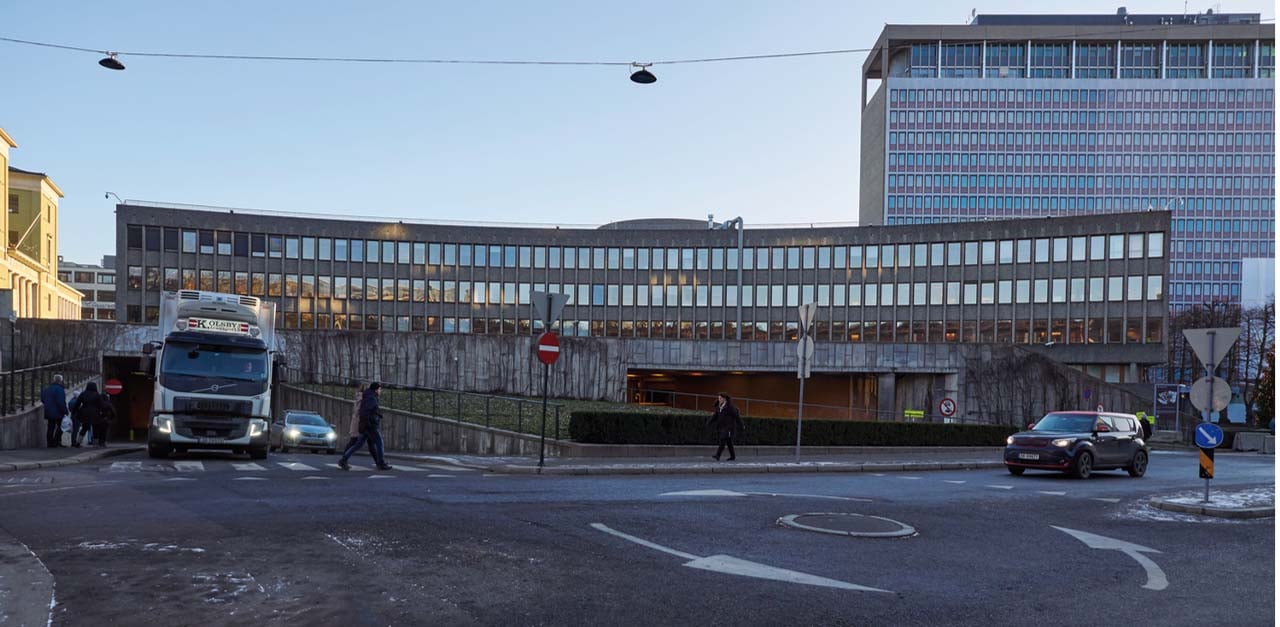
In redesigning the area, a prominent 1969 building by modernist Erling Viksjø—Y-Block—was controversially torn down. Protesters argued that its sculptural form was an irreplaceable complement to the architect’s other high-rise building on the site, but it eventually lost the battle—with the government citing national security and functional considerations. That partner building—Høyblokken, a 1950s brutalist structure that had its windows blown out by the blast—has been restored, and two new buildings sit alongside it. By this summer, the open side of the square will be capped by a public memorial by artist Matias Faldbakken, alongside a museum about the 2011 attack contained within a restored pavilion. The Fishermen, a mural by Picasso from the Y-Block, has been relocated to a prominent exterior position looking the square.
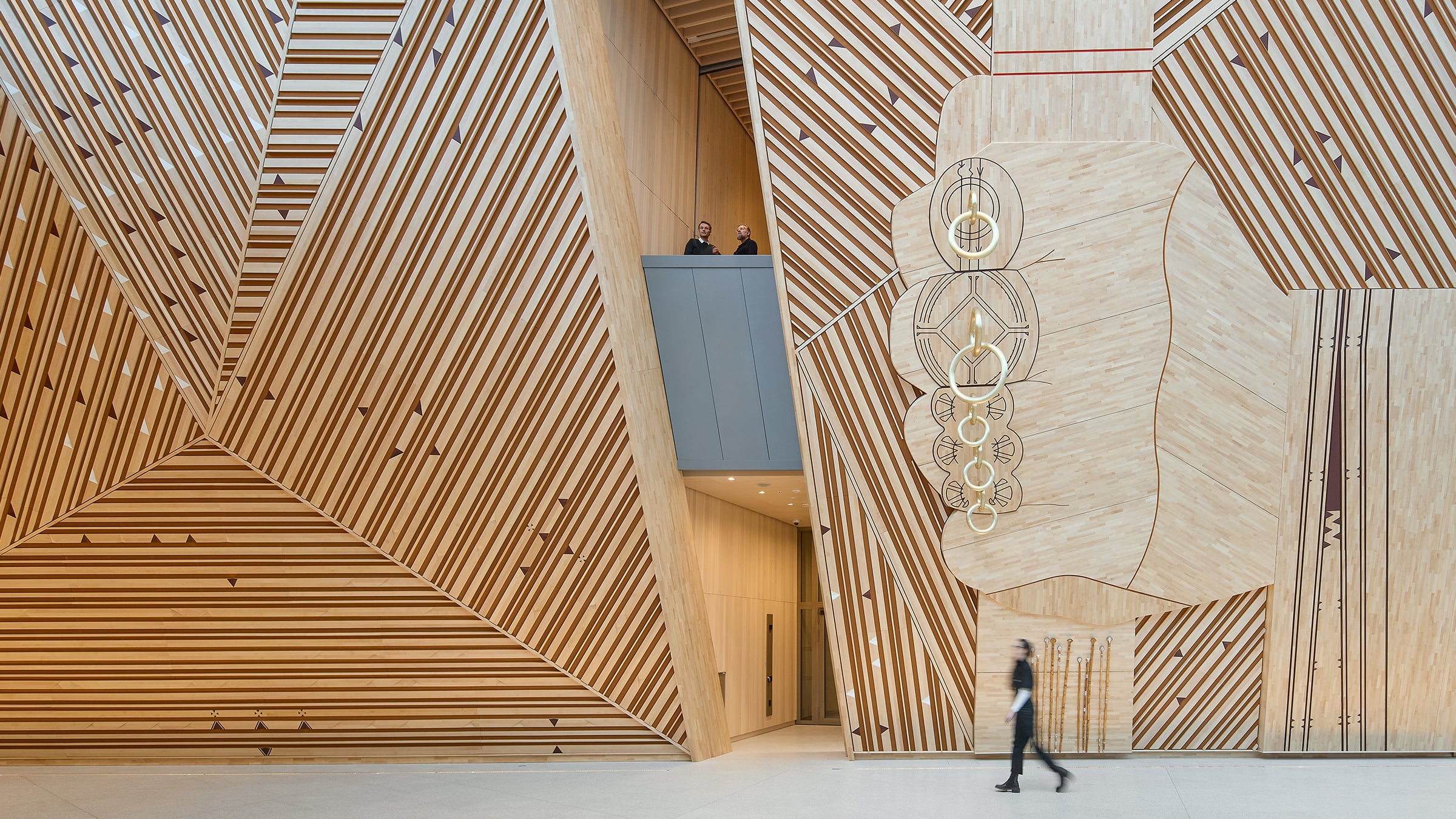
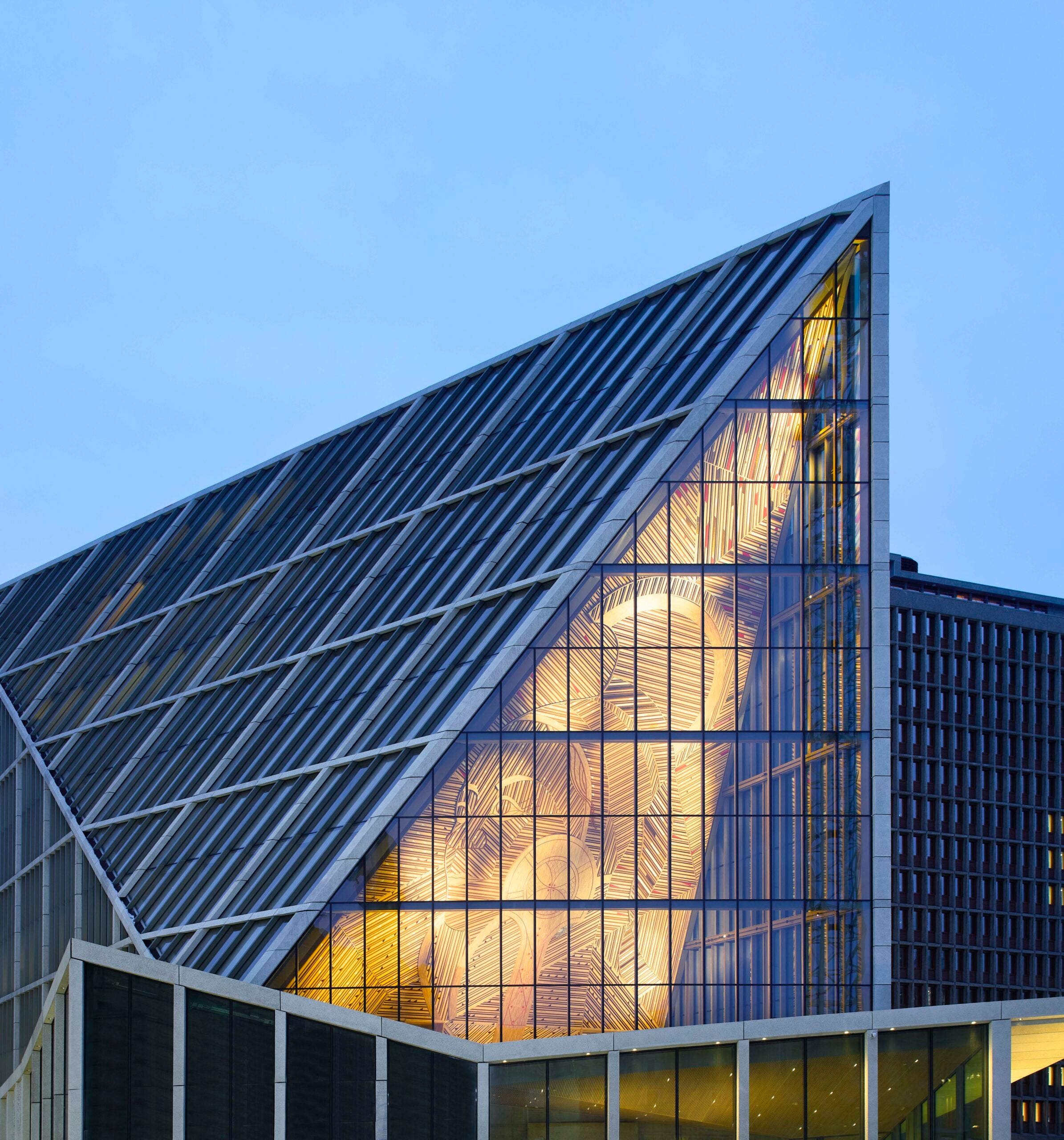
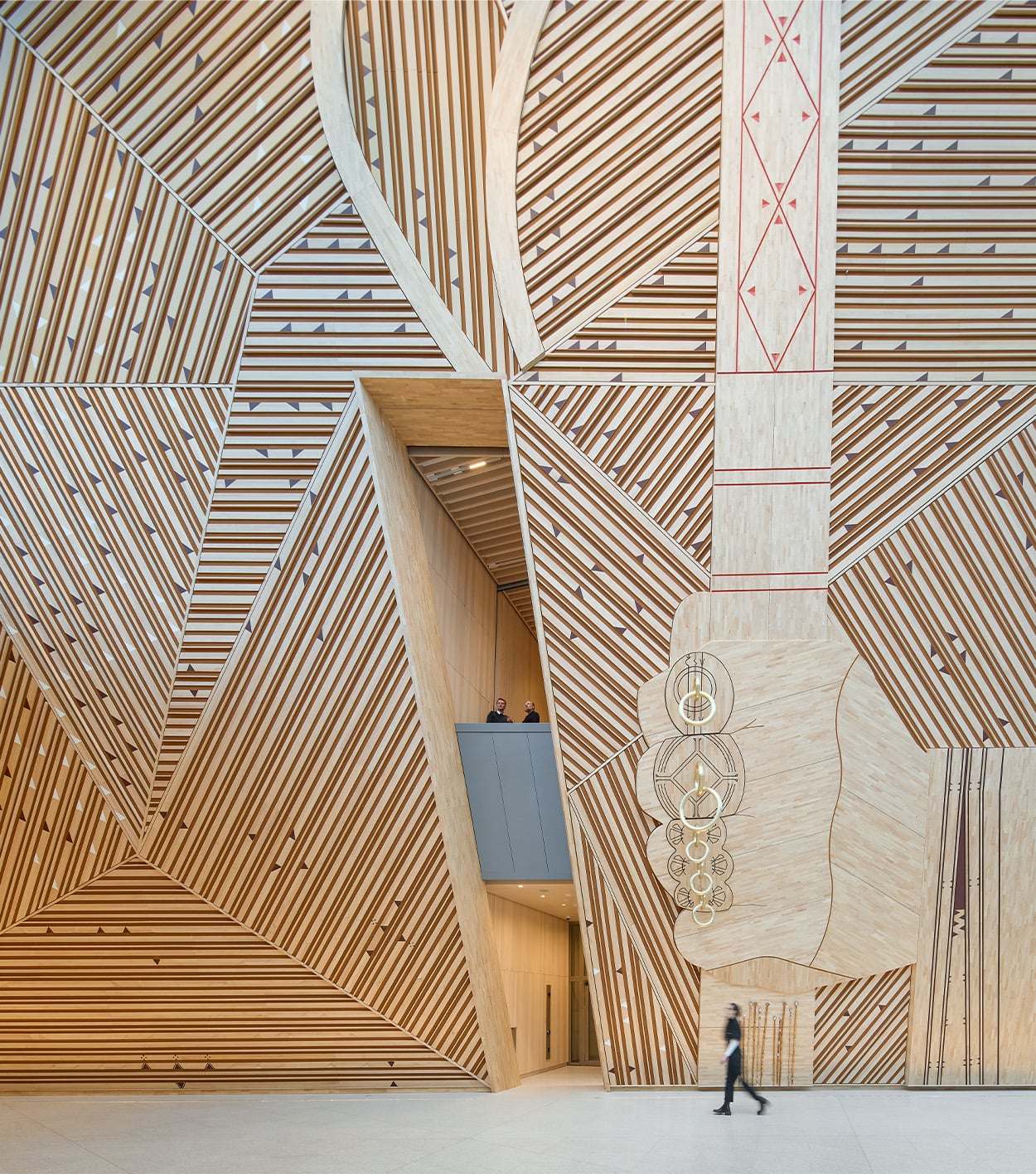
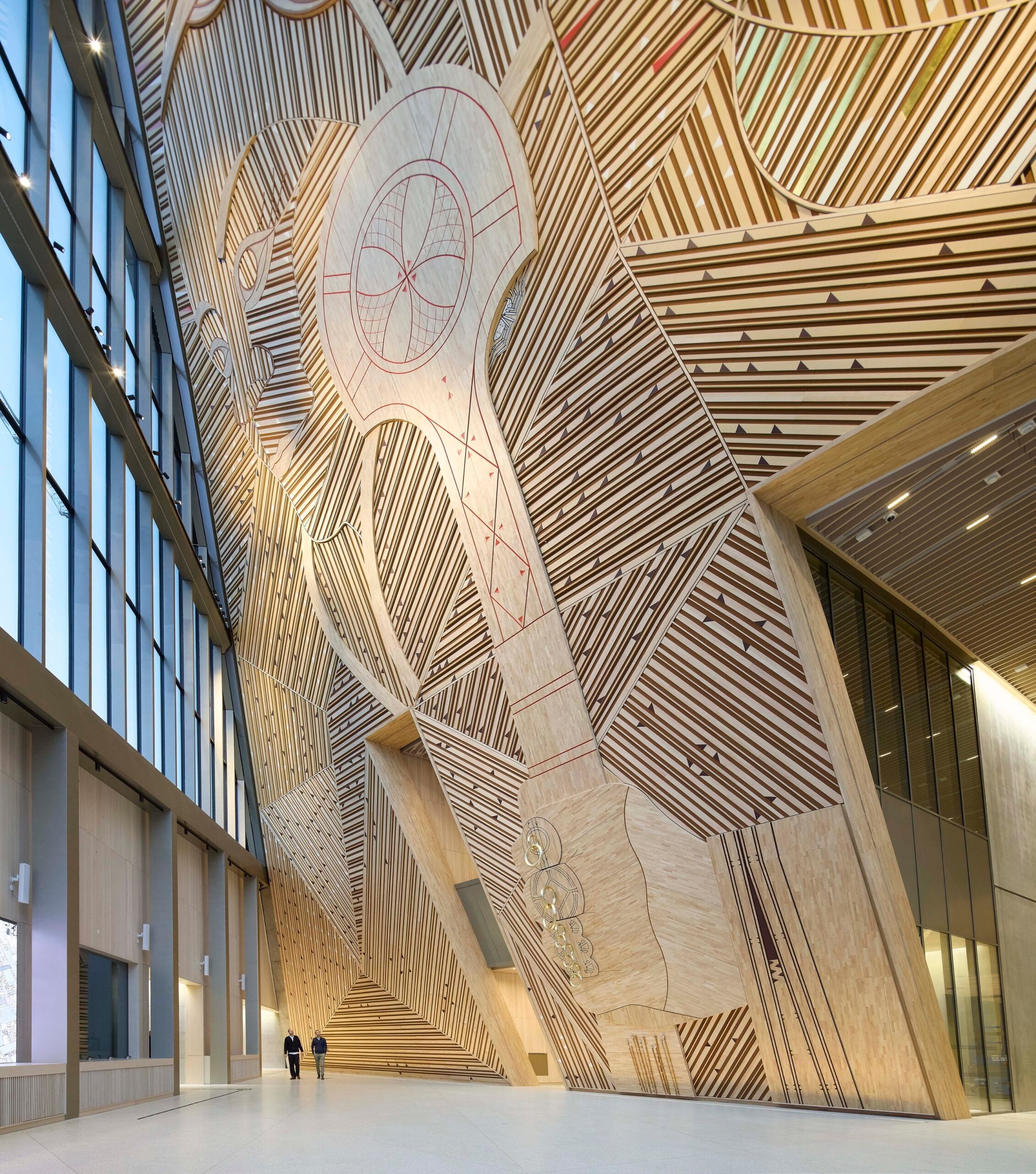
When the site is complete, a public park—designed with landscape architects SLA and Bjørbekk & Lindheim—will sweep alongside it, which Nordic partner Knut Hovland says will be ‘the place to have a beer after work’. This will hug the perimeter of a new building that acts as the government’s front door. Look in from the other side to see a giant pyramidal glass atrium with a sloping wooden wall. This is covered by a 7,534-square-foot artwork by Finnish-Sámi artist Outi Pieski depicting Akka, the personification of Mother Earth. While these artistic gestures are striking, the site’s new buildings avoid a sense of the monumental. “They’re simple and quiet, but will stand for centuries, and the hope is decade by decade they will belong more,” Stokke says.
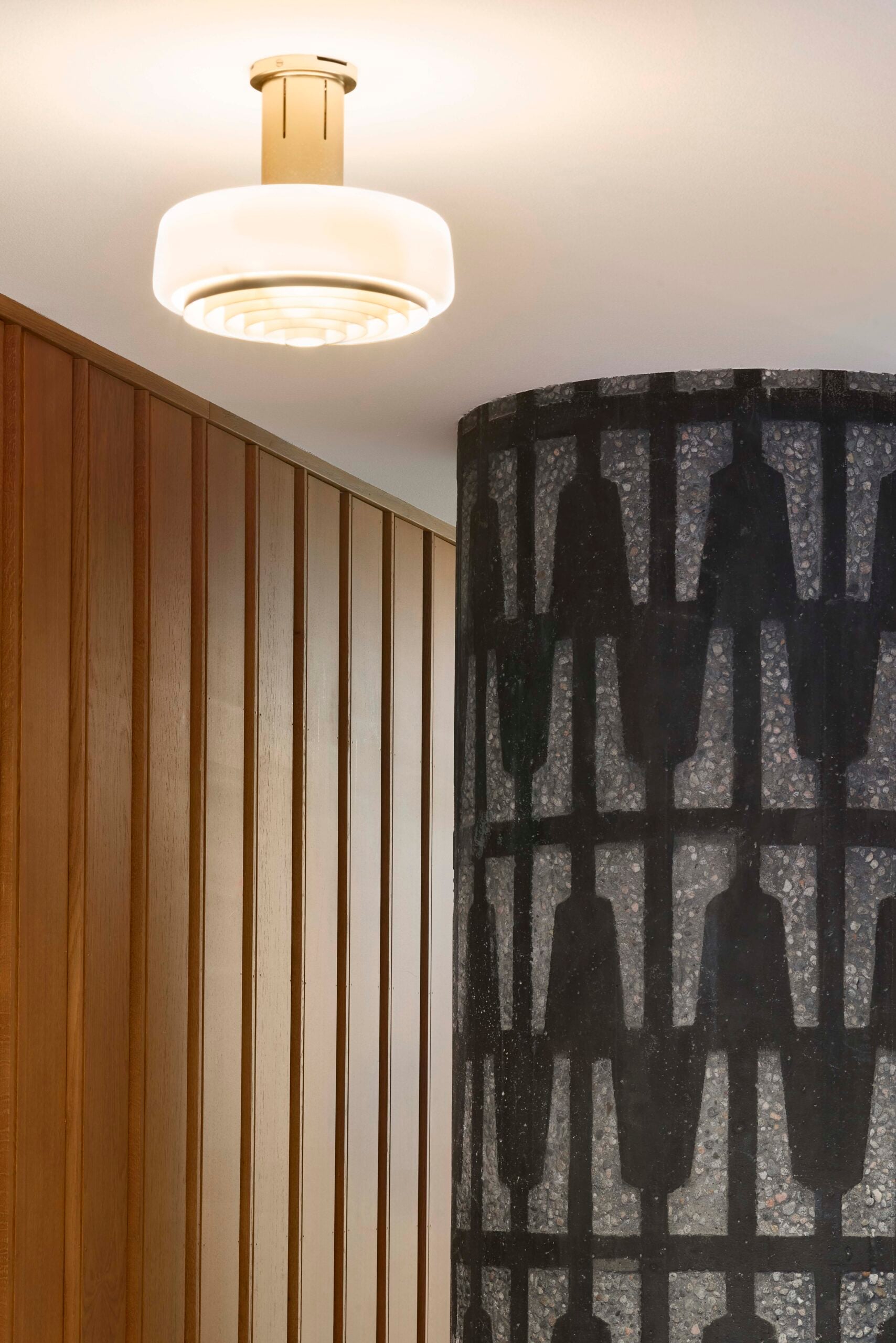
Høyblokken required a different sensibility: maintaining the original spirit of the listed building, while being sensitive to the traumatic memories it carries. Darker woods, mulberry accents, mood lighting and mid-century furniture nod to the era it was first built, and the teak window frames have been repaired. The original staircase and carved artworks that run alongside it have also been restored in a way the architects believe creates a more pleasant working environment than before.
Modeling Local Values
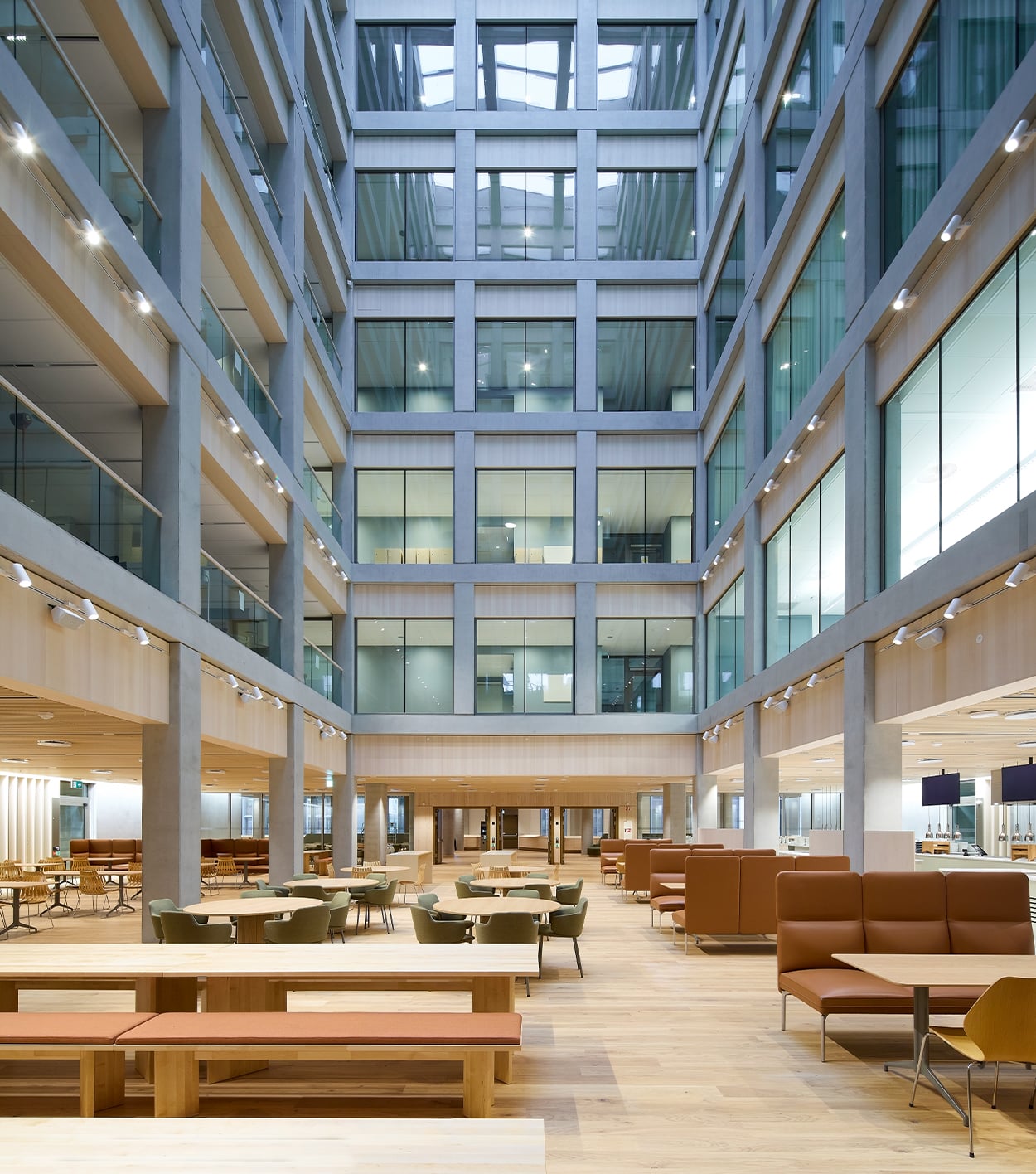
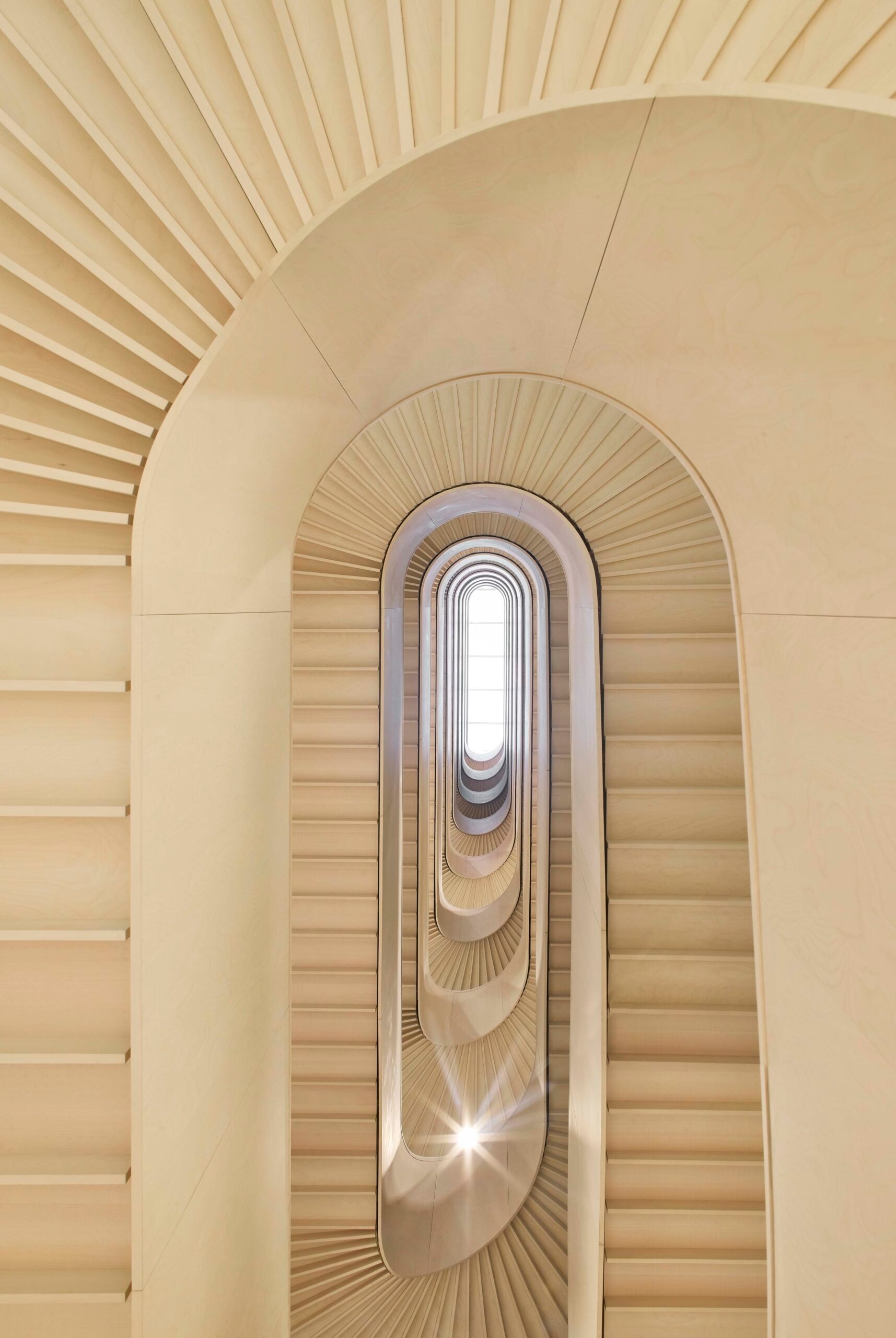
All the buildings are linked by internal bridges and sightlines, with the aim of fostering collaboration between the 4,000 people who will work there. For the first time, all but one government department (the Ministry of Defense will remain elsewhere for security and practical reasons) will be located on the same campus, with communal areas, common meeting rooms and canteens. “We live in a complex world, and the problems we face are not sorted into ministries,” Stokke says. “Here people can gather easily from any area in minutes.” While doing so, staff will be encouraged to take the healthy option and walk—by staircases placed more prominently than lifts.
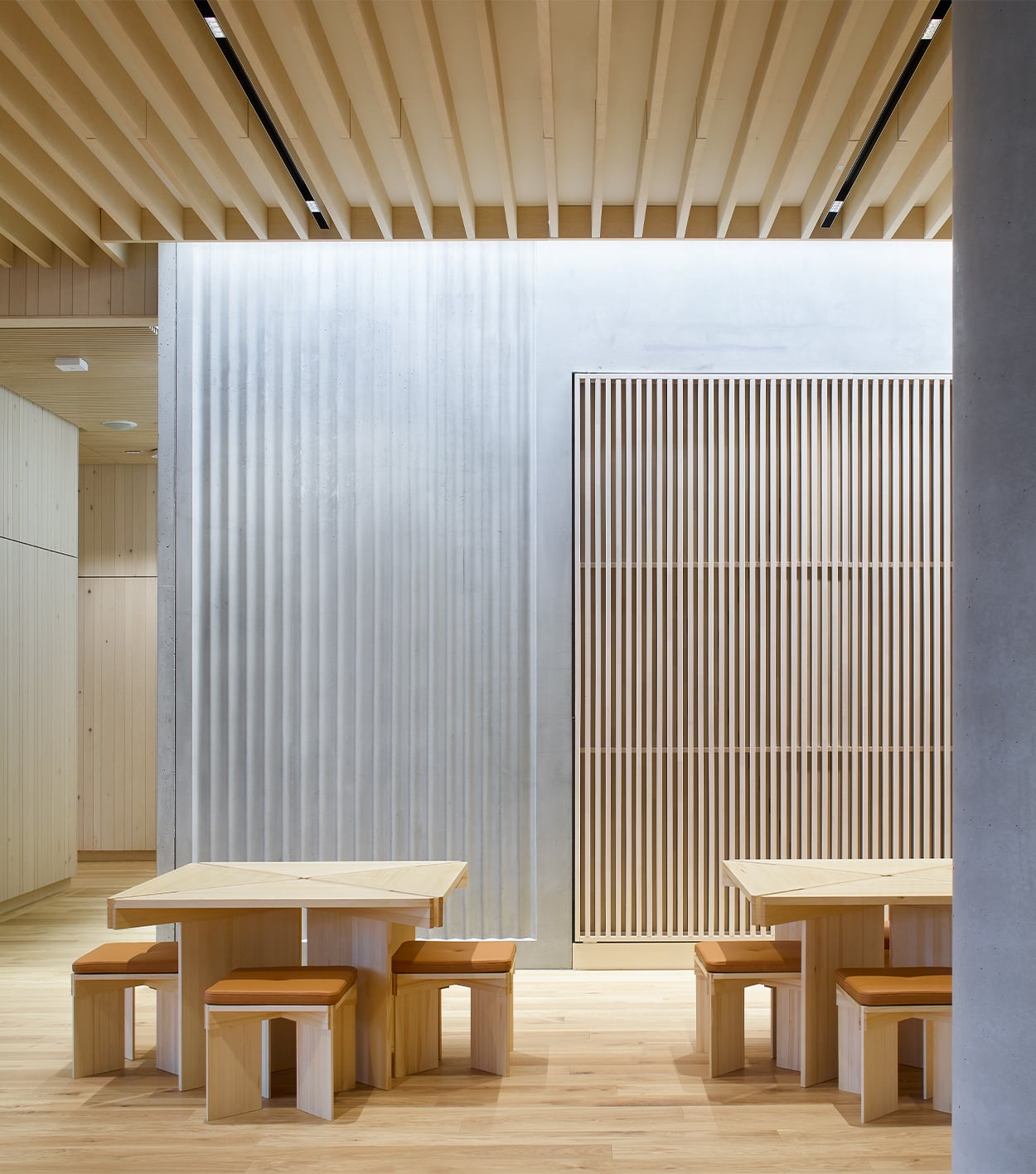
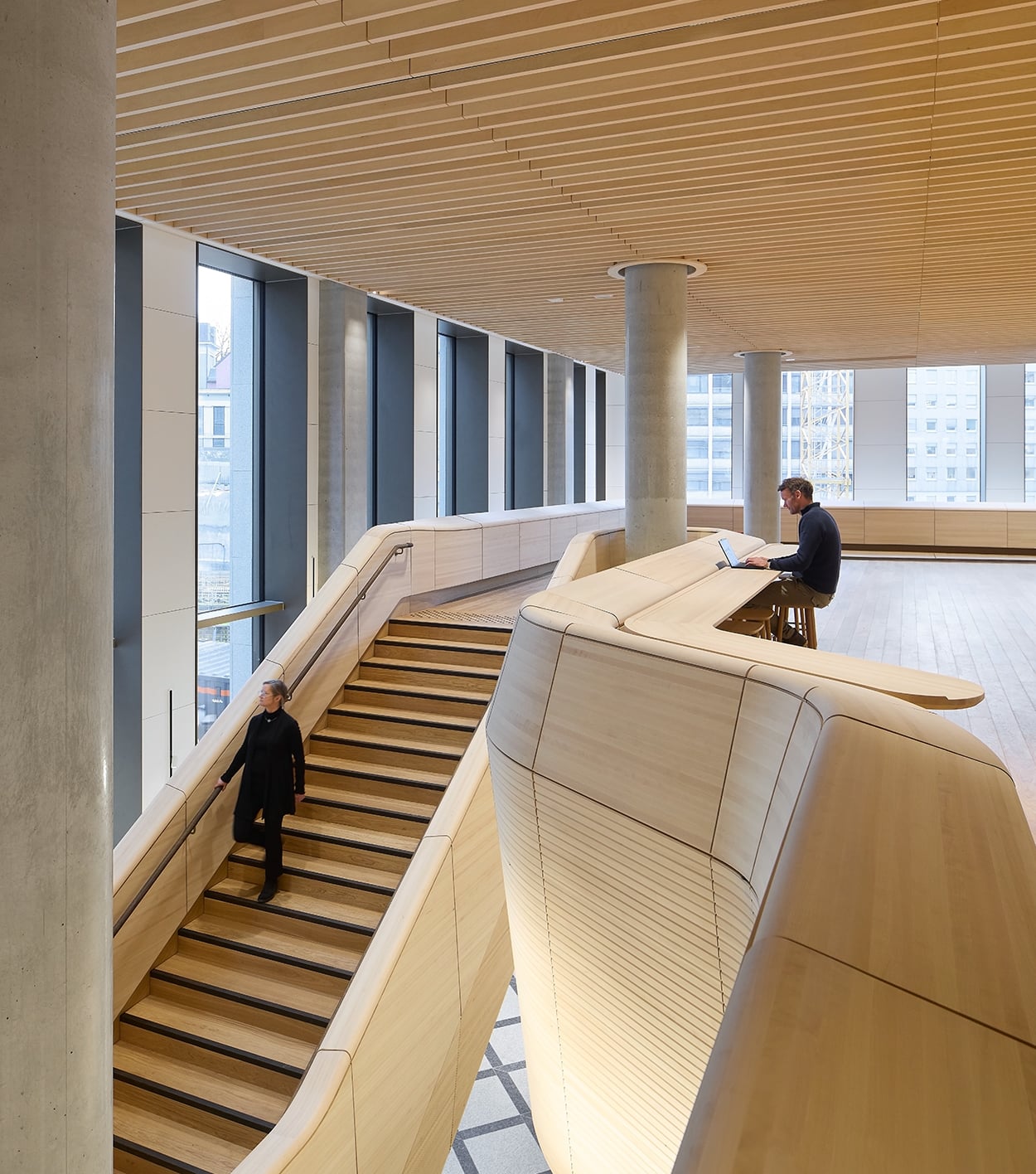
Inside, all the furniture was made by Norwegian designers, including 20 percent that was reclaimed and restored from previous government buildings. Crafted details, from ribbed concrete walls to an undulating wooden balcony, add warmth and atmosphere—the latter created in collaboration with skilled boatbuilders. The light timber used throughout the various buildings is designed to be emotive—the smell of wood, the architects say, triggers nostalgia among Norwegians. The use of local materials—alongside seawater-based heating and cooling and planting of native trees—also helped achieve the country’s highest environmental building standard.
The notion of nostalgia hints at both the ambition and contradiction embedded in this project. In engineering openness and appealing to emotional attachments, the architecture acknowledges the politics is always, to an extent, theatrical. Buildings cannot erase trauma, transform ideologies, eliminate violence, or heal divisions. But they do model values—whether in forcing interpersonal encounters, designing in visibility, or rebalancing power. The impact of this development on political culture remains to be seen, but at a time when many governments are constructing barriers and stoking animosity, it’s a welcome tonic.
Would you like to comment on this article? Send your thoughts to: [email protected]
- No tags selected
Latest

Profiles
In Mexico, This Architect Designs for Those Who Stay
Fernanda Canales represents a new generation of Mexican women architects.
Projects
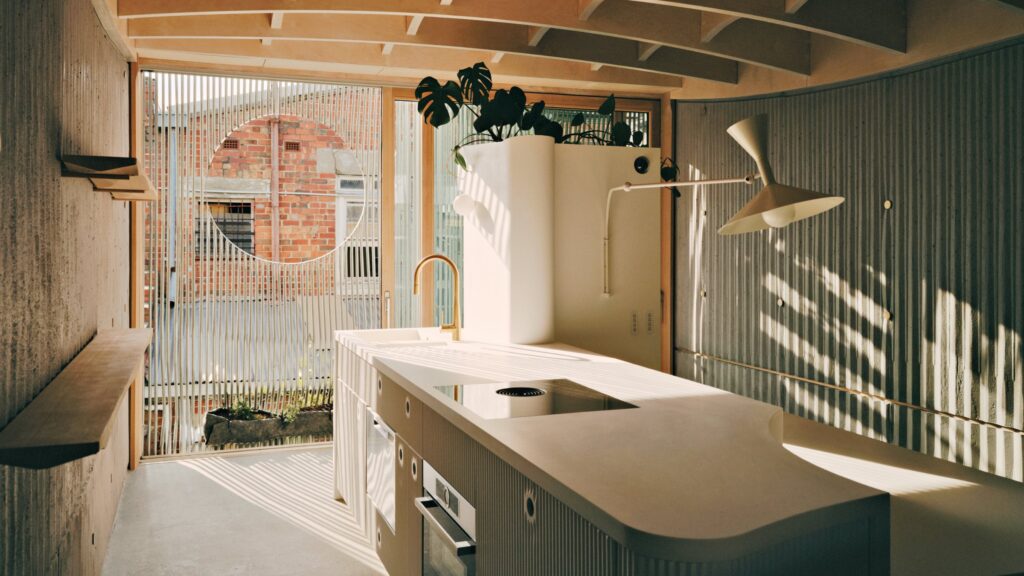
An Urban Infill by LLDS Is Breaking the Mold in Melbourne
Transforming the Victorian terrace home typology, Northcote House sets the stage for digitally fabricated design.