



December 15, 2025
A Circular Apartment Block in Rotterdam Sets a New Green Standard
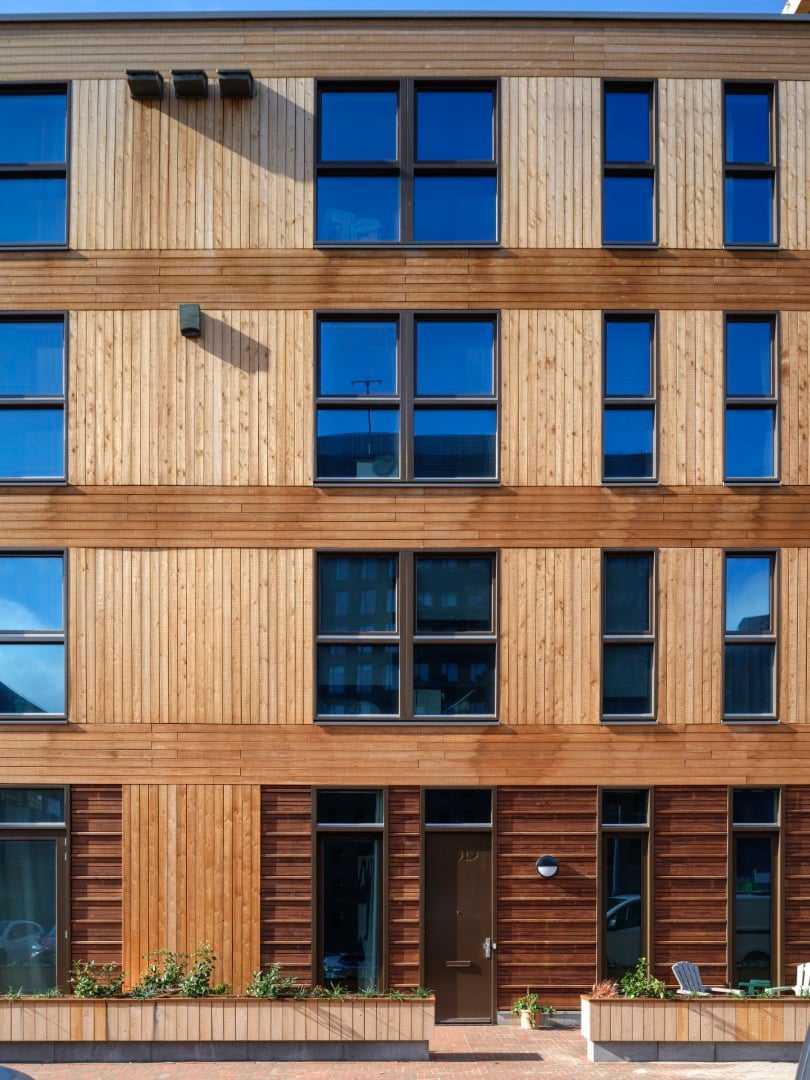
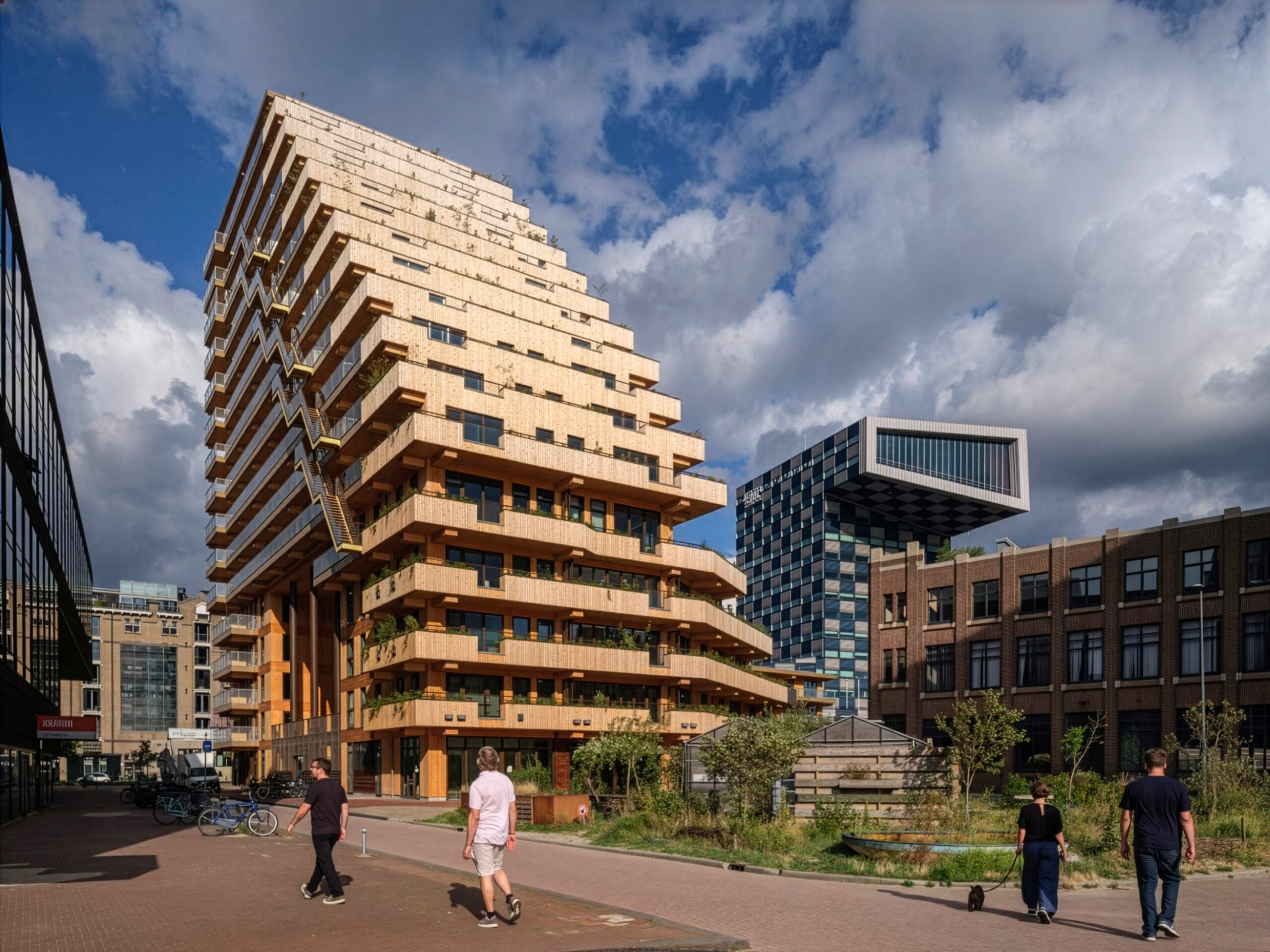
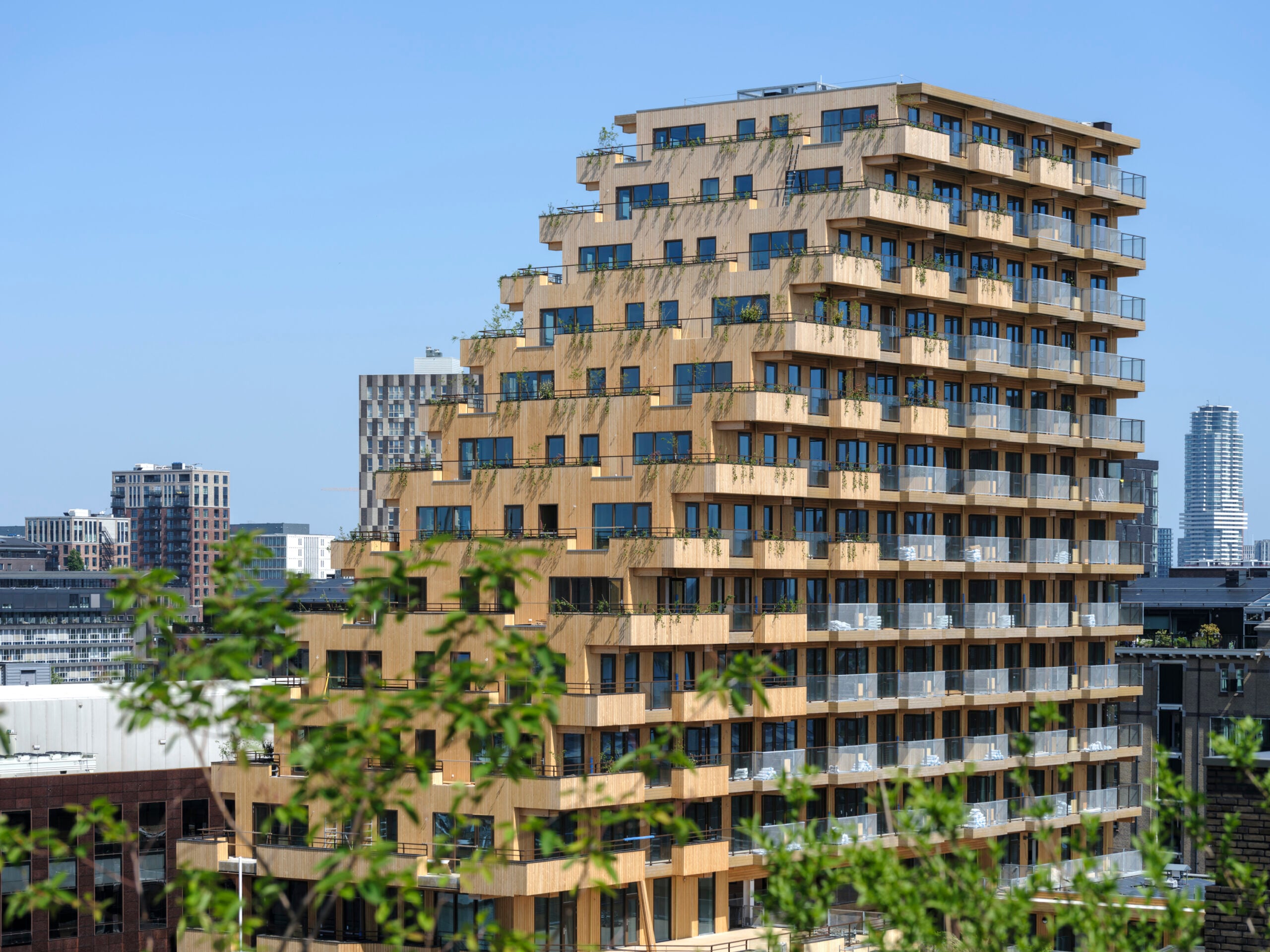
Commissioned by NICE developers and construction company Era Contour, the 164-foot-tall timber-clad apartment block has a supporting structure made of CLT. The wooden elements were assembled by six people in 26 weeks using a whopping 750,000 screws says Robert Winkel, founder of Mei architects and co-founder of Nice Developers, a development company whose aim is to make construction more socially minded and sustainable, likening the process to putting together “a massive piece of IKEA flat pack furniture.”
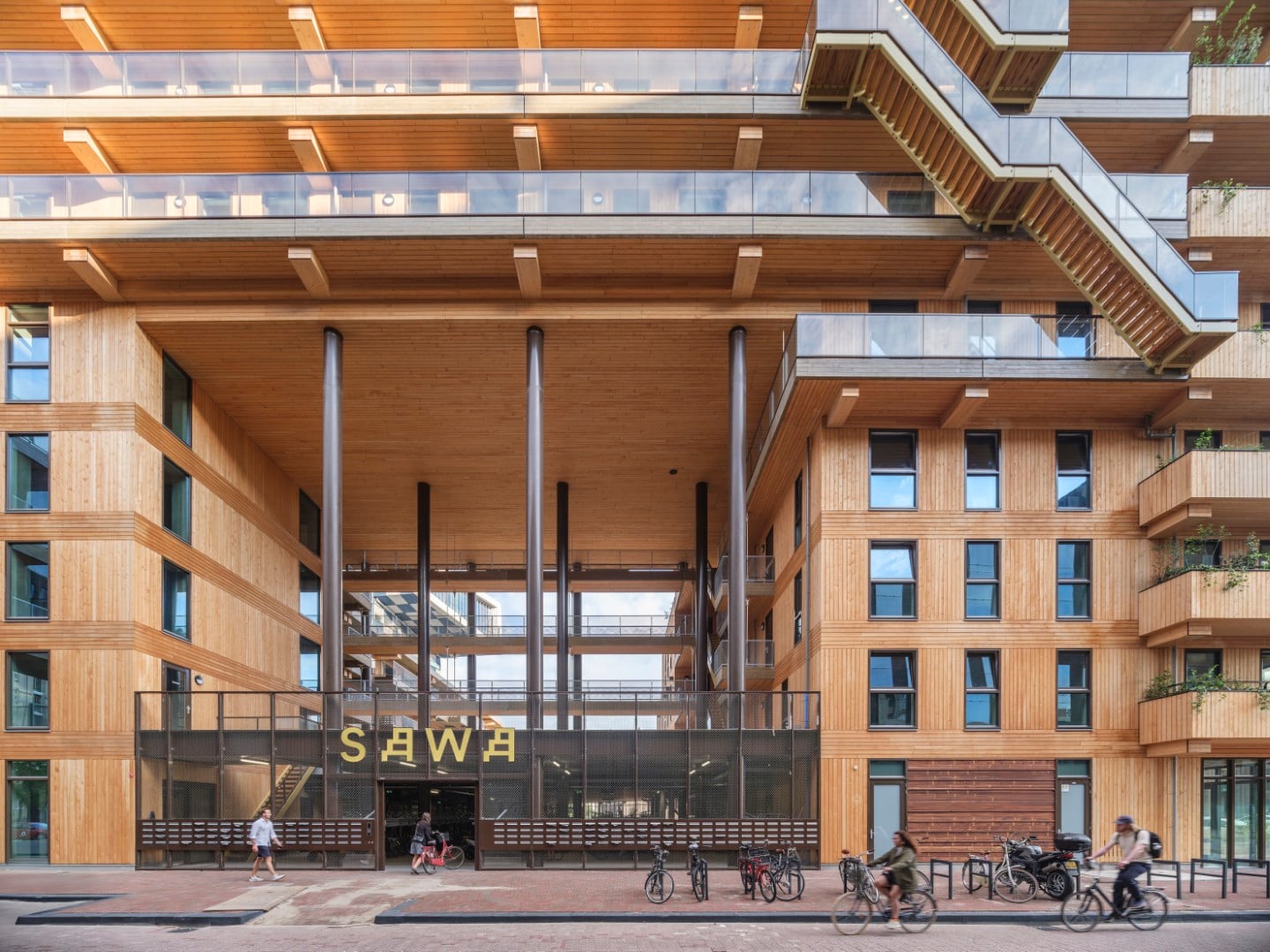
There was almost no need for noisy or messy machinery as only the foundation piles, parking deck, and elevator core are made of concrete though the next, taller CLT building the practice is hoping to build in Paris will have an “all-timber core.” for A TV broadcasting studio located in the building requested that a void be cut out of the volume to facilitate distant views to the river. This intervention required steel columns, but what started as an irksome planning requirement was turned into a virtue as the opening brings light into the street and gives the building’s entrance elevation a less monolithic and more welcoming appearance.
The project has already won plaudits for its ambitious carbon reduction and biodiversity goals. Over 2,500 tons of CO2 are stored in the structure and around 485 lbs. per 10.8 sq ft were emitted during construction (including all material preparation and transport), “less than half of what a typical construction project emits,” say the architects. The building features 2,130 linear feet of integrated planters across much of its facade containing 3,000 native plants and 140 nesting boxes for birds and bats have been installed across the project’s outdoor spaces.
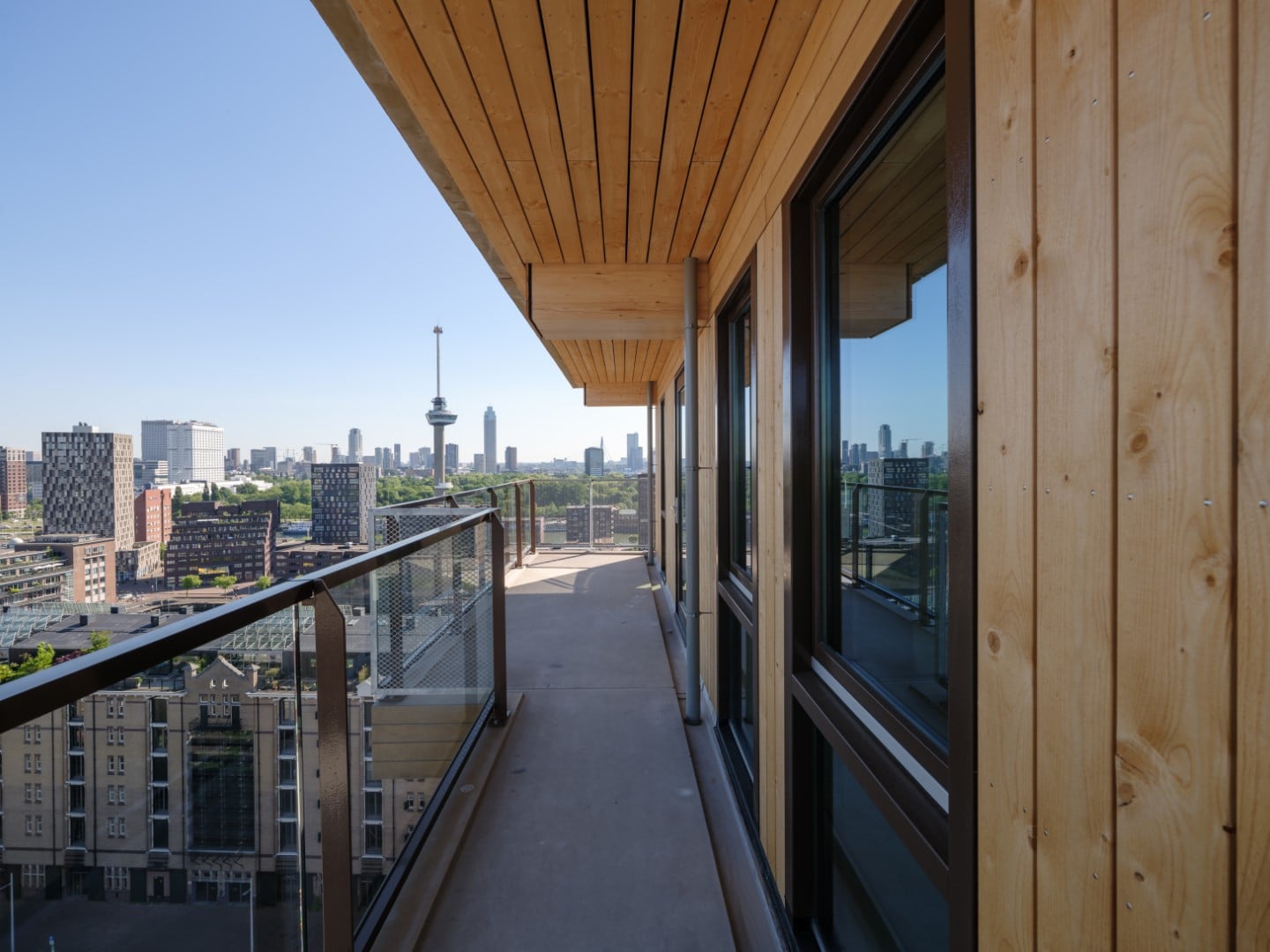
As inspiring are SAWA’s circularity credentials. The building is at least 90 percent demountable, thanks in part to innovative modular construction techniques such as the floors being made out of CLT topped with “roof pebbles” (or dry ballast) instead of concrete, and it can also easily be repaired. Internally the building is “highly adaptable” says Winkel as apartments can be combined or made smaller with ease.
Winkel also believes that buildings like SAWA can help resolve other urgent societal problems, such as the growing loneliness epidemic in many cities. “It’s a crazy statistic but two in 10 elderly people in the south of Rotterdam, which is a more deprived part of the city, don’t see people for several months at a time. But many young people suffer from isolation too.” Moving into one of the building’s 109 light-filled timber-ceilinged apartments, of which 50 are available at “mid-rent” prices would make that sort of isolation impossible.
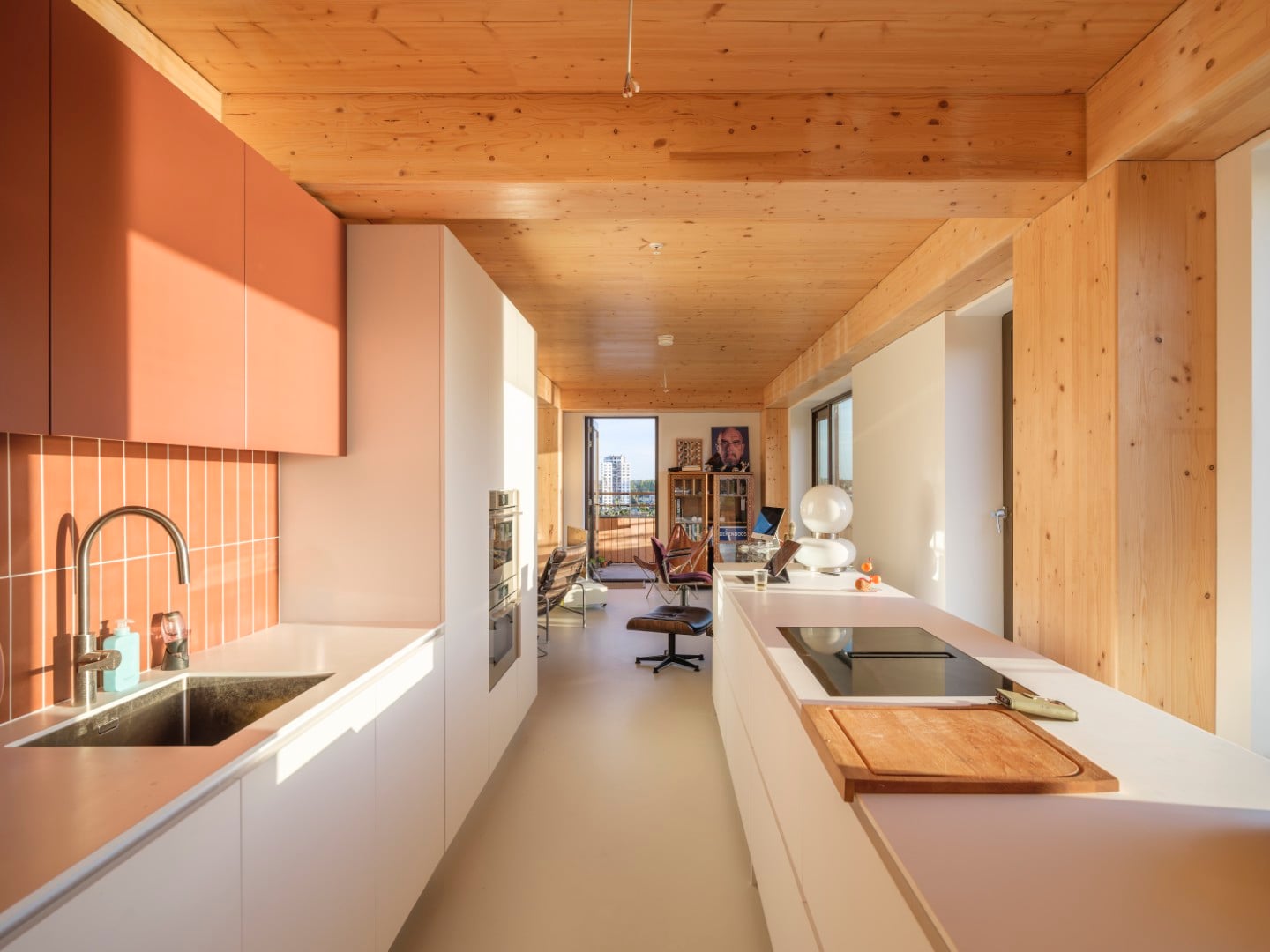
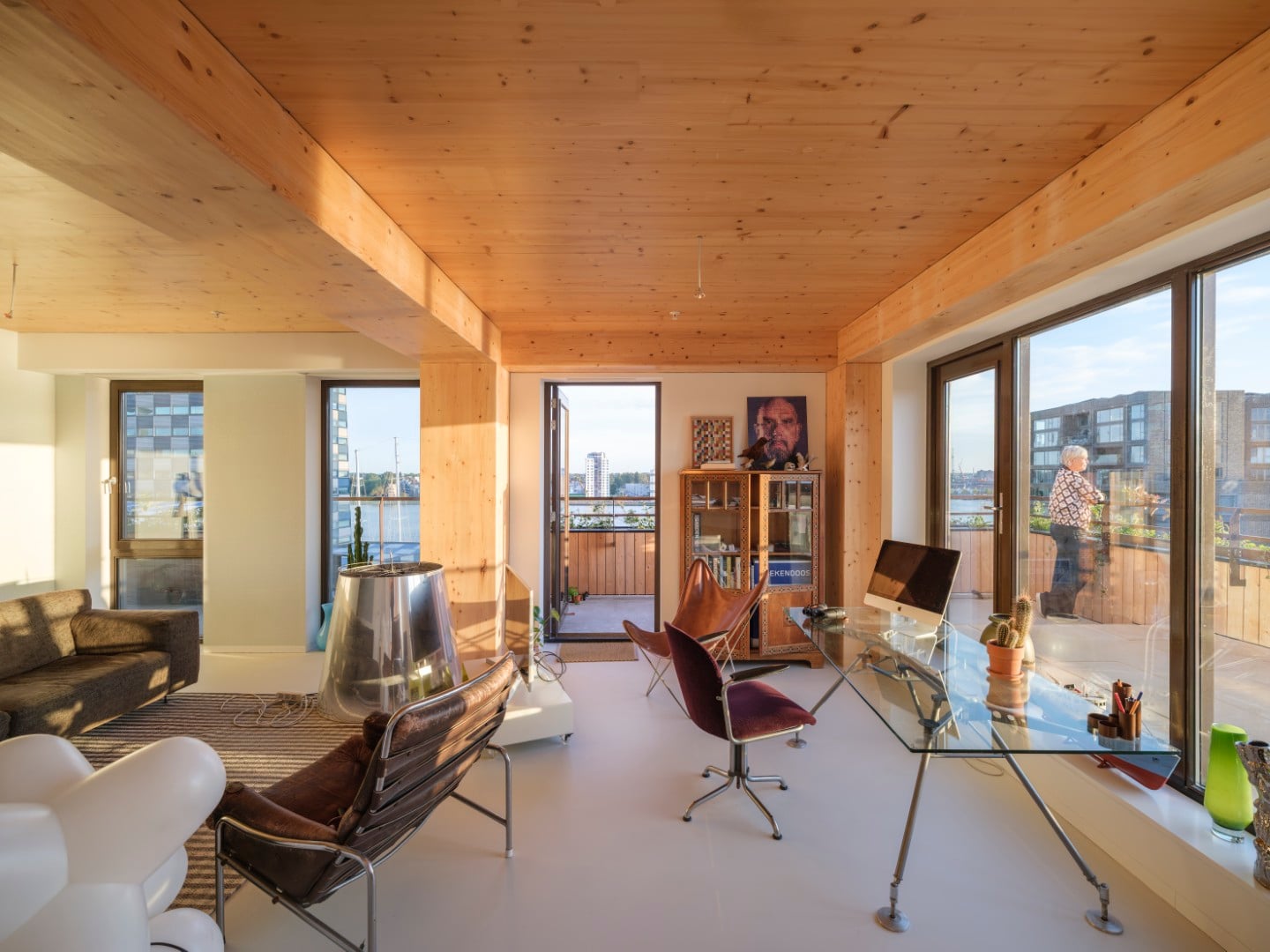
As well as 430-square-feet of outdoor space for each apartment (ten times the minimum amount required by national legislation), residents have the use of a communal tool/repair room, a large bicycle garage (with two electric cars for use by residents) and an 8,611-square-foot shared central outdoor deck. Filled with vegetable and flower beds for growing and a long, communal wooden picnic table with benches, the latter is an uplifting sun-filled space designed for social interaction. As are the generous covered walkways via which every home is reached. “Walkways have been unpopular in the past because they were often anonymous and not very pleasant places to be,” says Winkel, “but if you make good walkways, they become outdoor streets where people meet and stop to talk.”
“There is so much greed when it comes to house-building and many projects focus solely on profit maximization,” continues Winkel. “We decided instead to focus on social values, architectural design quality, and innovation.” In practice this meant aiming for profits of five percent instead of the typical 15 percent that a traditional developer seeking as large a return on investment as possible for its shareholders would try to achieve. Ultimately the project only made two percent in profits he says, “because it was our first time doing this.” But it achieved its arguably more important aim, of developing a new “green standard.”
“From now on everybody has to do this, or better.”
Would you like to comment on this article? Send your thoughts to: [email protected]
Latest
Projects
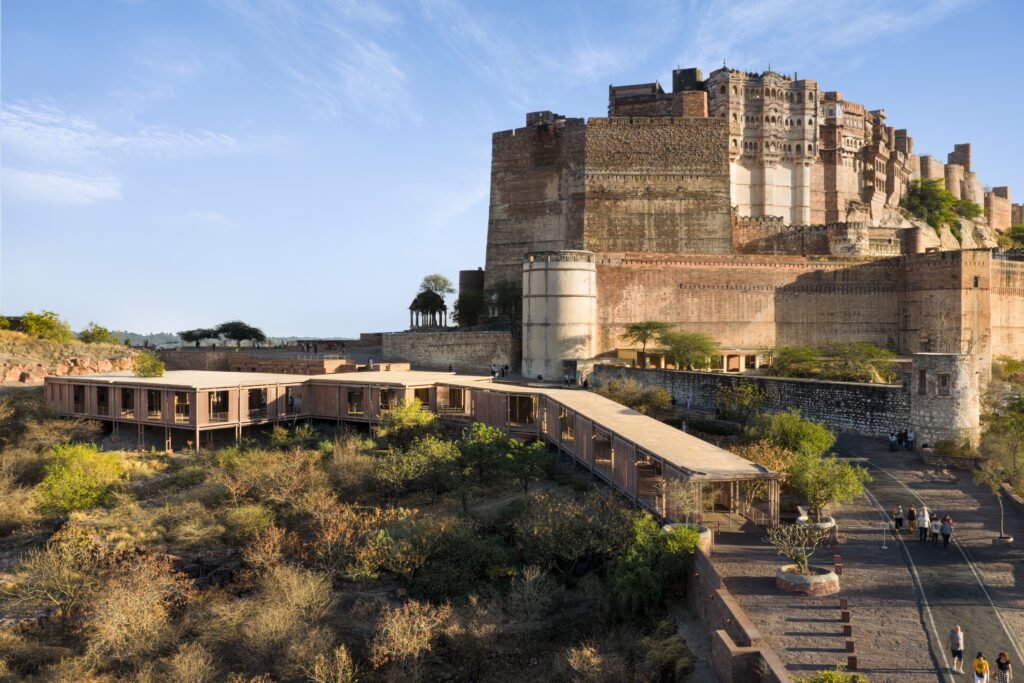
In Jodhpur, Studio Lotus Builds a Modular Future for Stone
Visitor Center at Mehrangarh Fort, sandstone-and-steel pavilions streamline visitor circulation, preserve rocky desert terrain, and give regional stone working traditions new applications.
Viewpoints
Celebrating the Craft of Architecture
METROPOLIS’s July/August 2026 issue, produced in partnership with Architizer, spotlights 25 standout projects and practices from the 2026 A+Awards.