




February 14, 2022
A Manifesto for the Metaverse
Lara Lesmes and Fredrik Hellberg, who founded Space Popular, the firm behind virtual artworks, experiences, and exhibitions—as well as this month’s cover—present: “8 Propositions for a Civic Portal Infrastructure for the Virtual Environment.”
1 CONSISTENT, STABLE, RELIABLE, DEPENDABLE, CERTAIN The way we move through the virtual environment must provide reliable and dependable spaces of access that do not change with every update. Communities require a degree of stability and certainty to build upon.
2 READABLE, RELATABLE, SYMBOLIC The portals to and across virtual environments must contain information about the space behind them that is widely legible. This will require the creation of a new grammar of material behaviors, graphics, and signs to be incorporated across all access points.
3 SHARED, NETWORKED, INTERCONNECTED The portals to virtual environments must be interconnected and consistent throughout, appearing the same to all citizens of the virtual environment at any given time. We must perceive the same if we are to understand a space as shared and a group of people as a community.
4 INCLUSIVE, TRANSPARENT, FAIR In virtual environments discrimination, inequality, and injustice will be possible in completely new and less transparent ways than what we already experience today. Owners of virtual environments are capable of using biometric data and other personal information to determine if access is restricted or refused. We must build transparent civic systems of access to the virtual environment where discrimination becomes visible and therefore can be addressed.
5 CIVIC, PUBLIC, COMMUNAL Currently browsers are the unquestionable access point, the place where it all begins, for all of our virtual strolls. The fact that most browsers are owned and operated by for-profit companies means that from that first step we already enter a commercial realm. The means of navigation must operate as civic infrastructure for the benefit of its citizens.
6 CHEAP, EFFICIENT, AFFORDABLE, SUSTAINABLE The calculations involved in bringing us from one virtual place to another, and allowing us to stroll through options, must be computationally efficient and consume as little energy as possible. The environmental impact of virtual spaces should also be part of the information communicated to the citizens of the virtual environment at the point of entry.
7 INTEROPERABLE, COMPATIBLE, OPEN The hyperlink is integral to the World Wide Web as we know it, experienced so far mostly in its flat version, through screens. The underlined blue text or the buttonlike graphic takes on a third dimension and becomes a portal as we enter the virtual environment. In doing so, such portals must be based on protocols that are able to exchange and make use of information across spaces.
8 WOVEN, THREADED, INTERLINKED The portals across virtual environments must be able to express how they are woven together, showing threads to other places and revealing the knitted network they are a part of. The expression of such portals must also be familiar and cognitively coherent with our only three-dimensional frame of reference: the built environment. Fabric provides a versatile affordance, an inviting metaphor, and a canvas for information.
Would you like to comment on this article? Send your thoughts to: [email protected]
Recent
Projects
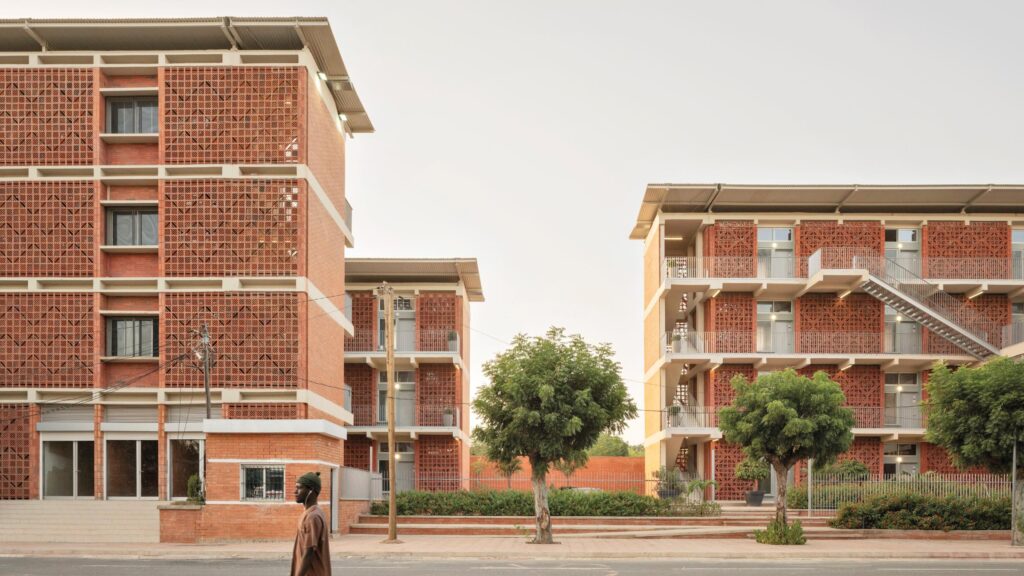
Student Housing That’s Resilient by Design
A bioclimatic university project in Dakar weathered ten years of change by staying flexible—and, in doing so, made a case for building African architecture from African earth.
Viewpoints
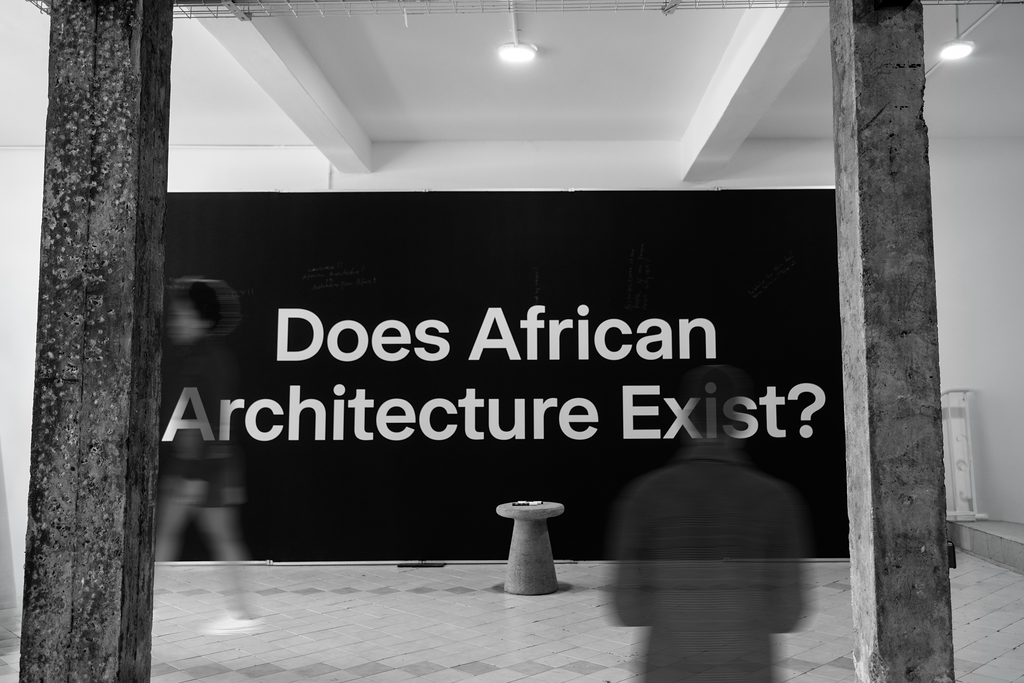
Moving the Center: Nairobi’s Pan-African Moment
The inaugural Pan African Biennale in Nairobi brought together practitioners to question how African architecture is represented.
Products
19 Products Specified in A+Awards-Winning Projects
Discover lighting, furniture, fixtures, facades, and materials recommended by the leading architects featured in METROPOLIS’s July/August 2026 issue.