



March 13, 2026
Four New Roadblocks on the Path to Sustainable Buildings
01 THE RENEWABLE ENERGY “CLIFF”
The U.S. building sector has reduced its energy use by 8.2% since 2005, Architecture 2030 founder Edward Mazria reported in Architect magazine in August 2025, while adding 70 billion square feet of buildings over the same 20-year period. That is certainly a success story, but it doesn’t mean that we can now safely rest on our laurels until 2030 and beyond.
On the supply side, U.S. energy production is amid an upheaval. In 2024, the U.S. generated 24% of its energy from renewable sources and 17.6% from nuclear plants, and that trend was broadly expected to continue. But rescissions and budgetary clawbacks by the federal government in 2025 have slowed the expansion of renewable energy. The nonprofit E2 has estimated that there were about $22 billion in losses from the cancellation of clean energy projects in the first half of 2025, even before the passage of the Big Beautiful Bill. It remains to be seen how private funding sources and
state measures, such as California’s Proposition 4, which voters approved with a $10 million bond to fund clean energy among other things, will step in to fill the gap. If they fall short, we might be looking at a drop-off—a “cliff”—for renewable energy in 2026 and beyond.
On the demand side, building electrification and renewables have largely fueled architecture’s progress toward net-zero construction, making these the pathways recommended by climate change–focused policies in U.S. cities. New York’s Local Law 97, for example, requires building owners to report on their operating emissions at regular intervals and to comply with ever-stricter limits until the buildings reach net-zero emissions by 2050. For the first reporting period, which is based on performance in 2024, a vast majority of buildings covered by the law are already in compliance. And looking ahead to 2030, “It’s my opinion that at least 80% of building stock in New York City can meet 2030 [requirements] without any major electrification projects. If they get themselves tuned up and running tightly, they’ll be fine,” Tristan Schwartzman, principal and director of energy services at engineering consulting firm Goldman Copeland told Engineering News-Record earlier this year. But beyond that milestone, project
teams and building operators will have to get creative. If renewable energy cannot easily step in to bridge the gap for electrification and building systems, getting to net zero will undoubtedly be a challenge.
02 OUR BIG GOALS ON WATER
While the U.S. architecture and design community has a robust industry-wide understanding of the carbon emissions of buildings—the concepts of operational and embodied carbon, the lifecycle assessment methodology, and a host of targets and milestones for decarbonization—a similar body of knowledge does not exist for water.
One can cobble together a general picture. In 2017, the National Association of Home Builders estimated that residential water use accounted for approximately 8% of all water use in the United States. Meanwhile, the EPA estimates that commercial and industrial buildings account for 17% of withdrawals from public water supplies. That would put operational water use at about 25% of public water supplies in the United States. A September 2025 study published in Resources, Conservation, and Recycling Advances concludes that embodied water, i.e., the water used in manufacturing building materials and constructing building, might represent 15 to 18% of global freshwater use. Embodied water is still a new area of study, and estimates for the United States are not available.
In the absence of an industry-wide water milestone or target, building certification systems set their standards against EPA baselines, rewarding total water independence, water treatment, and conservation.
Groundwater depletion, in the meantime, is a rapidly evolving crisis in the United States. The New York Times reported record levels of water loss in 2023, and this year it pointed out an alarming consequence of overpumping: 25 of America’s largest population centers are sinking as the aquifers that supply them are depleted.
03 ACCOUNTABILITY OUTSIDE THE PROJECT SITE
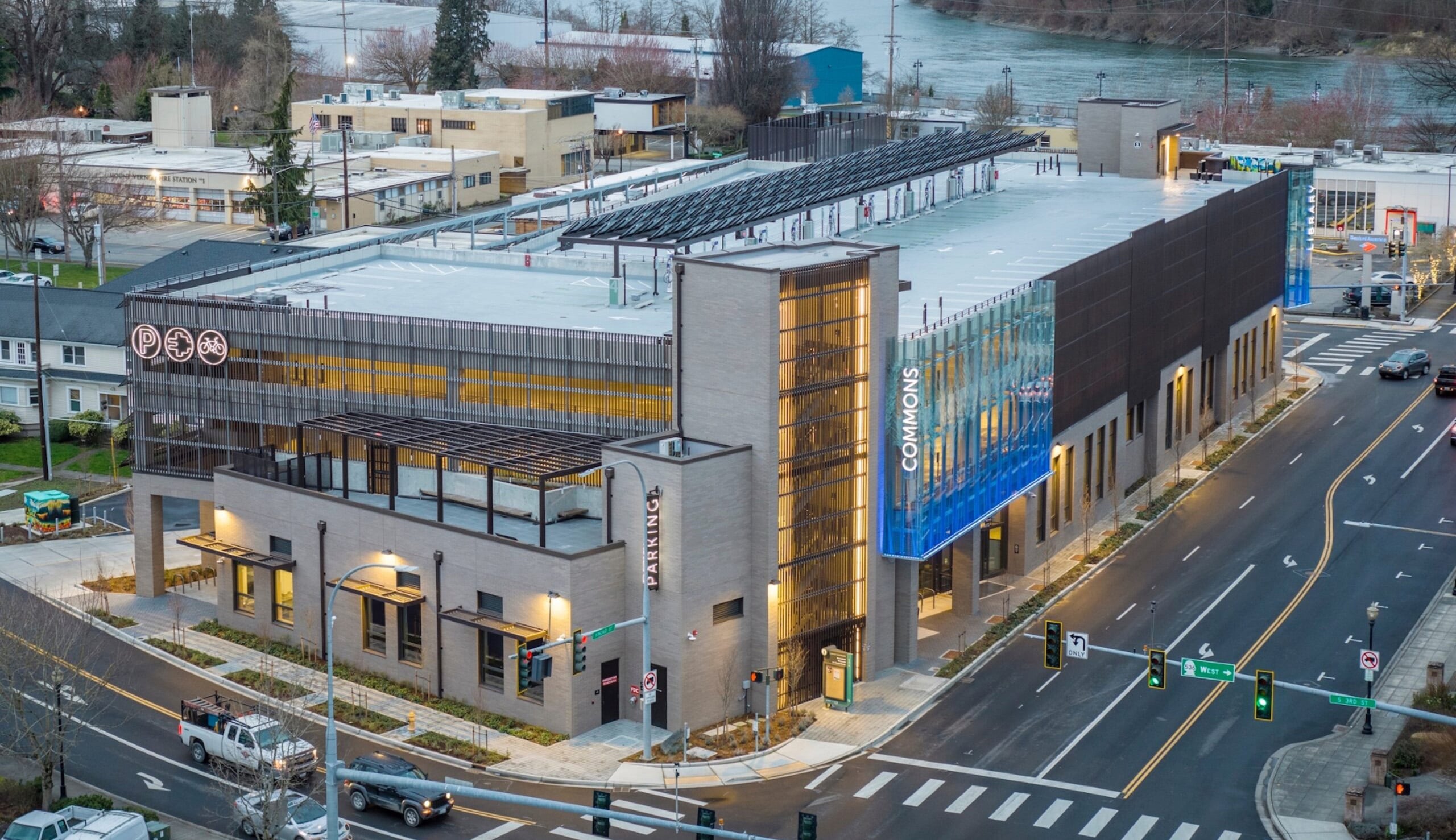
In the aftermath of the Los Angeles wildfires in January 2025, some estimates pegged total economic losses as high as $250 billion. The insurance payout in claims will likely be around $40 billion, the largest insured loss from a wildfire ever. To pay out its claims, California Insurer Fair Access to Insurance Requirements required a $1 billion payout; at least half of that cost will ultimately be borne by all California insurance policyholders. Because of the interconnected nature of our finance and insurance systems, sometimes when individual buildings are affected, communities pay.
Resilience is a cornerstone of a sustainable built environment, and this is appropriately recognized in sustainable building certification systems today, but mostly within the bounds of the project site. LEED v5’s resilience-focused elements, for example, include prerequisite site management policies, prerequisite assessments for climate resilience and occupant needs, and credits for operational planning and response, indoor air quality performance, and grid harmonization. However, the financial incentives for resilience measures, including insurance, could soon be geared toward locally coordinated approaches.
The World Economic Forum recently highlighted the success of community-based insurance solutions that tie together insurers, governments, investors, and communities. In California’s Lake Tahoe region, neighborhood-wide resilience improvements undertaken as part of the local Safer from Wildfires framework can qualify residents for discounts from multiple insurers. Similarly, communities in Key West, Florida, can earn discounts on their premiums when they invest in flood-risk reduction, as part of the National Flood Insurance Program’s Community Rating System.
“If you look at the indicators in the insurance markets and the indicators in the investment markets that are starting to price in this risk, it is unclear who’s actually going to be responsible for managing [projects] to those outcomes,” points out Brendan Owens, chief sustainability officer and principal at HKS. In a possible future scenario, projects would not only need to take care of the needs of owners and occupants but might also become accountable to their neighbors and communities for successful outcomes in the wake of a hazardous event like a wildfire or a flood.
04 THE EXPLOSIVE GROWTH OF DATA CENTERS
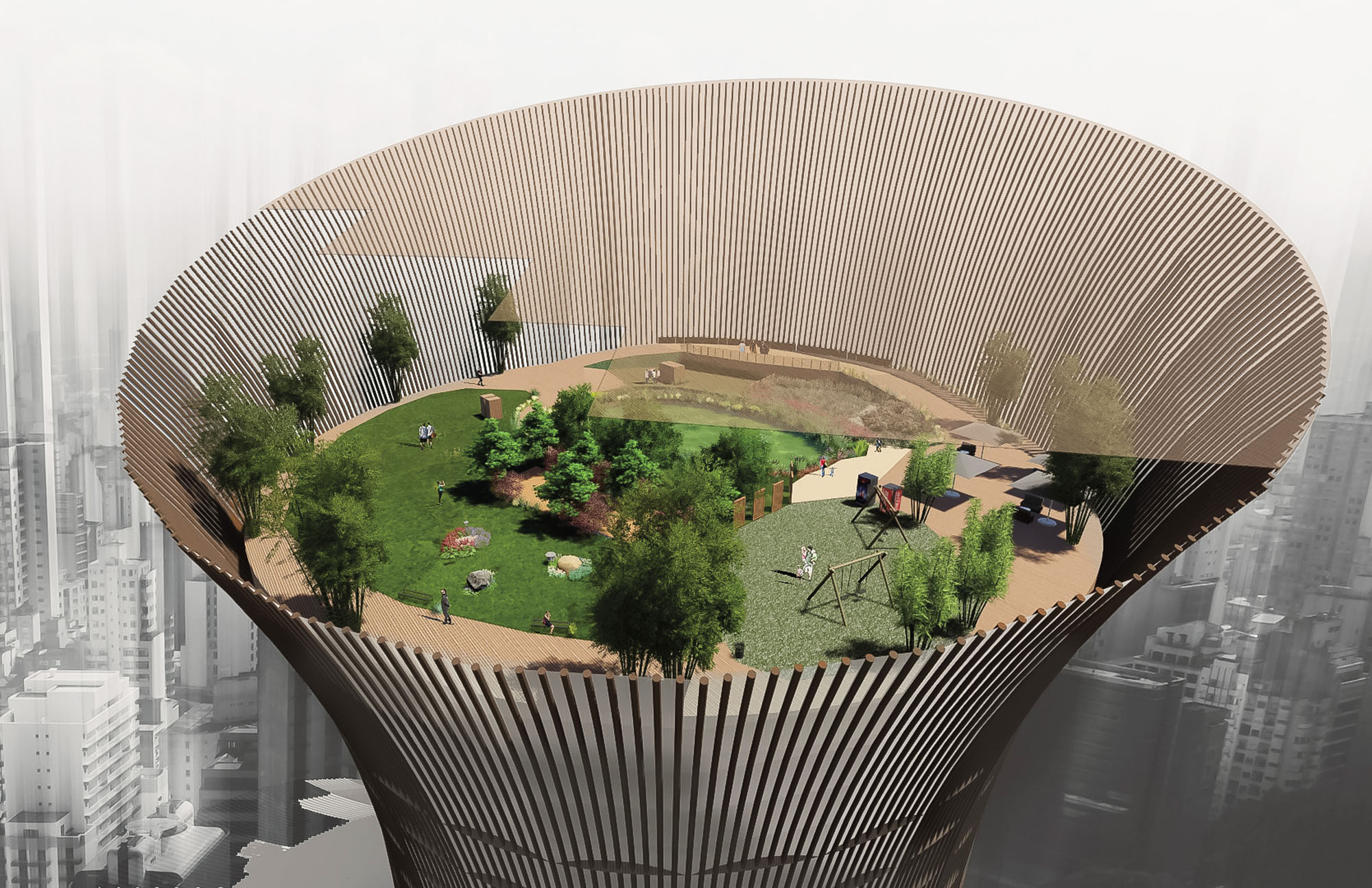
As of November 2025, the United States had 4,165 data centers, far outstripping the U.K.’s 499 and China’s 381. S&P Global estimates that these data centers used 22% more energy in 2025 than they did in 2024—an increase of more than one-fifth in a year. This immense energy requirement is coupled with a significant water demand: A single data center might need nearly 300,000 gallons of water per day. Further, this energy and water use is tied together in a particularly challenging way, the finance company MSCI points out in a December 2025 blog post: “Water-based cooling can be more energy efficient but increases water consumption, while air-based cooling systems conserve water but require more electricity.”
To meet energy demands, JLL reports, tech giants are investigating small modular reactors (SMRs), which are smaller-scale nuclear reactors that require lower upfront investment, have enhanced safety features, and can be constructed using modular or factory-fabricated components. AWS and Google have reportedly signed power purchase agreements with SMR developers in the United States.
Meanwhile, data center builders and operators are also looking into a host of water-saving strategies, including dry-cooling technologies and more efficient cooling designs. To benchmark and promote best practices in the sector, certification body GBI launched its Green Globes Data Center certification in November 2025.
The impacts of data centers will go beyond operational energy and water, though, as issues of land use, adaptation of existing building stock, ecosystem impacts, and community backlash all come into play. There will undoubtedly also be opportunities for knowledge sharing on resource efficiency and energy generation between data centers—which are a locus of investment at the moment—and the broader built environment.
Viewpoints
Report: METROPOLIS Weighs in on Sustainable Design in the U.S.
The METROPOLIS Interface U.S. Sustainable Design Report 2026 captures the state of green building today and what comes next.
Download NowWould you like to comment on this article? Send your thoughts to: [email protected]
Latest
Viewpoints
Detroit Month of Design: A City’s Work in Progress
Now in its 16th year, the celebration offers insights into the Motor City’s ongoing accomplishments without glossing over its hurdles.
Projects
How a Hybrid Building Helped an Historic Manhattan Congregation Remain in Place
On Billionaire’s Row, FX Collaborative designed a new home for Calvary Baptist Church combined with an office tower.