



February 27, 2026
How Robotic Homebuilding Is Accelerating the Pacific Palisades Rebuild
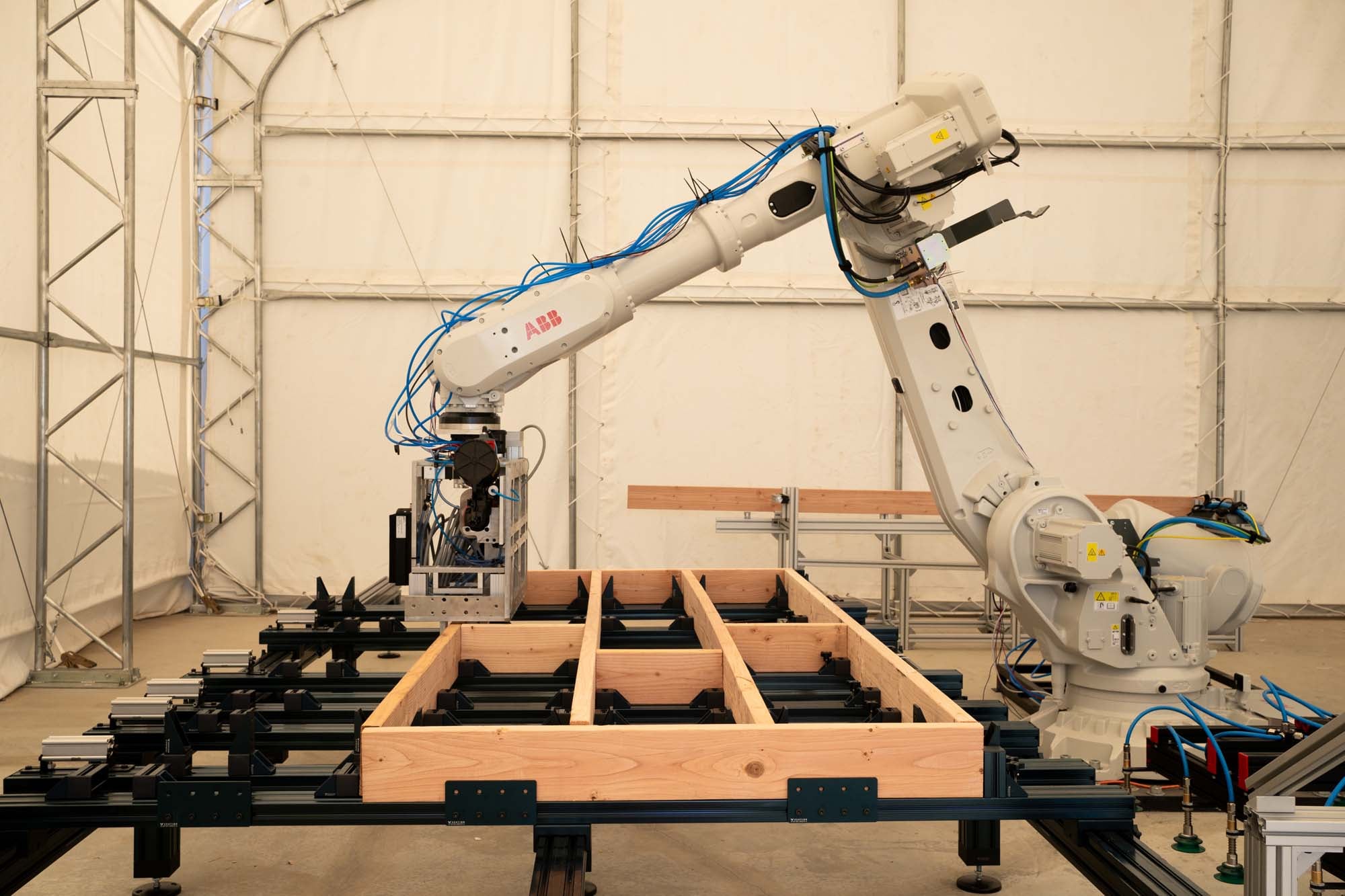
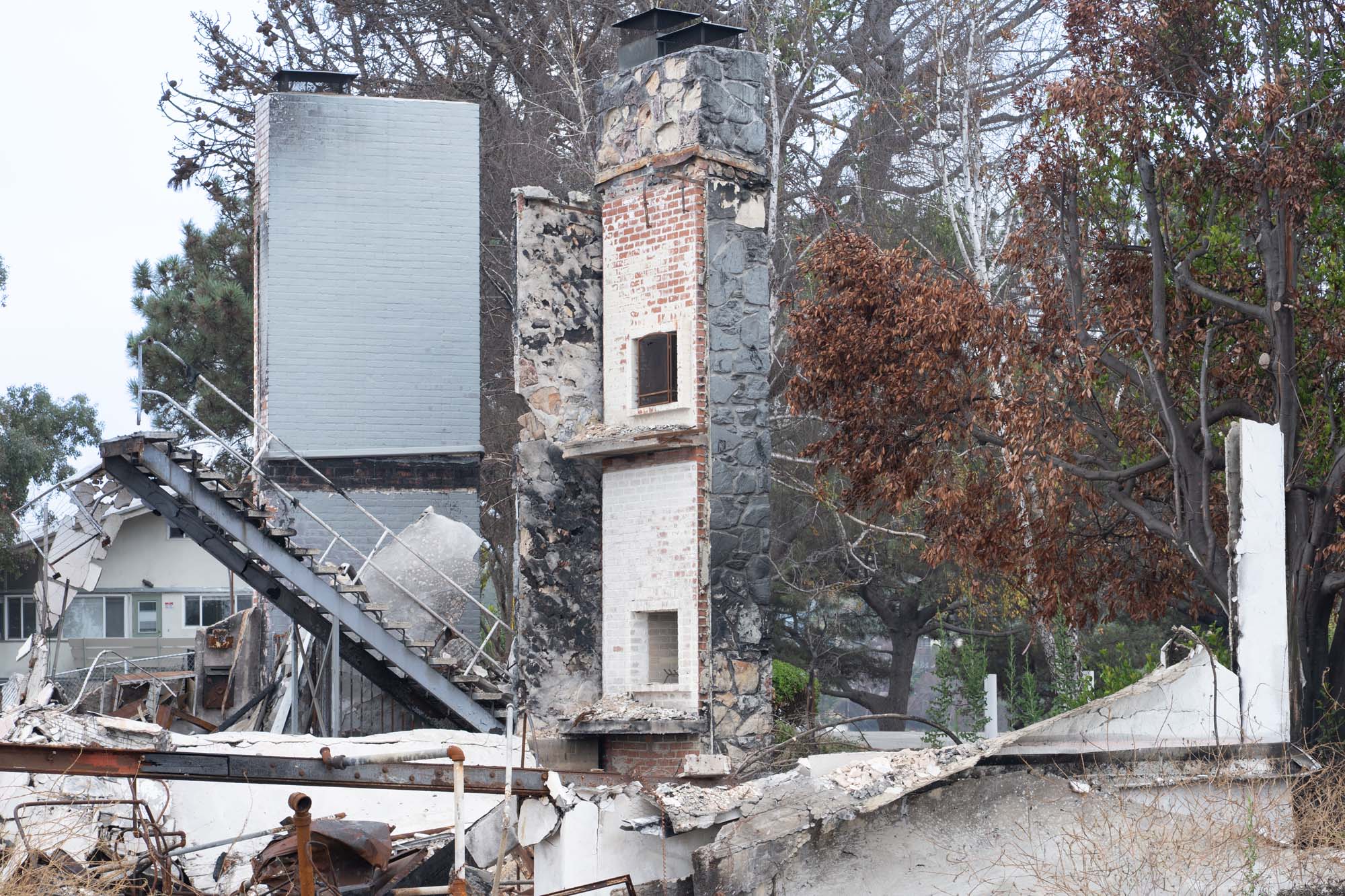
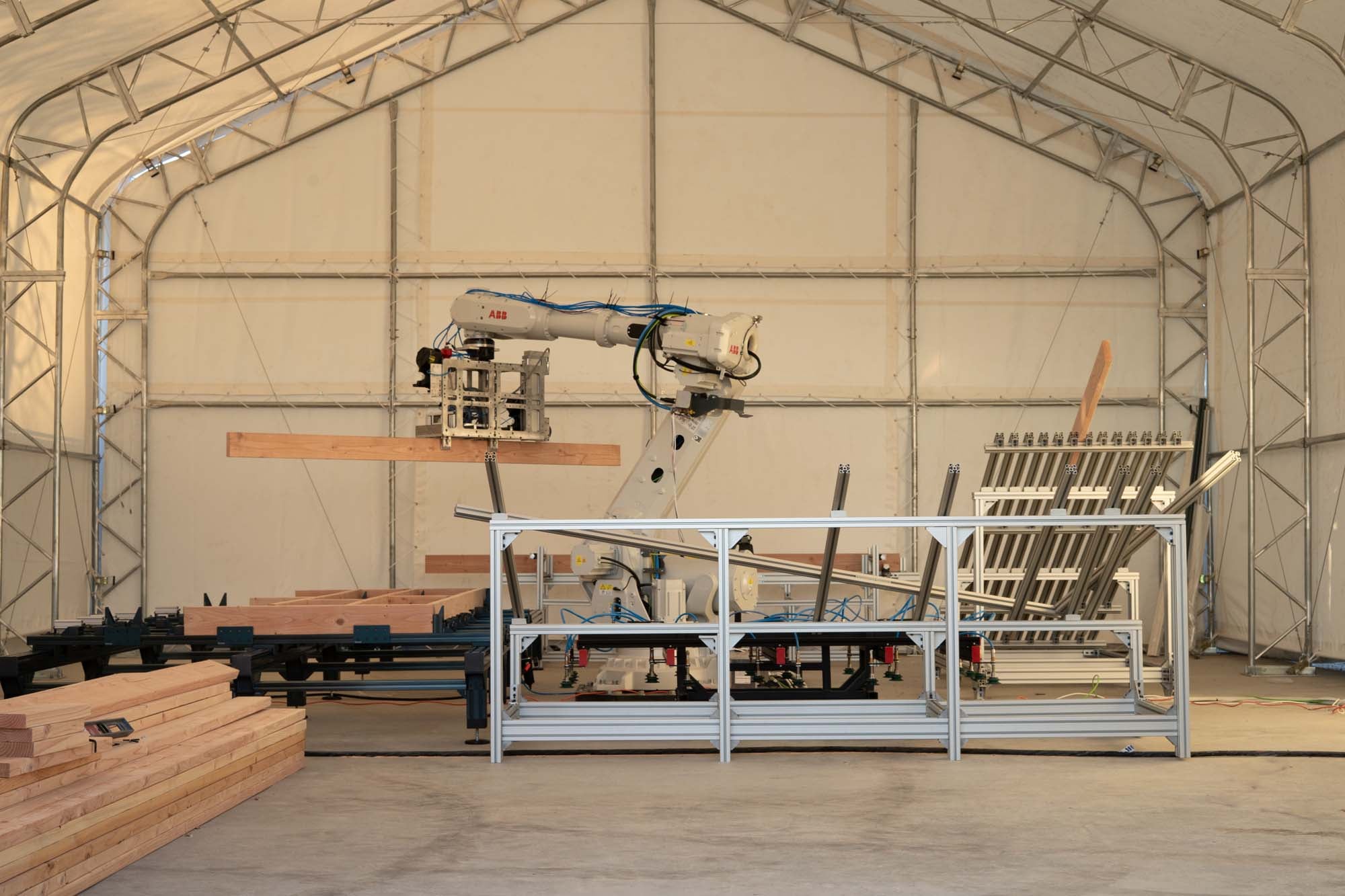
The brutal emptiness of post-cleanup Pacific Palisades is starting to reveal glimmers of life. Construction signs now dot many empty lots, and the frames of a few houses are—somewhat shockingly—starting to pop out of the ground. On a lot in Lower Marquez, a neighborhood just above Sunset Boulevard with views to the ocean, a robotic arm is humming softly under a white tent. It’s cutting, drilling, nailing, and assembling wooden panels with rote precision. This is the heart of Cosmic Buildings’ “mobile robotic factory,” a portable construction system designed to rebuild faster, cheaper, and smarter than conventional methods.
Founded in 2022 by Croatian-born architect Sasha Jokic, Cosmic is among a fast-growing group of companies bringing automation to residential construction. But while others focus on prefab factories or creating 3D-printed concrete shells, Cosmic employs the region’s familiar stick-built construction, albeit via robots that can be deployed directly to a job site, fabricating wall, roof, and floor panels within days.
“We didn’t reinvent the building—we reinvented the process,” Jokic says. “Instead of forcing people to adapt to prefab, we bring the factory to them.”
Bringing the Factory to the Job Site
Inside the tent, Jokic demonstrates how the process works. The robotic arm—trained through AI-assisted software—cuts and assembles modular framing panels, reducing manual labor by about 60 percent and construction waste by even more, Jokic says.
Each home or ADU begins as a digital model, where Cosmic’s AI plug-in checks for code compliance and structural efficiency. The software can generate initial layouts and cost out materials in just a few days (versus the typical weeks), Jokic explains. Once a client has chosen a design, and the firm has completed construction documents, the robot gets its marching orders.
Framing for a 2,000-square-foot home can be completed in as little as ten days, and an entire home—finished (via human workers) with cabinetry, appliances, and solar arrays—delivered within four to six months. That’s roughly three times faster and 30 percent cheaper than a conventional build, says Jokic. The robots’ role on site is now limited to producing wall, floor and roof panels, but it will inevitably expand, says Jokic.
The owner of Cosmic’s first site, tech entrepreneur Aaron George, never moved into the house he bought before the fire destroyed it. The company, says Jokic, is now working with around 40 clients in various stages of design or permitting in the Palisades, Malibu, and Altadena.
Designing for Fire, Speed, and a New Housing Reality
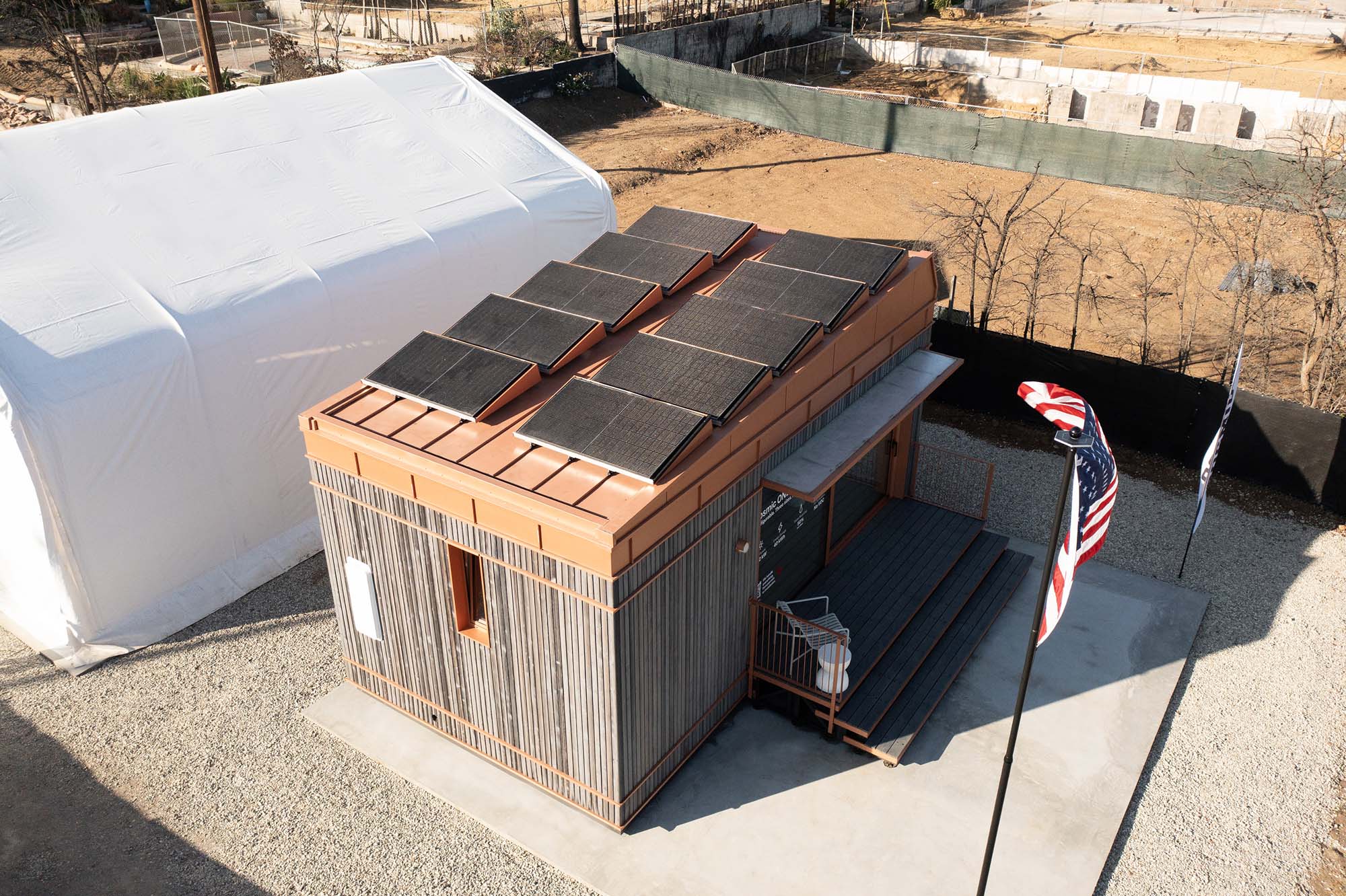
Every Cosmic home is built to exceed wildland–urban interface (WUI) standards, the codes created for the high-risk border between development and chaparral. Walls are wrapped in Rockwool insulation then clad in either cement board, aluminum, or charred wood sheathing—non-combustible materials that also dampen sound and improve thermal performance. Roofs consist of Kynar-coated panels. Inside, homes feature built-in fire sprinklers, fire-rated drywall and aluminum trim, and dual-pane, tempered glazing. The fire resilience, says Cosmic’s COO Kent Newmark, is attractive to insurers increasingly wary of underwriting California homes. (The company is talking to several companies about pre-insuring their builds moving forward.)
“We’re not dependent on exotic systems or specialized crews,” adds Newmark, who grew up in the Palisades himself.
Jokic grew up in Yugoslavia, where as a teenager he lost his own home during the Balkan wars. “It took my family five years to rebuild,” he recalls. “I fell in love with construction because I had to learn it from the ground up.” After studying architecture in Serbia and Spain, he worked for UN Studio and other international firms before turning to robotics.
“I couldn’t accept that 80 percent of projects are late and over budget,” he says. “Other industries industrialized long ago. Why not construction?”
His mobile factory model allows Cosmic to fabricate panels within a few yards of any foundation. No cross-state shipping, no fixed factory investment. “We can deploy anywhere,” says Jokic. “Disaster zones, rural areas, emerging economies—anywhere the need is urgent.”
The company’s automated approach, Jokic says, allows for far more customization than typical prefab. Cosmic’s team offers a series of modern home templates—including Mid-Century-inspired, modern farmhouse, and homes with butterfly roofs—that can be mixed and matched through AI-assisted design tools. Clients adjust layouts, materials, and colors, previewing photorealistic renderings or walking through models in VR. Interiors employ natural lime plaster, oak cabinetry, and ceramic tiles. Clients can also meet with the designers in their model home—an ADU built on George’s Palisades site.
Each Cosmic home is designed to operate at Net Zero energy, equipped with rooftop solar, battery storage, grey-water recycling, and advanced air-and-water filtration. Average costs range from $550 to $700 per square foot, depending on upgrades, but every model includes the full sustainability package by default.
Through its Cosmic Foundation, Cosmic is offering free schematic designs to fire-impacted families and pledges to donate one home for every ten it builds. Applicants must demonstrate under-insurance or financial hardship, verified through third-party review.
“When we launched, people who weren’t even rebuilding with us came by just to thank us,” he recalls. “It gave them hope—something tangible after so much loss.”
Startups like Cosmic are especially relevant now. Between supply-chain disruptions, rising tariffs, and chronic labor shortages, L.A.’s construction industry is straining. But the city must rebuild more than 15,000 fire-damaged buildings while meeting stricter sustainability and seismic standards. “Historically, wars, fires, pandemics—they all push architecture forward,” says Jokic. “This is that moment for homebuilding.”

Would you like to comment on this article? Send your thoughts to: [email protected]
Latest
Viewpoints
Detroit Month of Design: A City’s Work in Progress
Now in its 16th year, the celebration offers insights into the Motor City’s ongoing accomplishments without glossing over its hurdles.
Projects
How a Hybrid Building Helped an Historic Manhattan Congregation Remain in Place
On Billionaire’s Row, FX Collaborative designed a new home for Calvary Baptist Church combined with an office tower.