



April 7, 2026
The Shakers: Culture, Craft, Community, and Care
It’s hard to believe that a small, gender-segregated religious community founded on the values of confession, celibacy, and communal living could leave such a big impact on the sinful, individualistic “World” from which they were separating themselves. But the United Society of Believers in Christ’s Second Appearing (more commonly known as the Shakers) was full of surprises, inventions, and craft wisdom that have irrevocably shaped the history of design as we know it today.
Chances are, you’ve held a product of Shaker design without even realizing it.
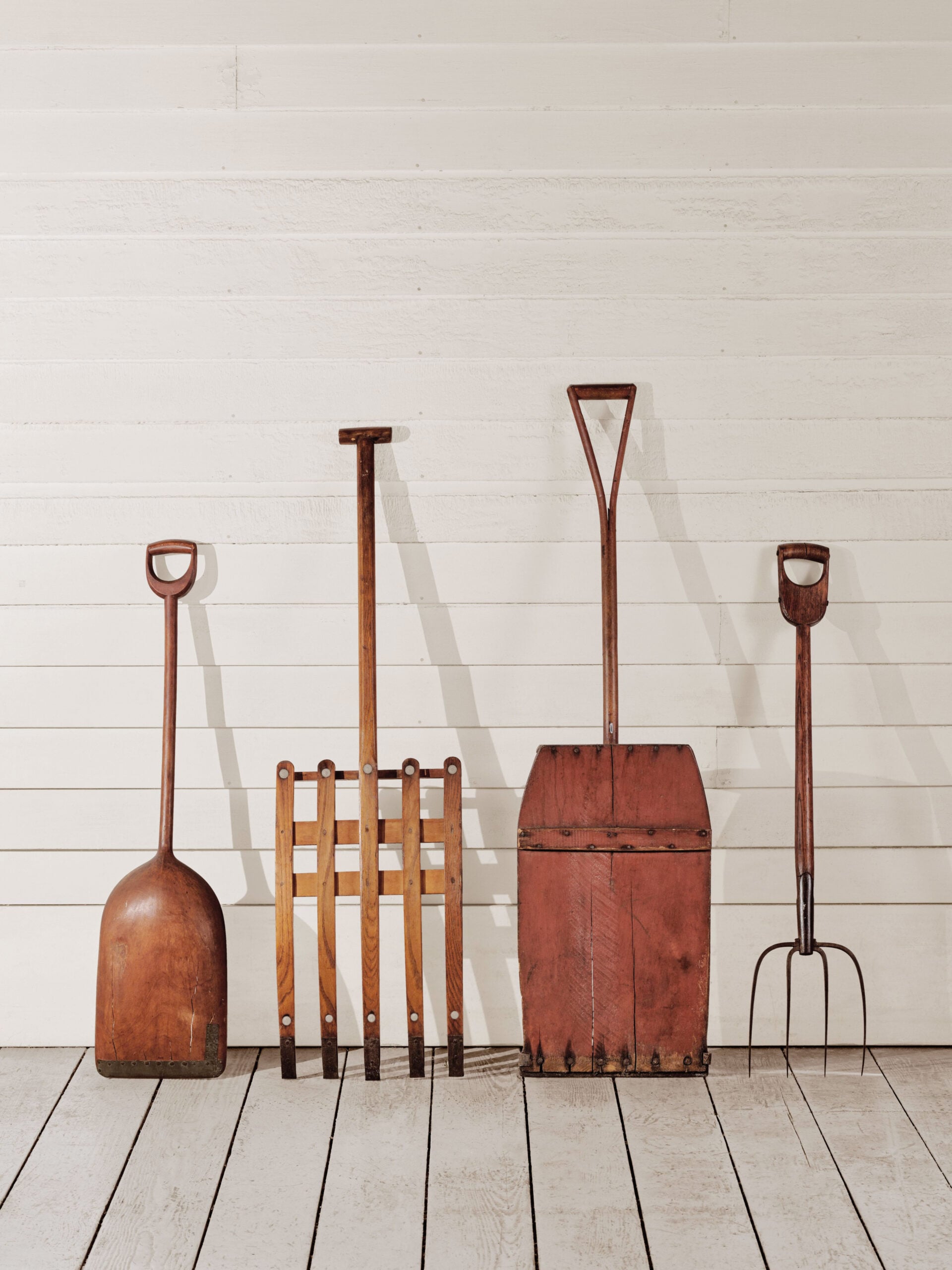
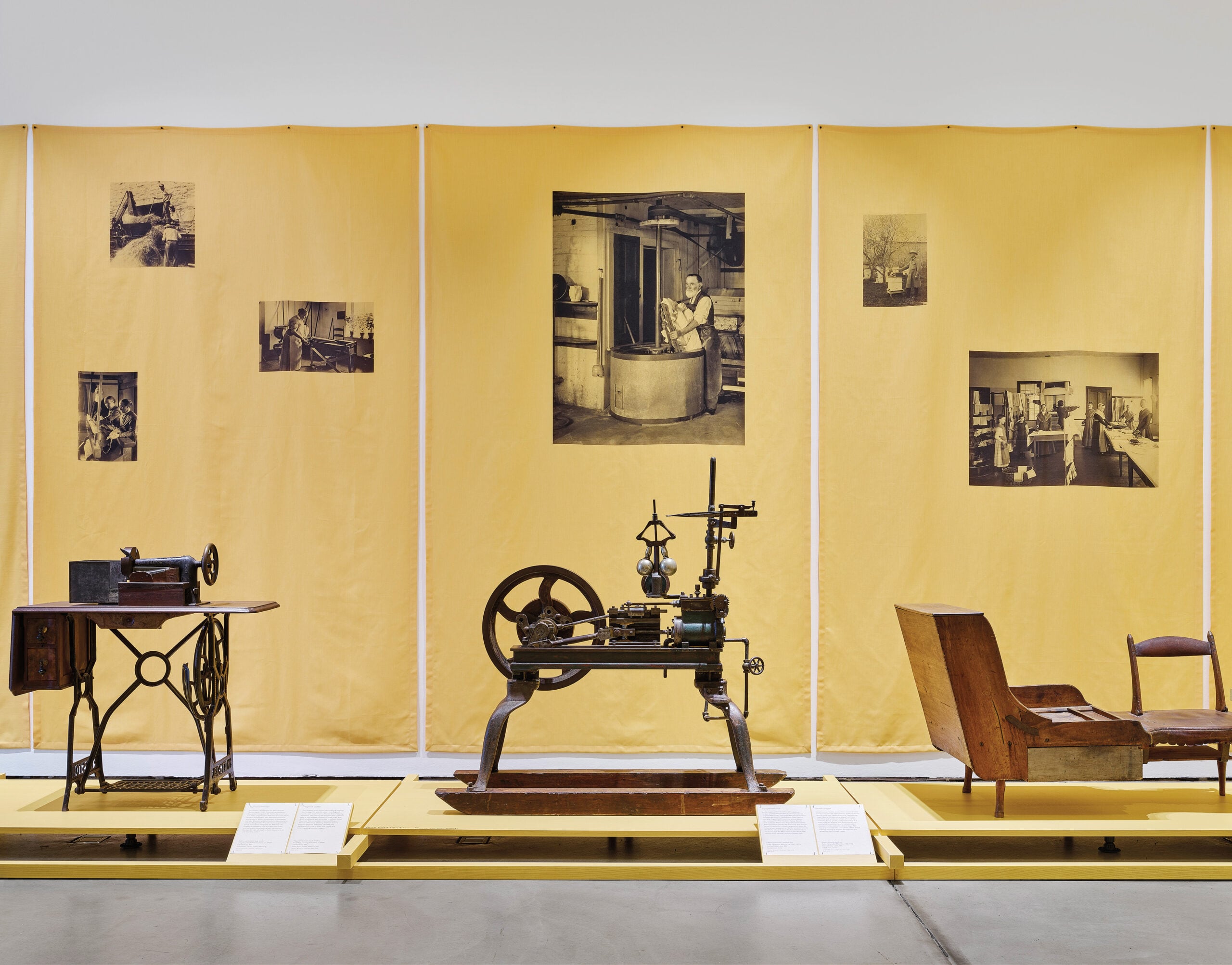
“The flat broom is a brilliant example of utility in Shaker design,” says Hallie Ringle, Daniel and Brett Sundheim Chief Curator at the Institute of Contemporary Art, Philadelphia. Ringle has worked alongside curatorial teams at Vitra and Milwaukee Art Museum on The Shakers: A World in the Making, a traveling exhibition that situates over 150 historic Shaker objects (most of which are on loan from the Shaker Museum in Chatham, New York) alongside the work of seven contemporary artists and designers from around the world. “While it may seem ordinary today, people once only used round brooms. The Shakers introduced this innovative flat design, and the technology to produce them, and they’ve remained more or less unchanged ever since.”

Function Drives Form
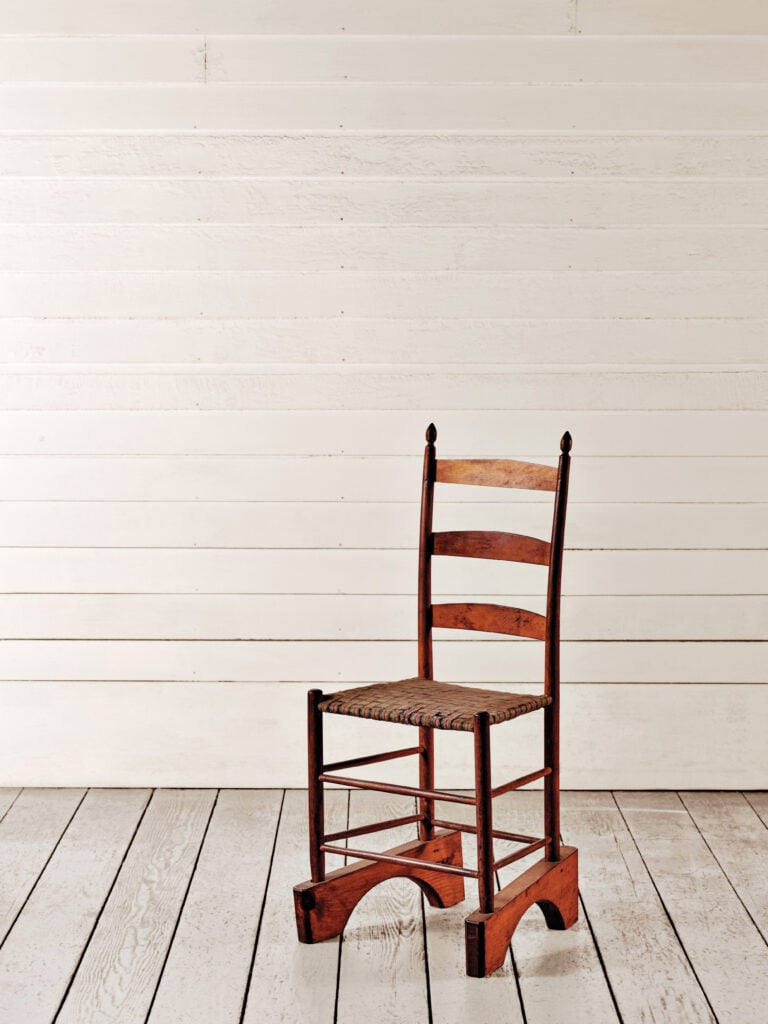
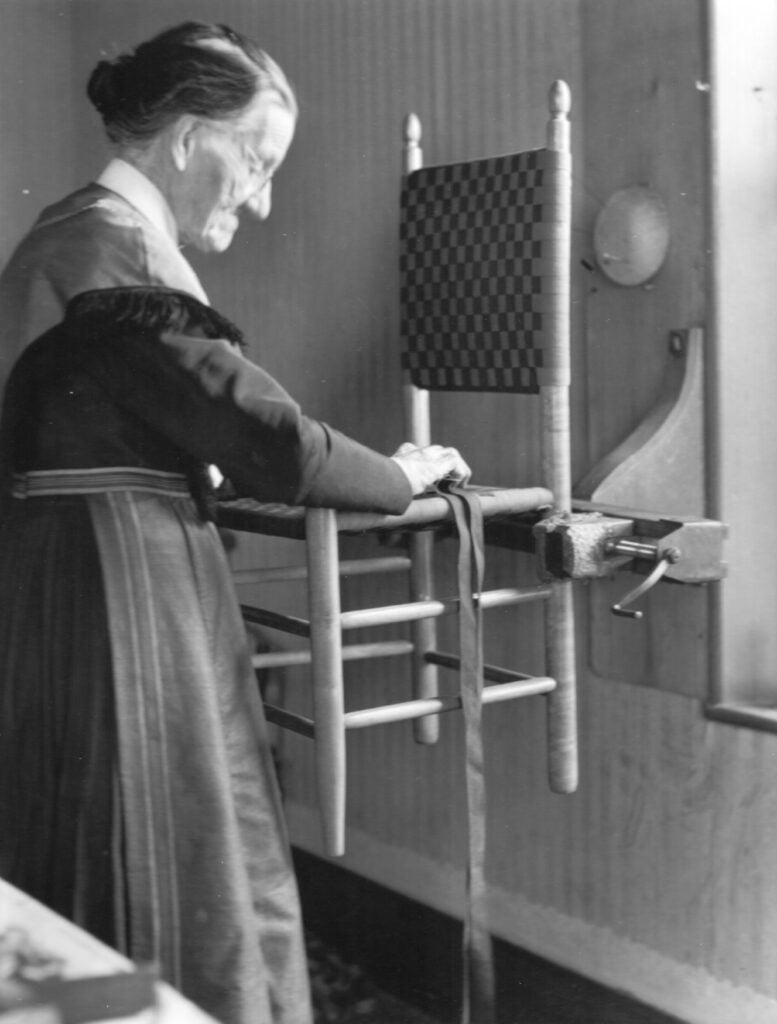
At the heart of Shaker design lies this utilitarianism, consistently underscored by the religious beliefs that “order is the creation of beauty” and “cleanliness is next to godliness.” To achieve this meticulous level of structure and systemization, the Shakers had a tool for everything. Not only did they invent tools for everything, but they also invented tools to make those tools, tools to repair them, and tools for disseminating them beyond their community. And just as they had a tool for everything, they also had a chair for everything—ladder-back chairs that could hang elegantly on peg-rails when not in use, rocking chairs, children’s chairs, and the wooden predecessor to the modern task chair—the revolving seat chair.
One of the earliest Shaker innovations came out of the design of a tilting chair. In 1852, Brother George O’Donnell of New Lebanon, New York (the Shakers’ largest village at the group’s height in 1860), patented a ball-and-socket tilting mechanism for the back posts of wooden chairs, allowing users to lean back safely, without fear of slipping or damaging the chair or floor. The exhibition catalog notes that the mechanism was developed to “accommodate, rather than limit” this very human urge to lean back in one’s chair. Ringle notes, “The tilter chair shows real thoughtfulness about how people actually live with furniture.”
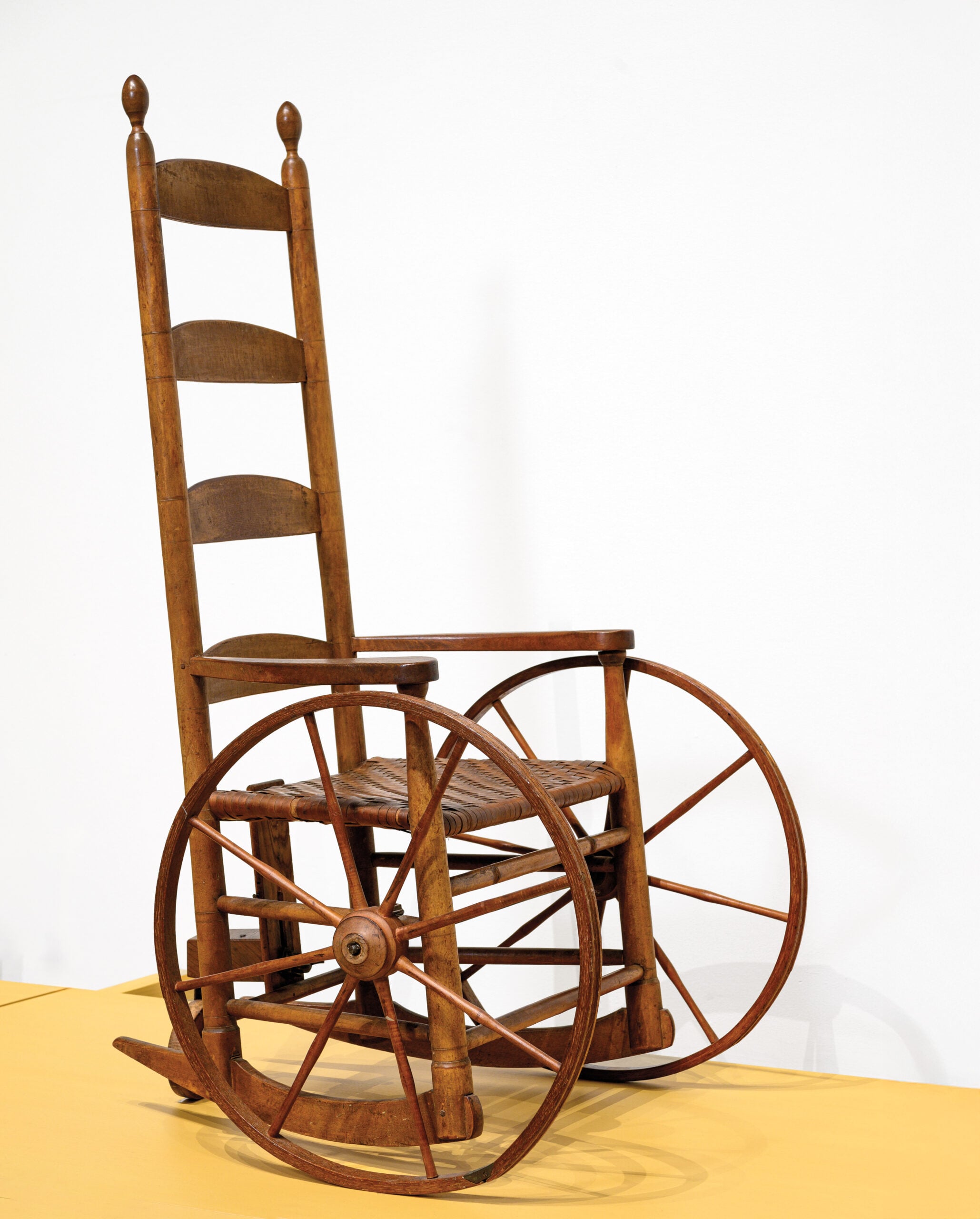
While Shaker objects are often described as having an inherent stillness, austerity, or quietness to them, their design and production were anything but static. The Shakers continually modified the everyday objects they used—a wheelchair circa 1830 was made from a modified rocking chair; a flagroot cutter was made from a modified sewing machine; and wooden infant cradles were scaled up for elderly adults and ailing community members.

Accessibility in Shaker Design
Repairs and modifications such as these were commonly employed to extend a tool’s utility. As Chyna Bounds, assistant curator of American Decorative Arts and Design at Milwaukee Art Museum, explains in the exhibition’s catalog: “This combination of innovation and resourcefulness underscored the Shakers’ broader commitment to sustainability, providing insight into their problem-solving abilities.” What we might now call “accessible,” “inclusive,” or “sustainable” design, for the Shakers were simply products of a godly life, small manifestations of heaven on earth.
Brooklyn-based artist Finnegan Shannon’s commission for the exhibition, I Want to Believe, “complicates the idea that utility is inherently synonymous with accessibility,” explains Ringle. Their work engages with Shaker mobility aids—like a carved maple walker, a cane, or an orthopedic shoe for a person with one leg longer than the other—to highlight both the hope the Shakers placed in medicine and its limitations for people with disabilities. Situated next to these objects, Shannon’s work critiques the commercialization of care and challenges contemporary structures—such as museums—that often prioritize profits over true accessibility.
Shannon’s commission is just one piece that helps answer the exhibition’s defining question: What happens when we look beyond the Shakers as makers of beautiful chairs? What does the Shaker worldview have to offer society today?
“Our goal is not to romanticize or mythologize the Shakers but instead learn from their approach,” writes Vitra Design Museum director Mateo Kries in the catalog’s introduction. “The Shakers’ dramatically different visions of belief, community, and capitalism represent an alternative history of the 19th and 20th centuries that offers lessons for the future.”
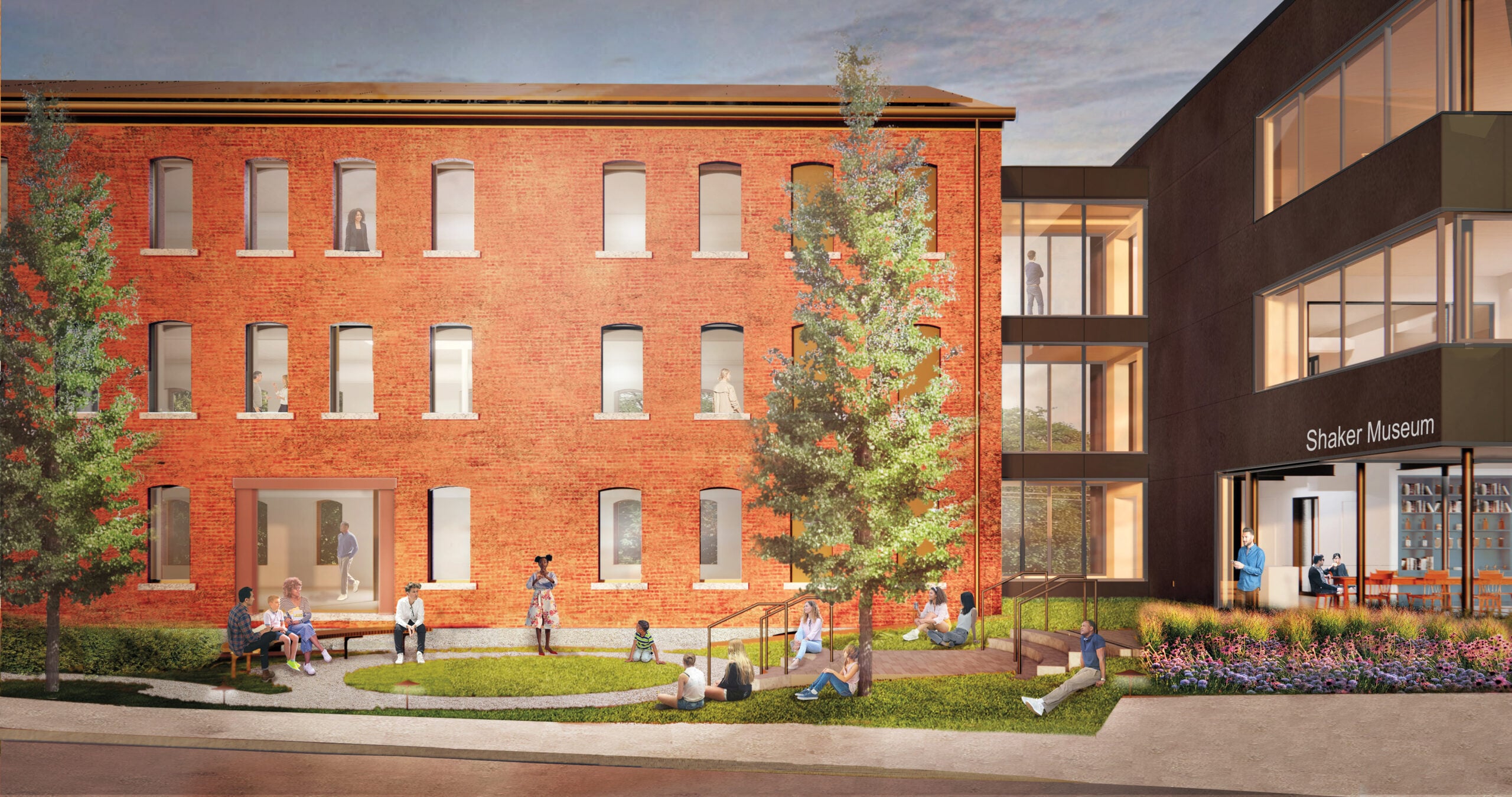
IN 2020, SELLDORF ARCHITECTS were announced as the
architects of the new Shaker Museum and Library, to be built in
in Chatham, New York. Just 20 minutes down the road, the
museum will also maintain the historic Shaker community of
Mount Lebanon, founded in 1787. Breaking ground in late 2025, the new permanent facility
will add 30,000 square feet of space and contain galleries, a
public reading room, a community space, and a conservation and
storage facility for stewarding more than 18,000 objects, the
most extensive collection of Shaker material culture and archives
in the world.
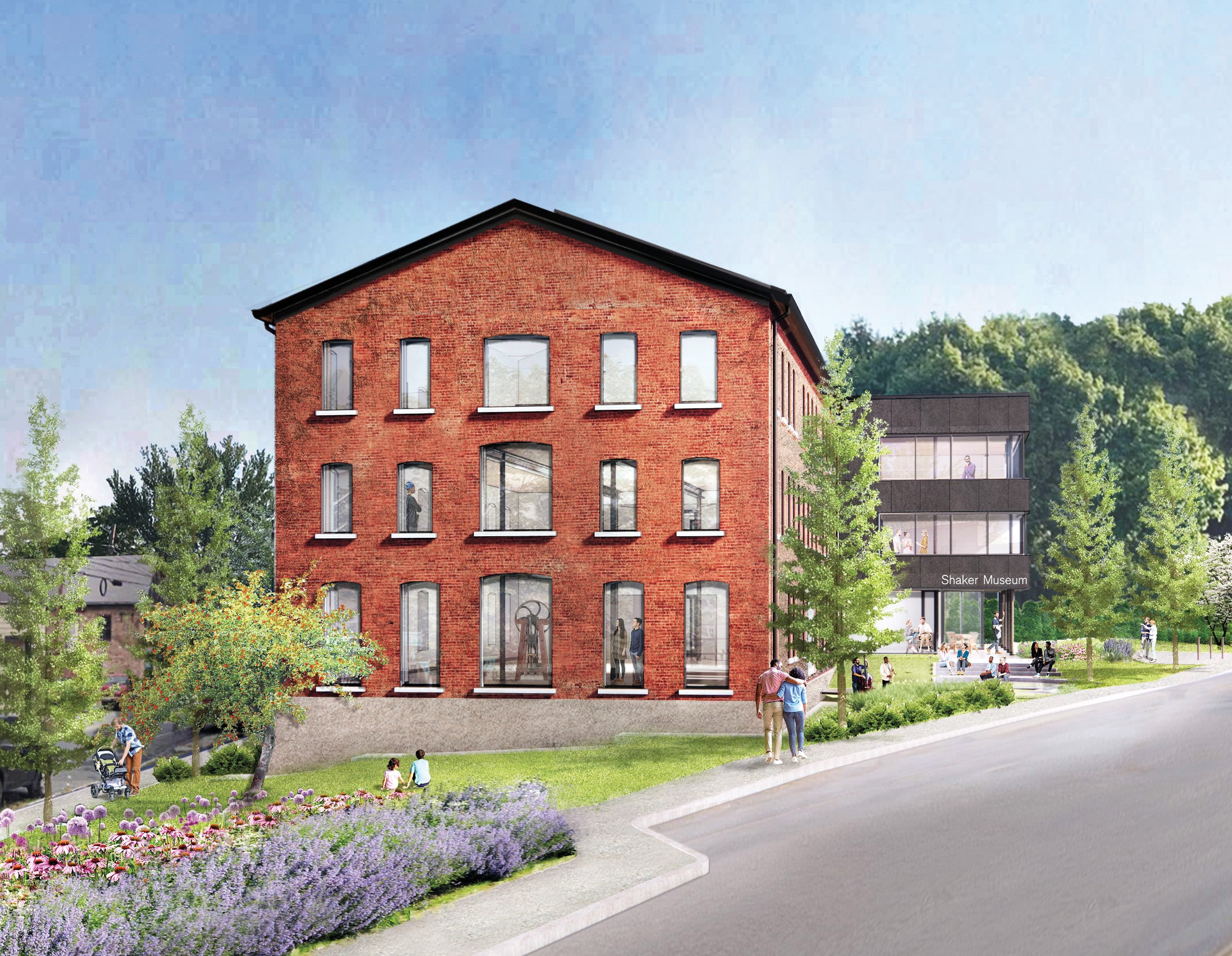
Designed to embody Shaker values of inclusion,
innovation, and equality, the museum will also feature a Shakerinspired
landscape design by Nelson Byrd Woltz, filled with
medicinal and native plants.
Would you like to comment on this article? Send your thoughts to: [email protected]
Latest

Viewpoints
Detroit Month of Design: A City’s Work in Progress
Now in its 16th year, the celebration offers insights into the Motor City’s ongoing accomplishments without glossing over its hurdles.
Projects
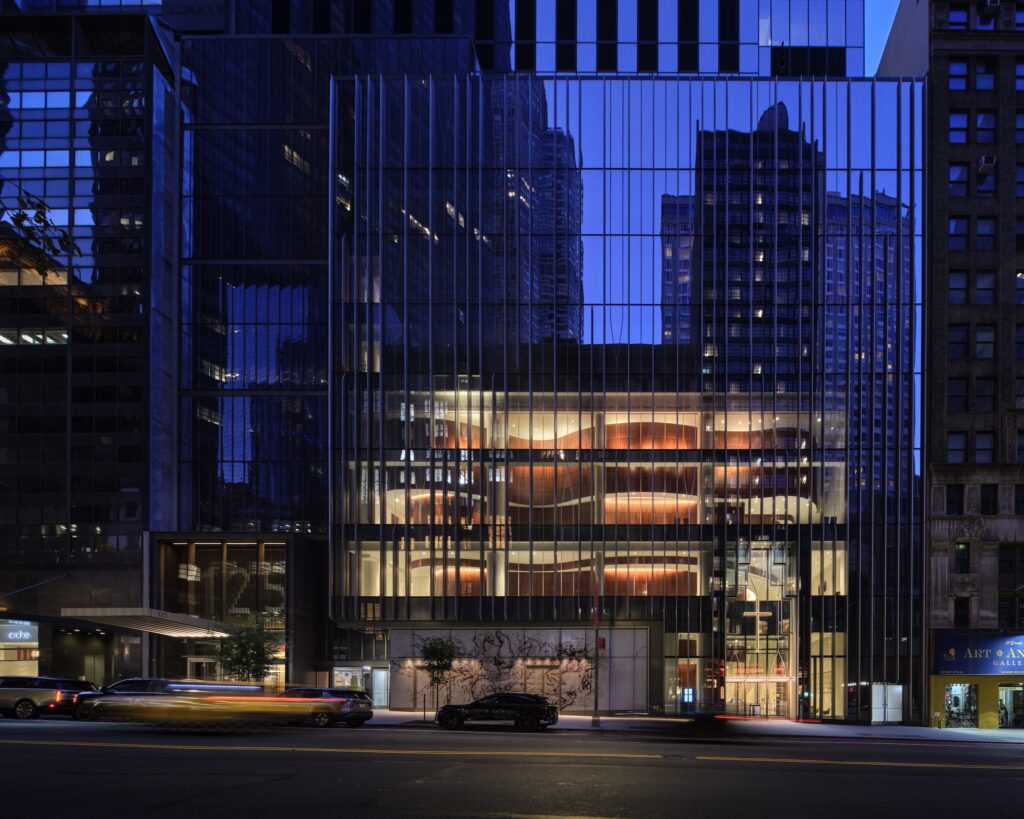
How a Hybrid Building Helped an Historic Manhattan Congregation Remain in Place
On Billionaire’s Row, FX Collaborative designed a new home for Calvary Baptist Church combined with an office tower.