



March 4, 2026
Why Bruce Goff’s Architecture Feels Made for the Instagram Age
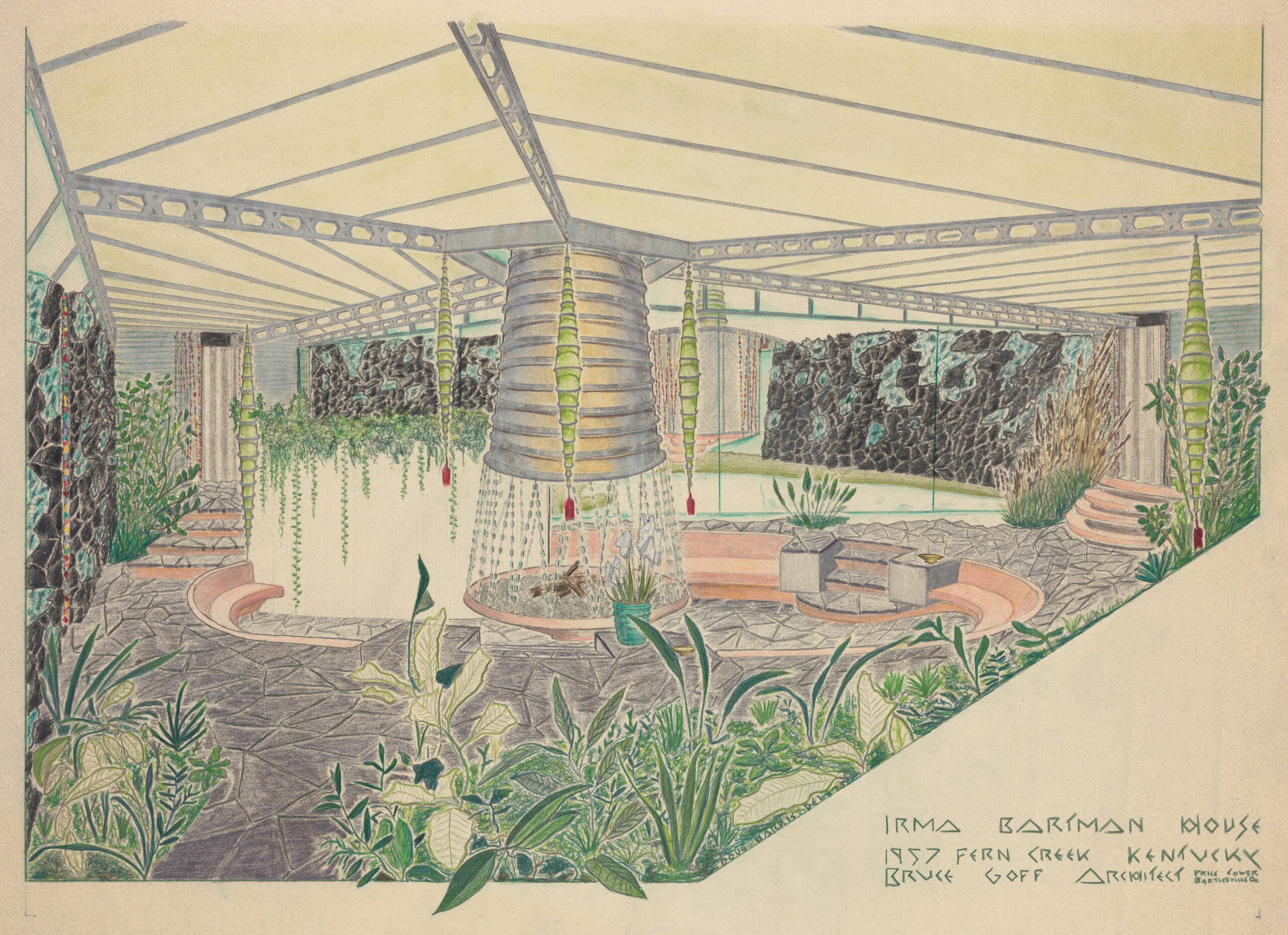
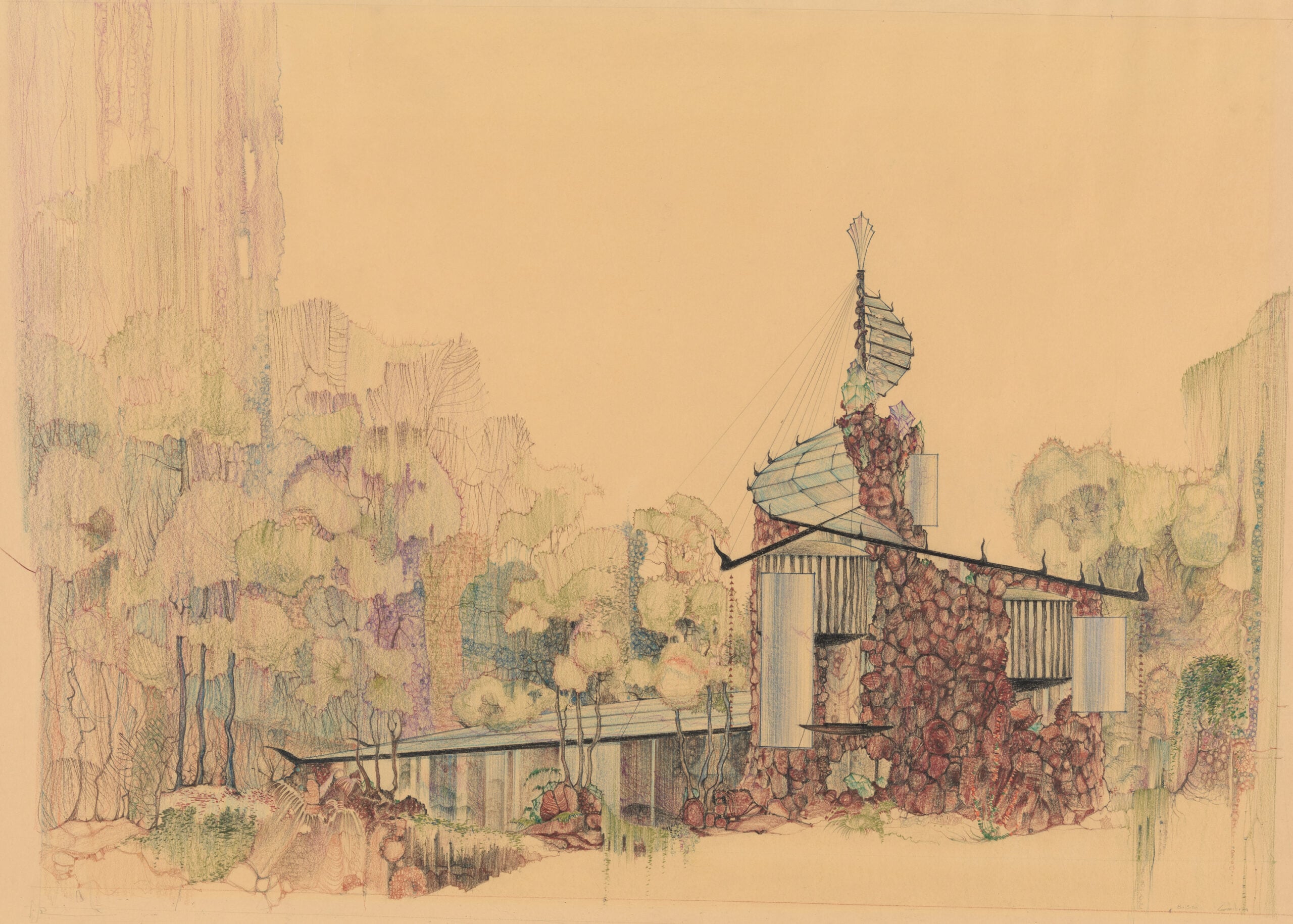
Bruce Goff: Material Worlds is a retrospective on the late architect’s practice, curated by Alison Fisher and Craig Lee with exhibition design by New Affiliates. Currently on view at the Art Institute of Chicago, the exhibition is the first major presentation of Goff’s work in 30 years, highlighting a career spanning 150 buildings, over 500 projects, and more than 800 collected artifacts. The show unfolds less like an orthodox retrospective and more like intimately scrolling through a creator’s Instagram. The energetic curation lets us see the world through Goff’s unfiltered eyes, positioning us inside his mind, which disrupts disciplinary boundaries. Hidden within this show are a few lessons for young designers.
Long before filters and feeds, Goff was constructing a total visual language. Like contemporary social media authors who carefully edit images to maintain a coherent aesthetic, Goff assembled a holistic and immersive vision across buildings, objects, drawings, and ephemera. In this sense, Goff’s work anticipates what Lev Manovich calls Instagramism: a visual culture in which digital identity becomes lifestyle identity, operating uncannily like it, decades before the platform even existed. For young architects navigating an image-saturated discipline, the takeaway is clear: coherence isn’t about minimalism or branding – it’s about world building. Goff shows that architecture can operate as an ecosystem of ideas rather than merely a series of commissions.
Bruce Goff and the Reinvention of American Modernism
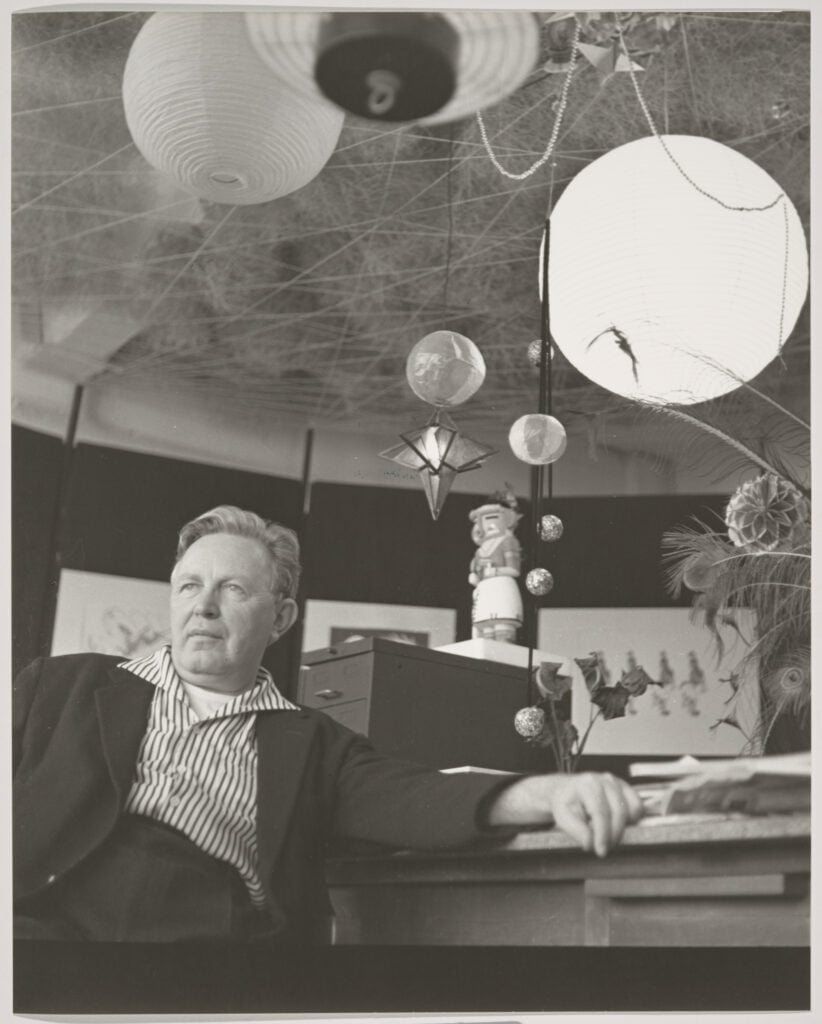
Bruce Goff (1904–1982) was a largely self-taught architect who began as an apprentice in Tulsa, Oklahoma. Though often linked to Frank Lloyd Wright and Louis Sullivan, he resisted the cool detachment of international modernism in favor of something stranger and more personal. Reyner Banham described him as a homegrown hero, someone who viewed America as a native rather than a tourist.
“If you are looking for a more purely American vision, one that belongs as beer belongs, looks at home in Marlboro country, and is simultaneously familiar and astonishing as Howard Johnson, it’s more likely to be the architecture of Bruce Goff. For him the European mind seeks desperate similes: in his ability to mould the off-cuts of standardised America nearer to heart’s desire. He is an even more radical hotrodder than Eames: he digs exotic cultures, far-out musics, a-formal arts, so that it is difficult nowadays not to see him as some sort of hipster: consumer-oriented, sensitive to grass-roots public moods, he is the master of the dream-house…”
[1] Reyner Banham, The Age of The Masters: A Personal View of Modern Architecture, pp. 79

Material Worlds: Architecture as Total Design
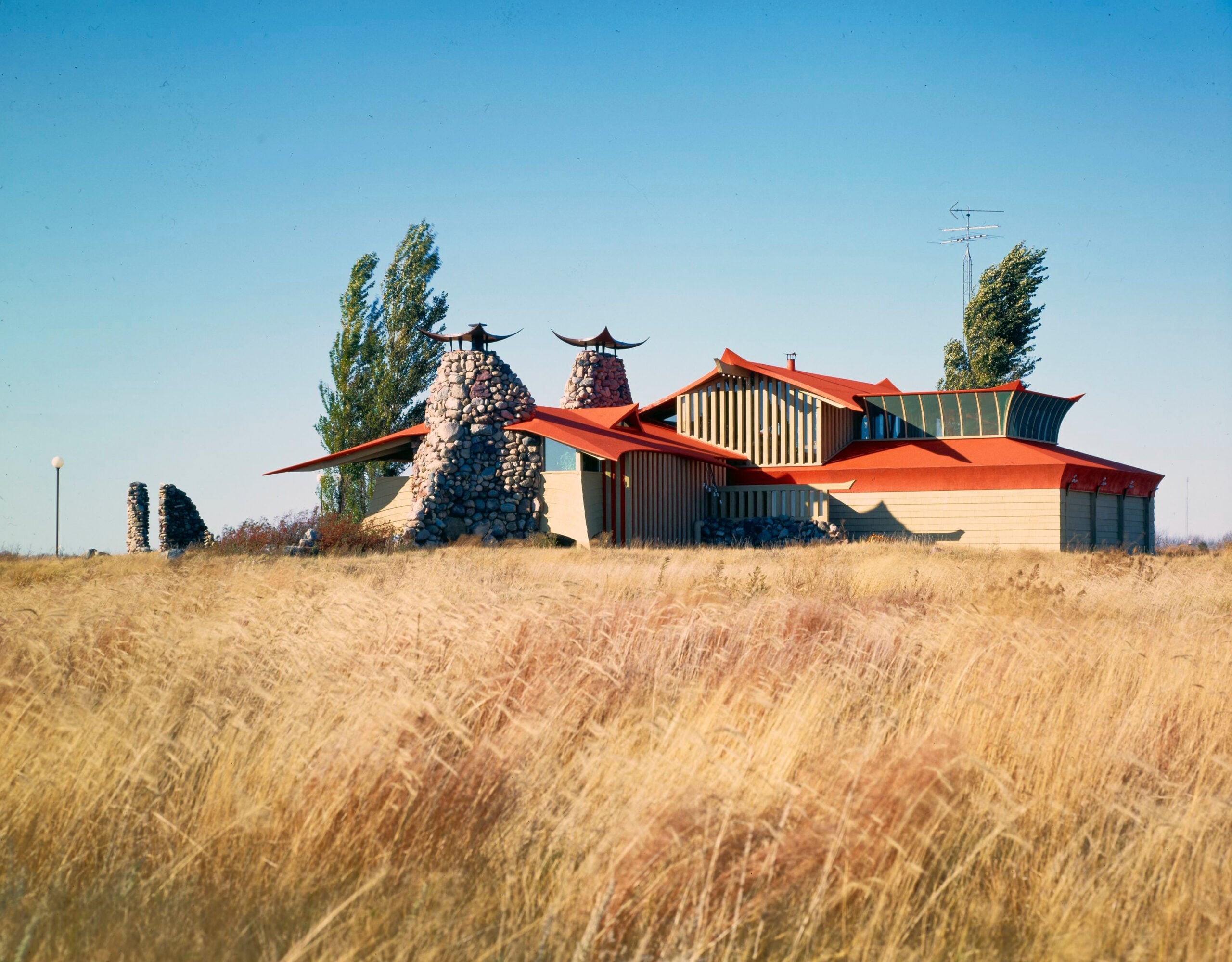
Goff’s houses, many now landmarked or listed on the National Register of Historic Places, were assembled from industrial components and everyday materials, shaped closely around clients’ personalities. He bridged affordability and total design, using standardized parts to create spaces that felt cosmic. For emerging practices working with limited budgets and unconventional materials, his work is a reminder that resourcefulness can be a generator of creativity, not a constraint.
Grounded by a dislike of flying, Goff stayed physically close to the American landscape: the Great Plains, Kansas, roadside America, the sprawl of Route 66. While modernism aimed for placeless universality, Goff leaned into proximity. He found futurism in shag carpeting and transcendence in cullet glass. For architects today, reconsidering region, climate, and context, there’s a lesson here: look sideways rather than chase global sameness.
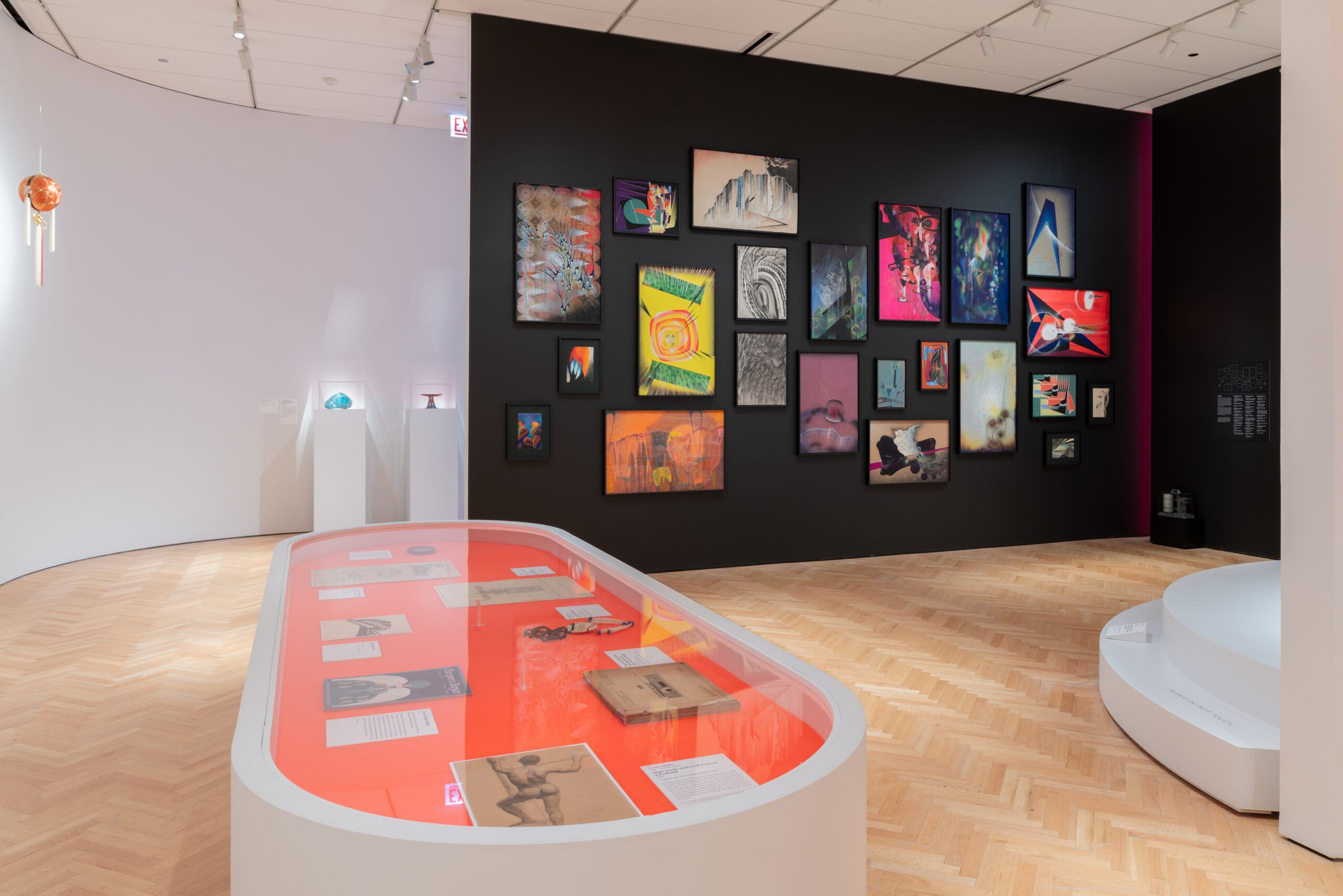
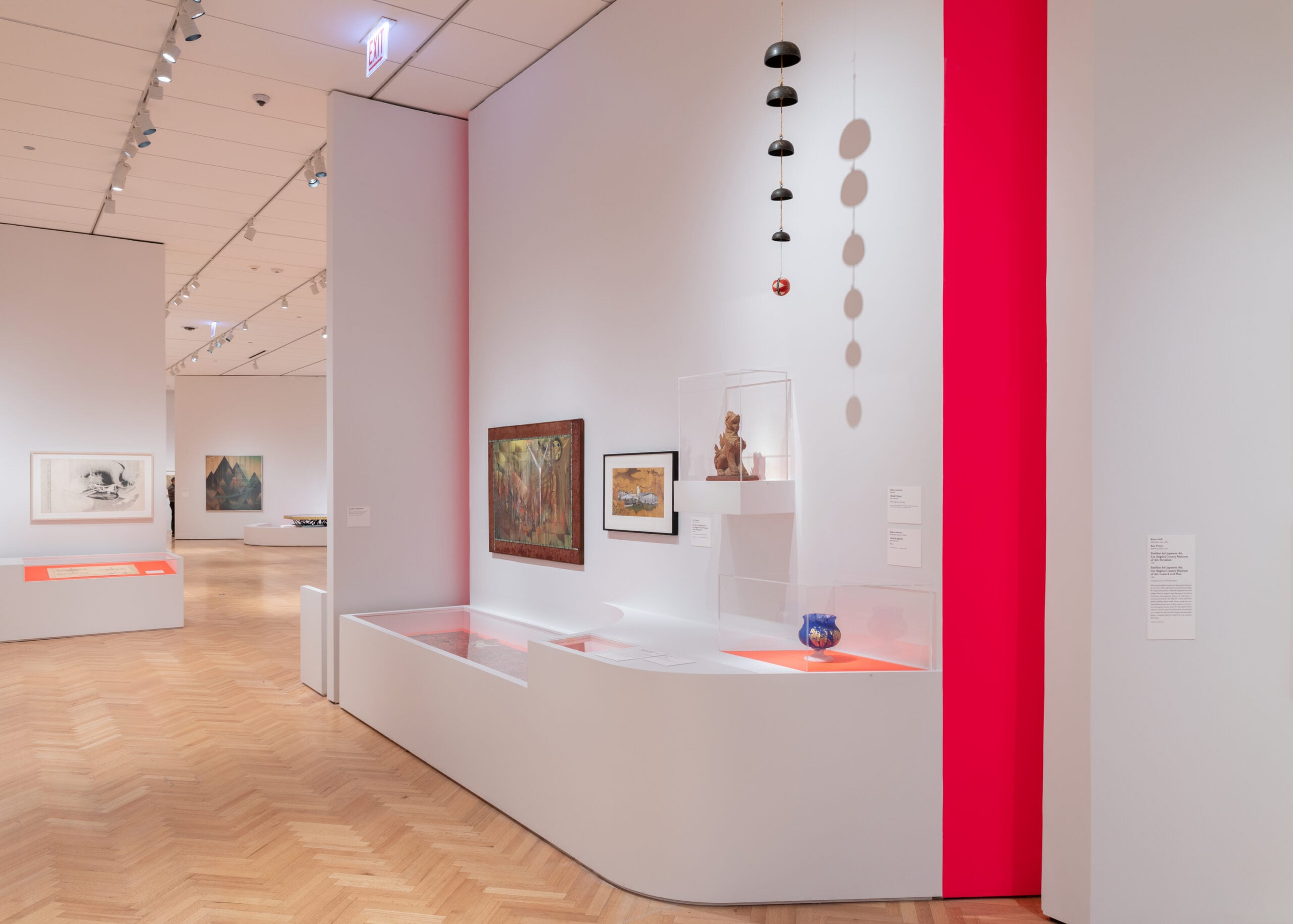
Inside the exhibition, a miniature disco ball greets visitors. Custom lettering, Navajo art, abstract paintings, scale models, and handwritten notes sit beside architectural drawings. The curatorial strategy collapses hierarchies between serious architecture and personal ephemera. Inputs and outputs share equal weight. The result feels less like a portfolio and more like a planet. The catalogue’s “Object Atlas,” indexing personal artifacts—many acquired through subscription networks—reads uncannily like scrolling through an Amazon Prime order history of curiosities. For younger architects accustomed to separating research, references, and final product, Material Worlds suggests another model: the archive is practice.
Exhibition Design by New Affiliates Expands Goff’s Legacy
Exhibition design by New Affiliates, a practice inspired by Bruce Goff, translates his designs into the gallery setting with off-axis walls, inverted conversation pit platforms, and colored gradients washing across white surfaces. Goff’s world spills out of the main exhibition, with companion shows staged in other locations throughout the Art Institute (The Japanese Art Galleries, The Modern Wing, and The Architecture and Design Gallery) and beyond Chicago.
Ultimately, the exhibition reframes Goff not as an eccentric outlier, but as a prototype. The exhibit is a gentle reminder to revisit overlooked or obscure figures to uncover new ways of seeing architecture, without simply relying only on pre-established histories and canonical narratives. Drawing and redrawing, as shown by New Affiliates and Norman Kelley, become critical tools for revealing material histories, economic contexts, and hidden relationships among architect, client, labor, and site. For contemporary young architects—many already operating as designers, curators, image-makers, and researchers simultaneously—Goff offers permission: to build worlds rather than objects, to treat material research as identity, and to see architecture not just as construction but as a continuous, authored feed.
Would you like to comment on this article? Send your thoughts to: [email protected]
Latest
Viewpoints
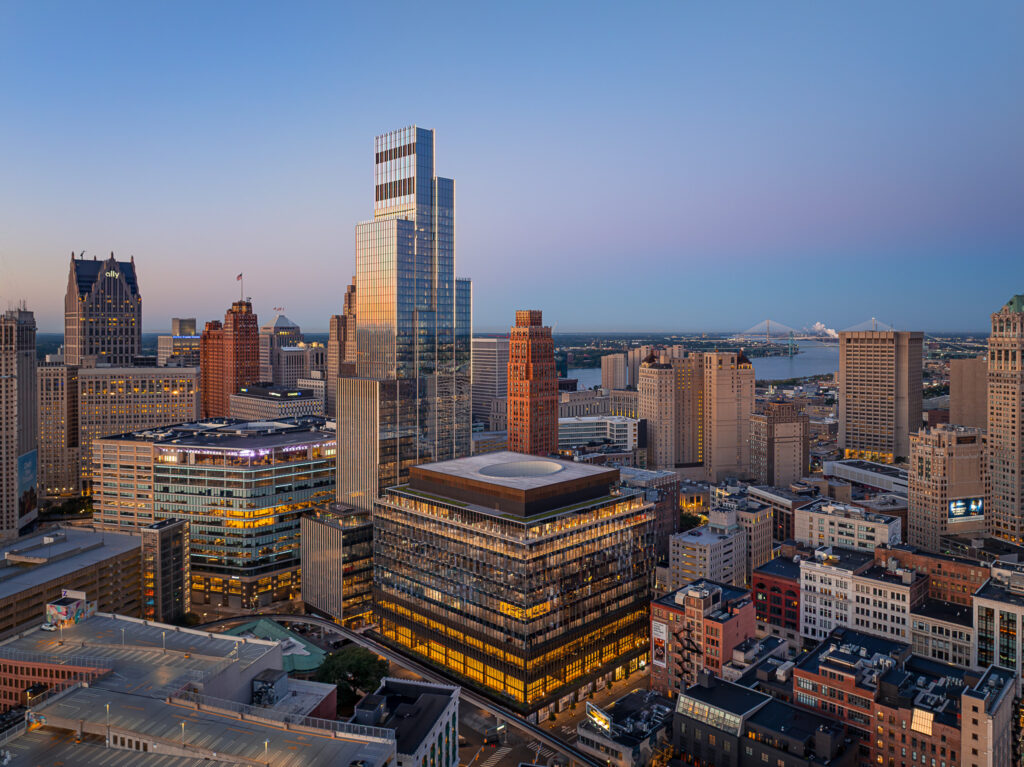
Detroit Month of Design: A City’s Work in Progress
Now in its 16th year, the celebration offers insights into the Motor City’s ongoing accomplishments without glossing over its hurdles.
Projects
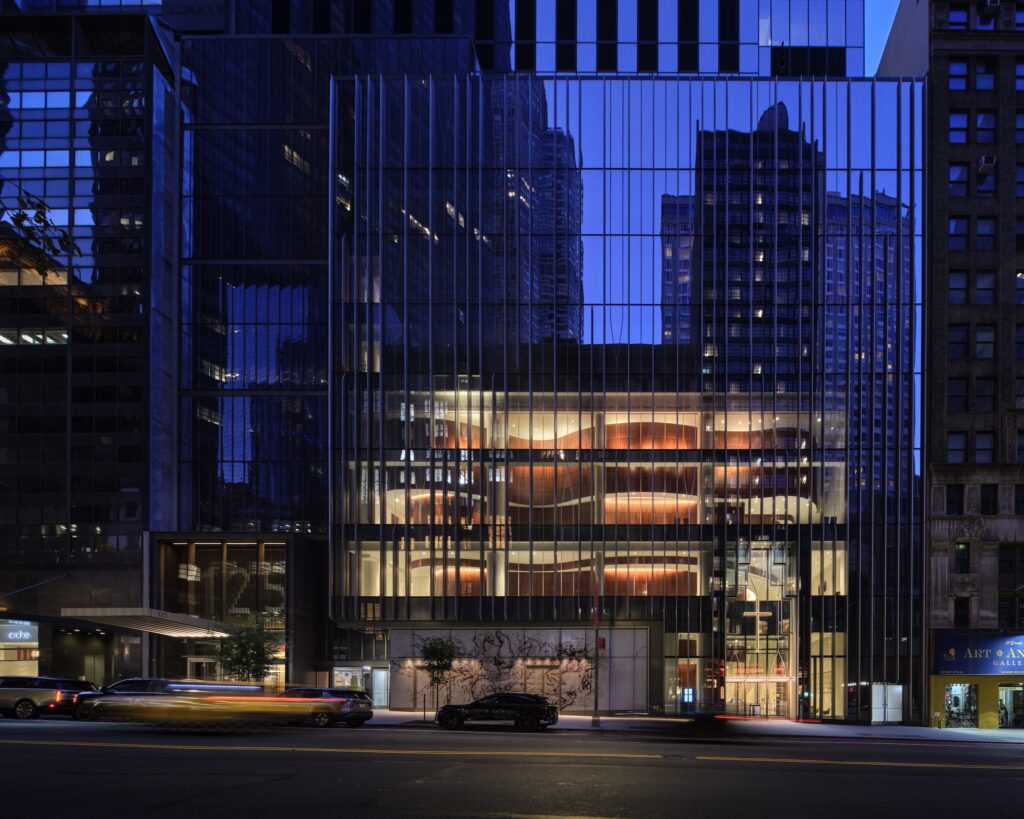
How a Hybrid Building Helped an Historic Manhattan Congregation Remain in Place
On Billionaire’s Row, FX Collaborative designed a new home for Calvary Baptist Church combined with an office tower.