



July 7, 2025
Why Words Matter: The Future of Regenerative Design
The compulsion to create and celebrate new things is a deeply embedded piece of the design world, and for good reason. Our creative spirits are constantly looking for new ways to create spaces, materials, and objects to enliven our environments and engage in the ongoing dialogue about the built world and its significance in our lives. The same holds true for the words we invent and descriptive terms we utilize to introduce new ideas. But words are powerful, our language has implications, and we’ve all been around for these cycles of experiencing a term gain traction, reach a fever pitch, and become passé all in the course of a couple of years.
And so it appears that fever pitch has arrived for the term “regeneration.” In the past few years, we’ve seen architecture and engineering firms rename and reposition their sustainability teams with the term, and it is becoming a more common goal for ambitious project teams and product designers seeking to “go beyond” their previous accomplishments in environmental sustainability. And it is true that regenerative work can feel like advancing beyond sustainability, but it is critical to understand that it isn’t just another rung on the ladder.

At Living Future, we define regenerative design as creating things—materials, buildings, place—that regenerate the systems they are a part of: they are healing, they are creating more good than harm, they are providing a “net positive” impact to a system. And we don’t just define the systems as ecological systems. We are pushing for regeneration of the health of our bodies and minds, the regeneration of our community health and resilience, and really the regeneration of all systems that create planetary and human health (including economic and political ones). In short, regenerative buildings have a net-positive and restorative impact across all the social, cultural, and ecological systems that they are a part of.
As is often the case, Europe seems to be ahead of us in adopting the trend, as evidenced by the names of various events and sessions at industry conferences in the past couple of years. This past September, the major global building materials company Holcim (headquartered in Switzerland) released a report with the consulting firm Systemiq, titled “Unleashing a Regenerative Revolution for the Built Environment.” Last year, two brilliant engineers, Oliver Broadbent and James Norman, authored an e-book called The Regenerative Structural Engineer, delving deeply into concepts and tactics for regenerative design for structural engineers. The UK’s Institution of Structural Engineers also hosted a Chatham House event last year to explore the topic and produced a concise summary: “Regenerative design: What is it and how can we do it?”
But also, the term is gaining popularity in adjacent fields. Agriculture is the industry where the term has become most pervasive (and well deserved, in terms of the very tangible ecological regeneration work that good agriculture can do), but now we are seeing the term applied in the grocery store (“regenerative rice,” anyone?) and in our clothing purchases (I may have recently purchased my first pair of jeans made with “regenerative cotton”).
And so, as we anticipate and watch the term growing in popularity, I hope we can take a moment to really consider what we mean when we use the term, and acknowledge that, unlike some trendy words in the design world, there are real consequences to misusing the term and collectively greenwashing ourselves into a mess.
What is regeneration when it comes to design? Is there such a thing as “regenerative design” or a “regenerative building”? For those new to the idea, I would highly recommend Arnold’s e-book linked above, the wonderful book (and podcast) Flourish by Sarah Ichioka and Michael Pawlyn, as well as some of the OGs of regeneration: the late, great Carol Sanford’s work and Bill Reed’s 2007 piece on shifting from Sustainability to Regeneration in the built environment. We at Living Future have also been championing regenerative practices with the Living Building Challenge, Living Product Challenge, and our various events and educational programs since 2006. We welcome you to check out our programs to get more resources to help you adopt regenerative practices in your design work.
As you navigate these resources, I believe you’ll find some common threads of caution and care with how to use the term regenerative, and I want to suggest a few key points here for consideration:
A net positive impact does not necessarily equal a regenerative impact. A net positive impact is great, don’t get me wrong. But, for example, if a building is generating more electricity than it uses, but that electricity is not being used by a larger system or community to improve the overall performance of the system, it is not doing regenerative work.
A fully regenerative building or a regenerative product is a bit of a white whale, and we should all be quite careful using the term to describe an object. One way I’m trying to navigate this is to focus on the idea of regeneration as an action verb rather than regenerative as an adjective. As is the case with regenerative agriculture, regenerative design work is a constant practice of care, healing, and engagement with the system you are intervening in.
Regeneration isn’t just ultra-sustainability. Certainly, it’s helpful if you’ve been focused on learning sustainability tactics and strategies, you’ll be better equipped to engage in regenerative design work. And in some systems, it may feel a lot like just a step up from sustainability work. But let’s keep the terms clear. It reminds me of a moment a few years back when a young architect I worked with proudly described the various levels of sustainability one could attempt for a building to a group of her assembled peers: “LEED Silver, Gold, Platinum, then at the top, WELL.” My palm quickly hit my face. Please, folks, let’s remember that these terms and programs are carefully introduced by advocates seeking to fundamentally transform and fix the broken systems we are dealing with in the building industry every day. They are not notches on your belt.
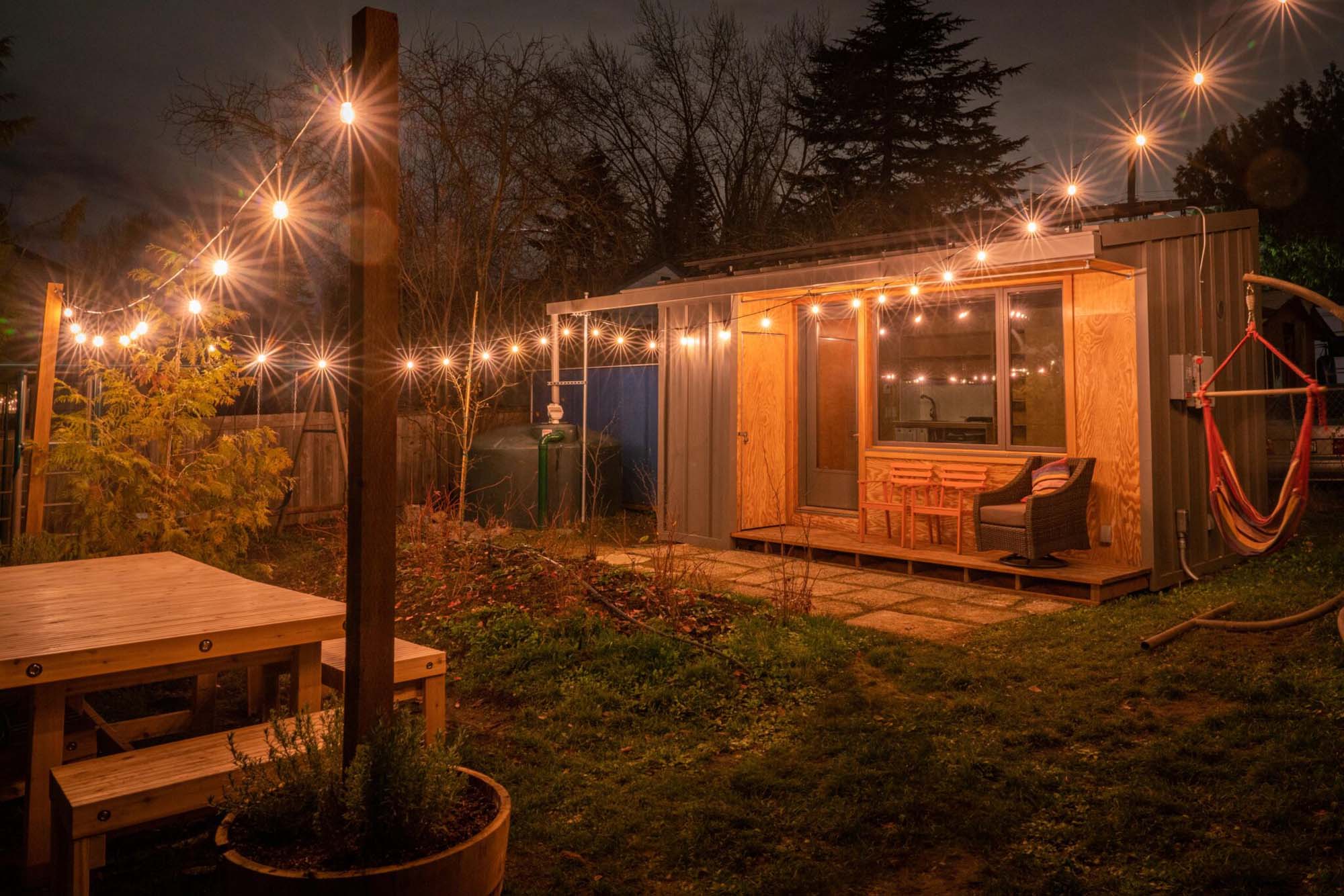
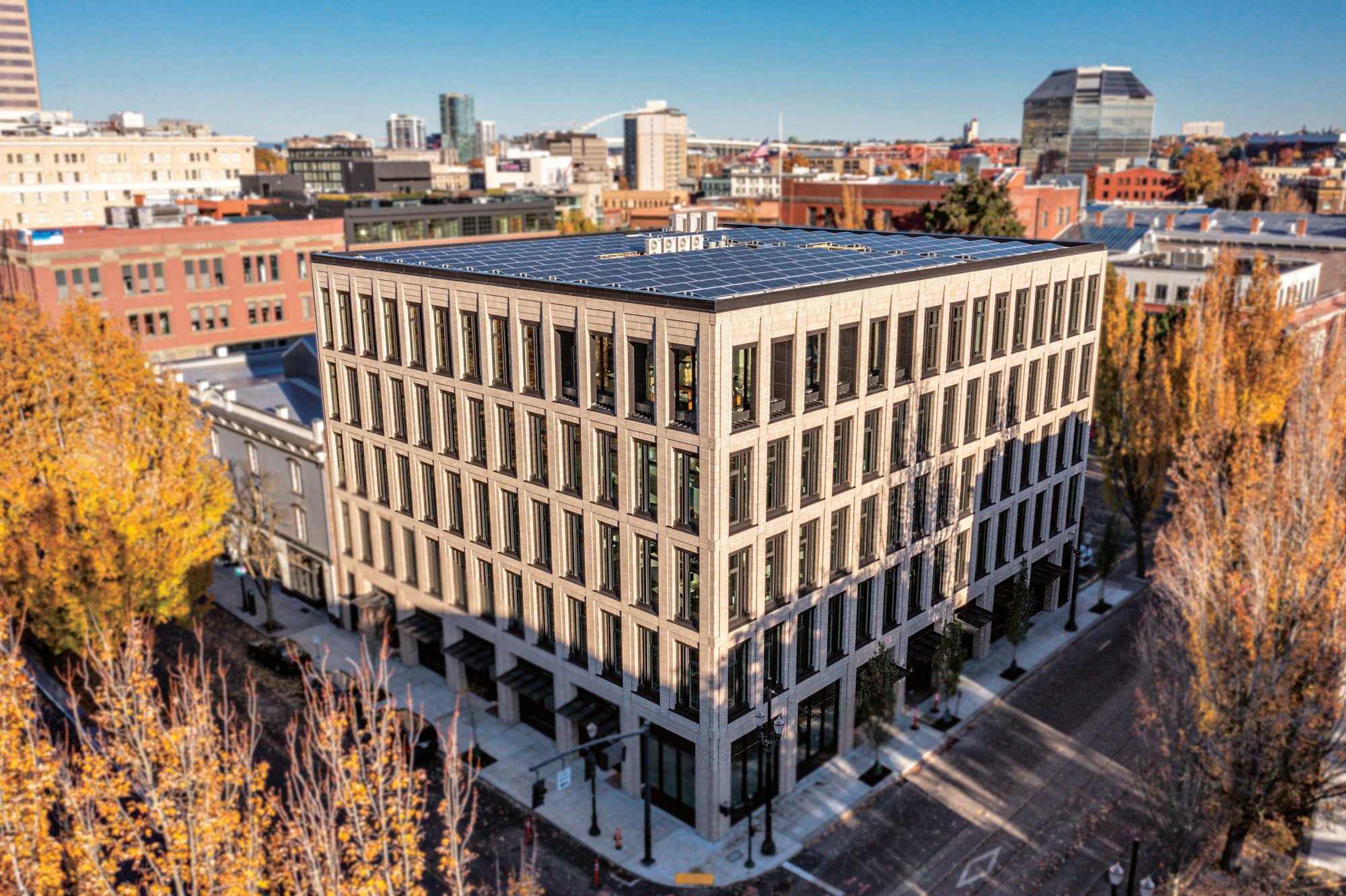
In the case of regeneration, the work we encourage and believe is fundamentally necessary is the work of healing, repairing, and indeed, regenerating through the act of design. It is a beautiful and critical act. Some of my favorite stories of regeneration come from Living Buildings like the Kendeda Building in Atlanta, the PAE Living Building in Portland, Oregon, and the BLOCK Housing Project in Seattle, Washington. As you engage more with the concept of regeneration, you will see it all around you. It is the act of care, the act of giving, the act of listening and offering support—but through the work you do as you build, make, and maintain the built environment.
We welcome you to this work with open arms but suggest that you take care with your words so that regeneration can grow to its full potential of transforming our global built environment entirely away from extractive and harmful impacts. A better world is made every day we choose the act of regeneration, and the community doing this work is growing with every act. We hope you will join us!
Living Future is working to cultivate a society that is socially just, culturally rich, and ecologically restorative. To do this, the organization envisions a living future and shows that it works better in practice and policy. Living Future is premised on the belief that providing a compelling vision for the future is needed to reconcile humanity’s relationship with the natural world. Together, the Living Future community is making regenerative design the new normal. Living Future’s programs have shaped more than 55 million square feet of real estate development across the United States and around the world. Join the Living Future community here. And help accelerate the progress: After losing a federal grant, Living Future is forging ahead with work towards transparency and improved pathways for regenerative materials. Contribute to the Resiliency Fund here.
Would you like to comment on this article? Send your thoughts to: [email protected]
Latest
Projects
UC Berkeley’s Newest Building Is All About Human Interactions
The Barbara and Gerson Bakar Gateway—home to the university’s College of Computing, Data Science, and Society—gently reminds data scientists and AI researchers of what’s really important.

Projects
ZD+A Brings a Modernist Mexico City House in Line with its Context
Architect Yuri Zagoin Alazraki reorganized the speculative house to respond to its site and create unique spaces for contemplation.