
2026 Planet Positive Awards > Social Impact > Winner
Adre
Parrott Creek
The Challenge
Parrott Creek serves some of our most vulnerable community members: youth involved in the juvenile justice and child welfare systems. The facilities that serve these populations are rarely dignified. Designed around confinement, not care, these places often feel less than humane. Parrott Creek establishes a national model for the treatment of at-risk youth. Rather than seeing buildings as a backdrop to care, the project asks: what if spaces were designed with the same intention as the treatment within them?
Restorative Campus
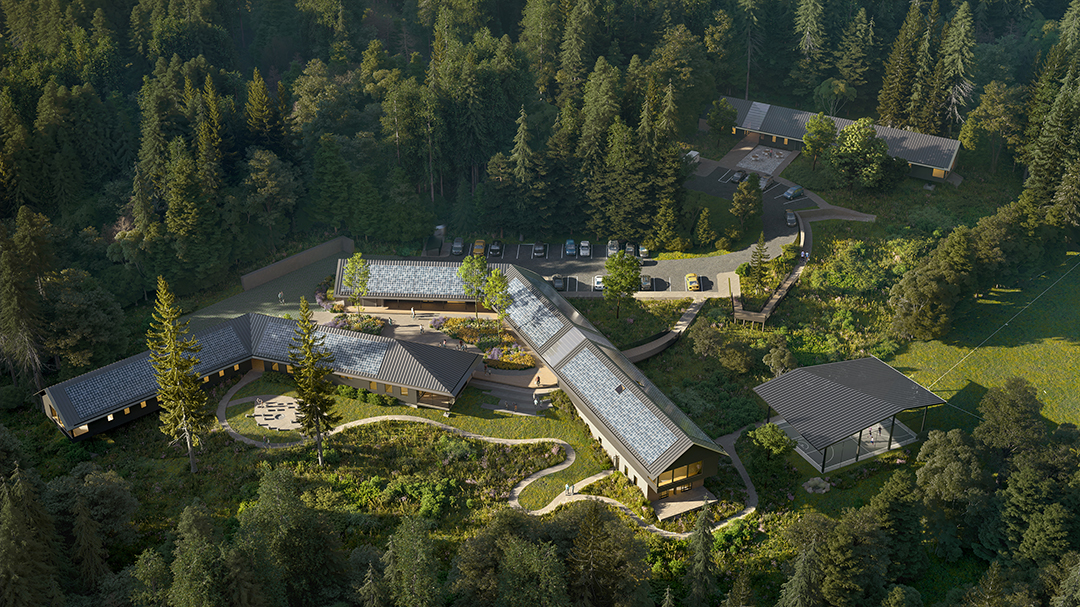
Located on a forested site outside of Portland, Oregon, the campus embraces its setting as a healing tool. Its buildings integrate with the landscape by framing woodland views, creating garden courtyards, incorporating natural materials, and connecting to trails. Inside, programming such as therapy rooms, educational spaces, and a fitness center place the focus on renewal, not detention. The design is intentionally “de-institutionalized,” using warm materials, daylight, and color to create spaces where youth feel valued.
Trauma-Informed Design (TID)
In response to a gap in behavioral facility design, Parrott Creek incorporates TID. This approach mitigates trauma triggers in built places. The project’s TID methodology places youth, families, and staff at the center of design decisions.
Examples of TID at Parrott Creek include: a private, spacious campus layout; transitions such as porches, walkways, and decompression areas between programs; passive surveillance; therapy and sensory spaces that support emotional regulation; private bedrooms with customizable features; safe furnishings with soft fabric and rounded corners; light- and sound-sensitive design with indirect light and acoustic treatments; biophilic design using natural materials and nature-based theming; and resilient design.
Grounded in Engagement and Equity
Deep engagement with Parrott Creek youth, families, and clinicians ensured that the design reflects lived experience, rather than conventional assumptions. The project was also enriched by 100+ partnerships with community organizations, tribal entities, and schools. During design, the team led studios at Harvard and University of Oregon to study TID innovation. Parrott Creek youth were integral participants.
Equity is also embedded in the development process through the participation of diverse businesses, with 20 percent of the project budget performed by BIPOC-owned, woman-owned, or small emerging businesses.
Climate Resilience as Care, Stewardship that Repairs
Located on a wooded site at an urban-rural interface, the campus faces power outages during wildfire season. These outages disrupt care and re-traumatize youth. To be self-sufficient in an emergency, the project incorporates a 184.4 kW photovoltaic array and a 550 kWh battery capable of powering critical systems for two days. Parrott Creek is also LEED v4 Gold certified and is part of Energy Trust of Oregon’s Path to Net Zero program.
Situated on the ancestral lands of the Confederated Tribes of the Grand Ronde, Parrott Creek honors this legacy through an initiative called The Cultural Ecology Project. This native-led program brings Indigenous peoples and practices back to the site and engages Parrott Creek youth in landscape restoration.
Innovative Model
What distinguishes Parrott Creek is not a single innovation but a holistic model where design, equity, sustainability, resilience, and participation work together to redefine youth residential care.
- No tags selected