



April 16, 2026
What Is the True Value of Existing Buildings?


Founded in 2024 by architects Billie Faircloth (formerly a partner at KieranTimberlake) and Lori Ferriss (formerly a principal at Goody Clancy), Built Buildings Lab is a nonprofit “dedicated to transforming existing buildings into humanity’s greatest resource.” Already, the organization has produced pioneering research with the Climate Heritage Network, published two reports with the Urban Land Institute (ULI), and advocated for existing buildings at the 2025 UN Climate Change Conference, COP30. Metropolis editor in chief Avinash Rajagopal spoke to Ferriss and Faircloth about their work and what it bodes for architecture in the future.
Avinash Rajagopal: What led to the founding of Built Buildings Lab?
Lori Ferriss: When Billie and I met as volunteers leading the AIA Committee on the Environment, we found clarity on the importance of the existing built environment in addressing today’s pressing issues, but a lack of actual projects, frameworks, data, and organizations backing up this need. So we founded Built Buildings Lab to fill this gap and work between a lot of different communities that already exist. For example, the gap between what we traditionally think of as the preservation community, the design community, the sustainability community, academic researchers, and policymakers.
Billie Faircloth: That also led Lori and me into a much larger conversation over the past year around the word value and how to get at the value of existing buildings. We are still discovering how to have conversations around built buildings that matter more generally to the public. There continues to be an assumption that if we’re going to talk about buildings, building technologies, specifically building assemblies, building construction, we’re talking about new buildings. But what can we learn from the buildings that already exist?
AR: Between forty and fifty percent of architecture firms’ billings in the U.S. are tied to retrofits and renovations, according to the AIA Buildings Index. How do you react to that change in the business of architecture, where built buildings are starting to represent a significant portion of firms’ work?
LF: Globally, we know that renovation rates need to increase dramatically, by up to ten times, according to the UN Environment Programme, to stay on track to meet our Paris Agreement targets. Architects won’t necessarily be involved with all those renovations, but we know that there is actually a climate imperative to use more of what we already have.
I think it also marks an interesting shift in what architecture means now and what architecture has meant for the past 50 to 100 years versus what it’s going to mean in the next 100 years. When we look at existing buildings, some of the work is in whole building renovations or big preservation projects, but a lot more has to do with maintenance or systems, things that are more associated with the care of buildings than with what we would think of as design with a capital D.
AR: How does historic preservation fit into this?
LF: At Built Buildings Lab, we’re part of coalitions of preservation organizations.
The earliest formal preservation we have in the U.S. emerged around the 1850s with the protection of Mount Vernon. And in that era, there was a bubbling up of preservation to elevate and protect historical figures, often typically white male, associated with the founding of the country.
By the 1930s, we see the first historic district in Charleston, and by bringing it to the district scale, we see an acknowledgement that preservation isn’t just about a single monument and a single figure. It’s about the value of architecture and the aesthetics of the historic built environment at the community scale, at the urban scale.
And then, of course, the foundational moment in the American preservation movement was the establishment of the National Historic Preservation Act by the federal government in 1966. And this was largely in response to urban renewal and the major demolition of Penn Station in New York in 1963.
If we fast-forward to what preservation is today, we’re seeing a continued broadening. I think the next step is that it’s not just preserving what is culturally significant because of a specific person, as defined by an elite or very specific group of people; it is the cultural value at large, the environmental value, the other types of value that these buildings have.
That is how Built Buildings Lab comes to preservation: by understanding the overlay of many values. Preservationists were some of the earliest, during the energy crisis, to talk about the embodied energy, the embodied environmental value of existing buildings. That’s not new for preservation, but we’re trying to broaden the aperture here and talk about preservation as applied to all the buildings we already have.
AR: What kind of projects is Built Buildings Lab involved in?
BF: Much of the work that we’re doing is trying to represent the value of existing buildings. We’re working on a project within an umbrella called Imagining Futures, through the Climate Heritage Network. Imagining Futures includes five different projects and Built Buildings Lab is leading one of those projects, which is Decarbonizing the Built Environment Through Heritage [DBTH]. Heritage informed decarbonization, as we’ve defined it, applies wisdom and practices of the past to minimize greenhouse gas emission contributions from the built environment in the present and in the future.
What we’re trying to do is to connect policymakers to projects where communities are, in fact, engaging in or practicing heritage-informed decarbonization.
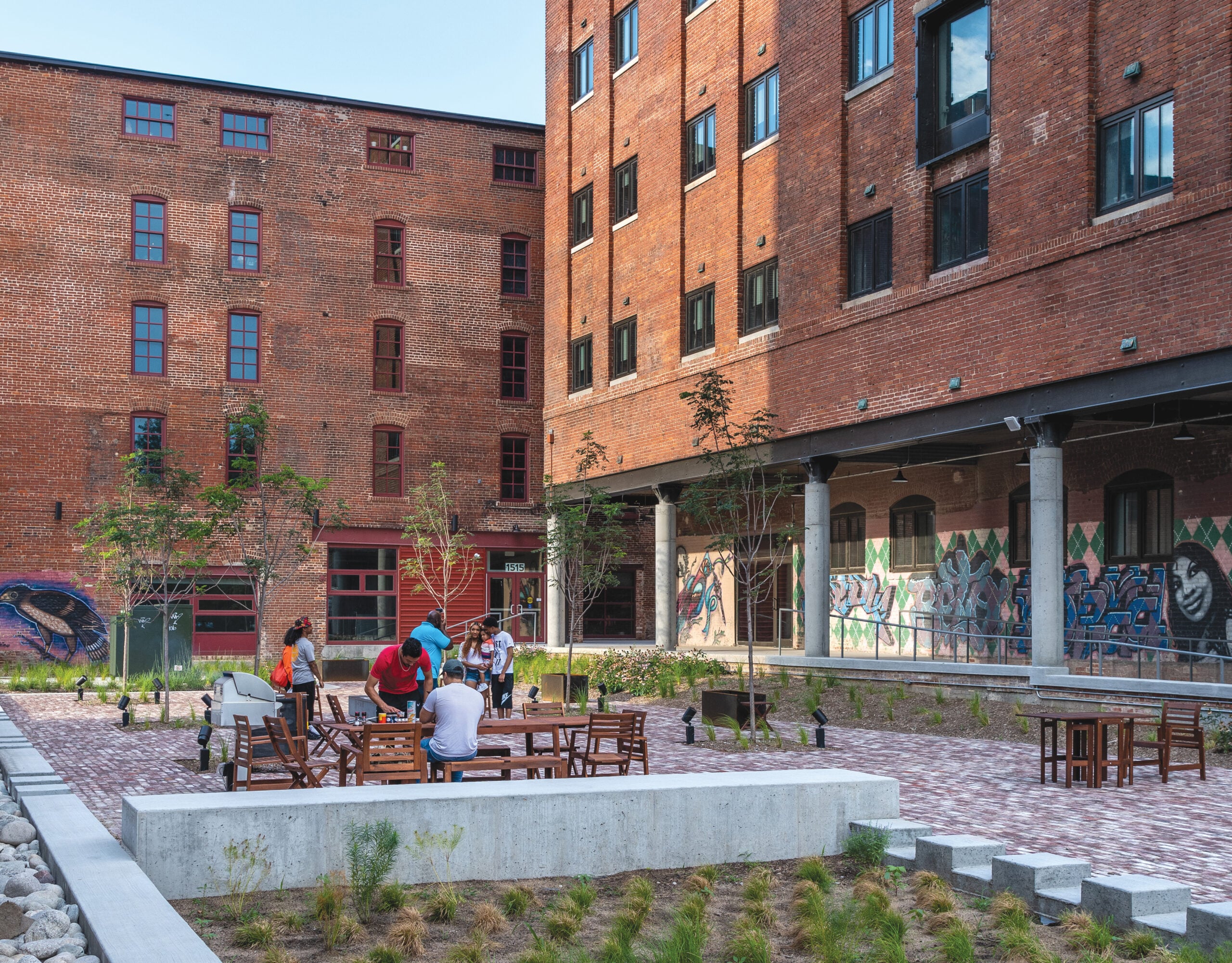
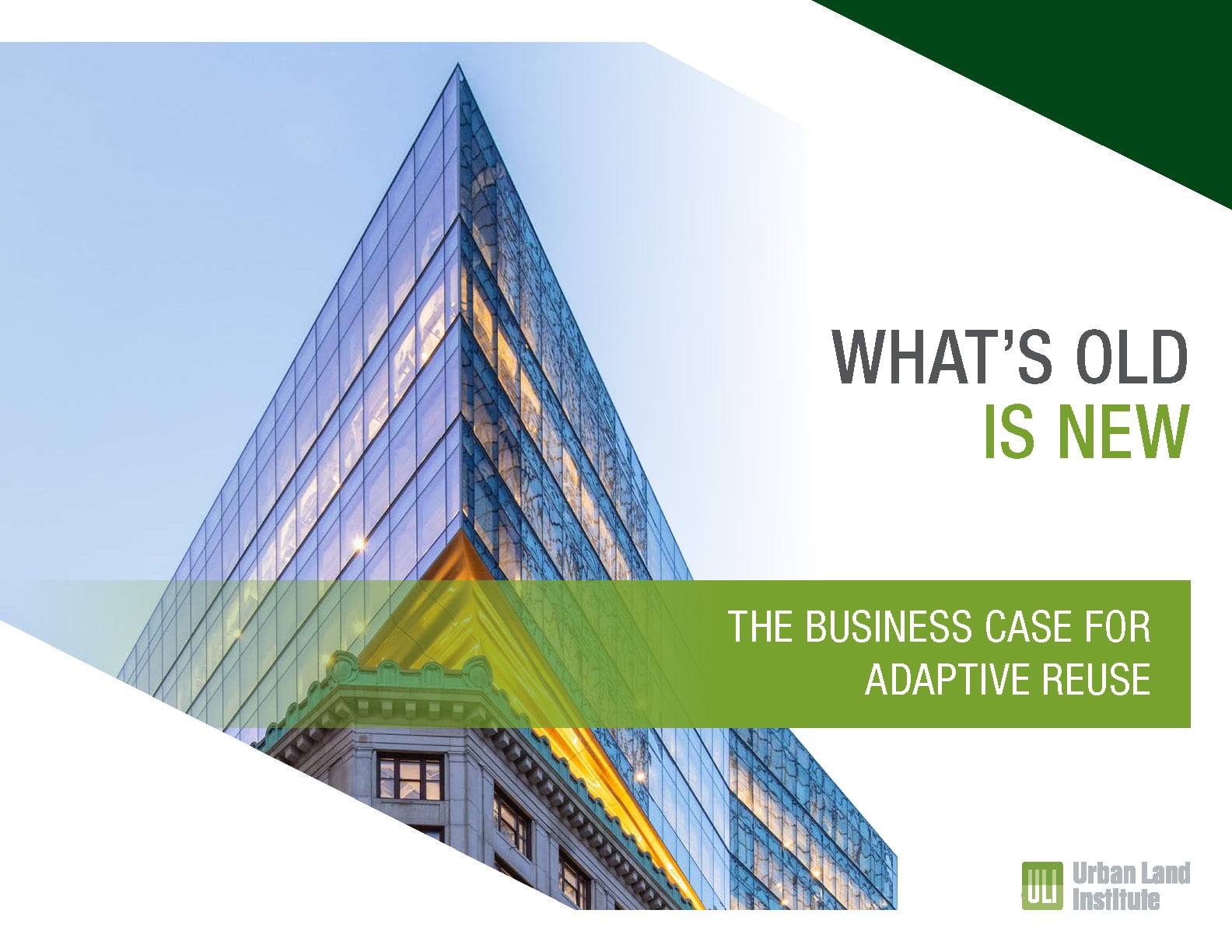
LF: DBTH was our earliest project, and it’s our longest-spanning project. Then there’s our commercial real estate work, which is about the value that existing buildings bring to the commercial real estate industry. We’ve published two reports now with ULI. One is about making the economic case for adaptive reuse in urban revitalization. I think we tend to talk about [building reuse] in single issues—the carbon benefits, the cultural benefits, the community benefits—but it’s really about the whole being greater than the sum of the parts. It is challenging to quantify those benefits. All the developers and funders we spoke to talked about this je ne sais quoi, this feeling: People just love to be in old buildings.
The other report we just issued was an addendum to a recent report ULI launched about commercial-to-housing conversion projects to demonstrate their viability financially and spatially. We did a whole life carbon overlay to understand how we can align the housing imperative with the climate imperative and quantify the carbon reductions associated with that.
AR: Tell me about your experience attending COP30, taking this message about existing buildings to the highest level of the sustainability movement on our planet.
LF: Traditionally, existing buildings and building retrofit have been seen as a subset of the building sector, and it’s taken a long time to even get acknowledgement of the significant role of buildings in climate action. Heritage, in my experience, has always been this thing off to the side, kind of a niche one-off, like it’s not part of the mainstream conversation. What was interesting to me about COP30 is that this year, culture really had a loud voice. It was exciting to invert the story, where it’s not that existing buildings are an important part of the built environment; it’s that the built environment is also a really important part of culture.
So that was my big revelation: We’re not just talking about buildings as a technical solution now. We’re talking about buildings activating the whole-of-society response needed to address climate action.
BF: COP30 was my first COP. I was overwhelmed by the concentration of advocates, platforms, images, and stories. My biggest takeaway is this: Built buildings have a seat at the global climate action table. Our sector’s persistent and collective action at the global level in response to the Paris Agreement is poised to amplify the local innovation that’s already underway. When the whole life of buildings, their materials, and their assemblies is [recognized as] a foundational principle of country-level commitments, we have a pathway for systemic change and practice transformation.
Would you like to comment on this article? Send your thoughts to: [email protected]
Latest
Viewpoints
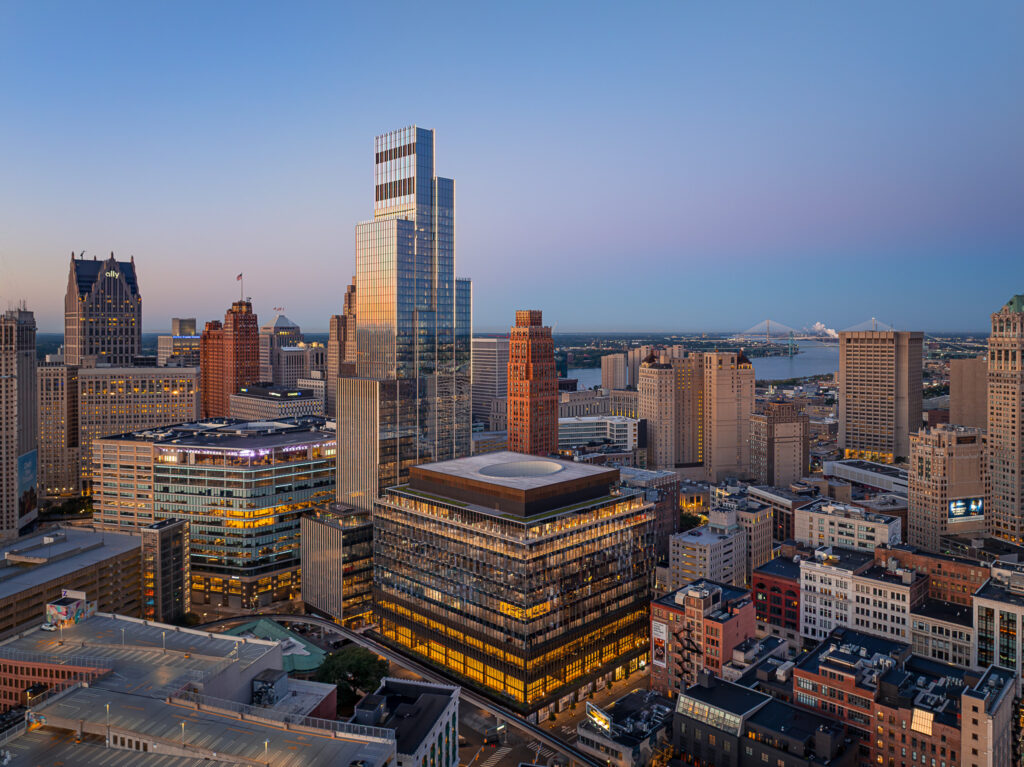
Detroit Month of Design: A City’s Work in Progress
Now in its 16th year, the celebration offers insights into the Motor City’s ongoing accomplishments without glossing over its hurdles.
Projects
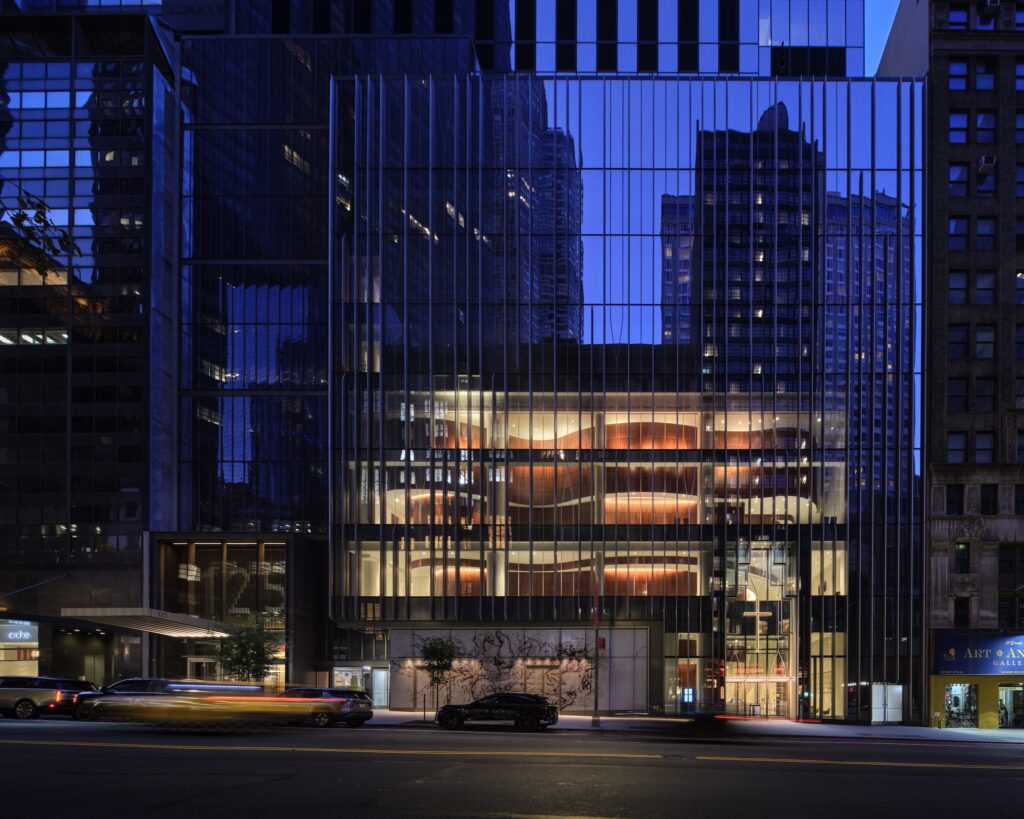
How a Hybrid Building Helped an Historic Manhattan Congregation Remain in Place
On Billionaire’s Row, FX Collaborative designed a new home for Calvary Baptist Church combined with an office tower.