



June 3, 2026
A New Housing Model for the Missing Middle
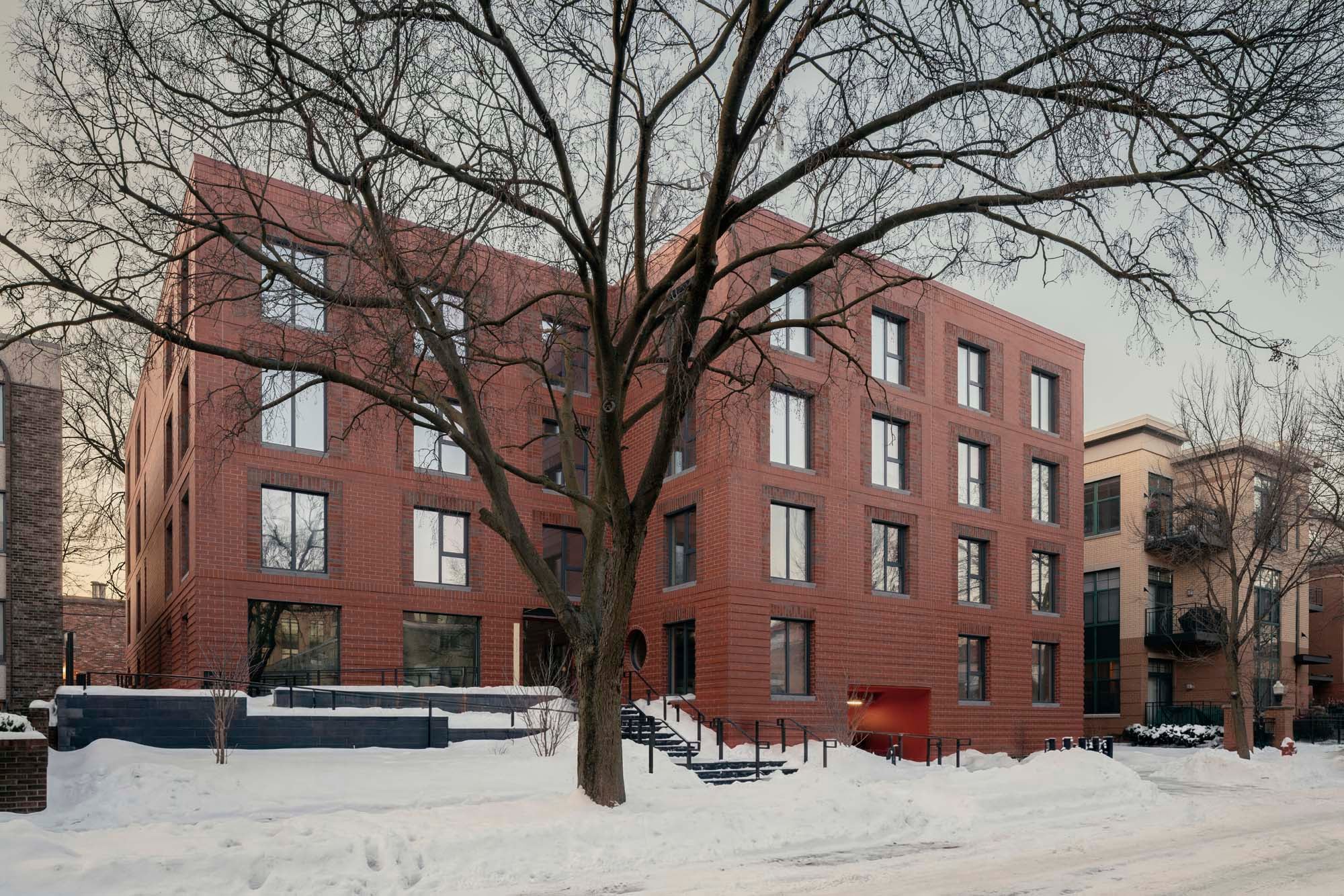
A few blocks from the Wisconsin State Capitol, Sala Hars’ 301 Vanilla looks both familiar and strangely out of time. Its red brick facade, scored and subtly articulated, recalls the architecture that once defined Madison’s urban core. Look closer and it begins to morph: The brickwork thickens and thins, windows sink into shadowed portals. It’s both a historical echo and something more experimental.
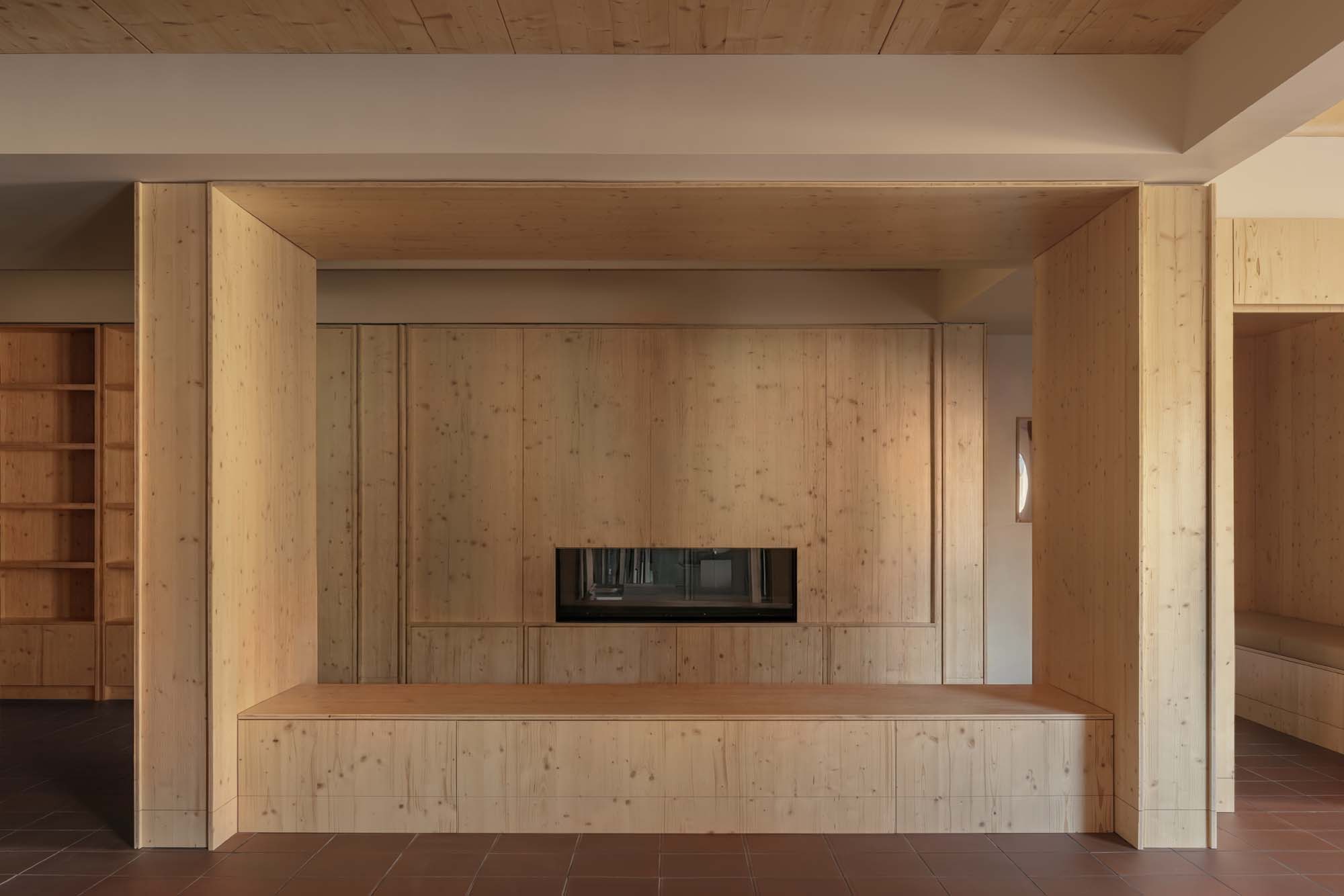
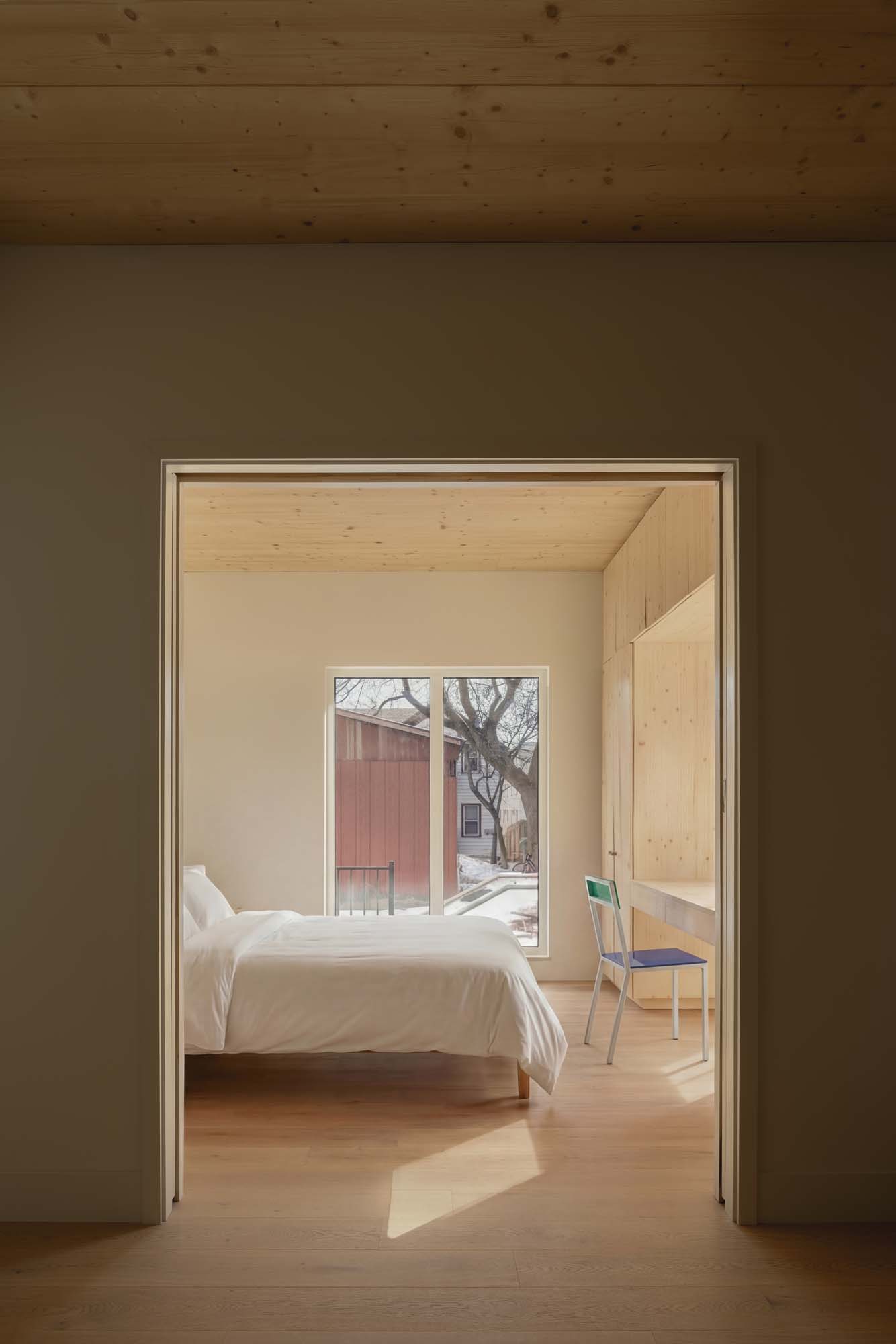
Inside, the sense of familiarity dissolves. Apartments are assembled from a rigorously organized system of prefabricated components: cross-laminated timber (CLT) slabs, light-gauge steel framing, and a kit of modular interior elements. As firm co-founder Juan Sala describes it, the project operates between “figuration and abstraction,” pairing an exterior that engages history and context with an interior that is unapologetically contemporary.
A Flexible Kit of Parts
The residential building, developed with Madison-based development firm Neutral, begins with a 12-by-12-foot grid. The module accommodates everything from bedrooms and living rooms to kitchens and bathrooms and can be subdivided into halves or thirds, then aggregated into varied apartment layouts. The system can adapt to changing market demands or site conditions with minimal redesign.
Rather than relying on conventional double-loaded corridors or wasted circulation space, apartments unfold as sequences of rooms. Hallways become storage, bathrooms, or workspaces; rooms bleed into one another. As Sala Hars co-founder Douglas Hars puts it, the goal is not efficiency through reduction, but “efficiency without being efficiently small.”
All major technical components, from wall panels to cabinetry, are fabricated off-site and assembled on location. The CLT panels form the horizontal structure, while the steel wall systems provide vertical support and acoustic separation. Mechanical systems are pre-coordinated and integrated into the panels.
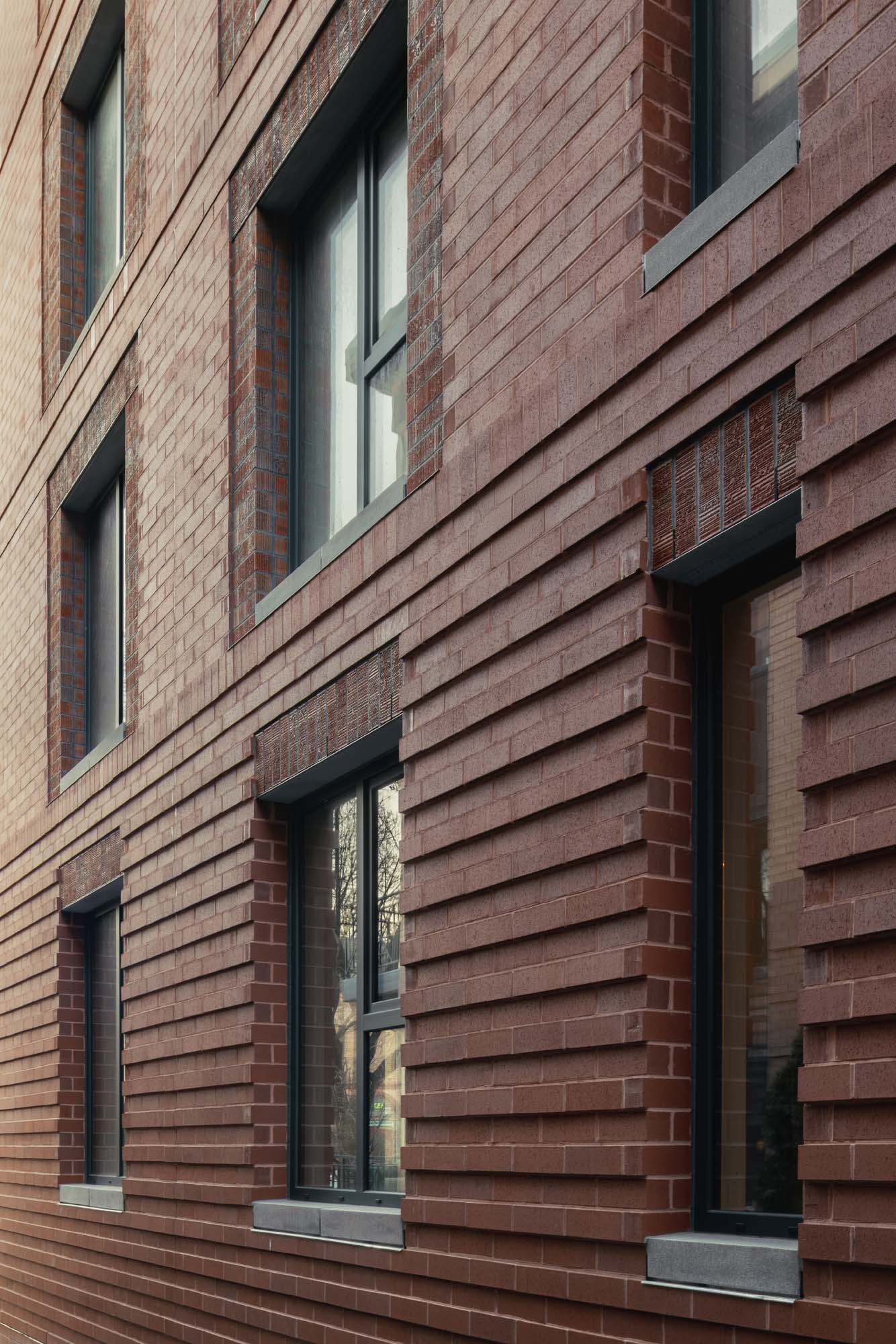
This upfront planning significantly compressed the construction timeline, reducing both cost and material waste. And the resulting efficiency helped the firm redirect resources into the building’s facade. In a building landscape dominated by “paste-on” brick panels and synthetic cladding, the partners insisted on working with local masons. Together they developed a façade laid brick by brick, employing multiple bonding patterns and finishes to produce subtle variations in depth and texture.
A New Urban Vernacular
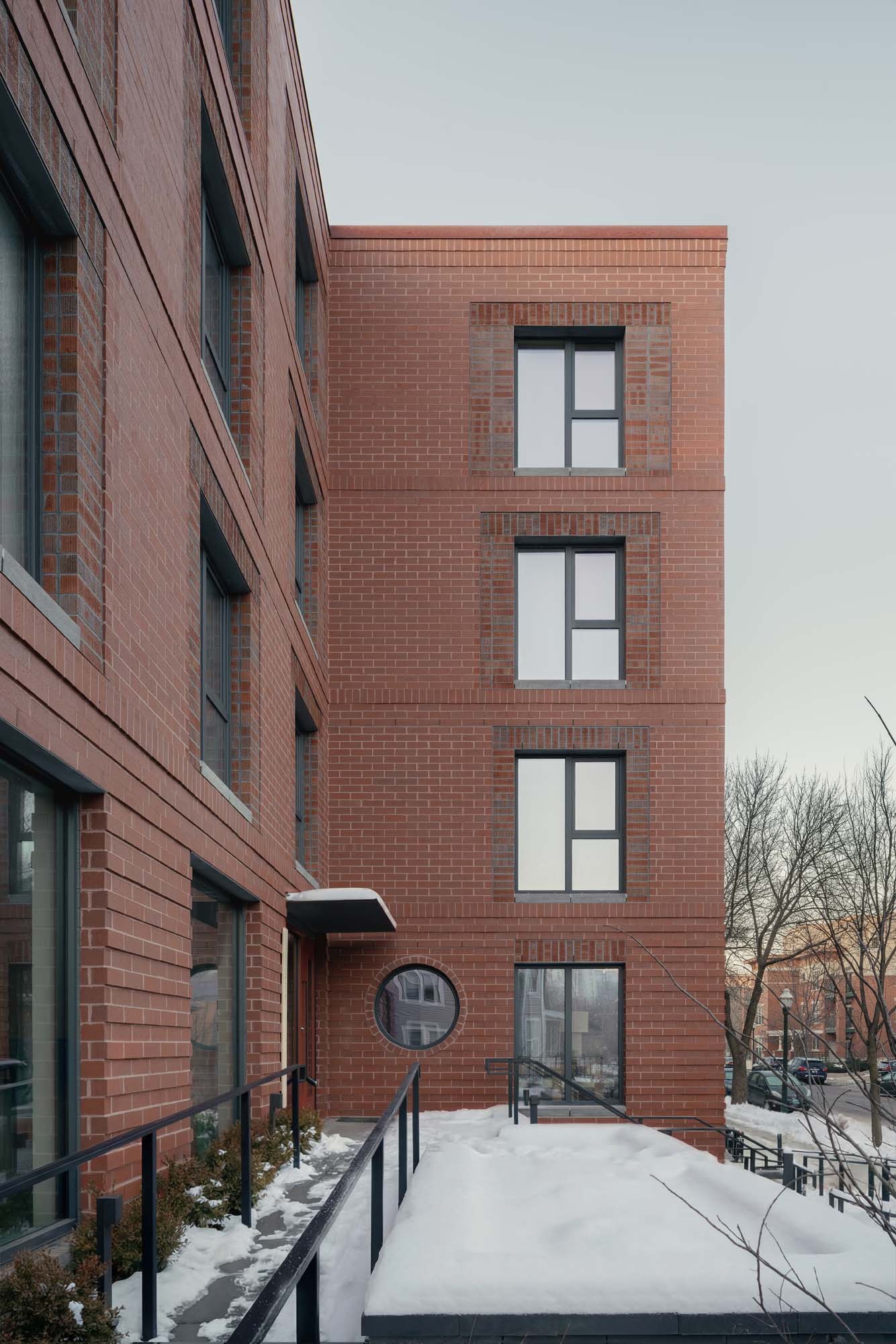
The language draws loosely from classical precedents: a rusticated base, a tripartite organization, and hints of entablature and pilaster. But the elements are stripped down and recomposed. Running bond, soldier course, and stacked brick patterns subtly shift to create shadow lines that animate the surface. Two types of brick, one smooth and one rough-faced, further differentiate the facade, particularly around windows, where deep, almost carved openings give each unit a sense of weight and presence.
The line between past and present, says Hars, “is not so rigid anymore. It can be a bit more plastic and playful.”
At the urban scale, the project resists the temptation to maximize every square foot. Instead, it pulls back from the street to create a small public plaza, contributing to the neighborhood’s pedestrian life.
The architects see 301 Vanilla (named for its street address) as a prototype for addressing the missing middle housing. In cities like Madison, where demand is rising but high-rise development remains impractical, there is a market for medium-density buildings that can bridge the gap between single-family homes and large apartment complexes.
The firm says they are looking at more sites in Madison. But the system could be adapted across different regions, adjusting massing, layout, and facade material to suit local conditions. In California, where seismic constraints limit masonry construction, the same framework might produce a wood-shingled exterior. In other regions, it could take on entirely different expressions.
Sustainability is embedded. Mass timber reduces the carbon footprint, while high-performance envelope systems and energy recovery ventilation improve efficiency. The building approaches passive house standards without fully committing to them, a pragmatic decision that reflects the financial realities of market-rate housing.
301 Vanilla is all about dualities. Craft and prefabrication. History and abstraction. Economy and expression. In holding such opposing approaches together, it finds its identity, suggesting a future in housing where quality, adaptability, and ambition are not luxuries.
Would you like to comment on this article? Send your thoughts to: [email protected]
Latest
Viewpoints
Detroit Month of Design: A City’s Work in Progress
Now in its 16th year, the celebration offers insights into the Motor City’s ongoing accomplishments without glossing over its hurdles.
Projects
How a Hybrid Building Helped an Historic Manhattan Congregation Remain in Place
On Billionaire’s Row, FX Collaborative designed a new home for Calvary Baptist Church combined with an office tower.