



November 26, 2025
Atlas Academy Rethinks the Stadium as a Miniature City
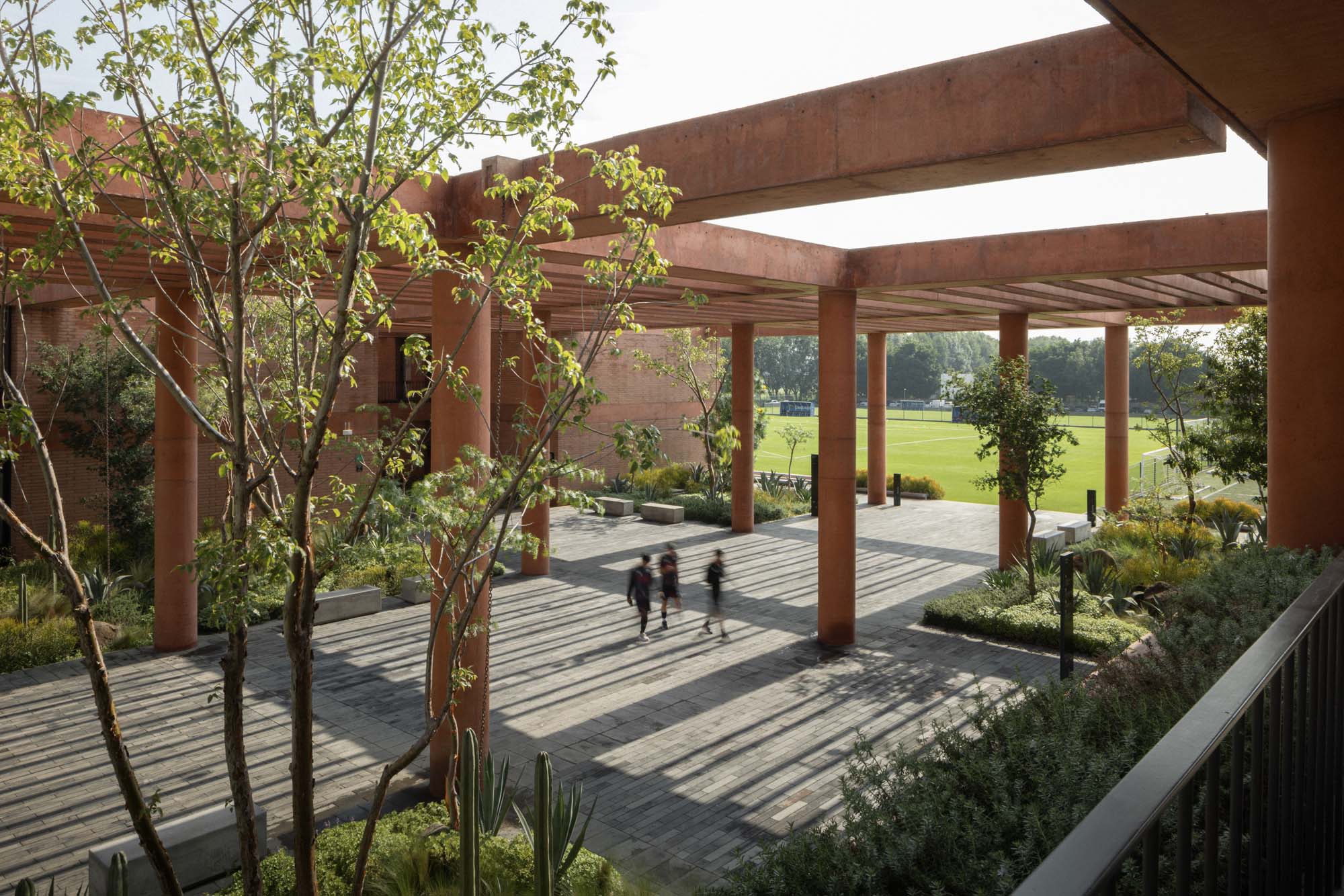
When Atlas FC—one of Mexico’s oldest and most storied soccer clubs—set out to create a new home on the outskirts of Zapopan, west of Guadalajara, they could have followed the familiar path of most sports architecture: glass boxes, metal slabs, and isolated training facilities. Instead, they turned to Mexico City–based Sordo Madaleno Arquitectos, who transformed a flat agricultural site into Atlas Academy, which firm partner Fernando Sordo Madaleno calls a “miniature city,” combining athletics, administration and community functions in one highly porous, very unique structure.
“It carries all the typologies in one,” says Sordo Madaleno, who now leads his company’s London office. “It’s probably one of the most complete buildings we’ve ever done.”
The club initially wanted two independent buildings: one for offices and another for soccer. Instead, the architects proposed a unified, 90,000-square-foot edifice, unfolding on a modular 28’x28’ concrete grid—both rigorous and flexible—interlacing classrooms, residences, a clinic, training spaces, team offices, restaurants, six professional soccer fields, and public spaces like courtyards, plazas, and garden-lined, shaded passages. The heart of the complex is its multifunctional central plaza, which hosts everything from assemblies and team photos to funerals (including, recently, that of the team owner’s father.)
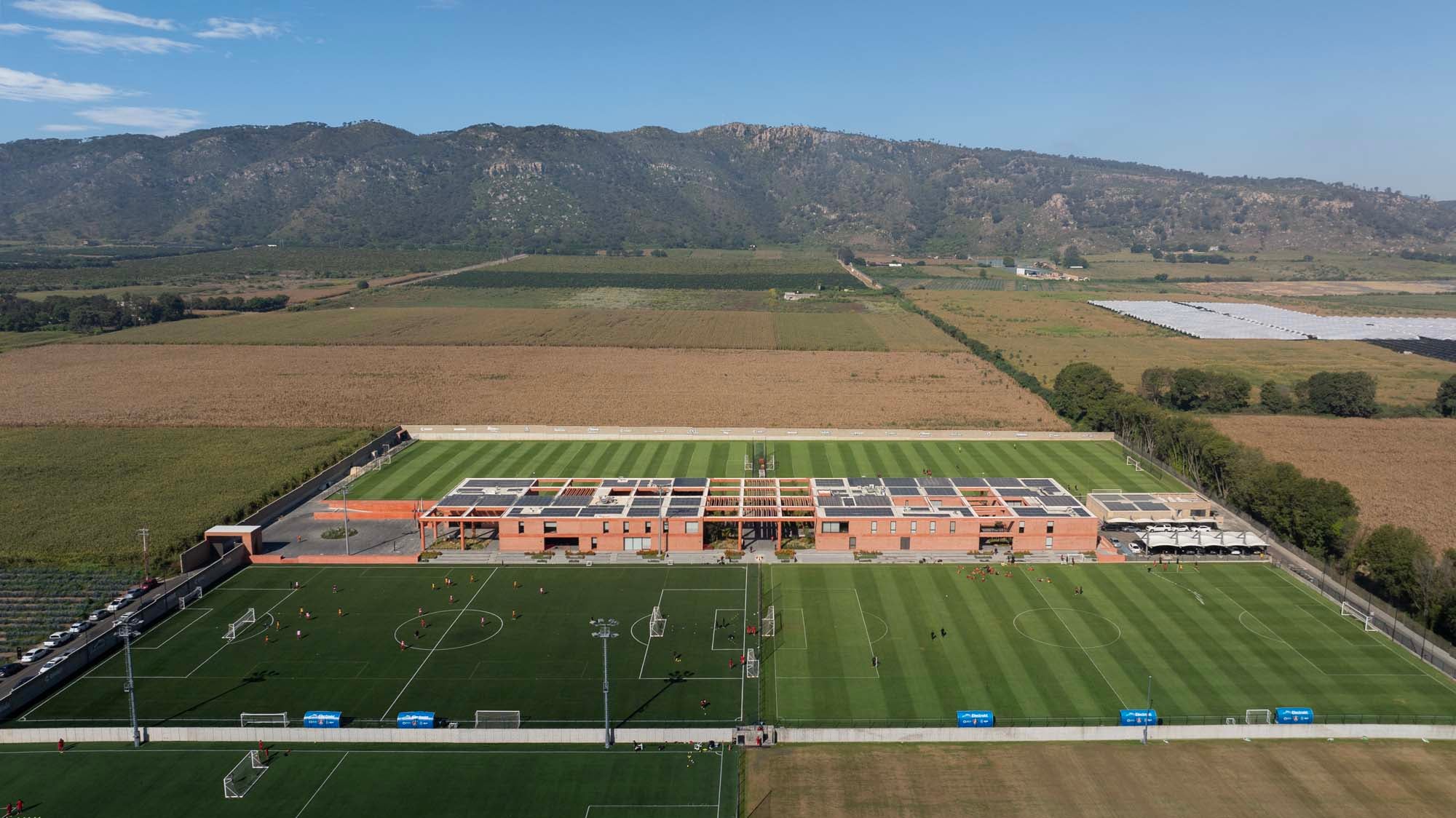
A Unified Campus Built on Modularity and Flexibility
Bucking the hyper-specialized nature of sports architecture, spaces in the complex are not locked into single uses. The west facade stair serves as seating during matches, a warm-up area during training, and a quiet terrace when empty. Bleachers, plazas, and courtyards are all interwoven into the structure itself. And each bay of the gridded structure can be added onto or reconfigured with minimal disruption.
With its thick brick walls, shaded walkways, and large openings providing natural cooling and ventilation, the complex blurs indoor and outdoor, building and landscape. Columns and beams form a latticed roof that doubles as a brise-soleil over denser program areas. Courtyards serve as outdoor rooms filled with shade trees and climbing vegetation. Some planters were deliberately placed on upper levels so greenery would cascade down the facades. Working with Plantica, the team planted only endemic species, creating microclimates that thrive year-round with low water use.
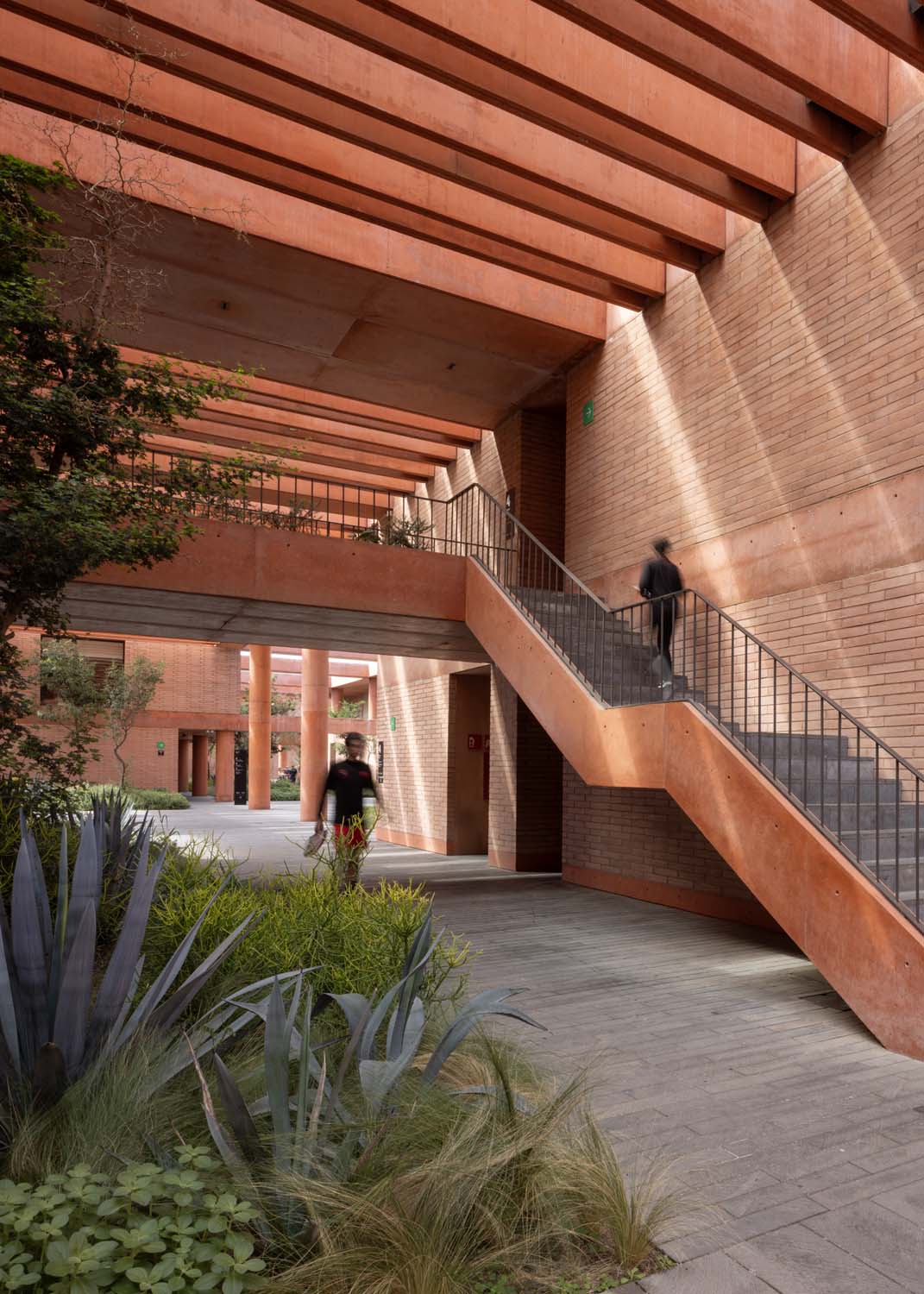
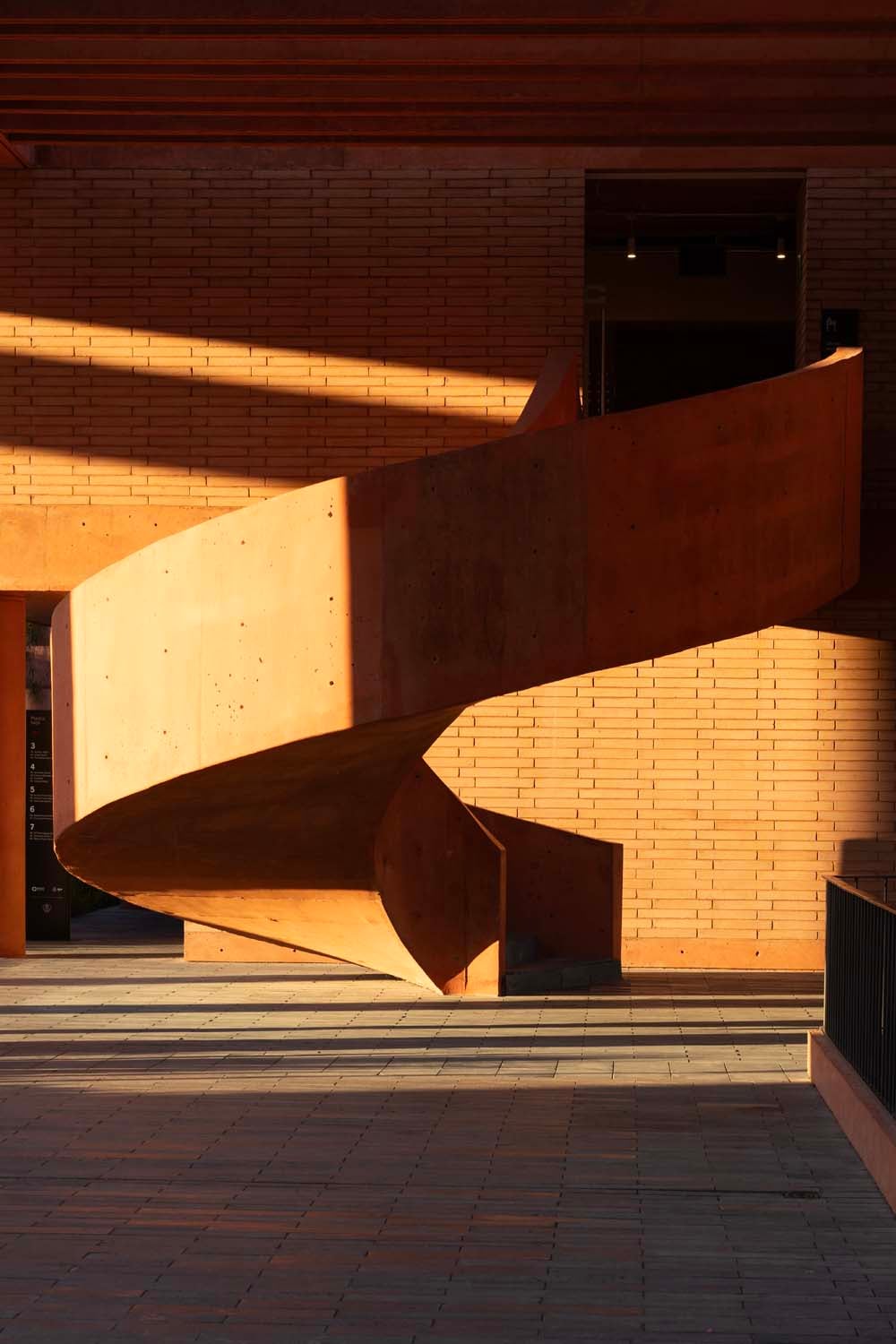
Blurring Indoors and Outdoors Through Materiality and Landscape
There is a prominent local story, too, with virtually all construction sourced in Jalisco. Every brick was manufactured in Guadalajara. Concrete (Mexico’s most common construction material) was cast in place by local craftsmen, while pre-cast floor slabs sped up assembly. The monochromatic red palette—echoing both the team’s colors and traditional Mexican brick—became a unifying language.
Reflecting Atlas FC’s identity as the nurturing “Academia del Fútbol Mexicano,” all players—men, women, and youth—share the same infrastructure. Professional locker rooms are identical to those of underprivileged academy players who live and study on-site.
Sordo Madaleno stresses the building’s celebration of texture and imperfection; its openness to weathering and change. “I like things that don’t look finished,” said Sordo Madaleno, who likens the “raw,” bulky edifice to a kind of ruin—a human counterpoint in a digital age.
The monochrome red complex offers a new point of reference—and a thriving community—in a landscape lacking scale or precedent. For Sordo Madalena, it reinforces the idea that “most of the projects that stand out today are more than buildings. They’re places.”

Would you like to comment on this article? Send your thoughts to: [email protected]
Latest
Projects
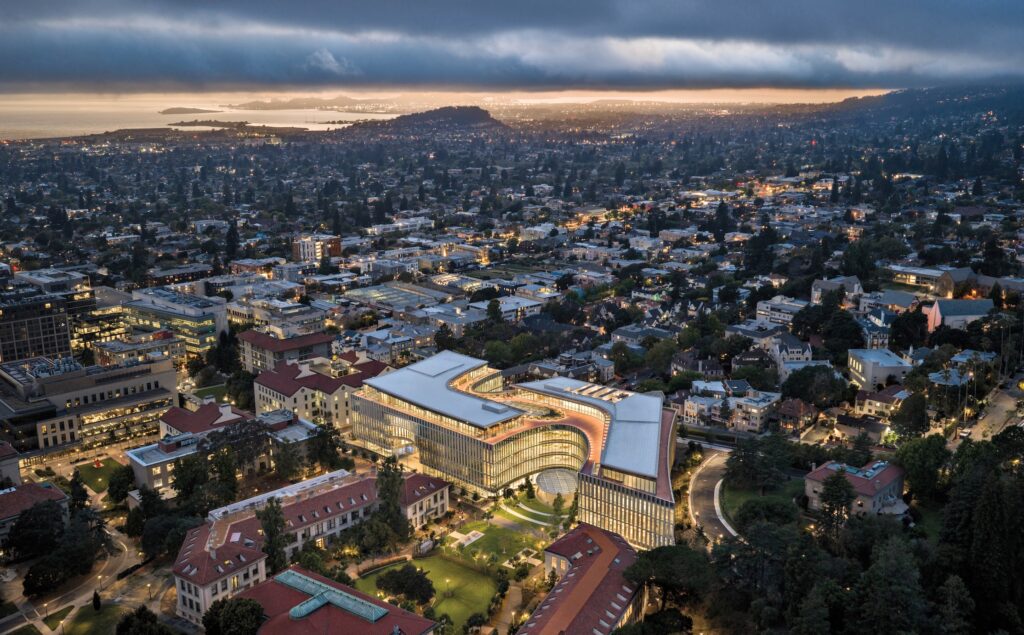
UC Berkeley’s Newest Building Is All About Human Interactions
The Barbara and Gerson Bakar Gateway—home to the university’s College of Computing, Data Science, and Society—gently reminds data scientists and AI researchers of what’s really important.

Projects
ZD+A Brings a Modernist Mexico City House in Line with its Context
Architect Yuri Zagoin Alazraki reorganized the speculative house to respond to its site and create unique spaces for contemplation.