




December 3, 2025
At This Portland Hotel, Wellness Is the Ultimate Sustainability
Portland, Oregon’s Alberta Arts District includes many galleries, restaurants, and shops. Still, until recently, the neighborhood—about four miles northeast of downtown—had no hotels, let alone one like Cascada, with its biophilic-centric interiors and an emphasis on health in seemingly every detail.
The lobby’s custom sofas were crafted with Portuguese cork; walls finished with natural limestone plaster; and its front desk faces a two-story living wall. The double-height pool room’s triple-pane glass ceiling is embedded with photovoltaic cells. Hundreds of plants—irrigated with rainwater from a 10,000-gallon cistern—were chosen to purify the air. The building’s mass-plywood framing further reduces the project’s carbon footprint.
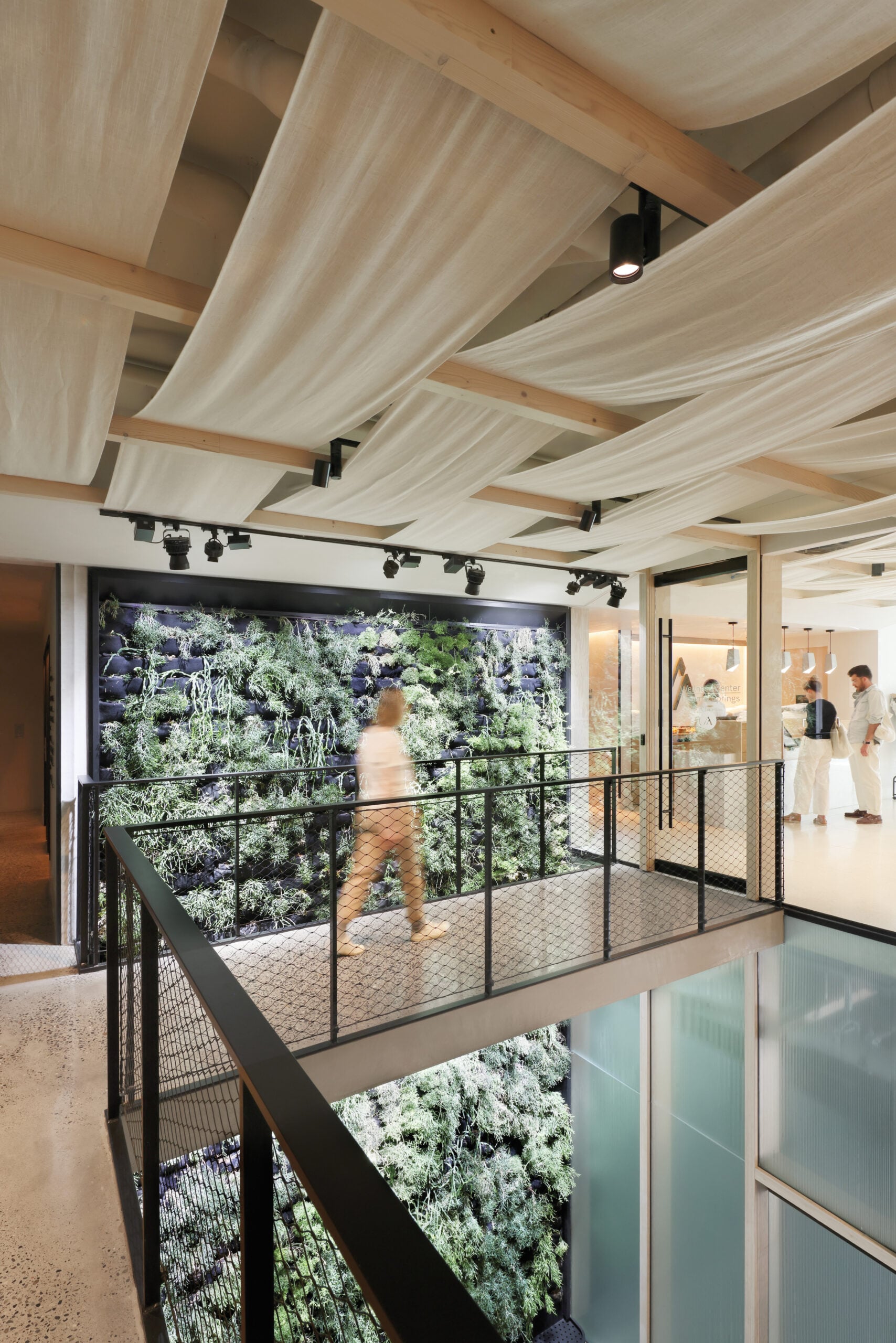
“Every project we’ve done has been built with a LEED Platinum baseline, and this will be LEED Platinum as well, but we’ve also done a bunch of other sustainable designations—2030 Challenge, Passive House. Each time we geek out on a different construction methodology, we learn a lot,” says Danya Feltzin, executive vice president of Solterra, the project’s developer and general contractor. “Now the company has evolved from designing sustainable spaces to this project, where the most sustainable aspect is the health-and-wellness focus.”
Instead of partnering with a third-party chain, Solterra created the Cascada boutique-hotel brand itself, in keeping with the neighborhood’s local-business vibe. “There’s something like 400 businesses along Alberta Street,” says Solterra’s CEO, Brian Heather, “and not one Starbucks.”
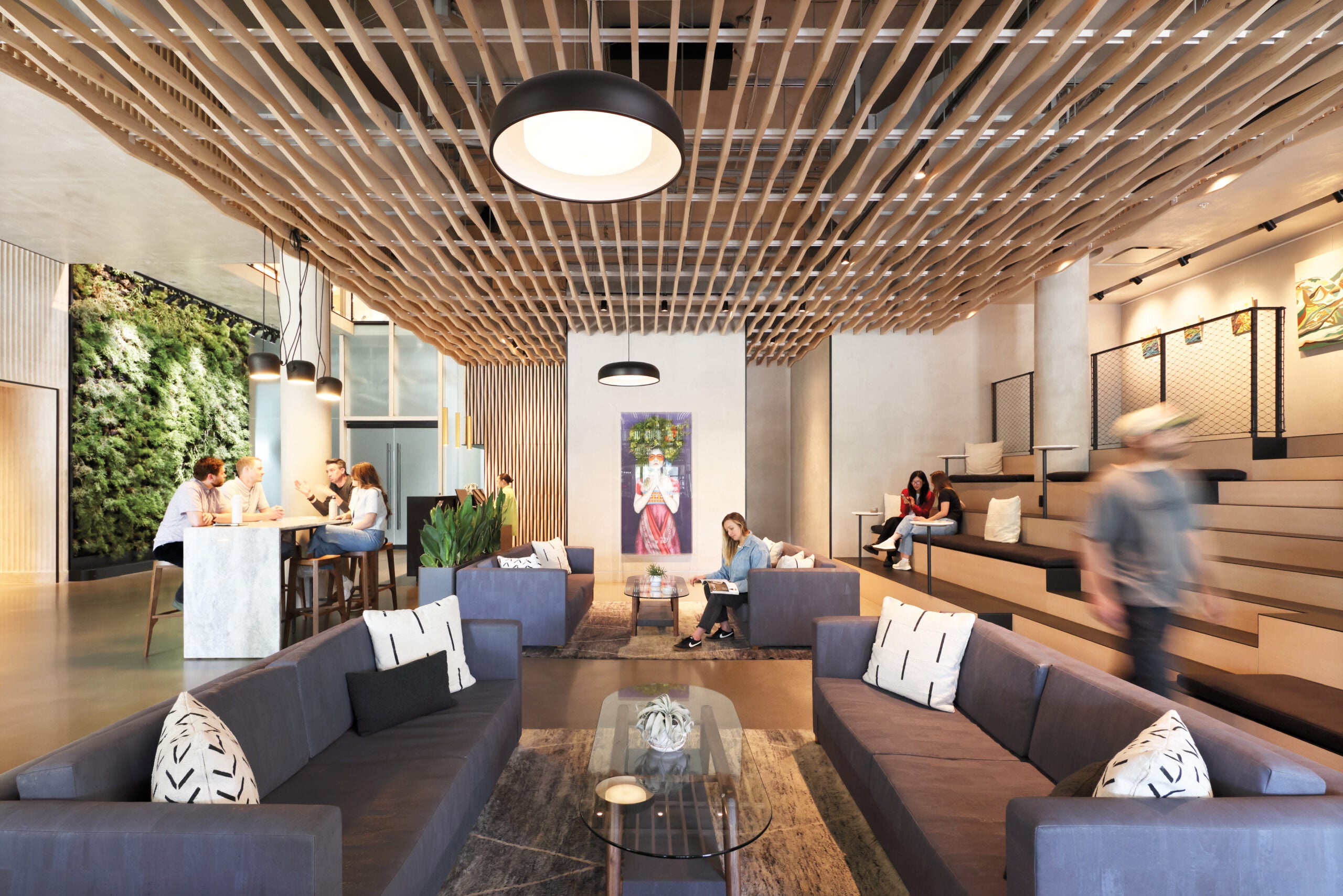
Biophilic Design Meets Low-Carbon Construction
Designed by LEVER Architecture, the project began as housing but shifted to a hotel after the pandemic. Many of the residential design features remained, including rooms with double-height, loft-style configurations, as well as washer-dryers and kitchens in every unit.
Early on, life-cycle analysis showed a hybrid mass-timber and low-carbon concrete structure would reduce embodied carbon by 35 percent compared with a baseline building designed to code. “It’s a highly customizable modular system that combines the efficiencies of prefabrication with craftsmanship,” says LEVER founder Thomas Robinson. “The floor-and-ceiling panels just stack into place with the metal-stud walls. It’s erected with minimal on-site labor. I think you’re just going to see more of that as a kind of next-generation construction method, because it makes sense.”


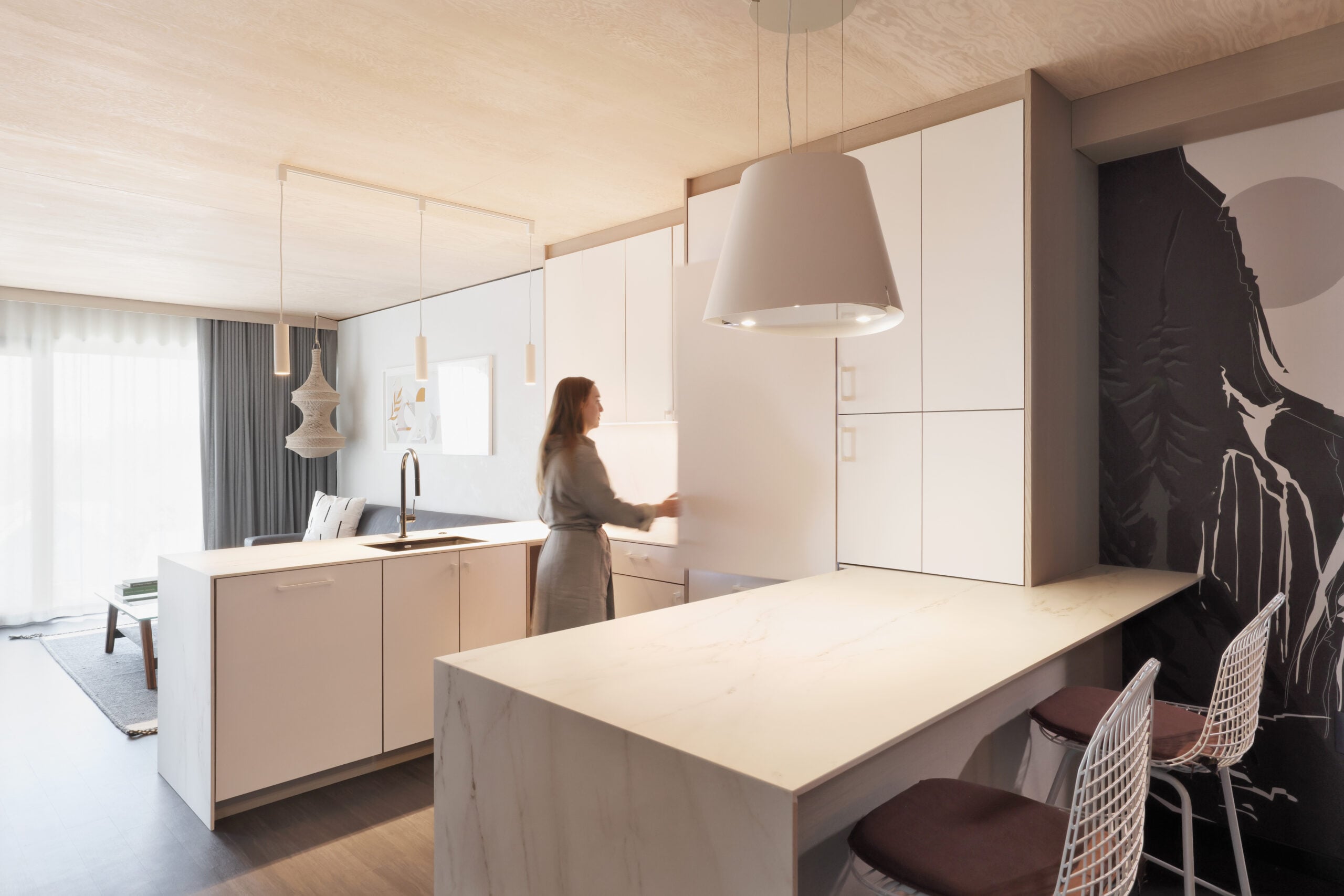
The mass plywood, manufactured by Freres Engineered Wood, was sourced from nearby Oregon forests, including trees salvaged from the 2020 Santiam fire, southeast of Salem. It also makes use of small-diameter trees, with trunks as little as eight inches
“Mass plywood has that ability to utilize fiber that other people don’t know what to do with, and it’s actually one of the biggest issues relative to fire,” Robinson says. As both a structural and a finish material, the mass plywood is visible in the ceilings and throughout the hotel. “It has an elevated quality that you don’t typically get with plywood,” the architect adds, “and I think it provides that sense of character they were looking for.”

So too does more than 100,000 square feet of limestone plaster, which all but eliminated the need for interior paint. “You don’t smell what you would typically smell in a new building, and it drastically reduces the embodied carbon footprint,” Robinson says.
The spa’s high-efficiency water heating and cooling system for its five pools is linked to the HVAC system via water-source heat exchangers, allowing heat recovery between the two systems. The pools are also filtered, without the need for chlorine. “There’s a lot of things that you might not know about unless somebody told you,” Robinson says, “but I think you can sense from the experience of the place.”

Would you like to comment on this article? Send your thoughts to: [email protected]
- No tags selected
Latest
Viewpoints
Detroit Month of Design: A City’s Work in Progress
Now in its 16th year, the celebration offers insights into the Motor City’s ongoing accomplishments without glossing over its hurdles.
Projects
How a Hybrid Building Helped an Historic Manhattan Congregation Remain in Place
On Billionaire’s Row, FX Collaborative designed a new home for Calvary Baptist Church combined with an office tower.