



January 22, 2026
CannonDesign Revitalizes the Gregory Bateson Building
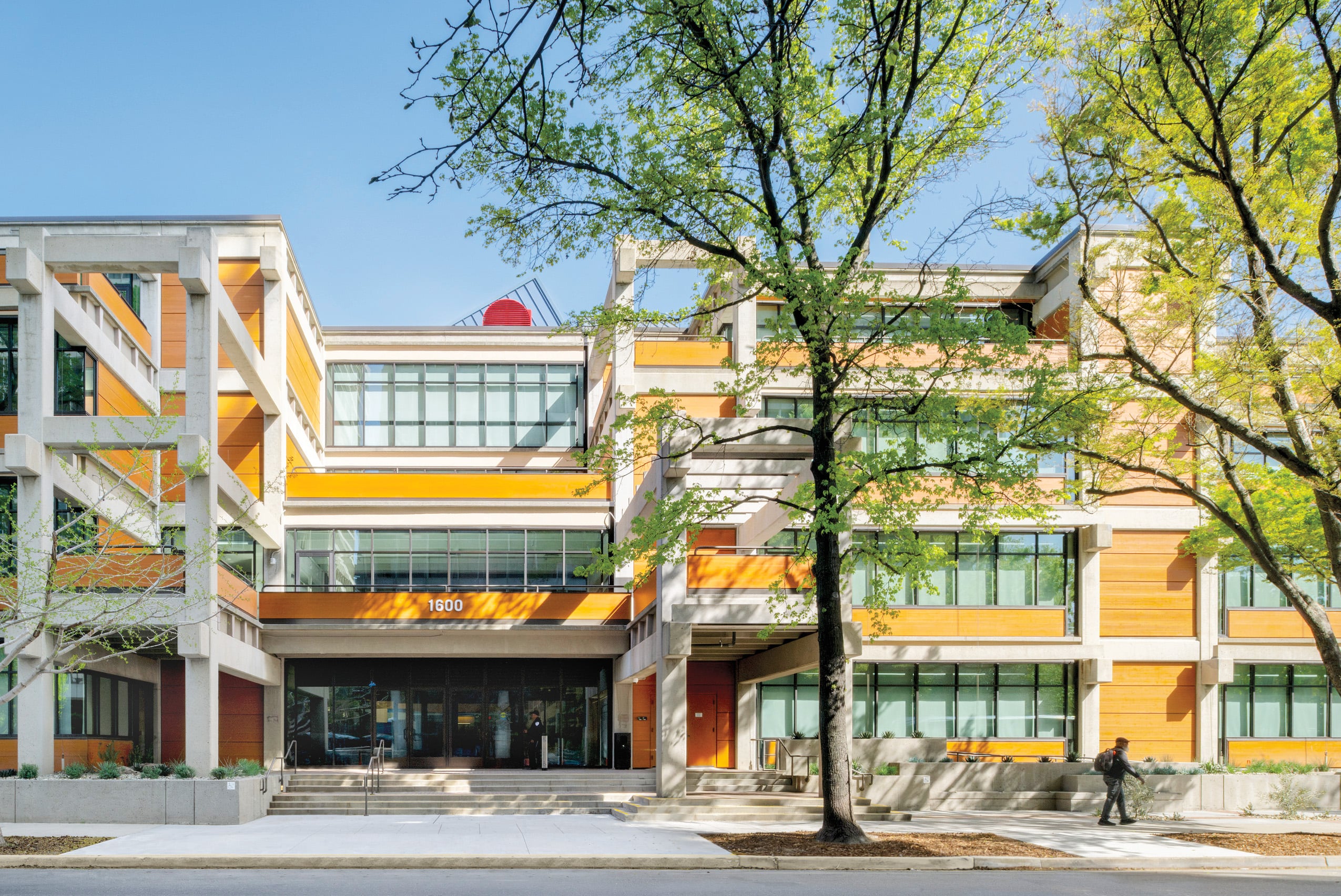
The sustainable design movement owes much to the late architect Sim Van der Ryn, often referred to as the father of green architecture. While other architects of his time were preoccupied with the stylish rigors of modernism, he focused on reducing the environmental impact of the built environment. His design for the 330,000-square-foot Gregory Bateson Building in Sacramento, California, is credited as the first large-scale example of sustainable architecture.
CannonDesign recently completed a $169 million renovation of the 1981 flagship office building, a prescient glimpse of how we want our buildings to be designed today. “Our assignment was to upgrade the building to desired energy standards but not to disturb the past,” says Praful Kulkarni, principal at CannonDesign.
The Original Vision: 1981
In 1975, Van der Ryn, a professor at UC Berkeley known for experimental off-the-grid buildings, was appointed state architect to advance a new administration’s environmental agenda. In a 2006 interview, he described how he brought people on board: “I had a gallon gas can and a little Japanese teacup, and I said to the committee, ‘See this gallon of gas? This represents how much [energy] it takes to heat, light, and cool a square-foot of state office space today. My goal is to reduce that amount by 90 percent.’”
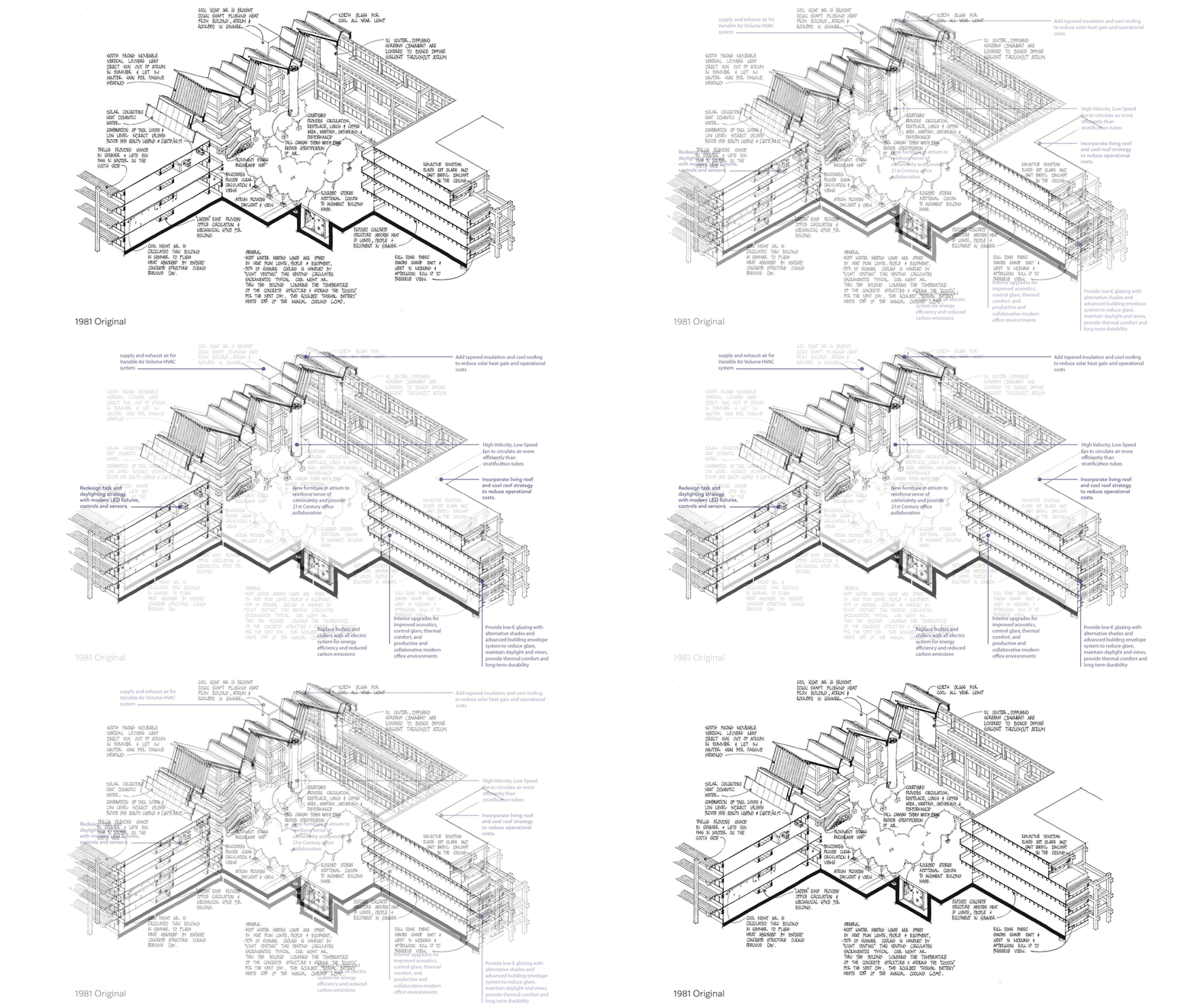
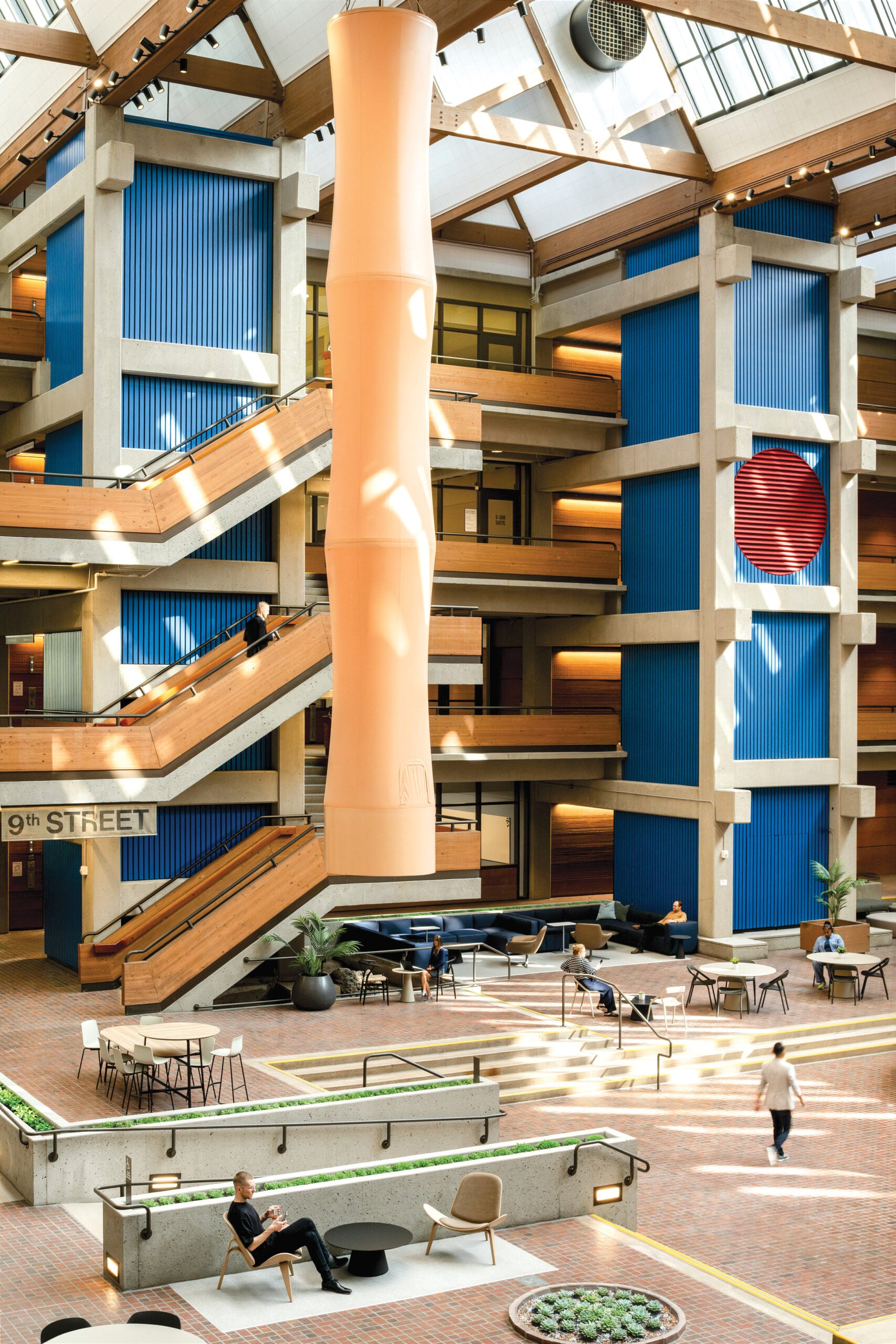
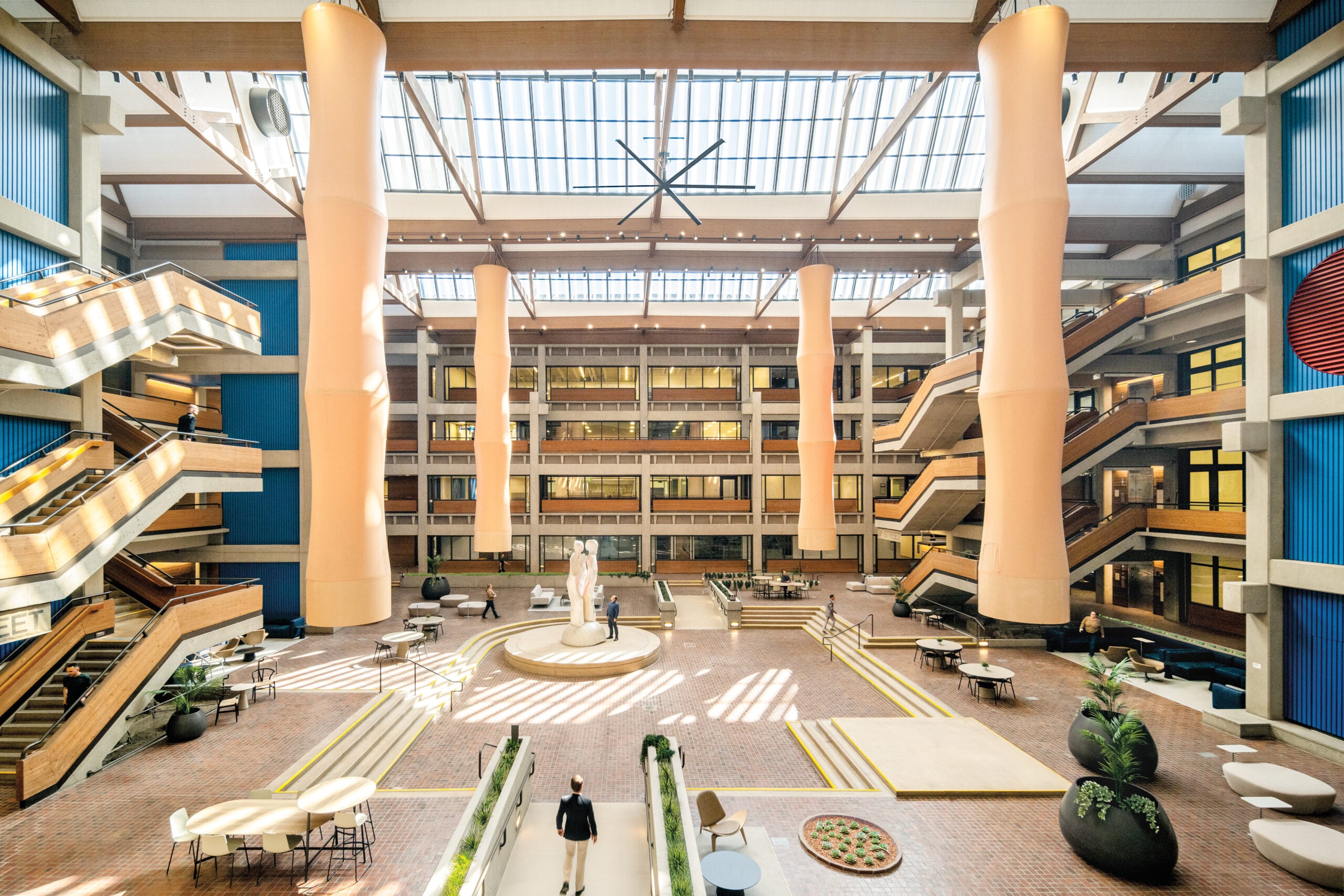
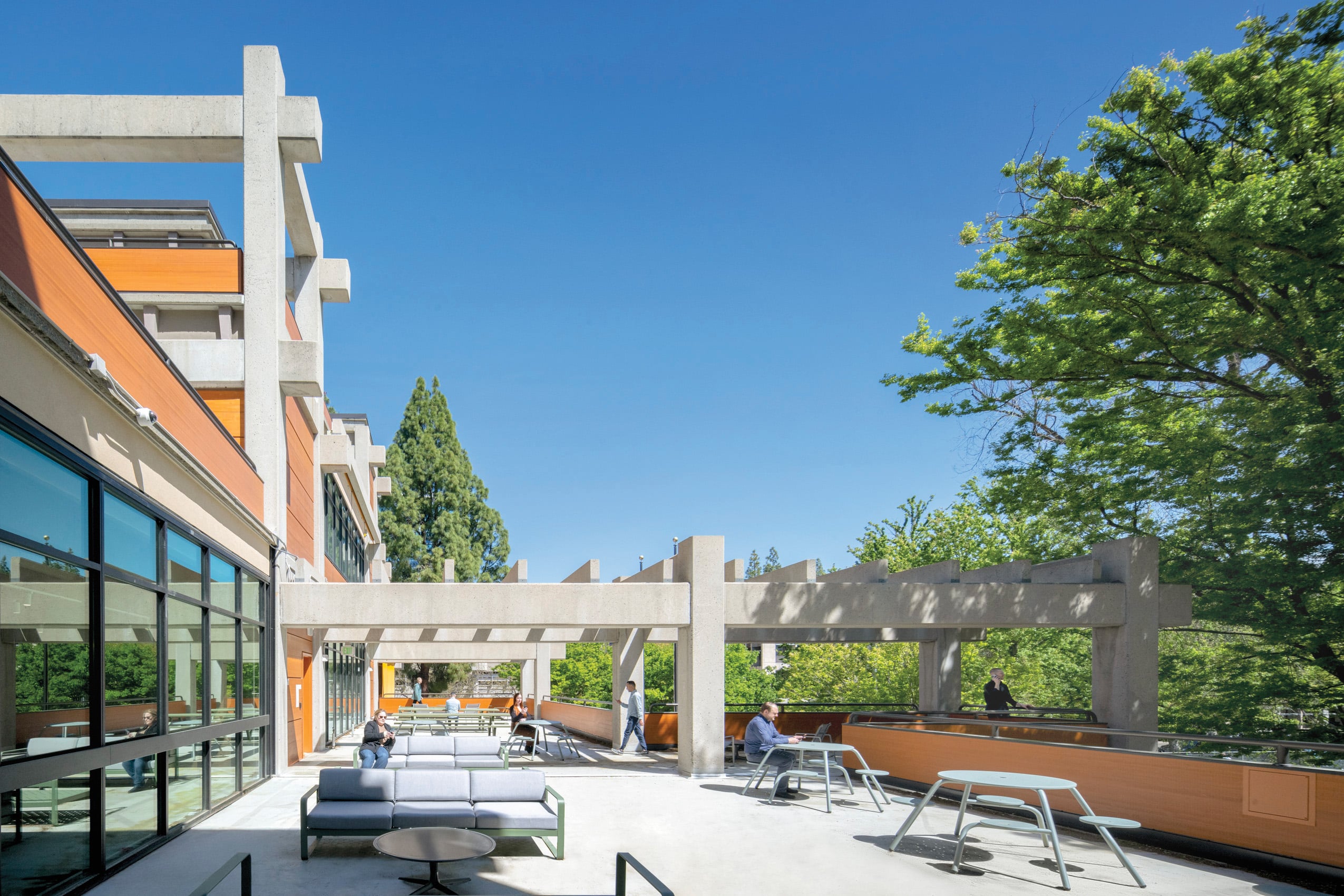
To minimize the energy use in Sacramento’s extremely hot weather, Van der Ryn relied on passive solar principles. The four-story building has an exposed post-and-beam concrete structure, which provides significant thermal mass, absorbing heat during the day and releasing it at night. In addition, it was designed with a night flush system that pumped out hot air through vents and fans. Natural light came in through the perimeter glazing, outfitted with exterior fabric shades, and a sawtooth roof, plus a wide band of north- and south-facing skylights with operable louvers. The building was—and remains—unusual for its enormous atrium, a soaring, 23,000-square-foot unconditioned, plant-filled space at the heart of the building.
Van der Ryn, who passed away in 2024, was also deeply interested in what he called “social ecology,” bringing people in tune with nature. On both the interior and exterior, the concrete was paired with warmly hued Douglas fir paneling, as if a Brutalist building had been outfitted with brown corduroy dungarees. Walking through the plant-filled atrium and up and down two grand stairs, the 1,000 staff members would be aware of the changing light and temperature during the year. They would see each other through cutouts in the walkways and on one of the building’s 23 exterior decks. In short, more than 40 years ago, the Bateson building was intent on fostering biophilia, as well as a culture of collaboration where “accidental collisions” occur.
The “Rock Bed” Experiment
To augment the building’s ability to heat and cool itself, below the atrium was a 600-ton bed of river rocks. A sound idea in principle, the rocks would store extra cooling energy from the night flush. This cool air would not only keep the atrium comfortable, it would be used as the air supply for the offices’ forced-air system, reducing the load on the air-conditioning units. (And the office heating system could heat the rocks to warm up the atrium.)
The visible parts of this experimental heating and cooling system were proudly called out in bright colors, akin to the Centre Pompidou in Paris, completed a few years before. The two vertical air shafts are painted blue with a big red dot, and suspended from the soaring ceiling are four giant orange tubes with fans, each more than 40 feet long. Alas, the rock HVAC was soon decommissioned because of airborne contamination concerns, but the rocks and colorful infrastructure remain in place.
The Gregory Bateson Building Renovation: 2025
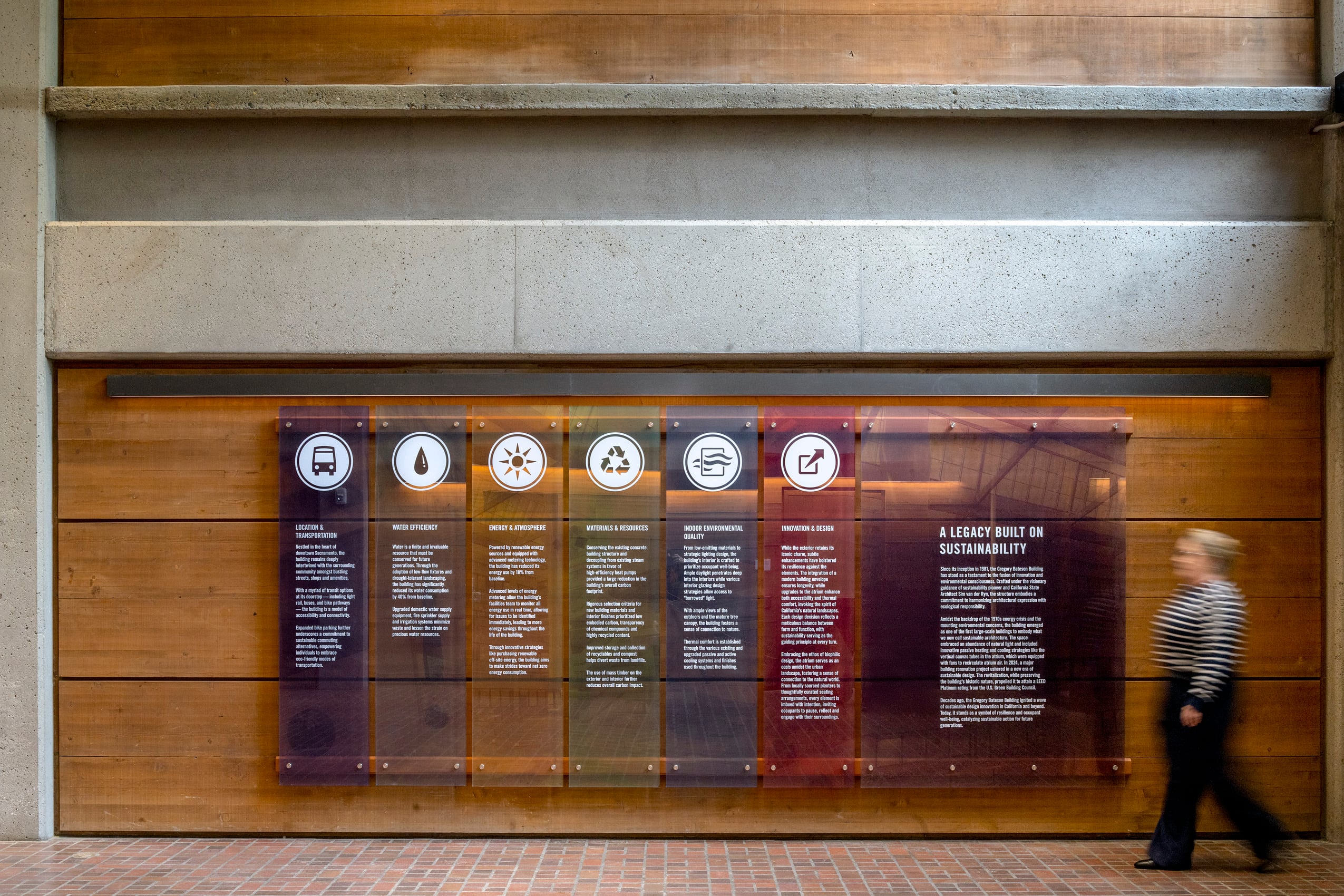
Over time, the building developed the typical problems of an aging structure and needed a building envelope upgrade, an all-electric HVAC system, and accessibility and fire safety enhancements. In addition, because the building is a California historical resource, the CannonDesign team had to figure out how to restore the exterior and key interior elements in the process. Notably, it replaced all the rotting Doug fir glulam panels on the exterior, which had been bolted directly to the exterior metal framing, with custom milled glulam panels on the face of the rainscreen system. With contemporary open office spaces, a modern reception area, and a bike storage room, the renovation helps to replenish the optimistic spirit of the past—while exceeding energy-efficiency targets.
The CannonDesign team was keenly aware of the building’s communal spirit. On all the drawings, in the “designed by” box, someone had written, “All of us.”
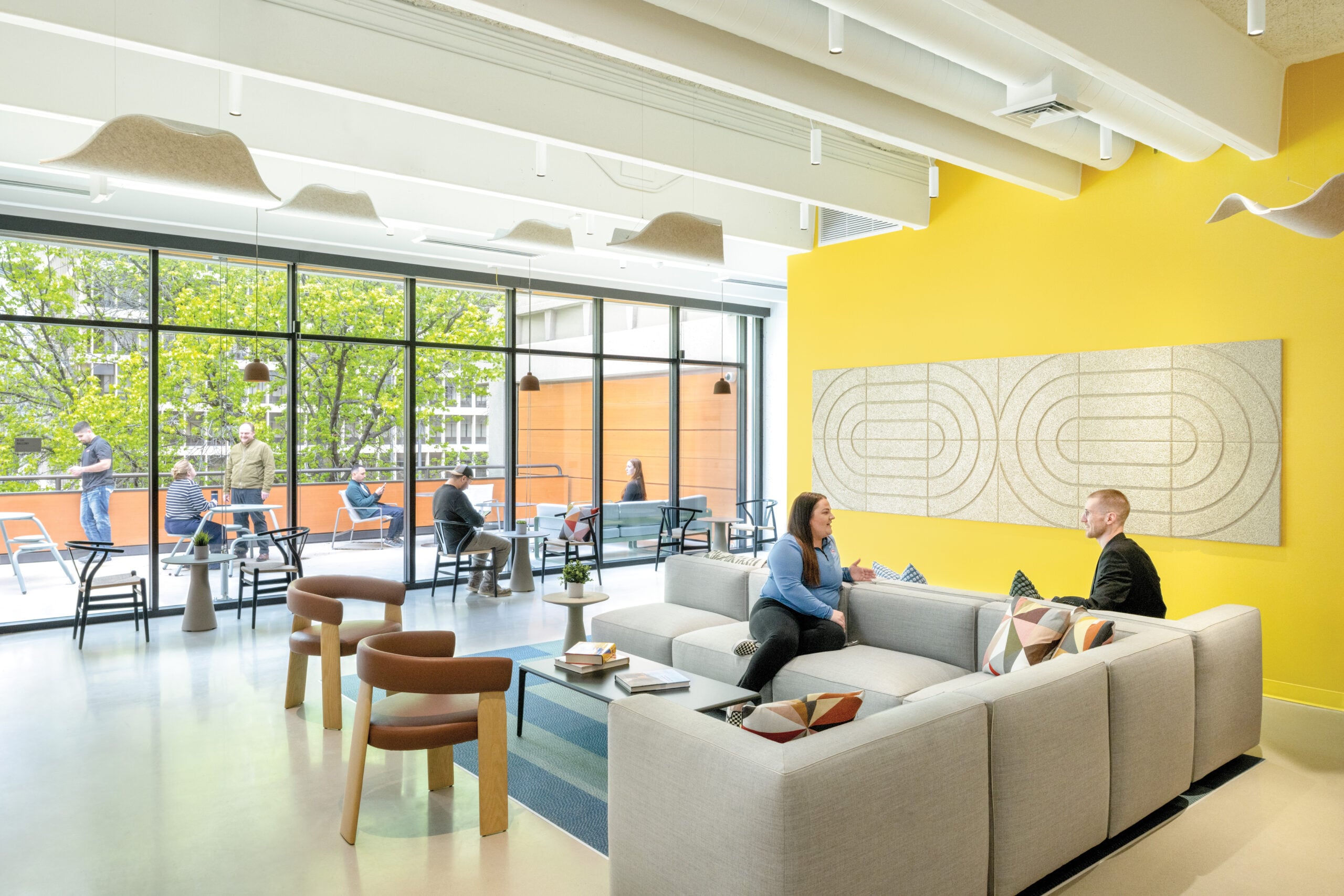
“That always touched me when I opened up those as-built documents to check things,” says CannonDesign’s Ian Merker, the project architect. “It was a team effort. And that’s exactly what we’re doing today with these collaborative design-build projects.”
When Van der Ryn dedicated the building before he passed away in 2024, he said: “We’re most alive when we experience subtle cycles of difference in our surroundings. The building itself…constantly tunes our awareness of the natural cycles which support all life. Maybe this is what aesthetics and beauty are all about.”
Would you like to comment on this article? Send your thoughts to: [email protected]
Latest

Viewpoints
The Architecture & Design Film Festival Enters a New Chapter
ADFF 2026 brings together stories of reuse, climate action, architectural history, politics, gender, and public life.
Projects
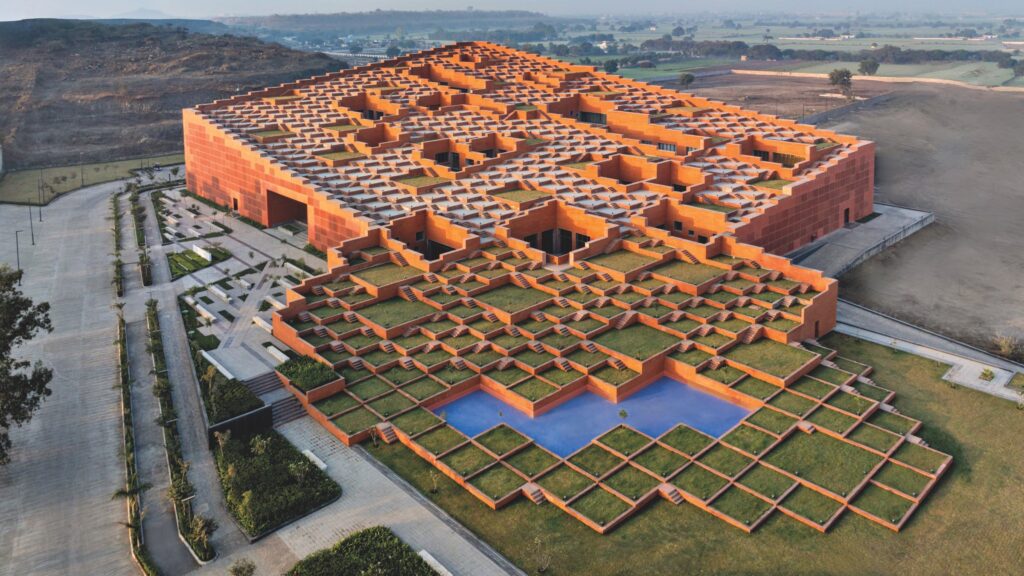
In India, Prestige University Offers Lessons in Climate Craft
The IGBC Platinum–rated education project is part of Sanjay Puri Architects’ quest for creative—and delightful—responses to a warming planet.