



February 20, 2026
Portland’s Carnegie Libraries Reopen as Community Anchors
At a time when investments in public institutions are dramatically dwindling, two recently reopened libraries on the north side of Portland make a compelling case for the opposite approach. LEVER’s transformations of the Albina Library and the North Portland Library, funded via a Multnomah County capital bond measure and in with specialized support from Noll & Tam Architects, are not just preservation projects, but social investments—helping repair historical harm, rebuild trust, and re-anchor communities.
Both structures are Carnegie-era buildings, part of Andrew Carnegie’s early-20th-century program that funded more than 1,600 public libraries across the United States. More than a century later, libraries are being asked to do far more than house books. Facing increasing digitization, they’ve become classrooms, cultural centers, cooling shelters, and community living rooms. “Libraries are some of the last places where you can exist without a transaction,” says LEVER cofounder Thomas Robinson. “That makes them incredibly powerful—and incredibly vulnerable—because they have to work for everyone, all the time.”
Restoring Memory in Albina
Such uses are vital in Albina, a historically Black neighborhood shaped by redlining, displacement, and decades of disinvestment. The Albina Library originally opened in 1912 and served as a cornerstone of the Multnomah County Library system until 1960, when it closed and was relocated off-site—mirroring the broader erosion of civic and cultural anchors here.
The $55 million restoration and addition, more than tripling its original size, was guided by one of the most extensive engagement efforts the library system has ever undertaken, involving more than 3,500 community members. One story surfaced repeatedly: elders in the Black community remembered coming to the original library as children and wanted to share that same experience with their grandchildren.
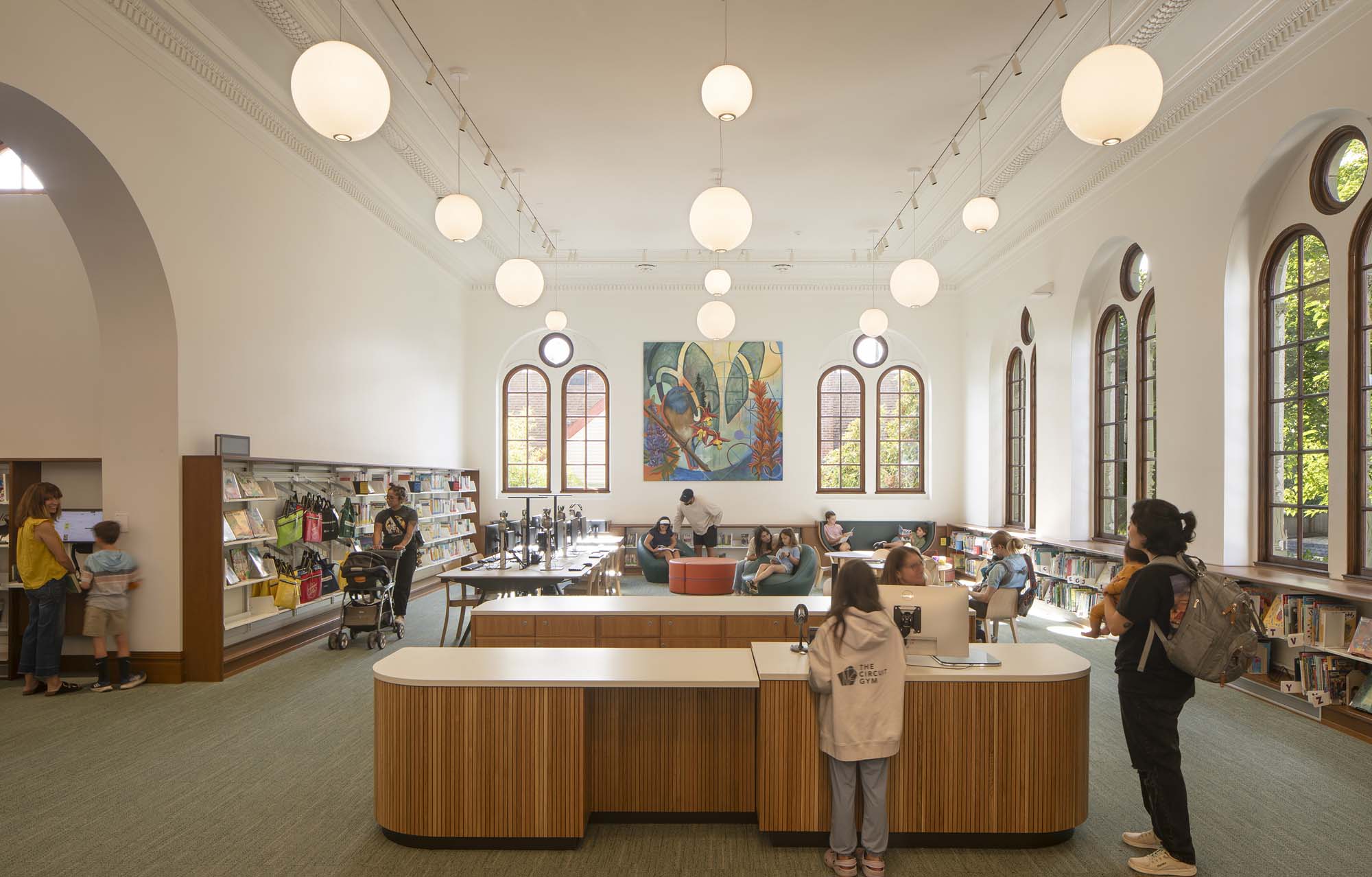
In response, LEVER located the children’s library within the historic Carnegie building, allowing generations to overlap in a space layered with memory. The Spanish Renaissance structure has been rehabilitated, with long-sealed arches reopened, windows restored, and the stucco façade refreshed. A reconstructed cornice discreetly conceals major seismic and acoustic upgrades, bringing the century-old building up to contemporary standards. Inside, the rooms feel intimate and ceremonial—a counterpoint to the openness of the new addition beyond.
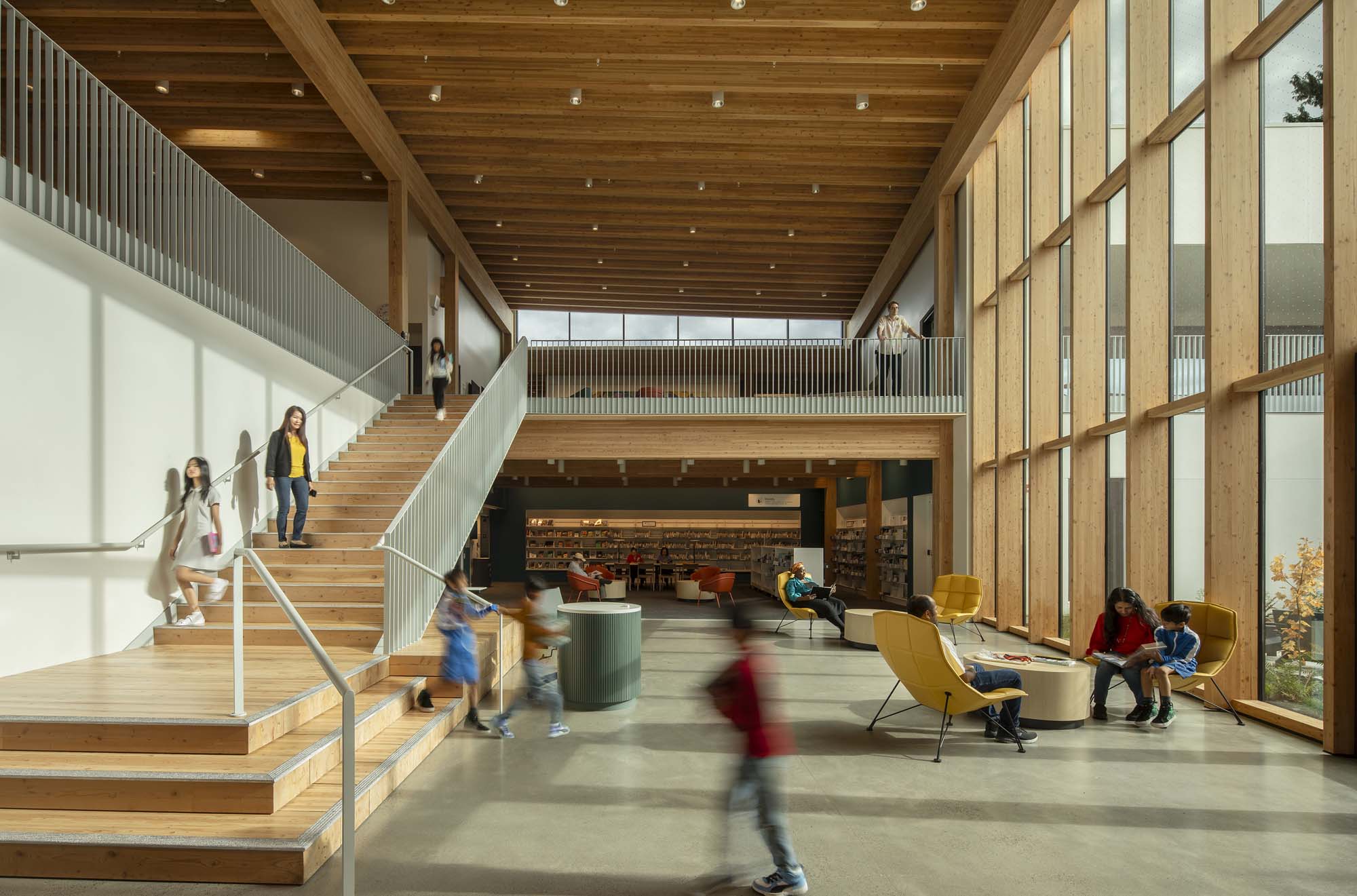
The addition, clad in brick to complement the surrounding historic district, houses the majority of the library’s new public spaces: a teen center, maker spaces, classrooms, a community room, and a garden courtyard that extends the library into the neighborhood. At its heart is a soaring, double-height main reading room that relies heavily on mass timber and glulam sourced from Pacific Northwest forests, including tribal lands and federal restoration projects. Locally commissioned artworks—including colorful murals and hanging sculptures inside and out—embed Black history, music, and culture into a variety of spaces.
Centering Culture in North Portland
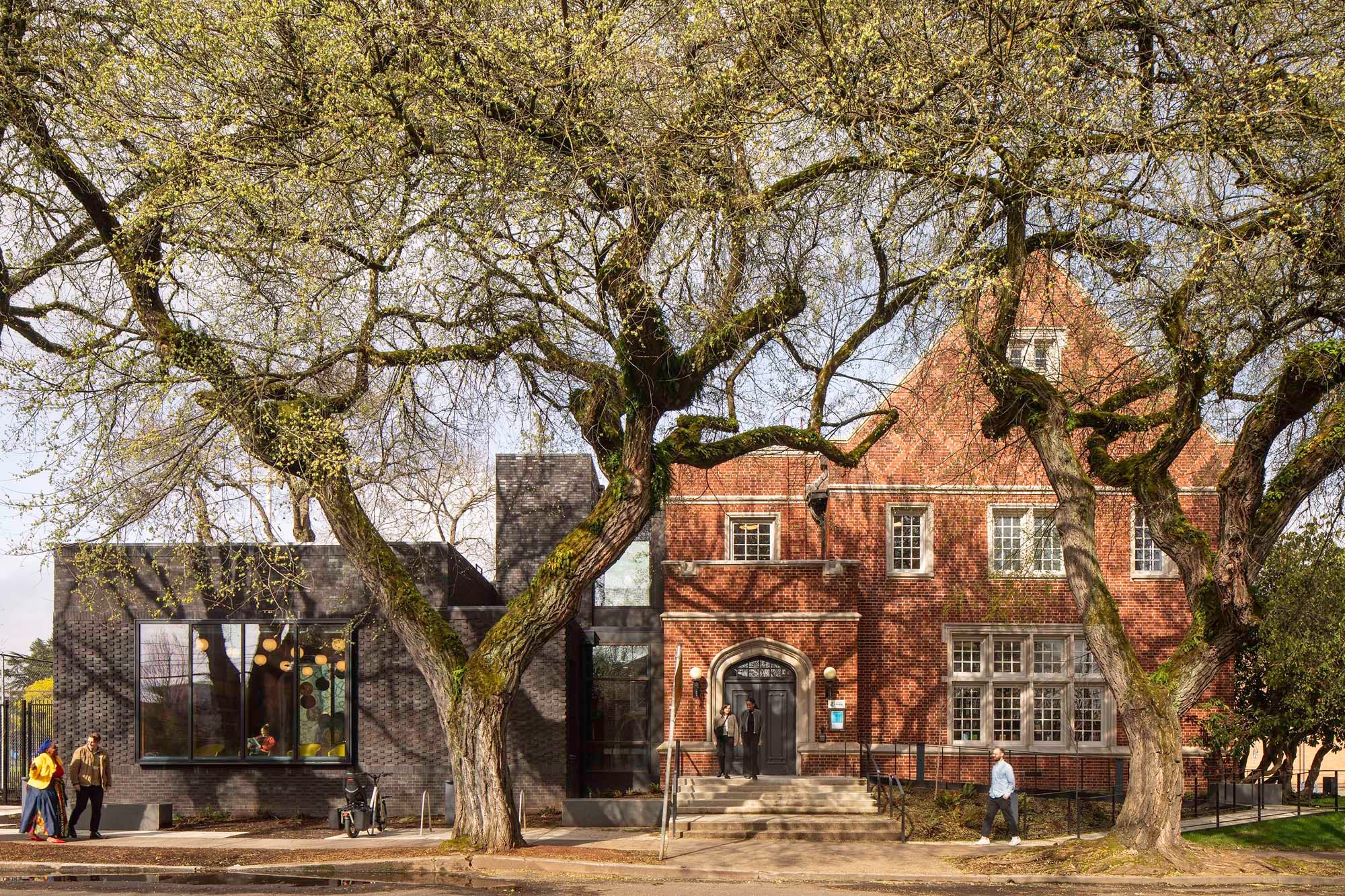
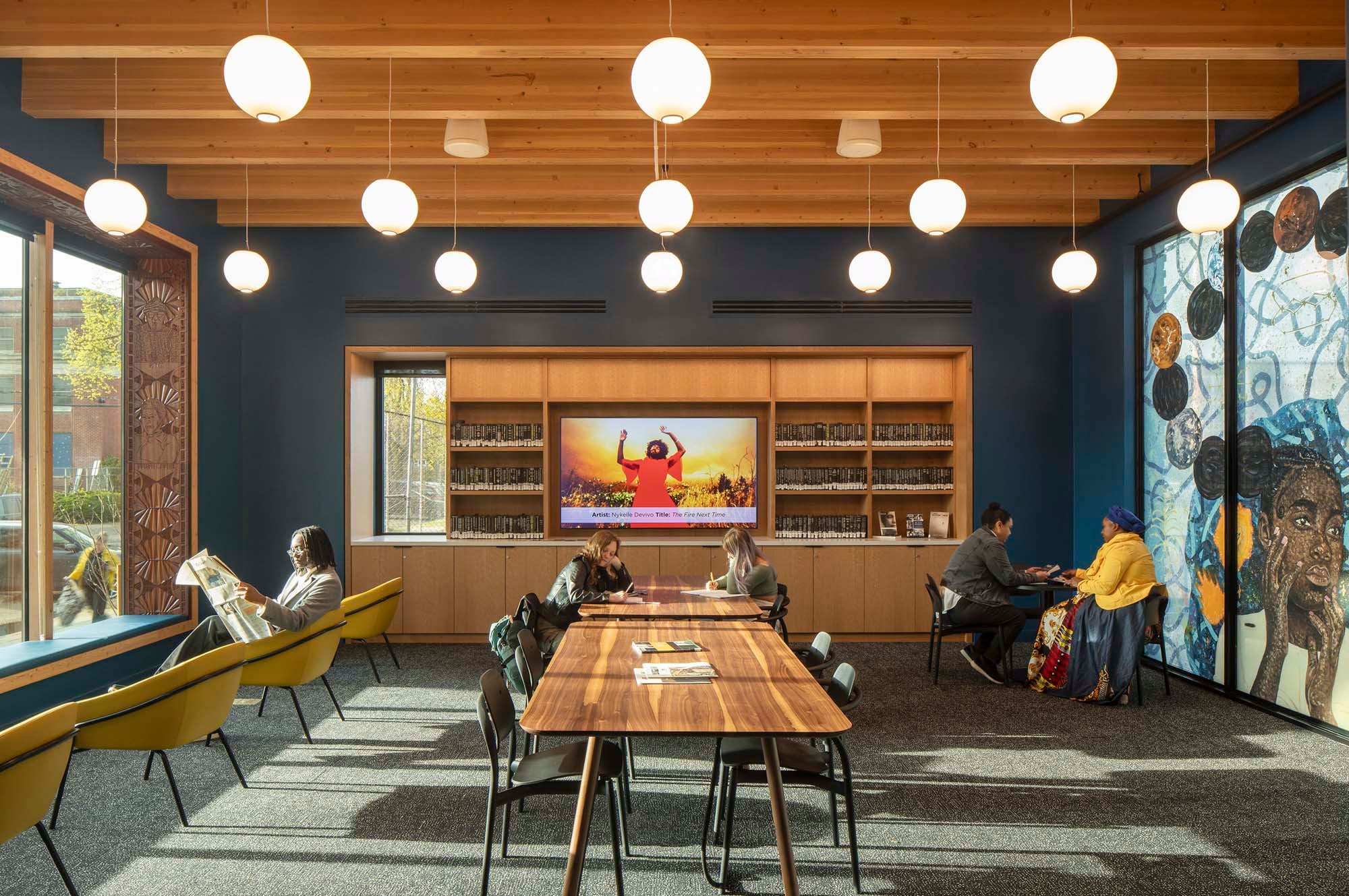
Around the same time, LEVER completed a $13 million transformation at the North Portland Library, another Carnegie-era building with deep neighborhood roots. This renovation centers on the Black Cultural Center, a flexible civic space developed with community leaders to support exhibitions, performances, lectures, and everyday gathering focused on Black history and culture in the region. The center is located primarily within the addition, allowing it to occupy a larger, more open volume while remaining tied to the historic structure. “We were very clear that this couldn’t be a side room or a program you had to search for,” Robinson says. “Culture isn’t an accessory to civic life—it’s central to it.” Integrated artworks by local Black artists—including murals, glass art and a carved window surround—anchor the space visually.

The historic structure has been restored and seismically upgraded. Next to it, the addition’s dark offset brick and wood elements echo the surrounding neighborhood while clearly signaling a contemporary chapter. Reading rooms and gathering spaces, visually linked to the Black Cultural Center from multiple points, include warm wood surfaces, exposed structure, and generous daylight.
As at Albina, North Portland’s Carnegie shell becomes a framework for contemporary civic life. “Preservation, for us, isn’t about freezing a moment in time,” Robinson adds. “It’s about giving these buildings enough flexibility and generosity to stay relevant for the next hundred years.”
More than a century after Carnegie libraries promised uplift through access to knowledge, Albina and North Portland suggest that today’s libraries—as civic tools— can help rebuild the social fabric of the city.
Would you like to comment on this article? Send your thoughts to: [email protected]
Latest

Profiles
Beyond Symbolism: Farshid Moussavi on the Ismaili Center in Houston
The cultural building and community center reinterprets Islamic design philosophy through geometry, climate-responsive design, and generous civic spaces.

Projects
Art Stages Built Into A Hillside & An Old School
PS21 and The Campus Upstate are reimagining cultural infrastructure from within.