



April 9, 2026
Marriott Autograph Collection Wants Adaptive Reuse to Be Hospitality’s New Normal

Leaning into Adaptive Reuse
For Aliya Khan, vice president of global design strategy and product development at MI, “Adaptive reuse has become an increasingly integral component of Marriott International’s development strategy. Repurposing existing buildings reduces embodied carbon and minimizes resource consumption while extending the lifecycle of existing structures.”
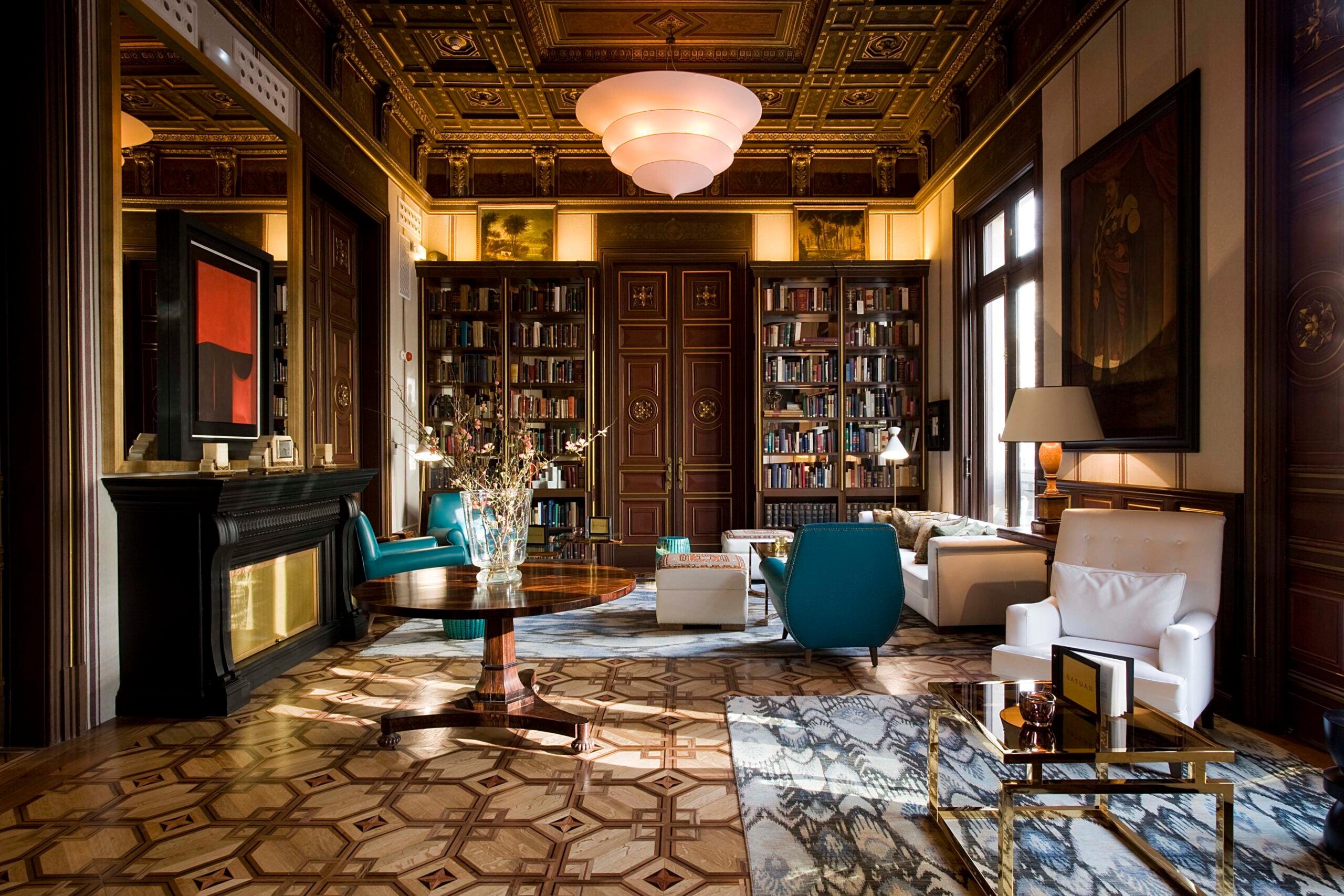
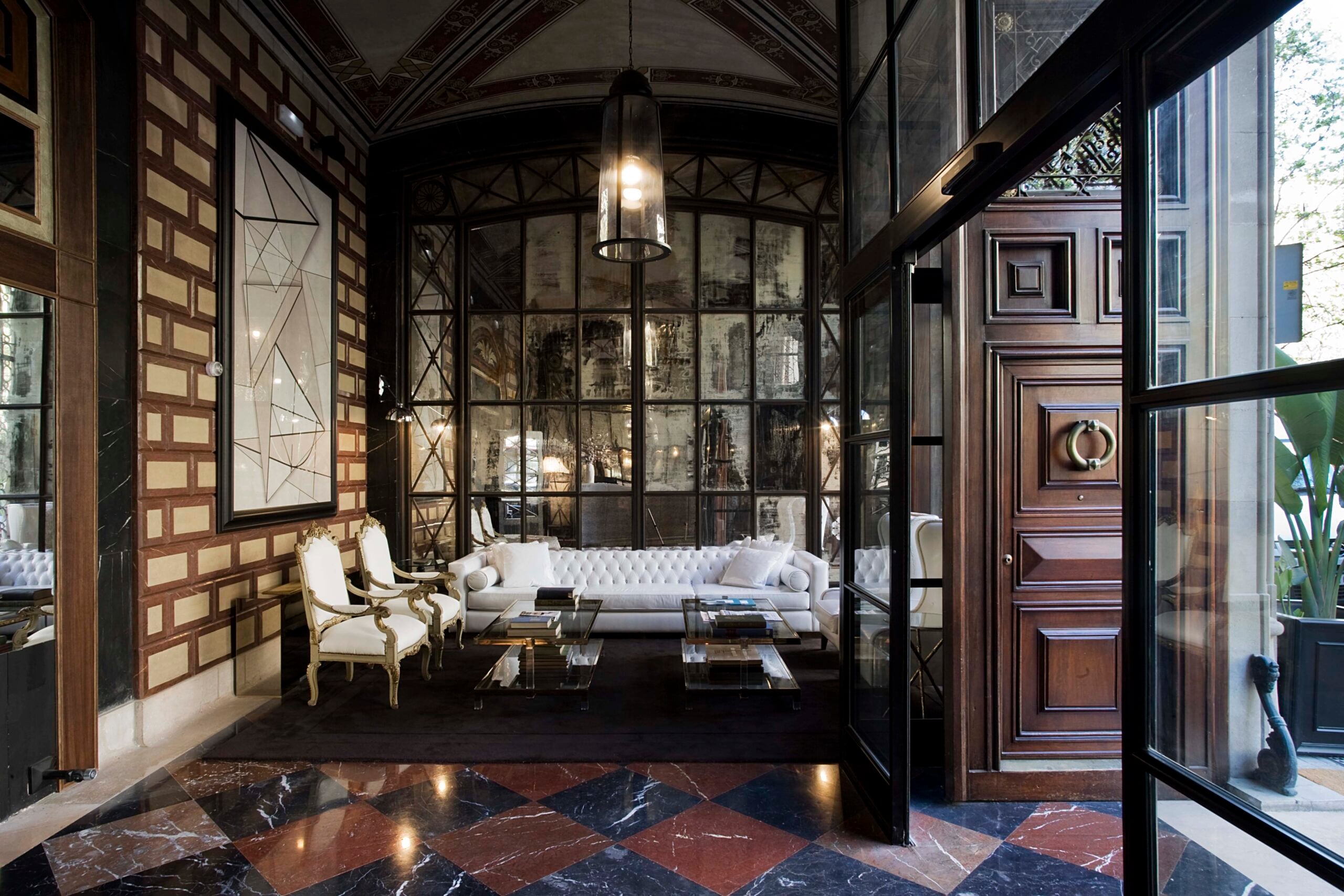
In Barcelona’s upscale Eixample district, Cotton House Hotel stands out as a longstanding example of this strategy. The original Neoclassical mansion was constructed in 1879 by Catalan architect Elies Rogent for Miquel Boada, a businessman and member of the Catalan bourgeoisie. In 1957, the building became the headquarters of the Association of Cotton House Manufacturers. In 2015, the building got a third life, when Autograph Collections Hotels and interior design studio Lázaro Rosa-Violán transformed the landmark property into an 83-room luxury hotel, maintaining century’s old detailing such as the original floor tiles, grand marble staircase, fresco ceilings, and wood paneling.
The building’s most eye-catching feature—a suspended helix-shaped iron staircase—while not original to the 1879 building, is an important historic addition from the 1950s and is recognized as the first suspended staircase in the city. Reminders of Barcelona’s textile industry abound, from the cotton-inspired poolside ceramic mural on the rooftop, to the dining area where guests can eat in a library-like room surrounded by cases filled with bolts of fabric. The concierge service, Gossypium, also offers bespoke tailoring services to guests, carrying on the tradition from when the building housed a private tailoring club for its elite members.
Cotton House Hotel’s approach reflects a broader philosophy within Autograph Collection Hotels: that design should emerge from a building’s historical narrative. “Beyond its environmental advantages, adaptive reuse plays a critical role in preserving local character and catalyzing urban revitalization,” Khan says, “By introducing hospitality into historic commercial, civic, and industrial buildings, Marriott activates underutilized assets, supports local economies, and safeguards architectural heritage.”
Navigating the Spanish Luxury Market
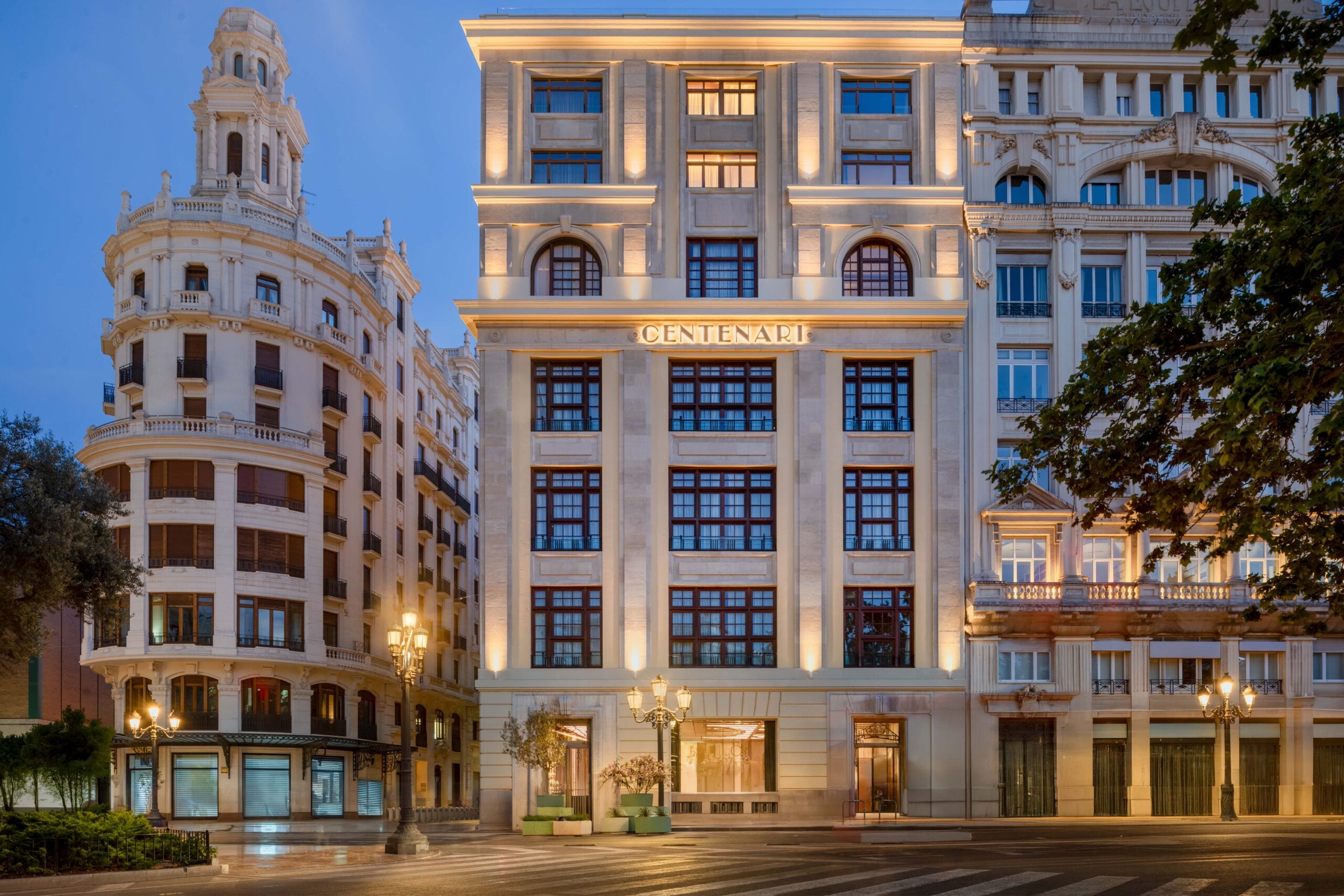
Autograph Collection Hotels are naturally well suited to Spain because “the brand thrives on character, history, and narrative‑driven design,” Khan explains. “As the collection evolves, we continue to consider projects where the building’s story—and its relationship to the city—leads the design.” There’s no better example of this than the recently opened Grand Hotel Centenari, Valencia, designed in collaboration with local firm ERRE.
Constructed between 1926 and 1928, the building was one of Valencia’s first skyscrapers, defined by its geometric Art Deco motifs and references to local heritage. Today, the 53-room hotel embraces this lineage. Each room is unique—a direct result of the building’s historic structure—with varied ceiling heights and layouts that resist the uniformity typical of modern hospitality design.
In Spain’s highly competitive luxury market, what makes a hotel stand out? According to Carolina Gil, general manager of the hotel: “Grand Hotel Centenari Valencia distinguishes itself through its storytelling—a celebration of the building’s 100‑year legacy, blended with contemporary design and elevated service.”
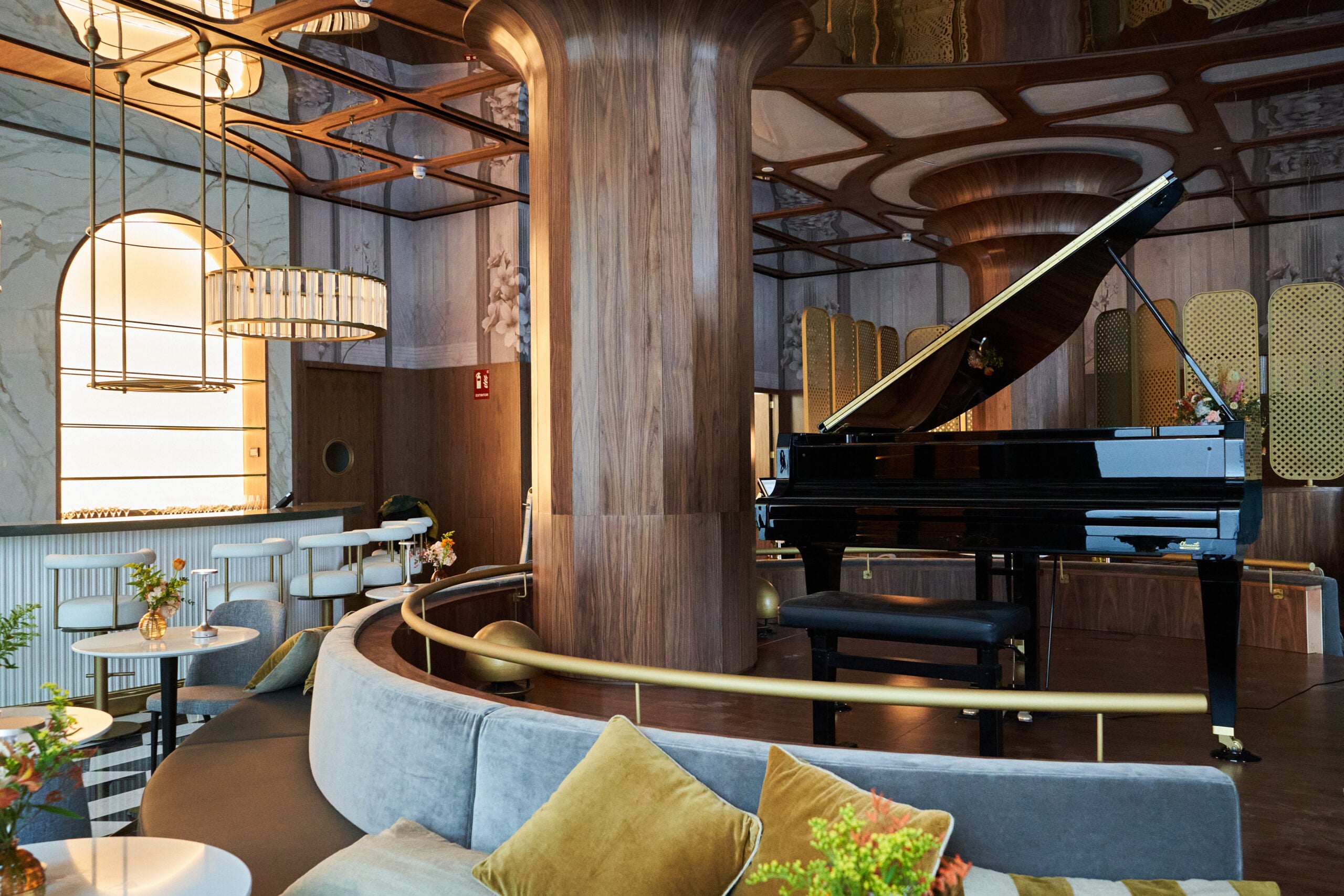
ERRE’s transformation of the building “reflects Valencia’s heritage not through preserved historical elements but through a contemporary reinterpretation of the city’s identity,” says Gil.
For Alejandra de Juan, director of residential and hospitality projects at ERRE, “Adaptive reuse is truly the sustainable way to go.”Starting from scratch, she argues, carries a far greater carbon footprint—particularly in an industry known for frequent renovations and brand turnover.
Throughout the process, the architects and interior designers had to navigate strict preservation rules while meeting BREEAM sustainability benchmarks. Achieving this certification in a century-old building was no small feat and required “creativity, patience, and deep respect,” says Gil. Walls were retrofitted with insulation, a vast solar array was integrated alongside a rooftop bar, and original window frames were restored to maximize natural light.

Moving Beyond “Performative Sustainability”
Marriott’s larger sustainability platform, Serve 360, sets ambitious targets across its global portfolio. Accordingto its 2025 Sustainability and Social Impact Goals, MI set a target for 100 percent of its hotels to hold a sustainability certification, with over 600 hotels pursuing LEED or an equivalent certification. The company was also targeting the development of 250 adaptive reuse properties, a goal that was achieved by the end of 2024, with 283 open adaptive reuse hotels and an additional 231 projects in the pipeline.
For MI, sustainability certifications represent only one dimension of the brand’s overall strategy. “Certifications offer third-party validation and accountability,” explains Khan, “However, they function within a broader, performance-driven framework centered on measurable outcomes, scalable impact, and continuous improvement across Marriott’s global footprint.” The goal for Serve 360 is to embed environmental stewardship, social responsibility, and long-term business resilience across the full lifecycle of Marriott’s portfolio, from reducing overall emissions, educating its employees on human trafficking, and giving back to local communities (MI donated over $160,000 and 750+ volunteer hours in response to the 2024 DANA storm floods.)
As part of this focus on social responsibility, MI also advocates for a transparent supply chain, requiring all contracted suppliers in the Top 10 categories to provide information on product sustainability that is inclusive of social and human rights impacts. In addition, a goal has been set for all Top 10 FF&E categories to be sourced in the top tier of the Marriott Sustainability Assessment Program.
For Marriott, all of these goals are aimed at embedding sustainable design and social impact directly into the guest experience. Khan notes, “For next-generation travelers, sustainability is inseparable from experience. They are highly fluent in what meaningful impact looks like. The goal is not performative sustainability, but thoughtful integration that enhances both environmental performance and guest experience.” In an industry long defined by newness, Marriott is making a compelling case for reuse.
Would you like to comment on this article? Send your thoughts to: [email protected]
Latest
Projects
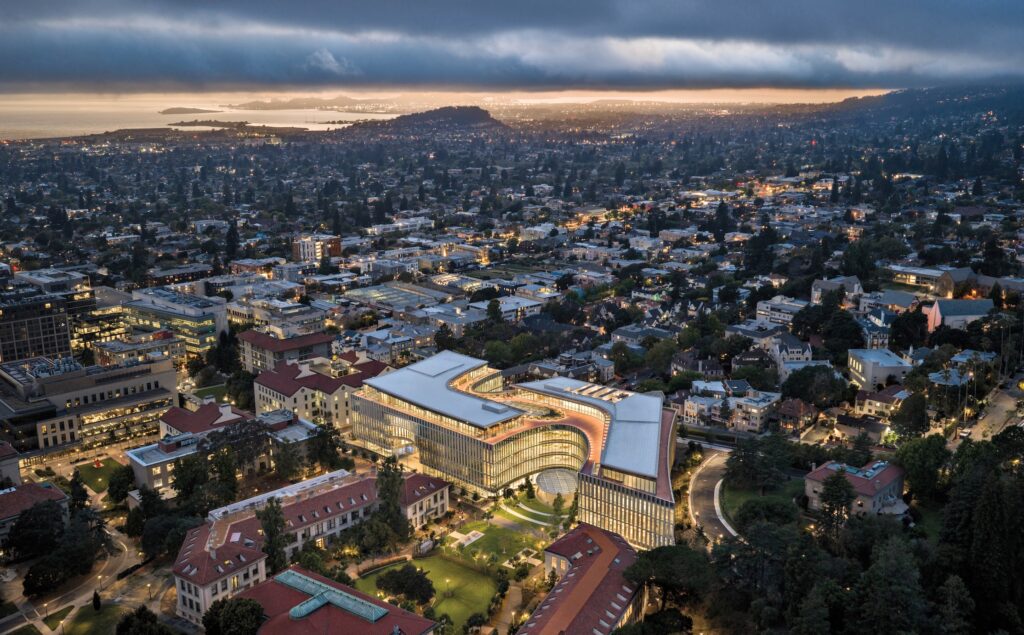
UC Berkeley’s Newest Building Is All About Human Interactions
The Barbara and Gerson Bakar Gateway—home to the university’s College of Computing, Data Science, and Society—gently reminds data scientists and AI researchers of what’s really important.

Projects
ZD+A Brings a Modernist Mexico City House in Line with its Context
Architect Yuri Zagoin Alazraki reorganized the speculative house to respond to its site and create unique spaces for contemplation.