



March 26, 2026
Populus Seattle Rewrites the Rules for Historic Reuse
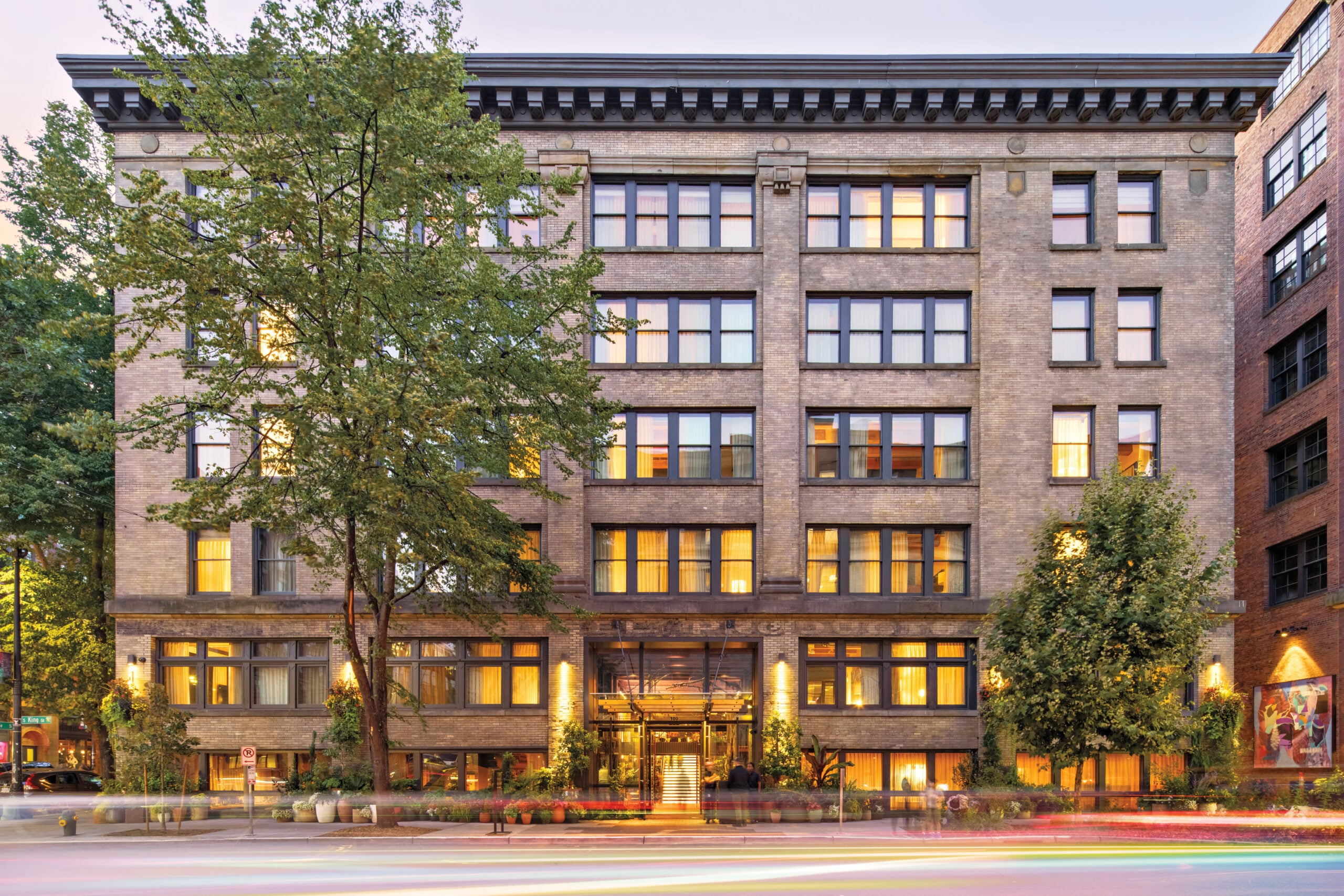
At the turn of the 20th century, Seattle’s downtown was centered on the nearby waterfront, with a cadre of workhorse structures built to support the city’s booming maritime and timber industries. Today, walking this neighborhood, now known as Pioneer Square, one is transported in time, passing block upon block of stone and brick buildings that still look much as they did then. Here, Denver-based developer Urban Villages took on the challenge of bringing one such building into the future, transforming it into the Seattle Populus Hotel. “We focus on adaptive reuse because it’s near impossible to replicate the patina and authenticity of these existing buildings,” says Urban Villages CEO Jon Buerge of the developer’s sustainable ethos. “It’s also the most environmentally friendly thing we can do.”
Working with local architecture firm The Miller Hull Partnership and the Chicago and Mérida, Mexico, offices of interiors studio Curioso, Urban Villages set its sights on a former steam-supply warehouse in the historic district for Populus, the second of the developer’s eco-friendly hotels. Although the 1907 building had been refreshed in the ’70s, when it was transformed into offices, it still needed an overhaul to bring it up to current code.
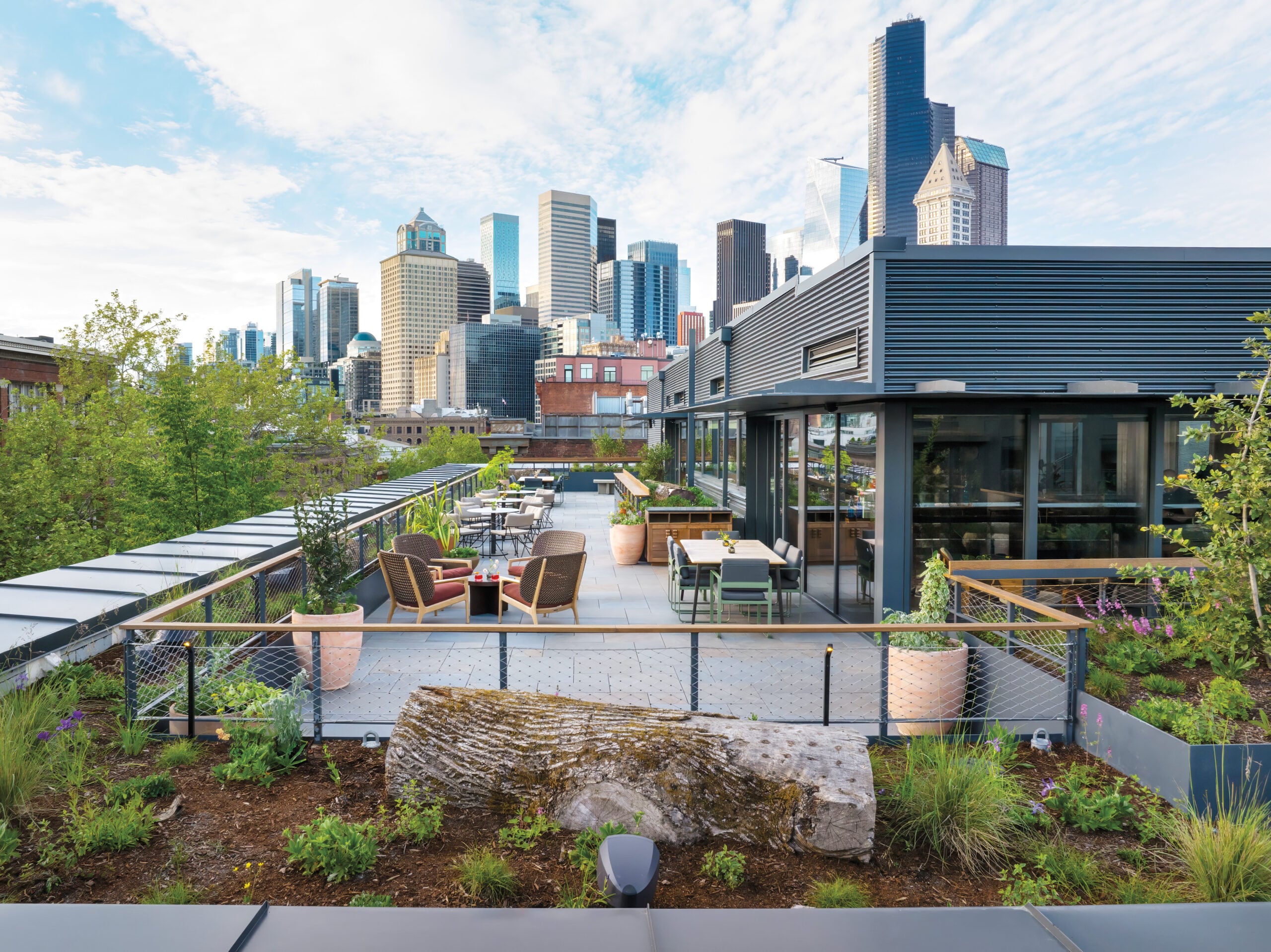
“I pictured it like this: There were all these needles we had to thread, and if we missed one of them, we couldn’t do it,” says Miller Hull design principal Mike Jobes, who, together with project architect Tetsuo Takemoto, threaded the needle of the many regulatory frameworks overlayed on the building, along with the developer’s aspirations. One such goal was to add a rooftop bar, which was needed to make the hotel’s economics pencil out.
Taking advantage of a recent change in the Seattle building code, updated in 2021 to allow taller mass-timber buildings, the team worked to convert the building’s classification from heavy to mass timber, thereby enabling a gathering space on the top floor. Urban Villages also appealed to the local city council, successfully overturning a longstanding prohibition against rooftop bars in Pioneer Square.
National Park Service historic-preservation guidelines required that the building appear essentially the same from the outside, so the team conducted extensive view studies from the street on the height and setback of the new roof assembly to ensure it “ducked out of view,” as Jobes puts it, as well as on the new room partitions to make sure they didn’t disrupt the existing window rhythm. Therefore, interior wall placements jog in and out, resulting in a range of sizes and layouts for the hotel’s 120 rooms. “It feels like each of the rooms is the same,” says Carlos Herrera, who led the interior design for Curioso. “But it’s actually a kit of parts of furnishings that were added, subtracted, and reconfigured to meet the varied layouts.”
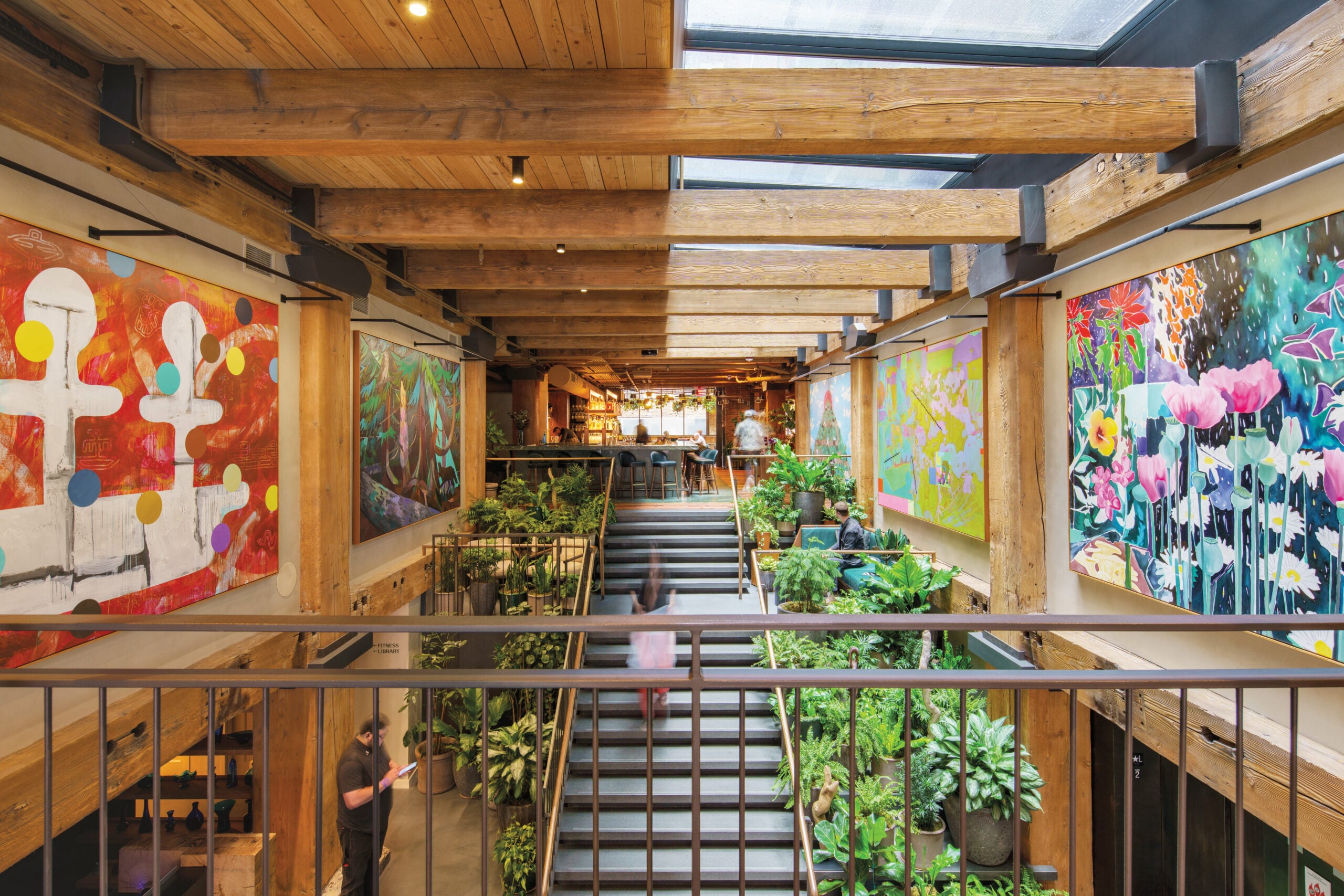
Inside, the team capitalized on a light well added during the 1970s office conversion, expanding it into a larger atrium to bring daylight to the lobby and guest rooms. It doubles as a stabilizing element, with a new concrete core, shear walls, and steel-braced frames, helping the building meet current seismic code requirements.
Targeting LEED Gold, the Populus Hotel brings both the building and the neighborhood into the 21st century, helping adapt local ordinances to pave the way for others.
Would you like to comment on this article? Send your thoughts to: [email protected]
Latest
Projects
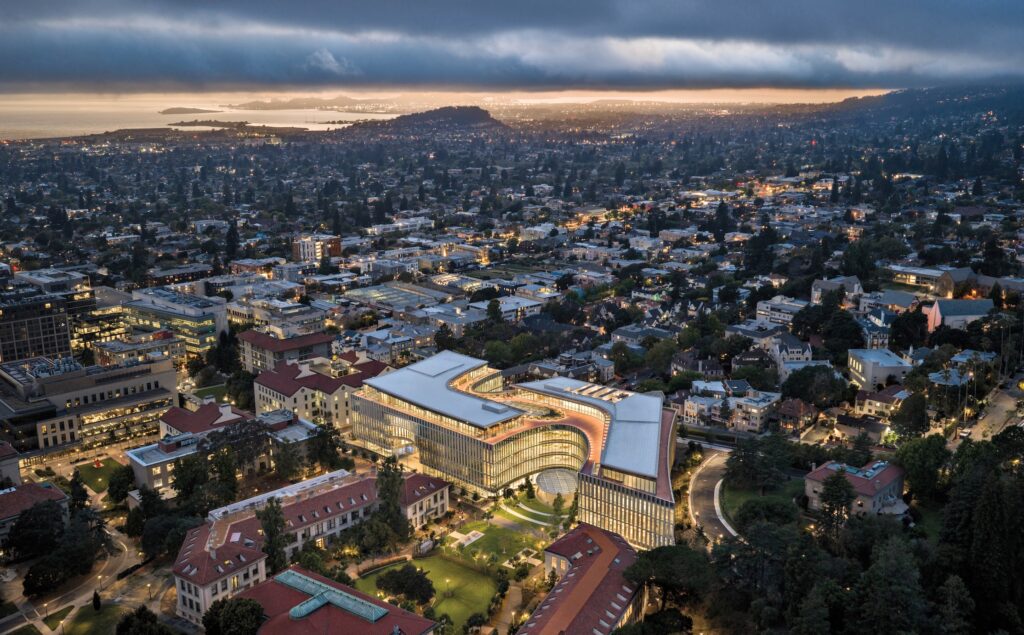
UC Berkeley’s Newest Building Is All About Human Interactions
The Barbara and Gerson Bakar Gateway—home to the university’s College of Computing, Data Science, and Society—gently reminds data scientists and AI researchers of what’s really important.
Projects
ZD+A Brings a Modernist Mexico City House in Line with its Context
Architect Yuri Zagoin Alazraki reorganized the speculative house to respond to its site and create unique spaces for contemplation.