



February 17, 2026
33 Articles That Show the Future Is Mass Timber
Is Mass Timber the Future of Building?
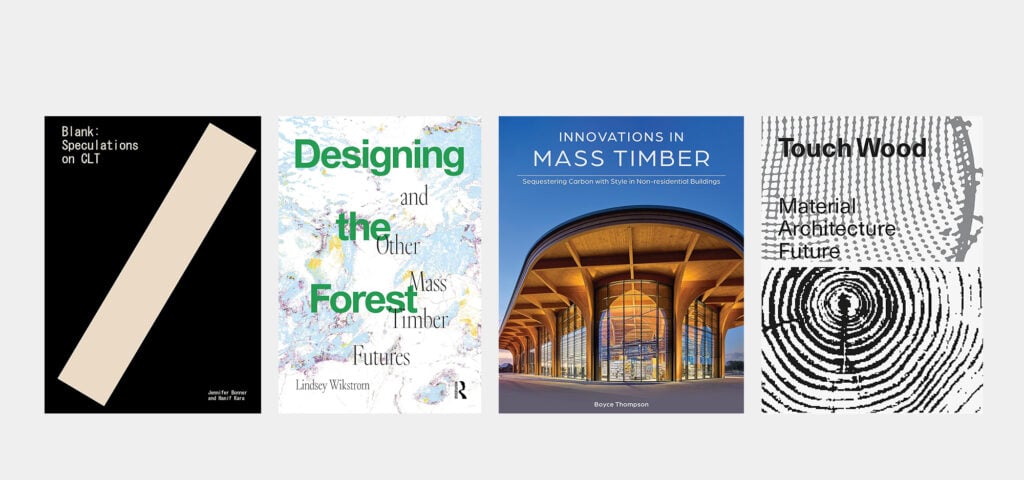
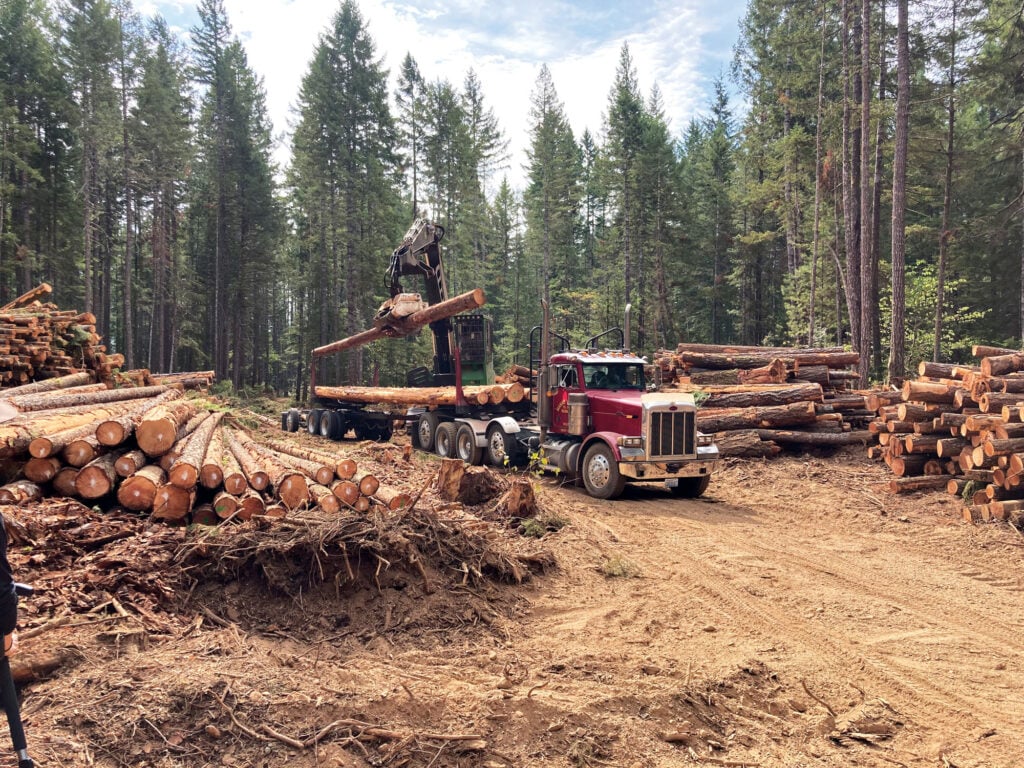
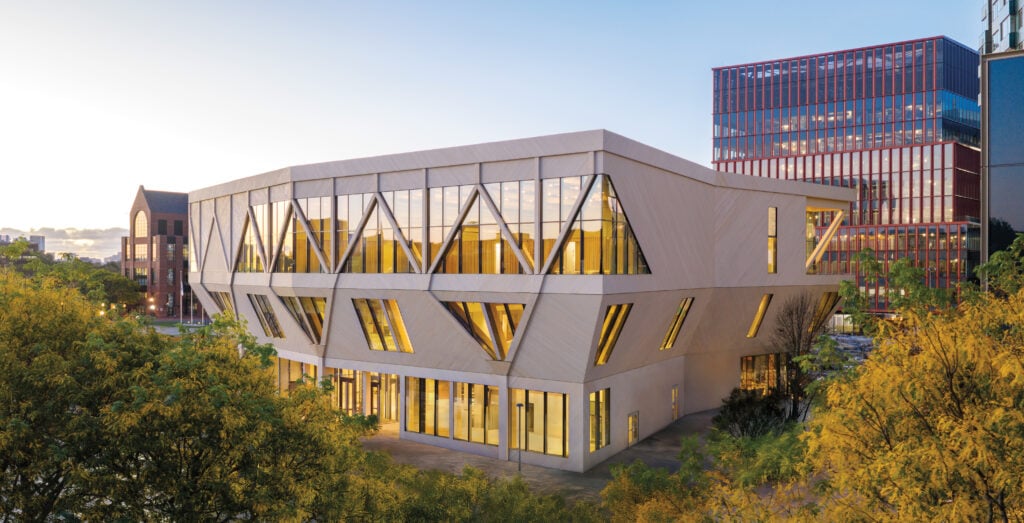
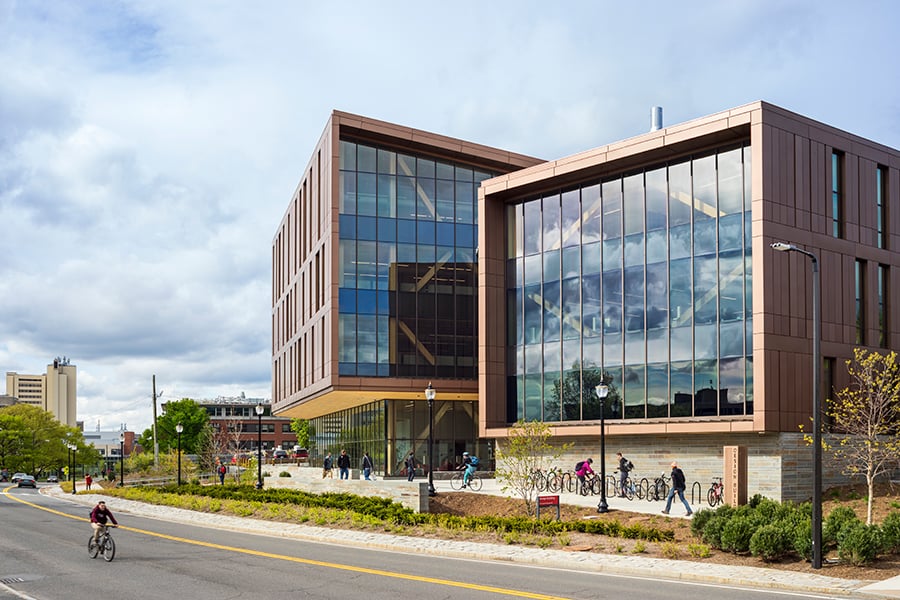
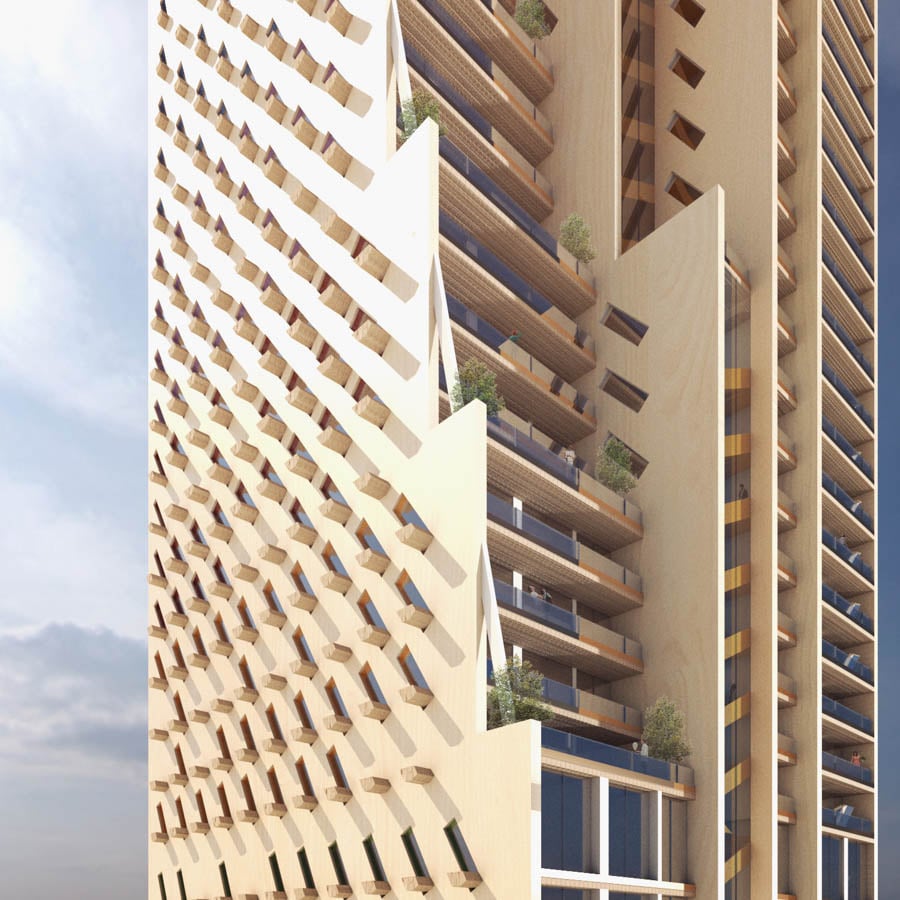
One of the defining trends in American architecture over the past decade is the renewed embrace of wood as a primary construction material. Mass timber buildings, like the Leers Weinzapfel Associates for the University of Massachusetts Amherst Design Building, are rising across North America.. METROPOLIS’ Deep Green podcast has put the material at the center of architectural discourse and various books regarding timber architecture are emerging as essential resources for environmentally conscious designers. Experts are also considering how mass timber can help reduce wildfire risk, and ZGF Architects is helping designers rethink their global footprint through a new open source calculator. On the other hand, some designers like Pritzer Prize–winning winner Shigeru Ban question if mass timber construction is treated more like a popular trend rather than a reliable solution. While the potential is clear, realizing a mass timber future requires thoughtful implementation, rigorous evaluation, and a commitment to lasting change.
Read more about the products, projects, and people who are shaping the future of mass timber below:
Mass Timber 101


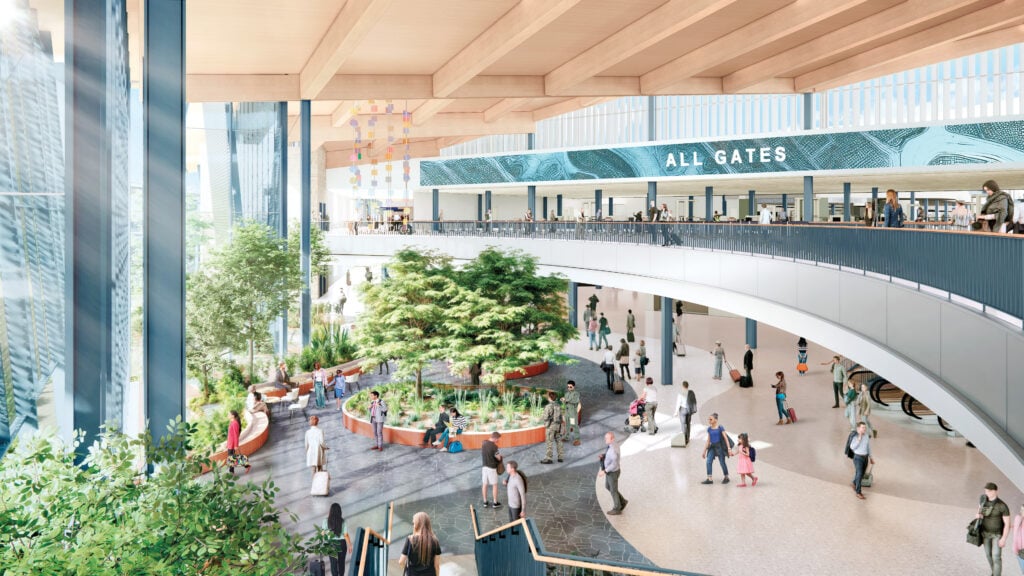
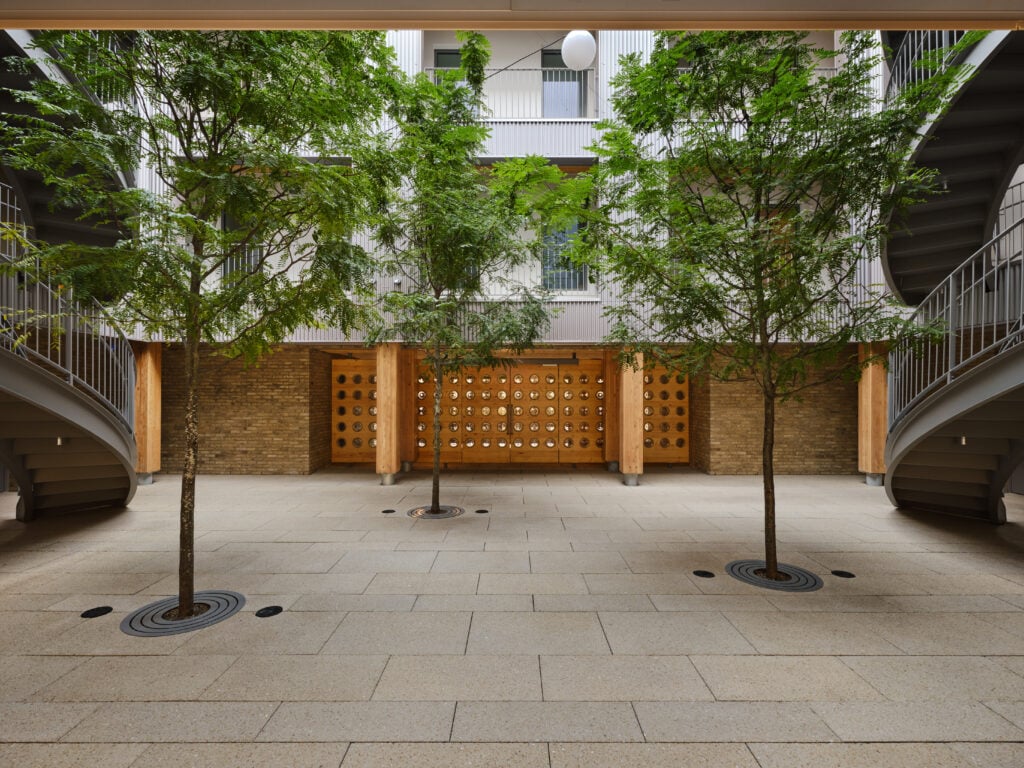
Portland, Oregon: A Mass Timber City?
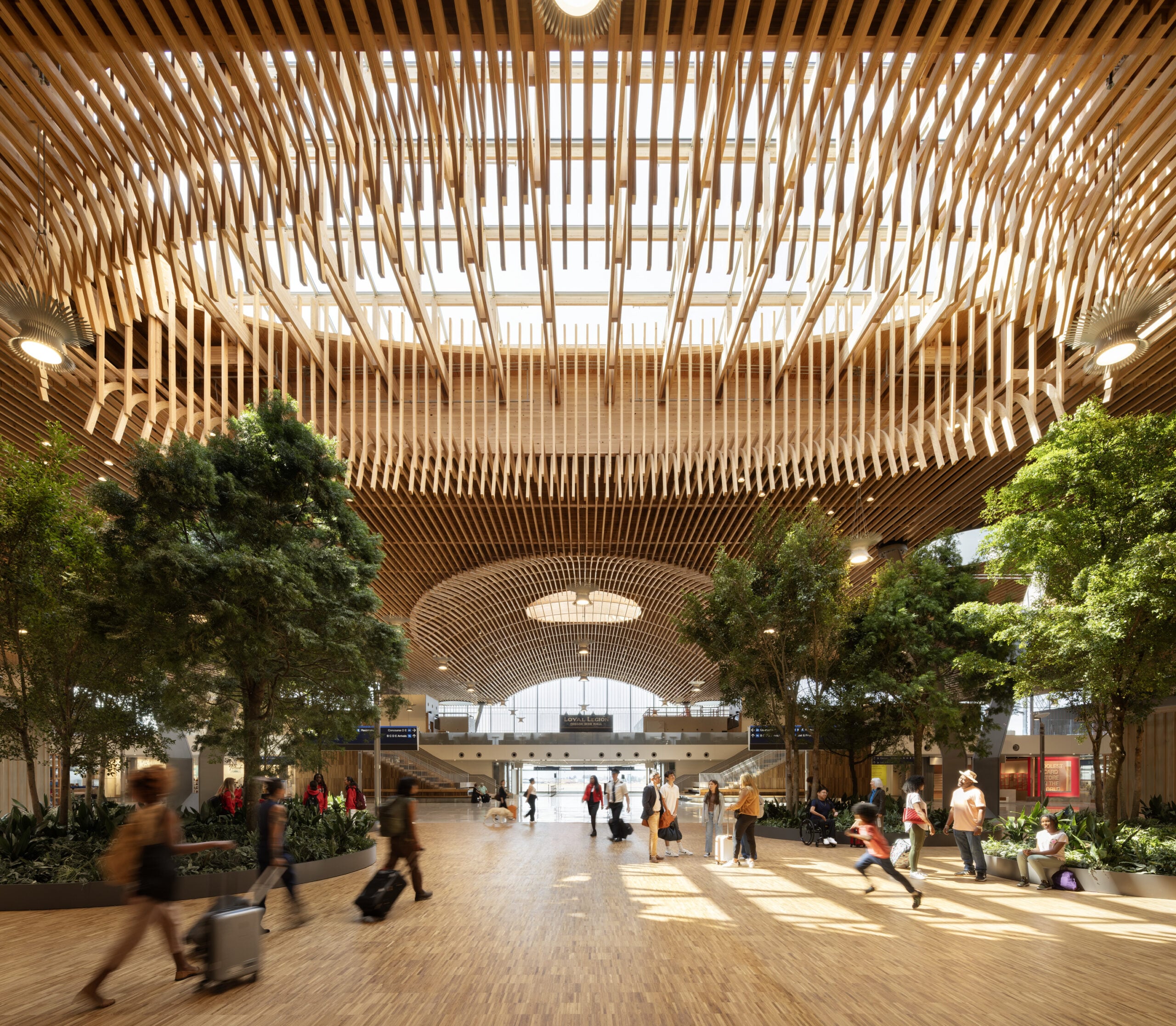
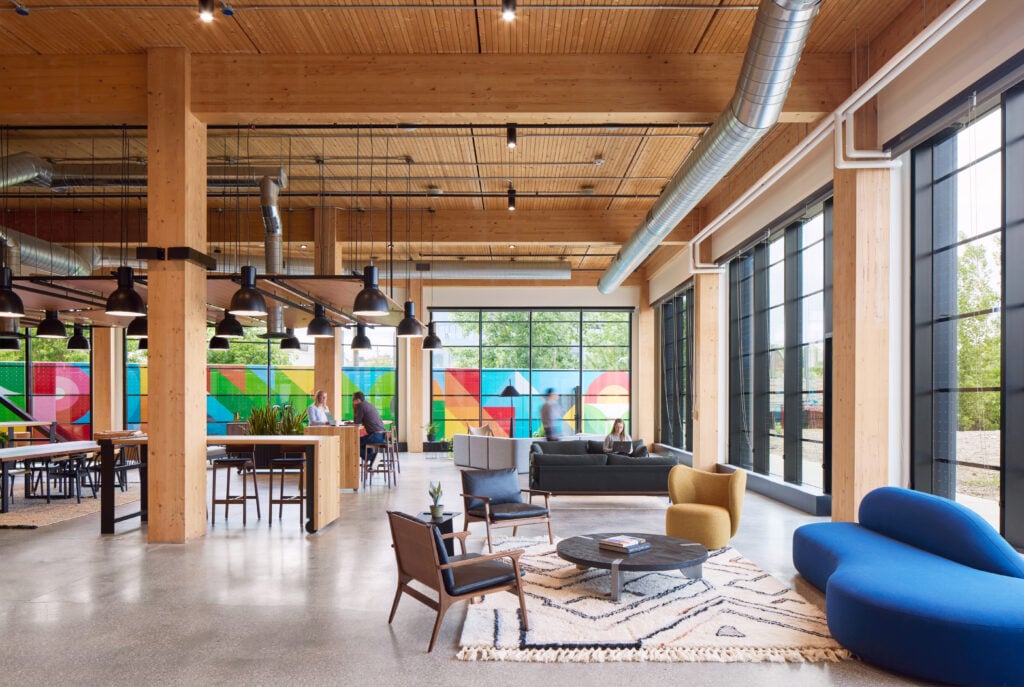
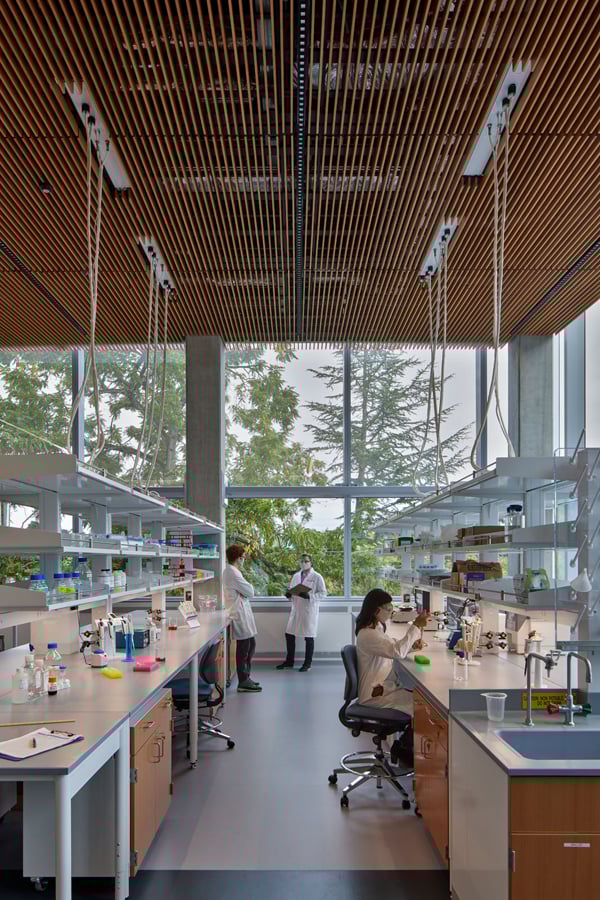
Portland, Oregon, has recently emerged as a national hub for mass timber innovation, thanks to its forward-thinking policies, robust supply chain, and growing portfolio of mass timber buildings positioning the city at the forefront of sustainable construction in the United States. A standout example is the newly completed Portland International Airport expansion by ZGF Architects, setting a new benchmark for large-scale mass timber projects, and serving as the perfect testing ground for the innovative wood life cycle calculator Upstream. ZGF has also led other pioneering efforts, including the PAE Living Building. Meanwhile, local firms are helping shape the city’s timber-forward identity—like Waechter Architecture crafting a mixed-use, mass-timber office and Michael Green Architecture designing the Oregon Forest Science Complex, a project that’s become the talk of world architecture.
Read more about the mass timber buildings in Portland, here:
Mass Timber City
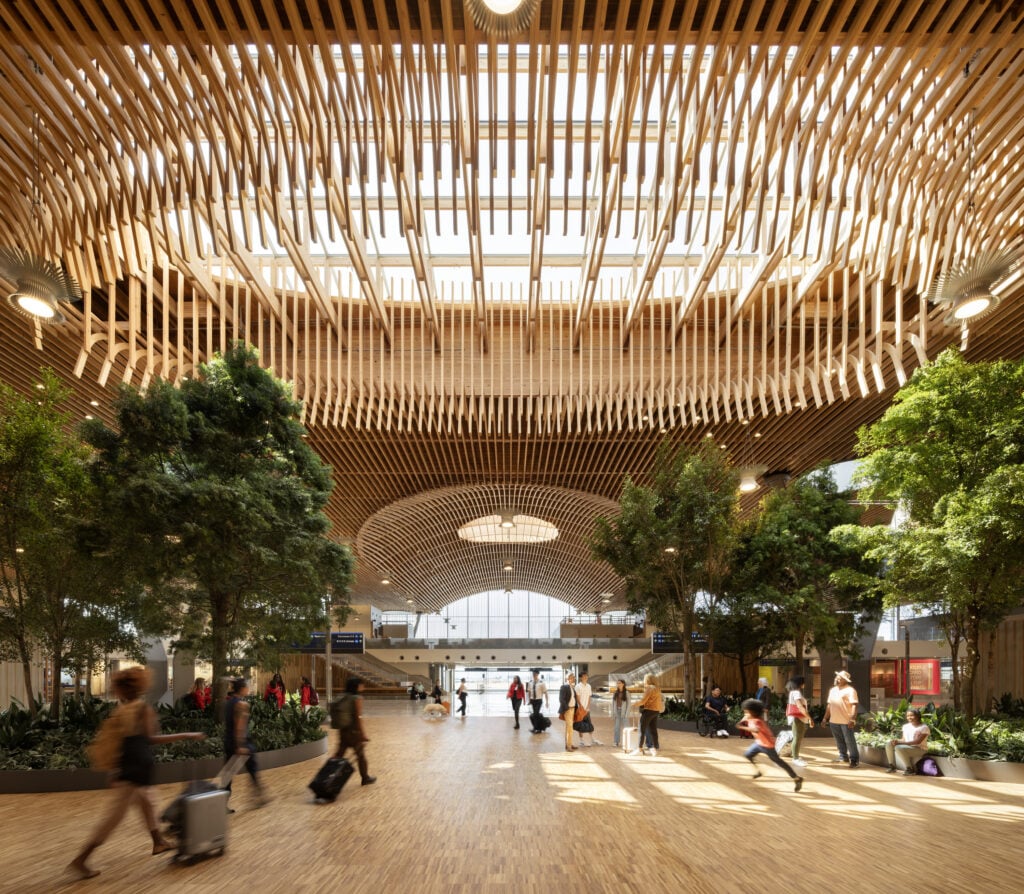
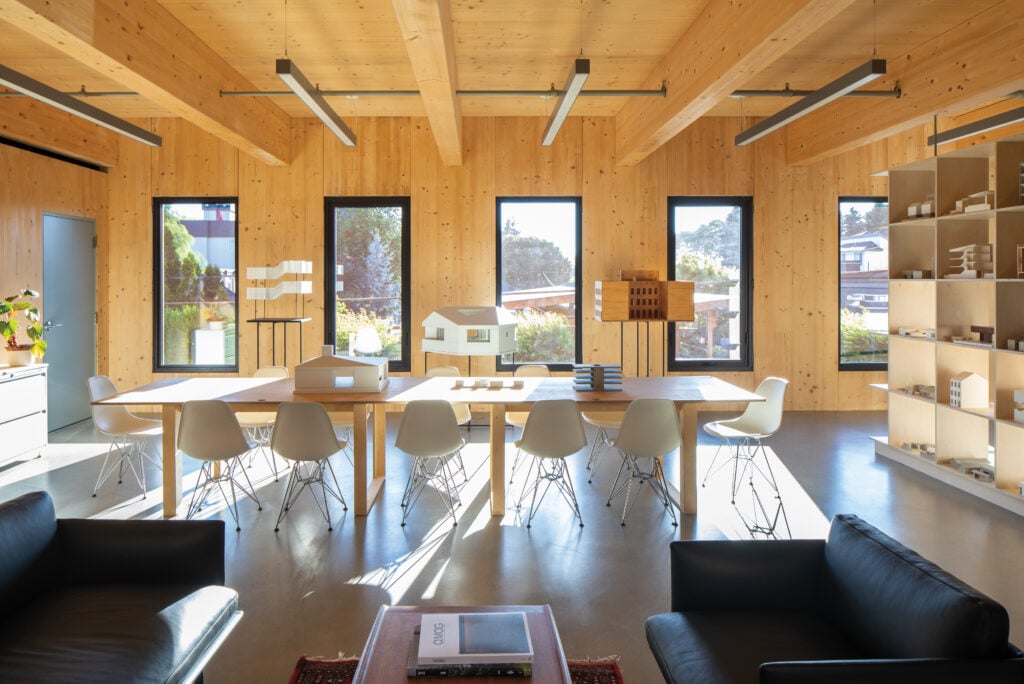
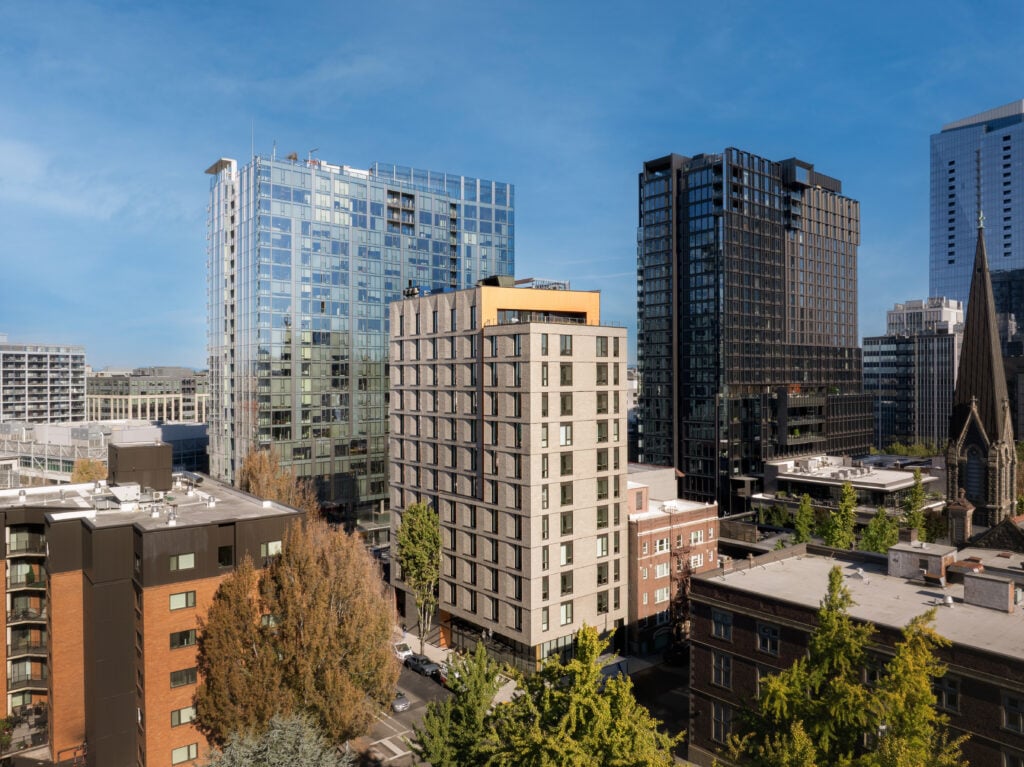
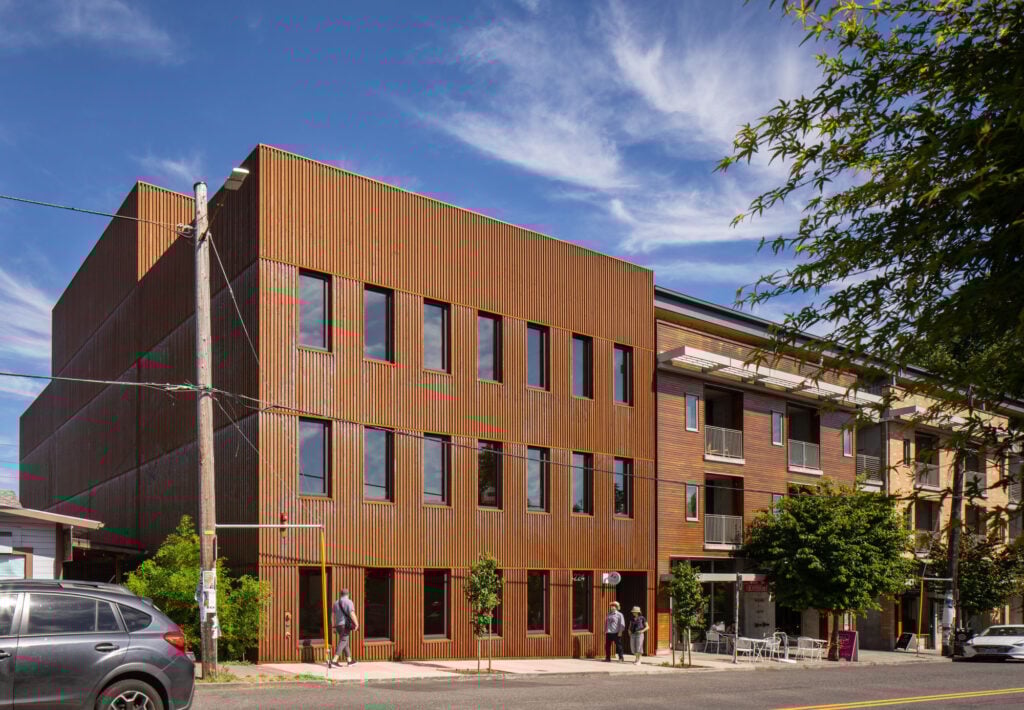
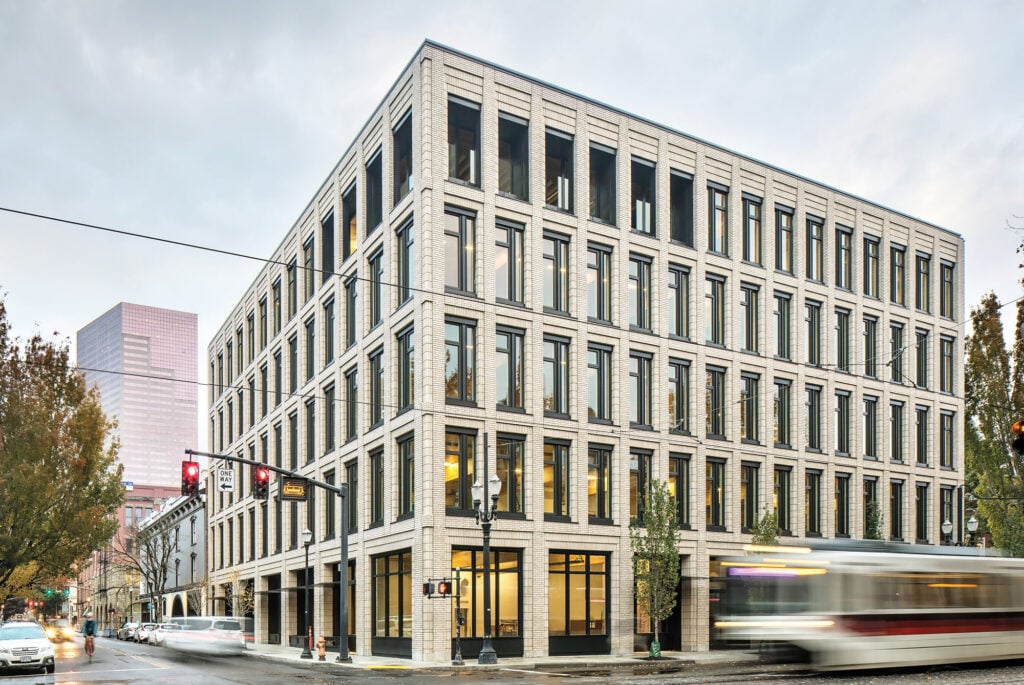
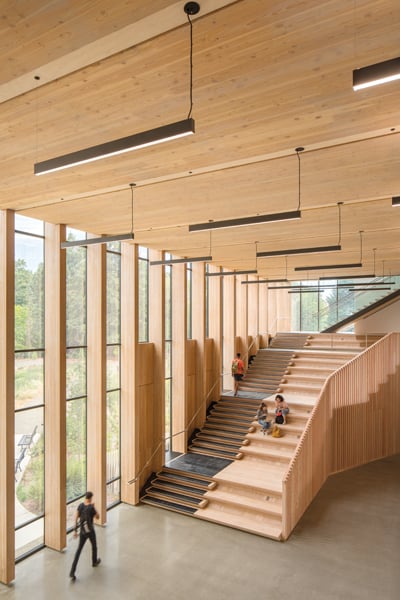
The Versatility of Mass Timber
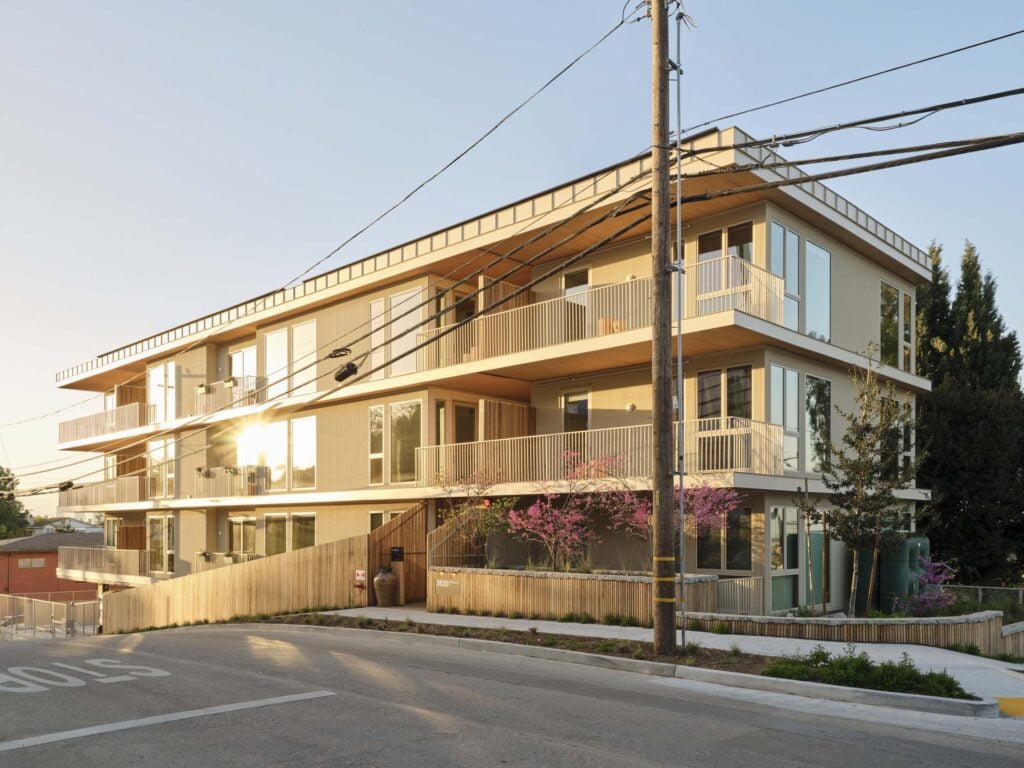
Mass timber’s versatility lies in its ability to adapt to a variety of projects across typologies, offering both structural performance and aesthetic appeal. It’s become a go-to material for everything from high-end hospitality projects like Japan’s Royal Park Canvas Hotel to urban multifamily developments like New York City’s Timber House. Design firms are continuing to push the boundaries of what mass timber can do: DLR Group’s mass timber hotel prototype, a winner of METROPOLIS’s Responsible Disruptors program, reimagines hospitality with sustainability at its core, while SuperLA’s “SuperBungalows” offer an affordable, eco-conscious housing solution. Beyond architecture, mass timber’s appeal extends to furniture design, where sustainably sourced wood delivers both durability and timeless beauty.
Read more about the versatility of mass timber below:
A Versatile Material


European Pioneers in Mass Timber
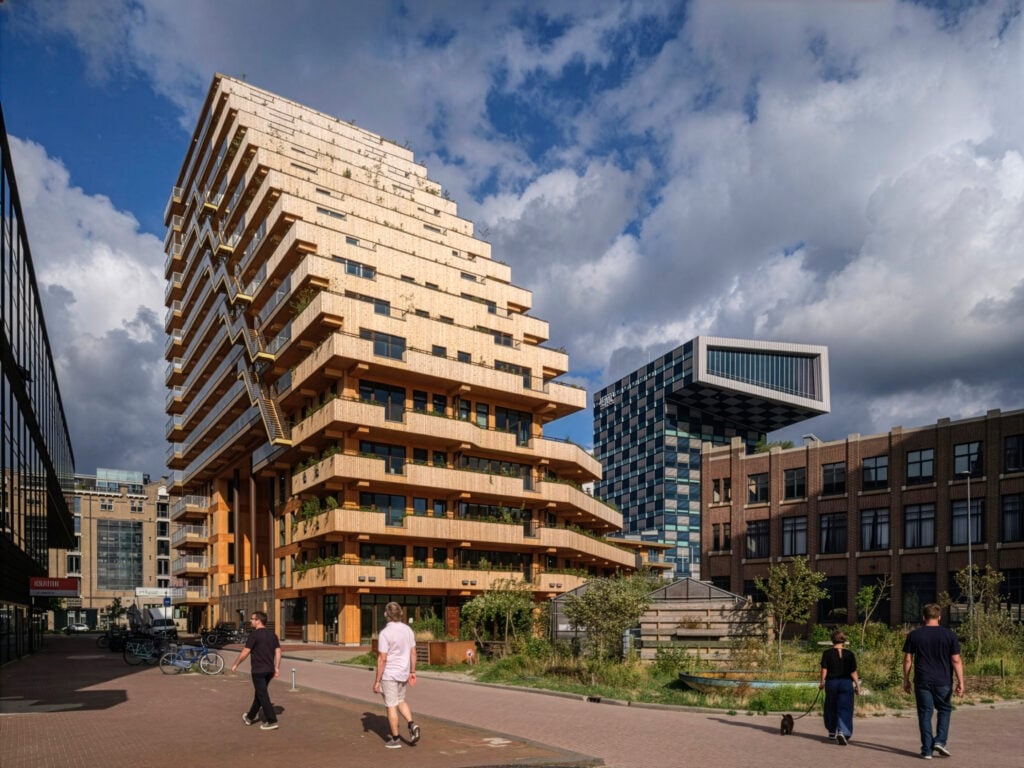
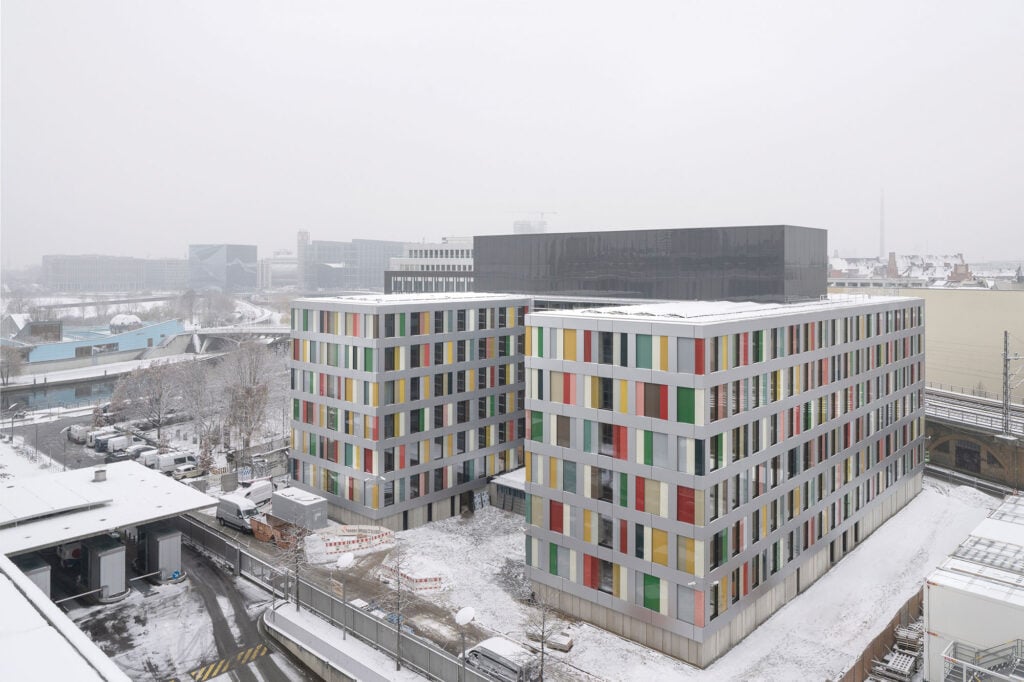
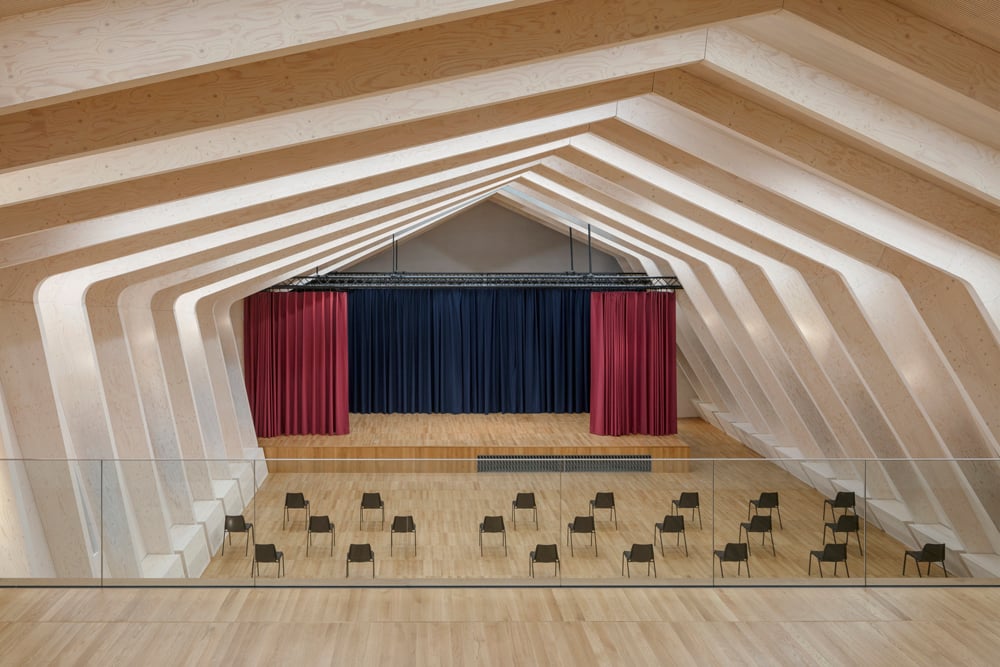
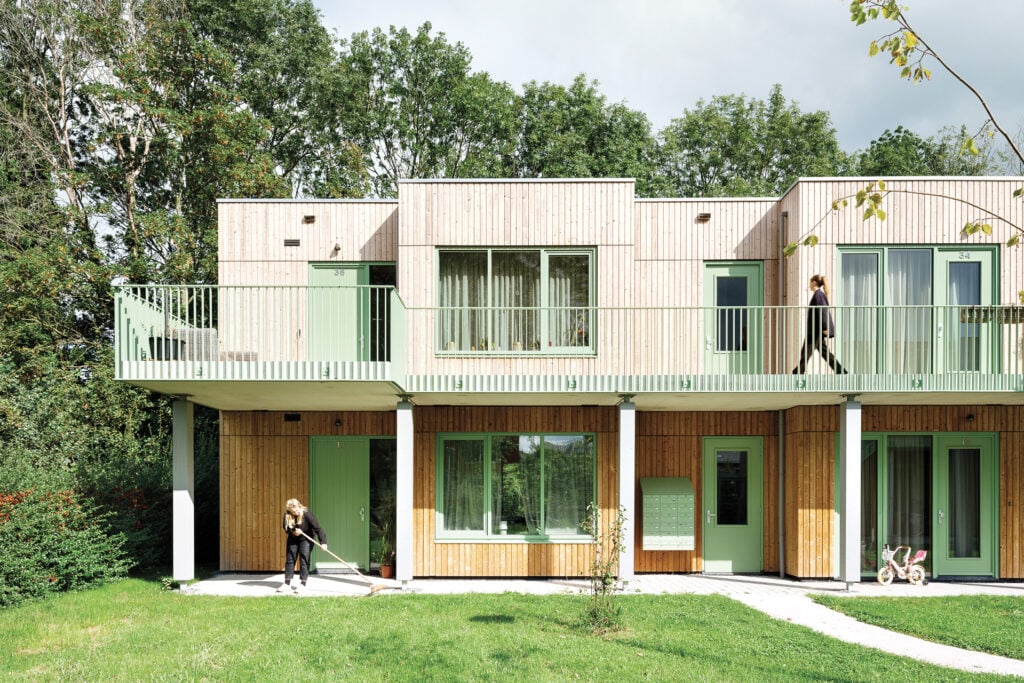
Mass timber construction is gaining significant traction across Europe, where a renaissance of mass timber architecture is reshaping the built environment. In Germany, for instance, timber-based projects are increasingly replacing traditional concrete and stone, driven by the demand for more affordable and sustainable construction solutions. Wulf Architekten designed the Straubenhardt firehouse with timber and concrete components that can be easily disassembled, emphasizing circular design. Meanwhile, Sauerbruch Hutton Architects, in collaboration with Kaufmann Bausysteme, delivered the Luisenblock office building for the German Parliament. Even grocery stores are being reimagined with mass timber, as architects explore how the material can support both environmental goals and stronger community connections.
Read more about mass timber construction in Europe:
Timber Buildings in Europe



Mass Timber in Higher Education
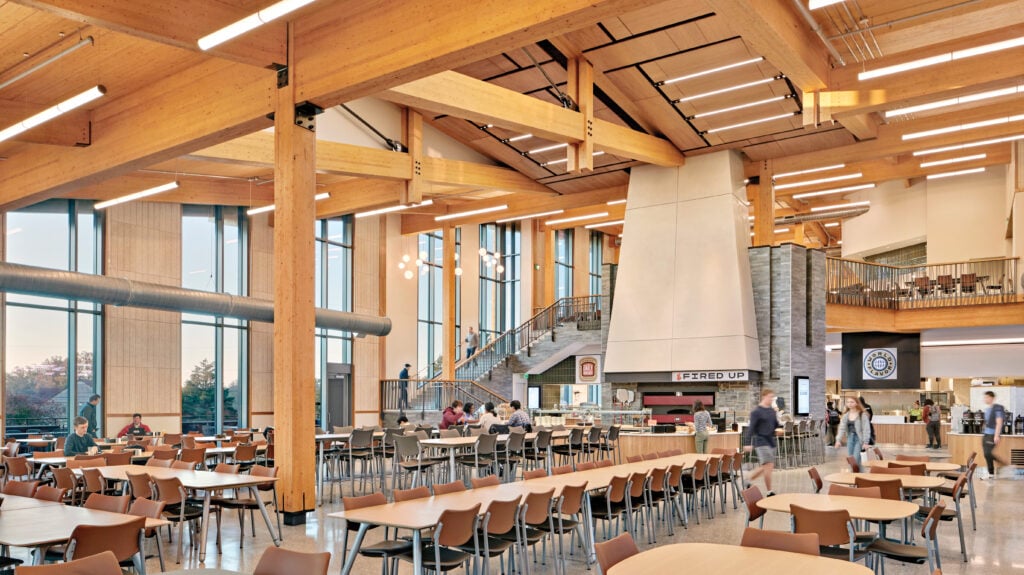
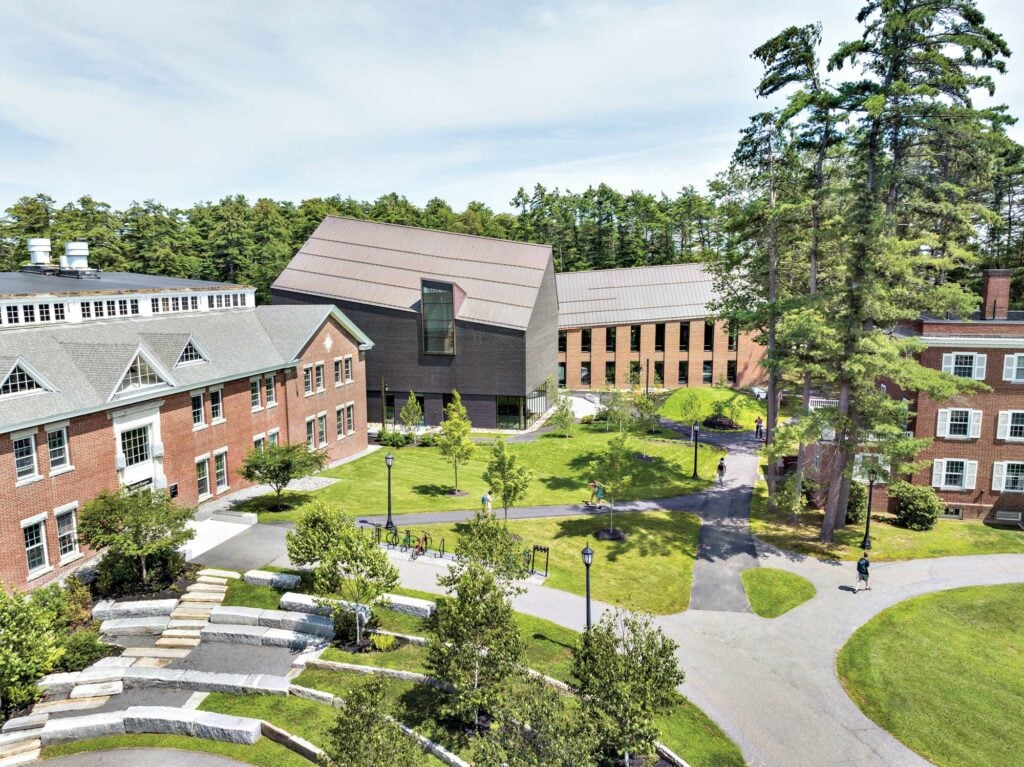
As universities in the United States keep expanding, environmental impact and resourcefulness have become key concerns for educational facilities, and schools are now turning to mass timber construction to minimize their ecological footprints. For example, HGA designed two mass timber buildings for Bowdoin College to help further the campus’s commitment to carbon neutrality. Meanwhile, Leers Weinzapfel Associates designed a cross-laminated timber academic building for University of Massachusetts Amherst. Ennead also designed a sustainable headquarters for Stanford’s Knight-Henessy Scholarship program featuring mass timber and a rainwater capture system. In addition, mass timber projects in higher education are increasingly incorporating energy-efficient mechanical systems, advanced lighting strategies, and solar-friendly materials to significantly reduce buildings’ carbon emissions and operational footprints.
Read more about mass timber in education below:
Rethinking the Campus Through Timber
Cross Laminated Timber and Structural Round Timber
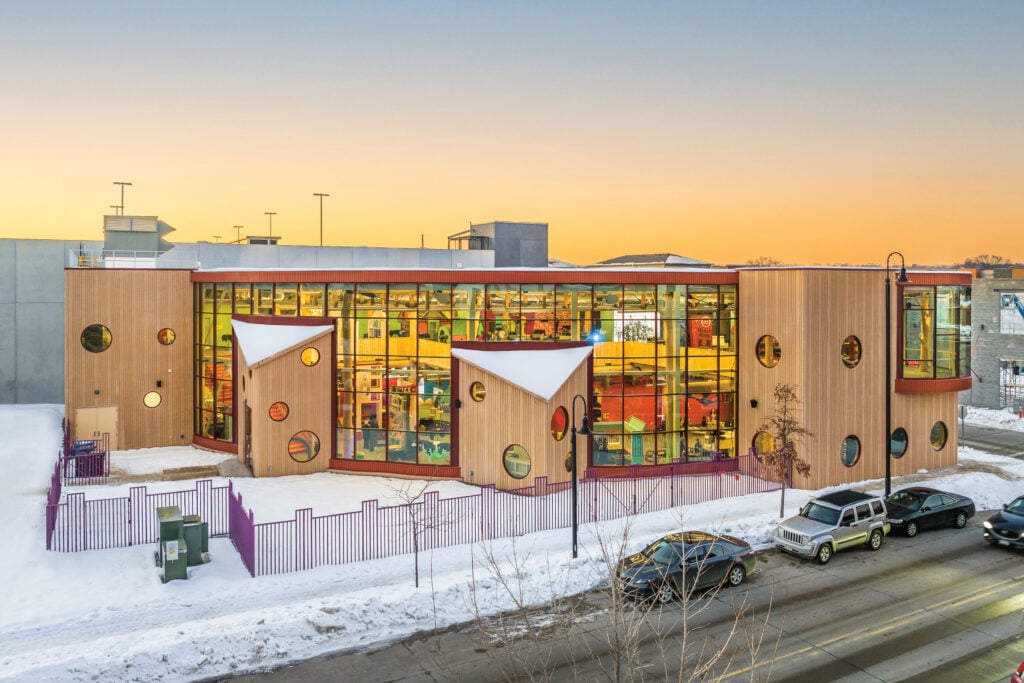
Mass timber encompasses a variety of engineered wood products—including cross-laminated timber (CLT) and structural round timber (SRT)—that offer a blend of strength, sustainability, and design versatility for contemporary architecture. The Wildernesse Restaurant in Kent, United Kingdom, designed by Morris + Company, showcases the potential of CLT through its expressive structure and reinterpretation of historical typologies. On the SRT front, WholeTrees Structures in Madison, Wisconsin, champions a restorative approach to commercial construction, exemplified by their work on the Children’s Museum of Eau Claire. Meanwhile, a research studio at Harvard is exploring innovative forms and surface treatments for CLT, pushing the boundaries of what mass timber can achieve both structurally and aesthetically.
Read more about CLT and SRT below:
CLT and SRT

Conclusion
In an era defined by climate urgency and a demand for smarter, more sustainable building practices, mass timber is emerging as a material uniquely equipped to meet the moment. Its blend of structural integrity, reduced environmental impact, and architectural elegance positions it as a powerful alternative to traditional steel and concrete. From hospitality projects to affordable housing, and from experimental studios to large-scale infrastructure, mass timber is proving its value across scales and sectors. While challenges remain, the growing body of successful projects and ongoing innovation signal a clear trajectory: mass timber isn’t just part of the future—it is the future of sustainable architecture.
Would you like to comment on this article? Send your thoughts to: [email protected]
Other Guides from METROPOLIS
Viewpoints
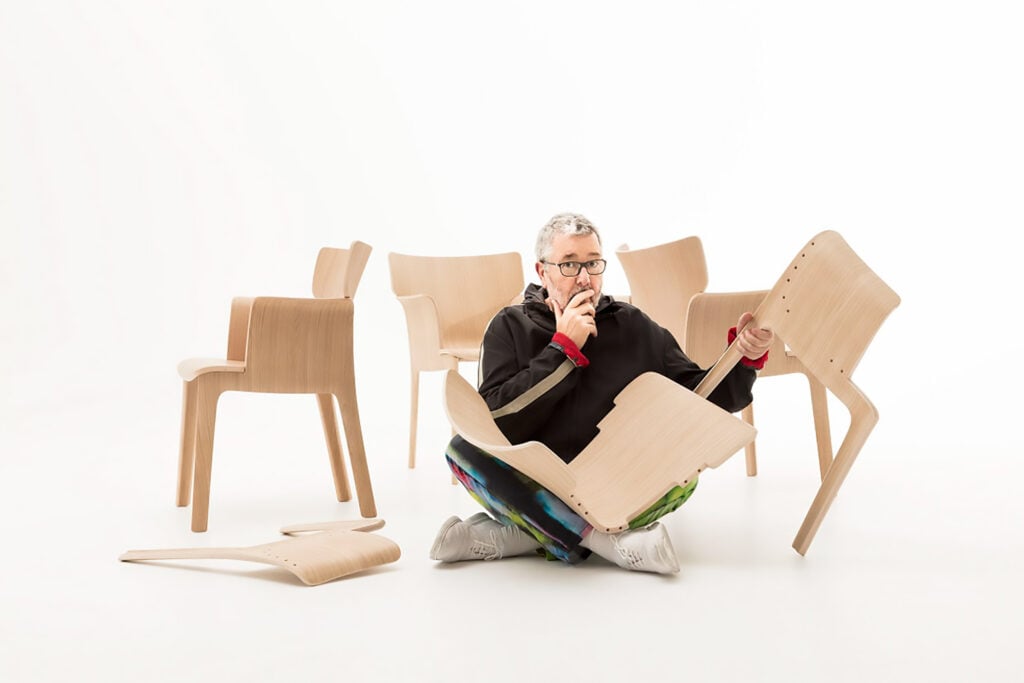
A Guide to Circularity in Products
METROPOLIS rounds up its most compelling coverage of circular design in products, from rethinking plastic production to salvaging used materials.
Viewpoints
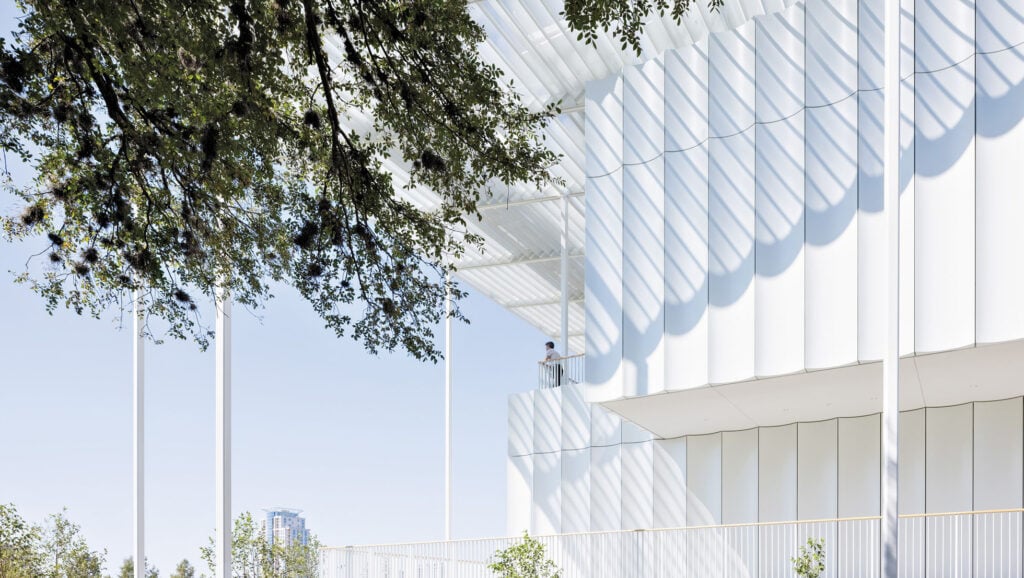
Navigating the Path to Net Zero
METROPOLIS mines its archives for pioneering perspectives and projects that prove the possibilities of net zero design.

Viewpoints
What Architects and Designers Need to Know About Embodied Carbon
From complex topics such as carbon form to advice on how to specify carbon-neutral furniture, METROPOLIS provides a lay of the land for carbon and design.