



October 31, 2025
Where Housing Meets Humanity
As housing needs grow more urgent, a new generation of design-led responses is emerging—rooted in care, community, and climate consciousness. These three projects, from Barcelona to Austin to Palm Springs, challenge conventional models by putting people first and embracing flexibility, visibility, and dignity. Designed for public housing residents, individuals living with HIV/AIDS, and unhoused populations, they ask not what’s standard but what’s needed.

Illa Glòries by Cierto Estudio
Amid Barcelona’s deepening housing crisis, Illa Glòries illustrates how publicly funded development—focused more on people’s needs than on profit margins—can drive socially driven urbanism. The 51-unit public housing block, commissioned by the Institut Municipal de l’Habitatge i Rehabilitació de Barcelona, was designed by the women-led firm Cierto Estudio as the anchor of a four-building development near the city’s Plaça de les Glòries public square.
At the heart of the firm’s competition-winning concept is a flexible, nonhierarchical apartment layout that breaks from traditional domestic models. Instead of prioritizing a central living room or a primary bedroom, the units feature equal-sized rooms that allow residents—whether nuclear families, roommates, or otherwise—to reconfigure space according to their evolving needs. Kitchens are treated not as secluded corners but as connective social nodes, turning childcare, cooking, and conversation into the core of the home. “We wanted to make caregiving visible and shared, not isolated behind a closed door,” says Marta Benedicto Izquierdo, a principal at Cierto Estudio. Diagonally aligned joints, windows, and room openings encourage cross breezes and shape long sight lines through the apartment and beyond, creating a sense of openness and expansion.
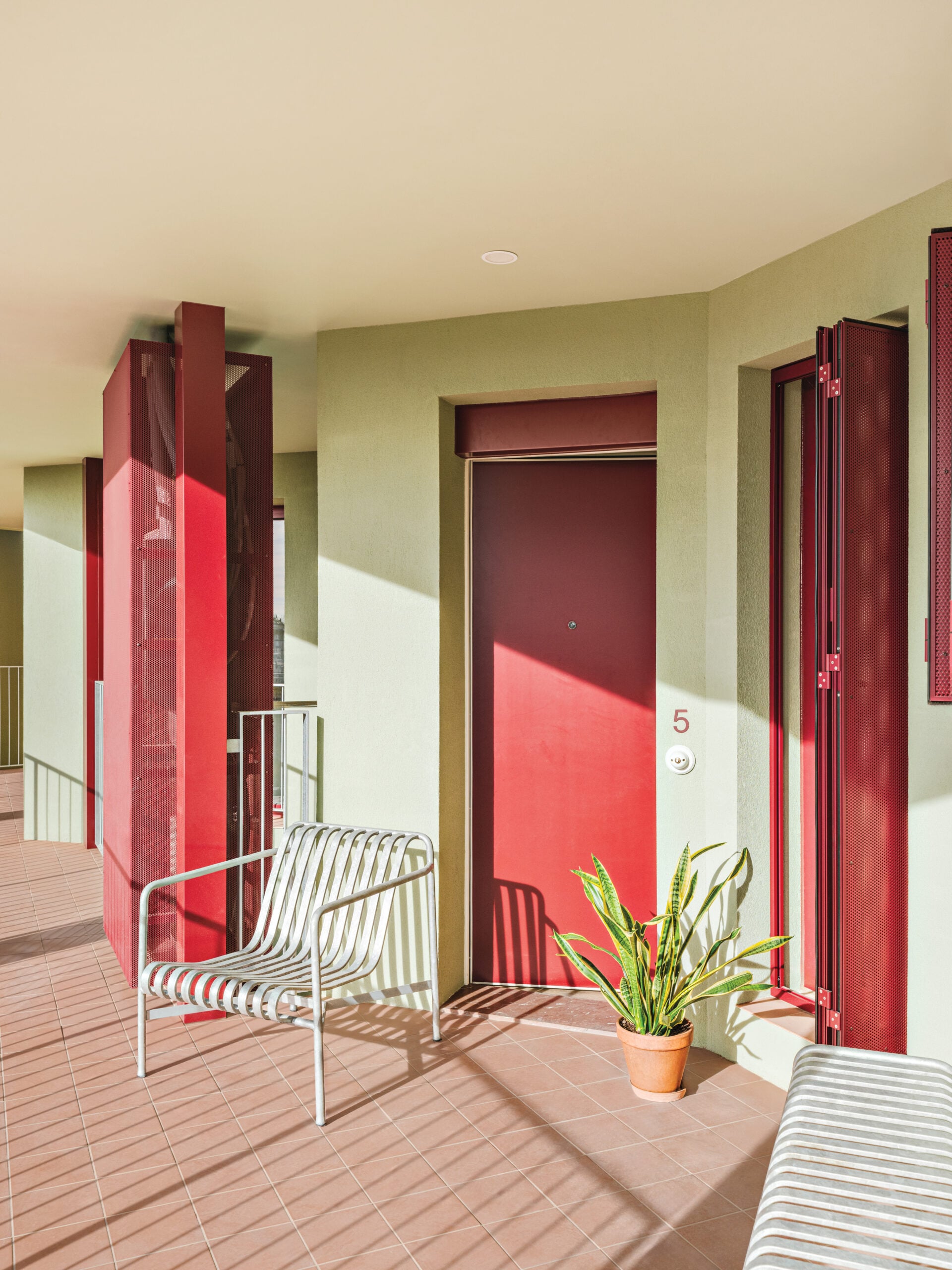
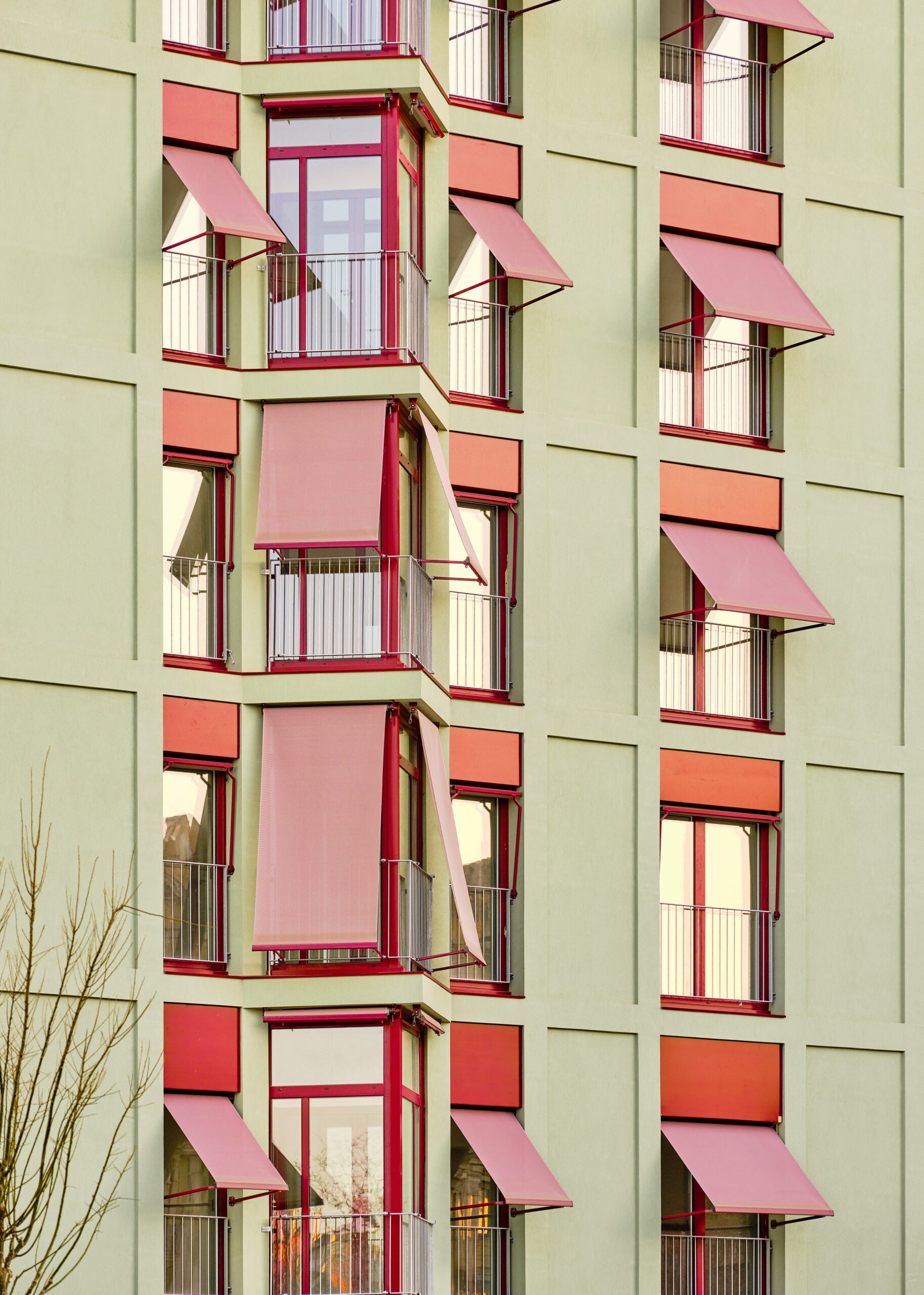

Outside each apartment, Illa Glòries emphasizes community. Generous communal balconies, green sculpted courtyards, and a rooftop garden encourage interaction and create passive safety through visibility. The balconies, which bump out in front of the units themselves, are especially wide thanks to a design decision to slightly reduce interior square footage in favor of outdoor space. “You can leave your door open and have a conversation with your neighbor,” notes Izquierdo. “This sense of threshold was key.”
The project meets the EU’s NZEB (European Union Nearly Zero Energy Building) standards and features a cross-laminated timber structure, passive cooling strategies, and over 60 percent green space, with green roofs helping to combat the urban heat island effect. A pedestrian passageway runs through the block, ensuring permeability and activating street life with commercial spaces at ground level.
The development creates a sense of dynamic, communal urbanity that nods to the past while still fitting into the city’s newer conditions. “This project isn’t just about living spaces,” says Izquierdo. “It’s about how we take care of each other.”
Burnet Place by Michael Hsu Office of Architecture
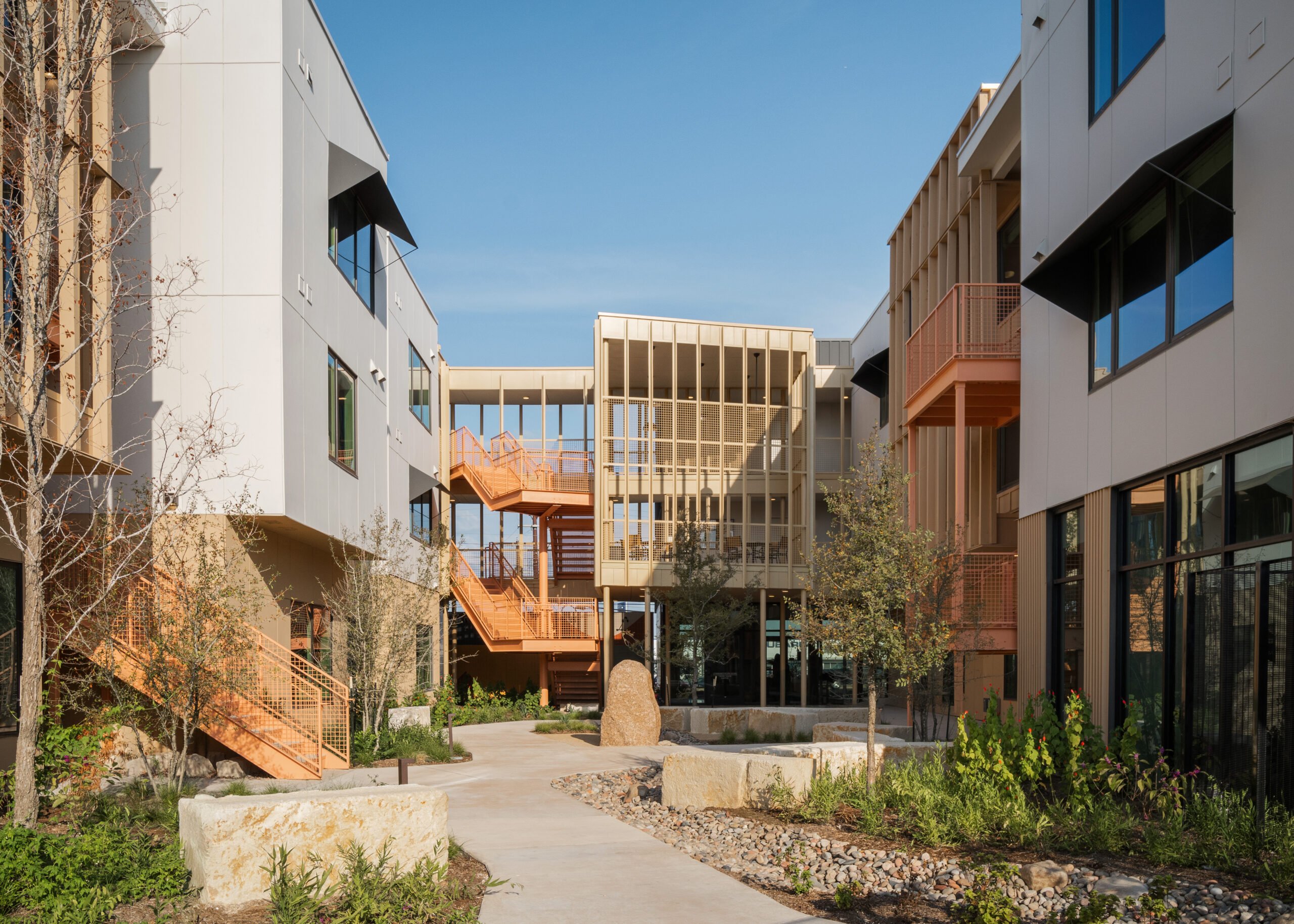
Just north of downtown Austin, tucked along Burnet Road and not far from the University of Texas at Austin, an affordable housing development is transforming what it means to live—and heal—in community. Burnet Place, a 61-unit residence designed by Michael Hsu Office of Architecture for the local nonprofit Project Transitions, serves residents living with HIV or AIDS. The project is conceived as a protective, nurturing environment that’s also imbued with a sense of vibrancy.
Inspired by the armadillo, the building’s form wraps a tough shell around a soft core. The exterior—composed of home-scaled siding, sun-shading porches, colorful tiles, and an abstract mural derived from the nonprofit’s logo—presents an artful face to the city. The interiors, in contrast, are intentionally warm and intimate, with natural wood finishes, daylight-filled rooms, and shared spaces designed to feel like residential living rooms. “We always talked about the building as having a central womb,” says Maija Kreishman, principal at Michael Hsu. “It wraps you in a very caring hug.”

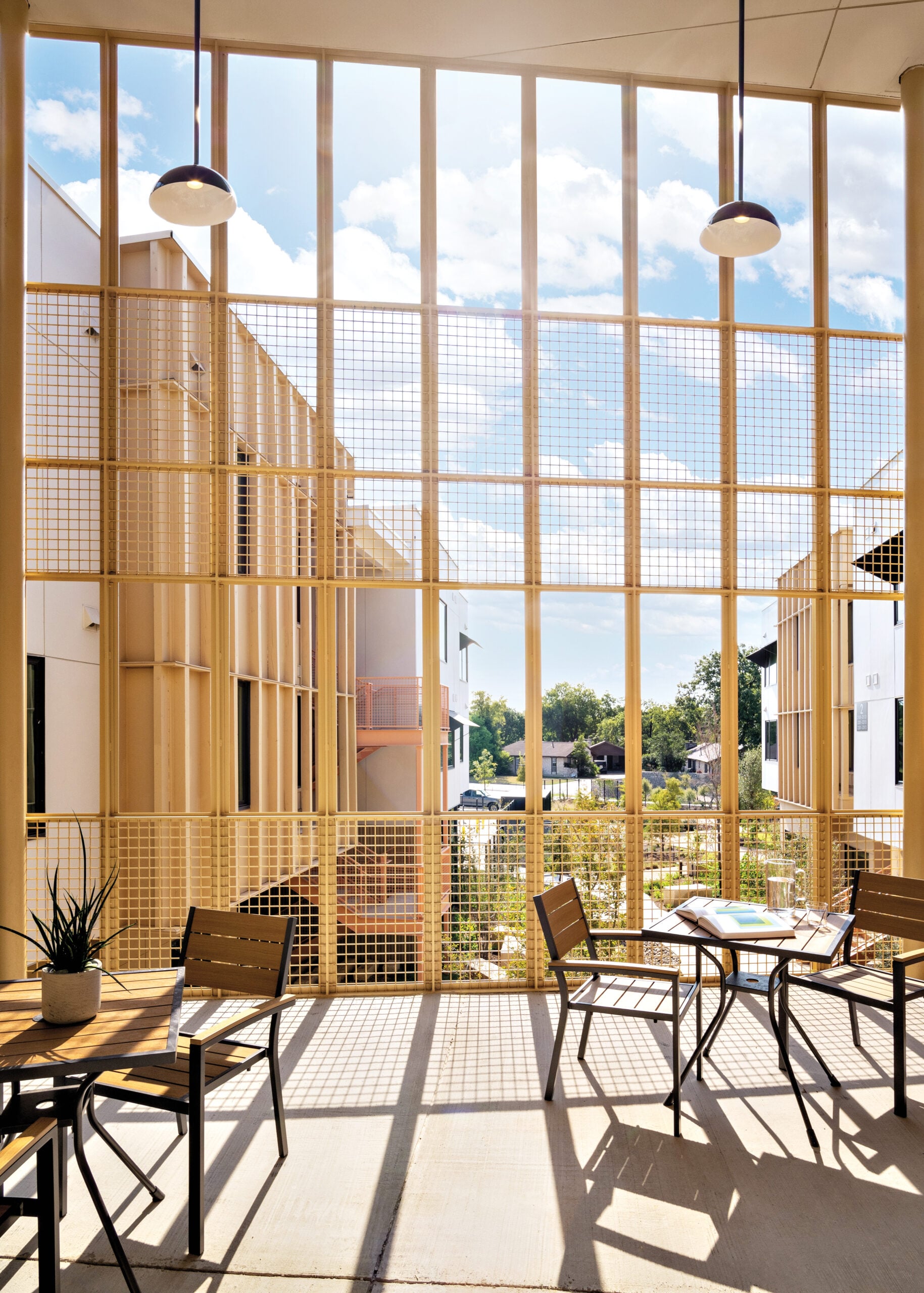
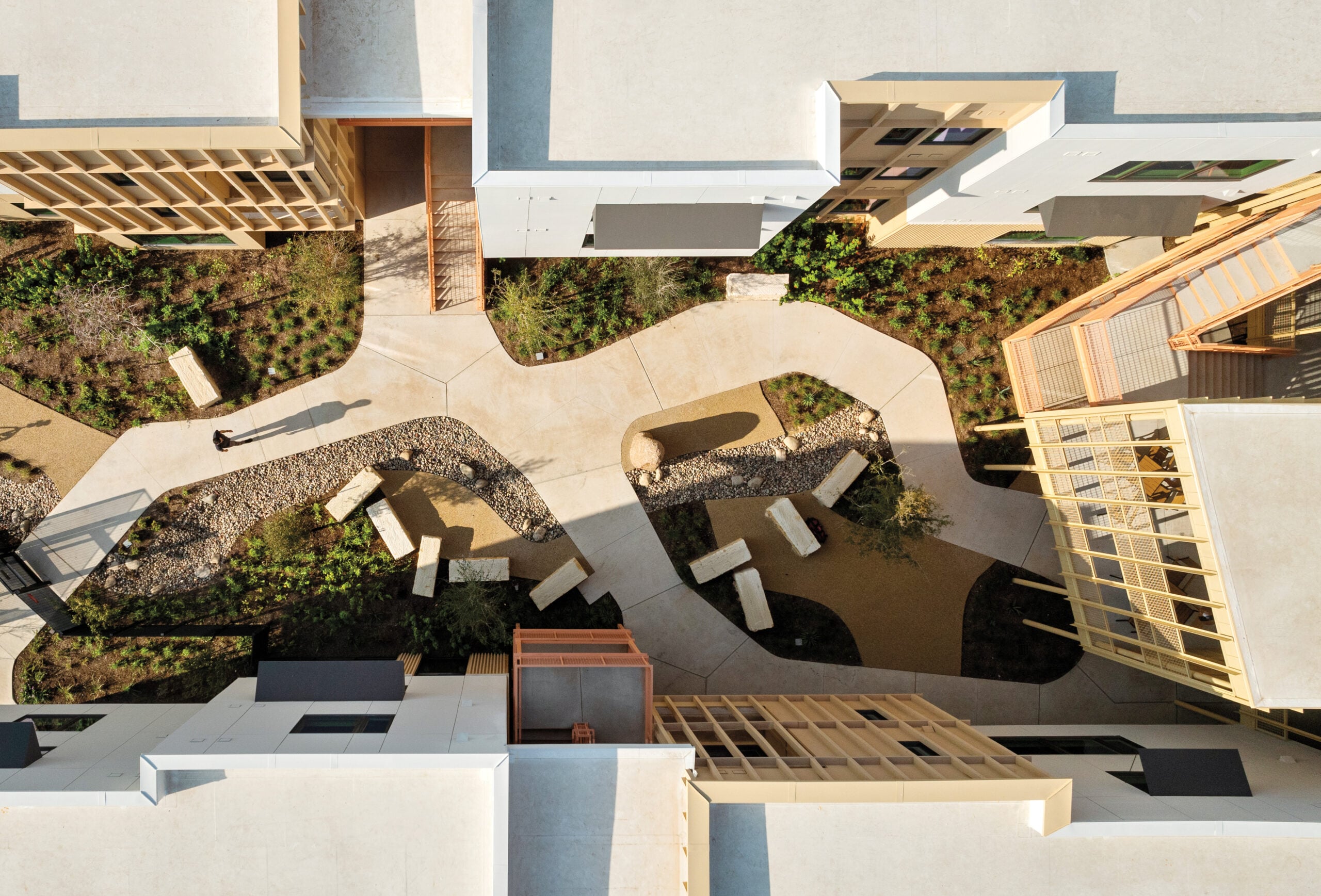
Rather than reading as a single mass, the project is composed of a series of smaller, interlocking volumes that echo the scale and cadence of traditional town houses. Arranged around a central courtyard, these forms give each segment its own identity. “When you’re walking through the courtyard, it’s as if you’re moving through a small neighborhood,” says Kreishman. Ground-floor communal rooms support case management, medical consultations, and dining, while maintaining the feel of a domestic space.
The courtyard, designed by longtime collaborators Nudge Design, includes community gardens, angled walking paths, and outdoor benches. An elevated porch bisects the complex in the spirit of a Texas dogtrot house, allowing breezes to pass through while offering shaded space for residents to sit and observe daily life in the garden below. “It’s really about creating moments of pass-through activity where you meet your neighbors and come together,” says Kreishman.
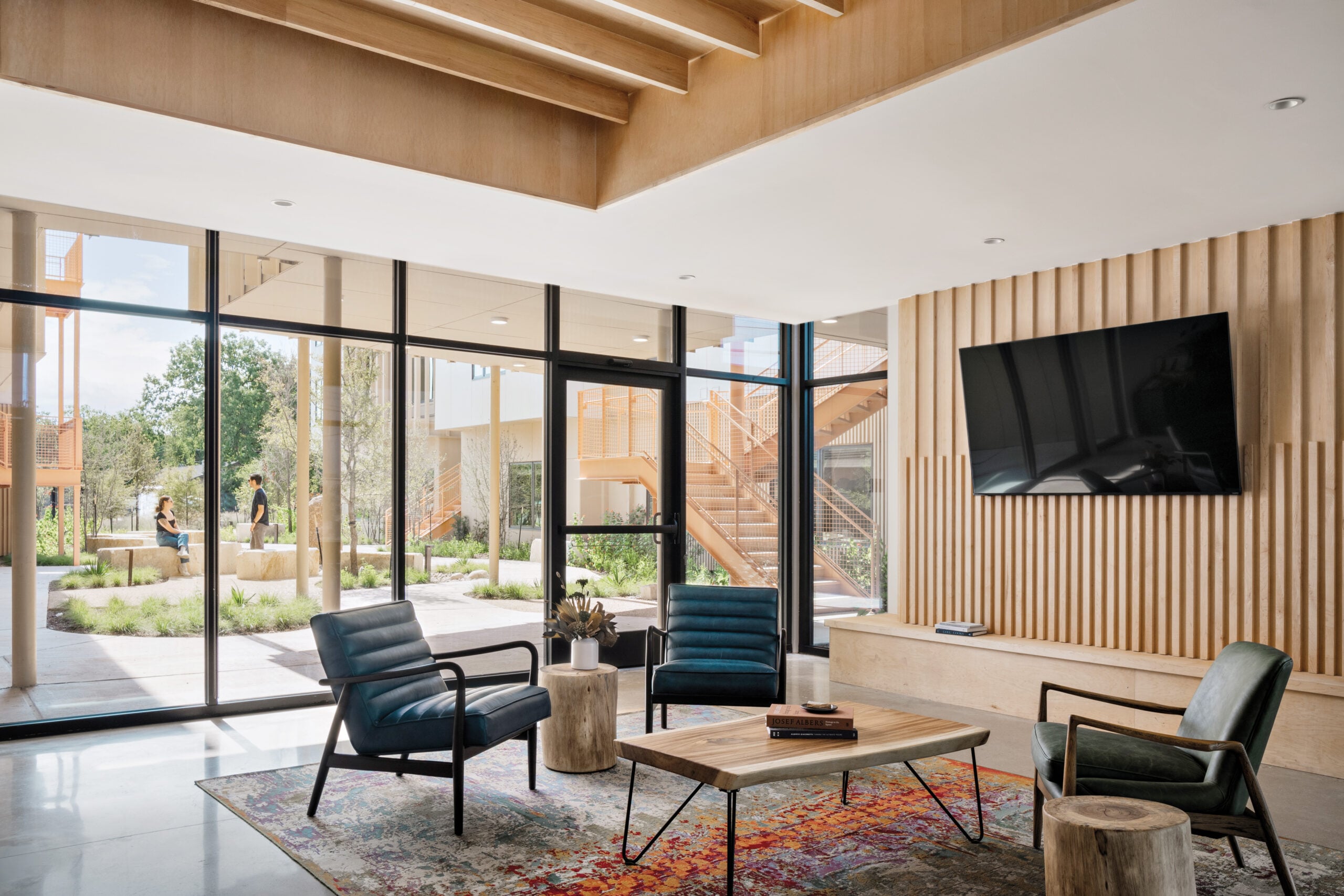
With a one-star rating from Austin Energy Green Building, the project incorporates on-site rain gardens for stormwater management, native and adaptive plants, and alternating hard and porous materials to provide both sun shading and cooling breezes.
Its design—rooted in regional tradition yet decidedly contemporary—offers a nuanced alternative to the standardized models of midscale urbanism in the area. “I’ve always wished cities had more of these,” Kreishman adds. “It’s meaningful to support a mission like this. The building doesn’t just provide shelter—it provides dignity.”

Palm Springs Homeless Navigation Center by JFAK
The Palm Springs Homeless Navigation Center, a product of John Friedman Alice Kimm Architects (JFAK), opened at the end of last year and is one of a new generation of nurturing, multifunctional facilities transforming the way we think about housing the unhoused. Consisting of 80 modular housing units, varied outdoor spaces, and two repurposed warehouses offering support services, communal activities, and emergency beds, the $40 million center is a place, not a shelter—an extroverted sanctuary of hope, not a hastily assembled facility tucked away from public view.
“It’s a city for people to get help, whether they need it for eight hours or six months,” noted JFAK cofounder John Friedman, adding that the project combines “a kind of density with a sense of community.”
JFAK, selected via RFP, collaborated with contractors Tilden-Coil Constructors, fabricators California Modulars, landscape architect Esther Margulies, and the center’s operator, Martha’s Village and Kitchen. Designed and built in just a year and a half, the cent
er inspires movement, interaction, and community. It’s a local centerpiece, not a liability.

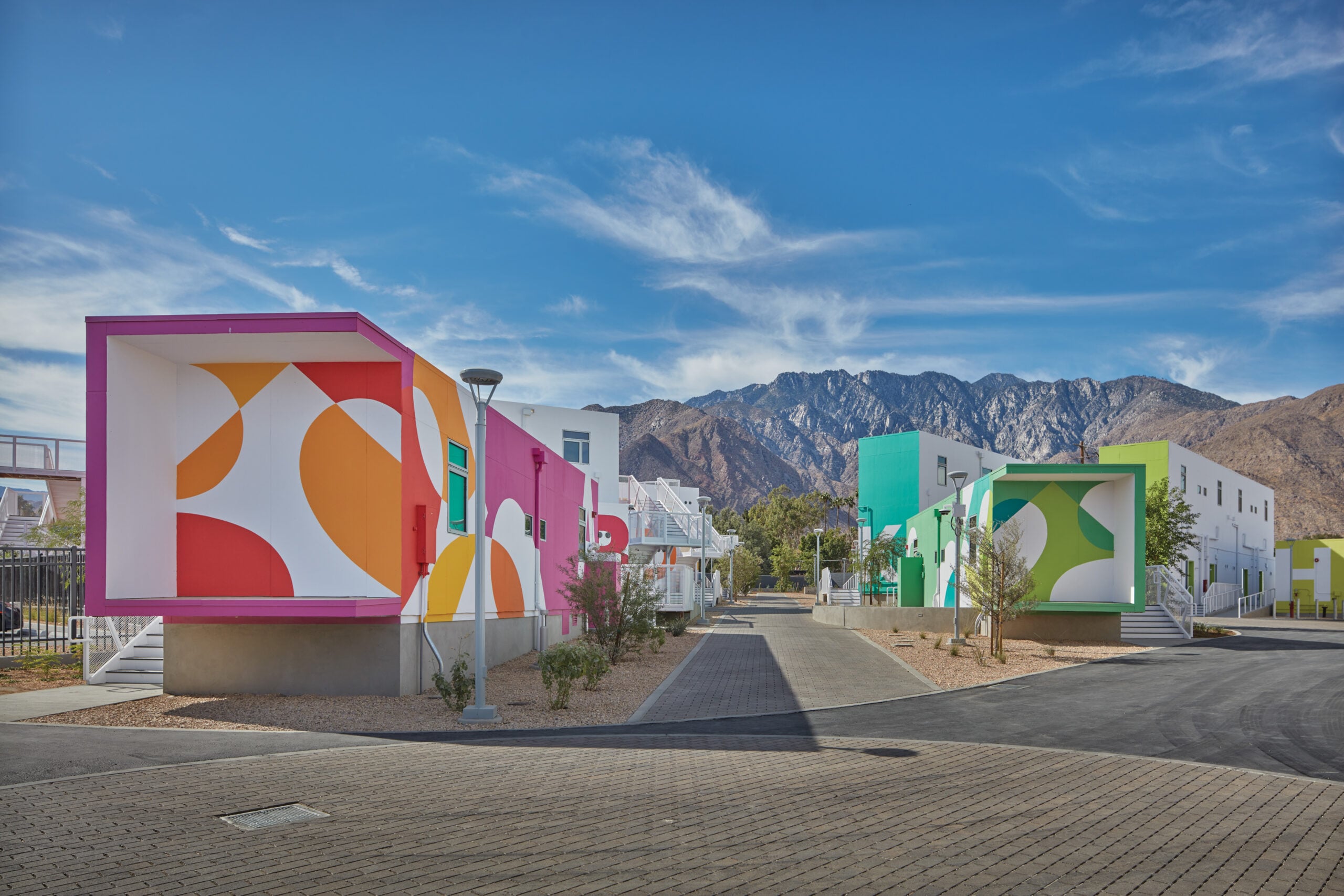
The one- and two-story, factory-built modular residences are set perpendicular to the spine in a layered, slightly angled configuration that provides ample natural light and air but still protects from what can be harsh amounts of both. Inside, simple but airy units maximize views and cross ventilation, but with relatively small windows to reduce heat gain and glare.
Elevated walkways weave between buildings, providing shade and connection, while open-air corridors ensure that every resident—whether in a ground-level unit or a second-story home—has a clear view of the nearby San Jacinto Mountains. Graphics provide wayfinding and identification via large, colorful letters, and establish an artful sense of place via color and pattern.
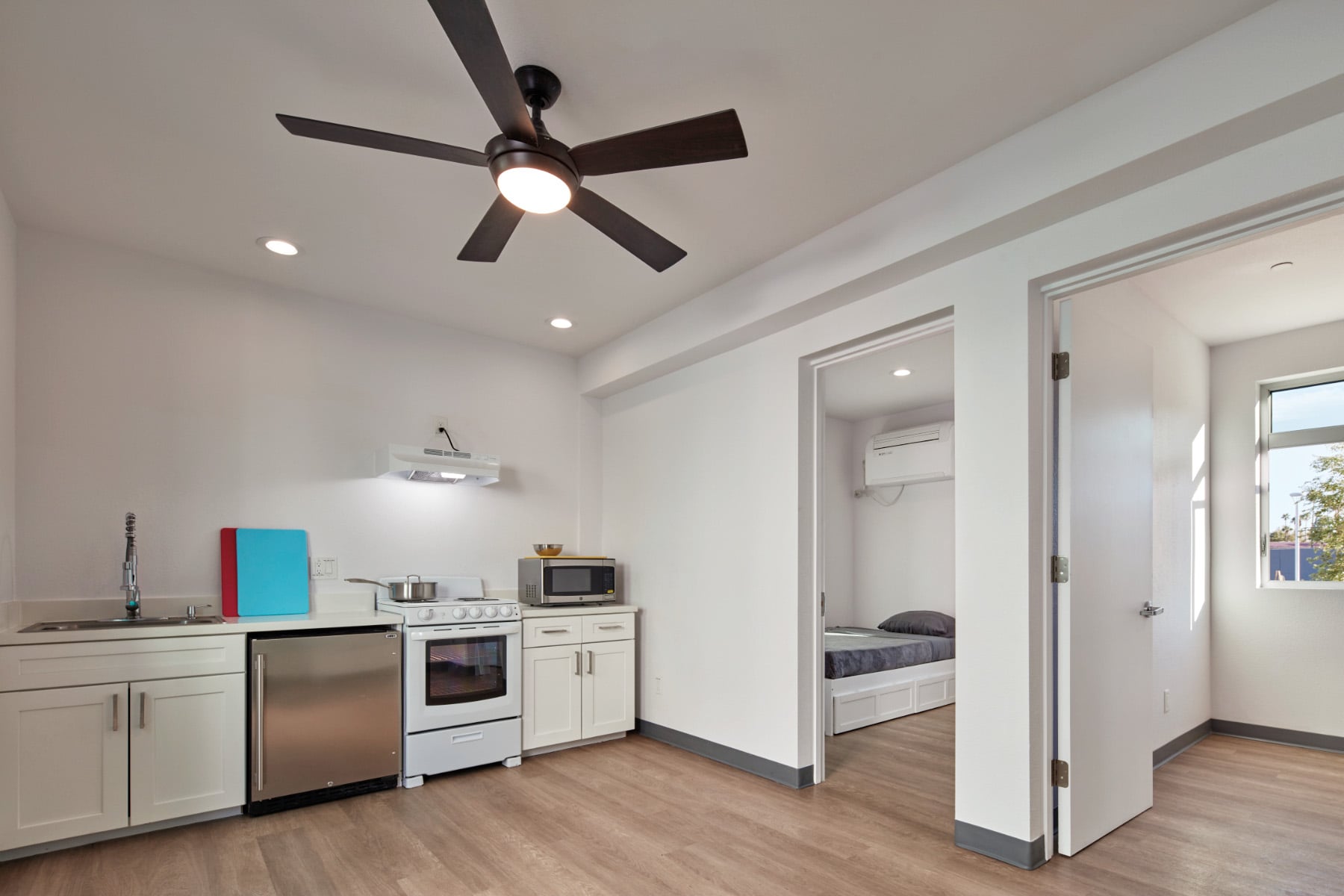
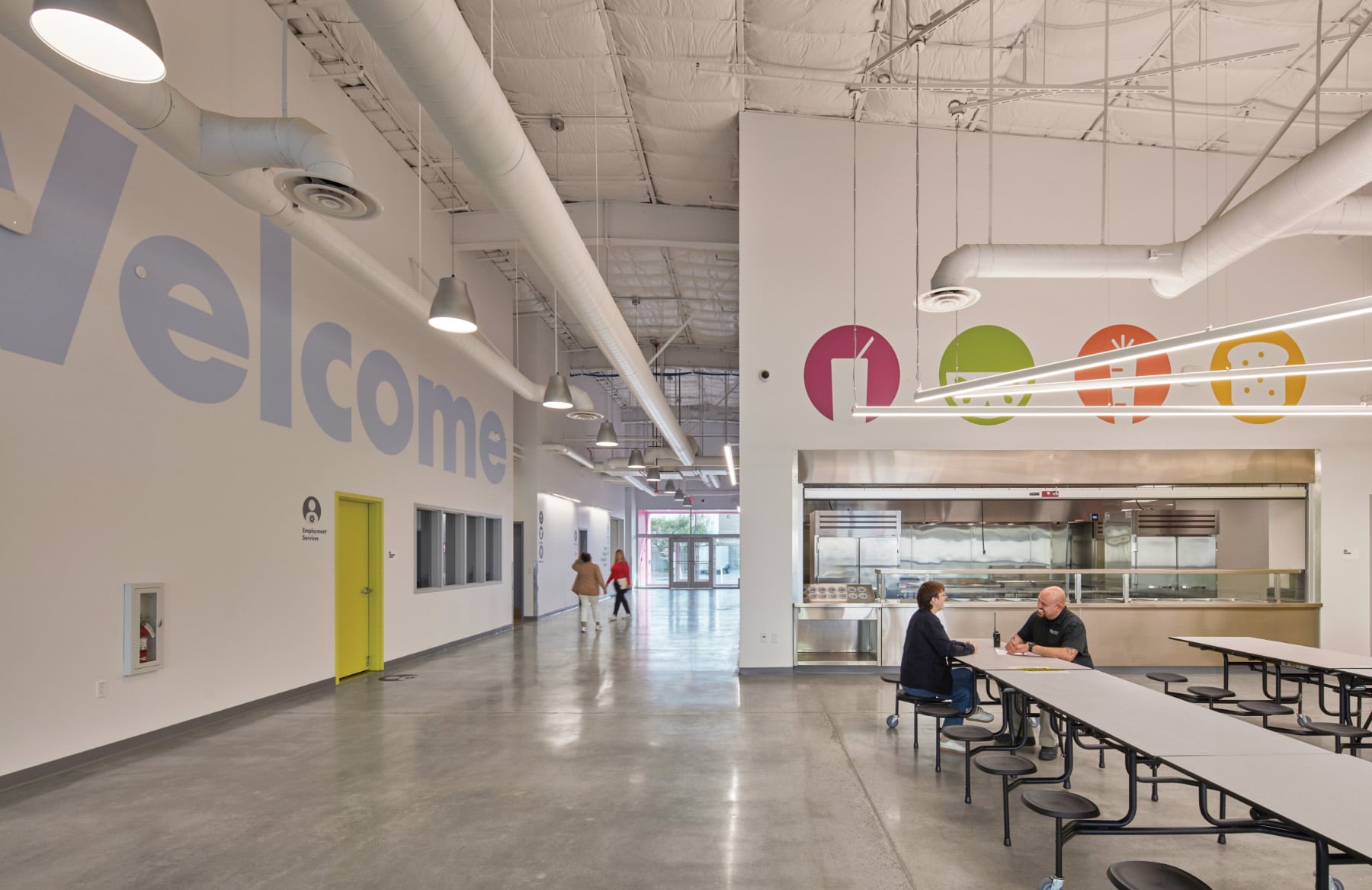
As for the site’s two warehouses—repurposed steel-frame structures that originally had no insulation and were leaking—the team effectively built new buildings within. The first warehouse was transformed into a hub of essential services: a commercial kitchen, communal dining area, laundry facilities, case management offices, and job training programs. Gathering areas have double heights, wide hallways, and colorful graphics that both welcome and orient. The second warehouse, known as the Early Access Center, offers 50 overnight-shelter beds.
The project’s biggest challenge, remembers firm cofounder Alice Kimm, was to create a special, humane place that wasn’t too nice. “The operator was afraid people would never want to leave,” she says. (Residents are encouraged to stay for six months before finding more permanent housing, with help from the center’s staff.) Ultimately, the design team struck a balance—warm and colorful, but not indulgent, comfortable but still transitional. The approach proves that emergency housing doesn’t have to feel institutional, and modular design doesn’t have to be rigid or impersonal.
Would you like to comment on this article? Send your thoughts to: [email protected]
Latest
Viewpoints
Detroit Month of Design: A City’s Work in Progress
Now in its 16th year, the celebration offers insights into the Motor City’s ongoing accomplishments without glossing over its hurdles.
Projects
How a Hybrid Building Helped an Historic Manhattan Congregation Remain in Place
On Billionaire’s Row, FX Collaborative designed a new home for Calvary Baptist Church combined with an office tower.