



August 21, 2026
Architecture’s Kinships: An Architecture of Interdependencies and Coexistence
Architecture has long presented itself as a discipline for building and connecting people to places, structures to cities, and private lives to collective worlds. But those connections and edifices are not neutral. Architecture has also participated in exclusion, segregation, ecological destruction, and the consolidation of narrow ideas about family, community, and belonging.
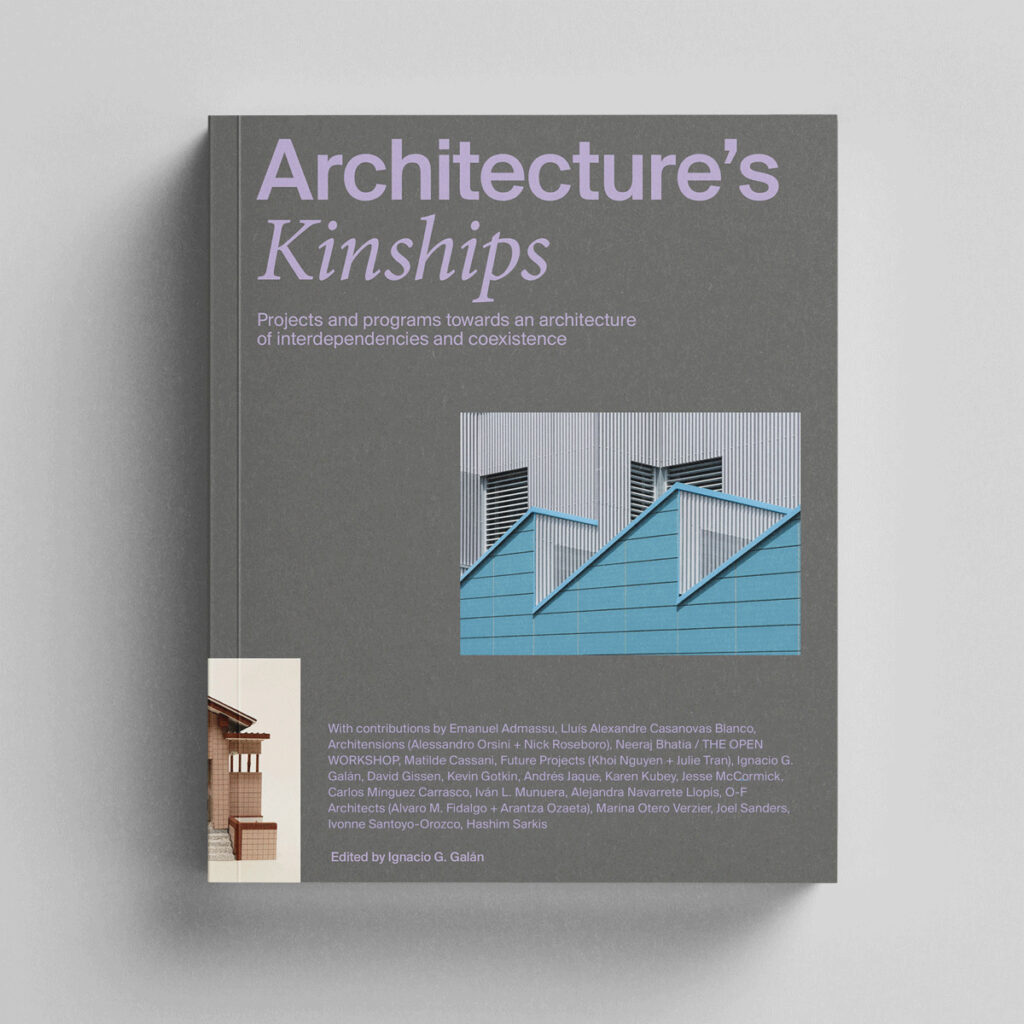
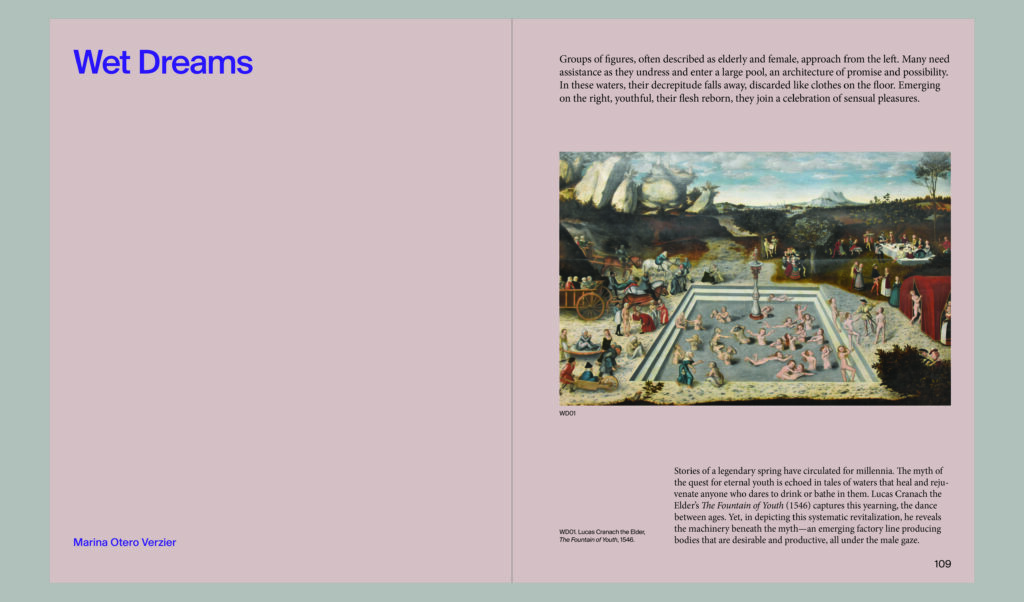
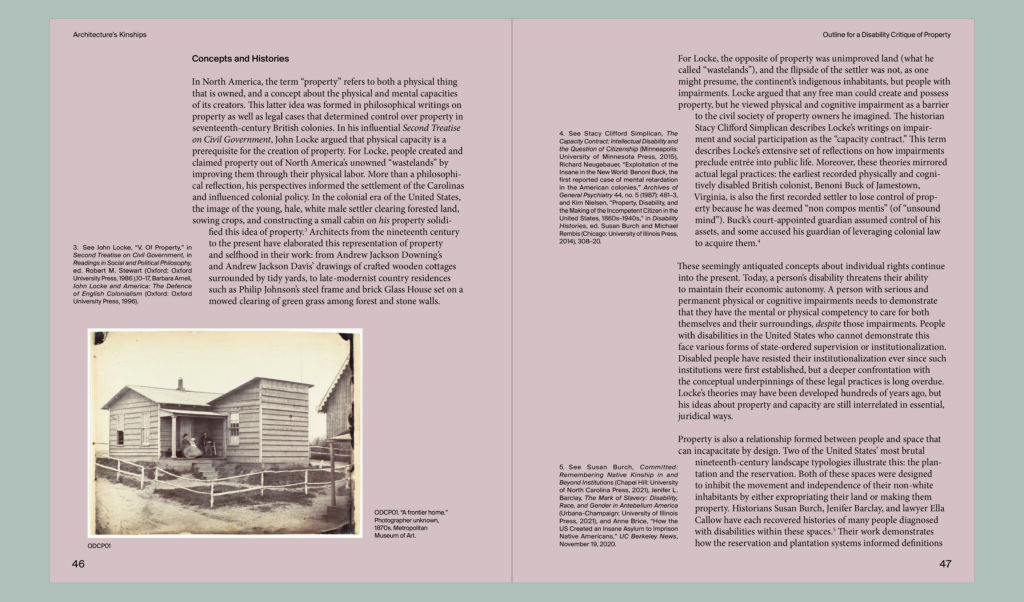
In this edited conversation, METROPOLIS senior editor Francisco Brown speaks with architect, historian, and educator Ignacio G. Galán about how his book Architecture’s Kinships (Actar, 2026) asks what might happen if human relationships became the starting point for design rather than its byproduct. The book includes contributions and projects by renowned architects and academic leaders such as Emanuel Admassu, Architensions (Alessandro Orsini + Nick Roseboro), David Gissen, Andrés Jaque, Karen Kubey, Carlos Mínguez Carrasco, Iván L. Munuera, Alejandra Navarrete Llopis, Marina Otero Verzier, Joel Sanders, Ivonne Santoyo-Orozco, Hashim Sarkis and many more
Bringing together built projects, speculative work, research, exhibitions, and collaborations, the book argues for an architecture that embraces difference, acknowledges friction, and treats design itself as an opportunity to build new forms of solidarity.
A Collection of Collaborations
Francisco Brown: Architecture’s Kinships bring together projects, research, but mostly collaborations. It also feels less like a monograph of your work. Why was it important for you to bring all of this work together in a book?
Ignacio G. Galán: The book is a collection of conversations and collaborations. It brings together projects I’ve participated in with different groups, but it also brings to the fore the voices of people with whom I’ve been thinking about how architecture intervenes in the world. So, I don’t see it as a monograph. In fact, the book deliberately unsettles the idea of the architect as an autonomous author, foregrounding instead the collective production of architectural knowledge and practice. Rather than presenting a coherent body of work, it makes visible the relationships through which that work has taken shape.
The book’s key idea is that we need to think about architecture as a mediator of diverse forms of togetherness in difference, acknowledging interdependences and coalitions that are sometimes messy. The book seeks to intervene in design thinking and design practice simultaneously, and that’s why it brings together design projects, some of which are built and some of which are speculative, along with writing and research.
The relationship between speculation, built work, research, and argumentation is not an easy one. At times, it comes with frictions because each of those forms of practice belongs in the world with different entanglements and commitments. But I think it’s an important relationship, and it’s one that the book takes on forcefully. Research and design do not simply inform one another; they can unsettle one another, forcing us to reconsider what we take as knowledge, whose experiences and forms of expertise matter, and what kinds of futures we can imagine. The book takes this relationship seriously, treating the movement between research and design as a space in which architectural knowledge—and the politics embedded within it—can be both produced and contested.
I feel it’s important that we think about design as a form of advancing complex ideas. We need to explore that relationship more often than we sometimes do. Design does not simply give material form to ideas developed elsewhere; it is itself a mode of inquiry and action, capable of producing knowledge, testing relations, and proposing political possibilities. Likewise, historical and theoretical arguments do not merely provide a context for design: they have their own ways of intervening in the world while transforming the questions design asks, the expertise it recognizes, and the relations it establishes.
That relationship between different forms of practice seems particularly evident in your recent exhibitions. In Fragments of Disability Fictions, you explored disability through speculative design. Tell me more about how this project relates more directly to the architectural questions in Architecture’s Kinships?
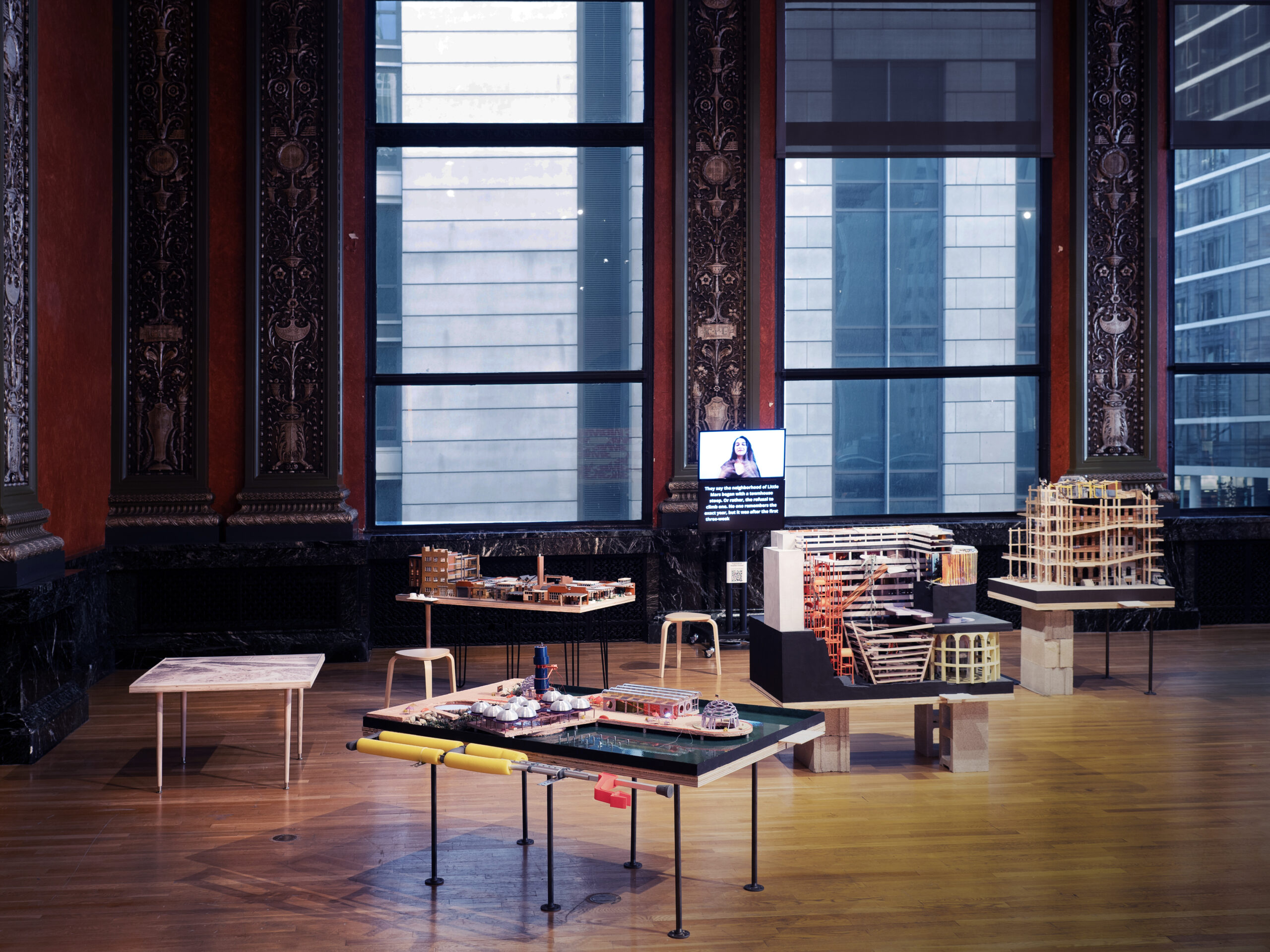
IGG: In Fragments of Disability Fictions, which we exhibited at the Chicago Architecture Biennial, we advance several fictions that explore both the past and future of New York City, centering disabled experiences. It mobilizes historical research and theoretical arguments to reimagine the city in ways that counter how conventional histories about the built environment either neglect the experiences of disabled individuals or project them into techno-utopian imaginations that obscure the frictions of disabled experiences, but also the contributions that disability and impairment can make to our understanding of the built world.
The exhibition manifests in a space as a series of fictional stories available as audio, with ASL (American Sign Language) and captioning, to ensure that different people—in this case, Deaf and hard-of-hearing audiences in the United States—can access them. The stories also manifest in a number of built artifacts, most of them scale models, which compose fragmentary representations of the worlds that the fictions bring together.
What’s key to this project, and to others in which I’ve used speculative design strategies, is the way they allow us to think about scenarios in which architecture mediates diverse forms of coming together, the formation of coalitions and alliances that open up diverse futurities.
It was important to us that those coalitions would manifest in the project’s materialization. That’s why, in addition to having the fictions available as ASL and captioning, the models are also available through tactile plates for blind or low-vision audiences. In a way, the installation’s architecture embodies those forms of encounter among diverse individuals.
The project is also important because it results from collective work between David Gissen, Architensions (Alessandro Orsini and Nick Roseboro), and me. It also incorporates input from diverse disabled scholars, policymakers, and activists in the writing of the stories.
One way the book advances the notion of architectural kinships is by thinking of the design project—or the design process itself — as an opportunity to bring together diverse individuals and collectives. Buildings can mediate diverse coalitions; the design process can also produce alliances, redistribute expertise, and become a practice of building community. In that sense, the politics of the project resides not only in the worlds it imagines, but in the relations through which those worlds are collectively produced.
Kinship is Not Inherently Positive
Many of these projects—whether curatorial or architectural —seem to be informed by your position as a researcher and teacher. What fundamental questions are you asking students to consider when learning about architecture practice today?
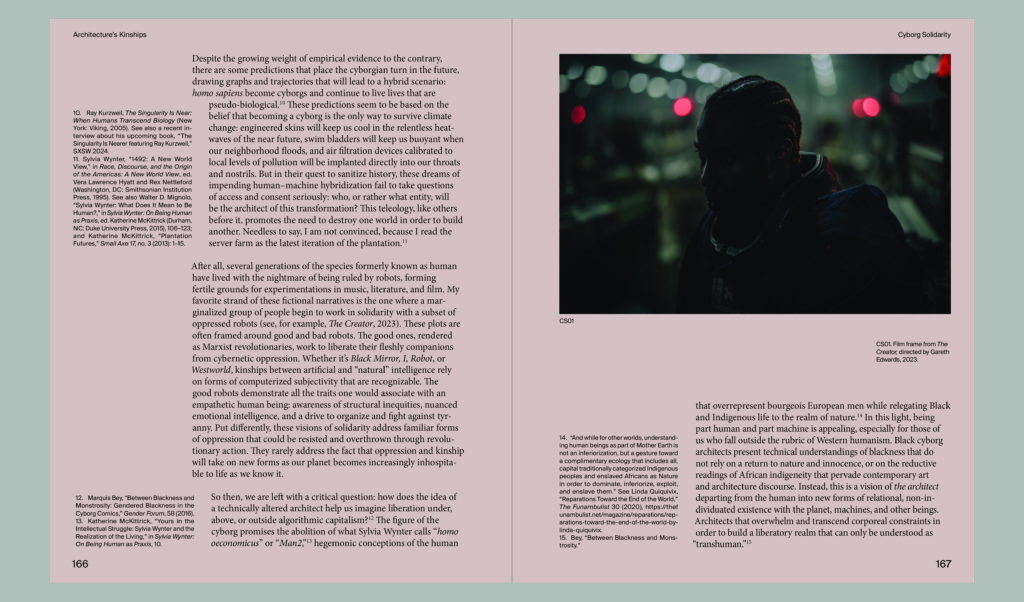
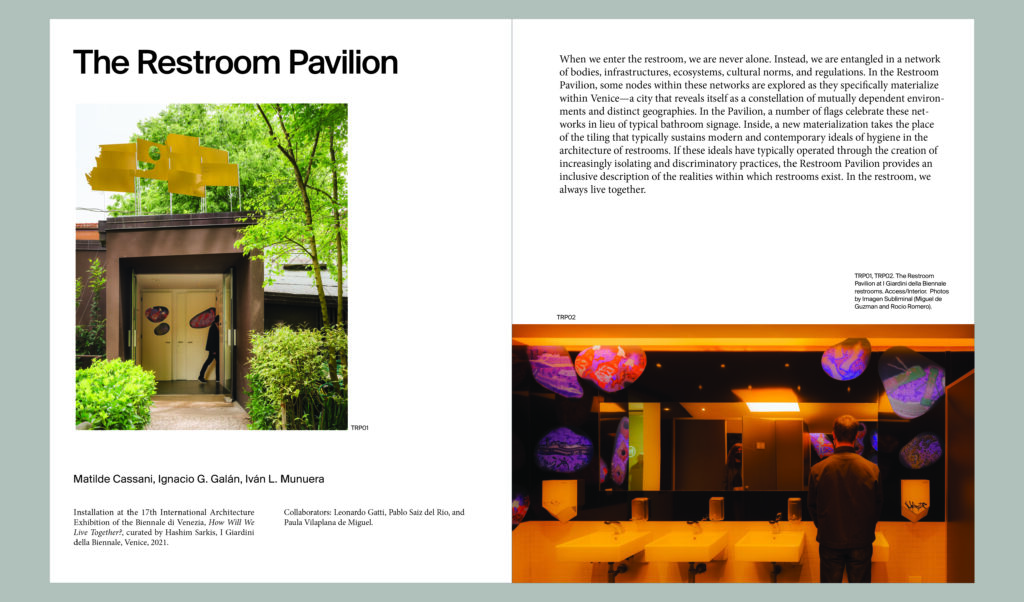
IGG: I’m very interested in the way in which architecture never operates alone. Buildings are always entangled in diverse forms of interrelationships, entangled in networks—cultural, material, symbolic—that I’m very interested in exploring both in my research and with my students. One way the book mobilizes the notion of kinship is to explore how architecture itself is embedded in diverse forms of relationality. Both in my research and with students, I want to ask not only what a building does as an object, but what relationships it organizes, whose interests and forms of knowledge it privileges, what forms of life it enables or constrains, and what kinds of collective futures it makes possible.
I am very interested in the relationship between teaching, research, and design, and the book brings together different voices that move between these forms of practice in different ways. I’m interested in those relationships because they allow us to approach architecture through different forms of expertise and to explore how research, design, and pedagogy can inform and unsettle one another in addressing critical contemporary questions. Rather than treating these as separate domains, the book asks how their contagions and intersections might expand architecture’s capacity to intervene in the world.
You use the words “messiness” and “kinship” very positively, but the book also includes critical voices that address conflict, exclusion, and violence. How do friction and antagonism fit into this idea of architecture as a space for building relationships?
IGG: That’s extremely important, because the book brings attention to how architecture brings together diverse individuals and nurtures opportunities for shaping coalitions. But this always goes hand in hand with an understanding of how the built environment—and architects themselves—have participated in separating communities, disrupting ecosystems, and foreclosing possibilities for solidarity among groups.
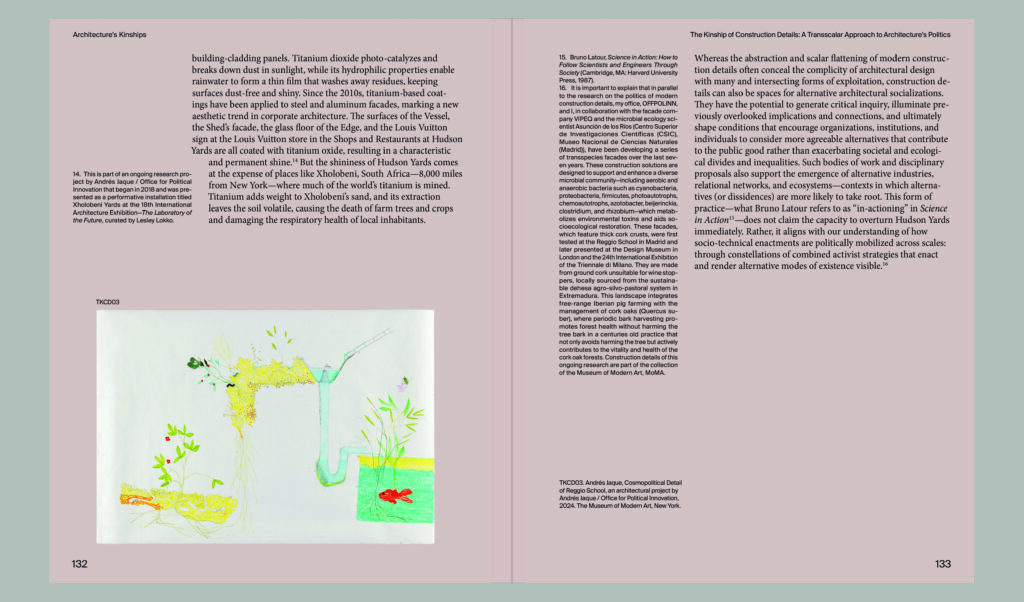
That is present in different chapters of the book. Andrés Jaque, for example, explores how architectural detailing has been central to the way architecture produces or exacerbates both social and ecosystemic differences or violences. But he also discusses alternative material practices and forms of detailing that embrace and nurture new ecosystemic and social relationships.
This also connects to the relationship between my design practice and my historical research. In my recent historical monograph exploring architects’ participation in giving form to fascist politics in Italy (Furnishing Fascism: Modernist Design and Politics in Italy (University of Minnesota Press, 2025)), I explore their participation in consolidating exclusionary forms of kinship that connected the family home and the nation as homeland. Kinship, then, is not inherently positive or emancipatory; relationships can be constructed around exclusion, hierarchy, and violence. I think that it is important for the field to understand how architecture has been fundamentally committed to exclusionary projects.
But understanding those histories also raises a contemporary question: how might we mobilize architecture’s capacity to produce relationships toward other forms of collective life? That is a question I wanted to ask through the book, together with its contributors and through the collaborative projects it gathers.
How do you bring these relational aspects and questions from the book into the built form in your own design practice?
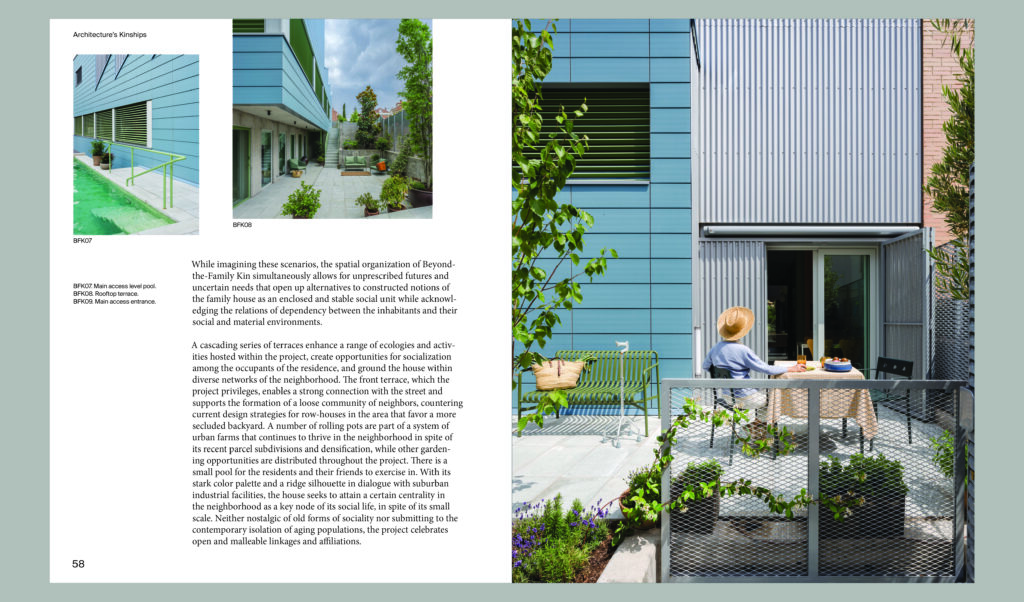
IGG: The design projects gathered in the book are all collaborative, and this has been important to me because it makes the relational questions explored in the book materially consequential. Moreover, once a project is built, several other relationships have to be negotiated through permits, economies, clients, property regimes, construction, and the many other systems that organize how architecture comes into being. Rather than seeing these as constraints on the ideas explored through speculative work, I see them as sites where ideas are tested, transformed, and sometimes critiqued and contested.
In fact, projects are shaped not only by designers but also by clients, neighbors, consultants, builders, and others who become implicated in their development and eventual occupation. They do not simply participate in realizing a predetermined design; their knowledge, economies, interests, and forms of agency become part of what projects need to negotiate. This collaborative process extends into the life of buildings, where they continue to negotiate different relationships among diverse actors.
I see potential in embracing that messiness rather than siloing academic thinking, design, speculation, and building. None of them is a pure or ideal form of practice. They are sites where different forms of knowledge, expertise, and power encounter one another. Both ideas and practices have material and political consequences.
Embrace the Messiness of Architectural Practice
You describe the work in terms of messiness and entanglement, yet the architecture itself can appear restrained and highly resolved. How do those seemingly contradictory qualities coexist?
IGG: When I talk about messiness, I’m not primarily referring to aesthetic or formal complexity. I’m interested in messiness as a condition of relations: how different forms of life, uses, temporalities, economies, and forms of expertise overlap without necessarily becoming coherent or harmonious.
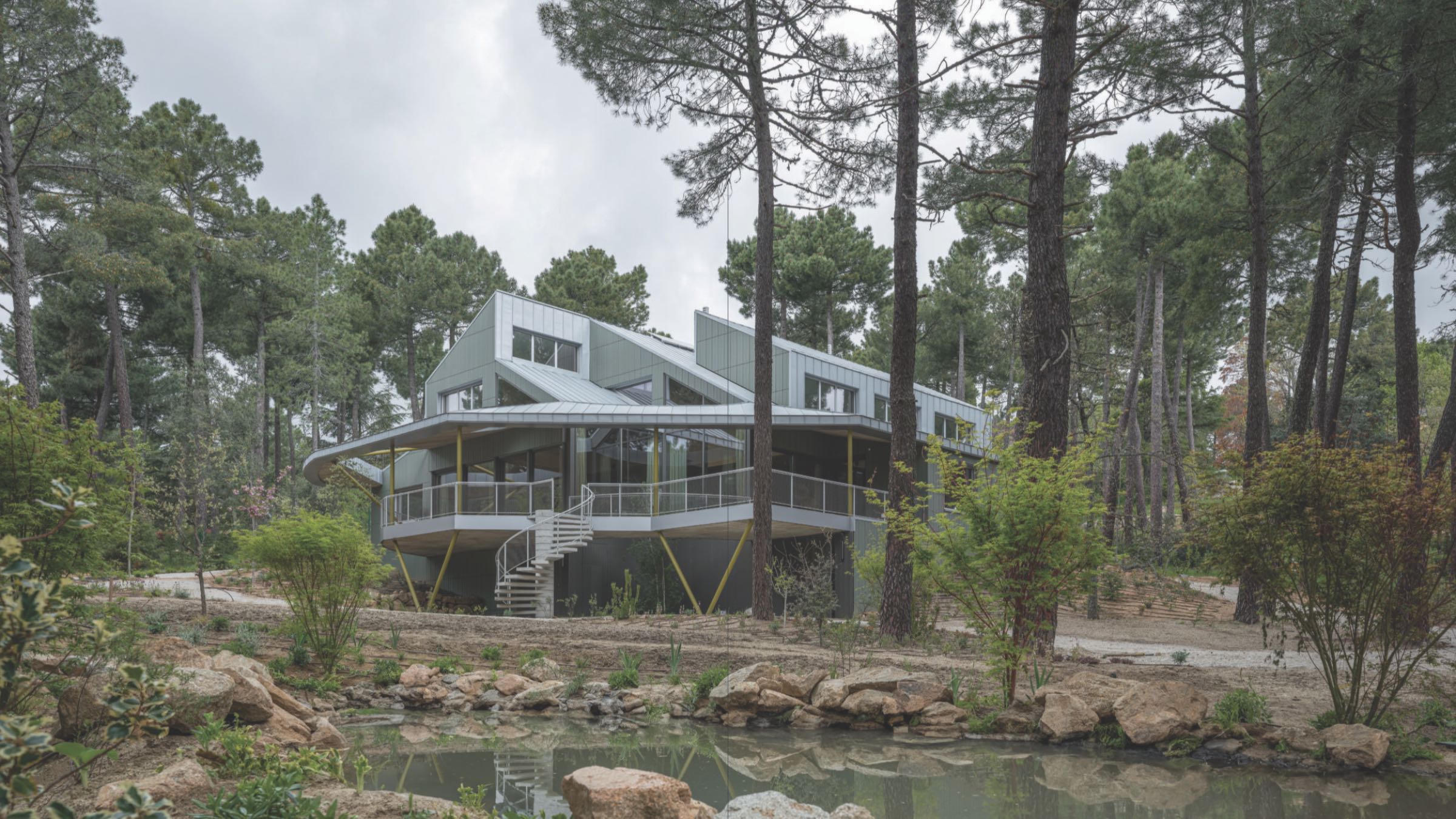
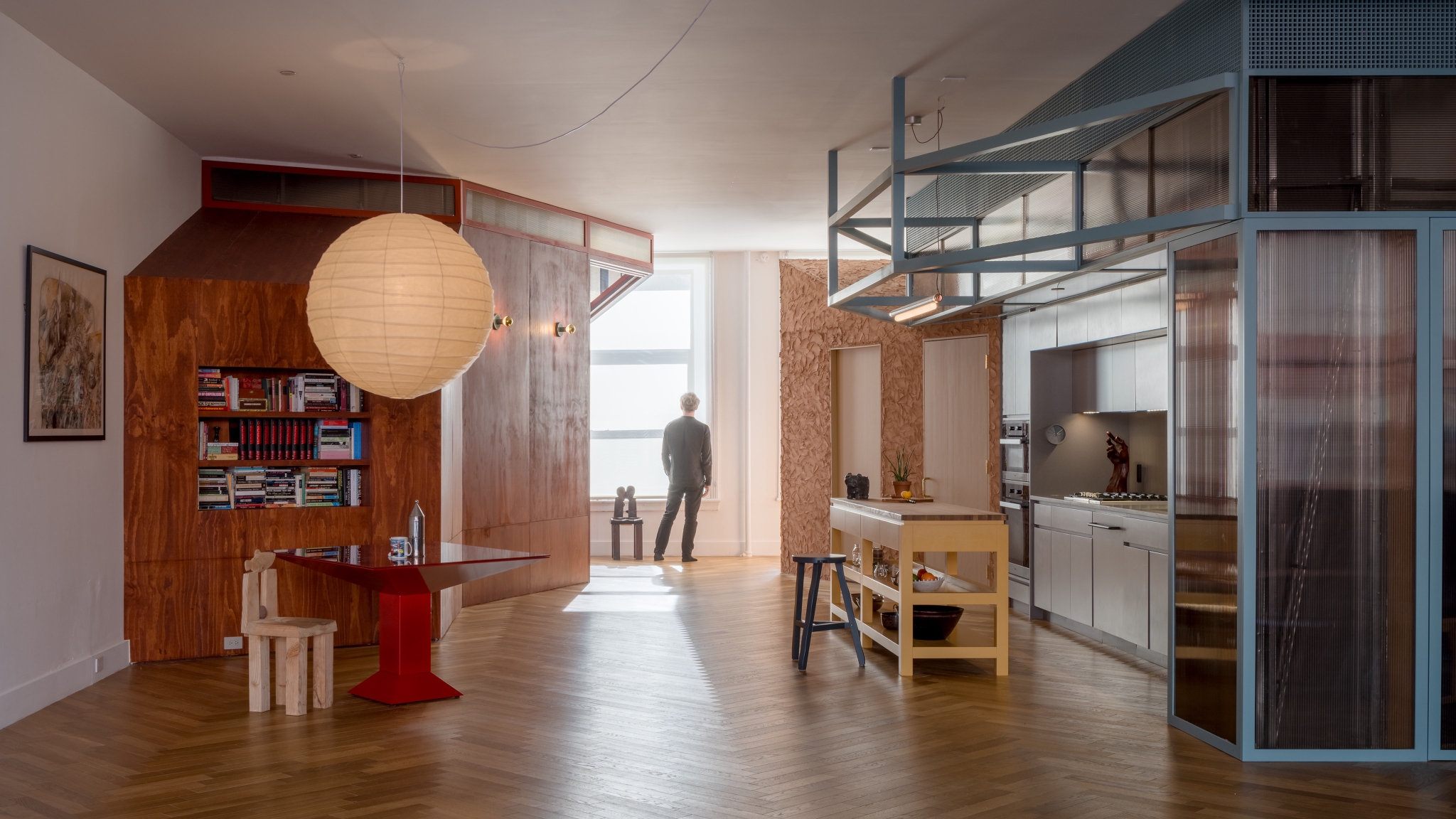
For example, the project Another Seedbed hopes to bring together the life of an artist and his own work with diverse forms of public display and performance, seeking to participate in the cultural life of the neighborhood. Some of those he invites to his apartment are his own friends, but others are part of the New York artist community or others who may visit their work. The project therefore blurs the boundaries between domestic space and cultural institution, not by making the architecture formally ambiguous, but by allowing its spatial and material organization to negotiate between these different forms of occupation and use.
For example, volumes are differentiated through color and material, including materials and techniques associated with the low-cost residential buildings of Williamsburg, such as the hand-troweled wall in the bathroom. That material diversity helps the interior operate almost as a small urbanism: it brings together different spatial identities and creates conditions for people and activities that might not conventionally belong within a domestic interior to encounter one another.
But I think it is less important whether messiness should be visible in the architecture. I am interested in whether architecture can mediate relationships that are contingent, overlapping, and unresolved. Formal and aesthetic clarity is not opposed to relational messiness; it can be what allows that messiness to remain open.
Looking across the book, your exhibitions, your teaching, and your built work, a consistent question emerges: not simply what architecture looks like, but what it does, what relationships it enables, and what forms of coexistence it makes possible. What would you like readers to take away from Architecture’s Kinships?
I would like the book to invite readers to embrace the messiness of architectural practice, foreground its collaborative nature, engage in conversation, and test horizons of togetherness that seem increasingly foreclosed in our world—ecologically, socially, and politically.
Would you like to comment on this article? Send your thoughts to: [email protected]
Latest
Viewpoints
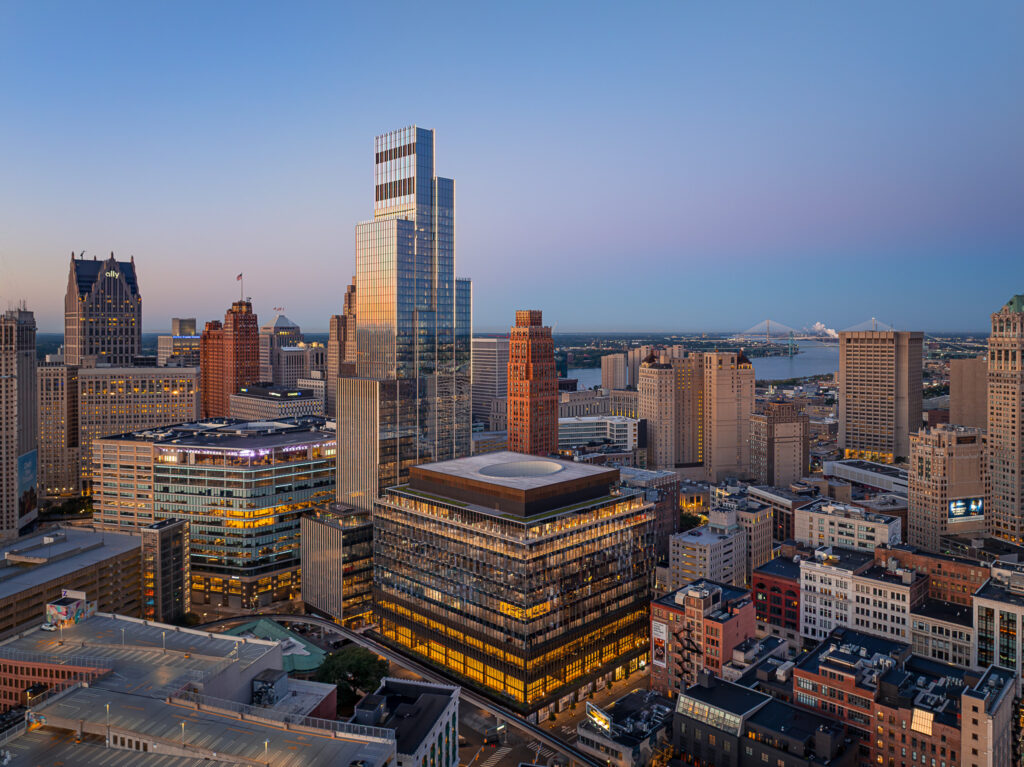
Detroit Month of Design: A City’s Work in Progress
Now in its 16th year, the celebration offers insights into the Motor City’s ongoing accomplishments without glossing over its hurdles.
Projects
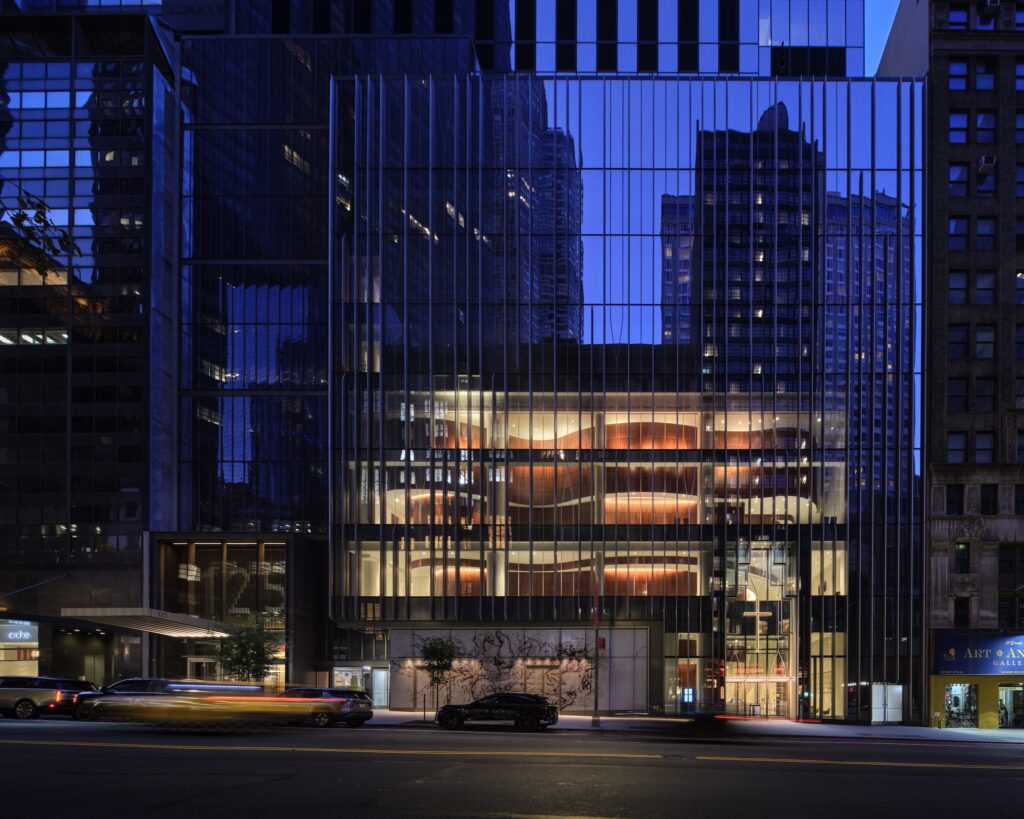
How a Hybrid Building Helped an Historic Manhattan Congregation Remain in Place
On Billionaire’s Row, FX Collaborative designed a new home for Calvary Baptist Church combined with an office tower.