



January 15, 2026
Inside Autodesk’s Sustainability Vision—and Actions
In 2023, the tech giant Autodesk launched Forma, an integrated, end-to-end platform that leverages artificial intelligence for predesign and schematic design. The cloud software supports a hyper-centralized model for architects, engineers, and construction professionals to ensure buildings perform as planned throughout the project cycle.
METROPOLIS sat down with Joe Speicher, Autodesk’s chief sustainability officer, to discuss how the company is aligning these innovations with its sustainability goals—particularly around energy efficiency, workplace design, and corporate commitments.

Balancing AI Growth with Energy Demands
Francisco Brown (FB): With Autodesk’s rapid growth in cloud computing and AI, how do you reconcile the increased energy demands of data centers that power these technologies with the company’s commitment to environmental impact?
Joe Speicher (JS): We’ve been investing in what would now be considered AI capabilities for over a decade, and we feel well prepared to deal with both the opportunities and challenges this presents.
We procure cloud service providers and AI capabilities upstream from our vendors. We subsequently provide those same vendors with Autodesk technology and tools to design, build, and manage their cloud infrastructure. We are aware of the energy and emissions associated with the rise of AI, and we are leveraging all of our capabilities to help reduce that overall, by using some of our tools for energy modeling, materials optimization, and data management in these same servers.
The Role of Data in Sustainable Design
FB: You released Autodesk Forma, which features embodied carbon analysis and materials insights. What have you heard from your customers about these new options, and is it changing sustainability practices?
JS: It’s a broad spectrum. We have some customers who are incredibly advanced in their thinking about sustainability and others who are beginning to get their heads around these issues and are starting to address them.
As you mentioned, we created Forma, a platform that connects all phases of project delivery. At the moment, what is designed is not necessarily what gets built. We know this just from change orders alone, right? Now, with this integrated approach—from the architect’s original model, to construction, to the owner, to the [building] operator—they get a live digital twin of the project model to validate performance against the original design and specifications.
As we transition to this data-driven, end-to-end offering, we’re also becoming a platform company, which, by definition, means interoperability of data across the markets we serve, particularly in the built environment, because, for us, sustainability is a data problem. But, yes, we’re getting positive feedback from our customers overall, and interestingly, I will say, over the last few years, our customers are pushing us to do more.

Corporate Sustainability Targets
FB: What are the biggest challenges that Autodesk faces in meeting its own sustainability targets on time?
JS: We have three goals that we focus on from a sustainability perspective. The first: Reduce emissions associated with running our own business.
We have an SBTI [Science Based Targets initiative]-validated goal across scopes 1, 2, and 3 by this decade. Second: We subsequently commit to powering our business with 100 percent renewable energy. And thirdly, we address the residual emissions associated with our operations.
We are a technology company, so we don’t own much of anything, and we essentially ship only code. We have a relatively light footprint. We meet all our commitments with our customers in mind. What are the things that the industry needs that our customers need overall?
For instance, thinking about reducing carbon emissions, one of the really challenging things is business travel.
Aviation is a hard sector to abate. Therefore, we invest in a couple of sustainable aviation fuel companies and procure sustainable aviation fuel because we think the best thing we can do as a business is to drive the cost curve down so others can participate in this market.
Instead of buying a renewable energy credit, we invest in something called virtual power purchase agreements, which enable us to underwrite the development of renewables on the grid. Bringing more renewables onto the grid helps our industry overall by decarbonizing the grid itself and, lastly, by addressing residual carbon emissions. We invest in a rigorous carbon offsetting program because, again, if we can bring down the cost curve, others—including our customers—can participate in this market.
Workplace Strategy as Inspiration
FB: What are some internal design and workplace strategies that you have implemented that architects and designers might find inspiring in their own offices?
JS: Having an attachment to a workplace and wanting to be in the office are productivity enhancers for us as a business. One of the best ways we do that is by looking to lease office space that is LEED certified, meets the WELL standard, or meets the BREEAM standard.
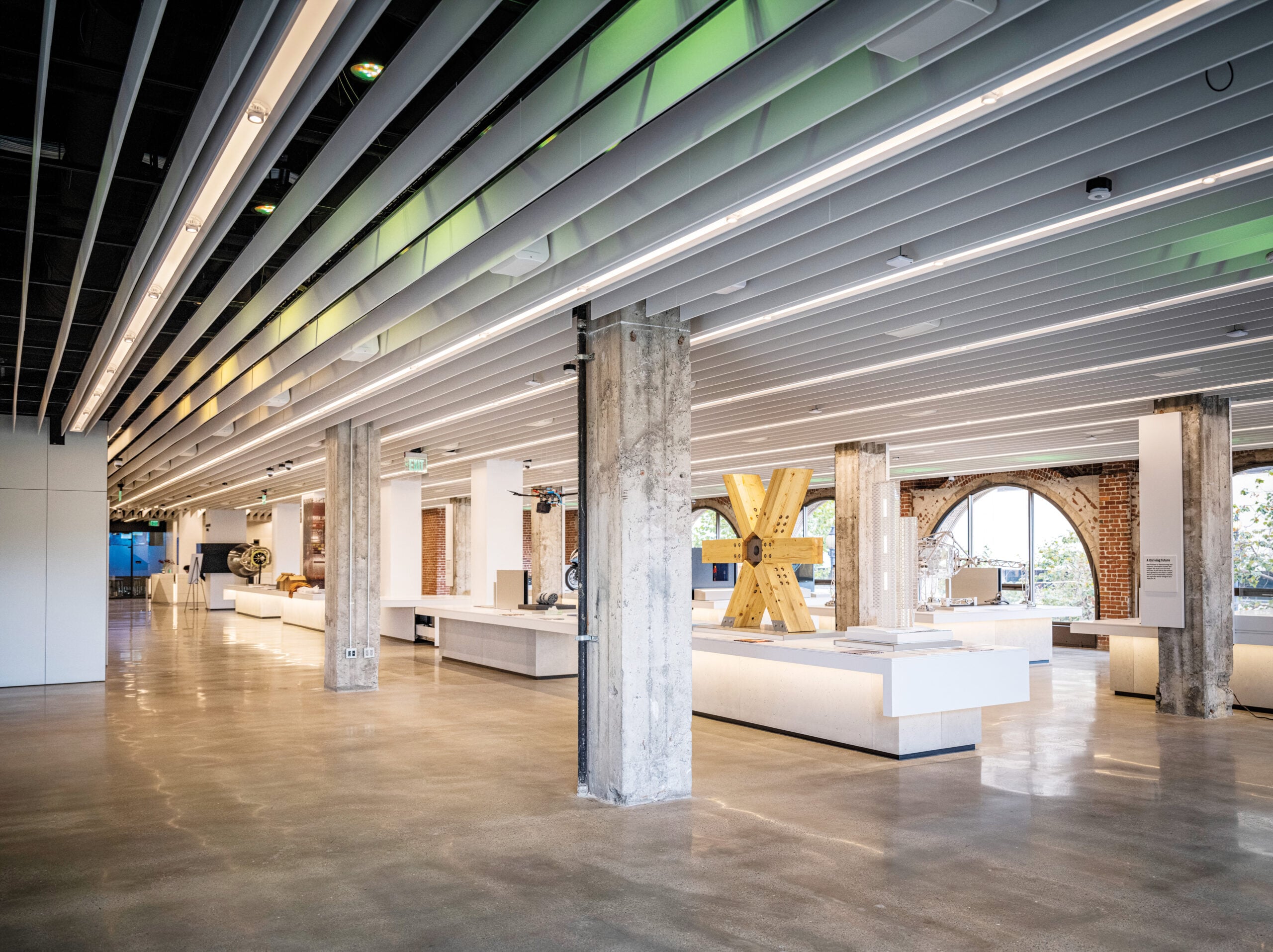
We know that employees prefer working in office spaces when there’s a sustainability certification. For instance, in our Platinum LEED-certified San Francisco headquarters, we ensured our employees had the best possible experience.
For us, it’s all about the opportunity to move toward outcomes-based thinking, or as we call it, outcome-based BIM [building information modeling]. Rather than just square footage, architecture firms can start thinking about [spatial] utilization and the number of folks in the building in order to improve people’s lives in the future.
The Future of Creative Automation
FB: That is a fantastic lead to my last question, which is about the future. When we think about the future of design tools, what excites you most about the role Autodesk plays in making sustainable design easier, faster, and more creative?
JS: I’m excited about how AI can let designers focus more on the creative side of their work. We’re using AI to automate repetitive tasks and simplify workflows—the parts no one enjoys doing.
Some worry AI might be threatening, but the reality is there’s far more work than there are people or tools to handle it. Technology like ours helps bridge that gap. I often get asked how much carbon Autodesk has offset with our tools. The truth is, the process has traditionally been very siloed—architects design, builders construct, and data gets lost in between.
As we connect those stages through platforms like Autodesk Construction Cloud and Forma, we’ll be able to track a building’s lifecycle, validate its performance, and see measurable carbon reductions. That’s what really excites me—proving that sustainable design isn’t just an ideal but a quantifiable outcome.
Listen to “Tech-Powered Sustainability: Autodesk’s Vision” on the Surround Podcast Network.
Would you like to comment on this article? Send your thoughts to: [email protected]
Latest
Viewpoints
Detroit Month of Design: A City’s Work in Progress
Now in its 16th year, the celebration offers insights into the Motor City’s ongoing accomplishments without glossing over its hurdles.
Projects
How a Hybrid Building Helped an Historic Manhattan Congregation Remain in Place
On Billionaire’s Row, FX Collaborative designed a new home for Calvary Baptist Church combined with an office tower.