



July 14, 2026
Takeaways from the METROPOLIS Leadership Summit at Neocon
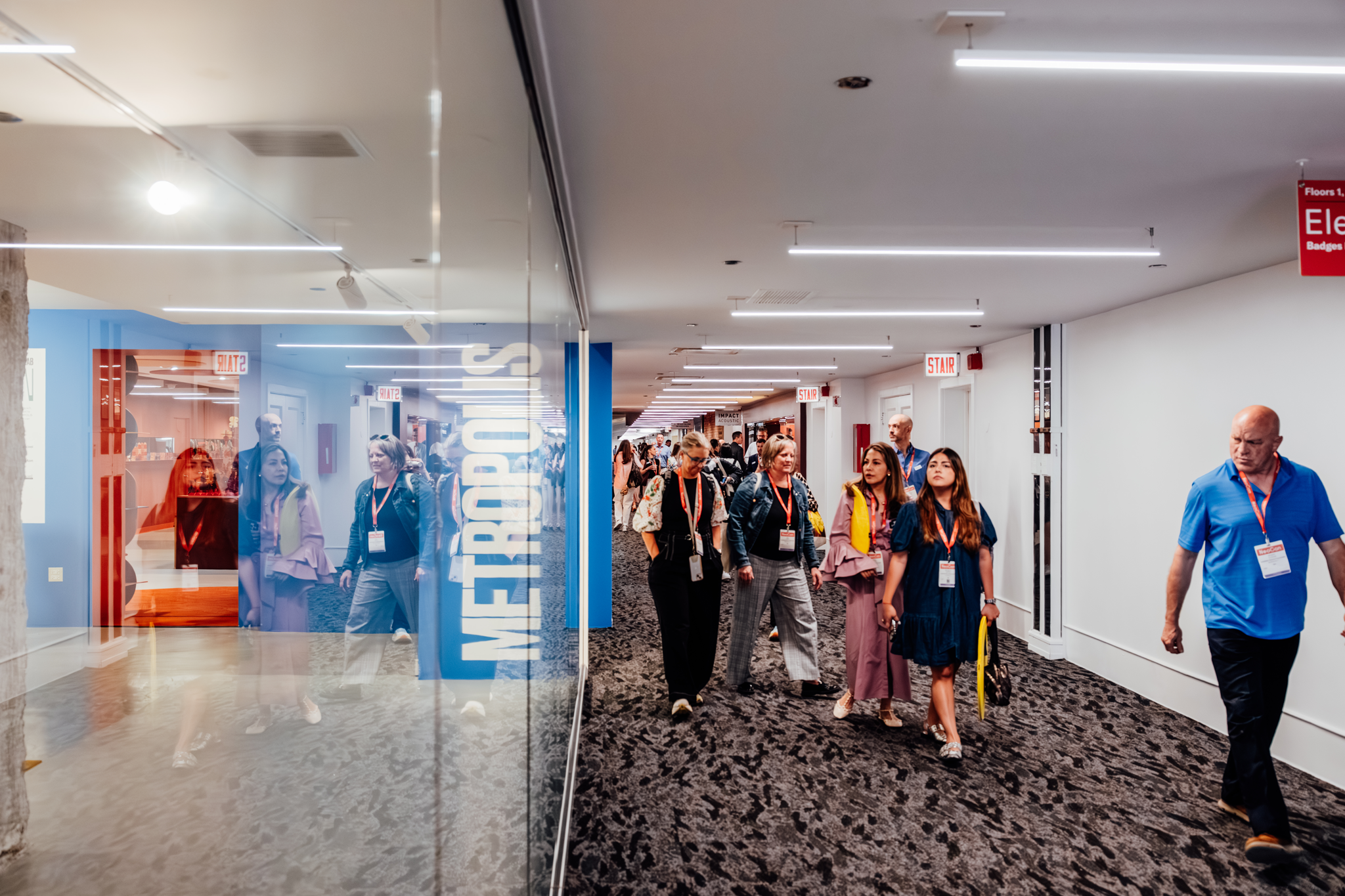
We were back in person at NeoCon this year, where it all started. We had our first METROPOLIS Leadership Summit four years ago in the early morning on the Monday of NeoCon. It’s remarkable to witness how much the industry has changed, evident in the shift in the conversation itself. For the first half of our 2026 NeoCon session, we asked the group: What really matters? With so many frameworks, certifications, and sustainability goals in play, how do we know we are focusing on the right priorities and driving meaningful impact rather than simply checking boxes?
From Information to Impact
One participant, having done her homework, posed the question: We have a lot of data now. Is the challenge getting designers to care? The group pushed back. We agreed that designers do care. And maybe the question is more about helping clients care, while also navigating an industry that now has a firehose of information at its fingertips. (Yes, we used the word firehose!) The amount of data on carbon, material health, circularity, transparency, and product impacts has grown tremendously in recent years. But it is also creating a challenge. It can make it difficult to prioritize and determine what matters most. Sustainability is often just another layer of complexity to a project rather than an integrated part of the design process.
We also discussed that metrics alone rarely inspire care. The conversation kept coming back to the need to translate technical information into shared human values: healthier communities, environmental justice, better outcomes for future generations, and a more meaningful connection between design decisions and their impacts.
Beyond Metrics and Checklists
Several leaders pointed to systems like the Common Materials Framework as promising examples of how the industry can simplify complexity through a unified framework. We talked about how certifications and reporting systems can become proxies for impact. They are valuable tools, but they shouldn’t be seen as the end goal, or a box to check off.
We came full circle on this first topic by questioning whether all the ever-growing number of frameworks, certifications, and reporting requirements are removing creativity, agency, and even joy from our work. It’s a good problem to have, but we shouldn’t have to choose between science and creativity. Can we create systems that encourage better decisions while leaving room for designers to think critically, exercise judgment, and design beautiful spaces?
What encouraged me most was realizing that the challenge is no longer a lack of information, data, resources, or tools. It’s aligning around what matters most and translating that into meaningful action and great design. As one designer stated: “If we can connect sustainability to desire, joy, and the creation of a better world, we are probably moving in the right direction.”
From Parallel Efforts to a Bigger Tent
For the second session we asked: How can the design industry move from parallel efforts to collective action? What kinds of partnerships, shared priorities, or “big moves” could better connect firms, manufacturers, educators, and associations? The group rejected the premise behind our question—that parallel efforts were creating fragmentation. Most agreed that parallel efforts primarily from the firm giants were good for the industry and added to our collective knowledge. The group zeroed in on a different divide—that between those already committed to sustainability and everyone else. In other words, are we just continuing to speak to the same people in the same room? The conversation shifted into a discussion about invitation, accessibility, and shared values.
One designer challenged the room to consider whether sustainability sometimes presents itself as a cultural identity rather than a set of broadly shared values. Speaking from her experience practicing in the South, she described feeling that sustainability can carry assumptions about who belongs in the conversation and who doesn’t. Rather than creating more exclusive spaces for sustainability leaders, she argued that the industry should focus on creating invitations for people who may not look, think, vote, or speak like those already in the room. Her point resonated with many participants who observed that some of the most sustainable practices are already taking place in communities that would not necessarily identify themselves as part of the sustainability movement.
Meeting People Where They Are
The discussion repeatedly returned to the importance of meeting people where they are. Participants shared examples of successful projects in regions where the language of sustainability itself can be polarizing. Rather than leading with climate goals or certifications, these projects succeeded by focusing on shared concerns such as healthy air and water, stewardship, resilience, and caring for future generations.
By the end of the session, the group had arrived at a broader definition of collective action. The group concluded that accessibility—not just expertise—is the prerequisite. The goal isn’t simply better coordination among firms, manufacturers, educators, and associations. It’s expanding the circle of participation. The group challenged themselves to move beyond familiar sustainability audiences and engage contractors, owners, dealers, clients, manufacturers, and communities that may not already identify with sustainability. The strongest call to action was not for a new certification, framework, or organization, but for a more inclusive and accessible conversation grounded in shared values.
As we were wrapping up the discussion, one designer made a comment that seemed to capture the energy of the entire morning—and a way forward. She encouraged the group to move from “elitism to invitation.” Collective action depends less on getting everyone to agree and more on creating enough common ground for people with different perspectives, priorities, and experiences to move forward together.
Participants of the METROPOLIS Leadership Summit included leaders from:
AECOM, ASID, Contract Textiles, Design Collective, DLR Group, Eckenhoff Saunders, Farrside, Formica, Formsolver, Geniant, Gensler, HDR, HGA, HKS, HLW, HMC, HOK, Huntsman Architectural Group, IA, IF Design, Interface, IWBI, J Banks Design, Living Future, Mahlum, Material Bank, Perkins&Will, Revel Architecture & Design, Shaw, SOM, and WELL Certified.
Latest
Viewpoints
Detroit Month of Design: A City’s Work in Progress
Now in its 16th year, the celebration offers insights into the Motor City’s ongoing accomplishments without glossing over its hurdles.
Projects
How a Hybrid Building Helped an Historic Manhattan Congregation Remain in Place
On Billionaire’s Row, FX Collaborative designed a new home for Calvary Baptist Church combined with an office tower.